
创新药

Search documents
集体引爆,AI概念上攻!
中国基金报· 2025-11-24 10:33
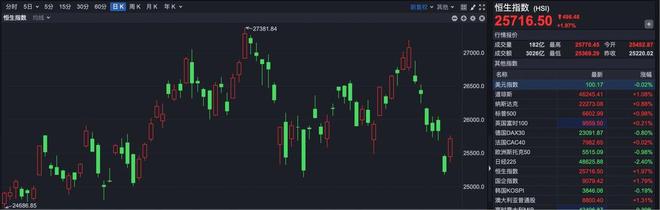
Market Overview - The Hong Kong stock market experienced a significant rise, with the Hang Seng Index increasing by 1.97% to close at 25,716.50 points, the Hang Seng China Enterprises Index rising by 1.79% to 9,079.42 points, and the Hang Seng Tech Index climbing by 2.78% to 5,545.56 points. The total market turnover reached 302.6 billion HKD, with net inflows from southbound funds amounting to 8.571 billion HKD [2][3]. AI Sector Performance - AI concept stocks saw a collective surge, with notable increases in share prices: Kuaishou-W rose by 7.11%, NetEase-S by 5.87%, Bilibili-W by 5.67%, Kingsoft Cloud by 4.96%, and Alibaba-W by 4.67% [4][5]. Alibaba's AI Assistant Launch - Alibaba announced that its AI assistant "Qianwen App" achieved over 10 million downloads in its first week of public testing, indicating strong market interest. The app is supported by the Qwen model, which has gained significant traction in the tech community with over 600 million downloads since its launch [6]. Innovative Drug Sector - The innovative drug sector showed strong performance, with notable stock increases: 3SBio rose by 6.07%, Hengrui Medicine by 5.61%, Hansoh Pharmaceutical by 5.29%, and WuXi AppTec by 5.12% [7][8]. Investment Outlook for Pharmaceuticals - China Galaxy Securities expressed optimism about investment opportunities in the pharmaceutical industry by 2026, suggesting that recent market adjustments have led to relatively low valuations. The report recommends focusing on innovative drugs, medical AI, and independent clinical laboratories [9]. Baidu's Rating Upgrade - Baidu's stock increased by 4.19% following a rating upgrade from Morgan Stanley, which raised its investment rating from "Neutral" to "Overweight." The report estimates Baidu's cloud business valuation at approximately 34 billion USD and highlights the potential for valuation reassessment [10][11]. Increased Capital Expenditure in AI - UBS reported that major Chinese internet companies are increasing capital expenditures and focusing more on AI investments. The report emphasizes that these companies are adapting quickly to demand changes and improving GPU efficiency amid geopolitical uncertainties [13].


野村首席观点 | 陆挺:新老经济并重,要让消费敢为
野村集团· 2025-11-24 10:06
Core Viewpoint - The article discusses the economic strategies and challenges facing China during the "14th Five-Year Plan" and the upcoming "15th Five-Year Plan," emphasizing the need for high-quality development and structural reforms to achieve the goal of reaching the income levels of moderately developed countries [5][6][8]. Economic Development Strategies - The "15th Five-Year Plan" aims for high-quality development rather than specific growth targets, focusing on resolving historical issues, enhancing industrial self-reliance, and promoting inclusive growth [9][10]. - Key conditions for achieving the goal of reaching the income levels of moderately developed countries include increasing industrial added value, promoting inclusive growth, and improving social security systems [8][9]. Manufacturing and Export Growth - China's strong manufacturing sector has been crucial for the rapid growth of exports, with an average annual growth rate of 8% over the past five years, totaling a 45% increase [15]. - The export structure has significantly upgraded, with high-value-added products increasing, making China the world's largest producer and exporter of automobiles [15][16]. Consumption as a Growth Driver - Consumption is identified as a key variable for future economic growth, with government policies like subsidies expected to continue to stimulate consumer spending [11][12]. - Increasing pension income for urban and rural residents, especially low-income groups, is seen as a significant measure to boost consumption and support economic transformation [12][13]. Addressing "Involution" Phenomenon - The article highlights the need for a collaborative approach involving market forces, industry associations, and government guidance to address the "involution" phenomenon in the economy [14][17]. Financial Sector Development in Shenzhen - Shenzhen aims to become a globally influential financial center by leveraging its proximity to Hong Kong, its manufacturing base, and its innovative environment [18][19]. - The city is focusing on integrating financial services with local industries, providing comprehensive financing support, and exploring innovative financial models suitable for emerging industries [19][20].
北工投资注册资本增至100亿元
FOFWEEKLY· 2025-11-24 10:01
Core Insights - Beijing Gongke Investment has increased its registered capital from 1 billion to 10 billion yuan, marking a significant step in its focus on patient capital and technological innovation following its approval as a pilot enterprise for state-owned capital investment reform [2] - The company has supported over 500 high-tech projects with more than 38 billion yuan in funding, playing a vital role in optimizing and upgrading the industrial structure of Beijing [2] Group 1 - Beijing Gongke Investment is a wholly-owned subsidiary of Beijing State-owned Assets Company, specializing in high-tech industries and aligning its investment strategy with Beijing's industrial development goals [2] - The company has adopted a dual investment approach, transitioning from direct investment to a combination of direct and fund investments, effectively leveraging state capital to attract social capital [3] - The total scale of funds aimed at promoting technological innovation in Beijing's high-tech industries exceeds 40 billion yuan, focusing on key areas such as new generation information technology and integrated circuits [3] Group 2 - The company has made significant investments in leading enterprises in the semiconductor and automotive sectors, including BOE Technology Group and BAIC Group, contributing to the transformation of Beijing's automotive industry [2] - Beijing Gongke Investment is also actively investing in cutting-edge technology fields such as robotics, artificial intelligence, and quantum technology, positioning itself as a core player in the financial sector of Beijing State-owned Assets Company [3]
海创药业:口服PROTAC药物HP518片联合抗肿瘤药物治疗晚期前列腺癌获批临床试验
Zhi Tong Cai Jing· 2025-11-24 09:28
Core Viewpoint - Haichuang Pharmaceutical (688302.SH) has received approval from the National Medical Products Administration of China for clinical trials of HP518 tablets in combination with anti-tumor drugs for the treatment of advanced prostate cancer, marking a significant step in the development of innovative cancer therapies [1] Group 1: Clinical Trial Approval - The company has been granted a Clinical Trial Approval Notice for HP518 tablets to conduct Phase Ib/II clinical trials for advanced prostate cancer [1] - HP518 has also received approval for clinical trials in China, Australia, and the United States, with no similar products currently approved for market [1] Group 2: Drug Mechanism and Advantages - HP518 is composed of a target protein ligand, an E3 ligase ligand, and a linker, which induces the ubiquitination of the androgen receptor (AR) and relies on proteasomal degradation to deeply inhibit the AR signaling pathway, achieving anti-tumor effects [1] - As a new oral PROTAC drug, HP518 exhibits typical advantages such as catalytic activity, high selectivity, and good safety profile [1] Group 3: Efficacy and Potential - Preclinical studies have shown that HP518 has high degradation activity against both resistant AR mutants and wild-type AR proteins, demonstrating excellent anti-cancer activity against AR-dependent prostate cancer cells [1] - The drug is expected to address resistance issues caused by mutations in prostate cancer treatment, providing new therapeutic options for this patient population [1]

港股速报|港股强势反弹 最大看点在这里!
Mei Ri Jing Ji Xin Wen· 2025-11-24 09:07
东方证券最新研报指出,阿里通过千问APP加大AI应用布局力度,看好AI应用布局完善后阿里的全栈AI 优势强化,且千问APP可与集团其他生活服务双向赋能,实现流量共享与收入提速,看好千问APP在阿 里业务内的多方向增长潜力。东方证券维持上次估值及目标价206.11港元,维持"买入"评级。 招商证券(香港)则认为,千问APP的发布,彰显阿里C端AI原生应用的野心。阿里作为全栈AI提供商 的领导地位再获确认,持续创新驱动盈利加速与估值回升。重申中国互联网板块首选标的,维持阿里巴 巴美股目标价204美元。 今天,港股市场的最大看点来自阿里巴巴(HK09988),在前期累计跌幅近20%之后,阿里今日最大涨 幅一度接近6%,最终收涨4.67%。 今日(11月24日),港股市场终于迎来强势反弹。 截至收盘,恒生指数报收于25716.50点,上涨496.48点,涨幅1.97%。 打开百度APP畅享高清图片 恒生科技指数报收于5545.56点,上涨150.07点,涨幅2.78%。 消息面,有报道称阿里旗下的AI助手千问App公测一周,下载量已突破1000万次,超越ChatGPT、 Sora、DeepSeek等,成为史上增长最快 ...

港股速报 | 港股强势反弹 最大看点在这里!
Mei Ri Jing Ji Xin Wen· 2025-11-24 08:53
今天,港股市场的最大看点来自阿里巴巴(HK09988),在前期累计跌幅近20%之后,阿里今日最大涨 幅一度接近6%,最终收涨4.67%。 今日(11月24日),港股市场终于迎来强势反弹。 截至收盘,恒生指数报收于25716.50点,上涨496.48点,涨幅1.97%。 恒生科技指数报收于5545.56点,上涨150.07点,涨幅2.78%。 消息面,有报道称阿里旗下的AI助手千问App公测一周,下载量已突破1000万次,超越ChatGPT、 Sora、DeepSeek等,成为史上增长最快的AI应用。报道显示,千问App上线后仅三天,就冲入苹果App Store免费总榜前三,一周便突破1000万下载量。"千问恐慌"也成为海外社交媒体讨论的热词。 东方证券最新研报指出,阿里通过千问APP加大AI应用布局力度,看好AI应用布局完善后阿里的全栈AI 优势强化,且千问APP可与集团其他生活服务双向赋能,实现流量共享与收入提速,看好千问APP在阿 里业务内的多方向增长潜力。东方证券维持上次估值及目标价206.11港元,维持"买入"评级。 招商证券(香港)则认为,千问APP的发布,彰显阿里C端AI原生应用的野心。阿里作为全 ...
三大指数强势上扬 科技医药双引擎领涨市场
Xin Lang Cai Jing· 2025-11-24 08:51
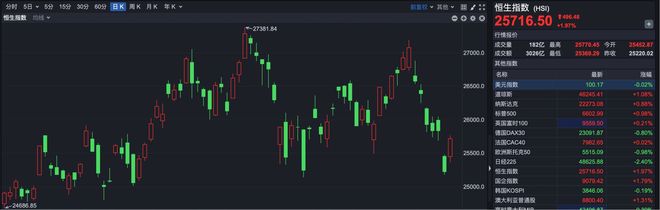
Market Overview - The Hong Kong stock market experienced a strong rebound, with the Hang Seng Index rising by 1.97% to 25,716.50 points, and the Hang Seng Tech Index increasing by 2.78% to 5,545.56 points [2][4] - The rebound was primarily driven by the performance of technology stocks, which had previously been under pressure due to liquidity issues and valuation adjustments [4] Technology Sector - Major tech stocks saw significant gains, with Kuaishou-W rising by 7.11%, Bilibili-W by 5.67%, and Alibaba-W by 4.67% [5][6] - Kuaishou's rise was supported by a Goldman Sachs report predicting that its AI-related revenue could reach $154 million by FY2025, maintaining a "Buy" rating with a target price of HKD 83 [6] - Alibaba's new AI app, Qianwen, achieved over 10 million downloads in its first week, surpassing other international AI applications [7] Pharmaceutical Sector - Innovative pharmaceutical companies showed strong performance, with Silver诺医药-B rising by 31.15% and 泰格医药 increasing by 9.25% [8][9] - The recovery in capital market financing activities and the anticipated US interest rate cuts are expected to boost the performance of CXO companies in the second half of the year [9][10] Automotive Sector - The automotive sector also performed well, with GAC Group rising by 12.03% and Li Auto increasing by 5.77% [10][11] - GAC Group announced the completion of its solid-state battery pilot production line, marking a significant breakthrough in China's new energy vehicle technology [11] Notable Stock Movements - Hesai-W saw an increase of 8.14% after being included in the Hang Seng Composite Index, effective December 8, 2025 [12] - WeRide-W rose by 9.73% after receiving Switzerland's first pure driverless taxi license, allowing it to operate in Zurich [13]

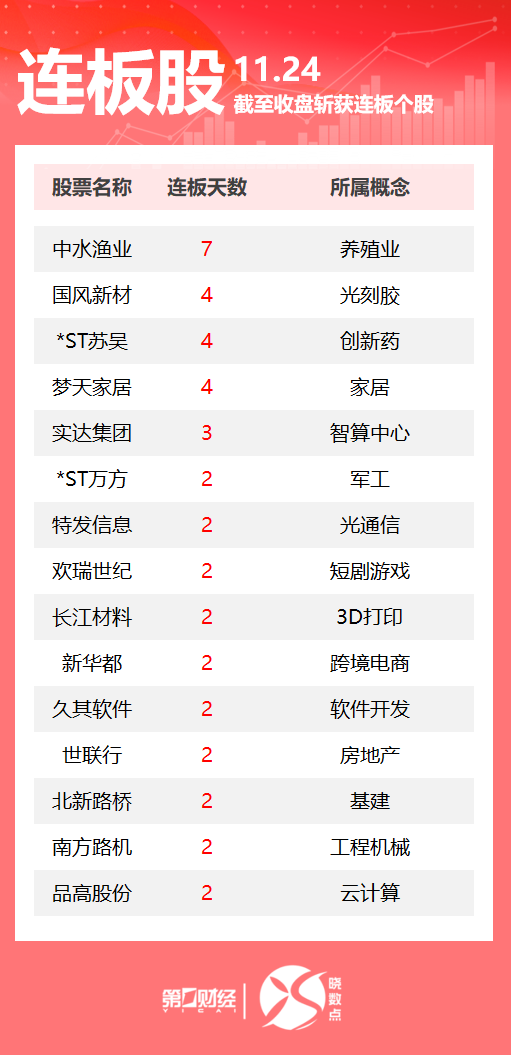
连板股追踪丨A股今日共79只个股涨停 中水渔业7连板
Di Yi Cai Jing· 2025-11-24 07:34
Core Insights - The A-share market saw a total of 79 stocks hitting the daily limit up on November 24, with notable performances in various sectors, particularly aquaculture, photolithography, and 3D printing [1][2]. Group 1: Stock Performance - Guofeng New Materials achieved a four-day consecutive limit up in the photolithography sector [1][2]. - Changjiang Materials, associated with 3D printing, recorded a two-day consecutive limit up [1][2]. - The aquaculture sector, specifically Shuiyu Industry, experienced a remarkable seven-day consecutive limit up [1][2]. Group 2: Conceptual Breakdown of Stocks - The following stocks have notable consecutive limit up days: - Sansi Mingchu: 7 days, related to aquaculture [2]. - Guofeng New Materials: 4 days, related to photolithography [2]. - *ST Suwu: 4 days, related to innovative pharmaceuticals [2]. - Meng Tian Home: 4 days, related to home furnishings [2]. - Shida Group: 3 days, related to intelligent computing centers [2]. - Other stocks with 2 days of consecutive limit up include *ST Wanfang (automotive), Te Fa Information (optical communication), and Changjiang Materials (3D printing) [2].

港股强势反弹!恒生科技指数涨超2%
Sou Hu Cai Jing· 2025-11-24 06:56
Core Viewpoint - Recent dovish signals from the Federal Reserve officials indicate that there is still room for further interest rate cuts in the short term due to a weakening labor market, which has significantly boosted market confidence and led to a rebound in the Hong Kong stock market [1] Economic Indicators - The U.S. unemployment rate rose to 4.4% in September, the highest level since October 2021 [1] - The probability of a 25 basis point rate cut by the Federal Reserve in December is currently close to 70%, up from 30% a week ago [1] Market Implications - Despite short-term disruptions in the Fed's rate cut schedule, the backdrop of potential rate cuts may lead to unexpected foreign capital inflows, coupled with sustained increases in southbound capital [1] - The Hong Kong stock market is expected to experience further liquidity easing, particularly benefiting sectors that are more sensitive to liquidity, such as technology and pharmaceuticals [1] Related ETFs - Hong Kong innovative drug industry: Hang Seng Pharmaceutical ETF (159892) [1] - Hong Kong market AI sector: Hang Seng Technology Index ETF (513180) [1]
多家创新药企业迎来内外资机构密集调研,港股创新药ETF(513120)盘中涨超2%,盘中成交额超47亿元居全市场医药类ETF之首!
Xin Lang Cai Jing· 2025-11-24 06:37
Group 1: Industry Insights - Multiple innovative pharmaceutical companies have received significant attention from both domestic and foreign institutional investors, with BeiGene receiving inquiries from 88 institutions and Zai Lab from 36 institutions [1] - The Chinese pharmaceutical industry is entering a critical phase characterized by "innovation realization + global layout," supported by population and domestic demand, as well as comprehensive manufacturing capabilities [1] - By 2026, opportunities in innovative commercialization, global breakthroughs, policy optimization, and industry mergers and acquisitions are expected to emerge [1] Group 2: Market Performance - As of November 24, 2025, the CSI Hong Kong Innovative Drug Index rose by 3.05%, with the Hong Kong Innovative Drug ETF (513120) increasing by 2.23% and achieving a trading volume exceeding 4.7 billion [2] - Over the past six months, the Hong Kong Innovative Drug ETF has accumulated a return of 33.71% [2] - The latest scale of the Hong Kong Innovative Drug ETF reached 24.102 billion, with continuous net inflows over the past six days totaling 170 million [2] Group 3: Company Developments - Traditional pharmaceutical companies like Heng Rui Medicine and Hansoh Pharmaceutical have successfully completed their innovation transformations, while companies like Bai Li Tianheng have emerged with globally innovative products [1] - Chinese pharmaceutical companies are becoming significant sources of innovation for multinational pharmaceutical firms, with improvements in their global competitiveness [1]