
家电

Search documents
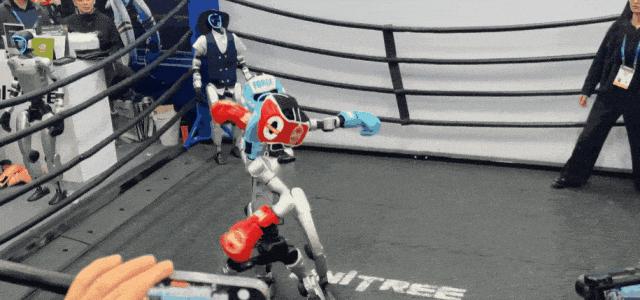
CES变成中国科技秀:机器人跳舞、熊猫获奖
3 6 Ke· 2026-01-09 08:24
Group 1: Core Themes of CES 2026 - The main theme of CES 2026 is "human-centered" AI applications, marking a shift from traditional consumer electronics to AI-centric technological transformations [1] - Chinese companies are increasingly taking center stage at CES, with 942 exhibitors, accounting for approximately 22% of the total, maintaining their position as the second-largest exhibiting nation [1] - In specific sectors, Chinese firms dominate, with 55% of humanoid robot exhibitors and nearly 70% of AI glasses brands coming from China [1] Group 2: Robotics and AI Innovations - Chinese manufacturers are expected to continue leading in cost reduction and efficiency improvements in humanoid robots, showcasing their capabilities in unstructured environments [2] - Notable products include the Unitree H1 humanoid robot with advanced sensing capabilities and the latest generation of the "绝影" series robotic dogs, which excel in indoor navigation [4][11] - The "Care-bot" humanoid robot by Fourier demonstrates embodied intelligence in real-life interaction scenarios [7] Group 3: Consumer Electronics and Smart Devices - Over 80% of global smart glasses supply chain manufacturers are from China, with 16 Chinese companies showcasing their products at CES [15] - Innovations in smart home devices include the AI-driven "安安" companion robot designed for elderly and cognitively impaired individuals [16] - Companies like Alibaba and XREAL are launching advanced AI glasses, with features such as ultra-lightweight designs and integration with various AI services [19][20] Group 4: Automotive and AI Integration - The automotive industry is transitioning from "software-defined" to "AI-defined" vehicles, with companies like Geely and Great Wall showcasing new technologies [28] - Geely's G-ASD smart driving solution and Great Wall's focus on new energy technologies highlight the industry's shift towards AI integration [30][32] - New products like the AI-driven logistics solutions from New Stone and advanced lidar technology from Hesai demonstrate the growing importance of AI in transportation [34][35] Group 5: Home Appliances and AI - Hisense introduced new RGB-Mini LED display technology and AI-controlled smart refrigerators, showcasing the integration of AI in home appliances [41] - TCL's innovations in display technology, including the world's first printed OLED car screen, reflect advancements in consumer electronics [43][44] - Companies are increasingly focusing on AI capabilities in home security and smart home management systems [51][49] Group 6: Overall Impact of AI - CES 2026 emphasizes the profound impact of AI on the consumer electronics industry, with expectations for AI user numbers to grow significantly [59] - The event serves as a platform for global tech companies to set the foundation for future technological development and transformation [59] - The integration of AI into various sectors, including robotics, automotive, and consumer electronics, indicates a trend towards deeper AI adoption in everyday life [59]





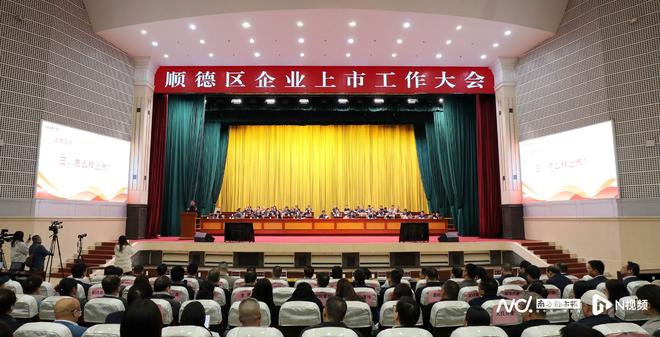
顺德新年第一会释放强信号,企业家聚焦云鹭小镇新蓝图
Nan Fang Du Shi Bao· 2026-01-09 08:21
Core Insights - The Shunde District is promoting itself as a "capital-strong area" through the launch of the "Yunlu Listing Town" development plan and the release of supportive policies for companies aiming to go public [1][5]. Group 1: Conference Highlights - The Shunde District held its annual enterprise listing conference, marking the tenth consecutive year of high-profile events focused on empowering companies for listing and high-quality development [1]. - The conference emphasized the importance of capital markets for companies, with leaders indicating a favorable market environment for the year ahead [3]. Group 2: Company Perspectives - Companies expressed optimism about the new policies, particularly the "Yunlu Listing Town" measures, which aim to attract more intermediary institutions and enhance collaboration between supply and demand [5]. - A company representative highlighted the need for capital market resources to support their global expansion strategy, indicating a reliance on external financing due to the long investment cycles in the equipment manufacturing industry [4]. Group 3: Future Plans and Goals - Companies like Cardwa Technology aim to leverage capital markets to strengthen their business, with plans to list on the A-share market within the next 3-4 years [6][7]. - Another company, Megke, plans to initiate its capital market layout after achieving a revenue target of 10 billion yuan, with a focus on expanding its market presence and enhancing its governance structure [17][19]. Group 4: Supportive Policies - The "Yunlu Listing Town" policies include targeted administrative support and solutions for compliance issues, which are seen as beneficial for companies preparing for listing [9]. - The Shunde District government has committed 600 million yuan to support enterprises in their listing efforts, which is expected to provide significant assistance to companies during their capital market journey [18].

广东江门“十四五”GDP突破4200亿元 年均增长5.2%
Zhong Guo Fa Zhan Wang· 2026-01-09 08:00
Core Viewpoint - The report highlights the achievements of Jiangmen City during the "14th Five-Year Plan" period, emphasizing economic growth, infrastructure development, and social progress, with a focus on high-quality development and regional coordination. Economic Development - Jiangmen's GDP exceeded 420 billion yuan, with an average annual growth rate of 5.2% over the past four years, ranking fourth in Guangdong Province [1] - The city has attracted investments totaling 800 billion yuan and has seen a 40% increase in operating entities, surpassing 800,000 [1] - Industrial investment reached 450 billion yuan, making Jiangmen the sixth city in the province to exceed 100 billion yuan in industrial investment [1] Infrastructure and Connectivity - Major infrastructure projects include the full operation of the Zhongkai Expressway and the completion of the Huangmaohai Cross-Sea Channel, enhancing connectivity with Hong Kong and Macau [1] - Jiangmen has implemented over 500 cross-border administrative services for Hong Kong and Macau residents, facilitating investment and residency [1] Industrial Development - The city has established 15 key industrial chains, with five chains (food, metal products, home appliances, petrochemical materials, and new-generation electronic information) each generating over 50 billion yuan [3] - Jiangmen's industrial added value has grown at an average annual rate of 7.6%, ranking second in the province [3] Regional Coordination - The "Hundred Thousand Project" aims to enhance the development capabilities of counties, towns, and villages, with New Hui District's GDP surpassing 100 billion yuan [4] - The "Eight Towns Linkage" initiative has led to an average annual growth of 11.4% in economic output across the eight pilot towns [5] Environmental Sustainability - Jiangmen has made significant strides in environmental protection, achieving the best air quality in a decade and maintaining a 100% quality rate for drinking water sources [5] - The city has increased its waste incineration capacity ninefold and achieved "zero landfill" for primary household waste [5] Social Progress - Over 75% of fiscal resources have been allocated to social welfare, resulting in the creation of 250,000 new jobs and a 27% increase in the total talent pool [6] - The city has added 67,000 public school places and four new universities, with a total higher education enrollment exceeding 100,000 [6]
如何让绿色消费有利可图?
Jing Ji Ri Bao· 2026-01-09 07:49
Core Viewpoint - The 2026 consumer market will be led by green consumption, supported by new policies that optimize subsidies for energy-efficient products and promote the transition to electric vehicles and renewable energy sources [1][2]. Group 1: Policy Initiatives - Nine government departments have jointly issued a document outlining 20 measures to promote green consumption, establishing a comprehensive policy framework that includes incentives, constraints, and guarantees [2]. - The new policies include a subsidy of 15% of the sales price for energy-efficient home appliances, with a maximum subsidy of 1500 yuan per item, and prioritize the replacement of old operational vehicles with electric ones [1][2]. Group 2: Market Demand Trends - Consumer demand is shifting from basic availability to quality and sustainability, with a notable increase in the sales of energy-efficient appliances, which grew over 10% during the New Year holiday [2]. - The latest data indicates that from 2024 to 2025, 18.3 million vehicles will be replaced under the old-for-new program, with nearly 60% being new energy vehicles, and over 90% of home appliances replaced will meet first-level energy or water efficiency standards [2]. Group 3: Industry Transformation - The demand for green products is driving companies to increase their investments in sustainable practices, including the development of green supply chains and the use of energy-efficient facilities [3]. - The transition to a circular economy is being facilitated by the establishment of reverse logistics systems and the promotion of "Internet + second-hand" models, shifting business models from linear to circular [3]. Group 4: Consumer and Corporate Perspectives - Green consumption should be perceived as a cost-effective choice rather than a premium option, with energy-efficient appliances and electric vehicles offering long-term savings and better experiences [4]. - Companies are encouraged to view green transformation as a source of competitive advantage through technological innovation and resource optimization, which can lead to cost savings and new revenue streams [4].
家电ETF(159996)涨超1.5%,出口链修复与内需回暖双轮驱动
Mei Ri Jing Ji Xin Wen· 2026-01-09 06:59
Core Viewpoint - The home appliance ETF (159996) rose over 1.5% on January 9, driven by the recovery of the export chain and the rebound in domestic demand [1] Group 1: Policy and Market Trends - The 2026 home appliance replacement policy focuses on six product categories, including refrigerators, washing machines, televisions, and air conditioners, with a subsidy rate of 15% and a maximum subsidy of 1500 yuan per item [1] - The subsidy scope and rate will narrow in 2026, with higher energy efficiency requirements benefiting leading companies in the white goods, black goods, and water heater industries [1] Group 2: Company Actions and Industry Signals - Midea announced a price increase for air conditioners starting in January, raising prices of popular models by 2% to 4% to offset cost pressures from rising copper prices, signaling healthy competition in the industry for 2026 [1] - At the CES exhibition, innovations in robotic vacuum cleaners became a highlight, with brands like Roborock and Dreame showcasing new technologies such as mechanical leg modules and flying modules, breaking spatial limitations [1] Group 3: Production and Export Outlook - The production of white goods is expected to remain stable in Q1 2026, with exports of refrigerators and washing machines recovering in November, indicating a smooth transition for the industry [1] - Policy support for the development of smart home products continues, and discussions on standards such as aluminum replacing copper are ongoing, suggesting further improvement in industry regulations [1] Group 4: Index and Market Representation - The home appliance ETF (159996) tracks the home appliance index (930697), which selects listed companies in the white goods, black goods, and small appliances sectors from the Shanghai and Shenzhen markets to reflect the overall performance of these securities [1] - This index emphasizes companies with high market share and technological strength, reflecting the characteristics of industry allocation under the trend of consumption upgrading [1]
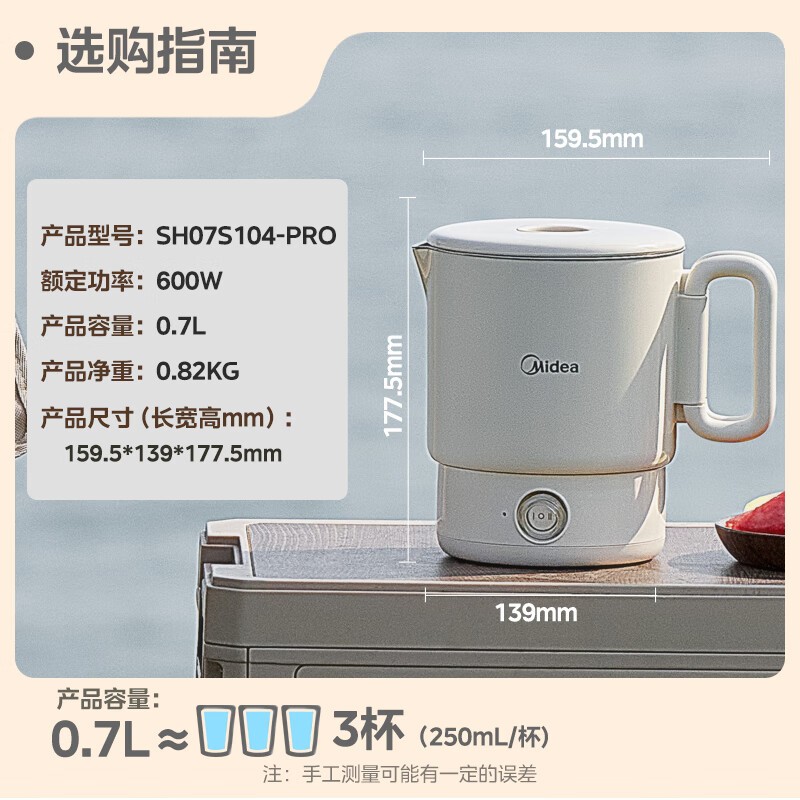
美的折叠烧水壶,京东优惠低至92.55元
Xin Lang Cai Jing· 2026-01-09 06:48
注:手工测量可能有一定的误差 选购指南 159.5mm 产品型号: SH07S104-PRO 额定功率:600W 产品容量: 0.7L 77.5mm 产品净重:0.82KG Midea 产品尺寸 (长宽高mm) : 159.5*139*177.5mm 139mm 产品容量: (311 (250mL/杯) 0.7L = 选购指南 159.5mm 产品型号: SH07S104-PRO 额定功率:600W 产品容量: 0.7L 77.5mm 产品净重:0.82KG Midea 产品尺寸(长宽高mm) : 159.5*139*177.5mm 139mm 产品容量: 3 (250mL/杯) 0.7L = 注:手工测量可能有一定的误差 8 > 新浪财经APP 24小时全球 具备资讯 下载APP > 广告 ...

从显示到全屋:海信以RGB为核,AI驱动智慧生活场景全覆盖
Xin Jing Bao· 2026-01-09 04:18
Core Insights - The CES 2026 marks a pivotal shift in AI technology from conceptual showcases to practical applications in everyday scenarios, with Hisense leading the way in display technology and AI advancements [1] - Hisense's long-term investments in AI algorithms, hardware development, and scene adaptation have positioned the company to capitalize on the current breakthroughs in embodied intelligence [1][8] - Hisense's products create a dual adaptation system between technology and scenarios, indicating a strong alignment with national strategic directions and industry trends [1] Group 1: Display Technology Innovations - Hisense unveiled the world's first 116-inch next-generation RGB-Mini LED TV at CES 2026, establishing a new standard for immersive visual experiences [2] - The company has transitioned from being a technology follower to a rule-maker in the display industry, achieving over 90% market share in the high-end 85-inch TV segment during the 2025 Double 11 shopping festival [2][3] - Hisense's RGB technology, which includes self-developed RGB light-emitting chips and AI picture quality chips, has led to significant advantages in color accuracy, brightness, and energy efficiency [2][3] Group 2: AI and Smart Ecosystem Development - Hisense is not only focusing on hardware but is also deeply exploring software ecosystems and scene experiences, evolving televisions into indispensable companions that understand user intentions [4][5] - The company is leveraging its role as the official sponsor of the 2026 FIFA World Cup to launch customized products that integrate cutting-edge technology into fans' daily lives, enhancing the overall experience [5][6] - Hisense aims to create a comprehensive smart home ecosystem powered by AI, integrating various appliances and technologies to enhance user experience across different household scenarios [6] Group 3: Embodied Intelligence and Future Growth - Hisense is actively developing embodied intelligence, showcasing robots that serve as companions in homes and efficient employees in commercial settings, marking a significant step towards practical applications of AI [7][8] - The company’s experience in display technology and home appliances provides a solid foundation for the development of embodied intelligence, emphasizing both technological advancement and practical applicability [8] - Hisense's exploration in this field positions it as a key player in the smart home and smart city sectors, opening up new avenues for future growth [8][9]

美股:特朗普引发军工巨震,谁是下一只翻倍黑马?
3 6 Ke· 2026-01-09 03:55
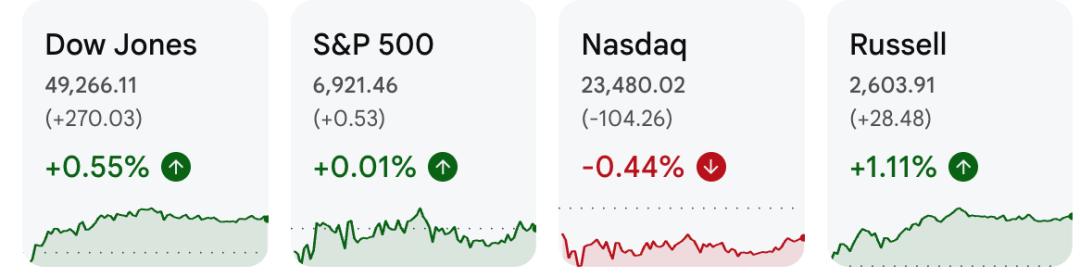
Market Performance - The internal rotation effect in the U.S. stock market was significant, with the Dow Jones increasing by 0.55%, the Nasdaq decreasing by 0.44%, and the S&P 500 rising by 0.01% [1] - The Russell 2000 index, representing small-cap stocks, surged by 1.1%, reaching a historical high and outperforming the Nasdaq 100 by approximately 4 percentage points in the first five trading days of the year, marking the second strongest start to a year in history [1] Sector Performance - Despite mixed performances among the three major indices, the number of stocks that rose significantly outnumbered those that fell, with the energy, consumer discretionary, consumer staples, and real estate sectors overall increasing [3] - In the large-cap tech sector, over half of the stocks experienced a pullback [3] Military Spending and Industry Impact - A major news item was Trump's plan to increase the U.S. military budget by 50% to $1.5 trillion by 2027, with stringent conditions attached [5] - Trump indicated that the military budget shortfall would be covered by tariff revenues, suggesting a potential unprecedented surge in order volume for military contractors [6] - However, Trump imposed three major restrictions on defense companies, including a ban on stock buybacks and dividends until production efficiency is met, a cap on executive salaries at $5 million, and a mandate that profits must prioritize factory expansion and equipment maintenance [6] Legal and Economic Implications - The U.S. Supreme Court is set to release a key opinion that could significantly alter market trends for 2026, particularly regarding the legality of Trump's comprehensive tariff plan [7] - If the court rules against the tariffs, S&P 500 companies could see a 2.4% increase in EBIT for 2026 compared to last year, as tariffs are viewed as a form of corporate tax [8] - Consumer sectors heavily reliant on imports, such as toys, clothing, and home appliances, would benefit from reduced procurement costs if tariffs are lifted, leading to potential valuation recovery [9] - Industries dependent on global supply chains, such as industrials and transportation, would also benefit from lower logistics costs and potential tariff refunds [10] - Conversely, domestic producers previously protected by trade policies may face increased international competition, leading to potential underperformance in stock prices [11] Debt Market Concerns - The bond market is experiencing complex sentiments, with concerns about fiscal sustainability arising from potential tariff revenue losses, which could exacerbate the federal budget deficit [12] - If the court mandates tariff refunds, there may be a surge in bond issuance to raise funds, negatively impacting the bond market [12] Strategic Outlook - Investors have partially priced in the expectation of tariffs being overturned, and initial sell-offs in the bond market may be temporary [13] - The focus for retail investors will not only be on the court's decision but also on the White House's subsequent responses, which could quickly diminish profit expectations in the stock market [13] - If the economic stimulus from tariff removal is too strong, it may cause the Federal Reserve to reconsider its interest rate path for 2026, maintaining high market volatility [14]
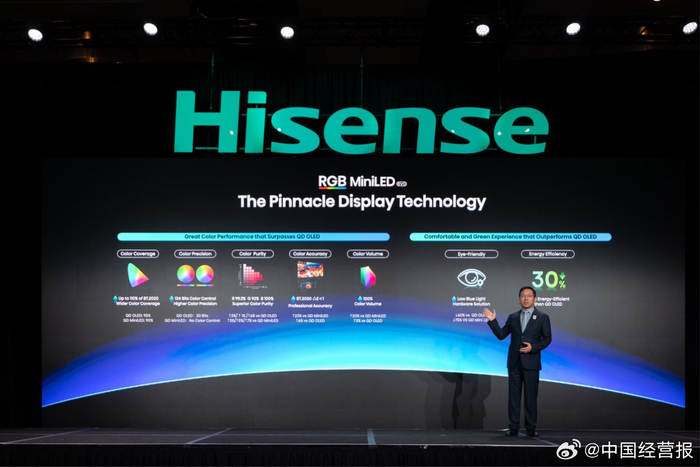
海信CES 2026发布RGB-Mini LED技术,UX系列3月国内上市
Zhong Guo Jing Ying Bao· 2026-01-09 02:50
Group 1 - The 2026 International Consumer Electronics Show (CES 2026) is taking place in Las Vegas, showcasing advancements in AI technology and consumer electronics, with Hisense presenting its new RGB-Mini LED display technology [1] - Hisense has developed a new generation of RGB-Mini LED display technology, achieving a color gamut of 110% BT.2020 and a color control precision of 134 bits, marking a significant advancement in display technology [1] - The integration of RGB and Mini LED technologies is described as a revolutionary change, aimed at closely replicating the visual experience seen by the human eye [1] Group 2 - Hisense's UX series, featuring the world's first 4-core color backlight, won the "CES 2026 Honor Award" and is set to launch in China in March 2026 [2] - The showcased smart refrigerator incorporates AI capabilities, featuring dual high-definition screens for content display and user interaction, and is powered by Hisense's proprietary Star Sea model for a comprehensive cooking solution [2] - Hisense refrigerators have achieved the top sales volume or revenue in 11 countries by mid-2025, leading in markets such as Canada, France, and Mexico, and maintaining a strong presence in Eastern Europe [2]
LG电子预计将录得九年来首次季度亏损
Ge Long Hui· 2026-01-09 02:47
美股频道更多独家策划、专家专栏,免费查阅>> 1月9日,韩国消费电子巨头LG电子预计将录得九年来首次季度营业亏损,原因是在竞争加剧的背景 下,家电、电视及其他电子产品需求复苏乏力,经营面临多重挑战。公司同时还在应对关税上升和重组 成本增加的问题。 公司在周五发布的初步业绩报告中表示,10月至12月期间的营业亏损预计为1094亿韩元,约合7530万美 元,而上年同期为1354亿韩元盈利。这将是LG电子自2016年第四季度以来首次出现季度亏损。2025年 全年营业利润预计下滑28%,至2.478万亿韩元。LG电子股价今年以来下跌约4%。公司计划在本月晚些 时候公布完整的季度业绩。 责任编辑:栎树 ...