电力设备

Search documents
航空板块重点推荐-人民币升值下的-春季躁动-机会
2025-12-31 16:02
Summary of Key Points from Conference Call Industry Overview - The focus is on the aviation sector, particularly in the context of the appreciation of the Renminbi (RMB) and its impact on various industries including airports and light industry paper manufacturing [1][3]. Core Insights and Arguments - The appreciation of the RMB is expected to enhance the financial performance of sectors like aviation and light industry paper due to improved cost and debt structures [1][3]. - Historical data indicates that different sectors lead the market during phases of rapid RMB appreciation, with core assets leading in 2017, new energy and military industries in 2020-2021, and economic recovery valuation logic in late 2022 to early 2023 [1][6]. - The current phase of RMB appreciation differs from previous ones, with reduced foreign capital influence and increased domestic pricing power, shifting market focus towards technological transformation rather than mere economic recovery [1][7]. - The aviation sector is highlighted as a key beneficiary, with significant cost components (over 60%) being dollar-denominated, meaning even slight RMB appreciation can lead to substantial profit increases [3][9]. Investment Opportunities - Short-term investment opportunities are identified in the aviation and light industry paper sectors, particularly as companies prepare to release annual reports [1][8]. - The second tier of investment opportunities includes foreign-invested blue-chip stocks such as electric equipment, electronics, and food and beverage sectors, which have shown resilience during past RMB appreciation phases [5]. - The third tier includes large financial and real estate sectors, which have a high proportion of RMB-denominated assets, benefiting from balance sheet improvements during RMB appreciation [5]. Additional Important Insights - The global aircraft manufacturing industry is facing supply chain bottlenecks due to de-globalization, affecting the availability of materials and components [11]. - The performance of Chinese airlines has significantly outpaced the Shanghai and Shenzhen 300 index, driven by increased international route demand and favorable pricing dynamics [12]. - Airlines like China Southern, China Eastern, Air China, and budget carriers such as Spring Airlines are identified as high-elasticity investment opportunities due to their potential recovery from historical lows [3][12]. - The upcoming delivery of new aircraft orders (e.g., Spring Airlines and Juneyao Airlines) is expected to support fleet updates and future growth [10].



TA们,在2026年能否“峰回路转”?
Shang Hai Zheng Quan Bao· 2025-12-31 15:27
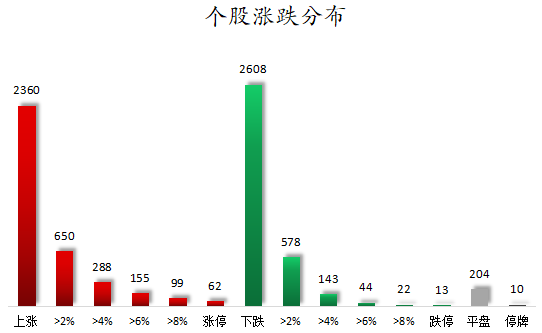
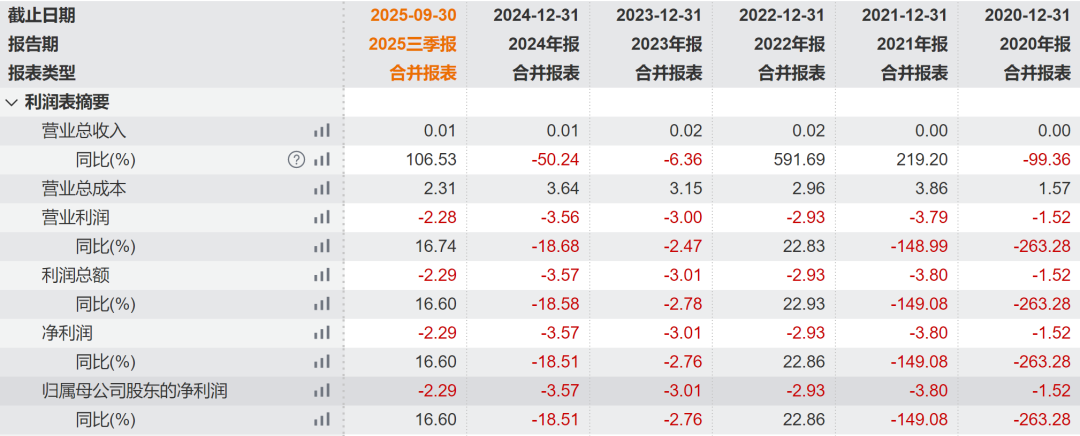
Market Overview - In 2025, the A-share market experienced a structural "small bull" market, with 4,110 out of 5,176 stocks showing positive growth, and 523 stocks rising over 100% [1] - However, 40 stocks fell over 30%, with 7 stocks declining more than 40% [1] Worst Performing Stocks - The largest decline was seen in Shijing Technology, which dropped 50.99% in 2025, primarily due to a significant decrease in completed orders after entering the photovoltaic sector [3] - Kangle Weishi ranked second with a decline of 49.97%, continuing to face losses since 2013, with a net profit loss of 2.29 billion yuan in the first three quarters of 2025 [3][4] - Longda Meishi experienced a 48.11% drop, affected by a prolonged downturn in the pig cycle and intensified competition in the prepared food sector [3] Financial Performance - Kangle Weishi reported a revenue of 1.2763 million yuan in the first three quarters of 2025, a year-on-year increase of 106.53%, but still faced a net profit loss of 2.29 billion yuan [4] - The food and beverage sector saw a 9.69% decline in 2025, marking its fifth consecutive year of losses, with a cumulative drop of over 50% since the peak in 2021 [8][10] Industry Trends - The pharmaceutical and biotechnology sector showed signs of recovery in 2025, with an 11.94% increase, ending a four-year downtrend [10] - The food and beverage sector is expected to benefit from macro policies aimed at boosting domestic demand, with potential recovery in the white liquor and pre-processed food segments [10][11]




资配跨年展望(三):头科技,强者恒强
Guoxin Securities· 2025-12-31 13:59
Group 1 - The report highlights the historical trend of "stronger getting stronger" in the U.S. stock market, emphasizing that leading technology companies represent the capital mapping of the era's productivity [1][13][22] - The current market is experiencing unprecedented "oligopolization," with the top 1% of U.S. companies accounting for 47.5% of total market capitalization, indicating a significant concentration of value among leading firms [2][21] - The report identifies that while technology bubbles are difficult to avoid, they often lay the groundwork for future innovations, with the current AI wave in a critical commercialization validation phase [3][25][28] Group 2 - The ChiNext 50 Index is presented as an optimal tool for investing in core technology assets in the A-share market, characterized by high elasticity, concentration, and growth potential [4][30] - The report indicates that the ChiNext 50 Index has shown strong return elasticity, outperforming other indices during growth phases, and has a high concentration in strategic emerging industries [4][31][39] - The underlying companies within the ChiNext 50 Index are noted for their high R&D investment and excellent profitability, providing solid support for long-term growth [4][32][38]


银河金工指数分析系列研究:市场基准分析:主要主题指数
Yin He Zheng Quan· 2025-12-31 13:44
- The report analyzes various thematic indices, including AI, Internet, Mainland Consumption, and Mainland Low Carbon, which are constructed by selecting top 50 stocks in terms of market cap and liquidity within each theme, and are adjusted semi-annually[1][4][5] - The indices are market-cap weighted and focus on specific sectors, such as AI and Internet indices focusing on technology-related fields, Mainland Consumption covering consumer themes, and Mainland Low Carbon emphasizing low-carbon economy-related businesses[1][4][5] - The indices show concentrated industry distribution, with Mainland Low Carbon heavily weighted in the electric power equipment sector, and the Internet index concentrated in communication and computer industries[6][7][8] - The indices exhibit high concentration in terms of weight, with the top 10 stocks accounting for a significant portion of the index weight, and a high proportion of private ownership among the top indices[11][13][14] - The indices tend to include large-cap stocks, with a significant portion of the index constituents having a market cap over 100 billion[14][19][20] - The AI and Internet indices have higher PB/PE ratios, reflecting market pricing for high growth, while Mainland Consumption and Mainland Low Carbon have lower valuations, indicating a thicker valuation cushion[21][22][23] - The indices have shown strong performance, with AI, Internet, and Mainland Low Carbon indices outperforming in recent years, driven by policy and technology cycles[24][27][28] - The indices' dividend rates have been increasing annually, with Mainland Consumption showing the most significant growth, and Mainland Consumption and Mainland Low Carbon having higher dividend yields compared to AI and Internet[38][39][40] - AI and Internet indices demonstrate stronger profitability with higher revenue and net profit growth rates, while Mainland Consumption has a higher ROE[40][42][43] Index Performance Metrics - **CS Artificial Intelligence Index**: Annualized return: 12.5%, Annualized volatility: 18.3%, Sharpe ratio: 0.68, Maximum drawdown: -25.4%[27][28][36] - **Internet Index**: Annualized return: 11.8%, Annualized volatility: 17.9%, Sharpe ratio: 0.65, Maximum drawdown: -24.7%[27][28][36] - **Mainland Consumption Index**: Annualized return: 9.2%, Annualized volatility: 15.4%, Sharpe ratio: 0.60, Maximum drawdown: -22.1%[27][28][36] - **Mainland Low Carbon Index**: Annualized return: 10.3%, Annualized volatility: 16.7%, Sharpe ratio: 0.63, Maximum drawdown: -23.5%[27][28][36]




年度策略报告姊妹篇:2026年策略组风险排雷手册-20251231
ZHESHANG SECURITIES· 2025-12-31 12:32
Group 1 - The core viewpoint of the report is that the A-share market in 2026 will revolve around "structural transformation and confidence restoration," with a focus on technology investments and external demand recovery [3][4] - The report emphasizes a "systematic slow bull" market phase, suggesting a gradual upward trend in the market, with the Shanghai Composite Index expected to oscillate between the high point of February 2021 and the 0.809 quantile of 5178-2440 [9] - Investment strategies include focusing on four main lines: consumer services, sectors with growth potential like automotive and pharmaceuticals, traditional industries, and dividend-paying stocks such as banks and transportation [9] Group 2 - Policy risks are highlighted, particularly the impact of new public fund regulations on asset allocation, which may lead to a reallocation of equity fund performance benchmarks in the second half of 2026 [10][12] - Geopolitical risks are identified, with potential impacts from U.S. actions in Venezuela and Japan's political stance affecting market sentiment and inflation expectations [13][14] - Other risks include the pace of U.S. interest rate cuts, domestic economic recovery, and the performance of U.S. tech stocks, all of which could influence market dynamics in the second half of 2026 [15][17][20]
主力资金 | 最高爆买超5亿元 尾盘6股获主力大手笔抢筹!
Zheng Quan Shi Bao Wang· 2025-12-31 11:21
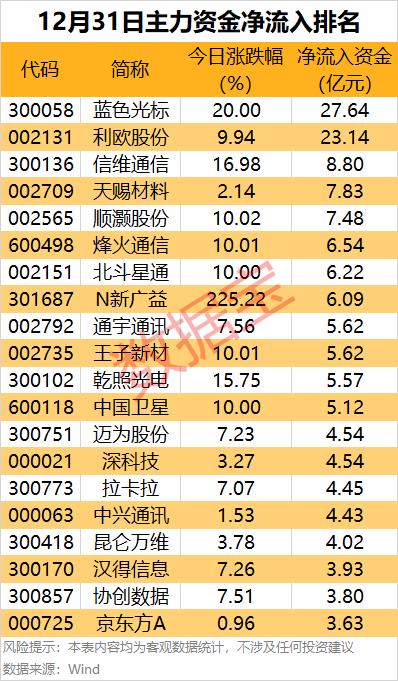
Group 1: Market Overview - On December 31, the main funds in the Shanghai and Shenzhen markets experienced a net outflow of 27.079 billion yuan, with the ChiNext board seeing a net outflow of 11.946 billion yuan and the CSI 300 index stocks a net outflow of 14.337 billion yuan [1] - Among the 15 first-level industries, the defense and military industry had the highest increase at 2.13%, followed by media, real estate, non-ferrous metals, and social services, all exceeding 1% [1] - Eight industries saw net inflows of main funds, with the media industry leading at 4.05 billion yuan, followed by the defense and military industry at 1.977 billion yuan [1] Group 2: Individual Stock Performance - Two AI application concept stocks, BlueFocus and Liou Co., saw net inflows exceeding 2.314 billion yuan and 2.314 billion yuan respectively, both hitting the daily limit [2][3] - BlueFocus reported a cumulative price deviation of over 30% over three trading days, with no undisclosed significant matters [2] - N Xin Guang Yi, a high-tech enterprise focusing on special functional materials, saw its stock price increase by 225.22% on its first trading day, closing at 71.32 yuan per share [2] Group 3: Net Outflow Rankings - Over 130 stocks experienced net outflows exceeding 1 billion yuan, with eight stocks seeing outflows over 1 billion yuan [4] - The top net outflow stocks included Tianfu Communication at 1.561 billion yuan, Sunshine Power at 1.464 billion yuan, and Xuanwei Electronics at 1.245 billion yuan [5] Group 4: End-of-Day Fund Flow - At the end of the day, the main funds saw a net outflow of 3.663 billion yuan, with the ChiNext board experiencing a net outflow of 2.201 billion yuan [6] - The top net inflow stock at the end of the day was Aerospace Development, with 563 million yuan, followed by Xunwei Communication and Sanhua Intelligent Controls [6][7] Group 5: End-of-Day Net Outflow Rankings - Eighteen stocks had net outflows exceeding 700 million yuan at the end of the day, with ten stocks exceeding 1 billion yuan [8] - The top net outflow stock was New Yi Sheng at 352.41 million yuan, followed by Aerospace Power and Tianfu Communication [9]


资金周报:本周主力资金连续净流出
Zheng Quan Shi Bao Wang· 2025-12-31 11:04
沪指本周上涨0.13%,深成指下跌0.58%,创业板指下跌1.25%,沪深300指数下跌0.59%。可交易A股 中,上涨的有2000只,占比36.62%,下跌的3398只。 资金面上,本周主力资金合计净流出1212.93亿元,各交易日资金均为净流出状态。其中,创业板主力 资金净流出331.98亿元;科创板主力资金净流出92.33亿元;沪深300成份股主力资金净流出390.53亿 元。 本周主力资金流向概况(单位:亿元) | 日期 | 深沪两市 | 创业板 | 科创板 | 沪深300 | | --- | --- | --- | --- | --- | | 一周合计 | -1212.93 | -331.98 | -92.33 | -390.53 | | 12月31日 | -322.70 | -102.21 | -35.54 | -191.76 | | 12月30日 | -282.29 | -65.22 | -19.12 | 6.22 | | 12月29日 | -607.95 | -164.55 | -37.67 | -204.99 | 行业来看,申万所属的一级行业中,本周上涨的有12个,涨幅居前的行业为石油石化、 ...
【31日资金路线图】两市主力资金净流出超270亿元 国防军工等行业实现净流入
证券时报· 2025-12-31 10:49
盘后数据出炉。 12月31日,A股市场主要股指多数下跌,截至收盘,上证指数报3968.84点,上涨0.09%;深证成指报13525.02点,下跌0.58%;创业板指 报3203.17点,下跌1.23%。两市合计成交20451.42亿元,较上一交易日减少971.83亿元。 1.两市主力资金净流出超270亿元 今日沪深两市主力资金开盘净流出129.42亿元,尾盘净流出36.63亿元,两市全天主力资金净流出270.79亿元。 | | | 沪深两市最近五个交易日主力资金流向情况(亿元) | | | | --- | --- | --- | --- | --- | | 日期 | | 净流入金额 开盘净流入 | 尾盘净流入 | 超大单净买入 | | 2025- 12- 31 | - 270. 79 | - 129. 42 | - 36. 63 | - 63. 89 | | 2025- 12- 30 | - 238. 28 | - 116. 17 | - 40. 17 | - 94. 18 | | 2025- 12- 29 | - 482. 76 | - 221. 26 | - 77. 92 | - 210. 81 | | ...

主力资金 | 最高爆买超5亿元,尾盘6股获主力大手笔抢筹!
Zheng Quan Shi Bao· 2025-12-31 10:26
Group 1 - Eight industries experienced net inflows of main funds, with the defense and military industry leading with a rise of 2.13% [1] - Among the 15 industries that rose, media, real estate, non-ferrous metals, and social services also saw gains exceeding 1% [1] - The media industry had the highest net inflow of main funds at 4.05 billion, followed by the defense and military industry with 1.977 billion [1] Group 2 - Two AI application concept stocks, BlueFocus and Liou Co., each saw net inflows exceeding 2.314 billion, with both stocks hitting the daily limit [2] - BlueFocus reported a cumulative price deviation of over 30% over three trading days, with no undisclosed significant matters [2] - N Xin Guang Yi, a high-tech enterprise focusing on special functional materials, saw its stock price increase by 225.22% on its first trading day [2] Group 3 - The top stocks with net inflows included BlueFocus (2.764 billion), Liou Co. (2.314 billion), and XW Communication (880 million) [3] - Over 130 stocks experienced net outflows exceeding 1 billion, with eight stocks seeing outflows over 1 billion [3] Group 4 - The stocks with the highest net outflows included Tianfu Communication (1.561 billion), Sunshine Power (1.464 billion), and Saiwei Electronics (1.245 billion) [5] - Commercial aerospace stocks saw significant net inflows, with Aerospace Development leading at 563 million [6] Group 5 - The top stocks with net inflows at the end of the day included Aerospace Development (563 million), XW Communication (486 million), and Sanhua Intelligent Control (203 million) [7] - The stocks with the highest net outflows at the end of the day included XW Communication (352 million), Aerospace Power (325 million), and Tianfu Communication (246 million) [9]
数据复盘丨卫星互联网、商业航天等概念走强 86股获主力资金净流入超1亿元
Zheng Quan Shi Bao Wang· 2025-12-31 10:07
Market Overview - The Shanghai Composite Index closed at 3968.84 points, up 0.09%, with a trading volume of 829.5 billion yuan. The Shenzhen Component Index closed at 13525.02 points, down 0.58%, with a trading volume of 1215.723 billion yuan. The ChiNext Index closed at 3203.17 points, down 1.23%, with a trading volume of 549.126 billion yuan. The STAR Market 50 Index closed at 1344.20 points, down 1.15%, with a trading volume of 49.3 billion yuan. The total trading volume of both markets was 2045.223 billion yuan, a decrease of 97.363 billion yuan from the previous trading day [1]. Sector Performance - Among industry sectors, defense and military, media, real estate, education, non-ferrous metals, and computer sectors showed the highest gains. Conversely, sectors such as telecommunications, electronics, agriculture, power equipment, precious metals, food and beverage, coal, and biomedicine experienced the largest declines [3]. - The satellite internet and commercial aerospace concepts saw strong performance, with companies like Daye Co. and Fenglong Co. achieving six consecutive trading limit ups [2][6]. Capital Flow - The net outflow of main funds in the Shanghai and Shenzhen markets was 27.079 billion yuan, with the ChiNext experiencing a net outflow of 11.946 billion yuan and the CSI 300 seeing a net outflow of 14.337 billion yuan. Eight sectors recorded net inflows, with the media sector leading at 4.05 billion yuan [7]. - A total of 2069 stocks saw net inflows, with 86 stocks receiving over 1 billion yuan in net inflows. BlueFocus Communication led with a net inflow of 2.764 billion yuan, followed by Lioo Co. and Xinwei Communication [11][12]. Individual Stock Performance - The stock with the highest net outflow was Tianfu Communication, with a net outflow of 1.561 billion yuan. Other notable outflows included Sunshine Power and Saiwei Electronics [14][15]. - Institutional investors showed a net buying of 14 stocks, with Yuyin Co. leading at approximately 167 million yuan in net purchases. The most sold stock by institutions was Aerospace Development, with a net outflow of about 318 million yuan [18][19].