稀土

Search documents
中美视频电话落地!稀土反制奏效,美急盼谈判,新一轮磋商要来了
Sou Hu Cai Jing· 2025-10-20 08:02
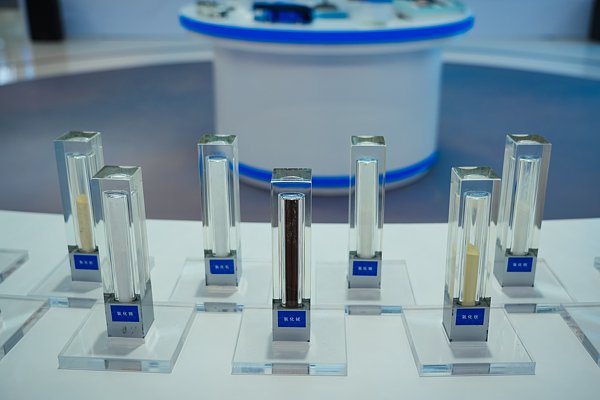
Core Points - The recent communication between the U.S. and China regarding rare earth elements signifies a strategic maneuver rather than a simple dialogue, indicating a complex backdrop of competition and negotiation [1][3][21] - China's recent restrictions on rare earth exports are more targeted and stringent, aimed specifically at the U.S., highlighting the importance of these materials in the tech industry [3][9][19] - The U.S. is under pressure to maintain access to rare earths, as its own domestic production efforts have not progressed as hoped, making it reliant on Chinese supplies [7][9][11] - The tone of the communication suggests that both parties are aware of each other's positions and are testing boundaries rather than seeking immediate resolutions [6][13][21] Summary by Sections U.S.-China Communication - The video call initiated by the U.S. reflects a desire to understand China's intentions regarding rare earth exports, indicating a shift in the dynamics of their relationship [1][3][19] - China's response was measured, emphasizing respect for core interests, suggesting a willingness to negotiate but with clear boundaries [5][11][17] Rare Earth Elements - Rare earths are critical for technology sectors, and the U.S. recognizes its vulnerability in this area, prompting a quick response to China's export restrictions [3][9][19] - The U.S. has attempted to develop domestic alternatives but has faced challenges, making it imperative to maintain a dialogue with China [7][9][11] Strategic Implications - The current situation is characterized by a balance of power where both sides are aware of their leverage, with China demonstrating a more confident stance in negotiations [11][15][21] - The communication serves as a signal that China is no longer just a supplier of raw materials but is asserting its position in the global supply chain [15][19][23]

高波动率下金银或迎来调整,耐心等待买入时机 | 投研报告
Zhong Guo Neng Yuan Wang· 2025-10-20 07:01
Group 1: Precious Metals - Precious metals continue to show strength, with COMEX gold rising by 5.76% and COMEX silver by 6.55% this week [1][2] - The main trading theme this week is recession, with the ten-year U.S. Treasury yield dropping below 4%, primarily due to renewed tariff expectations from Trump [1][2] - Short-term volatility for Shanghai gold and silver is high, with Shanghai gold volatility reaching 30% and silver exceeding 40%, suggesting a potential adjustment [1][2] - Long-term outlook remains positive for precious metals due to ongoing de-dollarization and inflows into ETFs amid short-term rate cut expectations [2] Group 2: Copper - Copper prices rebounded this week, with LME copper increasing by 2.25% due to tariff expectations leading to overselling [2] - Despite a recent price increase, downstream demand has shown some pressure, with a decline in operating rates for copper rods [2] - Supply disruptions from Freeport and Teck Resources are expected to create a tight supply-demand situation for copper by 2026, suggesting a buy on dips strategy [2] Group 3: Aluminum - Shanghai aluminum prices fell by 0.33% this week, facing pressure from tariff impacts similar to copper [3] - As the traditional peak season progresses, aluminum water ratios are expected to rise, although cost support continues to weaken [3] - Domestic aluminum processing enterprises recorded an average operating rate of 62.5%, down 1.4 percentage points year-on-year [3] Group 4: Cobalt - Cobalt prices surged this week, with significant weekly increases in various cobalt compounds, driven by supply concerns following Congo's export quota announcement [4] - The anticipated supply tightness is expected to persist, with a widening supply-demand gap projected for 2026-2027, indicating substantial price upside potential [4] Group 5: Rare Earths - Rare earth prices declined this week due to increased production of certain oxides, despite a reduction in raw material output [4] - Future supply constraints are expected due to tightened export controls, which may support rare earth prices [4] - Continued development in energy-efficient appliances, electric vehicles, and humanoid robots is expected to create upward price momentum [4] Group 6: Investment Recommendations - Companies to watch include Shengda Resources, Xingye Silver Tin, Chifeng Gold, Shenhuo Co., and Zijin Mining [5]
金价跳水,是倒车接人吗?后市怎么看?中美贸易摩擦缓和+俄乌地缘局势进展,避险情绪减弱!
Xin Lang Ji Jin· 2025-10-20 06:53
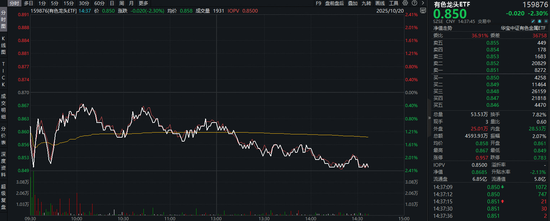
Core Viewpoint - The easing of US-China trade tensions and progress in the Russia-Ukraine situation have led to a decline in gold prices, which fell below $4,300 per ounce, impacting the A-share market and causing significant losses in gold stocks [1][3]. Group 1: Market Reactions - Gold stocks led the decline in the A-share market, with the ETF tracking leading non-ferrous metal companies dropping 2.3% [1]. - Major gold companies such as Western Gold and Chifeng Jilong Gold experienced declines exceeding 9% and 7%, respectively [1]. - Conversely, companies like Chuangjiang New Material and Yahua Group saw gains of over 6% and 1%, respectively [1]. Group 2: Economic Indicators - A video call between US and Chinese trade representatives on October 18 indicated a willingness to resume trade negotiations, contributing to the easing of market tensions [3]. - Ukrainian President Zelensky expressed readiness to participate in a meeting with US President Trump and Russian President Putin, signaling potential diplomatic progress [3]. Group 3: Gold Market Analysis - Despite the recent drop, Bank of America noted that gold assets still represent a low percentage of global investment portfolios, at 2.3% for institutions and 0.5% for private clients, indicating a lack of overcrowding in the market [3]. - The World Gold Council reported that retail gold investment accounts for less than 2% of global assets, and central bank gold reserves are below 30% of total foreign reserves, both far from historical highs [3]. Group 4: Non-Ferrous Metals Outlook - Analysts suggest focusing on the entire non-ferrous metals sector rather than solely on gold, as sectors like rare earths, lithium, and copper show promising growth potential [3][4]. - Rare earth companies are expected to report significant profit increases, with North Rare Earth projecting a net profit growth of 272.54%-287.34% for Q3 [3]. - In lithium, advancements in solid-state battery technology are anticipated to boost demand, with leading companies maintaining a self-sufficiency rate of over 50% in lithium salt production [4]. - Copper prices are expected to rise due to supply disruptions, particularly from the Grasberg mine in Indonesia, which is crucial for energy transition and new production capabilities [4]. Group 5: Investment Strategy - The non-ferrous metals sector is viewed as a key player in the current commodity bull market, driven by long-term capital expenditure cycles and increasing demand for strategic metal resources [4][6]. - The non-ferrous metal ETF (159876) offers a diversified investment approach, tracking an index with significant weightings in copper, gold, aluminum, rare earths, and lithium, thus reducing risk compared to investing in a single metal [6].
“欧企只按季度计划,中国却着眼二十年规划,今天看到的就是这种战略的成果”
Guan Cha Zhe Wang· 2025-10-20 03:59
Core Insights - China's recent export restrictions on rare earths have caught Western countries off guard, prompting European companies to reflect on their strategic planning compared to China's long-term approach [1][3][5] - China controls approximately 69% of the global rare earth mining market and about 99% of the processing market, making foreign companies increasingly dependent on Chinese supplies [1][4] - The tightening of export controls has led to significant price increases, with some products experiencing price hikes of up to 200%, raising concerns about supply stability for German industries [3][4] Group 1: Market Dynamics - Rare earths are essential for the production of high-tech products such as smartphones, wind turbines, and electric vehicles [1][4] - Despite having around 470 rare earth deposits globally, Western countries remain heavily reliant on China due to its largest reserves and production capabilities [4][5] - The German economy is particularly affected, as the tightening of Chinese export controls has made it difficult for German companies to secure rare earth imports, leading to rising prices and potential production disruptions [1][3] Group 2: Strategic Implications - European companies are recognizing the need for long-term strategic planning similar to China's, as they have historically operated on shorter quarterly planning cycles [1][3] - The opportunity to find alternative suppliers or establish independent supply chains has largely been missed, leaving European industries vulnerable [3][4] - The U.S. has also been slow to respond to its dependence on Chinese rare earths, with past awareness of risks not translating into effective policy or investment in domestic production [5][6] Group 3: International Response - In light of China's export restrictions, Western officials, including those from the G7, are considering coordinated measures to address the impact on global supply chains [5][6] - China's government has stated that its export control measures are in line with international norms and aimed at maintaining global supply chain stability [6]
中国一步不退,特朗普称难以置信,其官员称美国民众已准备好
Sou Hu Cai Jing· 2025-10-20 03:53
Group 1 - The recent escalation of the US-China trade war involves both countries revealing their strategies, with China implementing countermeasures targeting critical sectors such as rare earths, port services, and the chip industry, while the US responds with a 100% tariff increase [1] - China's counteractions are not merely emotional responses but are based on its control over key industries and resources, indicating a strategic foresight beyond passive reactions [1][9] - The US's aggressive stance on tariffs conceals internal reservations about the severity of a full-blown conflict, as indicated by US Trade Representative Tai's comments suggesting that there is "no need for a trade war" [1][5] Group 2 - The volatility in the US stock market, particularly in the tech sector, reflects concerns over extreme policies, with companies losing billions in market value, highlighting their deep reliance on the Chinese market and supply chains [3] - High tariffs are expected to increase corporate costs and inflationary pressures, affecting various sectors including agriculture and finance, which may lead to a reconsideration of extreme tariff policies in the future [5] - European countries exhibit a divided stance, with Germany showing anxiety due to its reliance on Chinese supply chains, while other European nations remain cautious, indicating the complexities of global interdependence [7] Group 3 - The trade war represents a contest of confidence and strategy rather than mere rhetoric, with China demonstrating its accumulated strength through decisive actions, while the US balances its hardline approach with underlying concerns [9] - The escalation of the trade conflict reflects the fragility of current global industrial, political, and social structures, suggesting that the outcomes may already be determined by market dynamics and strategic depth rather than direct confrontations [9]

8.5亿元投资,百亿稀土巨头大动作!稀土行业望迎新周期
Zheng Quan Shi Bao Wang· 2025-10-20 03:12
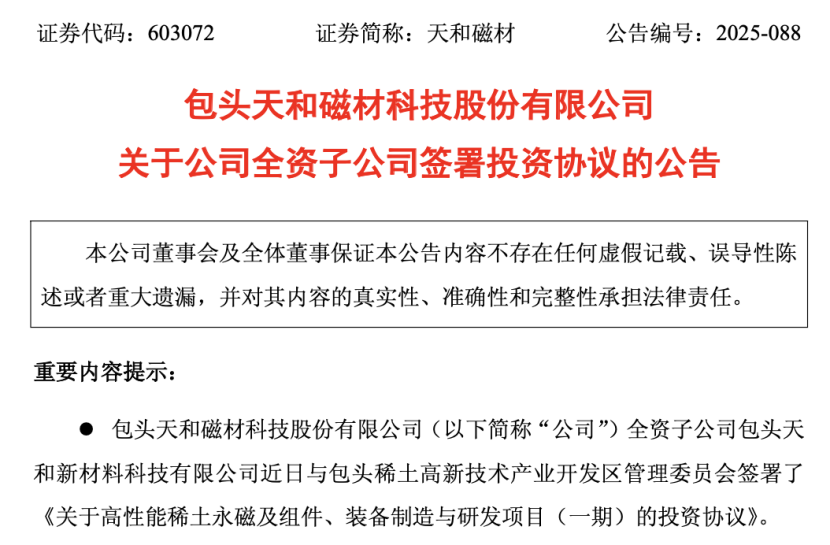
Core Viewpoint - Tianhe Magnetic Materials announced a significant investment of approximately 850 million yuan in a high-performance rare earth permanent magnet project in Baotou, aligning with national industrial policies and aimed at expanding business scale and enhancing profitability [1][2][4]. Company Summary - Tianhe Magnetic Materials' wholly-owned subsidiary, Baotou Tianhe New Materials Technology Co., Ltd., signed an investment agreement for the project, which will be developed in two phases, with the first phase requiring an investment of 210 million yuan and a construction period of 18 months [2][4]. - The project will include the construction of facilities necessary for the manufacturing of high-performance rare earth permanent magnets and components, as well as a research and development center [4]. - As of October 17, the company's stock price was 48.06 yuan, with a total market capitalization of 12.7 billion yuan [5]. Industry Summary - The rare earth sector has gained significant attention this year, with A-share rare earth stocks becoming a focal point for market investment [7]. - Analysts indicate that the rare earth industry is experiencing a favorable supply-demand dynamic, driven by both domestic policies and global green transition demands, which are expected to bolster the strategic position of the rare earth supply chain [7][8]. - Recent price adjustments in rare earth minerals reflect strong market demand, with companies like Northern Rare Earth announcing price increases for the fourth quarter of 2025, indicating a 37% rise compared to previous prices [7].

中国稀土10月17日获融资买入3.12亿元,融资余额24.14亿元
Xin Lang Cai Jing· 2025-10-20 01:25
Core Insights - The stock of China Rare Earth fell by 1.63% on October 17, with a trading volume of 3.24 billion yuan [1] - The financing buy-in amount for China Rare Earth on the same day was 312 million yuan, while the financing repayment was 345 million yuan, resulting in a net financing outflow of 32.99 million yuan [1] - As of October 17, the total financing and securities lending balance for China Rare Earth was 2.44 billion yuan [1] Financing Summary - On October 17, the financing buy-in for China Rare Earth was 312 million yuan, with a current financing balance of 2.41 billion yuan, accounting for 4.05% of the circulating market value [1] - The financing balance is above the 90th percentile level for the past year, indicating a high level of financing activity [1] - In terms of securities lending, 57,900 shares were repaid, while 19,100 shares were sold, with a selling amount of 1.0734 million yuan calculated at the closing price [1] Company Performance - As of September 19, the number of shareholders for China Rare Earth reached 230,000, an increase of 6.66% from the previous period [2] - The average number of circulating shares per person decreased by 6.25% to 4,614 shares [2] - For the first half of 2025, China Rare Earth reported operating revenue of 1.875 billion yuan, a year-on-year increase of 62.38%, and a net profit attributable to shareholders of 162 million yuan, up 166.16% year-on-year [2] Dividend and Shareholding Information - Since its A-share listing, China Rare Earth has distributed a total of 346 million yuan in dividends, with 124 million yuan distributed in the last three years [3] - As of June 30, 2025, Hong Kong Central Clearing Limited was the fourth-largest circulating shareholder, holding 19.6025 million shares, an increase of 3.8909 million shares from the previous period [3] - The Southern CSI 500 ETF ranked fifth among circulating shareholders, holding 11.0663 million shares, an increase of 1.4870 million shares [3]

特朗普宣布中美贸易战开始,美国扬言以34敌1,对我们加税500%
Sou Hu Cai Jing· 2025-10-19 23:22
Group 1 - The core viewpoint of the articles revolves around the escalating trade tensions between the United States and China, with the U.S. threatening significant tariffs and other punitive measures against Chinese goods and policies [1][3][12]. - The U.S. Treasury Secretary has indicated a willingness to impose a 500% tariff on Chinese purchases of Russian oil, highlighting the aggressive stance of the U.S. government [6][12]. - There is a concerted effort by the U.S. to form an "alliance" with 33 countries to counter China's dominance in the rare earth industry, which is seen as a strategic move to strengthen their position against China [6][14]. Group 2 - The articles emphasize that China remains unfazed by U.S. threats, asserting its readiness for negotiations while also preparing for a potential trade war [3][9][12]. - The U.S. is portrayed as potentially overestimating its leverage, with the assertion that American goods are not irreplaceable for China, as alternative supply chains have already been established [12][14]. - The narrative suggests that the U.S. lacks the necessary technology and equipment for rare earth processing, which China currently dominates, indicating a significant vulnerability in the U.S. strategy [14].
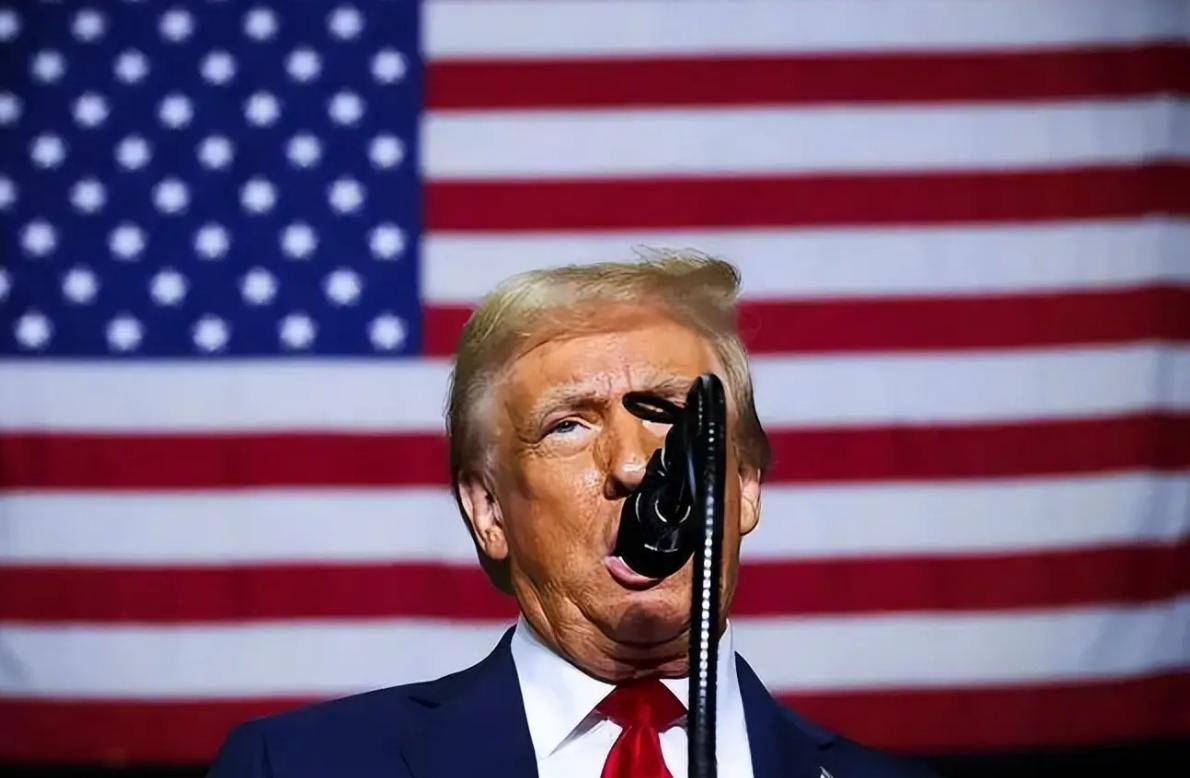
投资前瞻:纠结期预计并不长,发令枪响后有望再突破
Wind万得· 2025-10-19 22:35
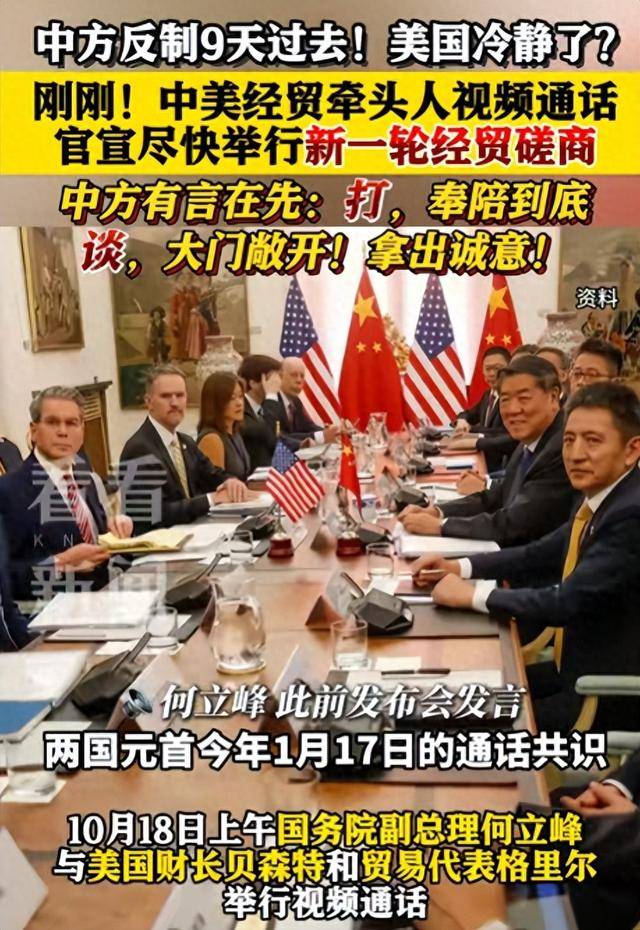
Market News - The Chinese and U.S. economic trade leaders held a video call to discuss important issues in bilateral economic relations and agreed to hold a new round of trade consultations soon [3] - The Shanghai Futures Exchange announced adjustments to margin requirements and trading limits for gold and silver futures starting October 21 [3] - The State Council approved the opening ceremony of the 2025 Financial Street Forum, scheduled for October 27, with key financial leaders attending [3] Policy Changes - The implementation of the "Guangdong Province Implementation Measures" will begin on January 1, 2026, allowing spouses to inquire about each other's property status [4] - The Ministry of Finance and other departments announced a 50% VAT refund policy for electricity products generated from offshore wind power, effective from November 1, 2025 [4] - The China Securities Regulatory Commission revised the "Corporate Governance Standards for Listed Companies," effective January 1, 2026, to enhance the regulation of directors and senior management [4] Industry Developments - The National Development and Reform Commission issued a management method to support energy-saving and carbon reduction transformations in key industries [7] - The Chinese government is expected to release a document to strengthen photovoltaic capacity control, limiting existing capacity utilization rates and prohibiting new capacity [8] - The Ministry of Commerce has intensified export controls on rare earths, which may lead to increased prices and strengthen China's strategic position in the global market [9] Major Projects - The Changbo Hydropower Station on the upper reaches of the Jinsha River successfully completed a significant milestone, marking progress in the construction of a major clean energy base [10] - The hydropower station, with a capacity of 826,000 kilowatts, is expected to produce over 4.3 billion kilowatt-hours of clean energy annually, significantly reducing coal consumption and CO2 emissions [10] Company News - JD.com announced a collaboration with GAC and CATL to launch a new car model, set to be officially released on November 11 [12] - Baidu's annual technology and product launch event, "Baidu World 2025," is scheduled for November 13, focusing on AI and global strategies [12] - The "Robotaxi unicorn" companies, Pony.ai and WeRide, have received approval for their IPOs in Hong Kong [12] Stock Unlocking - A total of 54 companies will have their locked shares unlocked this week, amounting to 3.04 billion shares with a total market value of approximately 71.709 billion yuan [14] - The peak unlocking date is October 20, with 25 companies unlocking shares worth a total of 42.09 billion yuan, accounting for 58.7% of the week's total unlocking scale [17] New Stock Calendar - One new stock, Daming Electronics, is set to be issued this week, with an expected fundraising of 468 million yuan [20] Market Outlook - Open Source Securities suggests that the market may experience a "rebalancing" phase, with potential breakthroughs driven by domestic positive signals and upcoming events like the Fourth Plenary Session [23] - Huajin Securities indicates that the A-share market may continue to show a slow bull trend despite short-term fluctuations due to ongoing U.S.-China trade tensions [24] - Shenwan Hongyuan notes a "high-cut low" style switch in the market, emphasizing that breakthroughs will ultimately depend on technology leading the way [25]

大动作!百亿稀土巨头,突发公告
Zheng Quan Shi Bao· 2025-10-19 22:33
Core Viewpoint - Tianhe Magnetic Materials announced a significant investment of approximately 850 million yuan in a high-performance rare earth permanent magnet and component manufacturing and R&D project in Baotou, aligning with national industrial policies and aimed at expanding business scale and enhancing profitability [1][2][5]. Company Summary - Tianhe Magnetic Materials' wholly-owned subsidiary, Baotou Tianhe New Materials Technology Co., Ltd., signed an investment agreement for the project, which will be developed in two phases, with the first phase requiring an investment of 210 million yuan and a construction period of 18 months [2][5]. - The project will include the construction of necessary facilities, production lines, and a research center, covering an area of approximately 67 acres [5]. - The company reported a market capitalization of 12.7 billion yuan as of October 17, with a stock price of 48.06 yuan [5]. Industry Summary - The rare earth sector has gained significant attention this year, with A-share rare earth stocks becoming a focus for market funds [8]. - Analysts indicate a resonant supply-demand dynamic in the rare earth industry, driven by domestic quota management and export controls, ensuring resources are directed towards high-end applications [8][9]. - The price of rare earth minerals has been on the rise, with Northern Rare Earth and Baotou Steel announcing price increases for the fourth quarter of 2025, reflecting strong market demand [8]. - The rare earth deep processing industry is crucial for national resource security and supports the development of high-tech industries, with rare earth permanent magnets accounting for over 40% of downstream applications [7][8].