大宗商品牛市

Search documents
需要准备接受油价在更长时期维持在更高位置
Shan Jin Qi Huo· 2026-03-16 11:07
1. Report Industry Investment Rating - Not provided in the content 2. Core Viewpoints of the Report - The conflict between the US and Iran may persist, leading to long - term high oil prices, and in extreme cases, oil prices may exceed the 2008 record of $147 [1][7][9] - Rising oil prices will drive the chemical industry into a bull market, the agricultural product bull market has emerged, while the black - series commodities may enter a long - term bull market later [1][11][18] - High oil prices have limited impact on China and may boost the export of domestic new energy products [1][12][18] 3. Summary by Relevant Catalogs 3.1 Middle East Situation Update - The US military launched a "violent air strike" on military targets on Iran's Kharg Island, but Iran's oil facilities on the island are intact and oil exports are normal [3] - Iran threatens to destroy US - related facilities if its infrastructure is attacked, and the US is considering bombing oil facilities on Kharg Island and sending more troops and warships to the Middle East [3] - There is news that Iran may allow limited oil tankers to pass through the Strait of Hormuz with oil cargo settled in RMB, which could weaken the US influence [3] 3.2 Reasons for Long - Term High - Oil - Price Threat - There is little possibility of negotiation between the US and Iran as Iran's cease - fire conditions are unacceptable to the US and Israel [7] - Iran has lost trust in the US and Israel due to previous bombings during negotiations, and it may choose to fight [8] - Blocking the Strait of Hormuz and raising oil prices are beneficial for Iran, increasing the revenue of the Revolutionary Guard [8] - If the US takes extreme actions, it will lead to higher oil prices, and the current losses have become a sunk cost, with the risk of both sides taking extreme measures [9] 3.3 Impact of High Oil Prices on Commodities - Chemical products have generally risen significantly after the increase in oil prices, and a long - term high oil price will start an upward cycle for them [11] - High oil prices increase the cost of soybean planting, and combined with possible yield declines, the price of agricultural products like soybeans may rise [11] - Black - series commodities have weak demand expectations and may be the last to enter the bull market [11] 3.4 Impact of High Oil Prices on China - China's CPI and PPI are in a low state, and the impact of high oil prices on them is relatively controllable and may help achieve price policy goals [12] - China has diverse oil import channels, and the interruption of Middle East oil supply will have limited impact [16] - High oil prices are beneficial for the export of China's electric vehicles and new - energy power - generation equipment, offsetting the negative impact of oil price increases [17][18]
大宗商品向上趋势没完!洪灏年度展望大谈周期,直言应该做些防御性的结构轮动……
聪明投资者· 2026-03-05 00:03
Core Viewpoint - The semiconductor cycle has reached its peak, indicating limited upward potential for the S&P 500. Global liquidity is at a regional high and is likely to retreat. The rebound in commodities has not yet reached its halfway point, and the upward trend remains intact. Growth stocks are currently outperforming, particularly in the Hong Kong and A-share markets, with more room for downward adjustments than upward. Investors should refocus on value stocks in the A-share market [2][4][82]. Group 1: Market Conditions - The global market is at the intersection of long and short cycles, influenced by geopolitical risks, liquidity turning points, and cyclical peaks, which will dominate asset pricing throughout the year [2]. - The U.S. semiconductor cycle has clearly peaked, which is highly correlated with the S&P 500's performance. As the semiconductor cycle approaches its peak, the major U.S. indices have stopped reaching new highs, indicating a depletion of price momentum [19][24]. - Global liquidity indicators suggest that liquidity is nearing a peak and will soon decline, which could negatively impact risk assets [3][38]. Group 2: Commodity Market Insights - The bull market for commodities is not over, with liquidity leading metal prices by about six months. Geopolitical conflicts are providing rigid support for material demand, suggesting that oil and industrial metals still have upward potential [4][62]. - Gold, as a core safe-haven asset, has risen alongside U.S. stocks, signaling potential volatility ahead [5][43]. - The current market conditions indicate that the upward trend in commodity prices has not yet reached its peak, with significant support from geopolitical tensions and material demand [66]. Group 3: Investment Strategies - In the current environment of tightening liquidity and cyclical peaks, a defensive structural rotation is recommended. Investors should focus on capturing certainty during volatility and wait for clearer signals before making aggressive investments [6][73]. - The A-share market is showing better resilience compared to the Hong Kong market, which is facing more significant challenges due to external geopolitical conflicts [75][84]. - The banking sector is expected to outperform the market, as historical patterns suggest that banks tend to recover after reaching low relative performance levels [80]. Group 4: Economic Cycles - The Chinese economic cycle is closely linked to the U.S. semiconductor cycle, with both markets experiencing significant resistance as they approach cyclical peaks [75][78]. - Historical data indicates that the Hang Seng Index's performance is highly correlated with the economic cycle, suggesting that further economic slowdown could present better buying opportunities in the future [84][85]. - The current economic cycle in China is likely to begin its decline from a high point, despite potential policy measures to extend the cycle [85][86].

牛市逻辑再现 AI资本开支重塑有色金属需求 商品配置正当时?
Qi Huo Ri Bao· 2026-02-15 00:31
Core Viewpoint - The article discusses the current macroeconomic environment and its impact on commodity markets, highlighting the potential for a new commodity bull market driven by fiscal expansion and geopolitical factors [2][3]. Group 1: Commodity Market Dynamics - The historical context of the 1970s is referenced, where fiscal expansion in the U.S. led to a significant commodity bull market, with the Reuters CRB index increasing over 200% in ten years due to rising demand and supply constraints [2]. - The anticipated fiscal expansion in the U.S. for 2026, with a projected tax cut of $396 billion, is expected to boost consumption by 1.8 percentage points, alongside new demands from AI and green transitions [3]. - The shift in commodity pricing dynamics is noted, with liquidity and risk hedging becoming more critical than traditional supply-demand pricing mechanisms [3]. Group 2: Impact of AI on Metal Demand - AI capital expenditure is reshaping the demand for non-ferrous metals, with significant increases in copper usage driven by data center construction and AI server power requirements [4]. - The expected increase in copper consumption by 400,000 tons in 2026 represents 2% of global production, while supply growth is projected at only 0.2%, indicating a supply-demand imbalance [4]. - The demand for lithium is expected to grow explosively at an annual rate of 15%-20% due to the scaling of energy storage systems, with aluminum's application in storage systems also increasing [4]. Group 3: Market Consensus and Risks - Current market consensus ranks commodities as "non-ferrous > precious metals > agricultural > energy > ferrous," but this consensus is deemed fragile due to potential macroeconomic shifts [5]. - The performance of traditional ferrous metals may be pressured, and key observation points include fiscal deficit rates and policy signals expected in March 2026 [5]. - The risk of a rollback in global decarbonization efforts could lead to a reassessment of demand premiums for green metals like copper and aluminum, with potential price adjustments exceeding expectations [6]. Group 4: Precious Metals Outlook - The trading logic for precious metals in 2026 emphasizes the stability of gold compared to silver, driven by central bank purchases and ETF demand, which enhance gold's "safe haven" status [7]. - Gold's unique financial attributes insulate it from industrial demand fluctuations, and its lower volatility makes it attractive for long-term investment [7]. - The current speculative net long positions in COMEX gold are below levels seen during previous rate cuts, suggesting potential upward price movement if monetary easing resumes [7].
招商宏观:在中性情境下,2026年PPI同比大概率于二季度中后期转正
Sou Hu Cai Jing· 2026-02-12 03:45
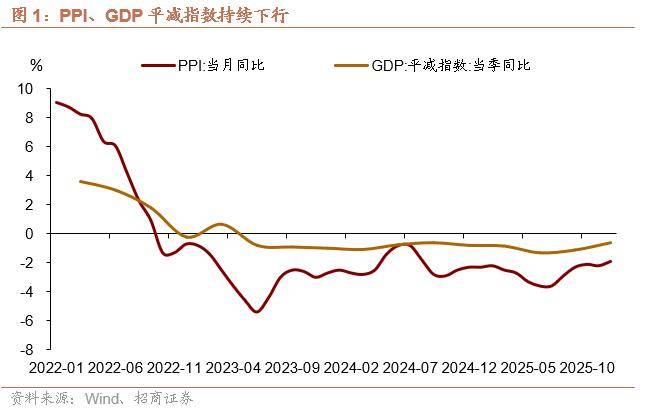
Core Viewpoint - The return of inflation is one of the macro themes in China for 2026, driven by three main factors: the marginal demand for commodities like copper due to artificial intelligence, the decline of the US dollar index since 2025 enhancing the financial properties of commodities, and resource populism increasing global investor concerns about commodity supply [1][2]. Group 1: PPI Trends and Influences - Insufficient domestic demand is the primary drag on PPI from 2022 to 2025, with real estate investment being the decisive factor contributing over 60% to the decline [3][4]. - The PPI's low performance and the divergence between nominal GDP and real GDP highlight the negative impact of price declines on economic perception, with PPI being negative for 39 consecutive months by the end of 2025 [3][4]. - The contribution of various factors to PPI changes shows that demand factors, particularly in real estate, have the most significant impact, while supply and oil price factors contribute less [4][10]. Group 2: Industry Contributions to PPI - Since 2022, key industries such as oil and coal processing, chemical manufacturing, and non-ferrous metallurgy have significantly increased their contribution to PPI, shifting the pricing power from traditional real estate to energy, resources, and high-end manufacturing [10][11]. - The eight major industries contributing to PPI include oil and coal processing, chemical manufacturing, and electrical machinery, accounting for approximately 70% of the overall PPI changes [10][11]. Group 3: Commodity Market Dynamics - The commodity market has entered a significant upward cycle since the second half of 2025, supported by a depreciating dollar and global credit expansion, which improves the financial environment for commodities [2][24]. - Industrial metals have seen substantial price increases, with copper and aluminum prices rising by 18.51% and 45.78% respectively since early 2025, driven by structural demand and supply constraints [17][26]. - Energy and chemical sectors are currently lagging in price recovery but are expected to gain momentum as geopolitical tensions and domestic economic recovery support demand [21][22]. Group 4: Future PPI Projections - The PPI is likely to turn positive in the second half of 2026, with key commodities like iron ore, crude oil, and copper expected to drive this change, showing a strong correlation with PPI movements [2][36]. - The analysis indicates that the PPI's upward movement will be influenced by the ongoing price increases in major commodities, with a potential earlier turnaround in PPI if commodity prices rise significantly [39][40].
构建招商中国金融条件指:假如PPI同比提前转正
CMS· 2026-02-11 14:34
Group 1: PPI Trends and Influences - Domestic PPI has been in a downward trend from 2022 to 2025, primarily due to insufficient domestic demand, with real estate investment contributing over 60% to the decline[6] - The core logic behind the PPI decline is not merely supply imbalance but rather weak domestic demand, particularly in the real estate sector[6] - The PPI is expected to turn positive in Q2 2026, with significant contributions from rising commodity prices, particularly iron ore, crude oil, coal, copper, silicon, and lithium carbonate[51] Group 2: Commodity Price Dynamics - Since the second half of 2025, international and domestic commodity prices have begun a significant upward trend, driven by a depreciating dollar and increased structural demand from sectors like AI and renewable energy[2] - Key industrial metals such as copper and aluminum have seen price increases of 18.51% and 45.78% respectively since early 2025, while lithium carbonate prices surged by 93%[27] - The financial environment for commodities has improved due to a weakening dollar, which historically correlates with rising commodity prices[34] Group 3: Sector Contributions to PPI - The contribution of various sectors to PPI has shifted, with energy, resources, and high-end manufacturing gaining pricing power, while traditional real estate has diminished[1] - Eight key industries, including non-ferrous metallurgy and chemical manufacturing, now account for approximately 70% of the overall PPI pricing influence[14] - In the latter half of 2025, the month-on-month PPI growth was driven significantly by non-ferrous metallurgy, contributing 15.40% to the increase[15]
资产配置系列报告:百年浮沉,商品距离“大牛市”还缺什么?
Guolian Minsheng Securities· 2026-01-30 05:08
Group 1 - The report focuses on the long-term cyclical analysis of commodities, identifying five major commodity upcycles since 1850, with an average duration of 11.8 years and an average price increase of 125% [6][12][15] - The analysis highlights that energy and metals are classic cyclical commodities, while agricultural products tend to underperform, and precious metals gained prominence only after the abandonment of the gold standard by major economies [6][12][18] - The report identifies three structural factors influencing commodity cycles: wars, technological revolutions, and emerging demand, emphasizing that not all wars positively impact commodity prices and that technological breakthroughs often coincide with commodity bull markets [6][12][42] Group 2 - The report notes that the current commodity cycle began in 2020, coinciding with a recession and a low point in commodity prices, and suggests that the ongoing technological revolution, particularly in AI, may be in its early stages [6][12][42] - It emphasizes that the current cycle lacks significant geopolitical tensions or unexpected surges in emerging demand, which are critical for sustaining commodity price increases [6][12][42] - The report also points out that the depreciation of the US dollar is a favorable factor for the current commodity cycle, while an economic recession could serve as a critical test for the cycle's strength [6][12][42] Group 3 - The report provides a detailed examination of the performance of various commodity categories during past cycles, indicating that energy and industrial metals have consistently performed well, while agricultural products have shown weaker long-term performance [18][24][31] - It discusses the historical context of agricultural products, noting that their prices have generally trended downward due to increasing agricultural efficiency, although they can perform well during significant supply shocks, such as during wartime [24][30] - The report highlights that gold and silver have not always been dominant in commodity cycles, with their significant price increases occurring primarily in the last two cycles, influenced by the decoupling of currencies from gold [31][35]
天哪!太疯狂了吧
Sou Hu Cai Jing· 2026-01-26 06:01
Group 1: Gold Price Dynamics - The international gold price has surged significantly, increasing by 17% this year, from $4,331 per ounce to nearly $5,100 per ounce, which translates to approximately $180 per gram or 1,250 RMB per gram [1] - Domestic gold prices, based on the Shanghai Futures Exchange, are currently around 1,150 RMB per gram, which is about 100 RMB cheaper than international prices, reflecting the stronger consumer nature of domestic gold [2] - The retail price of gold jewelry from major brands like Chow Tai Fook has exceeded 1,540 RMB per gram, indicating a substantial markup due to processing costs, which highlights the consumption aspect over investment [3] Group 2: Investment Opportunities - In an upward market cycle, individual stocks can exhibit greater elasticity compared to the underlying commodity, as profits can be amplified through leverage, leading to potentially significant stock price increases [4] - The current bullish trend in commodities suggests that investing in individual stocks and ETFs may yield substantial returns, as earnings growth can be magnified by low price-to-earnings ratios [4]
鏖战2026!公募再现“抱团取暖”,这次的主角换成了有色
Xin Lang Cai Jing· 2026-01-23 09:33
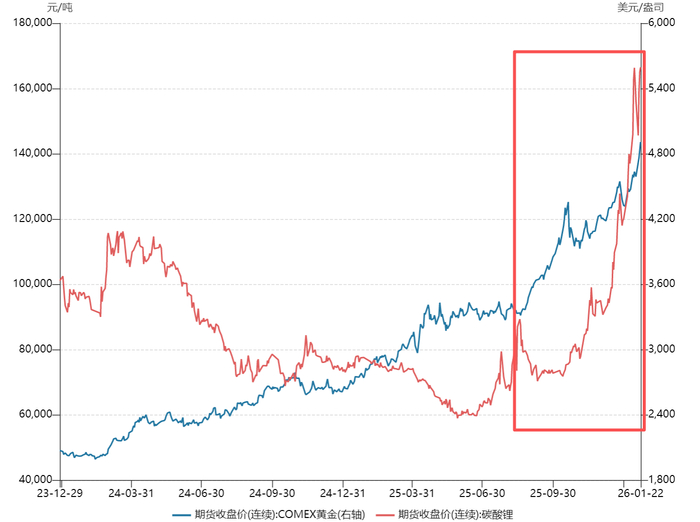
Core Viewpoint - The investment sentiment in the public fund sector has shifted from a strong focus on "drinking and medicine" (high-end liquor and pharmaceuticals) to a new emphasis on non-ferrous metals, particularly in light of rising commodity prices and inflation narratives [1][4]. Group 1: Market Trends - As of January 21, 2026, spot gold reached $4,800 per ounce, nearing $4,900, while spot silver surpassed $90 [1]. - Lithium carbonate futures have seen significant price increases, with the main contract breaking through 170,000 yuan per ton, currently priced at 166,700 yuan [1]. - The prices of aluminum and copper have also hit multi-year highs, although there has been a slight recent pullback [1]. Group 2: Fund Flows and Performance - In the past month, there has been a notable influx of capital into non-ferrous metal ETFs, with the Southern Non-Ferrous Metal ETF seeing a net inflow of 10.861 billion yuan, the highest among all stock ETFs [4]. - The top ten indices by net inflow include four related to non-ferrous metals, indicating strong market interest [4][6]. - The overall performance of non-ferrous ETFs has been impressive, with some products showing annual gains exceeding 100% [3]. Group 3: Institutional Investment Behavior - Prominent fund managers have increasingly allocated resources to non-ferrous stocks, with several well-known funds adding major mining companies to their top holdings [7]. - The trend of institutional investors "huddling together" around non-ferrous assets suggests a consensus on the sector's potential [4][7]. - The fourth quarter of 2025 saw a significant increase in resource stock allocations across various funds, indicating a strategic shift towards these assets [6][7]. Group 4: Investment Strategies for Retail Investors - Ordinary investors are advised to consider ETFs as a more accessible way to participate in the non-ferrous market, given the volatility and complexity of direct investments [8]. - Three leading ETFs in the non-ferrous sector include the Southern Non-Ferrous Metal ETF, the Dachen Non-Ferrous Metal Futures ETF, and the Wanji Industrial Non-Ferrous Metal Theme ETF, each offering different exposure to the market [9][10]. - The structural bull market for commodities is expected to continue, driven by increased capital expenditure and demand from energy transitions and AI expansion [10].
商品日报(1月22日):商品普涨化工板块多头发力 合成橡胶乙二醇苯乙烯携手领涨
Xin Hua Cai Jing· 2026-01-22 09:00
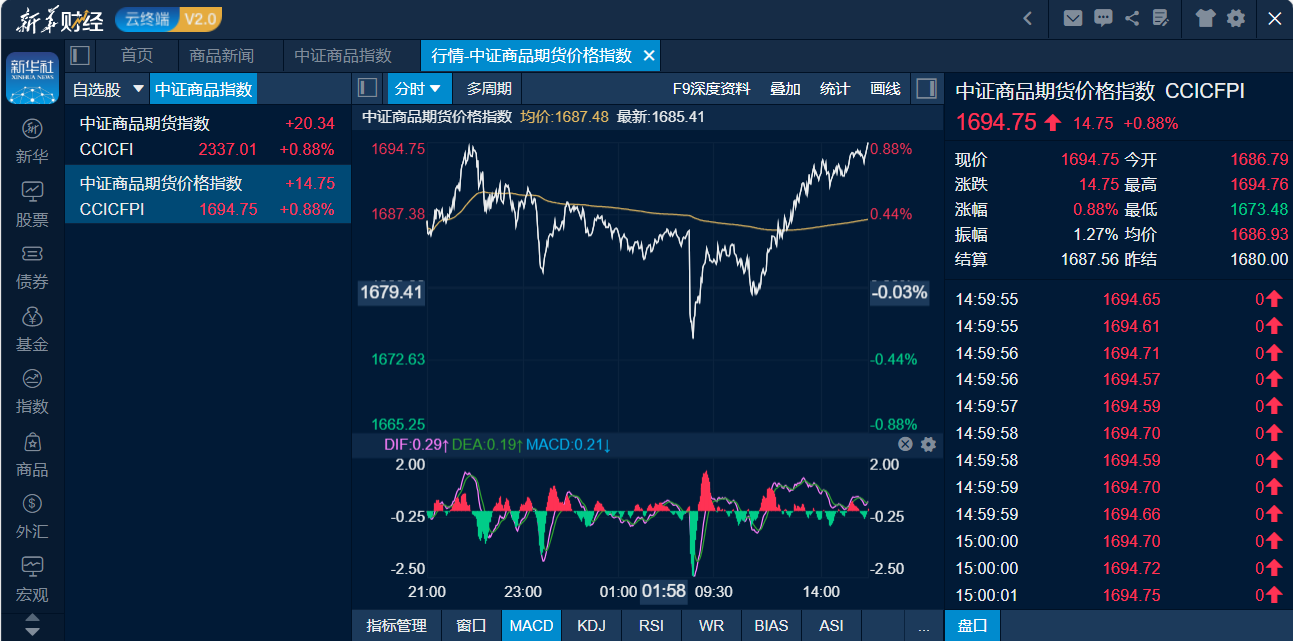
Group 1: Commodity Market Overview - The domestic commodity futures market experienced a broad increase on January 22, with the chemical sector leading the gains, particularly in products like butadiene rubber, ethylene glycol, and styrene, which saw daily increases of over 3% to 4% [1][2] - The China Securities Commodity Futures Price Index closed at 1694.75 points, up 14.75 points or 0.88% from the previous trading day, while the China Securities Commodity Futures Index closed at 2337.01 points, also up 20.34 points or 0.88% [1] Group 2: Chemical Products Performance - Chemical products saw a significant rally, with synthetic rubber, ethylene glycol, and styrene all rising over 4%. This surge is attributed to a strong consensus on the return of a bull market in commodities, with investors shifting focus to the chemical sector after previous gains in precious and industrial metals [2] - Factors supporting this rally include rising oil prices due to geopolitical tensions in major oil-producing countries and increased natural gas prices in Europe and the U.S. due to severe weather, which have positively impacted the cost side for chemical products [2] - Supply-demand mismatches have also contributed to the strength in the chemical sector, with tight supply conditions for butadiene and unexpected shutdowns in styrene production leading to increased speculative activity in the market [2] Group 3: Lithium Carbonate and Other Commodities - Lithium carbonate saw a significant increase, rising nearly 6% to reach a new high, driven by supply uncertainties and strong downstream demand from battery manufacturers. The upcoming Chinese New Year has also led to stockpiling activities [3] - Other commodities, including polysilicon, alumina, tin, eggs, palm oil, and crude oil, also experienced gains of over 1% [3] Group 4: Precious Metals Adjustment - The precious metals sector underwent a high-level adjustment, with gold and silver rebounding to maintain their gains, while palladium and platinum led the declines with drops of 1.90% and 0.92%, respectively [4] - The recent geopolitical tensions and changes in trade policies have impacted the demand for precious metals, leading to a retreat in prices, particularly for palladium and platinum, which have shown weaker monetary attributes [4] Group 5: Sugar Market Dynamics - The sugar market saw a slight recovery after five consecutive days of decline, influenced by overall market improvements. However, expectations of increased global sugar production for the 2025/26 season and the nearing end of the domestic peak season have created a supply surplus against weak demand [5] - Current domestic sugar prices are considered undervalued and close to cost support levels, which may drive prices into a bottoming phase [5]
商品牛市的密码?——基于历史与当下的观察
对冲研投· 2026-01-09 11:01
Core Viewpoint - The article discusses the lack of a strict sequential pattern in the rotation of commodity markets during bull cycles, emphasizing that the performance of different sectors is influenced by macroeconomic conditions and the fundamentals of the commodities themselves [2][18]. Group 1: Historical Analysis of Commodity Bull Markets - Historical reviews show that previous commodity bull markets do not follow a strict "gold first, silver follows, copper confirms, oil leads, and agriculture ends" rotation sequence [18]. - The analysis of four major commodity bull markets since 2000 indicates that agricultural products tend to perform strongly in the later stages of bull markets, exhibiting a lagging upward trend [18]. - Each commodity sector's performance order and intensity are fundamentally driven by unique macroeconomic environments (such as monetary policy and economic cycle phases) and their own fundamentals (supply, demand, inventory) [18]. Group 2: Current Market Sentiment and Trends - The current commodity market sentiment indicators are approaching an overheating warning line, suggesting an increased risk of short-term market corrections [20]. - Since June 2025, there has been a continuous inflow of funds into the commodity market, with a notable shift from precious metals and non-ferrous metals to other sectors [21][23]. - The current market structure shows a strength in non-ferrous and precious metals, while the black and chemical sectors are relatively weak, indicating a need for effective rotation to sustain upward momentum [24].