
环保

Search documents
大能源行业2024年报及2025一季报回顾 | 投研报告
Zhong Guo Neng Yuan Wang· 2025-05-07 01:21
Group 1: Power Generation Sector - The profitability of thermal power operators is improving in 2024 mainly due to the decline in coal prices, but there is regional differentiation, with Guangdong's thermal power operators experiencing worsening profitability due to a relaxed power supply-demand situation and further declines in market electricity prices [1][4] - Northern thermal power units show greater profitability improvement, with representative companies like Datang Power, Jingtou Energy, and Jingneng Power benefiting from a low base in 2023 [1][4] - In terms of profit per kilowatt-hour, Datang Power's coal-fired profit is 1.3 cents/kWh, while Huaneng International, Huadian International, and Guodian Power report profits of 1.9, 2.6, and 3.7 cents/kWh respectively [1][4] Group 2: Hydropower - Hydropower performance is stable, with a reaffirmation of its investment value; improved rainfall in 2024 is expected to contribute to increased electricity generation in early 2025 [2] - The pricing advantage of local hydropower remains compared to other local power sources, and the value of hydropower as a regulatory power source has yet to be fully priced [2] Group 3: Wind Power - Wind power operators are facing short-term performance declines due to poor wind conditions, while solar power operators are affected by declining electricity prices and increased curtailment rates [3] - Despite short-term challenges, the long-term value of wind power operators is emphasized, with a recommendation to focus on those with better investment potential [3] Group 4: Coal Industry - The coal industry is under pressure due to declining prices, with Q1 2025 coal prices continuing to fall; the average price of Qinhuangdao port thermal coal is reported at 721 RMB/ton, down 12.3% month-on-month and 20.0% year-on-year [11][12] - The overall performance of the coal sector is declining, with 28 listed coal companies reporting a total revenue of 273.9 billion RMB, down 17.0% year-on-year, and a net profit of 30.18 billion RMB, down 30.5% year-on-year [11][12] - The upcoming summer peak demand may help reduce inventory levels, potentially stabilizing coal prices [12]
今日56.72亿元主力资金潜入计算机业
Zheng Quan Shi Bao Wang· 2025-05-06 13:44
| 行业名 | 成交量(亿 | 成交量较昨日增减 | 换手率 | 涨跌幅 | 今日主力资金净流入(亿 | | --- | --- | --- | --- | --- | --- | | 称 | 股) | (%) | (%) | (%) | 元) | | 计算机 | 80.08 | 16.11 | 4.54 | 3.65 | 56.72 | | 电子 | 73.37 | 23.97 | 2.68 | 2.64 | 46.98 | | 非银金 融 | 42.19 | 31.55 | 1.02 | 1.38 | 24.29 | | 机械设 备 | 90.99 | 18.74 | 3.40 | 3.04 | 22.76 | | 有色金 属 | 43.08 | 42.69 | 1.97 | 2.57 | 20.75 | | 通信 | 31.97 | 41.66 | 1.85 | 3.59 | 20.12 | | 电力设 备 | 54.55 | 8.54 | 2.26 | 2.16 | 15.08 | | 汽车 | 53.94 | 4.84 | 2.51 | 2.20 | 13.02 | | 传媒 | 41.10 | 1 ...
九州一轨收盘上涨2.57%,滚动市盈率126.99倍,总市值15.00亿元
Jin Rong Jie· 2025-05-06 13:15
5月6日,九州一轨今日收盘9.98元,上涨2.57%,滚动市盈率PE(当前股价与前四季度每股收益总和的 比值)达到126.99倍,总市值15.00亿元。 从行业市盈率排名来看,公司所处的环保行业行业市盈率平均48.39倍,行业中值29.42倍,九州一轨排 名第108位。 股东方面,截至2025年3月31日,九州一轨股东户数6222户,较上次增加450户,户均持股市值35.28万 元,户均持股数量2.76万股。 北京九州一轨环境科技股份有限公司的主营业务是轨道交通减振降噪技术研发、产品制造、工程设计、 市场推广、测试咨询以及轨道运维管理工程技术服务。公司的主要产品是钢弹簧浮置道床减振系统、预 制式钢弹簧浮置板、其他、大荷载阻尼弹簧隔振器建筑用聚氨酯减振垫、声屏障、一系弹簧组、轨道声 纹在线监测系统、车载轨道声纹检测仪、轻量化轨道智能巡检小车、智能数据一体机。 最新一期业绩显示,2025年一季报,公司实现营业收入2605.84万元,同比-44.47%;净利润-6024851.04 元,同比9.86%,销售毛利率15.59%。 序号股票简称PE(TTM)PE(静)市净率总市值(元)108九州一轨126.99134. ...

大能源行业2024年报及2025一季报回顾
Hua Yuan Zheng Quan· 2025-05-06 12:58
Investment Rating - The report maintains a "Positive" investment rating for the large energy sector [5] Core Viewpoints - The report emphasizes the stable performance of hydropower, the negative impact of wind conditions on short-term performance, and the differentiation in thermal power profitability [6][31][37] Hydropower Summary - Hydropower performance is expected to be stable with improved rainfall in 2024, contributing to an increase in electricity generation in Q1 2025. The national rainfall is projected to be 9% above normal, with hydropower utilization hours increasing by 6.9% year-on-year [20][21] - Major hydropower companies are expected to see performance align with expectations, with notable growth in Q1 2025 for companies like Changjiang Power and Huaneng Hydropower [25][26] - The report highlights the importance of local hydropower pricing advantages and the stability of the business model and policy environment as key factors for investment [28][29] Renewable Energy Summary - Wind power operators are facing short-term performance declines due to poor wind conditions, while solar power operators are impacted by falling electricity prices and increased curtailment rates [31][36] - The report suggests focusing on long-term value in wind power operators despite current challenges, as the market is expected to favor those with sustainable development returns [36][37] Thermal Power Summary - The thermal power sector is experiencing improved profitability due to declining coal prices, although there is significant regional differentiation in performance [37] - The report notes that while northern thermal power operators are seeing better performance, regions like Guangdong are facing challenges due to market price declines [8][37] Investment Recommendations - The report provides three stock selection strategies: focusing on state-owned enterprises undergoing asset integration, selecting resilient hydropower assets, and identifying undervalued wind power operators [9][11] - Key recommended stocks include: - Hydropower: Guotou Power, Changjiang Power, Chuan Investment Energy - Wind Power: Longyuan Power, Xintian Green Energy, Datang Renewable - Thermal Power: Wan Energy, Shanghai Electric, Huaneng International [9]



A股市场2025年一季报业绩综述:全A净利边际改善,价格和政策有支撑的领域占优
BOHAI SECURITIES· 2025-05-06 10:55
| 略 | | 投资策略 | | --- | --- | --- | | | [Table_MainInfo] 全 A | 净利边际改善,价格和政策有支撑的领域占优 | | 研 | | ——A 股市场 2025 年一季报业绩综述 | | 究 | 分析师: 宋亦威 | SAC NO: S1150514080001 2025 年 05 月 06 日 | | | [Table_Analysis] 证券分析师 | [Table_Summary] | | | 宋亦威 | 投资要点: | | | 022-23861608 | 2025Q1 全 A 单季营收同比增速较 2024Q4 出现回落,而单季归母净利 | | | songyw@bhzq.com | 同比增速由负转正显著改善。具体而言,2025Q1 全 单季营收和净利 A | | | [Table_Author] 严佩佩 | | | | | 同比增速分别为-0.2%/3.7%,前者较 2024Q4 回落 1.7 个百分点,后者 | | | 022-23839070 SAC No:S1150520110001 | 较 2024Q4 回升 17.5 个百分点。 | | ...
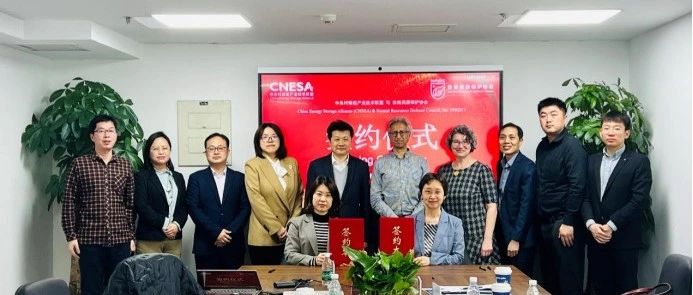
中关村储能产业技术联盟与自然资源保护协会签署合作谅解备忘录
中关村储能产业技术联盟· 2025-05-06 10:21
近日,中关村储能产业技术联盟(CNESA)与自然资源保护协会(NRDC)在北京签署合作谅解 备忘录(MOU)。 中关村储能产业技术联盟理事长陈海生、自然资源保护协会总裁兼首席执行 官马尼什·巴普纳(Manish Bapna)出席签约仪式。 中关村储能产业技术联盟秘书长刘为、自然 资源保护协会北京代表处首席代表张洁清代表双方进行签约。 签约仪式前,陈海生理事长向自然资源保护协会代表团介绍了压缩空气储能模型的工作机理和技 术进展。 相关阅读 重磅!国家发展改革委、国家能源局正式发布电力辅助服务市场基本规则 两部门发文:明确各地电力现货市场运行时间表 国家发展改革委、国家能源局发布加快推进虚拟电厂发展的指导意见 联盟官微 关注政策、项目、企业、市场活动 联盟官方小秘书 入会、入群、产业交流、活动对接 马尼什·巴普纳(Manish Bapna)表示,作为深耕环保领域的国际机构, 自然资源保护协会长期 助力中国低碳转型。 储能技术是实现全球能源转型、 实现《巴黎协定》气候目标的 关键。自然 资源保护协会与中关村储能产业技术联盟已经建立了坚实的合作基础,希望此次备忘录的签署能 进一步深化双方在储能技术创新、政策协同等方面 ...

飞马国际收盘上涨1.61%,滚动市盈率313.71倍,总市值67.33亿元
Sou Hu Cai Jing· 2025-05-06 09:04
Core Viewpoint - The company Feima International has a high rolling P/E ratio of 313.71, significantly above the industry average of 48.39, indicating potential overvaluation in the market [1][2]. Company Overview - Feima International specializes in supply chain management services and environmental new energy, with key products including comprehensive logistics services, trade execution services, and PPP project construction services [1]. - The company has established strong competitive advantages in business platform and operations, enterprise qualifications, management team, and brand reputation over years of exploration and accumulation [1]. Financial Performance - For Q1 2025, Feima International reported revenue of 54.66 million, a year-on-year decrease of 12.13%, and a net loss of approximately 768,248, indicating a significant decline of 112.24% compared to the previous year [1]. - The gross profit margin for the company stands at 29.66% [1]. Market Position - As of Q1 2025, Feima International ranks 116th in terms of P/E ratio within the environmental industry, which has an average P/E of 48.39 and a median of 29.42 [1][2]. - The total market capitalization of Feima International is approximately 6.733 billion [1][2]. Shareholding Structure - Eight institutions hold shares in Feima International, with a total of 1,006.18 million shares valued at 2.405 billion [1].

信用利差周报:长短端利差的分化-20250506
Changjiang Securities· 2025-05-06 08:45
Report Title - "The Divergence of Long - Short Term Spreads - Credit Spread Weekly Report (5/4)" [1][6] Report Industry Investment Rating - Not provided in the given content Core Viewpoints - From April 27th to April 30th, most bond yields declined. For 0.5 - 1Y industrial bonds, commercial bank second - tier capital bonds, securities company subordinated bonds, and securities company perpetual bonds, most yields dropped by over 2bp; for 0.5 - 1Y urban investment bonds and commercial financial bonds, most yields decreased by over 1bp; for 2Y industrial bonds and commercial financial bonds, most yields declined by over 1bp; the 2Y securities company subordinated bond yield rose by over 2bp; and the 3 - 5Y commercial financial bond yield dropped by over 2bp. Regarding credit spreads, the 0.5Y industrial bonds and commercial bank second - tier capital bond credit spreads mostly narrowed by over 5bp; the 1Y commercial bank second - tier capital bond credit spread narrowed by over 3bp; the 2Y securities company subordinated bonds and securities company perpetual bond credit spreads widened by over 3bp; and the 5Y urban investment bonds and industrial bond credit spreads mostly widened by over 2bp [2][6] Summary by Relevant Catalogs Yield and Spread Overview Yield and Spread of Each Maturity - Treasury bond yields at 0.5Y, 1Y, 2Y, 3Y, and 5Y were 1.47%, 1.46%, 1.45%, 1.48%, and 1.52% respectively, with weekly changes of - 3.5bp, 0.9bp, - 2.2bp, - 2.5bp, and - 2.2bp. Their historical quantiles were 11.9%, 13.2%, 8.7%, 6.2%, and 3.9% respectively. Similar data for other bond types such as national development bonds, local government bonds, etc., are also presented in detail [14] Credit Spread and Its Changes for Each Maturity - The 0.5Y, 1Y, 2Y, 3Y, and 5Y credit spreads of local government bonds were -, 12.01bp, 13.93bp, 14.34bp, and 14.37bp respectively, with weekly changes of -, 0.1bp, 0.2bp, - 1.5bp, and - 2.8bp. Their historical quantiles were -, 44.9%, 43.7%, 45.1%, and 38.6% respectively. Similar data for other bond types are also provided [16] Credit Bond Yields and Spreads by Category (Hermite Algorithm) Urban Investment Bonds by Region - In terms of yields, from April 27th to April 30th, most provincial urban investment bond yields declined. For example, the 5Y Guizhou urban investment bond yield dropped by about 35bp. In terms of credit spreads, the 0.5 - 1Y urban investment bond credit spreads mostly narrowed; the 2Y urban investment bond credit spreads mostly widened; the 3 - 5Y urban investment bond credit spreads showed differentiation, with the 3 - 5Y Guizhou urban investment bond credit spreads narrowing significantly [7] Industrial Bonds by Industry - From April 27th to April 30th, industrial bond yields generally declined. The 0.5 - 1Y industrial bond credit spreads generally narrowed, the 2 - 3Y industrial bond credit spreads showed differentiation, and the 5Y industrial bond credit spreads generally widened [7] Financial Bonds by Subject - From April 27th to April 30th, financial bond yields generally declined, with the 5Y city commercial bank second - tier capital bond yield dropping by about 55bp. The 0.5 - 1Y financial bond credit spreads generally narrowed, and the 2 - 5Y financial bond credit spreads showed differentiation [7] Credit Bond Yields and Spreads by Category (Balance Average Algorithm) Urban Investment Bonds by Region - Based on the balance average algorithm, from April 27th to April 30th, the 5Y Yunnan urban investment bond could target a return of over 3.2%, and the 5Y Qinghai urban investment bond could target a return of 3.0% or more. The 5Y Yunnan urban investment bond credit spread was significantly higher than that of medium - and short - term bonds, with high riding returns [8] Real Estate Private Enterprise Bonds - From April 27th to April 30th, the yields of real estate private enterprise bonds at all maturities were higher than those of other bond types, and the 0.5 - 1Y real estate private enterprise bond yields dropped by over 17bp [8] Financial Bonds - From April 27th to April 30th, the financial bond credit spreads generally narrowed, and the 3 - 5Y private securities company subordinated bonds could target a return of 4.7% or more [8]
从微观出发的五维行业轮动月度跟踪-20250506
Soochow Securities· 2025-05-06 08:04
- **Quantitative Model and Construction Method** - **Model Name**: Five-dimensional industry rotation model - **Model Construction Idea**: The model is based on the Dongwu quantitative stock selection multi-factor system, focusing on micro-level stock factors. It utilizes style indicators to classify stocks within industries and constructs discrete and traction indicators within industries to synthesize final industry factors [6][11] - **Model Construction Process**: 1. Micro factors are categorized into five major types: volatility, fundamentals, trading volume, sentiment, and momentum, based on Dongwu's multi-factor classification standards [6] 2. Style indicators are used to classify stocks within industries, referencing the style preferences of large-category stock selection factors [6] 3. Discrete indicators and traction indicators are constructed within industries, which are then synthesized into five types of industry factors [6] 4. The final model integrates these five dimensions to form the five-dimensional industry rotation model [6] - **Model Evaluation**: The model effectively captures industry rotation opportunities and demonstrates strong performance in terms of annualized returns and information ratio [6][11] - **Model Backtesting Results** - **Five-dimensional industry rotation model**: - Annualized return: 21.86% - Annualized volatility: 10.86% - Information ratio (IR): 2.01 - Monthly win rate: 72.88% - Maximum drawdown: 13.30% [11][14] - **Quantitative Factors and Construction Method** - **Factor Name**: Volatility factor - **Construction Idea**: Captures the risk and return characteristics of stocks within industries based on their volatility [6] - **Construction Process**: Derived from the dispersion of stock returns within industries, adjusted for market conditions [6] - **Evaluation**: Recent performance of the volatility factor has been outstanding [8] - **Factor Name**: Fundamental factor - **Construction Idea**: Reflects the intrinsic value and financial health of stocks within industries [6] - **Construction Process**: Based on financial metrics such as earnings, book value, and cash flow, normalized within industries [6] - **Evaluation**: Moderate performance compared to other factors [14] - **Factor Name**: Trading volume factor - **Construction Idea**: Measures liquidity and trading activity within industries [6] - **Construction Process**: Calculated using average trading volume and turnover rate, adjusted for industry-specific characteristics [6] - **Evaluation**: Stable but less impactful compared to volatility and momentum factors [14] - **Factor Name**: Sentiment factor - **Construction Idea**: Captures market sentiment and investor behavior within industries [6] - **Construction Process**: Derived from sentiment indicators such as news sentiment and market trends, aggregated within industries [6] - **Evaluation**: Performance fluctuates significantly, indicating sensitivity to market conditions [14] - **Factor Name**: Momentum factor - **Construction Idea**: Tracks the price trends and momentum of stocks within industries [6] - **Construction Process**: Calculated using relative strength and price momentum metrics, normalized within industries [6] - **Evaluation**: Strong performance, second only to the volatility factor [14] - **Factor Backtesting Results** - **Volatility factor**: - Annualized return: 11.59% - Annualized volatility: 10.23% - Information ratio (IR): 1.13 - Monthly win rate: 59.35% - Maximum drawdown: 14.27% [14] - **Fundamental factor**: - Annualized return: 6.18% - Annualized volatility: 9.95% - Information ratio (IR): 0.62 - Monthly win rate: 56.10% - Maximum drawdown: 21.50% [14] - **Trading volume factor**: - Annualized return: 7.90% - Annualized volatility: 12.22% - Information ratio (IR): 0.65 - Monthly win rate: 58.54% - Maximum drawdown: 18.51% [14] - **Sentiment factor**: - Annualized return: 7.56% - Annualized volatility: 12.93% - Information ratio (IR): 0.58 - Monthly win rate: 64.23% - Maximum drawdown: 14.16% [14] - **Momentum factor**: - Annualized return: 11.75% - Annualized volatility: 10.79% - Information ratio (IR): 1.09 - Monthly win rate: 61.48% - Maximum drawdown: 13.52% [14] - **Index Enhancement Strategy** - **Strategy Name**: Five-dimensional industry rotation model for CSI 300 index enhancement - **Construction Idea**: Enhances the CSI 300 index by leveraging the five-dimensional industry rotation model to optimize industry weights [21] - **Construction Process**: 1. At the end of each month, select the top five industries from the first group as enhancement industries and the bottom five industries from the last group as exclusion industries [21] 2. Reallocate the weights of excluded industries proportionally to the stocks in the enhancement industries within the CSI 300 index [21] 3. Adjust the portfolio monthly based on updated industry rankings [21] - **Evaluation**: The strategy demonstrates significant improvement in excess returns and information ratio compared to the original CSI 300 index [22] - **Index Enhancement Backtesting Results** - **Enhanced strategy**: - Annualized return: 7.28% - Annualized volatility: 20.05% - Information ratio (IR): 0.36 - Monthly win rate: 54.62% - Maximum drawdown: 26.66% [22] - **CSI 300 index**: - Annualized return: -1.70% - Annualized volatility: 19.69% - Information ratio (IR): -0.09 - Monthly win rate: 52.10% - Maximum drawdown: 39.92% [22] - **Excess performance**: - Annualized return: 8.88% - Annualized volatility: 7.55% - Information ratio (IR): 1.18 - Monthly win rate: 69.75% - Maximum drawdown: 12.74% [22]
环保行业2024、1Q25业绩综述:固废分红趋势明显,水务盈利能力改善,环保设备复苏态势初现
Huafu Securities· 2025-05-06 05:50
Investment Rating - The industry investment rating is maintained at "Outperform" [1] Core Views - The solid waste treatment sector shows a clear trend in dividends, with improving cash flow and profitability. The combination of "incineration + IDC" is expected to open a second growth curve. Water and wastewater treatment are seeing initial cost reduction and efficiency improvements, with attention on water price increases across various regions. The environmental equipment sector is showing signs of recovery in Q1 2025 [1][4][6] Summary by Sections Environmental Equipment - In Q1 2025, among 28 companies in the environmental equipment sector, 10 achieved year-on-year growth in net profit attributable to shareholders, while 3 turned losses into profits. In 2024, 8 companies saw a year-on-year increase in net profit, with 1 company turning profitable. The sales of sanitation vehicles reached 15,483 units, marking a 3.5% year-on-year increase, indicating a recovery trend [3][6] Solid Waste Treatment - The solid waste treatment sector reported a revenue of 1,493.72 billion yuan in 2024, a year-on-year increase of 36.09%. The net profit attributable to shareholders was 131.08 billion yuan, up 31.73%. In Q1 2025, the sector achieved a revenue of 353.81 billion yuan, a 30.99% year-on-year increase, with a net profit of 39.41 billion yuan, reflecting a 19.41% year-on-year growth [32][39][41] Water and Wastewater Treatment - In 2024, among 52 companies in the water and wastewater treatment sector, 17 achieved year-on-year growth in net profit, while 2 turned losses into profits. In Q1 2025, 23 companies reported year-on-year growth in net profit, with 4 turning profitable. The sector is experiencing initial improvements in cost reduction and efficiency [4][63]