黄酒

Search documents
古越龙山“一哥”地位险被超,会稽山增收难增利
Xin Jing Bao· 2025-09-16 09:11
Group 1: Industry Overview - The competition in the yellow wine market is intensifying, with leading companies like Guyue Longshan and Kuaijishan narrowing the revenue gap [1][2] - Yellow wine accounts for less than 2% of the total alcoholic beverage market, indicating significant future growth potential [1] - The industry is currently in a market cultivation phase, with major players seeking to break through through nationalization, youth-oriented strategies, and premiumization [1][7] Group 2: Company Performance - Guyue Longshan reported a revenue of 8.93 billion yuan in the first half of the year, a slight increase of 0.40%, but its net profit decreased by 4.72% to 903.07 million yuan [2][3] - Kuaijishan achieved a revenue of 8.17 billion yuan, marking an 11.03% year-on-year growth, while its net profit increased by 3.41% to 938.77 million yuan [2][5] - Jinfeng Winery experienced a revenue decline of 9.04% to 2.16 billion yuan and reported a loss of 7.14 million yuan, although the loss has narrowed compared to previous periods [3][4] Group 3: Financial Analysis - Kuaijishan's sales expenses surged by 53.69% to 2.15 billion yuan, significantly outpacing its revenue growth, which raises concerns about profit margins [5][6] - Jinfeng Winery's cash flow from operating activities was negative 43.92 million yuan, indicating ongoing financial challenges [4] - The financial performance of Kuaijishan's online subsidiaries showed losses, highlighting the risks associated with aggressive marketing strategies [6] Group 4: Market Strategies - Both Guyue Longshan and Kuaijishan are focusing on product innovation aimed at younger consumers, with new product lines introduced to attract this demographic [7][9] - The companies are also pursuing national expansion, but face challenges in penetrating markets outside their traditional strongholds in Jiangsu, Zhejiang, and Shanghai [8][9] - The current pricing strategy positions yellow wine as a more affordable option compared to other alcoholic beverages, suggesting room for product upgrades [9]


黄酒半年报丨古越龙山“一哥”地位险被超,会稽山增收难增利
Bei Ke Cai Jing· 2025-09-16 09:09
Group 1: Industry Overview - The competition in the yellow wine market is intensifying, with the revenue gap between the leading company, Guyue Longshan, and the second-ranked company, Kuaijishan, narrowing year by year [1][2] - The yellow wine industry has a small market size, accounting for less than 2% of the total alcoholic beverage market, indicating significant future market potential [1] Group 2: Company Performance - Guyue Longshan reported a revenue of 893 million yuan in the first half of the year, a year-on-year increase of 0.40%, while its net profit decreased by 4.72% to 90.31 million yuan [2][3] - Kuaijishan achieved a revenue of 817 million yuan, a year-on-year growth of 11.03%, and a net profit of 93.88 million yuan, up 3.41% [2][3] - Jinfeng Wine experienced a revenue decline of 9.04% to 216 million yuan and reported a loss of 7.14 million yuan, although the loss has narrowed compared to previous periods [3][4] Group 3: Financial Dynamics - Kuaijishan's sales expenses reached 215 million yuan, a significant increase of 53.69%, which has impacted its profit margins despite revenue growth [6][7] - The company has been investing in advertising and promotions, including collaborations with celebrities, which has led to increased sales but also higher costs [6][7] Group 4: Market Strategies - Both Guyue Longshan and Kuaijishan are focusing on product innovation aimed at younger consumers, with new product lines being introduced to capture this demographic [8][10] - The companies are also pursuing national expansion strategies, although they face challenges in penetrating markets outside their traditional strongholds in Jiangsu, Zhejiang, and Shanghai [9][10] Group 5: Consumer Trends - The yellow wine industry is experiencing a shift towards high-end and younger consumer segments, but the transition is proving challenging and requires time for market acceptance [11] - The current main price range for yellow wine is around 20 yuan, which is significantly lower than that of white wine, suggesting room for product upgrades [11]
会稽山(601579):2025年中报业绩点评:二季度保持双位数增长,盈利同比改善
Changjiang Securities· 2025-09-14 04:45
Investment Rating - The investment rating for the company is "Buy" and is maintained [8] Core Views - The company reported a total revenue of 817 million yuan for H1 2025, representing a year-on-year increase of 11.03%. The net profit attributable to shareholders was 93.88 million yuan, up 3.41% year-on-year, while the net profit excluding non-recurring items was 89.33 million yuan, an increase of 14.6% year-on-year [2][6] - In Q2 2025, the company achieved a total revenue of 336 million yuan, reflecting a year-on-year growth of 12.4%. The net profit attributable to shareholders turned positive at 133,900 yuan, while the net profit excluding non-recurring items showed a reduction in losses at -3.25 million yuan [2][6] - The company’s revenue growth was driven by strong performance in the Zhejiang region, while Jiangsu and Shanghai experienced declines. The revenue from Zhejiang reached 518 million yuan, up 19.29% year-on-year, while Jiangsu and Shanghai saw declines of 13.83% and 11.33% respectively [12] Summary by Sections Financial Performance - For H1 2025, the company’s revenue from mid-to-high-end yellow wine, ordinary yellow wine, and other alcoholic beverages was 521 million yuan, 195 million yuan, and 70 million yuan respectively, with year-on-year growth rates of 7.16%, 2.53%, and 60.47% [12] - In Q2 2025, the revenue from mid-to-high-end yellow wine, ordinary yellow wine, and other alcoholic beverages was 185 million yuan, 90 million yuan, and 49 million yuan respectively, with year-on-year changes of -0.71%, +4.96%, and +147.39% [12] Profitability - The company achieved a net profit margin of 0.04% in Q2 2025, with a gross margin of 47.91%, reflecting a year-on-year increase of 3.1 percentage points. The expense ratio remained relatively stable [12] - The company’s profitability improved slightly due to an increase in gross margin and controlled expense ratios, despite a decline in the growth rate of mid-to-high-end yellow wine [12] Future Outlook - The company anticipates good revenue growth in the second half of the year, driven by the upcoming Mid-Autumn Festival, National Day, and year-end Spring Festival stocking [12] - Long-term growth is expected from the company’s high-end and youth-oriented new products, as well as increased brand influence and market expansion outside the province [12]
黄酒逆势提价:成本、需求还是市值考量?两家酒企上半年业绩透露端倪
Sou Hu Cai Jing· 2025-09-12 12:46
Group 1 - The yellow wine market has seen recent developments with leading companies Kuaijishan and Guyuelongshan implementing price increases on key products, ranging from 2% to 12% [1][3] - Kuaijishan's price increase is the first since 2016, while Guyuelongshan has adjusted prices again after the second half of 2023 [1][3] - The price hikes aim to enhance consumer recognition of the market value of yellow wine products [1] Group 2 - The price adjustments in the consumer goods sector are influenced by multiple factors, including raw material costs, market demand changes, and the macroeconomic environment [3] - The price increase by yellow wine companies occurs against a backdrop of general price reductions in the white wine industry, raising industry concerns [3] - Kuaijishan reported a revenue of 817 million yuan, a year-on-year increase of 11.03%, and a net profit of 93.88 million yuan, up 3.41% [3] - Guyuelongshan's revenue was 893 million yuan, a slight increase of 0.4%, but its net profit fell to 90.31 million yuan, down 4.72% [3] - Kuaijishan's revenue growth has noticeably slowed compared to previous years, with growth rates of 18.24% and 14.25% in 2024 and 2023 respectively [3] - Guyuelongshan's performance is more concerning, with both revenue and net profit metrics below those of the same period in the previous two years [3] Group 3 - Market observers note that the price increase strategy may face dual challenges: competition pressure from the declining white wine prices and the need for product upgrades and brand building to support the pricing structure [3] - The yellow wine consumption market remains primarily regional, with national expansion not yet fully realized, making the acceptance of price increases uncertain [3][4] - The overall scale of the yellow wine industry is about one-tenth that of the white wine industry, indicating significant potential for consumer awareness and market penetration [4] - Balancing market acceptance and profit margins will be crucial for the success of the price increase strategy [4]

借助服贸会平台 绍兴放大“文化会展名城”声量
Bei Jing Shang Bao· 2025-09-11 13:14
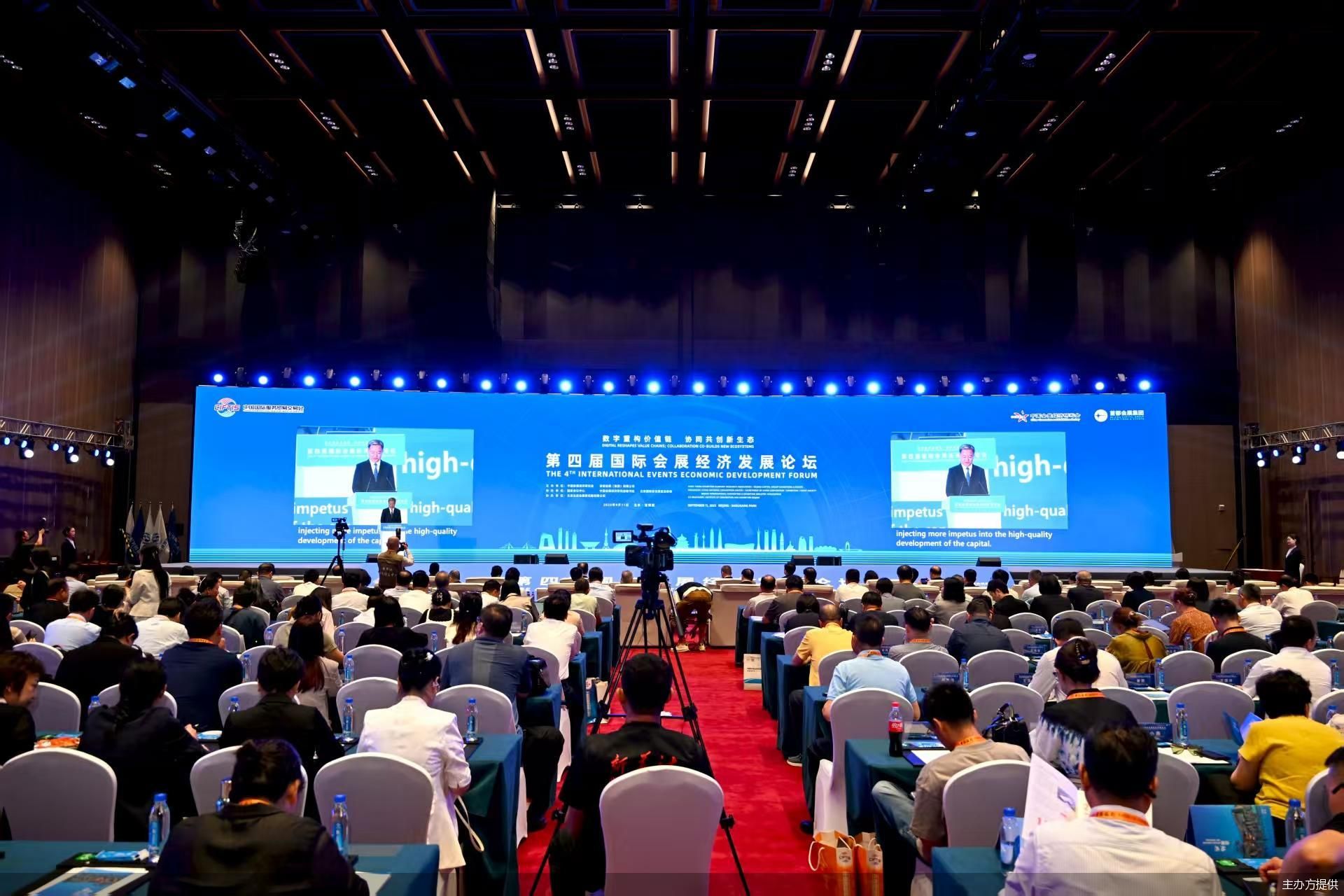
Group 1 - The fourth International Convention and Exhibition Economic Development Forum was held during the 2025 China International Service Trade Fair, showcasing Shaoxing's innovative achievements in the exhibition economy [1] - Shaoxing has established a cluster of five professional exhibition venues, with a total construction area of 491,000 square meters, centered around the Shaoxing International Exhibition Center [1][3] Group 2 - The exhibition economy is becoming a strong engine for urban industrial and cultural innovation, with Shaoxing focusing on both traditional and emerging exhibition brands to support its transformation from a textile city to a hub for new industries [3] - Shaoxing is integrating culture with exhibitions through unique models, enhancing visitor engagement and increasing average stay duration by 15% through innovative exhibition routes [3] Group 3 - Shaoxing is a key city in the Yangtze River Delta and a national historical and cultural city, recognized as the largest production base for chemical fiber fabrics and dyeing, as well as a major center for freshwater pearls and socks [5] - The city has developed a modern industrial system characterized by three major industries (textiles, chemicals, metal processing) and two historical industries (yellow wine, pearls), along with four emerging industries [5] Group 4 - Shaoxing is leveraging exhibitions as a key strategy for national opening-up, with the 2025 Spring Textile Expo attracting over 7,773 international buyers from 80 countries, resulting in intended orders worth 369 million yuan [5] - The city plans to organize 300 groups and 3,000 enterprises to participate in domestic and international exhibitions, having already sent 236 groups and 2,139 enterprises, achieving an intended transaction amount of 370 million USD [5] Group 5 - Future plans for Shaoxing include establishing 3-5 high-level international exhibition projects in collaboration with international organizations over the next three years, aiming to enhance the international influence of its exhibition brands [6] - The city will focus on four key tasks: strengthening dual-feature exhibition IPs, creating a smart exhibition ecosystem, expanding international cooperation, and integrating into the Yangtze River Delta exhibition economy [6]
2025服贸会|借助服贸会平台 绍兴放大“文化会展名城”声量
Bei Jing Shang Bao· 2025-09-11 13:05
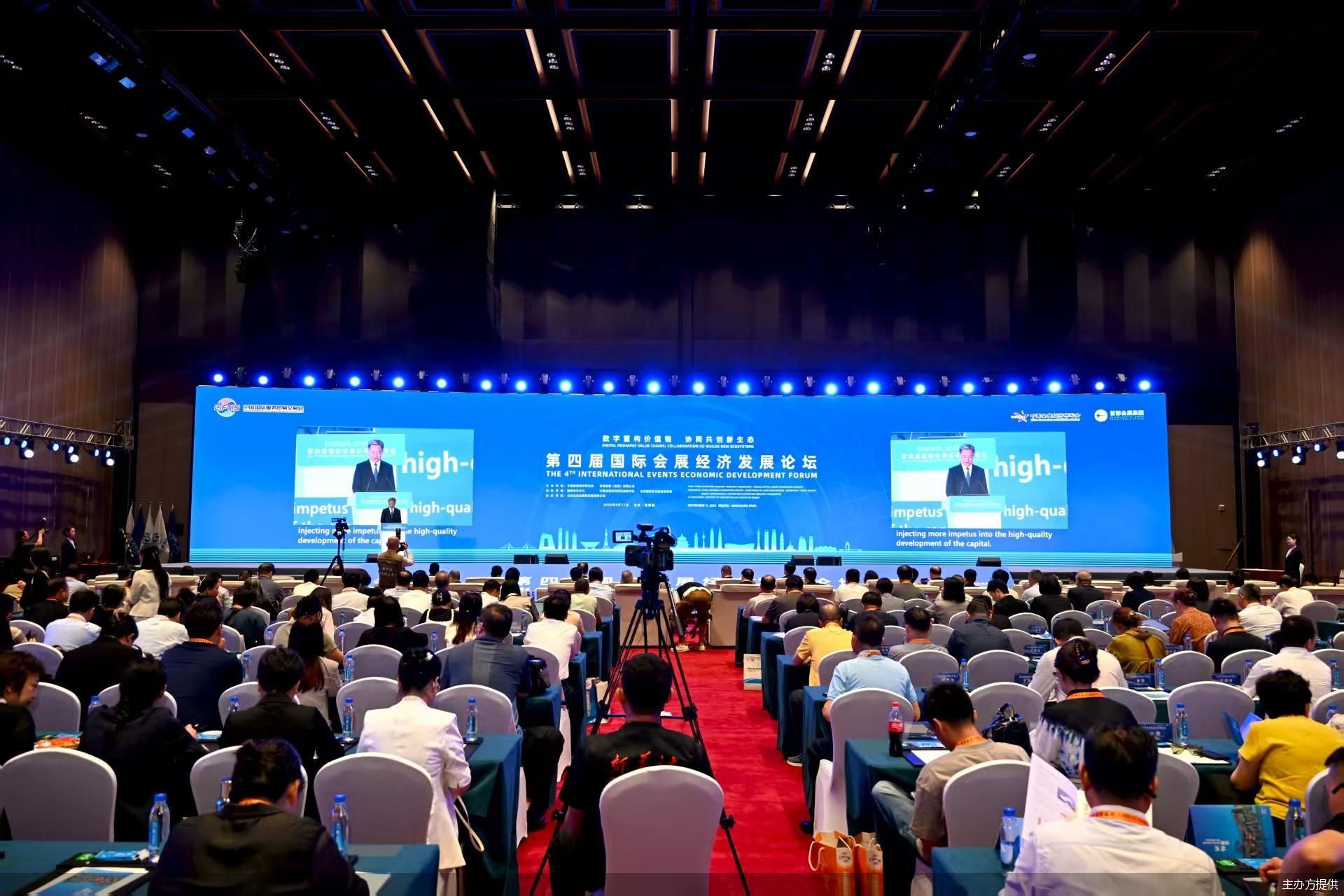
Group 1 - The fourth International Convention and Exhibition Economic Development Forum was held during the 2025 China International Service Trade Fair, showcasing Shaoxing's innovative achievements in the exhibition economy [1] - Shaoxing has established a cluster of five professional exhibition venues, with a total construction area of 491,000 square meters, centered around the Shaoxing International Convention and Exhibition Center [1][3] Group 2 - The exhibition economy is becoming a strong engine for urban industrial and cultural innovation, with Shaoxing focusing on both traditional and emerging exhibition brands to facilitate its transformation from a "textile city" to a "new industrial powerhouse" [3] - Shaoxing is leveraging a "cultural IP + exhibition scene" model to create unique exhibition brands, enhancing visitor engagement and integrating culture with exhibitions [3] Group 3 - Shaoxing is a key city in the Yangtze River Delta and a national historical and cultural city, recognized as the largest production base for chemical fiber fabrics and dyeing, as well as a major center for freshwater pearls and socks [5] - The city has developed a modern industrial system characterized by three traditional industries (textiles, chemicals, metal processing) and four emerging industries (high-end equipment, modern medicine, new materials, and electronic information) [5] Group 4 - Shaoxing aims to use exhibitions as a means to support national open strategies, with plans to attract over 7,773 international buyers from 80 countries during the 2025 Spring Textile Expo, achieving an intended order value of 369 million yuan [5] - The city plans to organize 300 groups and 3,000 enterprises to participate in domestic and international exhibitions, having already sent 236 groups and 2,139 enterprises, achieving an intended transaction value of 370 million USD [5] Group 5 - Future development plans include establishing 3-5 high-level international exhibition projects in collaboration with international organizations over the next three years, enhancing Shaoxing's international exhibition brand influence [6] - Key tasks include strengthening "industry + culture" dual-feature exhibition IP, creating a smart exhibition ecosystem powered by digital technology, and integrating into the Yangtze River Delta exhibition economy [6]
黄酒:积极求变,创新突围
2025-09-09 14:53
Summary of Huangjiu Industry Conference Call Industry Overview - The Huangjiu industry is experiencing significant challenges, including a sharp decline in scale and sales volume, with a need for transformation and upgrading due to unclear consumption scenarios, an aging consumer base, and low-end product offerings [1][2][3] - The market concentration is increasing, with leading companies such as Guyue Longshan, Kuaijishan, and Jinfeng Liquor significantly increasing their market share, yet overall sales revenue is still declining, indicating intensified market competition and survival pressure for companies [1][4] Core Insights and Arguments - The Huangjiu industry has reached a turning point towards high-end products and diversified consumption scenarios, with leading companies launching premium series and utilizing tasting promotions to expand their core consumer base. The price per ton of mid-to-high-end products has increased, with Kuaijishan's mid-to-high-end product ton price rising by 20% year-on-year and Guyue Longshan's by 10% [1][5] - Leading companies have begun to implement price increases on mass-market products, approximately 5%, reflecting their enhanced bargaining power due to increased market concentration [1][6] - Kuaijishan has introduced innovative products like sparkling Huangjiu and utilized e-commerce platforms and holiday promotions to attract younger consumers, achieving a breakthrough effect and providing new ideas for the industry's youth-oriented and social development [1][7] Challenges Faced - The Huangjiu industry faces several key challenges, including a lack of clear consumption scenarios compared to other alcoholic beverages, a severely aging consumer demographic, and a predominance of low-end products priced around 20-30 yuan, which hampers the expansion into high-end markets and brand value enhancement [3][9] - Despite the increase in market concentration, the overall sales revenue has decreased from 20 billion yuan in 2016 to around 10 billion yuan in 2023, indicating a need for strategic shifts [4][8] Market Performance and Trends - In 2023, the sales revenue of Huangjiu production companies was approximately 10 billion yuan, with total profits around 1.6 billion yuan. The industry has seen a 50% decline in scale and sales volume from 2016 to 2023, while other alcoholic beverages like Baijiu and beer have performed strongly [2][8] - Since the end of the pandemic in 2022 and 2023, leading companies have seen revenue growth rates increase from single digits to double digits, with Kuaijishan and Guyue Longshan achieving revenue growth rates of 10% and 9%, respectively [8][9] Future Directions - The future development of Huangjiu companies will focus on high-end product offerings and diversified consumption scenarios. Although the current channel profits for single bottles of Huangjiu are acceptable, there is still a gap in turnover rates and sales compared to Baijiu and beer [10] - Strategies such as product innovation, including the introduction of sparkling Huangjiu, are essential for improving consumer acceptance. Long-term, the high-end pricing strategy will be crucial, along with efforts to attract younger consumers [10][12] Capital Market Expectations - The capital market has high expectations for Huangjiu companies, with Kuaijishan's stock price doubling and Guyue Longshan's stock price increasing by 40%-50%. However, investors should be cautious regarding valuation, as current stock prices reflect significant expectations, with leading companies' valuations around 40 times earnings [11][12] Conclusion - The Huangjiu industry is at a critical juncture, requiring strategic innovation and market expansion efforts to overcome existing challenges and capitalize on emerging opportunities for growth and profitability [1][10][12]
调整期行业结构未见变化 优势向谁集中?
Nan Fang Du Shi Bao· 2025-09-04 23:07
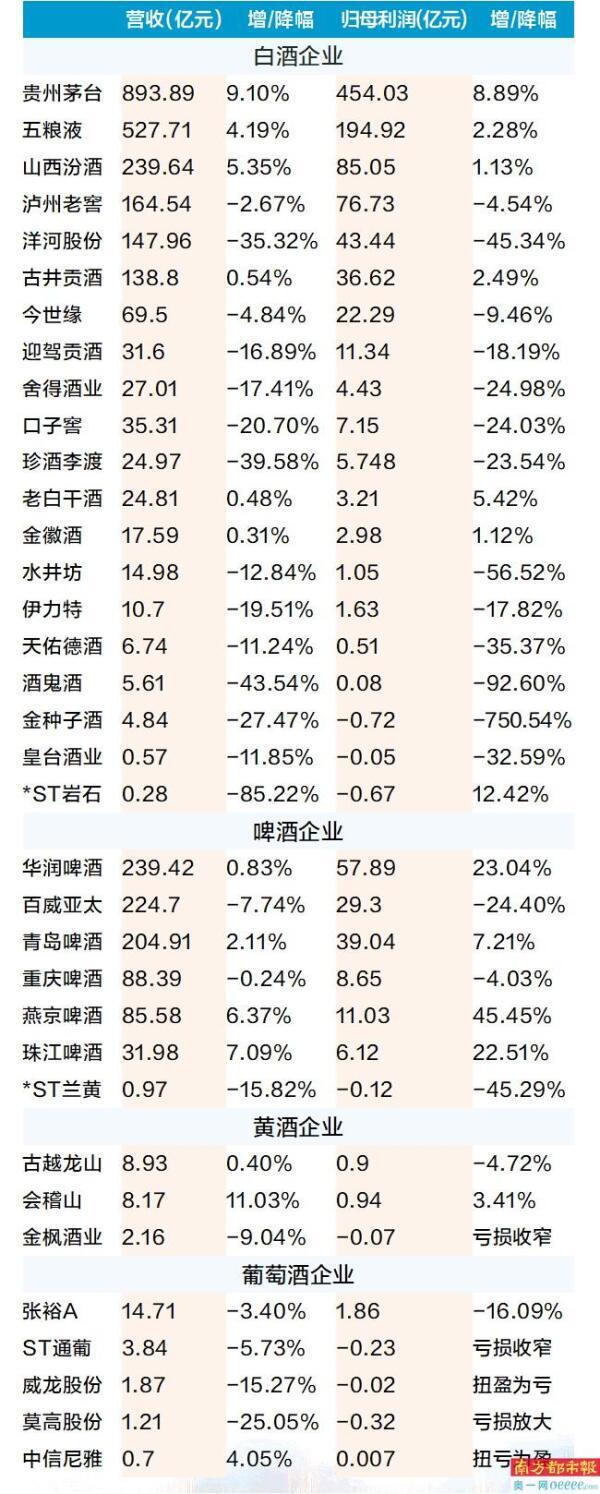
Summary of Key Points Core Viewpoint - The alcoholic beverage industry in China is undergoing a significant adjustment phase, with varying performance across different segments such as baijiu, beer, yellow wine, and wine. While some companies are experiencing declines, others are managing to maintain or grow their revenues through strategic adjustments and market focus [3][4][14]. Baijiu Industry - The baijiu sector is the most affected by the adjustment phase, with 13 out of 20 listed companies reporting declines in both revenue and net profit. Only 6 companies showed growth in both metrics [4][5]. - Major players like Kweichow Moutai, Wuliangye, and Shanxi Fenjiu have managed to maintain growth, while smaller companies face more significant declines [4][5]. - Companies are adopting strategies to address inventory issues and optimize product channels, attributing performance declines to proactive adjustments rather than market weakness [5][6]. Beer Industry - The beer industry is showing signs of recovery, with leading companies like China Resources Beer and Qingdao Beer reporting growth in both revenue and net profit. In contrast, foreign companies like Budweiser APAC are experiencing declines [6][7]. - The high-end segment continues to be a focal point, with companies competing in the premium market, while the 8 yuan price range is emerging as a new growth driver [7][8]. - Beer companies are also diversifying into other beverage sectors to seek new growth opportunities [8][9]. Yellow Wine Industry - The yellow wine sector is struggling to achieve collective growth, with only a few companies like Kuaijishan showing positive performance. The market remains heavily concentrated in the Jiangsu and Zhejiang regions [10][11]. - Despite the introduction of new products aimed at younger consumers, overall performance remains lackluster, with traditional products still driving most sales [10][11]. Wine Industry - The wine market is in a deep adjustment phase, with most companies reporting revenue declines. The market is heavily impacted by the increasing share of imported wines, which continue to challenge domestic brands [12][13]. - Companies are exploring new sales channels, such as live e-commerce, to boost performance and adapt to changing consumer preferences [13][14]. - The emotional value of wine consumption, such as "self-drinking" and "social drinking," is seen as a potential avenue for recovery in the domestic market [13][14].



《环球ESG观察》(第五期):体系创新锚定零碳未来 能源革命重塑全球格局
Huan Qiu Shi Bao· 2025-09-02 01:09
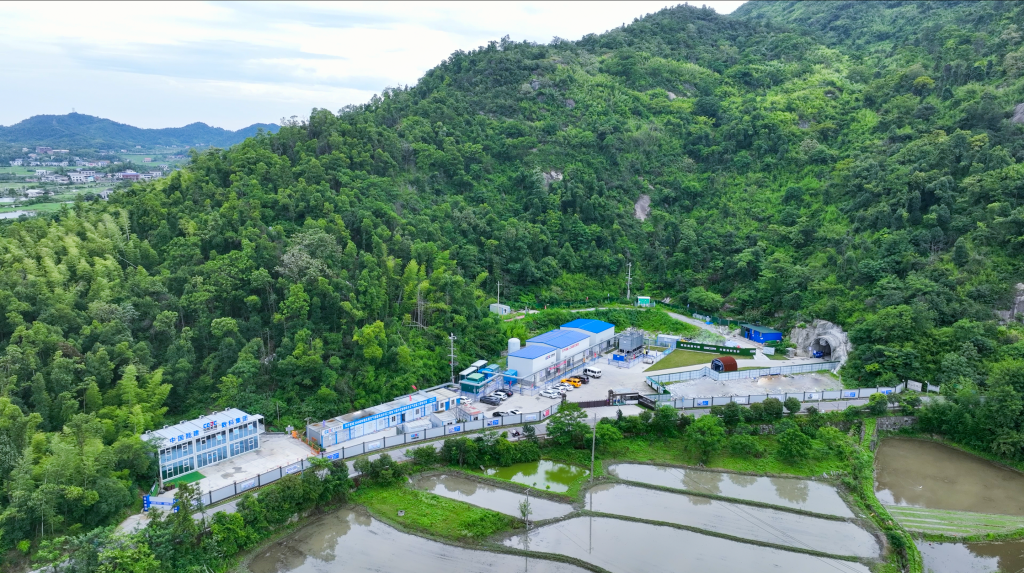
Core Insights - China has established the world's most comprehensive carbon reduction policy system, achieving significant milestones in sustainable development and green transformation [1][2][3] Domestic Developments - China has constructed a top-level design and policy system for carbon reduction, with coal consumption decreasing from 56.8% in 2020 to 53.2% in 2024, and non-fossil energy consumption increasing from 15.9% to 19.8% [2][3] - The country has cultivated over 6,400 green factories and 490 green industrial parks, aiming for an 11.6% reduction in energy consumption per unit of GDP by 2024, equivalent to a decrease of 1.1 billion tons of CO2 emissions [3] - In July, China's total electricity consumption surpassed 1 trillion kilowatt-hours for the first time, with a year-on-year growth of 8.6%, reflecting the acceleration of economic vitality and green transformation [6] - The world's largest underground compressed air energy storage facility has been established in Hunan, capable of operating at a pressure of 18 MPa, addressing challenges in renewable energy consumption [7][8] - A pilot program for green foreign debt has been launched in 16 provinces and cities, encouraging cross-border financing for green or low-carbon transition projects [9] International Developments - Former U.S. President Trump criticized renewable energy, labeling wind and solar projects as a "scam" and halting new approvals for such initiatives [10][11] - Global negotiations on a plastic treaty have stalled due to disagreements, highlighting the challenges of multilateral governance in environmental issues [12][14] Practices and Innovations - Hengsheng Electronics achieved an MSCI ESG rating upgrade from "A" to "AA," marking it as the highest rating among domestic software companies, reflecting significant progress in sustainability [21] - Shenzhou Holdings received nominations for two awards at the Sedex Supply Chain Awards, recognizing its leadership in sustainable supply chain practices [22][23] - Guyue Longshan maintained its leading position in the yellow wine industry with a Wind ESG rating of BBB, showcasing its commitment to high-quality development and sustainability [24] - BAIC Group launched the "Hetian Oasis" initiative, contributing to desertification control by donating 9.9 yuan for every vehicle sold in the region [25][26]


新进标的猛涨134%,葛卫东持仓大曝光
Zhong Guo Ji Jin Bao· 2025-09-01 22:43
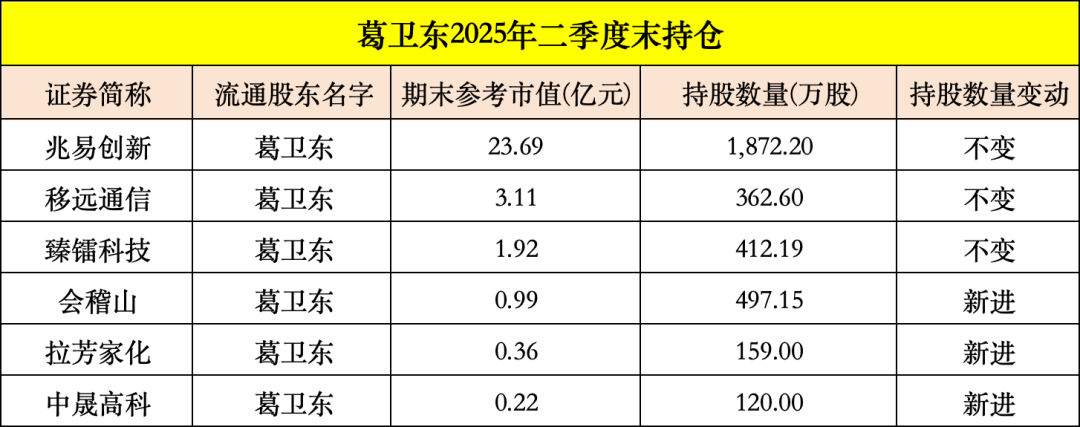
Summary of Key Points Core Viewpoint - The latest movements of private equity mogul Ge Weidong have emerged following the disclosure of A-share listed companies' semi-annual reports for 2025, revealing his significant investments in several companies, particularly in the consumer sector. Group 1: Ge Weidong's Holdings - As of the end of Q2 2025, Ge Weidong appeared as a top ten circulating shareholder in six listed companies, with a total holding value of 3.029 billion yuan [1][2] - His notable holdings include Zhener Technology, Zhaoyi Innovation, and Yiyuan Communication, where he maintained his positions without changes [1][2] - He entered the top ten circulating shareholders of Kuaijishan and Lafang Jiahua for the first time, while also increasing his stake in Zhongsheng High-Tech [1][2] Group 2: Lafang Jiahua - Lafang Jiahua has seen a nearly 97% increase in stock price year-to-date, with Ge Weidong holding 1.59 million shares valued at 36 million yuan, making him the eighth largest circulating shareholder [3][4] - The Ge family collectively holds shares in Lafang Jiahua worth 269 million yuan [3] - The company reported a revenue of 410 million yuan in the first half of the year, a decrease of 4.27% year-on-year, and a net profit of 6.36 million yuan, down 82.89% year-on-year [6] Group 3: Kuaijishan - Kuaijishan's stock has surged over 134% this year, with Ge Weidong holding 4.97 million shares valued at 99 million yuan, making him the eighth largest circulating shareholder [7][9] - The company reported a revenue of 817 million yuan in the first half of the year, an increase of 11.03% year-on-year, and a net profit of 93.88 million yuan, up 3.41% year-on-year [8] Group 4: Zhongsheng High-Tech - Ge Weidong reappeared in Zhongsheng High-Tech's top ten circulating shareholders with 1.2 million shares valued at 22 million yuan [12] - The company reported a revenue of 64.42 million yuan in the first half of the year, a decrease of 73.31% year-on-year, but a net profit of 47.01 million yuan, an increase of 376.2% year-on-year [14]