茶饮

Search documents
新茶饮决战美国:喜茶纽约开LAB、霸王瞄准比佛利、瑞幸2美元搅局
创业邦· 2025-06-21 10:10
Core Viewpoint - The article discusses the rapid expansion of Chinese tea brands into international markets, particularly focusing on the strategies and challenges faced by these brands in developed countries like the United States and South Korea. The competition is intensifying as brands adopt different approaches to capture market share, with a notable shift from Southeast Asia to more mature markets in the West [4][20][23]. Group 1: Brand Expansion Strategies - Heytea has opened over 20 stores in the U.S., testing high-ticket markets with its LAB store model [5][25]. - Bawang Chaji targets affluent areas like Beverly Hills, with single-store investment costs several times higher than in China [7][27]. - Cha Baidao is boldly challenging the coffee-dominated South Korean market with a differentiated strategy [9][30]. Group 2: Market Performance and Financials - Bawang Chaji's overseas stores generated a GMV of 178 million yuan in Q1 2025, marking an 85.3% year-on-year increase [13][36]. - Despite rapid expansion, overseas revenue for brands like Mixue Ice City remains low, accounting for less than 5% of total revenue [22][50]. - Bawang Chaji's marketing expenses surged from 73.6 million yuan in 2022 to 1.1 billion yuan in 2024, indicating a high-cost strategy [52][53]. Group 3: Market Challenges - The U.S. market presents unique challenges, including high investment costs and lengthy approval processes for store openings, which can take 9-12 months [33][34]. - Compliance with local regulations significantly increases operational costs, as seen with the requirements for seating and restroom facilities in California [56]. - Local competition and imitation brands pose significant threats, complicating market entry and brand protection efforts [56][57]. Group 4: Supply Chain and Operational Efficiency - Bawang Chaji's simplified supply chain focuses on tea, milk, and packaging, resulting in lower logistics costs compared to fruit-based brands [49]. - The complexity of the supply chain for fruit tea brands creates challenges in overseas expansion, with some opting for local sourcing to mitigate costs [49][54]. - The article highlights that over 80% of restaurant brands face failure when expanding internationally, emphasizing the difficulties in establishing a sustainable presence abroad [50].

半两财经|大消费复苏 新消费崛起 资本市场消费板块成“宠儿”
Sou Hu Cai Jing· 2025-06-21 00:48
Group 1: Consumer Sector Recovery - The consumer sector has become a "darling" of the capital market, driven by strong rebounds in traditional consumption and the rise of new retail, signaling economic recovery in China [1][2] - The consumption sector experienced a bull market due to favorable policies aimed at boosting consumption, with various regions implementing action plans to stimulate consumer spending [2][4] - Notable stock performances include Pop Mart, which saw a price increase of over 190% this year, and Lao Pu Gold, which reported a 168% year-on-year revenue growth [2][3] Group 2: Economic Data and Policy Support - In May, the retail sales of consumer goods increased by 6.4% year-on-year, with significant growth in categories like home appliances and audio-visual equipment, which rose by 53% [3] - Local governments have introduced measures such as employment stabilization, consumption vouchers, and paid leave to enhance consumer spending and strengthen domestic circulation [4][5] - The Guangdong province has initiated a "2025 Welfare Childcare Voucher" program to support families, while other regions are focusing on subsidies for marriage and childbirth [4][5] Group 3: New Consumption Trends - The "new consumption" sector is thriving, with significant growth in beauty care, pet economy, and personalized products driven by demand upgrades and policy support [6][7] - Companies in the pet sector, such as Zhongchong Co. and Guai Bao Pet, have reported impressive revenue growth rates of 18.9% and 27% respectively from 2020 to 2024 [7] - The jewelry sector, particularly Lao Pu Gold, has seen revenue and net profit growth of 166% and 254% year-on-year, indicating a strong market position despite rising gold prices [7] Group 4: Investment Opportunities - Analysts suggest focusing on structural investment opportunities in the consumer sector, including new consumption, emotional consumption, silver economy, and AI-enabled consumption [8] - The Chinese consumer market is shifting towards "consumption stratification," with consumers willing to pay for quality at reasonable prices, driven by the preferences of the Z generation [8][9] - The food sector, particularly snacks, dairy products, and beverages, is expected to attract significant investment due to favorable domestic demand policies [9]
茶咖日报|咖啡黄酒“双刺激”?古越龙山回应:适量饮用无负担
Guan Cha Zhe Wang· 2025-06-20 12:41
Group 1: Company Developments - Guyue Longshan stated that its coffee yellow wine product, "Fei Huang Teng Da," is suitable for young consumers and can be consumed in moderation without health concerns [1] - Luckin Coffee's new innovation production center in Qingdao aims to become the largest coffee roasting production base in China, with an expected annual output of 55,000 tons of roasted coffee beans and an annual output value of 3 billion yuan [3] - Baifei Dairy announced plans to establish "Guangxi Baifei Tianrui Dairy Buffalo Breeding Co., Ltd." to develop dairy buffalo breeding, following its recent IPO acceptance on the Shanghai Stock Exchange [4] Group 2: Industry Trends - Cafebreak announced its partnership with the "Su Super" Jiangsu City Football League to enhance brand promotion and fan engagement through various marketing activities [2] - Hu Shang A Yi revealed that the tea beverage market is expected to exceed 400 billion yuan by 2028, with fruit tea and milk tea being the most popular categories among consumers [5]


新消费三巨头为何分化了?
3 6 Ke· 2025-06-20 12:35
Core Viewpoint - The article discusses the recent performance of three major new consumption companies in Hong Kong: Mixue Group, Laopu Gold, and Pop Mart, highlighting the divergence in their stock price movements and the underlying market dynamics driving new consumption trends [1][2]. Group 1: Market Trends - New consumption has emerged as the biggest hotspot in the Hong Kong stock market this year, driven by a shift in consumer preferences towards high-growth sectors amid traditional consumption stagnation [1][2]. - The stock price performance of the three companies has been notable, with Pop Mart up 165%, Laopu Gold up 250%, and Mixue Group up 152% year-to-date, indicating strong market interest and profitability in this sector [1]. Group 2: Consumer Behavior - The rise of new consumption is attributed to two main factors: the changing age structure of the population, particularly the Z generation's increasing purchasing power, and a preference for frequent, low-cost discretionary spending due to slower income growth [2]. - Mixue Group's products are seen as more relatable to everyday consumers, contrasting with the luxury positioning of Laopu Gold and the collectible nature of Pop Mart's products, which may be perceived as less essential during economic downturns [3][4]. Group 3: Company Analysis - Mixue Group's pricing strategy is effective, offering lower average prices compared to competitors, which appeals to price-sensitive consumers seeking quality during economic uncertainty [4]. - The demand for tea drinks has surged, particularly due to aggressive subsidies from platforms like JD and Ele.me, which have significantly increased order volumes in the beverage sector [5]. - Analysts predict continued growth for Mixue Group, supported by its strong market position and the ongoing trend of consumer preference for high-value products [4][5].
1分钱一杯比水还便宜?去年爆火的冰杯,今年杀回来了
3 6 Ke· 2025-06-20 09:12
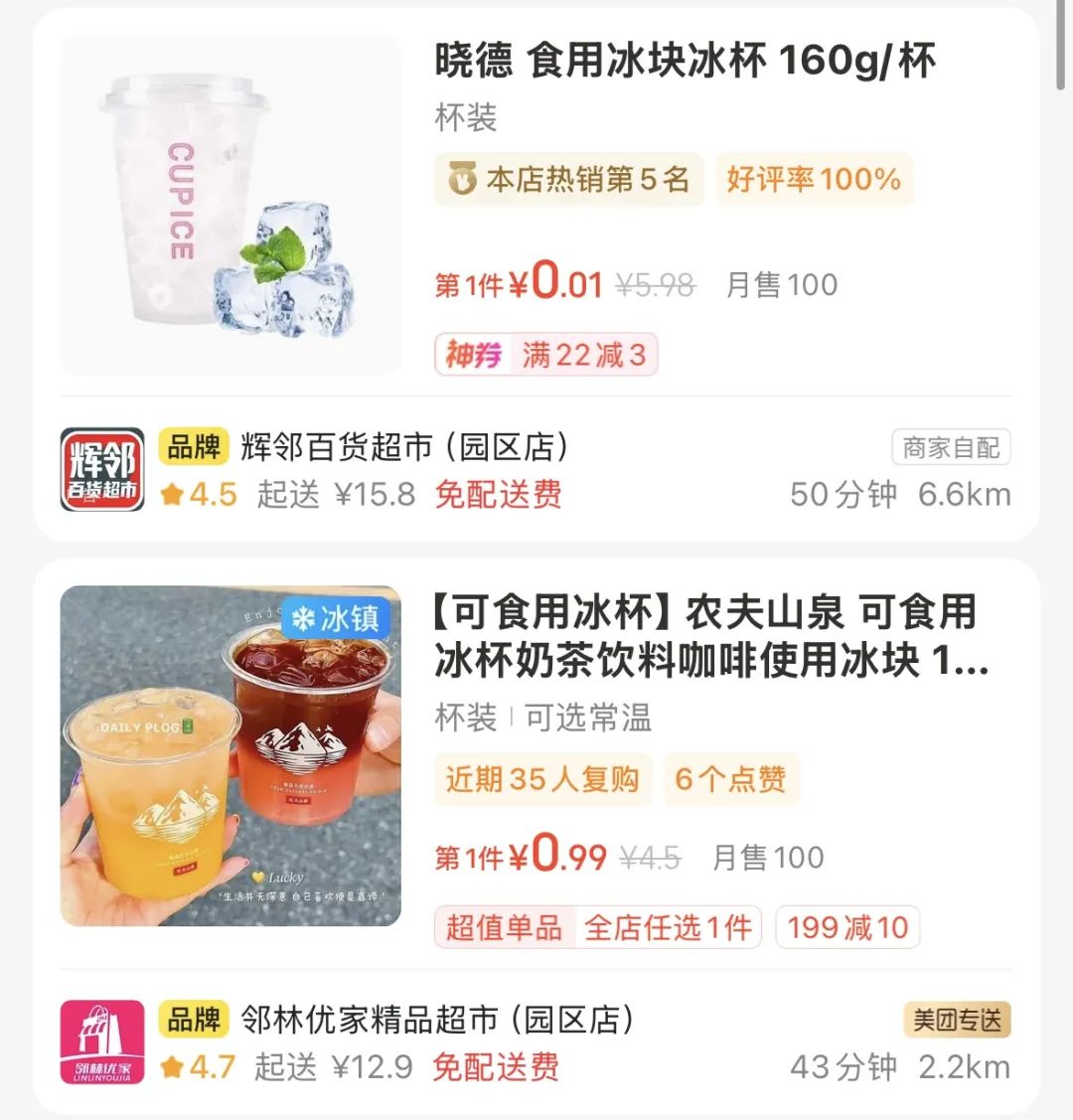
Core Viewpoint - The ice cup market is experiencing significant growth, driven by low pricing strategies and innovative marketing tactics, leading to increased consumer engagement and sales opportunities. Group 1: Market Dynamics - Online platforms have reduced the price of ice cups to as low as 1 yuan or even 0.01 yuan, while major tea brands are launching "1 yuan ice water/ice cup" promotions to attract customers [1][4] - According to the "2025 China Urban Consumption Behavior White Paper," ice cup sales have seen a growth rate exceeding 300% for two consecutive years, with per capita annual consumption in first-tier cities reaching 48 cups [7] - The "one yuan strategy" has proven effective in driving foot traffic to stores, with approximately 35% of customers who purchase 1 yuan ice water also buying additional products, raising the average transaction value to over 20 yuan [9][12] Group 2: Product Innovation - Ice cups are evolving beyond simple ice blocks, with brands introducing flavored ice cups and unique shapes, enhancing the visual appeal and consumer experience [17][19] - The packaging of ice cups is also being upgraded to cater to younger consumers' preferences for personalization and social sharing, with themed designs gaining popularity [21][23] Group 3: Consumer Behavior - The rise of DIY beverage culture, fueled by social media, has positioned ice cups as essential components for creating personalized drinks, with 69% of consumers using ice cups for homemade beverages [31] - The convenience of purchasing ice cups over making ice at home aligns with the "lazy economy," as consumers seek instant gratification during hot weather [34][35] Group 4: Competitive Landscape - Traditional giants and emerging brands are entering the ice cup market, with established players like Mengniu and Yili launching their own ice cup products [25][28] - The market is witnessing a shift in consumer preferences, with ice cups becoming a staple in convenience stores and supermarkets, driving additional sales through bundled offerings [14][16]
华莱士炸鸡腿吃出活虫?上海一市监局介入丨消费舆警指数
2 1 Shi Ji Jing Ji Bao Dao· 2025-06-20 08:21
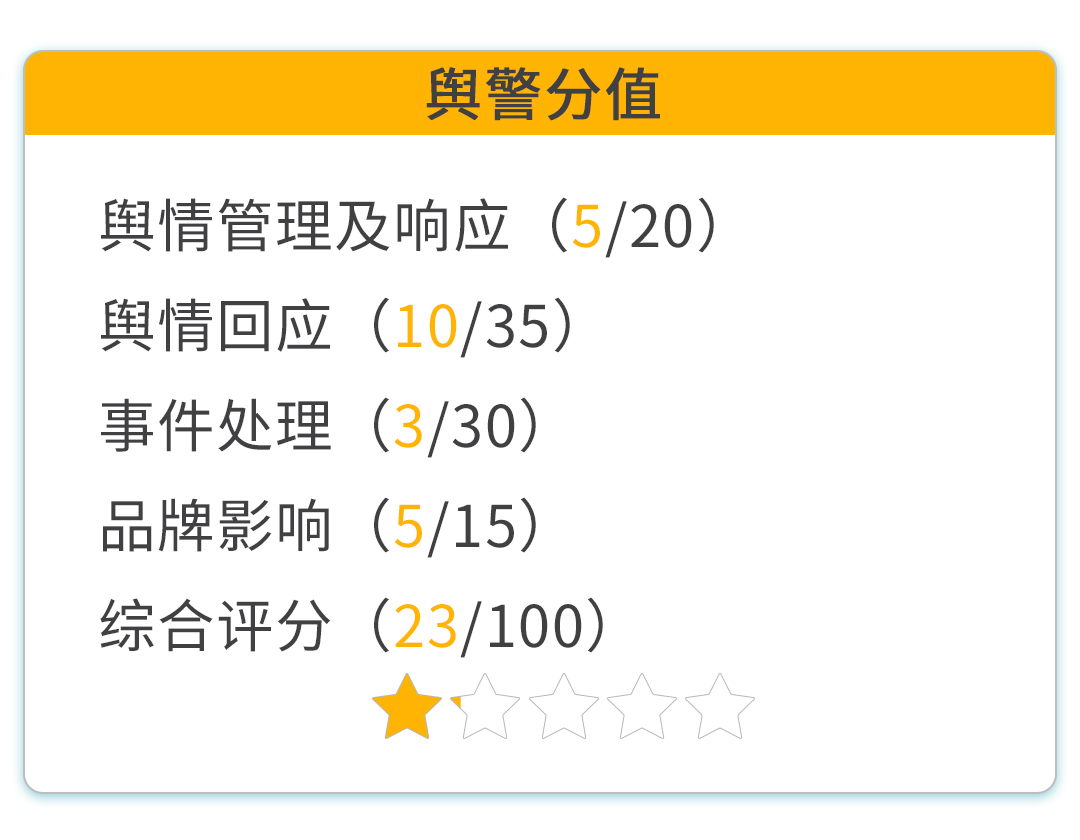
Group 1: Consumer Trust and Brand Management - Consumer trust and preference are crucial market resources for consumer-facing companies, reflecting their brand management and operational effectiveness [1] - The increasing integration of consumer brands with operational processes highlights the importance of effective crisis management and brand resilience in the face of public opinion shifts [1] - The establishment of a quantitative scoring mechanism, the "Consumer Public Opinion Index," aims to evaluate companies' responses to public crises, focusing on management, response, and brand impact [1] Group 2: Case Study - Wallace Fried Chicken Incident - The Wallace Fried Chicken incident involved a consumer discovering a live worm in a fried chicken leg, leading to widespread public concern over food safety [2][3] - The company's initial compensation offer of 100 yuan was deemed insufficient, and their response failed to alleviate consumer dissatisfaction, exacerbating food safety worries [3] - Wallace has a history of food safety issues, indicating systemic risks in its food safety management practices [3] Group 3: Case Study - Grandpa Does Not Brew Tea Controversy - The tea brand "Grandpa Does Not Brew Tea" faced backlash for inviting a controversial influencer to an event, resulting in public outrage and trending on social media [4][5] - The brand has not issued a formal response, and initial explanations from staff were met with skepticism, highlighting a lack of due diligence in partner selection [5] - Previous quality control issues, such as reduced drink sizes and rusting cups, have already damaged the brand's reputation, further complicating its public image [5][7]
超级植物Pro家族再上新!益禾堂携保卫萝卜IP引爆今夏“蔬适圈”
Zhong Guo Shi Pin Wang· 2025-06-20 07:39
Core Insights - The beverage industry is experiencing intensified homogenization, with a shift towards health-oriented products targeting the younger demographic's "light health" needs, moving from mere taste to a focus on health-centric ingredients like vegetables and fruits [1][3] - Yihotang is strategically positioning itself in this trend with its "Super Plant Pro" initiative, launching new products like the carrot series in June after the successful rose vinegar series in May, and collaborating with the popular game IP "Carrot Defense" for a summer campaign [1][4][19] Industry Trends - The rise of "vegetable suitable circles" is evident as superfoods like kale and beetroot transition from the light food sector to the beverage scene, with competitors like Heytea and Shanghai Auntie also entering the functional beverage market [3][4] - The health wave is prompting brands to innovate with functional drinks, as seen with Yihotang's carrot-based products that emphasize low calories and high vitamin content [5][6] Product Development - Yihotang's new carrot series focuses on "natural fruits and vegetables, supplementing vitality VC," using a blend of carrot, orange, apple, and pear to achieve a balance of health and taste [5][6] - The carrot juice products feature unique flavor combinations, such as "Carrot Orange" and "Carrot Mango Coconut," enhancing the health experience by extending it to light food offerings [6] Marketing Strategy - The collaboration with "Carrot Defense" targets Gen Z's health anxieties and emotional needs, creating a campaign that resonates with their lifestyle challenges [11][17] - The promotional activities include interactive elements like limited-time offers and social media engagement, enhancing consumer participation and brand interaction [13][16] Strategic Positioning - Yihotang's strategic focus on health beverages has proven effective, with previous collaborations leading to significant market engagement and sales, such as over 780,000 cups sold from the rose series [17][19] - The brand's approach of "exploding single products to dominate categories" is evident in its expansion of the "Super Plant Pro" series, aiming to set new standards in healthy beverages this summer [19][20]

抽象年轻人的“不体面”旅拍,为何成了抖音、小红书新潮流?
3 6 Ke· 2025-06-20 02:57
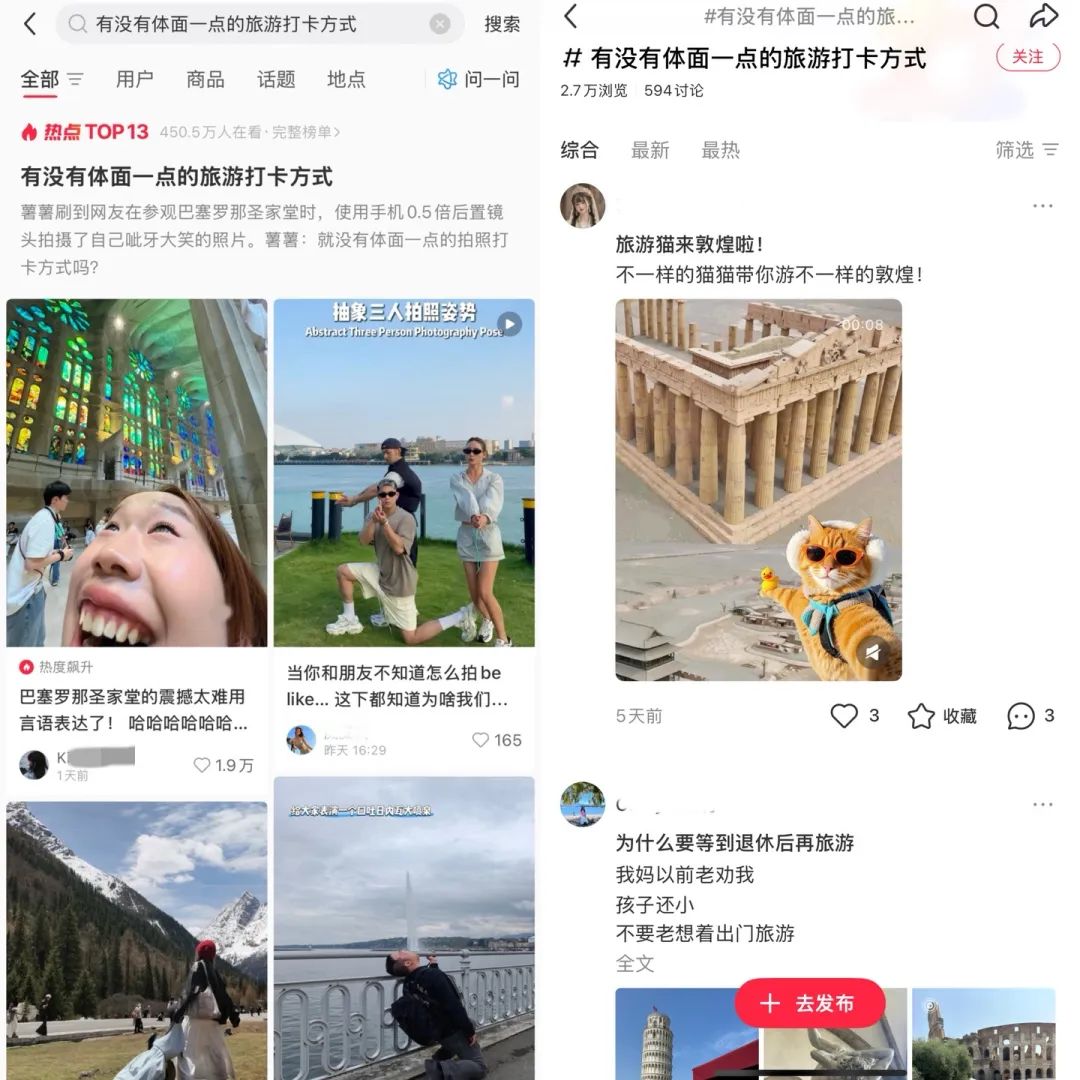
Core Insights - The article discusses the evolving trend of travel check-ins among young people, emphasizing a shift from traditional photo-taking to creative and immersive experiences that blend personal expression with cultural narratives [1][12][38] Group 1: Changing Travel Check-in Trends - Young travelers are redefining the concept of travel check-ins, moving from standardized scenic photos to creative cultural expressions [1][6] - A significant 63% of young people choose travel destinations based on films and literature, with many engaging in narrative recreations at these sites [12][14] - The phenomenon of "study-based check-ins" merges fictional narratives with historical contexts, allowing for a deeper emotional connection to travel locations [12][18] Group 2: Social Media's Role - Social media platforms serve as incubators for creative check-ins, facilitating user interaction and content sharing [19][23] - On Douyin, the hashtag 景点打卡 has garnered 82.8 billion views, indicating a massive engagement with travel-related content [23][29] - The algorithmic mechanisms of these platforms enhance creative expression, allowing users with lower follower counts to achieve viral success [29][31] Group 3: Brand Engagement and Marketing - Brands are recognizing the commercial potential of creative check-ins, engaging in content co-creation with young users [32][34] - For instance, Xu Zhou Amusement Park's campaign generated 370 million views, showcasing the effectiveness of integrating user-generated content with brand narratives [34][36] - Successful marketing strategies focus on providing participatory creative resources, aligning content with consumer experiences to shorten decision-making processes [36][38]
从“一骑红尘”到“杯杯爆款”,《长安的荔枝》带火荔枝茶饮
Chang Sha Wan Bao· 2025-06-19 16:18
Core Insights - The launch of the TV drama "Chang'an's Lychee" has sparked a significant trend in lychee-flavored beverages, leading to a surge in sales across various tea brands [1][2][3] - The high demand for lychee drinks is attributed to both increased supply and the popularity of the drama, which has created a strong consumer interest [6][7] Sales Performance - Tea brand Cha Bai Dao reported that its new lychee products sold 50,000 cups within the first hour of launch, surpassing 100,000 cups by noon on the same day [1][3] - Luckin Coffee's lychee drinks also experienced rapid sales, with both new products selling out quickly, indicating a strong market response [3][6] Supply and Pricing Dynamics - This year, lychee production has increased by over 111% compared to last year, resulting in a drop in wholesale prices to 5 yuan per kilogram [6] - The availability of multiple lychee varieties has enhanced consumer choice, contributing to the trend of "lychee freedom" among consumers [6] Marketing and Consumer Engagement - The collaboration between Luckin Coffee and the TV drama has added emotional value to the products, making them more appealing to consumers [7][9] - The marketing strategy, including themed merchandise like the "turning horse" figurine, has resonated with consumers, creating a sense of connection to the drama [9][10]
买个产品→买种心情,情绪消费崛起ing | 红杉爱生活
红杉汇· 2025-06-19 14:16
Core Viewpoint - The article highlights the growing trend of "emotional consumption" among young consumers, emphasizing their unique purchasing behaviors driven by personal satisfaction and self-expression [2][4][7]. Group 1: Trend of Emotional Consumption - Young consumers are increasingly influenced by emotional value in their purchasing decisions, seeking products that resonate with their individuality and provide joy [2][4]. - The "潮玩" (trendy toys) market in China has seen significant growth, with market value increasing from 6.3 billion yuan in 2015 to 60 billion yuan in 2023, and projected to reach 110.1 billion yuan by 2026 [4]. - The popularity of products like LABUBU, which embodies a "cute-ugly" aesthetic, reflects the desire of Generation Z for unique and non-conformist expressions [4][5]. Group 2: The "谷子" Economy - The "谷子" economy, referring to merchandise derived from popular media, is projected to reach a market size of 168.9 billion yuan in 2024, growing over 40% from 2023 [7]. - This segment thrives on the emotional connection fans have with their favorite characters and stories, serving as a medium for social interaction among enthusiasts [7]. Group 3: Pet Economy - The pet industry is booming, with the number of pet dogs and cats in urban areas expected to exceed 120 million by 2024, indicating a strong trend among young people to treat pets as family members [8][9]. - Young pet owners are increasingly focused on high-quality, nutritious pet food and personalized services, driving a shift towards premium products in the pet market [9][10]. Group 4: Home Renovation Trends - The home renovation trend among young renters is characterized by a focus on aesthetic improvements and personalized spaces, with a significant online presence on platforms like Xiaohongshu [11][12]. - Young consumers prioritize cost-effectiveness while also being willing to invest in high-quality, stylish home decor items [16]. Group 5: New Tea Beverage Market - The new tea beverage market has become a social currency among young people, with brands rapidly emerging to cater to diverse tastes and preferences [17][18]. - The emotional satisfaction derived from these beverages contributes to their popularity, as they serve as a means to alleviate stress and enhance social interactions [18]. Group 6: Light Outdoor Activities - The "light outdoor" trend is gaining traction, with activities like camping and short trips becoming popular among young consumers seeking immediate enjoyment and relaxation [21][22]. - The camping economy is projected to reach nearly 214 billion yuan in 2024, reflecting a growing interest in outdoor experiences as a form of social engagement [21]. Group 7: Emotional Healing Products - There is a rising demand for products and services that address emotional well-being, including mindfulness and therapeutic offerings, as young consumers seek comfort amid various pressures [23]. - The willingness to spend on emotional value indicates a shift in consumer behavior, with a focus on experiences that enhance mental health and happiness [23].