茶饮

Search documents
202亿元,34岁刘靖康成90后新首富!中国最有钱的90后,还有哪些人?| 原创
Zheng Quan Shi Bao Wang· 2025-06-19 12:01
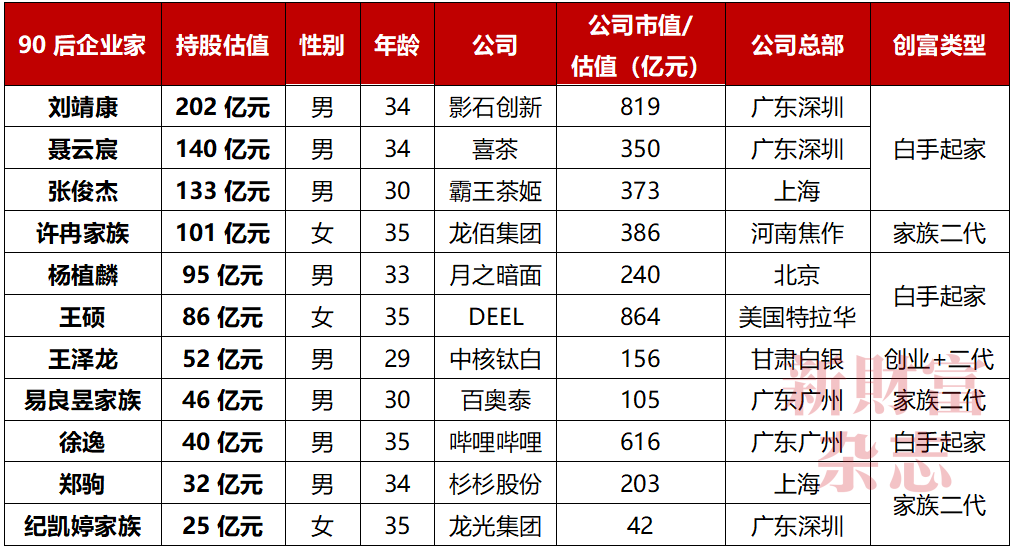
Core Insights - Liu Jingkang has become the new richest post-90s individual in China with a net worth of 20.2 billion yuan, surpassing other young entrepreneurs [1][4][10] - The rise of Liu Jingkang and other post-90s entrepreneurs like Nie Yuncheng and Zhang Junjie highlights a shift in wealth creation from inherited family fortunes to self-made success stories [2][18] Company Overview - Liu Jingkang founded Yingshi Innovation (影石创新), which went public on June 11, 2023, and saw its stock price surge by 274% on the first day, leading to a market capitalization exceeding 81.8 billion yuan [4][10] - Despite a subsequent drop of 12% in stock price, Liu Jingkang's holdings still valued at 17.6 billion yuan, maintaining his status as the richest post-90s individual [5][10] - Yingshi Innovation's flagship product, the Insta360 panoramic camera, holds a global market share of 66%, with over 70% of its revenue coming from international markets [8][9] Entrepreneurial Landscape - The competition among post-90s billionaires is categorized into three groups: technical talents from prestigious schools, grassroots entrepreneurs in consumer sectors, and second-generation heirs [9][18] - Liu Jingkang's success story is emblematic of a new generation of entrepreneurs who are fearless and innovative, leveraging technology to address market gaps [8][16] - Other notable post-90s entrepreneurs include Nie Yuncheng of Heytea, Zhang Junjie of Bawang Chaji, and Yang Zhilin of Moonlight, all of whom have achieved significant valuations through their ventures [14][15][16] Wealth Transition - The article contrasts the success of self-made entrepreneurs with the decline of second-generation heirs like Ji Kaiting of Longguang Real Estate and Zheng Ju of Suning Group, who have faced challenges in wealth preservation and management [18][22][23] - The narrative emphasizes that while some young individuals inherit wealth, others rise from humble beginnings to create substantial value, showcasing the dynamic nature of wealth creation in contemporary China [24][25]

出海速递 | 接棒外卖和生鲜,美团共享充电宝也出海了/京东物流在沙特推出海外快递品牌JoyExpress
3 6 Ke· 2025-06-19 10:54
Group 1 - Meituan is expanding its shared power bank business overseas, indicating a new growth opportunity for the company [2] - The new tea beverage market is intensifying competition in the U.S., with brands like Heytea and Luckin Coffee making significant moves [3] - Shenzhen's energy storage companies are rapidly entering new markets, driven by a flexible supply chain and responsiveness to global demand [4] Group 2 - JD Logistics has launched a new overseas express delivery brand, JoyExpress, in Saudi Arabia, enhancing its service offerings in the region [7][8] - JD Technology is testing a compliant stablecoin in Hong Kong, aiming for a Q4 launch to facilitate cross-border trade [8] - Beijing Yuxin Technology Group has submitted a listing application to the Hong Kong Stock Exchange, indicating a potential IPO [8] Group 3 - UniUni has completed a D1 round financing of over $70 million, aimed at enhancing digital capabilities and logistics automation [9] - Mammotion has released its first pool cleaning robot, SPINO E1, targeting major global markets [9] - Yushu Technology has finalized its C round financing, with significant participation from major investors [10] Group 4 - Alibaba Cloud is set to launch its second data center in South Korea, expanding its infrastructure [10] - Alibaba International Station has seen a 42% year-on-year increase in platform orders, indicating strong growth in cross-border e-commerce [10] - Alipay+ has introduced a global payment solution for smart glasses, marking an innovation in mobile payment technology [10] Group 5 - OpenAI is offering discounts on its ChatGPT enterprise version, anticipating significant revenue growth from enterprise clients by 2030 [11] - Waymo plans to introduce its autonomous taxi service in New York City, expanding its operational footprint [11] - Zoox, an Amazon subsidiary, is ramping up production of autonomous taxis, with plans for a commercial launch in Las Vegas [11] Group 6 - London is actively seeking to attract more Chinese companies to list on its stock exchange amid a shrinking market [12] - The Chinese Ministry of Commerce is advancing its CPTPP membership process, aiming for deeper integration into international trade [13] - A Chinese business delegation recently visited Kazakhstan, resulting in contracts worth approximately $11 billion [13]


为了“理解消费王岑”,我跟他聊了5个小时
投中网· 2025-06-19 03:34
Core Viewpoint - The article discusses the evolving landscape of consumer investment, highlighting the emergence of new consumer brands and the potential for a resurgence in the consumer sector, particularly in the context of recent market trends and the experiences of investor Wang Cen [2][3]. Group 1: Consumer Market Trends - By 2025, several prominent consumer brands such as 52 TOY, Gu Ming, and Ba Wang Tea Ji are preparing for IPOs, indicating a new wave of entrepreneurial success in the consumer sector [2]. - The Hong Kong stock market has seen a bullish trend driven by consumer stocks like Lao Pu Gold, Pop Mart, and Mixue Ice City, suggesting a renewed investor confidence in consumer brands [2][3]. - The current consumer enthusiasm differs from previous trends, raising questions about the sustainability and characteristics of this new consumer wave [3]. Group 2: Insights from Wang Cen - Wang Cen emphasizes the importance of understanding the "five organs" of a brand: product, channel, traffic, branding/marketing, and capital, which are crucial for successful consumer investment [6][7]. - The evolution of channels from traditional markets to modern e-commerce platforms has drastically changed the landscape, necessitating a deep understanding of online and offline integration [7][10]. - Wang Cen's experience as a content creator has provided him with insights into traffic dynamics, which he believes are essential for successful brand investment [8][10]. Group 3: Investment Strategies - The article introduces the CHEES model, which outlines key factors for evaluating consumer brands: Cheap (affordability), Health (wellness), Emotion (cultural significance), Entertainment (engagement), and Lifestyle (consumer habits) [44][45]. - The model suggests that brands capturing two of these elements are likely to succeed, while those capturing three are positioned for significant growth [44][45]. - Wang Cen notes that the current economic climate favors affordable brands, as seen with Mixue Ice City, which operates on a low-cost model appealing to price-sensitive consumers [33][34]. Group 4: Future Outlook - The article posits that the consumer sector is entering a new golden period, with potential for significant growth in brands that adapt to changing consumer preferences and economic conditions [25][34]. - Wang Cen expresses cautious optimism about the future of consumer investments, emphasizing the need for strategic thinking and understanding market dynamics [25][44]. - The discussion highlights the importance of adapting to macroeconomic trends and consumer behavior shifts, suggesting that successful brands will be those that can navigate these changes effectively [43][44].

左手黄金右手奶茶,年轻人的“茅台”不来一口?
Sou Hu Cai Jing· 2025-06-18 23:16
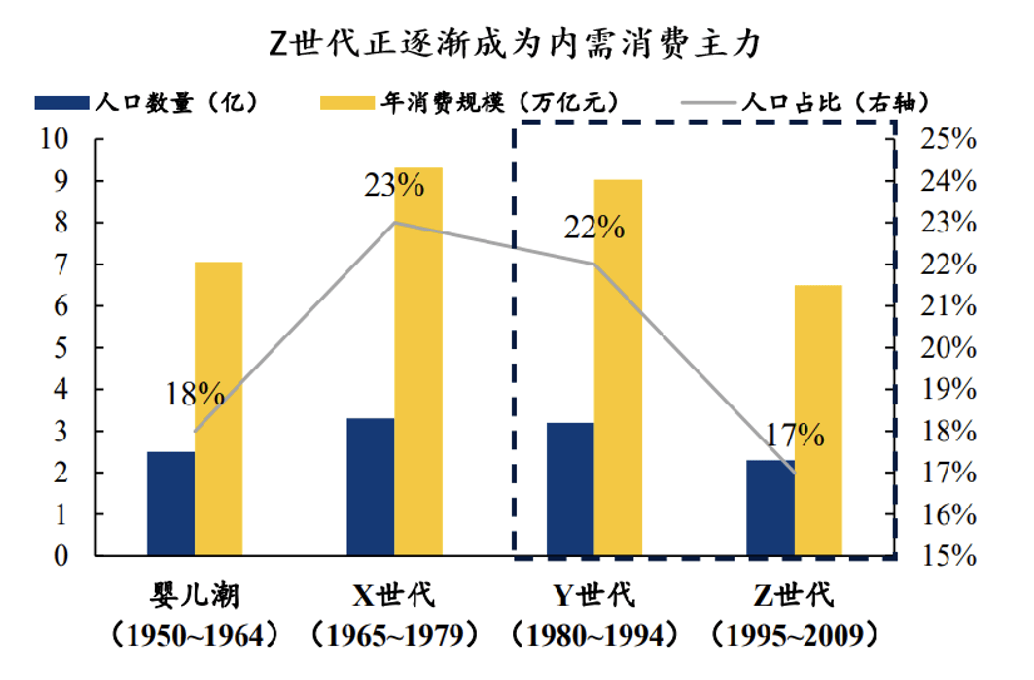
Group 1: Market Overview - The Hong Kong stock market is experiencing a surge in consumer stocks, with notable companies reaching historical highs and significant market valuations, reflecting the unique appeal of the Hong Kong consumer sector characterized by high growth, strong brand power, and valuation opportunities [1] - The influx of southbound capital into Hong Kong stocks is driven by the narrative of asset revaluation in China, improving market liquidity, and a favorable policy environment, positioning the Hong Kong consumer sector as a new battleground for global capital [1] Group 2: Consumer Recovery - The consumer market is witnessing a revival, with increased foot traffic in shopping areas, packed cinemas, and a surge in online shopping, indicating a robust recovery in consumer spending [2] - During the recent Dragon Boat Festival holiday, domestic travel reached 119 million trips, a year-on-year increase of 5.7%, with total spending of 42.73 billion yuan, up 5.9%, showcasing the recovery across various sectors including hospitality and transportation [2] Group 3: Policy Support - The Chinese government has prioritized boosting consumption and expanding domestic demand in its economic agenda, with comprehensive measures outlined in the "Special Action Plan for Boosting Consumption" to enhance consumer confidence and spending [3][4] Group 4: Emerging Consumer Trends - The rise of "self-care consumption" reflects a shift in consumer behavior, particularly among the Z generation, who prioritize emotional satisfaction and personal well-being in their purchasing decisions [5][6] - Emotional consumption, driven by the need for emotional fulfillment rather than just practical utility, is becoming increasingly popular, with key demands including self-care, value realization, personal expression, and emotional satisfaction [9][10] Group 5: Investment Opportunities in Hong Kong - The Hong Kong stock market is becoming a preferred destination for new consumer companies due to its more lenient listing requirements and the government's supportive measures for domestic companies seeking to list abroad [11] - The National Index for Hong Kong Stock Connect Consumer Theme has shown a cumulative increase of 32.3% in 2024, outperforming other consumer indices, indicating strong growth potential in the sector [15]
64款应用违规收集个人信息被通报,涉喜茶奈雪等茶饮小程序
Nan Fang Du Shi Bao· 2025-06-18 15:25
Core Viewpoint - The National Cybersecurity and Information Security Information Notification Center reported 64 mobile applications that illegally collected and used personal information, including several well-known tea beverage brands' ordering mini-programs, highlighting significant privacy issues within the industry [1][2]. Group 1: Overview of Violations - Among the 64 problematic applications, 30 did not provide users with a way to withdraw consent for personal information collection, indicating a severe issue [1]. - 29 applications failed to implement necessary security measures such as encryption and de-identification [1]. - 25 applications did not clearly outline the purposes, methods, and scope of personal information collection in their privacy policies [1]. Group 2: Specific Applications Highlighted - The application "霸王茶姬" (version 5.78.8) exhibited four types of issues, including a lack of clear privacy policy details and failure to provide timely responses for user requests regarding personal information [2]. - "太平洋咖啡会员" (version 3.3.0) also faced four issues, notably not informing users about the privacy policy at the app's first run and not obtaining user consent before collecting personal information [2]. Group 3: Detection and Reporting - The problematic applications were detected by the National Computer Virus Emergency Response Center between May 23, 2025, and June 11, 2025 [3].
茶饮界惊现“新排队王”,日销超2000杯,被誉为“北京必喝茶饮”
Guan Cha Zhe Wang· 2025-06-18 12:55
Group 1: New Tea Beverage Industry - A new tea beverage brand, "Li Tea," has emerged as a "new queue king," selling over 2000 cups daily since its opening in April last year [1] - The brand has gained significant popularity on social media, with over 1.44 million views on related topics on Xiaohongshu, and is considered a must-try drink in Beijing [1] - Li Tea's menu features 21 products across five categories, with prices ranging from 15 to 32 yuan per cup, including signature items like Apple Da Hong Pao and explosive hawthorn lemon tea [1] Group 2: Vanadi's Bitcoin Investment - Spanish coffee chain Vanadi has increased its Bitcoin holdings to 30 coins, planning to invest over $1.1 billion in Bitcoin as part of a new reserve strategy [2] - The company aims to fully transform into a Bitcoin-centric enterprise, with Chairman Salvador Martí seeking authorization for a €1 billion Bitcoin reserve strategy [2] Group 3: Bai Fei Dairy Industry - Bai Fei Dairy has had a tumultuous journey towards IPO, with multiple attempts since 2018, including a shift from the New Third Board to the Shanghai Stock Exchange [3] - The company has faced setbacks, including withdrawing its IPO application in December 2023, but has recently had its application accepted by the Shanghai Stock Exchange [3] Group 4: Guangdong Lychee Export - Guangdong Zhongli Agricultural Group has successfully exported 11 tons of Guangdong Feizixiao lychee to Thailand, marking the start of its Southeast Asian journey [4] - The distribution strategy includes 60% of the lychee entering major supermarkets, 30% to a large fresh produce wholesale market, and 10% through TikTok Shop and live commerce [5] - The company anticipates a 3 to 4 times increase in lychee export volume this year, projecting around 6000 tons, with Guangdong lychee accounting for over 55% of national exports [5]

海伦司市值缩水9成,为何难成“酒馆界蜜雪冰城”?
Jing Ji Guan Cha Wang· 2025-06-18 10:40
Core Viewpoint - The decline of Helen's, once a promising player in the low-cost bar market, highlights the challenges of maintaining a viable business model in a rapidly changing consumer landscape, contrasting sharply with the success of competitors like Mixue Ice Cream. Company Performance - Helen's market value plummeted from 30.2 billion HKD in 2021 to 1.8 billion HKD, a decline of over 94% [2] - In 2024, Helen's revenue dropped by 37.8% to 75.2 million HKD, with a net loss of 7.8 million HKD [4] - The number of Helen's stores decreased from a peak of 782 to 579 [4] Business Strategy - Helen's initially thrived on a low-cost model targeting young consumers, but faced a "scale trap" leading to significant losses [4] - The company closed over 500 stores in two years as part of a survival strategy, which temporarily resulted in a profit of 18 million HKD in 2023 [4] - In contrast, Mixue Ice Cream reported a revenue growth of 22.29% to 24.83 billion HKD in 2024, with a net profit increase of 41.41% to 4.44 billion HKD [8] Market Positioning - Helen's struggles stem from a mismatch between its low-price positioning and the emotional value sought in social spaces by consumers [5] - Only 34% of Helen's customers are willing to bring friends or partners, compared to 68% for competitors like Hu Tao Li [5] - The rise of alternative social venues, such as camping bars and home drinking experiences, has further diluted Helen's customer base [8] Operational Challenges - Helen's faces a heavy cost structure, with initial investments for franchise stores exceeding 600,000 CNY, compared to Mixue's 210,000 CNY [6] - Labor costs for Helen's surged by 72.5% to 1 billion CNY in 2022, adding to operational burdens [6] - The business model relies heavily on evening traffic, requiring high customer volume and turnover to be profitable [6] Competitive Landscape - The high-end market is dominated by craft beer and whiskey bars, while the low-end market is being encroached upon by convenience stores and e-commerce [6] - Mixue's success is attributed to its strategic focus on lower-tier cities and a product-driven approach that emphasizes high turnover and customer engagement [9] Future Directions - Helen's is attempting a difficult transition to a franchise model, with the "Hi Beer Partner" initiative launched in 2023, but faces challenges with declining sales in franchise stores [10] - The company has adjusted its franchise policies, which has raised concerns among franchisees regarding profitability [10] - The emergence of new social consumption spaces poses a significant threat to traditional bar models like Helen's, as consumer preferences evolve [11]

茶饮行业的五次浪潮:如何捕获消费新趋势,创造新需求?
Xin Lang Cai Jing· 2025-06-17 13:25
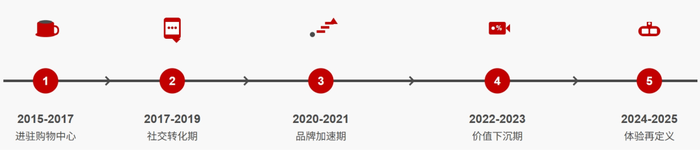
Core Insights - The article highlights the rapid evolution of the tea beverage industry in China, marking 2023 as a significant year for capital market entries by tea brands, with "沪上阿姨" being the fourth to list on the Hong Kong Stock Exchange [1] - The tea beverage sector has transitioned from a niche market to a vital component of shopping centers, reflecting changing consumer behaviors and preferences [1][2] - The industry is currently facing challenges such as declining repeat purchases, brand homogenization, and increased competition, prompting a reevaluation of the value tea brands bring to shopping centers [1][6] Development Phases of the Tea Beverage Industry (2015-2025) - **Phase 1 (2015-2017)**: Transition from street vendors to shopping centers, with brands like CoCo and蜜雪冰城 expanding into lower-tier cities [3] - **Phase 2 (2017-2019)**: Emergence of "new tea" brands like 喜茶 and 奈雪的茶, redefining the tea experience from convenience to social consumption [4] - **Phase 3 (2020-2021)**: Pandemic-driven rapid expansion, with brands competing for prime locations in shopping centers [5] - **Phase 4 (2022-2023)**: Market saturation and rational consumer behavior lead to a decline in repeat purchases and brand differentiation [6] - **Phase 5 (2024-2025)**: Reevaluation of brand value, focusing on brand uniqueness and consumer engagement [7] Consumer Behavior and Brand Evolution - The perception of tea beverages has shifted from mere products to symbols of personal expression and social interaction, driven by younger generations [10] - The rise of social media platforms has transformed tea consumption into a shareable experience, emphasizing aesthetics and brand storytelling [10][13] - Leading brands are diversifying their offerings beyond tea, creating a "brand universe" that includes food and lifestyle products [13][14] Operational Strategies and Market Dynamics - The tea beverage sector is experiencing a decline in average monthly sales per square meter, with a reported drop of approximately 22% from previous years [20] - The traditional strategy of prioritizing prime locations is shifting towards a focus on cost-effectiveness and brand synergy [21] - Shopping centers are encouraged to limit the number of tea brands to enhance differentiation and avoid market saturation [24] Future Outlook - The tea beverage industry is evolving into a more integrated part of the consumer experience, with brands exploring collaborations and immersive experiences [8][25] - The focus is shifting from merely attracting foot traffic to creating meaningful consumer interactions and enhancing overall shopping center appeal [24][25]
从隔夜柠檬到菌群超标,投资者对蜜雪冰城的宽容还剩多少?
阿尔法工场研究院· 2025-06-17 12:19
Core Viewpoint - The article discusses the challenges faced by the popular tea brand Mixue Ice City in the Hong Kong market, particularly focusing on food safety issues and the sustainability of its low-price strategy. Group 1: Market Entry and Challenges - Many mainland restaurant brands are attempting to enter the Hong Kong market, seeing it as a lucrative opportunity due to the spending power of Hong Kong residents [4][5]. - The year 2023 marked a peak for mainland restaurant brands entering Hong Kong, with at least 42 brands having established a presence by June [5][7]. - However, the Hong Kong market presents significant challenges, including higher rent and labor costs, as well as stricter regulatory scrutiny compared to mainland China [8]. Group 2: Food Safety Issues - Mixue Ice City was recently highlighted by Hong Kong authorities for food safety violations, specifically for exceeding bacterial limits in frozen dessert samples [9][22]. - The Hong Kong food safety system is known for its strict regulations, with a compliance rate of 99.9% for food safety [12]. - The specific violations included a 70% exceedance of the allowable limit for coliform bacteria and a 50% exceedance for total bacterial count in their products [26]. Group 3: Consumer and Market Response - Despite the food safety issues, consumers have shown a degree of tolerance towards Mixue Ice City, with its stock price remaining relatively stable after the incidents [36][37]. - The brand's low pricing strategy, such as offering lemon water for 4 HKD, has created a strong psychological barrier for consumers, making them more forgiving of the brand's missteps [40][38]. - Mixue Ice City's stock price has seen significant growth, with a cumulative increase of over 160% since its listing, reflecting strong market resilience [51]. Group 4: Financial Performance - For the fiscal year 2024, Mixue Group reported a revenue of 24.83 billion RMB, a year-on-year increase of 22.3%, and a net profit of 4.45 billion RMB, up 39.8% [52][53]. - The company's gross margin stood at 32.5%, indicating strong profitability compared to its peers [52]. Group 5: Future Outlook and Risks - Despite its current success, Mixue Ice City faces significant challenges, including the need to balance expansion with food safety management [69]. - The brand's overseas operations have encountered setbacks, with negative net openings in international markets and a 35% decline in same-store sales growth [64][66]. - Analysts have downgraded Mixue Ice City's rating due to concerns over high valuations and underperformance in overseas markets [60][61].

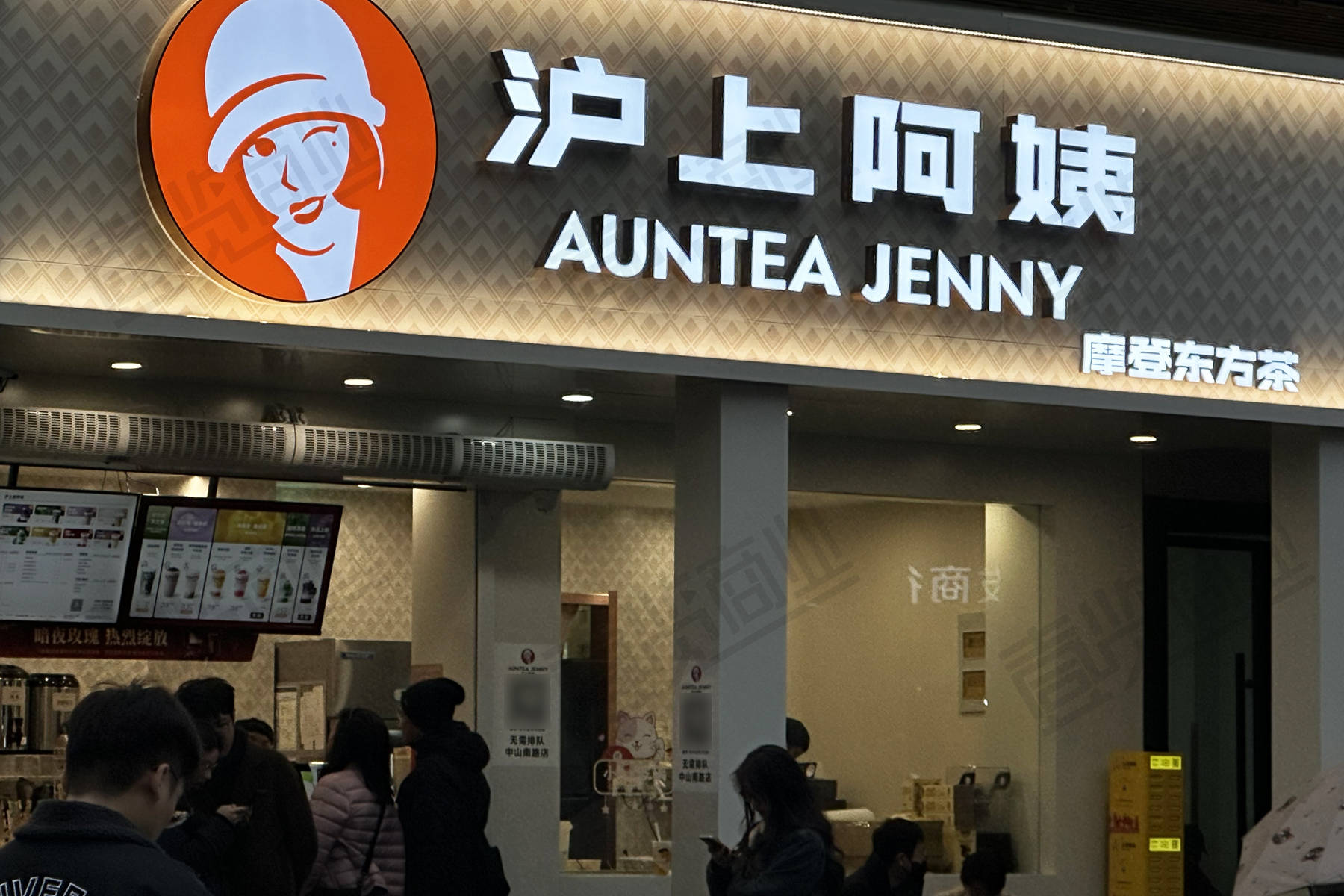
沪上阿姨加盟政策调整,加速开店
Sou Hu Cai Jing· 2025-06-17 10:24
Core Insights - The company, Hu Shang A Yi, is preparing for the peak season of tea beverages by launching supportive policies for franchise partners, particularly targeting young entrepreneurs [2] - The company is innovating its product offerings to align with market trends, focusing on health and dietary needs [3][4] - A robust support system for franchisees is established, covering site selection, supply chain, operations, and marketing [5][6][7] Group 1: Franchise Support Initiatives - Hu Shang A Yi announced several promotional policies to alleviate financial burdens on franchise partners, including a reduction of 20,000 yuan in brand authorization fees and a 30% down payment on equipment costs, with the remaining amount payable in 12 months interest-free [2] - The company aims to empower young entrepreneurs and franchise partners in Shandong by providing policy support and brand empowerment [2] Group 2: Product Innovation - Starting in 2024, the tea beverage industry is undergoing a health transformation, with Hu Shang A Yi upgrading its product standards to include a new "Super Fruit and Vegetable Tea Series" that provides 20% to 35% of the daily dietary fiber requirement for adults [3][4] - The launch of the new product line generated significant consumer interest, achieving over 10 million views on social media within 12 hours [4] Group 3: Operational Support - Hu Shang A Yi has developed a comprehensive support system for franchisees, utilizing big data and established models to assist in site selection, thereby increasing the success rate of new openings [5] - The company maintains a global direct sourcing supply chain to ensure consistent quality and timely delivery of raw materials, which is crucial for efficient store operations [5] - Regular training programs are conducted to enhance the operational management and standardized service capabilities of franchise stores [6] Group 4: Marketing Strategies - The company actively organizes national and regional marketing campaigns and collaborates with well-known IPs to drive traffic and stimulate consumer interest [7] - The combination of attractive franchise policies, innovative product offerings, and solid operational support is driving Hu Shang A Yi's scalable growth, with over 9,100 stores across more than 300 cities by the end of 2024 [7]