证券业

Search documents
短端利率偏弱的状态如何破解
Xinda Securities· 2025-05-20 09:19
1. Report Industry Investment Rating - The report does not explicitly mention the industry investment rating. 2. Core Viewpoints of the Report - The attitude towards the bond market remains relatively positive. It is recommended to maintain a medium - to - high duration in the portfolio, appropriately increase leverage to boost short - bond holdings, and seize buying opportunities for long - end bonds during adjustments [3][49]. - Although short - term interest rates are currently weak, as technical factors wane and with the potential for deposit rate cuts and a stable monetary policy, short - and medium - term interest rates are expected to decline, which will support long - term bonds [2][3]. 3. Summary According to the Table of Contents 3.1 Constraints on Short - Term Interest Rates from Some Technical Factors May Weaken in the Future - The weak performance of the 2 - year Treasury bond futures (TS) has restricted short - term interest rates. After the basis repair, the IRR of the CTD bond of the TS2506 contract has dropped, reducing the suppression on futures prices and potentially boosting confidence in short - term bonds [7][12]. - The decline in the central bank's claims on the government in the balance sheet may be due to the maturity of short - term bonds previously purchased or the closing of the previous short - selling long - buying operation. Currently, the impact of this factor is gradually weakening, and large banks have resumed net buying of 1 - 3 - year Treasury bonds [12][15][16]. 3.2 In the Short Term, the Probability of the Funding Rate Remaining Loose but Lower than the Policy Rate is Low, but the Decline in Deposit Rates is Still Expected to Benefit the Short - End - After the RRR cut, the tightening of the funding market was a temporary shock. The average - method assessment of the RRR and the large - scale net payment of government bonds and net withdrawal of reverse repurchase and MLF were the main reasons [17][18][19]. - Although the excess reserve ratio in April was at a low level, the central bank may tolerate a decline in banks' net lending, indicating that it hopes to maintain a loose environment but may not want the funding rate to fall significantly below the policy rate. The decline in deposit rates is conducive to compressing short - and medium - term spreads [25][30]. 3.3 The Weakening of Economic Data in April Indicates Insufficient Demand, and the Fundamental Environment is Still Favorable for the Bond Market - In April, new credit and social financing were both lower than expected. New credit mainly came from government bond issuance, and the decline in new credit may be due to the lack of bank reserve projects after the early - year impulse [34][35][39]. - Despite the slowdown in credit growth, the M2 growth rate increased due to the rise in banks' net lending and bond investment. However, the M1 growth rate declined, indicating limited currency activation [39][42]. - In April, domestic demand declined. Retail sales, investment, and production all showed signs of weakness, indicating that the fundamental environment is favorable for the bond market [44][45][47]. 3.4 The Bond Market is Expected to Continue a Relatively Strong and Volatile Trend - Although the recent Sino - US negotiation has made progress, the impact of short - term export rush is short - term. External demand still faces uncertainties, and domestic demand is insufficient. - The monetary policy is expected to remain in a loose range. If the funding expectation stabilizes, short - and medium - term interest rates are expected to decline, which will support long - term bonds [49].
【招银研究|固收产品月报】关注债市回调带来的配置机遇(2025年5月)
招商银行研究· 2025-05-20 08:50
Core Viewpoint - The article discusses the recent performance and outlook of fixed income products and the bond market, highlighting the impact of macroeconomic factors and policy changes on investment strategies and opportunities [1][34]. Summary by Sections Fixed Income Products - Recent performance of fixed income products shows that rights-embedded bond funds outperformed short-term bond funds and high-grade interbank certificates of deposit index funds in the past month, with returns of 0.62%, 0.19%, and 0.18% respectively [3][8]. - Cash management products yielded a return of 0.11%, indicating a stable but declining trend in cash product yields, which may approach 1% in the long term [1][38]. Bond Market Review - The bond market experienced fluctuations, with short-term rates stabilizing and long-term rates rising. The 10-year government bond yield increased to 1.68%, while the 1-year government bond yield rose to 1.45% [10][16]. - The easing of US-China tariffs has improved market risk appetite, leading to a slight market correction [10][30]. Market Outlook - Short-term expectations indicate a weak fluctuation in the bond market, with a potential for small adjustments. However, the long-term downtrend in interest rates remains intact, suggesting opportunities for investors to capitalize on market corrections [29][36]. - The 1-year AAA interbank certificate of deposit rate is expected to stabilize between 1.6% and 1.8% [29][30]. Investment Strategies - For investors focused on liquidity management, maintaining cash products and considering low-volatility financial products or short-term bond funds is recommended [38]. - For conservative investors, holding pure bond products and gradually increasing duration exposure is advisable, especially as the 10-year government bond yield approaches 1.7%-1.8% [39]. - For more aggressive investors, fixed income plus products that include convertible bonds and equity assets may present opportunities, with a focus on defensive convertible bond products over aggressive ones [40]. Regulatory Developments - The China Securities Regulatory Commission has issued a plan to promote high-quality development in the public fund industry, emphasizing a shift from scale to return, and from short-term to long-term investment strategies [34].

中美贸易代表会谈后是否已确定下一次会谈?外交部回应……盘前重要消息一览
Zheng Quan Shi Bao· 2025-05-20 00:59
Core Insights - The Chinese economy is showing resilience, attracting long-term capital into the A-share market, with net purchases exceeding 200 billion yuan this year [2][3] - There is a growing global consensus on the upward revaluation of Chinese assets, driven by strong GDP growth [3] - The Ministry of Industry and Information Technology emphasizes the need to maintain stable growth in the manufacturing sector and expand employment capacity [4] Group 1: Market Trends - As of May 19, 2023, long-term funds such as social security and insurance have net bought over 200 billion yuan in A-shares, indicating a positive cycle of capital inflow and market stability [2] - In April, foreign investment in domestic stocks turned into net purchases, reflecting a favorable sentiment towards Chinese assets [5] Group 2: Economic Indicators - China's GDP growth in the first quarter outpaced that of other major economies, reinforcing the narrative of a stable and robust Chinese economy [3] - The Ministry of Industry and Information Technology is implementing policies to support key industries and enhance employment through technological upgrades and new industry cultivation [4] Group 3: Foreign Investment - In April, non-bank sectors saw a net inflow of 17.3 billion USD, with significant contributions from resilient foreign trade and increased foreign investment in domestic bonds [5][8] - As of the end of April, foreign institutions held 4.44 trillion yuan in the interbank bond market, accounting for 2.7% of the total [8] Group 4: Corporate Developments - Huawei launched the world's first Harmony OS laptop, priced from 7,999 yuan, indicating a push into innovative technology products [9] - Several companies are undergoing significant changes, including acquisitions and stock repurchases, reflecting active corporate strategies in the current market environment [11]
万众瞩目,央行即将公布
Wind万得· 2025-05-19 22:36
Core Viewpoint - The People's Bank of China is expected to lower the Loan Prime Rate (LPR) on May 20, which has remained unchanged for six months, with the current 1-year LPR at 3.1% and the 5-year LPR at 3.6% [2][3] Impact on Financial Markets - A potential LPR reduction could lower financing costs and boost market confidence, benefiting the stock market and corporate profitability, while possibly leading to a decrease in deposit rates affecting fixed-income products [4][9] - Short-term funding rates may experience fluctuations, with expectations of them stabilizing between 1.4% and 1.6% [10][11] Real Estate Market Implications - Lowering the LPR could reduce mortgage costs for homebuyers, stimulating demand and improving the financial situation of real estate companies, although the effect may take time to materialize due to weak buyer sentiment [4][15] - The current real estate market is still adjusting, with a need for further supportive measures to stabilize prices, and a potential reduction in mortgage rates could be a key strategy [14][19] - Some analysts predict that new mortgage rates could drop to around 2.9% if the LPR is lowered, although certain regions have seen recent increases in mortgage rates [16][18]

每日债市速递 | 4月规模以上工业增加值同比增6.1%
Wind万得· 2025-05-19 22:36
Group 1: Monetary Policy and Market Operations - The central bank conducted a 135 billion yuan 7-day reverse repurchase operation on May 19, with a fixed interest rate of 1.40%, resulting in a net injection of 92 billion yuan for the day after accounting for 43 billion yuan in reverse repos maturing [1][2] - Overnight and 7-day pledged repo rates for deposit-taking institutions decreased, with the former dropping over 9 basis points and the latter nearly 4 basis points [3] Group 2: Interbank and Bond Market - The latest transaction for one-year interbank certificates of deposit in the secondary market is around 1.69%, showing little change from the previous day [6] - The closing prices for government bond futures showed an increase, with the 30-year main contract rising by 0.37%, the 10-year by 0.13%, the 5-year by 0.04%, and the 2-year by 0.02% [10] Group 3: Economic Indicators - China's industrial added value above designated size increased by 6.1% year-on-year in April, exceeding the expected growth of 5.2% but lower than the previous value of 7.7% [12] Group 4: Corporate Bond Issuance - TSMC plans to issue bonds worth 14.1 billion New Taiwan dollars, with a 5-year interest rate rising to 1.92% [16] - Huagong Technology intends to issue up to 2 billion yuan in short-term financing notes and up to 2 billion yuan in medium-term notes [17] - Lianrui New Materials plans to issue convertible bonds to raise no more than 720 million yuan [17]

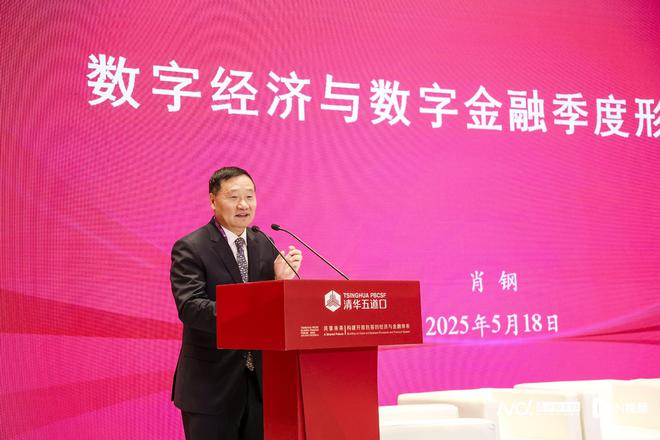
全球金融论坛 | 证监会原主席肖钢:三个方面入手破解数字经济发展堵点
Zhong Guo Jing Ying Bao· 2025-05-19 22:15
Core Insights - The digital economy in China has shown strong growth in the first quarter of 2023, with core industries growing at over 10%, significantly outpacing GDP growth [2] - The development of digital finance is also robust, with the emergence of AI models like DeepSeek enhancing financial efficiency and customer experience [2][3] Group 1: Digital Economy Growth - In Q1 2023, the digital economy's core industries maintained a growth rate of over 10%, with digital manufacturing value-added increasing by 11.5% year-on-year, surpassing the growth rates of traditional industrial and high-tech manufacturing sectors [2] - The digital services sector has also experienced double-digit growth, exceeding the overall service sector growth by 5 percentage points [2] - Eastern regions of China are leading in digital economy development, contributing over 90% of revenue and net profit from A-share listed companies in core industries [2] Group 2: Digital Finance Development - Digital finance has two notable characteristics in Q1 2023: financial institutions are focusing on cost-effective investments while enhancing talent acquisition and training [3] - The securities industry has the highest investment intensity in financial technology among all financial sub-sectors, with increased emphasis on return on investment [3] - Financial data market construction is deepening, with institutions working on policies and infrastructure to activate data elements and enhance data circulation [3] Group 3: Policy and Strategic Recommendations - The development of the digital economy aims to improve the efficiency of the real economy, necessitating deeper integration between digital and traditional sectors [4] - Recommendations include improving the digital economy ecosystem, accelerating the establishment of governance frameworks for generative AI in finance, and building a high-quality financial data market [4] - Key actions involve fostering a cooperative ecosystem among technology, industry, and finance, and addressing constraints in digital consumption [4]
业绩比较基准连降难抵存款搬家 理财规模年内有望创新高
Zhong Guo Zheng Quan Bao· 2025-05-19 20:42
Core Viewpoint - Financial institutions are adjusting the performance benchmarks of wealth management products in response to the recent interest rate cuts by the People's Bank of China, although the adjustments do not fully reflect the actual decline in underlying asset yields [1][2][3]. Group 1: Adjustments in Performance Benchmarks - Institutions such as Xingyin Wealth Management and Minsheng Wealth Management have lowered the performance benchmarks of several wealth management products, with some upper limits reduced by up to 155 basis points and lower limits by up to 60 basis points [2]. - For instance, Xingyin Wealth Management's product benchmark was adjusted from 2.05%-2.75% to 2.00%-2.70%, effective from May 14 [2]. - Minsheng Wealth Management also reduced its product benchmark from 3.1%-4.0% to 2.6%-3.1%, effective from May 13 [2]. Group 2: Market Response and Asset Allocation - The decline in performance benchmarks is seen as a normal adjustment to align with the downward trend in market interest rates [2][3]. - Financial institutions are encouraged to optimize their asset allocation structures to cope with performance pressures resulting from the declining yields of underlying assets [3][4]. - The supply-demand gap for low-risk, high-yield quality assets may further widen, as banks control deposit rates and guide costs downwards [4]. Group 3: Market Trends and Predictions - The recent interest rate cuts are expected to lead to a new wave of collective rate reductions by banks, potentially increasing the scale of wealth management products to historical highs, possibly exceeding 33 trillion yuan [6]. - In April, the scale of wealth management products increased by 2.1 trillion yuan, reaching 31.3 trillion yuan, surpassing previous levels [6]. - There is a growing preference for "fixed income plus" wealth management products, which are expected to continue expanding in market share due to their risk diversification capabilities [7].
“创业投资与民营经济绽放女性力量”闭门沙龙成功举办
2 1 Shi Ji Jing Ji Bao Dao· 2025-05-19 08:28
Group 1 - The private economy in China is experiencing unprecedented development opportunities, supported by policies that empower the private sector and the implementation of the first Private Economy Promotion Law, providing a solid legal guarantee for its healthy development [1] - The venture capital industry in China has undergone significant growth over the past 30 years, driven by policy, market, and industry forces, but still faces challenges in various stages of fundraising, investment, management, and exit [3] - Female venture capitalists are playing a crucial role in shaping a vibrant ecosystem within the industry, leveraging their unique qualities to capture the social value of enterprises and enhance their resilience against uncertainties [5] Group 2 - The event "Venture Capital and the Empowerment of Women in the Private Economy" was successfully held, highlighting the importance of female leadership and investment in driving innovation and economic growth [1] - The macroeconomic analysis shared during the event emphasized optimism towards technology and consumption as key investment directions, with a focus on domestic substitution in emerging technology sectors and the increasing importance of consumption in the long term [9] - The discussion on female leadership revealed that companies with gender-diverse management teams tend to perform better, showcasing the advantages of empathy, emotional intelligence, and resilience that female leaders bring to the table [11] Group 3 - The application of artificial intelligence in the healthcare sector was highlighted, with successful implementations in various levels of hospitals across China, indicating a promising future for AI in addressing significant health issues [13][16] - The development of China's commercial space sector was discussed, with calls for increased capital investment in space infrastructure, which is expected to bring revolutionary changes to human development [14]


证监会原主席肖钢:建设高质量金融数据市场,核心是数据要素
Nan Fang Du Shi Bao· 2025-05-19 05:45
Core Insights - The digital economy in China has shown strong growth in Q1 2023, significantly supporting the macroeconomic outlook, with the core industries' added value growth rate exceeding 10%, notably higher than GDP growth [3][4] - Investment in core industries of the digital economy has also performed well, driven by policies and market demand recovery, particularly in emerging fields like artificial intelligence and humanoid robots [3][4] Digital Consumption - Digital consumption has experienced steady growth, with innovations in digital technology improving consumer experiences and driving online consumption, particularly in food and trade-in models [4] - The eastern region of China leads in digital economy metrics, contributing over 90% of revenue and net profit from A-share listed companies in core digital industries, indicating strong industrial clustering effects [4] Digital Finance - The emergence of AI models like DeepSeek has democratized access to AI capabilities for small and medium financial institutions, enhancing innovation and efficiency in the financial sector [5] - Financial institutions are focusing on optimizing technology investments, with a slowdown in growth for banking tech investments but increased intensity in securities sector investments [5] Policy Outlook - Recommendations for future development include improving the digital economy ecosystem, fostering collaboration between technology, industry, and finance, and establishing governance frameworks for generative AI applications in finance [6] - Emphasis on consumer rights protection in the AI era is crucial, with financial institutions needing to ensure the safety and compliance of AI technology usage [6]
陆港投资(珠海)有限公司靠谱吗?
Sou Hu Cai Jing· 2025-05-18 18:01
Group 1: Financing Needs - Companies must accurately identify their financing needs, including the specific amount required, the purpose of the funds, the duration of use, and the repayment sources [1] - Short-term financing may require smaller amounts and can be repaid through operating cash flow, while long-term projects necessitate larger financing plans with clear repayment arrangements [1] Group 2: Assessing Company Status - A comprehensive and objective assessment of the company's status is crucial before applying for financing, as it is a core consideration for financial institutions [3] Group 3: Understanding Financing Channels and Products - Companies should thoroughly understand the characteristics, requirements, and applicable scenarios of various financing channels and products available in the market [4] - Bank loans are a common financing method, with various types such as working capital loans, fixed asset loans, project loans, and more, offering relatively low interest rates and stable funding sources [4] - Companies with good financial conditions and stable operations can secure loans at lower interest rates compared to market averages [6] - Bond financing allows companies to raise large amounts of capital with longer terms and fixed costs, suitable for large enterprises with good credit ratings [8] - Equity financing involves selling a portion of the company's equity to investors, which can provide long-term funds but may dilute existing shareholders' control [8] - Other financing options include leasing, supply chain finance, microloans, and government support funds, each with unique advantages and conditions [8] Group 4: Preparing Financing Application Materials - Companies must prepare financing application materials that accurately reflect their strengths and the feasibility of the financing project, ensuring authenticity and completeness [9] Group 5: Choosing the Right Financial Institution - Selecting the appropriate financial institution is critical, as different institutions have varying loan policies, interest rates, and service quality [11] - Companies should prioritize larger, reputable banks with strong financial capabilities to reduce risks and access a wider range of services [11] Group 6: Application and Approval Process - The financing application process involves submitting various documents, including business licenses, financial statements, and project feasibility reports [10][12] - Financial institutions conduct thorough due diligence to assess the company's operational status, creditworthiness, and project feasibility [12] Group 7: Contract Signing and Fund Disbursement - After approval, companies must carefully review and sign financing contracts, ensuring clarity on key terms such as loan amount, interest rate, and repayment methods [14] - Funds are disbursed to the company's designated account following the completion of necessary procedures [17] Group 8: Post-Financing Management and Risk Control - Companies should implement robust management and risk control measures post-financing to maximize the effectiveness of fund usage and ensure timely repayment [17][18] - Monitoring fund usage and maintaining open communication with financial institutions are essential to prevent potential credit crises [18] - Companies must adapt to changes in financial structure and manage operational risks associated with business expansion funded by financing [17]