
物流

Search documents
中国外运等在无锡成立新公司,含港口经营业务
Qi Cha Cha· 2025-11-24 08:25
Core Viewpoint - A new company, Wuxi Xin'an Port Co., Ltd., has been established in Wuxi, focusing on port operations and related logistics services [1] Company Summary - Wuxi Xin'an Port Co., Ltd. has a registered capital of 30 million yuan [1] - The company is co-owned by China National Foreign Trade Transportation Group (China Foreign Trade) and Wuxi High-tech Logistics Center Co., Ltd. [1] Industry Summary - The business scope of the new company includes port operations, bonded warehouse operations, customs supervision of goods storage services, and domestic cargo transportation agency [1]

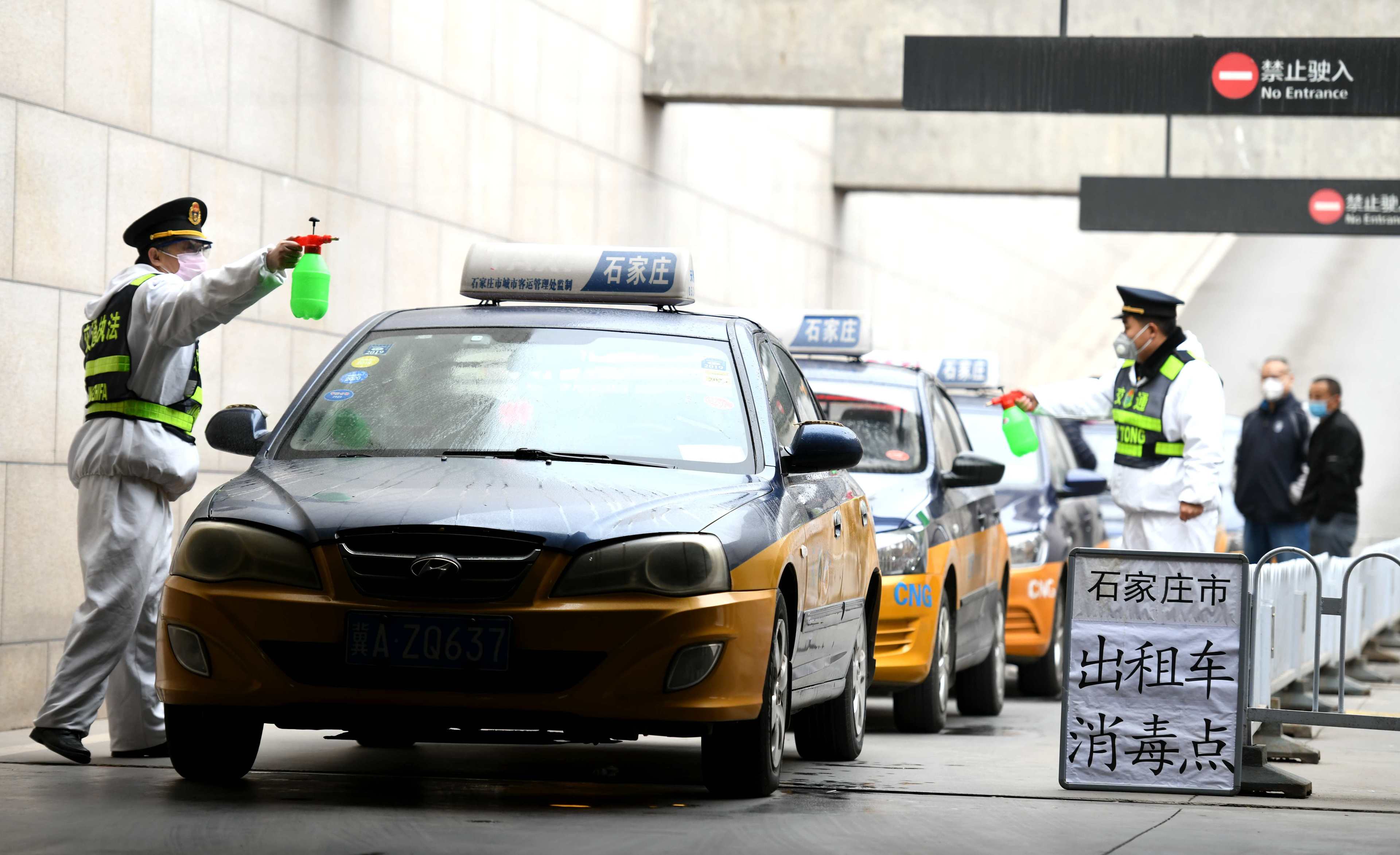
阶段性提高地方财政留用比例,新增1100亿全部留给县级,减免出租车“份子钱”……国务院再出大招
Mei Ri Jing Ji Xin Wen· 2025-11-24 08:07
Core Points - The State Council meeting, chaired by Premier Li Keqiang, focused on enhancing the "six stability" work coordination mechanism to effectively respond to the pandemic's impact and promote stable economic and social operations [1] - Measures were determined to support the transportation and logistics industries, including tax reductions and financial support for local governments to ensure basic livelihoods and operational capabilities [1][5] Group 1: Support for Taxi Drivers - The meeting emphasized the need to assist taxi drivers who have faced significant income reductions due to decreased passenger numbers during the pandemic [3] - As of the end of 2018, there were 1.39 million taxis in China, completing 35.2 billion passenger trips, which accounted for 28% of the national urban passenger transport volume [3] - The government encouraged local authorities to implement temporary reductions in the "commission fees" that taxi drivers must pay to taxi companies, alleviating financial pressure on drivers [3][4] Group 2: Financial and Tax Relief Measures - The meeting proposed to increase the local fiscal retention ratio by 5 percentage points from March 1 to June 30, resulting in an additional 110 billion yuan allocated for county-level use [1] - Insurance companies are encouraged to provide relief by extending insurance periods and allowing deductions for insurance fees for vehicles, ships, and aircraft that were not in operation during the pandemic [4] - A series of tax reductions and fee exemptions were announced, including a 50% reduction in land use tax for warehouse land and the exemption of port construction fees for import and export goods until June 30 [10][11]

飞力达涨2.11%,成交额4842.06万元,主力资金净流出380.77万元
Xin Lang Cai Jing· 2025-11-24 06:27
Group 1 - The core viewpoint of the news is that Feilida's stock has shown fluctuations, with a year-to-date increase of 17.96% but a recent decline in the last five trading days by 7.30% [1] - As of November 24, Feilida's stock price was 7.75 CNY per share, with a total market capitalization of 2.88 billion CNY [1] - The company has experienced a net outflow of main funds amounting to 3.81 million CNY, with significant selling pressure observed [1] Group 2 - Feilida's main business involves integrated supply chain management solutions, with international freight forwarding accounting for 56.83% of revenue and comprehensive logistics services for 43.17% [1] - As of September 30, the number of shareholders decreased by 13.53% to 28,400, while the average circulating shares per person increased by 15.65% to 12,804 shares [2] - For the period from January to September 2025, Feilida reported a revenue of 4.659 billion CNY, a year-on-year decrease of 6.81%, while net profit attributable to shareholders increased by 49.10% to 33.19 million CNY [2] Group 3 - Since its A-share listing, Feilida has distributed a total of 160 million CNY in dividends, with 24.066 million CNY distributed over the past three years [3]

高频数据跟踪:生产持续回落,物价整体下行
China Post Securities· 2025-11-24 05:22
Report Information - Report Type: Fixed Income Report - Release Date: November 24, 2025 - Analysts: Liang Weichao, Cui Chao [2] Industry Investment Rating No industry investment rating information is provided in the report. Core Viewpoints - The production side's heat continues to decline, with significant decreases in the operating rates of blast furnaces, asphalt, PX, PTA, all-steel tires, and semi-steel tires. - The commercial housing transaction area has marginally rebounded but remains lower than the same period in previous years. The land supply area is on a seasonal upward trend, and a peak in land supply is expected at the end of the month. - Prices have generally declined, including those of crude oil, coking coal, copper, aluminum, zinc, and four key monitored agricultural products: pork, eggs, vegetables, and fruits. - In terms of shipping prices, the SCFI has declined for three consecutive weeks, while the BDI has risen significantly. Short-term focus should be on the implementation of incremental policies on the consumption and investment sides and the recovery of the real estate market [2][32]. Summary by Directory Production - Steel: The coke oven capacity utilization rate remained flat, the blast furnace operating rate decreased by 0.62 pct, and the rebar production increased by 7.96 tons [3][9]. - Petroleum Asphalt: The operating rate decreased by 4.2 pct [3][9]. - Chemicals: The PX operating rate decreased by 0.36 pct, and the PTA operating rate decreased by 4.25 pct [3][9]. - Automobile Tires: The all-steel tire operating rate decreased by 3.19 pct, and the semi-steel tire operating rate decreased by 2.61 pct [3][10]. Demand - Real Estate: The commercial housing transaction area marginally rebounded, the inventory-to-sales ratio increased, the land supply area grew, and the residential land transaction premium rate decreased [3][15]. - Movie Box Office: It increased by 444 million yuan compared to the previous week [3][15]. - Automobiles: The daily average retail sales of automobile manufacturers increased by 21,000 vehicles, and the daily average wholesale sales increased by 27,000 vehicles [3][17]. - Shipping Freight Rates: The SCFI index decreased by 3.98%, the CCFI index increased by 2.63%, and the BDI index increased by 7.06% [3][20]. Prices - Energy: The Brent crude oil price decreased by 2.84% to $62.56 per barrel, and the coking coal futures price decreased by 7.33% to 1,113 yuan per ton [4][22]. - Metals: The LME copper, aluminum, and zinc futures prices changed by -0.63%, -1.77%, and -0.75% respectively, while the domestic rebar futures price increased by 0.43% [4][23]. - Agricultural Products: The overall price slightly declined, with the Agricultural Product Wholesale Price 200 Index decreasing by 0.10%. The prices of pork, eggs, vegetables, and fruits changed by -0.83%, -3.46%, -0.70%, and -0.14% respectively compared to the previous week [4][25]. Logistics - Subway Passenger Volume: In Beijing, it decreased, while in Shanghai, it increased [4][28]. - Flight Operations: Both domestic and international flight volumes rebounded [4][29]. - Urban Traffic: The peak congestion index in first-tier cities stabilized and rebounded [4][29]. Summary - The production continues to decline, and prices are generally decreasing. Short-term focus should be on the implementation of incremental policies on the consumption and investment sides and the recovery of the real estate market [32].
河北“十五五”规划建议发布:推动重大交通基础设施布局建设 深入推进京津冀协同发展
Jing Ji Guan Cha Bao· 2025-11-24 04:10
Core Viewpoint - The Hebei Provincial Government has released suggestions for the 15th Five-Year Plan, emphasizing the importance of Xi Jinping's leadership and the need for high-quality development in the province, while addressing both opportunities and challenges in the upcoming period [1][2][5]. Group 1: Achievements During the 14th Five-Year Plan - Hebei's economic strength has significantly increased, with major economic indicators consistently outperforming the national average since 2022, and the province's GDP approaching 5 trillion yuan [3]. - The effectiveness of the Beijing-Tianjin-Hebei coordinated development has improved, with enhanced transportation networks and successful hosting of the Beijing Winter Olympics [3]. - The pace of industrial transformation has accelerated, with R&D investment growing at an annual rate exceeding 10%, and the province leading in comprehensive computing power index [3]. - Reforms and opening-up have effectively released vitality, with significant improvements in the business environment and a historic increase in the number of central enterprises' subsidiaries in Hebei [3]. - Environmental quality has improved significantly, with all cities achieving better air quality and advancements in water and soil pollution control [3]. Group 2: Opportunities and Challenges for the 15th Five-Year Plan - Internationally, the world is undergoing significant changes, with increased uncertainty in the economic and trade order, while domestically, China's economic fundamentals remain strong [5]. - The coordinated development of the Beijing-Tianjin-Hebei region presents strategic opportunities, particularly with the large-scale construction of the Xiong'an New Area [5]. - However, challenges remain, including the need for stronger innovation capabilities and the urgency of industrial transformation [5]. Group 3: Development Goals for the 15th Five-Year Plan - The plan aims for high-quality development, with annual economic growth rates exceeding the national average and significant advancements in new industrialization and modernization [10]. - There is a focus on enhancing technological innovation capabilities, with increased R&D investment and the establishment of a comprehensive innovation ecosystem [10]. - The plan emphasizes the importance of social and cultural development, aiming to improve the quality of life for residents and enhance public services [11]. Group 4: Key Strategies for Implementation - The plan outlines principles such as maintaining the Party's leadership, prioritizing people-centered development, and promoting high-quality growth [9][8]. - It emphasizes the need for comprehensive reforms, effective market mechanisms, and a balance between development and security [9][8]. - The plan also highlights the importance of expanding domestic demand and integrating into the national market, with a focus on enhancing consumption and investment [27][28].
泡沫、壁垒、裁员——从跨国企业季报看世界经济风险与挑战
Xin Hua Wang· 2025-11-24 03:40
Group 1: AI Bubble Concerns - The performance of major companies in the AI sector has been strong, with firms like Nvidia exceeding revenue and profit expectations, but concerns about an AI bubble are growing [2][3] - Major tech companies, including Amazon, Alphabet, and Microsoft, are increasing capital expenditures in AI infrastructure, with a total expected to exceed $380 billion this year, yet market reactions to these investments vary [2] - A survey by Bank of America indicates that over half of fund managers believe AI stocks are in a bubble, with high valuations raising concerns about potential market impacts if AI development underperforms [3] Group 2: Impact of Tariff Barriers - The impact of U.S. tariff policies has become more pronounced, negatively affecting the earnings of export-oriented companies in Europe and Japan, as well as U.S. firms facing additional costs [4][5] - European luxury goods companies are experiencing significant revenue declines, with LVMH's fashion and leather goods revenue down approximately 8% and Kering's Gucci brand down about 22% year-over-year [4] - Japanese automakers are also suffering, with estimates suggesting that U.S. tariffs could lead to losses of approximately 1.5 trillion yen for seven major car manufacturers [4] Group 3: Consumer Sentiment and Layoffs - U.S. consumer sentiment is notably low, with major companies announcing significant layoffs, contributing to economic uncertainty [7] - The disparity in consumer spending is evident, as affluent consumers maintain or increase spending while lower-income consumers are forced to cut back [7] - Layoffs in the U.S. have reached nearly 1 million in the first nine months of the year, the highest for that period since 2020, raising concerns about future consumer spending [7]
山东港口物流集团:陆海相拥 “链”达全球
Da Zhong Ri Bao· 2025-11-24 02:50
Core Viewpoint - The logistics industry is undergoing a transformation, with the Shandong Port Logistics Group enhancing international logistics channels and significantly improving export efficiency for inland enterprises, exemplified by the new "Taiyuan-Qingdao Port" sea-rail intermodal service that reduces transit time to 48 hours [1][3]. Group 1: Logistics Development - The Shandong Port Logistics Group has established 43 inland ports and opened 41 new intermodal train routes over the past five years, exceeding its "14th Five-Year Plan" targets [3][4]. - The logistics group has achieved an annual operation volume of over 4.2 million TEUs in sea-rail intermodal transport, with an average annual growth rate of nearly 20% [4]. Group 2: Service Innovation - The logistics group has introduced over 20 new service products and innovative business models, such as "e-commerce bonded imports," to enhance its supply chain service capabilities [4][10]. - The group has developed a comprehensive service network that integrates various logistics elements, promoting a more efficient logistics ecosystem [4][6]. Group 3: Regional and International Expansion - The logistics group has expanded its operations beyond Shandong to other provinces and international locations, establishing logistics nodes in countries like South Korea, Kazakhstan, and Belgium [8]. - The group is focusing on creating a logistics hub in Yunnan, integrating local industries with modern logistics systems to support regional economic development [10][11]. Group 4: Digital Transformation - The logistics group is advancing digital logistics by developing over 300 online services and implementing a "SupplyX3" integrated service system to provide comprehensive logistics solutions [11][12]. - The group has been recognized as a leader in green logistics, being the first port logistics enterprise in China to achieve "carbon neutrality" in warehousing [11].
——交运周专题2025W47:如何看待回落后的散运?
Changjiang Securities· 2025-11-24 02:12
Investment Rating - The report maintains a "Positive" investment rating for the transportation industry [11] Core Views - Recent stock price declines in the dry bulk shipping sector are attributed to a cooling sentiment in the Fujian market, following a significant rise influenced by the 301 tariff law [2][21] - Despite short-term price declines, the industry is expected to recover due to limited supply growth and three key demand catalysts: the commissioning of the West Simandou iron ore project, potential interest rate cuts by the Federal Reserve, and increased demand from post-war reconstruction in Ukraine and hydropower projects in Yasha [2][21] - Current valuation support comes from tight shipyard capacity, high new ship prices, and rebounding second-hand ship prices, indicating a strong reset cost support for valuations [2][21] Summary by Sections Dry Bulk Shipping - The dry bulk shipping sector has experienced a rapid stock price correction after a 41.1% increase from October 16 to November 17, primarily driven by the 301 tariff law and subsequent market sentiment shifts [22] - The West Simandou iron ore project is expected to reshape the iron ore shipping landscape, with an anticipated annual production capacity of 120 million tons by 2028, significantly impacting shipping demand [24][26] - The Federal Reserve's interest rate cuts historically correlate with increased shipping rates, as lower rates reduce the opportunity cost of holding inventory and stimulate demand for commodities [30][34] Passenger Transport - Domestic passenger transport volume has shown a 5% year-on-year increase, while international passenger volume has risen by 17% [8] - The average domestic passenger load factor has improved by 2.0 percentage points, and international load factors have increased by 3.5 percentage points [52] - The report highlights a trend of rising passenger volumes despite slight fluctuations in ticket prices and oil prices [52][53] Logistics - The logistics sector has seen an 8.9% year-on-year increase in express delivery volume, with air freight prices turning positive as cross-border e-commerce demand rises [10] - The report suggests focusing on companies with strong dividend capabilities and those benefiting from improved export expectations [10][67]
帮主郑重:油价十连降!加满一箱省出早餐钱,背后藏着这些投资机会
Sou Hu Cai Jing· 2025-11-24 01:55
Core Insights - The article highlights the significant downward adjustment of oil prices, marking the tenth reduction of the year, which reflects broader economic trends impacting consumer spending and logistics costs [1][3]. Price Adjustment Summary - The recent oil price adjustments have shifted from "seven increases, nine decreases, six stasis" to "seven increases, ten decreases, six stasis," resulting in a cumulative reduction of 690 yuan per ton for gasoline, equating to a decrease of 0.49 yuan per liter, the lowest in nearly four years [3]. - Although the individual price drop may seem minor, the cumulative effect translates to substantial savings for logistics, with truck drivers saving 195 yuan on fuel costs for every 10,000 kilometers driven, which will ultimately affect consumer prices [3]. Factors Behind Price Decline - The persistent decline in oil prices can be attributed to three main factors: 1. The cost reduction for major oil consumers, such as airlines and logistics companies, where fuel costs can account for over 30% of expenses, leading to a 5% profit increase for every 10% drop in oil prices [4]. 2. A significant drop in international oil prices, with Brent crude falling below $63 and WTI reaching $58, indicating a global supply surplus [4]. 3. Easing geopolitical tensions, particularly progress in the Ukraine peace plan and improved US-Russia relations, which have reduced market risk premiums [4]. 4. Lower-than-expected demand, characterized by high US crude inventories and rapid production increases in Brazil and Guyana, alongside the Federal Reserve's delay in interest rate cuts affecting consumer confidence [4]. Investment Implications - Investors should be cautious of the pressure on renewable energy sources, as low oil prices may diminish the appeal of electric vehicles, necessitating a reevaluation of the cost-saving logic associated with charging [4]. - There is an opportunity to invest in anti-cyclical assets, as oil and gas stocks, despite short-term pressures, may present long-term investment opportunities for companies with stable cash flows and dividend yields exceeding 5% [4]. - The article emphasizes the cyclical nature of commodities, suggesting that oil prices are nearing the breakeven point for shale oil production, indicating that OPEC+ may intervene with production cuts [5].

德国将征收小包裹税;拼多多:全球化业务存在不确定性丨出海周报
2 1 Shi Ji Jing Ji Bao Dao· 2025-11-24 01:51
Group 1: Market Opportunities - Southeast Asia, Africa, and the Middle East are identified as the most promising markets for Chinese companies in the next three years [1] - The construction and engineering sector shows the highest optimism for Southeast Asia, with 71% of respondents expressing positive outlooks [1] - Healthcare (67%) and information technology and software (65%) sectors also demonstrate strong interest in Southeast Asia [1] - Retail e-commerce (63%) is strategically focusing on the Latin American market, while energy and utilities companies are paying attention to the Middle East and Central Asia (approximately 30% each) [1] Group 2: Trade Statistics - Shenzhen's total import and export volume reached 3.74 trillion yuan in the first ten months, a slight decrease of 0.2% year-on-year, maintaining its position as the leading city in mainland China [2] - Imports amounted to 1.47 trillion yuan, reflecting a year-on-year increase of 6.8%, while exports totaled 2.27 trillion yuan, showing a decline of 4.3% [2] Group 3: Regulatory Changes - A new regulation from multiple Chinese departments will enhance management of second-hand vehicle exports, requiring additional documentation for vehicles registered less than 180 days before export starting January 1, 2026 [3] Group 4: E-commerce Developments - Germany will impose a 23% VAT on all cross-border e-commerce small packages from China starting November 24, 2025, eliminating the previous exemption for goods valued under 22 euros [4] - Pinduoduo's CEO acknowledged the uncertainties in global business operations due to changing regulatory policies across different countries [5] - Alibaba International Station launched an AI Mode to automate cross-border e-commerce procurement processes for global SMEs [6] - AliExpress Brazil set a record for single-day sales on November 11, surpassing competitors and achieving three times the sales compared to the August promotion [7] Group 5: Environmental Initiatives - Didi's Brazilian platform 99 has expanded its electric vehicle services to five major cities, with over 30,000 electric and hybrid vehicles registered, significantly reducing carbon emissions [11] Group 6: Financial Performance - Walmart reported third-quarter revenue of $179.5 billion, a year-on-year increase of 5.8%, driven by strong e-commerce growth in both the U.S. (28%) and international markets (26%) [12] - The company raised its full-year sales growth guidance to 4.8%-5.1% [12] Group 7: Logistics Expansion - Cainiao has launched a cross-border small package service to Africa, initially covering eight countries and planning to expand to South Africa and Egypt by the end of December [13]