集成电路

Search documents
重庆竞超科技有限公司成立 注册资本3000万人民币
Sou Hu Cai Jing· 2025-12-10 20:53
Core Viewpoint - Chongqing Jingchao Technology Co., Ltd. has been established with a registered capital of 30 million RMB, focusing on integrated circuit manufacturing and related services [1] Company Overview - The legal representative of the company is Dai Yongjin [1] - The registered capital of the company is 30 million RMB [1] Business Scope - The company operates in various areas including integrated circuit manufacturing, sales, design, and chip production [1] - Additional services include power electronic components sales, electronic components wholesale and manufacturing, and research and development of electronic materials [1] - The company also engages in software development, non-residential real estate leasing, and information technology consulting services [1] - It is authorized to conduct business activities independently based on its business license, except for projects that require legal approval [1]
芯联集成电路制造股份有限公司关于2024年限制性股票激励计划首次授予部分第一个归属期(第三批次)归属结果公告
Shang Hai Zheng Quan Bao· 2025-12-10 18:42
Core Viewpoint - The announcement details the completion of the first vesting period for the 2024 Restricted Stock Incentive Plan of ChipLink Integrated Circuit Manufacturing Co., Ltd, with a total of 429,138 shares being vested from shares repurchased in the secondary market [2][10]. Group 1: Stock Vesting Details - The number of shares vested in this period is 429,138 shares [2]. - The shares were sourced from the company's repurchase of its A-share common stock in the secondary market [7][10]. - The vesting involved 12 incentive recipients [7]. Group 2: Decision-Making and Disclosure Process - The decision-making process for the incentive plan included multiple board and supervisory meetings, with the first board meeting held on April 13, 2024, approving the plan [3][4]. - The plan was publicly disclosed on April 25, 2024, following the annual shareholders' meeting [3][4]. - The supervisory board verified the incentive recipients and provided opinions on the plan's implementation [4][5]. Group 3: Regulatory Compliance and Restrictions - The vested shares do not have a lock-up period, but there are restrictions on transfer for directors and senior management, limiting annual transfers to 25% of their total holdings [8][9]. - Any gains from shares sold within six months of purchase by significant shareholders must be returned to the company [8]. - The company remains without a controlling shareholder or actual controller after the vesting [10].

7.2万亿,美国关税失效?美媒感叹,中国居然交了全球最好成绩单
Sou Hu Cai Jing· 2025-12-10 18:12
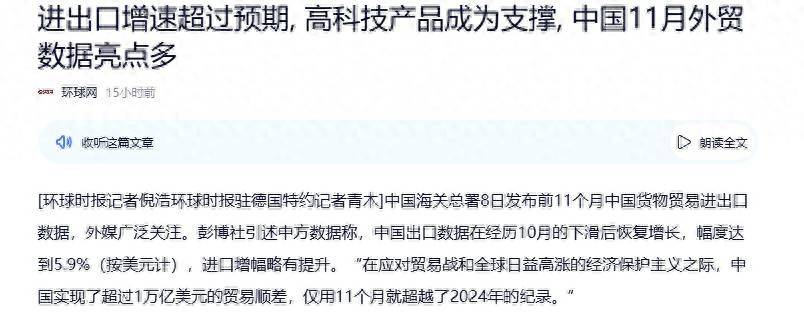
Core Insights - The trade surplus of China reached a remarkable $1.08 trillion in the first 11 months of 2025, equivalent to over 7.2 trillion yuan, defying expectations amid the US-China tariff conflict [1] - Exports to the US decreased significantly by 18.9% year-on-year, amounting to $385.9 billion, which is nearly $90 billion less than the previous year [3] - Despite the decline in US exports, China saw an increase in exports to the EU by 8.1% and to ASEAN by 13.7%, compensating for the losses in the US market [5] Trade Dynamics - A Zhejiang automotive parts factory experienced a 30% drop in US orders due to tariffs but successfully pivoted to new markets in Southeast Asia and Africa, signing contracts that now account for 40% of total orders [7][9] - The number of private enterprises engaged in import and export activities increased by 6.6 million, with a 7.1% growth in their trade volume, indicating a shift towards diversifying markets [13] - Exports to Africa surged by 26.3%, reaching $201.7 billion, with local demand for Chinese products increasing significantly [15] Product Trends - High-tech exports, such as integrated circuits and automobiles, grew by 25.6% and 17.6% respectively, indicating a shift from low-cost, high-volume products to more advanced offerings [17] - The demand for Chinese electric vehicles in Europe has increased, with dealers willing to pay a premium for their superior battery life and smart control systems [20] - Traditional products like shoes and bags are still reliant on low margins, but their share in total exports is gradually decreasing as high-tech products take the lead [22] Import Dynamics - The average import prices of major commodities fell, with iron ore down 9.4%, crude oil down 12.1%, and coal down 23.9%, leading to a lower overall import expenditure [26] - The increase in export revenue combined with reduced import costs contributed to a higher trade surplus, which could reach approximately $2 trillion when excluding energy and food imports [28] Strategic Outlook - The US is shifting its strategy from military containment to economic competition with China, aiming to establish a similar supply chain system [29] - The complexity of China's industrial system, which encompasses a wide range of products from textiles to high-end chips, poses challenges for the US in replicating such a comprehensive supply chain [32] - China's foreign trade success is attributed to the resilience and adaptability of its enterprises, which have found new markets despite tariff barriers [36][37]


前10月部分行业统计数字看上海经济的韧性与定力
Sou Hu Cai Jing· 2025-12-10 17:04
Economic Performance - Shanghai's GDP achieved a remarkable growth of 5.5% in the first three quarters, demonstrating strong resilience despite a complex external environment [1] - The annual growth rate may face some downward pressure due to the high growth base from the previous year's fourth quarter [1] Foreign Trade - Shanghai's foreign trade import and export total increased by 5.2% year-on-year from January to October, with exports rising by 10.5% [2] - Exports to non-US markets grew by 16.3%, indicating strong market competitiveness and expansion capabilities of Chinese and Shanghai enterprises [2] Transportation and Financial Markets - Airport passenger throughput increased by 8.2% due to holiday travel, while waterway and road freight turnover rose by 3.7% and 2.1% respectively [2] - The financial sector saw a total transaction volume of 29.678 trillion yuan in the first three quarters, a year-on-year increase of 12.7% [2] Industrial Transformation - The transformation of Shanghai's economic structure accelerated, with the three leading industries' manufacturing output growing by 7.6% from January to October [3] - The output of integrated circuits and artificial intelligence increased by 10.9% and 11.1% respectively, showcasing the growth of new productive forces [3][4] Consumer and Investment Trends - Retail sales of consumer goods in Shanghai rose by 4.8% year-on-year, surpassing the national average for the first time [5] - Fixed asset investment increased by 5.8% year-on-year, with significant investments in urban renewal projects [5] Employment and Income - Employment remained stable, and the overall price level was steady, with a reduction in the income gap between urban and rural residents [6]
新华全媒头条|步调一致绘蓝图 因地制宜启新篇——多省份“十五五”规划建议观察
Xin Hua She· 2025-12-10 16:38
Core Viewpoint - The article discusses the implementation of the "14th Five-Year Plan" by various provinces in China, highlighting their strategic goals and initiatives aimed at achieving high-quality economic and social development during this period [1]. Group 1: Provincial Planning and Goals - Over 20 provinces have approved their local "14th Five-Year Plan" proposals, aligning with the central government's strategic objectives [1]. - Zhejiang aims for significant economic and technological advancements by 2030, targeting GDP per capita close to that of developed economies [2]. - Guangdong emphasizes the "High-Quality Development Project" for rural areas, while Shandong focuses on enhancing innovation and ecological protection [3]. Group 2: Economic Transformation and Development - Hubei identifies the "14th Five-Year" period as crucial for its rise in central China, focusing on advanced manufacturing and modern service industries [4]. - Shanxi plans to accelerate its energy transition and upgrade its manufacturing sector, leveraging agriculture and tourism for development [4]. - Western provinces like Shaanxi aim to enhance traditional industries and promote new energy sectors [4]. Group 3: Industry-Specific Initiatives - Guizhou is set to optimize six major industrial clusters, including digital industries and advanced manufacturing, while also developing three distinctive sectors [5]. - Heilongjiang is focusing on developing a billion-level ice economy, promoting a full industry chain around ice sports and tourism [6]. Group 4: Reform and Innovation - Hainan is implementing reforms to enhance its free trade port, while Shandong is focusing on building major open cooperation platforms [7]. - Sichuan and Hunan are prioritizing artificial intelligence integration into various sectors, indicating a trend towards technological innovation [7]. Group 5: Regional Cooperation and Integration - The "Beijing-Tianjin-Hebei" collaborative development is a key focus for these regions, with plans for infrastructure and functional integration [9]. - Guangdong is enhancing its role in the national market while promoting cooperation with other major economic regions [10]. Group 6: Safety and Sustainability - Provinces are emphasizing ecological safety and resource security, with Inner Mongolia focusing on environmental protection and Liaoning on supply chain security [12]. - The plans highlight a balance between development and safety, ensuring that economic growth does not compromise ecological integrity [12]. Group 7: Social Development and Welfare - Provinces are prioritizing social welfare, with initiatives aimed at improving employment and healthcare services [13]. - The focus on people's well-being as a central theme in development strategies reflects a commitment to enhancing quality of life [13]. Group 8: Implementation and Future Outlook - The ongoing release of provincial plans is expected to facilitate the effective implementation of the central government's "14th Five-Year Plan," laying a solid foundation for achieving significant progress in modernization [14].
14万亿可期 江苏交经济建设新答卷
Jiang Nan Shi Bao· 2025-12-10 16:24
Economic Growth - Jiangsu's GDP is projected to exceed 14 trillion yuan in 2024, with a continuous increase from over 11 trillion in 2021 and over 12 trillion in 2022, showcasing strong economic resilience and growth potential [1] - The province's per capita GDP is expected to reach 22,600 USD in 2024, with labor productivity increasing from 213,000 yuan per person in 2020 to 284,000 yuan per person in 2024, indicating a focus on quality alongside scale [2] Domestic Demand - The total retail sales of consumer goods in Jiangsu are anticipated to rise from 3.63 trillion yuan in 2020 to 4.49 trillion yuan in 2024, reflecting a robust internal demand strategy [2] - Over 12,000 "Su New Consumption" promotional events have been held, distributing approximately 2.54 billion yuan in consumption vouchers and digital currency, which has significantly boosted domestic consumption [2] Innovation and Industry Upgrade - Jiangsu ranks second nationally in regional innovation capability, with significant R&D investment and breakthroughs in basic research, particularly in strategic emerging industries like new energy and high-end equipment [4][5] - The province has established a comprehensive industrial system with 16 advanced manufacturing clusters and 50 key industrial chains, leading to a strong global competitive position in various sectors [5] Manufacturing Sector - Jiangsu's manufacturing quality development index has ranked first nationally for five consecutive years, with a focus on digital transformation and smart manufacturing [5] - The province's strategic emerging industries have seen an average annual growth of 8% over the past five years, with sectors like biomedicine and integrated circuits leading nationally [5] Social Welfare and Common Prosperity - Jiangsu has made strides in reducing the urban-rural income gap to 2.04:1, with urban employment growth exceeding 10% nationally [6] - The province has implemented various social welfare projects, including a comprehensive elderly care system and high enrollment rates in education, enhancing the overall quality of life for residents [6] Future Outlook - Jiangsu aims to continue leading in high-quality development by focusing on technological and industrial innovation, deep reforms, and promoting common prosperity as part of its long-term strategy [7]
历史首次!中国外贸顺差破1万亿,绕开美国,独扛世界市场大旗!
Sou Hu Cai Jing· 2025-12-10 16:02
Core Insights - China's foreign trade surplus reached an unprecedented $1.08 trillion in the first 11 months, breaking its previous record of $992.16 billion set in 2024, making it the first country in global trade history to surpass a trillion-dollar surplus [1][29] - The significant surplus has raised eyebrows globally, with reactions from U.S. politicians, Japanese economists, and European leaders, questioning how China managed to achieve this amidst rising tariffs and declining exports to the U.S. [1][29] Group 1: Trade Dynamics - Exports to the U.S. saw a dramatic decline of 29%, yet China's overall trade surplus increased by 21% compared to the previous year, indicating resilience and adaptability in its trade strategy [2][29] - Exports to ASEAN grew by 8.2%, the EU by 14.8%, and Australia by 35.8%, filling the gap left by the U.S. market [4][29] - The Belt and Road Initiative countries showed strong performance with a 10.5% increase in exports, accounting for over half of China's total exports [4][29] Group 2: Product Structure Changes - The structure of exported products has shifted significantly, with high-value items like new energy vehicles, integrated circuits, and electromechanical equipment now dominating exports [7][29] - Electromechanical product exports reached 14.89 trillion yuan, making up 60.9% of total exports, while integrated circuit exports grew by 25.6% to 1.29 trillion yuan [7][29] - The automotive sector, particularly new energy vehicles, saw exports of 896.91 billion yuan, a growth of 17.6% [7][29] Group 3: Market Diversification - The automotive export landscape has changed, with Mexico becoming the largest export destination for Chinese cars in 2025, surpassing Russia [11][29] - The Middle East has emerged as a new growth market, with significant increases in imports of Chinese new energy vehicles from countries like the UAE and Turkey [11][29] - China's exports to Africa grew by 26.3%, reaching $20.17 billion, indicating a broadening of trade relationships [16][29] Group 4: Trade Infrastructure and E-commerce - The China-Europe Railway Express has seen rapid growth, with the number of trains reaching 110,000 in just six months, significantly reducing transit times and costs [14][29] - Cross-border e-commerce has also surged, with total import and export value reaching 2.06 trillion yuan, a 6.4% increase, as businesses proactively engage with overseas consumers [23][29] Group 5: Economic Strategy and Future Outlook - China's trade structure is becoming more robust and less reliant on any single country, with only 51 out of over 250 trading partners showing a trade deficit [18][29] - The share of processing trade in China's exports has decreased to 18%, while high-tech products now account for 75% of exports, marking a significant structural shift [21][29] - The internationalization of the renminbi is progressing, enhancing China's influence in the global payment system [27][29]
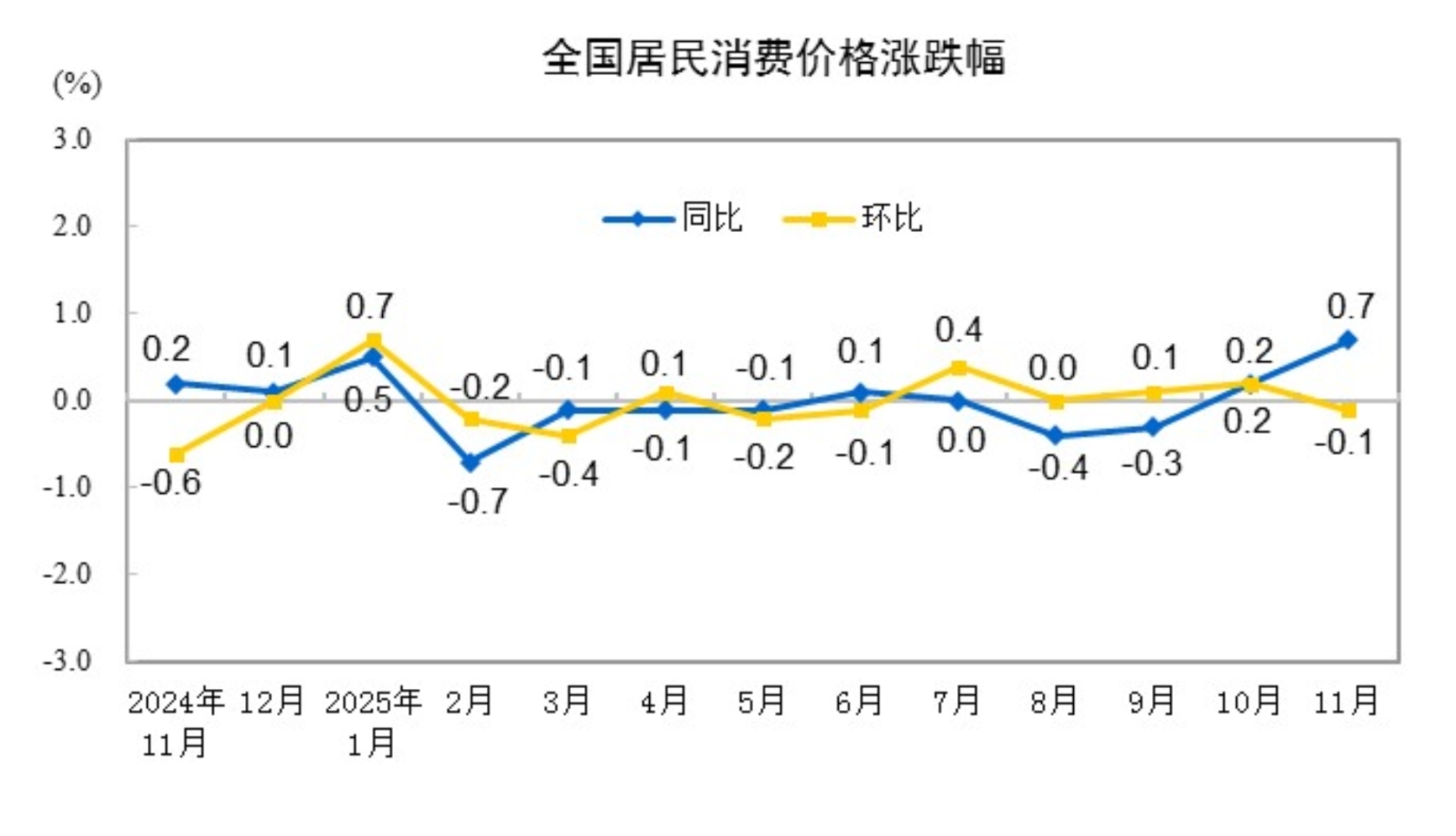
物价水平进一步企稳:鲜菜价格连降9个月后首次转涨 专家:明年下半年生猪供应或现实质性收缩 支撑猪肉价格走高
Mei Ri Jing Ji Xin Wen· 2025-12-10 15:28
Group 1: CPI and PPI Trends - The CPI (Consumer Price Index) in November showed a slight month-on-month decrease of 0.1% but a year-on-year increase of 0.7%, marking the highest growth since March 2024 [1][2] - The core CPI has maintained a year-on-year growth rate of over 1% for three consecutive months [1] - The PPI (Producer Price Index) increased by 0.1% month-on-month for the second consecutive month, but year-on-year it decreased by 2.2%, with the decline widening by 0.1 percentage points compared to the previous month [1][9] Group 2: Food Prices and Their Impact - Food prices shifted from a year-on-year decline of 2.9% to a slight increase of 0.2%, positively impacting the CPI [5] - Fresh vegetable prices rose by 14.5% year-on-year after a nine-month decline, contributing approximately 0.49 percentage points to the CPI increase [5][6] - The prices of beef and lamb increased by 6.2% and 3.7%, respectively, while pork and poultry prices saw a decrease of 15.0% and 0.6%, with the declines narrowing [5] Group 3: Service Prices and Their Effects - Service prices turned from a month-on-month increase of 0.2% to a decrease of 0.4%, negatively affecting the CPI by approximately 0.16 percentage points [8] - The decline in service prices was attributed to reduced demand for travel and accommodation post-holiday, with significant decreases in hotel, flight, and rental prices [8] Group 4: High-Tech Manufacturing and Market Dynamics - The high-tech manufacturing sector is experiencing strong supply and demand, with prices in sectors like integrated circuits and robotics showing year-on-year growth [12] - The coal and gas sectors are seeing seasonal price increases due to higher demand, with coal mining prices rising by 4.1% month-on-month [12] - Despite some positive trends in high-tech manufacturing, the overall industrial product market remains weak due to low demand and external economic pressures [12]
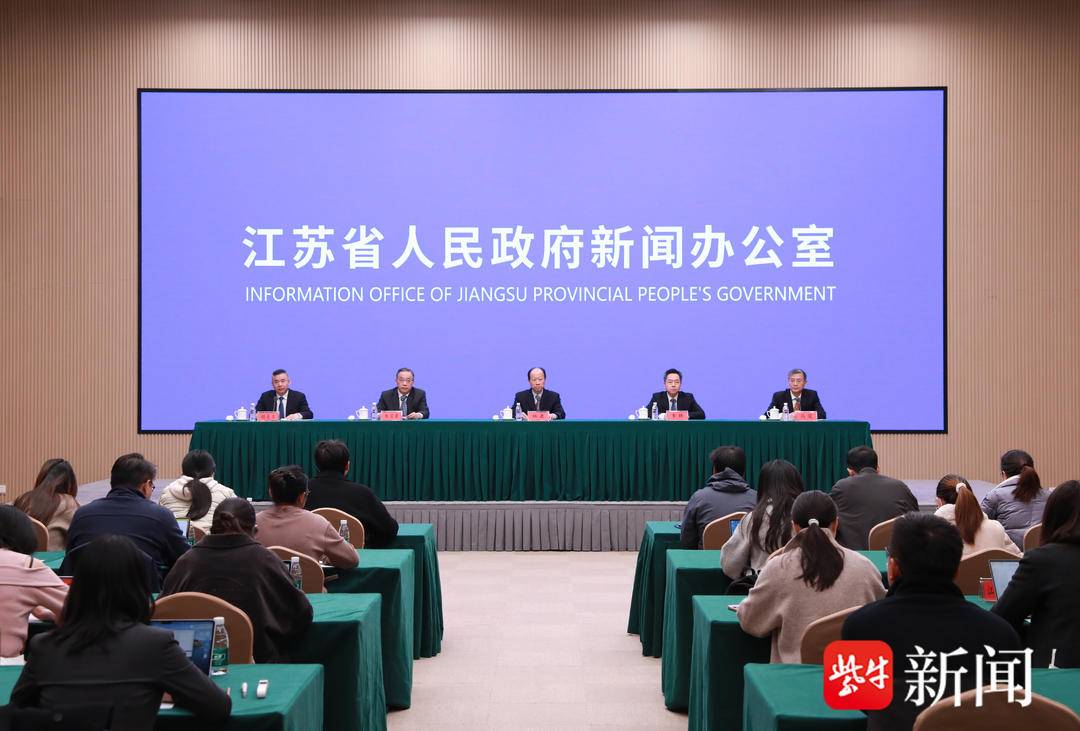
连跨3个万亿元台阶,江苏地区生产总值今年有望突破14万亿元
Yang Zi Wan Bao Wang· 2025-12-10 13:42
Economic Growth - Jiangsu's GDP has increased from 10.5 trillion yuan in 2020 to 13.7 trillion yuan in 2024, with expectations to surpass 14 trillion yuan this year, marking the crossing of the fourth trillion yuan milestone during the "14th Five-Year Plan" [1][3] - All 13 cities in Jiangsu have entered the national top 100, reflecting significant economic progress [3] Consumer Market - The retail sales of consumer goods in Jiangsu remain among the highest in the country, with a projected consumption boost of over 351 billion yuan from the "old-for-new" consumption initiative in 2024-2025 [3] - The integration of events and consumption has led to the emergence of new business models, stimulating consumer potential [3] Manufacturing and Innovation - Jiangsu's regional innovation capability has risen to second in the nation, with over 70% growth in high-tech enterprises and significant contributions to patent creation and technological platforms [4] - The province leads the nation in advanced manufacturing clusters and strategic emerging industries, including power batteries, integrated circuits, and biomedicine [4] Environmental Initiatives - Jiangsu is actively promoting carbon neutrality and has launched a provincial carbon footprint public service platform to track emissions across various stages of production [5] - The province has achieved significant environmental quality improvements, with PM2.5 levels meeting national standards for four consecutive years [5] Employment and Social Welfare - Jiangsu has maintained urban employment growth above 10% nationally, with a reduction in the urban-rural income gap to 2.04:1 [6] - The province has established a comprehensive elderly care service system and achieved high rates of basic health insurance coverage [6] Consumer Engagement and Events - The province has issued approximately 2.54 billion yuan in consumption vouchers and digital currency red packets, with over 500,000 businesses participating in the "Su New Consumption + Su Super League" initiative [7] - Various promotional activities, including food festivals and local delicacies, have attracted significant public engagement, enhancing the integration of commerce, culture, and sports [7]
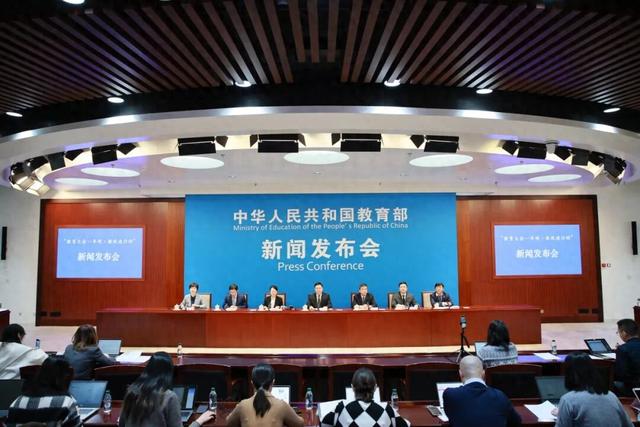
深化产教融合!多方合力建强卓越工程师队伍
Bei Jing Ri Bao Ke Hu Duan· 2025-12-10 13:18
Core Viewpoint - The Ministry of Education held a press conference to discuss the progress of the "Excellence Engineer Training Reform" and the interpretation of the "Excellence Engineer Education Certification Standards" aimed at enhancing the integration of industry and education in cultivating engineers [1] Group 1: Policy and Support - The Ministry of Industry and Information Technology (MIIT) has issued implementation opinions to strengthen the construction of the industrial and information technology talent team, including the "Excellence Engineer" initiative [4] - MIIT plans to support approximately 300 advanced manufacturing technology talents and 500 advanced basic process talents annually through the "Manufacturing Talent Support Plan" [4] - Regular national industrial and information technology skills competitions will be held to recognize outstanding talents and promote industry-academia collaboration [5] Group 2: Educational Institutions' Initiatives - Tsinghua University is innovating its engineer training model by establishing a demand-driven enrollment mechanism and implementing a "course study + professional practice" model [11] - Over three years, Tsinghua has enrolled 1,430 engineering master's and doctoral students, collaborating with 56 units across 14 key fields [11] - The university has formed a closed-loop education system where students participate in the entire process from research and design to mass production [11] Group 3: Corporate Involvement - The China Aviation Industry Corporation has established a comprehensive management approach for training engineers, collaborating with 32 key universities and enterprises to form an "Excellence Engineer Training Industry-Education Alliance" [12] - A personalized support mechanism has been implemented to track and assist engineering master's and doctoral students throughout their training [12] - The corporation aims to attract engineering graduates by offering favorable employment conditions and opportunities for early professional evaluations [12] Group 4: Local Government Initiatives - Beijing's education authorities are promoting the integration of industry and education by developing action plans and measures to strengthen the excellence engineer workforce [13] - The city is establishing new educational platforms, such as the National Excellence Engineer Innovation Research Institute, to support the training of engineers [13] - Collaborative projects between industry and education are being initiated to address key technological challenges and enhance practical applications [13]