农业

Search documents
好资源“生”出好产业
Ren Min Ri Bao Hai Wai Ban· 2025-10-24 01:32
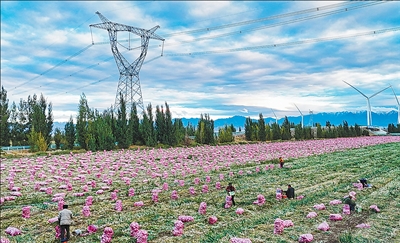
Core Insights - The article highlights the successful integration of agriculture, culture, and tourism in Xuanhan County, Sichuan Province, through the "East-West Cooperation" project, which has significantly boosted local economic development and tourism [1][4]. Group 1: Agricultural and Tourism Development - The Dacheng Rose Industrial Park in Xuanhan County is a key project that combines planting, picking, processing, sales, and sightseeing, attracting numerous visitors during the rose blooming season [1]. - Since the establishment of the partnership between Zhoushan City and Xuanhan County in 2018, nearly 200 million yuan has been invested in over 50 agricultural and cultural tourism projects [1]. - The "Cloud Corridor" in the Moonlight Forest Health Resort has attracted over 450,000 visitors since its opening in October 2024, showcasing the area's appeal [1]. Group 2: E-commerce and Local Products - The "Revitalization Workshop" in Xiaoba Town utilizes live streaming to promote local specialties, leading to annual sales of over 23,000 pounds and nearly 520,000 yuan in revenue [2]. - The collaboration has enabled the sale of over 60 types of agricultural products to eastern regions, generating cumulative sales exceeding 300 million yuan [2]. Group 3: Cultural Integration and Community Impact - The Ba Mountain Grand Canyon has become a natural stage for cultural tourism, with over ten experiential projects developed, including the immersive epic drama "Dream Back to the Ba State," which has seen full houses during performances [2][4]. - The development of the "Flower Economy" aims to enhance consumption and strengthen the agricultural and cultural tourism industry, creating a comprehensive consumption experience [4]. - The establishment of various tourism parks has significantly increased local incomes, with some villagers reporting annual earnings rising from 3,000 yuan to 30,000 yuan [4].


广发早知道:汇总版-20251024
Guang Fa Qi Huo· 2025-10-24 00:53
广发早知道-汇总版 广发期货研究所 电 话:020-88818009 E-Mail:zhangxiaozhen@gf.com.cn 目录: 金融衍生品: 金融期货: 股指期货、国债期货 贵金属: 黄金、白银 集运欧线 油脂、粕类、玉米、生猪、白糖、棉花、鸡蛋、红枣、苹果 能源化工: 原油、PTA、乙二醇、苯乙烯、短纤、尿素、瓶片、烧碱、PVC、LLDPE、 PP 特殊商品: 橡胶、玻璃纯碱、工业硅、多晶硅 2025 年 10 月 24 日星期五 商品期货: 有色金属: 铜、氧化铝、铝、铝合金、锌、锡、镍、不锈钢、碳酸锂 黑色金属: 钢材、铁矿石、焦煤、焦炭 农产品: [股指期货] 投资咨询业务资格: 证监许可【2011】1292 号 组长联系信息: 张晓珍(投资咨询资格:Z0003135) 电话:020- 88818009 邮箱:zhangxiaozhen@gf.com.cn 刘珂(投资咨询资格:Z0016336) 电话:020-88818026 邮箱:qhliuke@gf.com.cn 叶倩宁(投资咨询资格:Z0016628) 电话:020- 88818017 邮箱:yeqianning@gf.com.cn ...
综合晨报:二十届四中全会公报出炉,中美24-27日于马来西亚贸易-20251024
Dong Zheng Qi Huo· 2025-10-24 00:46
1. Report Industry Investment Ratings No specific industry investment ratings were provided in the report. 2. Core Views of the Report - Gold is in a corrective phase, with potential for further downside but increasing interest from bottom - fishing funds. The market is awaiting the results of Sino - US negotiations and APEC meetings, as well as US CPI data [12]. - The stock market was boosted by expectations of incremental policies from the Fourth Plenary Session, but trading volume declined slightly. Industrial policies will remain the focus, and there is a need to strengthen domestic demand expansion [2]. - The decline in US banking reserves provides a basis for the Fed to stop shrinking its balance sheet, leading to an increase in market risk appetite and a volatile US dollar [16]. - Intel's improved financial results have boosted the technology sector, and Sino - US trade negotiations have increased market risk appetite. However, the negotiation process may be bumpy, and market volatility may remain high [22]. - The bond market may face short - term downward pressure, but the risk of continuous decline is low. After November, there is potential for the bond market to rise. Investors are advised to look for opportunities to buy on dips [25]. - The price of cotton is affected by factors such as new cotton listings, downstream orders, and Sino - US trade negotiations. The upside space is limited [30]. - Concerns about palm oil supply in Indonesia have led to a rebound in prices, and investors are advised to buy on dips [33]. - The pig market is expected to experience seasonal demand improvement, but the supply surplus will continue until the first quarter of next year. Investors are advised to look for short - selling opportunities in the near - term contracts [34]. - The price of red dates is in a volatile state, and investors are advised to wait and see, focusing on price negotiations and acquisition progress in the production areas [38]. - The price of thermal coal is expected to be strongly supported due to the approaching cold wave in the north [40]. - The price of iron ore is expected to remain weakly volatile, with a seasonal increase in supply and pressure on demand [41]. - The price of steel products is expected to be volatile, with inventory reduction alleviating concerns about oversupply but limited demand restricting the upside space [44]. - The price of copper is supported by short - term macro - sentiment improvement but limited by fundamentals in the short term. Investors are advised to buy on dips [49]. - The price of lead is expected to remain high and volatile. Investors can consider short - selling on rallies, as well as mid - term spread and cross - market arbitrage opportunities [53]. - The price of zinc is expected to be in a wide - range volatile state. Investors are advised to wait and see, and consider mid - term positive spread arbitrage opportunities [58]. - The price of nickel is expected to have upward potential. Investors can look for opportunities to buy on dips and consider option strategies [61]. - The price of lithium carbonate is supported by inventory reduction during the peak season, but further upward movement depends on supply - side disruptions. Short - term range trading is recommended, and attention should be paid to arbitrage opportunities [64]. - The price of liquefied petroleum gas is expected to remain volatile in the short term [67]. - The price of asphalt is expected to fluctuate greatly due to the game between geopolitical support for oil prices and weak fundamentals [68]. - The price of methanol is currently supported by cost and downstream factors, but the fundamentals have not improved. If the price rises further, there may be short - selling opportunities [72]. - The price of natural gas is in a bearish pattern, and the current rebound is expected to be short - lived. Investors are advised to wait and see [73]. - The supply - demand pattern of caustic soda is weak, but the large discount on the futures market and potential demand pulses from new alumina capacity may limit the downside. Short - selling should be cautious [76]. - The price of PVC is expected to remain in a low - level volatile state, with limited further downward space [78]. - The price of styrene has rebounded due to supply disruptions and rising oil prices. Attention should be paid to the negative feedback from downstream industries and the potential reduction of the pure benzene - oil price spread [80]. - The price of soda ash is supported by coal prices in the short term, but the upside is limited by new capacity. The downward space depends on coal price fluctuations and new capacity launches [82]. - The price of float glass has risen slightly due to coal - price - driven bullish sentiment, but the market is under pressure due to continuous inventory accumulation and weak demand [83]. 3. Summaries by Directory 3.1 Financial News and Comments 3.1.1 Macro Strategy (Gold) - News: Sino - US trade negotiations will be held in Malaysia from October 24 - 27 [12]. - Comment: Gold prices rebounded slightly but are still in a corrective phase. The market is awaiting negotiation results and APEC meetings, as well as US CPI data. - Investment Advice: Gold is expected to be in an oscillatory phase with potential for further downside. Observe the support at the $4000 level [12]. 3.1.2 Macro Strategy (Foreign Exchange Futures - US Dollar Index) - News: US Senate Democrats blocked a Republican bill to pay military and federal employees during the government shutdown; US banking reserves decreased to $2.93 trillion; Trump plans to expand drug - fighting targets to land [13][14][15]. - Comment: The decrease in US banking reserves provides a basis for the Fed to stop shrinking its balance sheet, leading to increased market risk appetite and a volatile US dollar [16]. - Investment Advice: The US dollar index is expected to be volatile [17]. 3.1.3 Macro Strategy (Stock Index Futures) - News: Sino - US will hold trade talks in Malaysia from October 24 - 27; the Fourth Plenary Session of the 20th CPC Central Committee released its communique [18][19]. - Comment: The stock market was boosted by policy expectations, but trading volume declined slightly. Industrial policies will be the focus, and domestic demand expansion needs to be strengthened [2]. - Investment Advice: Allocate evenly among stock indices [20]. 3.1.4 Macro Strategy (US Stock Index Futures) - News: Sino - US will hold trade talks; Intel's Q3 revenue increased by 3% year - on - year, and it returned to profitability [22]. - Comment: Intel's results improved the technology sector, and Sino - US negotiations increased market risk appetite. However, the negotiation process may be bumpy, and market volatility may remain high [22]. - Investment Advice: The US stock market will be volatile in the short term due to Sino - US negotiation news but should be treated with a bullish outlook overall [23]. 3.1.5 Macro Strategy (Treasury Bond Futures) - News: The Fourth Plenary Session of the 20th CPC Central Committee released its communique; the central bank conducted 7 - day reverse repurchase operations worth 212.5 billion yuan [24]. - Comment: The bond market may face short - term downward pressure, but the risk of continuous decline is low. After November, there is potential for the bond market to rise [25]. - Investment Advice: Look for opportunities to buy on dips [26]. 3.2 Commodity News and Comments 3.2.1 Agricultural Products (Cotton) - News: EU clothing import growth declined in August; CCI cotton procurement in India is accelerating; Xinjiang cotton purchase prices are rising [27][29][30]. - Comment: The price of cotton is affected by new cotton listings, downstream orders, and Sino - US trade negotiations. The upside space is limited [30]. - Investment Advice: The upside space of Zhengzhou cotton is limited. Monitor new cotton acquisitions, downstream orders, and Sino - US negotiations [31]. 3.2.2 Agricultural Products (Soybean Oil/Rapeseed Oil/Palm Oil) - News: The Indonesian military seized palm plantations, affecting 30% of the country's palm oil - growing area [32]. - Comment: Concerns about palm oil supply in Indonesia have led to a rebound in prices [33]. - Investment Advice: Buy on dips [33]. 3.2.3 Agricultural Products (Pigs) - News: Wens Co., Ltd. reported a net profit of 5.256 billion yuan in the first three quarters; Tangrenshen is implementing its production plan [33][34]. - Comment: Seasonal demand improvement may lead to a short - term rebound in pig prices, but the supply surplus will continue until the first quarter of next year [34]. - Investment Advice: Look for short - selling opportunities in the near - term contracts and continue to monitor the reverse spread strategy [35]. 3.2.4 Agricultural Products (Red Dates) - News: The price of red dates in Hebei's Cui'erzhuang market is stable; Xinjiang red dates are in the drying stage, and the acquisition price will be determined in the next week [36][37]. - Comment: The price of red dates is in a volatile state, and the main trading logic is not clear [38]. - Investment Advice: Wait and see, and focus on price negotiations and acquisition progress in the production areas [39]. 3.2.5 Black Metals (Thermal Coal) - News: National railway coal shipments reached 1.553 billion tons from January to September [40]. - Comment: The price of thermal coal is expected to be strongly supported due to the approaching cold wave in the north [40]. - Investment Advice: The price of thermal coal is expected to be strongly supported [40]. 3.2.6 Black Metals (Iron Ore) - News: FMG's iron ore production in Q3 2025 was 50.8 million tons, with a 7% quarterly decline and a 6% annual increase [41]. - Comment: The price of iron ore is expected to remain weakly volatile, with a seasonal increase in supply and pressure on demand [41]. - Investment Advice: The price of iron ore is expected to remain weakly volatile and is relatively weak in the sector [41]. 3.2.7 Black Metals (Rebar/Hot - Rolled Coil) - News: China's rebar production in the first three quarters was 143.387 million tons; the inventory of five major steel products decreased by 2.741 million tons last week [42][43]. - Comment: The price of steel products is expected to be volatile, with inventory reduction alleviating concerns about oversupply but limited demand restricting the upside space [44]. - Investment Advice: Adopt a volatile trading strategy for steel prices [45]. 3.2.8 Non - Ferrous Metals (Alumina) - News: Century Aluminum's smelter in Iceland shut down temporarily due to a power equipment failure, affecting about 2 million tons of alumina demand annually [45]. - Comment: The overseas smelter shutdown has affected alumina demand, and the market is under pressure [45]. - Investment Advice: Wait and see [46]. 3.2.9 Non - Ferrous Metals (Copper) - News: A French highway tested the "charging - while - driving" technology for electric vehicles; Vale plans to invest 70 billion reais to expand copper production [47][48]. - Comment: The price of copper is supported by short - term macro - sentiment improvement but limited by fundamentals in the short term [49]. - Investment Advice: Buy on dips [49]. 3.2.10 Non - Ferrous Metals (Lead) - News: The number of car trade - in subsidy applications in 2025 exceeded 10 million; Qingyuan offers a 500 - yuan subsidy for electric bicycle trade - ins [50][51]. - Comment: The price of lead is expected to remain high and volatile. Investors can consider short - selling on rallies, as well as mid - term spread and cross - market arbitrage opportunities [53]. - Investment Advice: Short - sell on rallies, and consider mid - term spread and cross - market arbitrage opportunities [53]. 3.2.11 Non - Ferrous Metals (Zinc) - News: Boliden's Q3 2025 lead - zinc concentrate production increased; the number of car trade - in subsidy applications in 2025 exceeded 10 million [55][56]. - Comment: The price of zinc is expected to be in a wide - range volatile state. Investors are advised to wait and see, and consider mid - term positive spread arbitrage opportunities [58]. - Investment Advice: Wait and see, and consider mid - term positive spread arbitrage opportunities [58]. 3.2.12 Non - Ferrous Metals (Nickel) - News: Australia's Western Mines Group is conducting a general study on its Mulga Tank nickel project [59]. - Comment: The price of nickel is expected to have upward potential. Investors can look for opportunities to buy on dips and consider option strategies [61]. - Investment Advice: Look for opportunities to buy on dips and consider option strategies [61]. 3.2.13 Non - Ferrous Metals (Lithium Carbonate) - News: Do - fluoride plans to ship 30GWh of lithium batteries in 2026; EVE Energy's power battery shipments in the first three quarters of 2025 were 34.59GWh [62][63]. - Comment: The price of lithium carbonate is supported by inventory reduction during the peak season, but further upward movement depends on supply - side disruptions. Short - term range trading is recommended, and attention should be paid to arbitrage opportunities [64]. - Investment Advice: Short - term range trading, and pay attention to arbitrage opportunities [64]. 3.2.14 Energy Chemicals (Liquefied Petroleum Gas) - News: China's weekly liquefied petroleum gas production decreased by 2.65% week - on - week; the inventory rate decreased by 0.39 percentage points [65][66]. - Comment: The price of liquefied petroleum gas is expected to remain volatile in the short term [67]. - Investment Advice: The price is expected to remain volatile in the short term [67]. 3.2.15 Energy Chemicals (Asphalt) - News: China's weekly asphalt production decreased by 110,000 tons week - on - week, a 2% decline [68]. - Comment: The price of asphalt is expected to fluctuate greatly due to the game between geopolitical support for oil prices and weak fundamentals [68]. - Investment Advice: Wait and see [69]. 3.2.16 Energy Chemicals (Methanol) - News: Iran's Kimiya methanol plant restarted [70]. - Comment: The price of methanol is currently supported by cost and downstream factors, but the fundamentals have not improved. If the price rises further, there may be short - selling opportunities [72]. - Investment Advice: Wait and see. If the price rises further, there may be short - selling opportunities [72]. 3.2.17 Energy Chemicals (Natural Gas) - News: US natural gas inventory increased by 87Bcf week - on - week [73]. - Comment: The price of natural gas is in a bearish pattern, and the current rebound is expected to be short - lived [73]. - Investment Advice: Wait and see [74]. 3.2.18 Energy Chemicals (Caustic Soda) - News: The price of liquid caustic soda in Shandong decreased locally; the overall开工 load rate increased slightly [75]. - Comment: The supply - demand pattern of caustic soda is weak, but the large discount on the futures market and potential demand pulses from new alumina capacity may limit the downside. Short - selling should be cautious [76]. - Investment Advice: Short - selling should be cautious [76]. 3.2.19 Energy Chemicals (PVC) - News: The price of PVC in the domestic market was slightly volatile, and the overall开工 load rate decreased [77][78]. - Comment: The price of PVC is expected to remain in a low - level volatile state, with limited further downward space [78]. - Investment Advice: The price is expected to remain in a low - level volatile state, with limited further downward space [78]. 3.2.20 Energy Chemicals (Styrene) - News: China's weekly styrene production decreased by 124,000 tons week - on - week, a 3.65% decline [79]. - Comment: The price of styrene has rebounded due to supply disruptions and rising oil prices. Attention should be paid to the negative feedback from downstream industries and the potential reduction of the pure benzene - oil price spread [80]. - Investment Advice: Monitor the negative feedback from downstream industries and the potential reduction of the pure benzene - oil price spread [80]. 3.2.21 Energy Chemicals (Soda Ash) - News: The inventory of soda ash manufacturers decreased slightly on Thursday compared to Monday [81]. - Comment: The price of soda ash is supported by coal prices in the short term, but the upside is limited by new capacity. The downward space depends on coal price fluctuations and new capacity launches [82]. - Investment Advice: The downward space depends on coal price fluctuations and new capacity launches. Continue to monitor [82]. 3.2.22 Energy Chemicals (Float Glass) - News: The inventory of float glass manufacturers continued to increase, with a 3.64% week - on - week increase [83]. - Comment: The price of float glass has risen slightly due to coal - price - driven bullish sentiment, but the market is under pressure due to continuous inventory accumulation and weak demand [




乡村振兴新动向:推动农村基本具备现代生活条件
2 1 Shi Ji Jing Ji Bao Dao· 2025-10-24 00:18
Core Insights - The 20th Central Committee's Fourth Plenary Session emphasized the importance of addressing "agriculture, rural areas, and farmers" (referred to as "three rural issues") as a top priority for the party's work, aiming for a comprehensive modernization of agriculture and rural areas [1][3][6] Group 1: Agricultural Modernization - The session highlighted the need to accelerate agricultural modernization and promote comprehensive rural revitalization, with a focus on enhancing agricultural production capacity and quality efficiency [1][3][6] - A significant change in the report is the emphasis on improving agricultural production capacity and quality efficiency, indicating a shift towards technology-driven agriculture and smart agriculture as key drivers for building an agricultural powerhouse [2][6][7] Group 2: Rural Living Conditions - The meeting proposed that rural areas should have basic modern living conditions, which includes improving education, healthcare, and infrastructure to enhance the quality of life in rural areas [5][6] - The focus for the upcoming "15th Five-Year Plan" period will not only continue infrastructure development but also emphasize the need for rural areas to meet modern living standards [5][6] Group 3: Urban-Rural Integration - Urban-rural integration is a key focus, with plans to promote the free flow of resources between urban and rural areas, breaking down institutional barriers to facilitate this integration [4][6] - Key initiatives include land system reforms to establish a unified construction land market and increasing public resources in rural areas to reduce urban-rural disparities [4][6] Group 4: Policy Support - The government is expected to introduce more targeted policies to support rural innovation, entrepreneurship, and digital infrastructure, alongside encouraging urban talent and resources to flow into rural areas [8] - Since the "14th Five-Year Plan," significant financial support has been allocated to agriculture, with over 10.8 trillion yuan spent on agricultural and rural affairs, indicating a growing commitment to enhancing agricultural policies [8]
洋葱丰收
Ren Min Ri Bao· 2025-10-23 22:42
Core Viewpoint - The onion cultivation in Urumqi County, Xinjiang, has become a significant source of income for local residents, with nearly 20,000 acres of onions being harvested, showcasing a vibrant scene of agricultural success [2] Group 1 - The harvesting of nearly 20,000 acres of onions in Urumqi County is currently taking place, indicating a successful agricultural season [2] - The local onion industry has emerged as a distinctive and profitable sector for the community, contributing to the economic well-being of residents [2] - The scene in the fields is described as bustling and lively, reflecting the positive impact of onion farming on local livelihoods [2]
南非经济呈温和增长态势
Ren Min Ri Bao· 2025-10-23 22:29
Economic Growth - South Africa's GDP grew by 0.8% in Q2 2023, an increase from 0.1% in Q1, marking the strongest growth quarter in nearly two years [1] - The South African Reserve Bank forecasts economic growth of 0.9% in 2025 and 1.3% in 2026 [1] Sector Performance - Eight out of ten industries in South Africa experienced growth in Q2, significantly up from four in Q1 [1] - The mining sector saw a growth of 3.7%, the fastest since Q1 2021, driven by increased production of platinum group metals, gold, and chrome [1] - Manufacturing grew by 1.8%, contributing 0.2 percentage points to GDP growth, with seven industries, including petroleum and chemicals, showing positive growth [1] - Agriculture continued its positive trend with a growth rate of 2.5%, marking the third consecutive quarter of growth [1] Consumer Spending - Household consumption remained active, with a growth rate of 0.8% in Q2, marking the fifth consecutive quarter of growth [2] - The trade, restaurant, and accommodation sectors grew by 1.7%, the highest level since Q1 2022, supported by increased spending in restaurants, hotels, clothing, and insurance [2] Challenges and Trade - South Africa's economic growth faces challenges such as unstable domestic electricity supply and heavy debt burdens [2] - The U.S. has imposed a 30% tariff on South African exports, particularly affecting the automotive and agricultural sectors, adding uncertainty to economic trends [2] - South Africa's total exports and fixed capital investment saw a decline in Q2 [2] - The government and business sectors are actively working to diversify foreign trade, with notable growth in citrus exports to Vietnam and avocado exports to China [2] Trade Agreements and Cooperation - South Africa is committed to advancing the African Continental Free Trade Area and expanding trade cooperation with BRICS and other emerging market countries [3] - The resilience of the South African economy is highlighted despite various adverse factors, indicating a promising outlook for multilateral trade cooperation with other global southern countries [3]
采矿业增速明显 外贸加快多元化 南非经济呈温和增长态势
Ren Min Ri Bao· 2025-10-23 22:06
Economic Growth - South Africa's GDP grew by 0.8% in Q2 2023, an increase from 0.1% in Q1, marking the strongest growth quarter in nearly two years [1] - The South African Reserve Bank forecasts economic growth of 0.9% in 2025 and 1.3% in 2026 [1] Sector Performance - Eight out of ten industries in South Africa experienced growth in Q2, significantly up from four in Q1 [1] - The mining sector saw a growth of 3.7%, the fastest since Q1 2021, driven by increased production of platinum group metals, gold, and chrome [1] - Manufacturing grew by 1.8%, contributing 0.2 percentage points to GDP growth, with seven industries, including petroleum and chemicals, showing positive growth [1] - Agriculture continued its positive trend with a growth rate of 2.5%, marking the third consecutive quarter of growth [1] Consumer Spending - Household consumption increased by 0.8% in Q2, marking the fifth consecutive quarter of growth, with notable increases in trade, accommodation, and restaurant sectors [2] - Government public spending also contributed positively to economic development during the quarter [2] Challenges and Trade - South Africa's economic growth faces challenges such as unstable domestic electricity supply and heavy debt burdens [2] - The imposition of a 30% tariff on South African exports to the US has severely impacted exports, particularly in the automotive and agricultural sectors [2] - There has been a decline in both total exports and fixed capital investment in Q2 [2] - The government and business sectors are actively working to diversify foreign trade, with increasing exports of citrus to Vietnam and avocados to China [2] Trade Agreements - South Africa is committed to advancing the African Continental Free Trade Area and expanding trade cooperation with BRICS and other emerging markets [3] - The resilience of the South African economy amidst various challenges highlights the potential for broad multilateral trade cooperation with other global southern countries [3]
焦点访谈|守底线、保安全、促发展!“十四五”我国自然资源工作成果丰硕
Yang Shi Wang· 2025-10-23 13:41
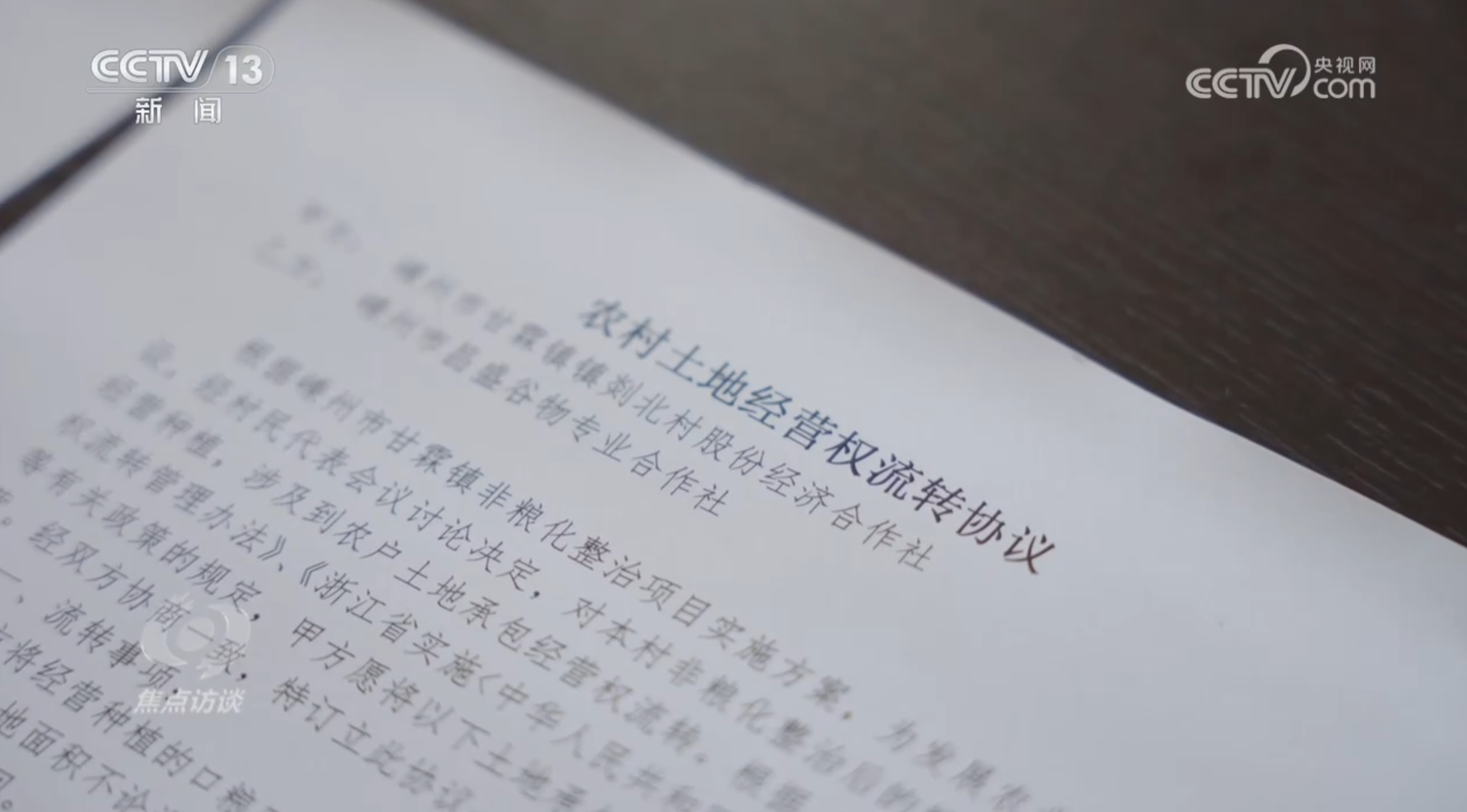
Core Viewpoint - The article emphasizes the importance of natural resources as the material foundation for human development and highlights China's achievements in resource management and ecological protection during the 14th Five-Year Plan period [1][5][11]. Group 1: Agricultural Land Management - By the end of 2024, China's cultivated land area is expected to reach 1.94 billion acres, with an increase of 28 million acres since 2020, firmly maintaining the protection of arable land [5][11]. - The "Hundred-Million" project in Zhejiang province aims to transform fragmented farmland into large, well-equipped, and ecologically sound agricultural areas, enhancing productivity [3][5]. - The integration of various agricultural practices, such as rice-shrimp rotation and aquaculture, has led to significant increases in agricultural efficiency [5][11]. Group 2: Spatial Planning and Resource Management - The establishment of the Ministry of Natural Resources has unified various spatial planning functions, leading to a cohesive national land space planning system [7][9]. - A comprehensive management system for nine categories of natural resources has been developed, allowing for unified planning and resource management [9][11]. - The "multi-planning integration" approach has resolved previous conflicts in planning, promoting a unified vision for land use and development [7][9]. Group 3: Ecological Protection and Restoration - Significant efforts have been made in ecological restoration, including the rehabilitation of over 2.4 million acres of abandoned mines and the restoration of 820 kilometers of coastline [11][12]. - China has become the fastest-growing country in terms of afforestation, achieving a national greening area of 549 million acres, with 185 million acres of new forest cover [11][12]. - The integration of various ecological elements into a cohesive management strategy has improved overall ecological benefits [11][12]. Group 4: Industrial Transformation and Resource Efficiency - The transformation of industrial sites, such as the old steel plant in Wuxi, has turned previously unused land into vibrant urban spaces, demonstrating effective land use [12][14]. - Since 2021, China has repurposed over 5 million acres of idle land and reduced the land use per unit of GDP by 15.97%, surpassing the target set for the 14th Five-Year Plan [14][18]. - The development of new strategic industries, particularly in marine resources, has shown promising growth, with marine production value reaching 10.5 trillion yuan, a 34% increase from the end of the 13th Five-Year Plan [16][18].
“十五五”时期,中国将着重办好这些事
Yang Shi Xin Wen· 2025-10-23 12:13
Core Points - The Fourth Plenary Session of the 20th Central Committee of the Communist Party of China was held from October 20 to 23, 2025, in Beijing, where a work report by Xi Jinping was discussed and the proposal for the 15th Five-Year Plan was approved [1] Economic Development - The focus during the 15th Five-Year Plan period will be on building a modern industrial system and strengthening the foundation of the real economy, emphasizing intelligent, green, and integrated development [2] - There will be an emphasis on optimizing traditional industries while nurturing emerging and future industries, alongside promoting high-quality development in the service sector [2] Technological Advancement - The plan aims to accelerate high-level self-reliance in technology, enhancing the national innovation system and boosting independent innovation capabilities [3] - Key areas include original innovation and tackling core technologies, integrating technological and industrial innovation, and advancing digital China initiatives [3] Domestic Market - The strategy will focus on expanding domestic demand, linking consumer and investment needs, and fostering a positive interaction between supply and demand [4][5] - Efforts will be made to stimulate consumption and increase effective investment while removing barriers to a unified national market [5] Economic System - The establishment of a high-level socialist market economy will be prioritized, enhancing the driving force for high-quality development [6][7] - The plan includes activating various business entities and improving the market-oriented allocation of resources [7] International Cooperation - The strategy includes expanding high-level opening-up and creating a win-win cooperation landscape, maintaining a multilateral trade system, and promoting international circulation [8][9] Agricultural Development - The modernization of agriculture and rural areas will be a key focus, addressing rural issues and promoting urban-rural integration [10] - Enhancements in agricultural production capacity and quality, along with rural development, will be prioritized [11] Regional Development - The plan aims to optimize regional economic layouts and promote coordinated regional development, enhancing the effectiveness of major productivity layouts [12][13] Cultural Development - There will be a push to invigorate cultural innovation and development, promoting socialist culture with strong ideological and international influence [14] Social Welfare - The strategy emphasizes improving people's livelihoods and promoting common prosperity, focusing on employment, income distribution, education, and social security [15] Environmental Sustainability - The plan aims for a comprehensive green transformation of economic and social development, focusing on carbon neutrality and ecological safety [16] National Security - The modernization of the national security system and capabilities will be prioritized to ensure social order and vitality [17][18] Military Modernization - The strategy includes achieving the centenary goals of the military and advancing the modernization of national defense and armed forces [19][20]
A股“红包雨”又来了!超30家公司派现超40亿
第一财经· 2025-10-23 12:10
Core Viewpoint - The article discusses the ongoing trend of cash dividends among A-share companies as they release their Q3 reports, highlighting that over 30 companies have announced dividend plans totaling over 4.3 billion yuan, with some companies proposing significant payouts [3][4][12]. Group 1: Dividend Announcements - More than 500 A-share companies have released their Q3 reports, with over 30 announcing dividend plans, amounting to a total cash payout exceeding 4.3 billion yuan [3][4]. - Eight companies are set to distribute over 100 million yuan, with Wens Foodstuffs (温氏股份) proposing nearly 2 billion yuan, and other notable companies like Sanquan Foods (三棵树) and Shengnong Development (圣农发展) expecting payouts over 300 million yuan [3][4][5]. - Over half of the companies announcing dividends have proposed a per-share dividend of 0.1 yuan or more, with some companies offering substantial payouts such as "10 for 5" [5][6]. Group 2: Performance and Support for Dividends - Companies announcing large dividends generally show strong performance, with many reporting revenue and profit increases, including some with net profit growth exceeding 200% [3][7][8]. - Among the companies with significant dividend announcements, only Wens Foodstuffs reported a decline in performance, while others like Shengnong Development and Sanquan Foods showed substantial growth in both revenue and net profit [7][8]. Group 3: Market Outlook and Investment Strategy - Analysts suggest that the dividend sector may become a safe haven for investors amid current market conditions, with funds likely to flow into low-volatility dividend stocks [9][13]. - Investment strategies should focus on identifying companies with sustainable dividends, considering factors such as dividend yield and the company's fundamental performance, particularly in mature sectors like consumer goods and utilities [15].