氢能

Search documents
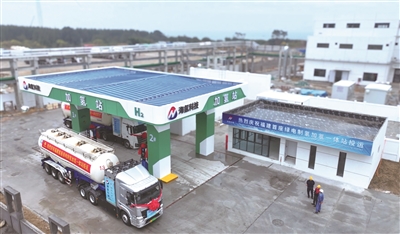
闽首座固定加氢站投用
Zhong Guo Hua Gong Bao· 2026-02-02 02:46
Core Viewpoint - The establishment of the first fixed hydrogen refueling station in Fujian Province marks a significant step towards the large-scale application and commercialization of green hydrogen in the region [1] Group 1: Project Development - The Fujian green hydrogen pilot base is set to include two 10-megawatt wind turbines, photovoltaic systems, energy storage, hydrogen equipment testing workshops, and refueling stations [1] - The fixed hydrogen refueling station has the capacity to supply 1,000 kilograms of high-purity green hydrogen daily [1] Group 2: Environmental Impact - The pilot base is expected to reduce carbon dioxide emissions by approximately 47,000 tons annually, supporting the construction of a "zero-carbon park" at the Gulei petrochemical base [1]

可再生能源制氢年产能超25万吨
Zhong Guo Dian Li Bao· 2026-02-02 01:28
Core Insights - China's renewable hydrogen production capacity is expected to exceed 250,000 tons per year by the end of 2025, marking a doubling from the previous year [1] - Hydrogen energy is recognized as a crucial component of the future national energy system and is set to play a significant role in the construction of new power and energy systems [1] Group 1: Industry Development - The 14th Five-Year Plan period has seen China's hydrogen industry gradually breaking through in an orderly manner [1] - The National Development and Reform Commission and the National Energy Administration have established a coordination mechanism for hydrogen industry development and released the "Medium and Long-term Planning for Hydrogen Industry Development (2021-2035)" [1] - A total of 41 projects and 9 regions are conducting pilot work in the hydrogen energy sector, promoting the collaborative development of the entire hydrogen production, storage, transportation, and application chain [1] Group 2: Technological Advancements - Significant breakthroughs have been achieved in major technological equipment related to hydrogen energy production and application [1] - The National Key R&D Program for "Hydrogen Technology" continues to be implemented, with 27 items of first-of-their-kind hydrogen technology equipment being promoted [1] Group 3: Standardization and Policy Support - The construction of a national hydrogen information platform is ongoing, and a technical committee for hydrogen standardization has been established to promote the development of industry standards [2] - During the 15th Five-Year Plan period, the National Energy Administration will collaborate with relevant departments to strengthen industry planning, increase policy support, and enhance core technology research [2]
核心逻辑未变!关于A股和黄金走势,机构最新研判
Xin Lang Cai Jing· 2026-02-01 15:13
Core Viewpoint - The A-share market is experiencing a weak and volatile trend, with the core logic supporting the spring market remaining unchanged, and the precious metals sector expected to enter a wide fluctuation phase in the short term [1][6] Market Trends - The non-manufacturing business activity index for January is reported at 49.4%, a decrease of 0.8 percentage points from the previous month, indicating a decline in overall non-manufacturing sector activity [1] - The capital market service index is above 65%, reflecting high market activity in sectors such as monetary financial services and insurance [1] Investment Recommendations - Focus on sectors with lower price increases but strong logical support, including storage chips, embodied intelligence, AI edge computing, energy storage, and the lithium battery supply chain [1][5] - Emphasize sectors mentioned in the "14th Five-Year Plan," such as commercial aerospace, 6G, nuclear power, hydrogen energy, quantum communication, and brain-computer interfaces [5] Precious Metals Sector - Banks have issued risk warnings regarding precious metals business, citing increased market uncertainty and price volatility, while still recognizing the medium to long-term investment value of gold and similar assets [2] - The precious metals sector is currently in a high congestion state after rapid previous gains, expected to enter a wide fluctuation phase, but the fundamental outlook remains positive due to unresolved supply-demand gaps [6] Sector-Specific Insights - The AI industry is expected to significantly drive electricity demand, creating investment opportunities in the energy storage and power equipment sectors [6] - The pharmaceutical industry is anticipated to continue its upgrade trend driven by innovation, with a long-term positive outlook for globally competitive drugs and devices [7] - The technology growth sector is favored due to abundant liquidity and industry theme catalysts, with a focus on sectors supported by industry trends [8]
各地加快产业升级 激活发展新动能
Yang Shi Wang· 2026-02-01 12:09
新兴产业、未来产业激活新动能。福建在新型储能、生物制造等工业新兴领域培育国家级中小企业特色 产业集群,紧盯氢能、核技术应用、具身智能等未来产业赛道加强谋划,推动新兴产业规模扩大。今 年,江西重点布局未来能源等六大未来产业,瞄准金属新材料、脑机接口、固态电池等新赛道,加速形 成一批千亿元级未来产业集群。江苏聚焦生物制造、航空航天等领域,组织省科技重大专项40项攻关任 务,同时围绕人工智能产业布局一批场景开放创新中心,加速算法模型研发,加大数据资源供给。 央视网消息(新闻联播):新年开新局。各地相继出台务实有力新举措,促进产业升级,激活发展新动 能。 传统制造业焕发新活力。今年,辽宁围绕22个重点产业集群、100条以上产业链、1000家以上重点企 业,全力推进数字化转型,梯度培育智能工厂,构建"技术创新—中试转化—产业应用"全链条体系。甘 肃今年启动实施"万企联网"工程,推动人工智能融入传统制造业,在工艺优化、流程改造等场景引入数 字化转型解决方案,促进传统制造业焕新升级。河北推动制造业重大技术改造升级和大规模设备更新, 以人工智能赋能钢铁、化工等重点产业,一体推进制造业数字化、网络化、智能化转型。 ...
氢能周度观察(9):零碳工厂加速氢能产业化应用-20260201
Changjiang Securities· 2026-02-01 10:54
Investment Rating - The report indicates a positive outlook for the hydrogen energy industry, suggesting that it will outperform the relevant market indices in the next 12 months [13]. Core Insights - The report highlights the Chinese government's strong support for hydrogen energy as a key clean fuel in the construction of zero-carbon factories, which is expected to accelerate the industrialization of hydrogen applications [6][9]. - The document emphasizes the potential for hydrogen energy in various industrial applications, with significant projected consumption growth, particularly in sectors like synthetic ammonia and methanol [9]. - The report anticipates that the hydrogen industry will evolve towards large-scale and commercial development during the 14th Five-Year Plan period, with substantial advancements in hydrogen production, storage, and application technologies [9]. Summary by Sections Policy Support - The Chinese government has integrated hydrogen energy into its zero-carbon factory construction framework, recognizing its critical role in industrial decarbonization [6][9]. - The guidance encourages the development of integrated projects for green hydrogen and ammonia, promoting the use of clean hydrogen sources from industrial by-products and renewable energy [6][9]. Market Potential - In 2024, China's hydrogen consumption is projected to reach approximately 36.5 million tons, reflecting a compound annual growth rate of about 2.2% since 2020 [9]. - The report estimates that if green hydrogen can replace gray hydrogen in the production of green methanol and ammonia, it could absorb 6.98 million tons and 9.34 million tons of green hydrogen, respectively [9]. Future Outlook - By the end of 2025, the cumulative production capacity of green hydrogen is expected to exceed 250,000 tons per year, with significant reductions in production costs anticipated due to advancements in technology and economies of scale [9]. - The report forecasts the construction of over 540 hydrogen refueling stations by the end of 2025, alongside a substantial increase in fuel cell vehicle ownership [9].
北交所定期报告20260130:氢能成“十五五”主攻方向,北证50下跌
Soochow Securities· 2026-02-01 07:25
Capital Market News - In 2025, China's non-financial direct investment abroad reached $145.66 billion, a growth of 1.3% compared to the previous year[6] - The total revenue from foreign contracted projects was $178.82 billion, increasing by 7.7%, with new contracts signed amounting to $289.22 billion, up by 8.2%[6] - Labor exports increased by 4.6%, with 428,000 workers sent abroad, contributing to a total of 603,000 workers overseas by the end of 2025[6] Industry News - The National Energy Administration reported that hydrogen energy has become a key focus for the 14th Five-Year Plan, with renewable hydrogen production capacity exceeding 250,000 tons/year by the end of 2025, doubling from the previous year[10] - The government aims to enhance the pricing mechanism for power generation capacity, including coal, gas, and new energy storage systems, to adapt to the new power system[8][9] Market Performance - On January 30, 2026, the North Exchange 50 index fell by 0.29%, while the ChiNext index rose by 1.27%[11] - The average market capitalization of the 292 constituent stocks in the North Exchange was $3.193 billion, with a trading volume of $27.211 billion, down by $2.492 billion from the previous trading day[11] New Stocks - Medela (920119.BJ) issued 16 million shares at an IPO price of ¥41.88, raising ¥670 million, with a closing price of ¥109.50 on the first day, reflecting a 161.46% increase[25][26] Risk Warning - Potential risks include individual stock earnings falling short of expectations, intensified industry competition, increased trade frictions, and unfavorable policy changes[27]


【展望二〇二六】构筑能源强国新格局
Jing Ji Ri Bao· 2026-01-31 23:03
Core Viewpoint - The development of a strong energy nation is crucial for China's economic and social progress, emphasizing the need for comprehensive enhancement of energy technology, industrial chains, and system capabilities to boost international competitiveness and support sustainable development [1]. Group 1: New Energy System Construction - The new energy system is the main focus in building a strong energy nation, with a shift from top-level design to comprehensive construction during the "14th Five-Year Plan" and "15th Five-Year Plan" periods [2]. - The goal is to significantly increase the share of non-fossil energy, with plans to add over 20 million kilowatts of wind and solar power capacity annually by 2026 [2]. - The development of clean energy sources such as wind, solar, hydro, and nuclear power will be prioritized, while also promoting biomass, geothermal, and marine energy as supplementary sources [2]. Group 2: Clean Utilization of Fossil Energy - The transition to cleaner and more efficient use of fossil energy is essential during the transitional period, with coal power being upgraded to serve as a flexible and stable backup for renewable energy [3]. - By 2026, initiatives will be implemented to enhance coal power's low-carbon development through technology upgrades and innovative mechanisms [3]. - A new electric power system will be established to ensure efficient distribution and utilization of clean energy, including the construction of high-voltage lines and smart grids [3]. Group 3: Challenges in New Energy Development - The rapid growth of new energy capacity has led to challenges in the power system, including difficulties in transmitting green electricity from western regions to eastern cities and the volatility of renewable energy generation [6]. - The National Energy Administration aims to promote integrated development of new energy by 2030, enhancing reliability and market competitiveness [6][7]. - The optimization of power system regulation capabilities is crucial, with a goal to significantly improve these capabilities by 2027 to support the integration of over 20 million kilowatts of new energy annually [8]. Group 4: Coal Consumption Trends - Coal consumption in China has shown signs of decline, with a negative growth rate for the first time since 2017, but short-term demand is expected to remain resilient due to the need for coal in power generation and chemical industries [10]. - The long-term trend indicates a gradual reduction in coal consumption as part of the carbon peak strategy, with coal's role shifting from a primary energy source to a backup energy source [11]. - The integration of coal and new energy is emphasized, with initiatives to develop renewable energy in coal-producing regions and promote clean energy alternatives [11][12]. Group 5: Future Energy Technologies - The "15th Five-Year Plan" highlights the importance of future industries such as hydrogen energy and nuclear fusion, which are seen as key components for ensuring energy security and sustainable development [14]. - Hydrogen energy is recognized for its potential but faces challenges in achieving market competitiveness due to a lack of sufficient application scenarios [15]. - The development of nuclear fusion is positioned as a long-term goal, with significant investments and research needed to overcome technical and commercial hurdles [16]. Group 6: Overall Energy Strategy - Building a strong energy nation is a strategic task for the "15th Five-Year Plan" and is essential for China's modernization efforts, requiring collaboration among government, enterprises, and society [17].
构筑能源强国新格局
Jing Ji Ri Bao· 2026-01-31 22:09
Core Viewpoint - The development of a strong energy nation is crucial for China's economic and social progress, emphasizing the need for comprehensive enhancement of energy technology, industrial chains, and system capabilities to boost international competitiveness and support sustainable development [1]. Group 1: New Energy System Construction - The new energy system is the main focus in building a strong energy nation, with a shift from top-level design to comprehensive construction during the "15th Five-Year Plan" period [2]. - The goal is to significantly increase the share of non-fossil energy, with plans to add over 200 million kilowatts of wind and solar power capacity annually by 2026 [2]. - The integration of various energy sources, including biomass, geothermal, and marine energy, will complement the new energy system [2]. Group 2: Clean and Efficient Use of Fossil Energy - The transition to cleaner and more flexible coal power is essential during the transition period, with coal power expected to act as a stabilizer for energy supply [3]. - By 2026, efforts will focus on upgrading coal power technology and promoting carbon capture and utilization in the oil and gas sector [3]. - The construction of a new power system will require the establishment of high-voltage lines and smart grids to ensure efficient energy distribution [3]. Group 3: Overcoming Bottlenecks in New Energy Development - China aims to lead global energy transformation, with a target of achieving six times the wind and solar power capacity by 2035 compared to 2020 levels [5]. - Challenges such as the inability to transmit green electricity from western regions to eastern cities and the volatility of renewable energy generation need to be addressed [6]. - The focus will shift from simple capacity expansion to system collaboration and value creation in new energy development [6]. Group 4: Coal Consumption Trends - Coal consumption in China has shown signs of decline, with a negative growth rate for the first time since 2017, but short-term demand is expected to remain resilient [9]. - The long-term trend indicates a gradual reduction in coal consumption, with a peak expected around 2027, after which a more significant decline is anticipated [10]. - The integration of coal and new energy is essential for the sustainable development of the coal industry, with initiatives to develop renewable energy in coal mining areas [11]. Group 5: Future Industry Development - The "15th Five-Year Plan" emphasizes the need to cultivate future industries such as hydrogen energy and nuclear fusion, which are critical for energy security and sustainable development [14]. - Hydrogen energy is seen as a key component of the future energy system, with efforts to support pilot projects and promote large-scale applications [15]. - Nuclear fusion is positioned as a long-term solution for energy challenges, with significant investments and research needed to overcome commercialization hurdles [16][17].
2025年全国能源投资保持较快增长 年度重点项目完成投资额首超3.5万亿元
Xin Lang Cai Jing· 2026-01-31 20:32
光明日报北京1月31日电 记者张翼31日从国家能源局获悉,2025年,全国能源投资保持较快增长,年度 重点项目完成投资额首次超过3.5万亿元,同比增长近11%,增速分别高于同期基础设施、制造业12.9、 10.1个百分点。 能源安全保障关键领域有效投资持续扩大。2025年,煤电、常规水电等领域投资增势良好,西南主要流 域新建在建梯级水电群项目有序推进、持续扩大实物工作量。电网等领域投资保持平稳增长,跨省跨区 输电通道加快建设,能源资源互补互济水平持续提升。 能源领域民营企业投资保持较快增长。2025年,民营企业能源重点项目完成投资额同比增长12.9%,高 于全国能源重点项目完成投资增速约2个百分点。民营企业投资重点在太阳能发电、风电、煤炭开采等 领域,其中在陆上风电、分布式光伏领域投资保持两位数增长。 《光明日报》(2026年02月01日 03版) 据介绍,内蒙古、新疆、山东、广东、江苏5个省(区)去年完成能源投资额均超过2000亿元。2025 年,我国能源绿色转型新业态投资加快释放,全国风电光伏新增装机超过4.3亿千瓦、累计装机规模突 破18亿千瓦。其中,陆上风电投资增势良好,重点项目完成投资额同比增长近5 ...
人民日报丨国家能源局公布2025年全国能源投资成绩单 迎峰度冬燃料储备充足
国家能源局· 2026-01-31 03:02
Core Viewpoint - The National Energy Administration reported that the total investment in key energy projects exceeded 3.5 trillion yuan for the first time, with a year-on-year growth of nearly 11%, indicating a robust increase in energy investment and a shift towards green energy transition [2][3]. Investment Growth - The investment in key energy projects showed a year-on-year increase of nearly 11%, outpacing the growth rates of infrastructure and manufacturing by 12.9 and 10.1 percentage points respectively [2]. - Five provinces, including Inner Mongolia, Xinjiang, Shandong, Guangdong, and Jiangsu, each completed investments exceeding 200 billion yuan [2]. Renewable Energy Transition - By 2025, renewable energy generation capacity is expected to exceed 60%, with an estimated generation of approximately 4 trillion kilowatt-hours, surpassing the total electricity consumption of the 27 EU countries [2]. - Investment in onshore wind power projects increased by nearly 50% year-on-year, while investments in new energy storage and hydrogen industries doubled compared to the previous year [2]. Hydrogen Energy Development - By the end of 2025, the cumulative production capacity of renewable hydrogen projects in China is expected to exceed 250,000 tons per year, marking a doubling in capacity from the previous year [2]. - Key hydrogen production, storage, and application projects in regions such as Xinjiang and Inner Mongolia have been successfully launched, indicating progress in the hydrogen energy supply chain [2]. Private Sector Investment - Private sector investment in energy projects grew at a rate of 12.9%, exceeding the national average growth rate for key energy projects by approximately 2 percentage points [3]. - Investments from private enterprises are primarily focused on solar power, wind power, and coal mining, with significant growth in onshore wind and distributed photovoltaic sectors [3]. Policy Support and Market Environment - The National Energy Administration plans to enhance policy support and market environment to stimulate energy investment, including the introduction of green electricity direct connection policies [3]. - The government aims to facilitate the implementation of projects in zero-carbon parks and industrial microgrids, ensuring a stable development outlook for renewable energy [3]. Energy Supply Stability - The overall fuel reserves in the country are sufficient, with coal production maintaining high levels, ensuring stable electricity supply during peak winter demand [5]. - As of January 27, the national coal inventory for power plants was 220 million tons, sufficient for 26 days of operation, indicating a solid foundation for coal supply [5]. - Natural gas consumption during the heating season reached 119.52 billion cubic meters, a year-on-year increase of 4.6%, with stable operations in both domestic and imported gas supplies [5].