
石油与天然气

Search documents
每日核心期货品种分析-20260115
Guan Tong Qi Huo· 2026-01-15 11:15
1. Report Industry Investment Rating - No relevant information provided 2. Core View of the Report - As of the close on January 15, most domestic futures main contracts declined, with some metals and agricultural products rising, while some precious metals and chemical products falling; stock index futures and treasury bond futures showed mixed performances; different futures varieties have their own supply - demand situations, affected by factors such as production, consumption, policies, and geopolitical events, and their price trends are also different [5][6] 3. Summary by Related Catalogs 3.1. Futures Market Overview - As of the close on January 15, domestic futures main contracts declined more than they rose. Shanghai tin rose over 8%, Shanghai nickel over 4%, stainless steel (SS) over 3%, eggs and Shanghai zinc over 2%; palladium and platinum fell over 4%, bottle chips, caustic soda, palm oil, PX, and soda ash fell over 2%, short - fibers and PTA fell over 1%. Stock index futures and treasury bond futures had mixed performances. In terms of capital flow, as of 15:41 on January 15, Shanghai zinc 2603, stainless steel 2603, and Shanghai lead 2603 had capital inflows, while CSI 1000 2603, Shanghai and Shenzhen 2603, and Shanghai gold 2602 had capital outflows [5][6] 3.2. Market Analysis 3.2.1. Shanghai Copper - Shanghai copper opened high and went low, falling during the day. Supply - side: smelters rely on by - products for profit, refined copper production is expected to decline in January. Demand - side: terminal demand grows strongly, but copper products are cautious, and inventory accumulates significantly. The probability of a deep decline in the copper market is low [8] 3.2.2. Lithium Carbonate - Lithium carbonate opened low and went lower. In December 2025, production increased by 3.0% month - on - month, and weekly inventory decreased slightly. Demand for energy - storage batteries is strong, but policies such as export tax rebate adjustments and trading fees may affect the market. The demand increase from the export rush is expected to guide the market to be strong in the long - term [10] 3.2.3. Crude Oil - OPEC + will maintain the production plan in February and March 2026. US crude inventory accumulates, and the market is worried about demand. The supply is in an oversupply pattern, but geopolitical risks such as the situation in Iran and the Russia - Ukraine negotiation affect the price, and the price is expected to fluctuate [11][13] 3.2.4. Asphalt - Supply: the start - up rate decreased last week, and the expected output in January 2026 decreased. Demand: downstream start - up rates mostly declined, with rigid demand weakening and winter - storage demand releasing. The situation in Venezuela affects raw material supply, and it is recommended to focus on reverse arbitrage [14][16] 3.2.5. PP - As of the week of January 9, the downstream start - up rate decreased. The enterprise start - up rate was about 81%. The cost was affected by geopolitical events, with new production capacity put into operation. The downstream demand was limited, and the upward space was expected to be limited. The L - PP spread was expected to narrow [17] 3.2.6. Plastic - The start - up rate was about 86% on January 15. As of the week of January 9, the downstream start - up rate increased slightly, with new production capacity put into operation. The downstream demand was weakening, and the upward space was expected to be limited. The L - PP spread was expected to narrow [18][19] 3.2.7. PVC - The upstream calcium carbide price was stable, the supply - side start - up rate increased, and the downstream start - up rate was low. Exports were average, and inventory was high. Before the export tax rebate is cancelled in April 2026, there may be an export rush, and the 03 - 05 contracts are expected to fluctuate strongly [20] 3.2.8. Coking Coal - Coking coal opened high and went low, closing down. The supply of imported coal decreased, and domestic production increased. Mines de - stocked, while coking enterprises and steel mills increased inventory. The price is expected to be high and strong [22] 3.2.9. Urea - Urea opened high and went high, being strong during the day. The daily output increased, and the downstream demand improved. The inventory decreased. The upward pace slowed down, but it is expected to be strong in the medium - and long - term and adjust at a high level in the short - term [23][24]
伊朗局势升温,燃料油盘面大涨
Hua Tai Qi Huo· 2026-01-15 05:02
燃料油日报 | 2026-01-15 策略 高硫方面:短期震荡偏强,关注伊朗局势发展;中期偏空 低硫方面:短期震荡偏强,关注伊朗局势发展;中期偏空 跨品种:无 跨期:无 期现:无 期权:无 风险 宏观风险、关税风险、制裁风险、原油价格大幅波动等、发电端需求超预期、欧佩克增产幅度不及预期、船燃需 求超预期 伊朗局势升温,燃料油盘面大涨 市场分析 上期所燃料油期货主力合约日盘收涨6.07%,报2586元/吨;INE低硫燃料油期货主力合约日盘收涨2.51%,报3098 元/吨。 随着伊朗局势升温,原油与燃料油情绪溢价明显上涨。具体来看,昨日美国政府敦促美国公民立即离开伊朗,特 朗普与政府高级官员讨论美国针对伊朗的下一步措施,包括网络攻击、实施制裁和军事打击等。在美伊关系趋于 紧张的环境下,再结合近期美国对委内瑞拉展开的行动,市场担忧伊朗地区冲突进一步升级,从而导致伊朗石油 供应收紧。作为伊朗主要产品,高硫燃料油潜在的风险敞口较为显著。此外,由于委内瑞拉重油物流减少,国内 沥青炼厂对燃料油等替代原料的需求增加,而伊朗是国内燃料油资源的重要来源之一。如果伊朗供应出现中断, 则多重因素叠加下市场将更为紧张。最后,近期彭博 ...
中国石油1月14日获融资买入3.44亿元,融资余额18.91亿元
Xin Lang Cai Jing· 2026-01-15 02:47
Group 1 - China National Petroleum Corporation (CNPC) experienced a decline of 2.28% in stock price on January 14, with a trading volume of 3.493 billion yuan [1] - The financing data for CNPC on the same day showed a financing purchase amount of 344 million yuan and a net financing purchase of 161 million yuan, with a total financing and securities balance of 1.910 billion yuan [1] - The financing balance of CNPC is currently at 1.891 billion yuan, accounting for 0.12% of the circulating market value, which is below the 10th percentile level over the past year, indicating a low financing balance [1] Group 2 - CNPC's main business includes exploration, development, production, transportation, and sales of crude oil and natural gas, as well as refining and sales of oil products and chemicals [2] - As of September 30, CNPC reported a total revenue of 2.169 trillion yuan for the first nine months of 2025, a year-on-year decrease of 3.86%, and a net profit attributable to shareholders of 126.279 billion yuan, down 4.71% year-on-year [2] - The company has distributed a total of 875.28 billion yuan in dividends since its A-share listing, with 247.08 billion yuan distributed in the last three years [3] Group 3 - As of September 30, 2025, CNPC had 503,900 shareholders, an increase of 4.46% from the previous period, with an average of 324,618 circulating shares per person, a decrease of 4.33% [2] - The top shareholders include China Securities Finance Corporation with 1.020 billion shares, unchanged from the previous period, while Hong Kong Central Clearing Limited reduced its holdings by 336 million shares to 521 million shares [3] - The Huaxia SSE 50 ETF and Huatai-PineBridge CSI 300 ETF also saw reductions in their holdings, with the former decreasing by 5.8644 million shares and the latter by 9.554 million shares [3]

西南期货早间评论-20260115
Xi Nan Qi Huo· 2026-01-15 01:55
2026 年 1 月 15 日星期四 重庆市江北区金沙门路 32 号 23 层; 023-67071029 上海市浦东新区世纪大道 210 号 10 楼 1001; 021-61101854 地址: 电话: 1 市场有风险 投资需谨慎 | | | | 碳酸锂: 17 | | --- | | 铜: 17 | | 铝: 18 | | 锌: 18 | | 铅: 18 | | 锡: 19 | | 镍: 19 | | 豆油、豆粕: 20 | | 棕榈油: 21 | | 菜粕、菜油: 21 | | 棉花: 22 | | 白糖: 23 | | 苹果: 24 | | 生猪: 24 | | 鸡蛋: 25 | | 玉米&淀粉: 26 | | 原木: 26 | | 免责声明 28 | 国债: 上一交易日,国债期货收盘多数上涨,30 年期主力合约跌 0.04%报 111.270 元, 10 年期主力合约涨 0.08%报 107.930 元,5 年期主力合约涨 0.04%报 105.655 元,2 年 期主力合约持平于 102.334 元。 公开市场方面,央行公告称,1 月 14 日以固定利率、数量招标方式开展了 2408 亿 元 7 ...
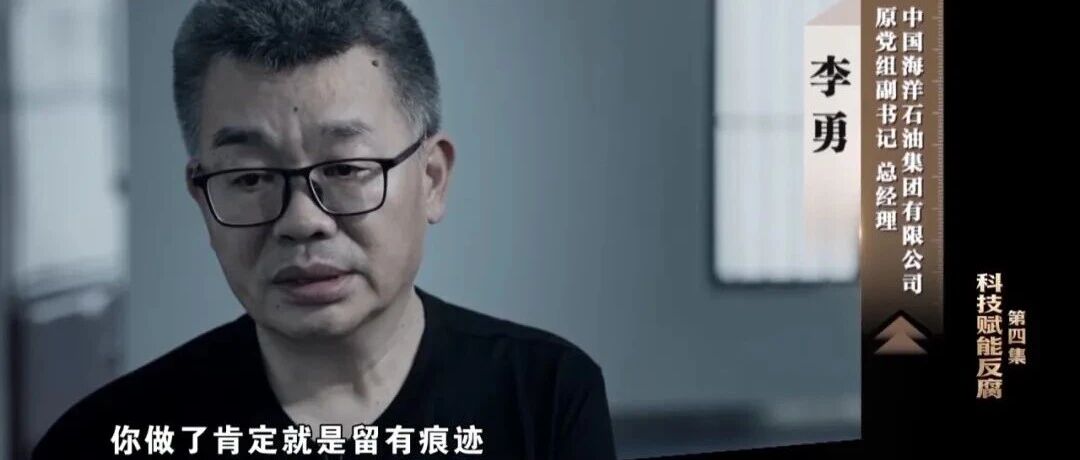
副部级李勇得知他人被留置后极度恐慌,想在阁楼里烧掉收受的现金
中国基金报· 2026-01-14 13:36
Core Viewpoint - The article discusses the case of Li Yong, former Deputy Secretary of the Party Committee and General Manager of China National Offshore Oil Corporation (CNOOC), highlighting the significant issue of cross-border corruption within state-owned enterprises, particularly in the oil sector [4][6]. Group 1: Case Overview - Li Yong was under investigation by the Central Commission for Discipline Inspection and the National Supervisory Commission starting in March 2024 due to serious corruption allegations [4]. - The case is characterized as a typical example of cross-border corruption, with over 83% of the illicit funds originating from overseas [6]. - Li Yong utilized his extensive experience in the international offshore oil sector to disguise corrupt practices within seemingly legitimate project collaborations [6]. Group 2: Investigation Techniques - The investigation employed advanced data analysis techniques to uncover evidence of corruption, including the examination of extensive business records and international cooperation for evidence gathering [9][20]. - The use of big data platforms allowed investigators to identify key business relationships and suspicious activities linked to Li Yong, leading to the discovery of significant irregularities in procurement projects [11][20]. Group 3: Corruption Mechanisms - Li Yong engaged in corrupt practices by facilitating high commissions for foreign agents, which were then funneled through offshore accounts to obscure the source of the funds [17][20]. - A notable case involved a foreign agent who offered Li Yong a "thank you fee" for securing a project, which was disguised through a trusted intermediary, Ren Fengde, to avoid direct association [15][16]. Group 4: Consequences and Sentencing - Following the investigation, Li Yong was found guilty of accepting bribes and was sentenced to 14 years in prison along with a fine of 3 million RMB [27]. - The case serves as a cautionary tale about the consequences of corruption, with Li Yong expressing regret over his actions and the loss of his reputation [29].


中国要做最坏打算!美国砍掉我们石油进口一条腿,现在要砍另一条
Sou Hu Cai Jing· 2026-01-14 11:19
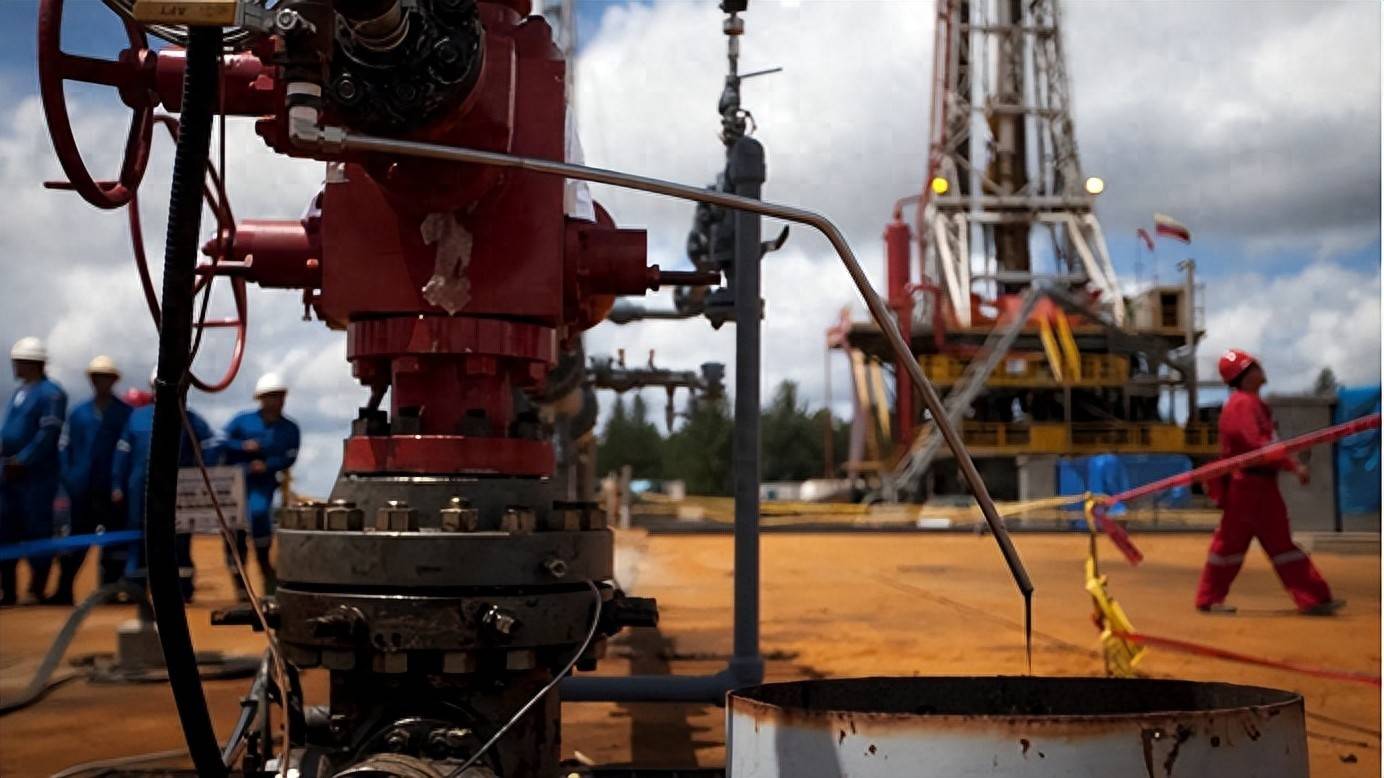
Core Viewpoint - The article discusses how the U.S. is attempting to control China's oil supply through sanctions on Venezuela and Iran, while China is proactively diversifying its energy sources and developing new channels to mitigate these pressures [1][2][5]. Group 1: U.S. Actions Against China's Oil Supply - The U.S. has taken aggressive actions against Venezuela, including controlling former President Maduro and intercepting millions of barrels of oil intended for China [2][8]. - The U.S. has also targeted Iran, which is a crucial oil supplier for China, by imposing punitive tariffs and travel warnings, indicating potential military actions [14][18]. Group 2: China's Response and Energy Strategy - China has diversified its oil import sources, with significant increases from Russia and Brazil, reducing reliance on Venezuela [10][12]. - The country has invested in oil fields in South America, creating a network of cooperative energy relationships that are less vulnerable to political changes [12][13]. Group 3: Energy Supply and Infrastructure Developments - The Middle East has become a core region for China's energy supply, accounting for over 40% of imports [13]. - China is enhancing its energy transport infrastructure, including the completion of the China-Pakistan Economic Corridor, which significantly reduces logistics costs and transit times [20][28]. Group 4: Strategic Oil Reserves and Energy Security - China's strategic oil reserves have reached 1.2 to 1.3 billion barrels, sufficient to sustain the economy for 180 days, exceeding the International Energy Agency's recommended safety line [26]. - The legal framework for strategic oil reserves has been established, with plans for additional storage capacity [26]. Group 5: Transition to Renewable Energy - By 2025, China's sales of new energy vehicles are projected to exceed 17 million, significantly reducing oil consumption [33]. - The development of green methanol technology and projects like the green hydrogen coupling biomass gasification project are pivotal for industrial decarbonization [35]. Group 6: Currency and Trade Dynamics - The use of the Chinese yuan in energy transactions is increasing, with a 120% year-on-year growth in energy transaction settlements through the CIPS system [37]. - This shift enhances China's negotiating power against U.S. financial sanctions [37]. Group 7: Conclusion on Energy Strategy - The U.S. strategy to disrupt China's oil supply chain has revealed outdated hegemonic logic, as China has already established a multifaceted approach to energy security [38][40]. - The ongoing transformation in energy strategy is crucial for China's economic stability and will have significant implications for global energy dynamics [40].
每日核心期货品种分析-20260114
Guan Tong Qi Huo· 2026-01-14 11:12
Report Overview - Report Title: Daily Core Futures Variety Analysis - Release Date: January 14, 2026 1. Market Performance Summary 1.1 Futures Market Overview - As of the close on January 14, domestic futures main contracts showed mixed results. Shanghai Tin rose 8%, Shanghai Silver rose over 8%, Fuel Oil rose over 6%, and Platinum rose over 3%. Low-Sulfur Fuel Oil (LU) and Pure Benzene rose over 2%. In terms of declines, Lithium Carbonate fell over 3%, Caustic Soda fell over 2%, and Glass, Polysilicon, Coking Coal, and Rapeseed Meal fell over 1% [6]. - Among stock index futures, the CSI 300 Index Futures (IF) main contract fell 0.29%, the SSE 50 Index Futures (IH) main contract fell 0.62%, the CSI 500 Index Futures (IC) main contract rose 0.94%, and the CSI 1000 Index Futures (IM) main contract rose 0.09%. Among treasury bond futures, the 2-year Treasury Bond Futures (TS) main contract remained flat, the 5-year Treasury Bond Futures (TF) main contract rose 0.03%, the 10-year Treasury Bond Futures (T) main contract rose 0.08%, and the 30-year Treasury Bond Futures (TL) main contract fell 0.04% [7]. 1.2 Capital Flow - As of 15:18 on January 14, in terms of capital inflows into domestic futures main contracts, Shanghai Silver 2604 had an inflow of 4.395 billion yuan, CSI 2603 had an inflow of 4.248 billion yuan, and Shanghai and Shenzhen 2603 had an inflow of 3.545 billion yuan. In terms of outflows, Lithium Carbonate 2605 had an outflow of 785 million yuan, Shanghai Gold 2602 had an outflow of 578 million yuan, and Alumina 2605 had an outflow of 316 million yuan [7]. 2. Market Analysis of Key Varieties 2.1 Shanghai Copper - Shanghai Copper opened high and moved higher, rising during the day. The US inflation data in December increased market expectations of an interest rate cut in April. In terms of supply, copper smelters are facing profit challenges, and refined copper production is expected to decline in January. The merger negotiation between Rio Tinto and Glencore may tighten the copper supply. In terms of demand, terminal demand is growing strongly, but the copper product sector is cautious, and copper inventories have increased significantly. The market is worried about the US refining copper tariff, which supports the copper price [9]. 2.2 Lithium Carbonate - Lithium Carbonate opened high and then declined during the day. In December 2025, production increased, and inventory started to accumulate. The demand for energy storage batteries remains strong, but the export tax rebate policy adjustment and the exchange's trading policy adjustment have affected the market. Despite the downward movement in the short term, the overall sentiment is still bullish, with the risk of CATL resuming production [11]. 2.3 Crude Oil - OPEC+ decided to maintain the production plan in February and March 2026. The US crude oil inventory decreased more than expected, but the refined oil inventory increased. The market is still worried about demand, and the global crude oil market is in a state of oversupply. The situation in Iran and Venezuela may affect the supply, and the oil price is expected to fluctuate [12][13]. 2.4 Asphalt - The asphalt production rate decreased last week, and the expected production in January 2026 also decreased. The downstream demand is weak in the north and average in the south. The situation in Venezuela may affect the raw material supply and production cost of domestic asphalt. It is recommended to focus on the raw material shortage of domestic refineries and consider reverse arbitrage [14][16]. 2.5 PP - The downstream start - up rate of PP is at a low level, and the enterprise start - up rate is at a medium - low level. The cost is affected by the international situation, and the supply is increasing with new capacity. The downstream is in the off - season, and the demand is weak. The upward space of PP is expected to be limited, and the L - PP spread is expected to narrow [17]. 2.6 Plastic - The plastic start - up rate has increased, and the downstream start - up rate is at a low level. The cost is affected by the international situation, and new capacity has been put into production. The downstream demand is weakening, and the upward space is limited. The L - PP spread is expected to narrow [18][19]. 2.7 PVC - The PVC start - up rate is increasing, but the downstream demand is weak, and the export is average. The social inventory is high, and the real estate market is still in the adjustment stage. With the cancellation of export tax rebates, the 03 - 05 contracts are expected to fluctuate strongly [20]. 2.8 Coking Coal - Coking Coal opened low and then adjusted downward nearly 2% during the day. The supply of imported coal decreased, while domestic production increased. Coking enterprises and steel mills are replenishing inventory. Despite the short - term adjustment, Coking Coal is expected to remain strong in the long term [22]. 2.9 Urea - Urea opened low and rose over 2% during the day. The daily production has increased, and the inventory has decreased. The agricultural demand is increasing, but the industrial demand is weakening due to the approaching Spring Festival. The short - term strength of urea is expected to be difficult to sustain, and it will be adjusted at a high level [23].
“我为祖国献石油”——一场七十五年的深情奔赴
Xin Hua Wang· 2026-01-14 08:13
有多少深情,足以跨越一代代人薪火相传?有多少坚守,能够将青春淬炼成国家发展的基石? 从石油大会战的艰难起步,到如今擎起保障国家能源安全的"顶梁柱",中国石油的成长轨迹,与中 国石油工业的壮大、中国经济的腾飞紧密交织,谱写了一曲波澜壮阔的能源报国史诗。 与祖国发展同频,与时代脉搏共振。"我为祖国献石油",是石油人用七十五年峥嵘岁月写就的壮丽 史诗。 为国"加油" 能源的饭碗必须端在自己手里。 新中国成立初期,全国生产的汽、柴油不足国内需求量的10%,90%以上石油产品依赖进口。 新中国石油工业从一穷二白开始,要摘下"贫油国"的帽子,自此,石油人开始了艰苦卓绝的奋斗历 程。 20世纪末到60年代初,决定中国石油工业前途和命运的大决战——大庆石油会战打响。数万石油大 军挺进荒原,在极其艰苦的条件,仅用三年时间就开发建设了146平方千米、年产能力600万吨的原油生 产基地。 这场"战役"不仅奠定了中国石油工业的基础,更孕育出"爱国、创业、求实、奉献"的大庆精神,成 为激励一代代石油人接续奋斗的精神火炬。 此后,胜利石油会战、大港石油会战、冀中石油会战、吉林石油会战、辽河石油会战、四川"开气 找油"会战、江汉石油会战、 ...
洲际油气股价涨5.31%,博时基金旗下1只基金重仓,持有29.81万股浮盈赚取5.66万元
Xin Lang Cai Jing· 2026-01-14 02:39
截至发稿,王祥累计任职时间9年76天,现任基金资产总规模608.22亿元,任职期间最佳基金回报 241.7%, 任职期间最差基金回报-47.82%。 数据显示,博时基金旗下1只基金重仓洲际油气。博时中证油气资源ETF(561760)三季度减持24.77万 股,持有股数29.81万股,占基金净值比例为2.51%,位居第十大重仓股。根据测算,今日浮盈赚取约 5.66万元。 博时中证油气资源ETF(561760)成立日期2024年4月19日,最新规模2698.76万。今年以来收益 6.67%,同类排名1881/5520;近一年收益27.81%,同类排名3097/4203;成立以来收益18.65%。 博时中证油气资源ETF(561760)基金经理为王祥。 1月14日,洲际油气涨5.31%,截至发稿,报3.77元/股,成交6.72亿元,换手率4.43%,总市值156.42亿 元。 资料显示,洲际油气股份有限公司位于北京朝阳区顺黄路229号海德商务园,海南省海口市国贸大道2号 海南时代广场17层,成立日期1984年8月20日,上市日期1996年10月8日,公司主营业务涉及石油勘探开 发和石油化工项目的投资及相关工程的技术 ...

玉门油田实现“双百”目标
Zhong Guo Hua Gong Bao· 2026-01-14 00:20
Core Insights - Yumen Oilfield has achieved its dual targets of oil and gas production exceeding 1 million tons and renewable energy installed capacity surpassing 1 million kilowatts by December 30, 2025 [1][2] Group 1: Oil and Gas Production - Yumen Oilfield, developed in 1939, is China's first natural oil base and has seen its oil and gas production equivalent rise above 1 million tons for the first time in 65 years [1] - The oilfield's production peaked at 1.4062 million tons in 1959 but fell to 1.0956 million tons in 1960, remaining below 1 million tons for over 60 years [1] - Recent strategic initiatives have led to continuous growth in oil and gas exploration, with proven reserves increasing by over 10 million tons for seven consecutive years and production rising by over 100,000 tons for five consecutive years [1] Group 2: Renewable Energy Development - Yumen Oilfield has effectively constructed large-scale photovoltaic power stations, including the 200 MW Qingquan and 300 MW Yining, along with supporting energy storage systems [2] - The completion of the 500,000 kW Hongliuqian wind power project by the end of this year will contribute to the renewable energy installed capacity exceeding 1 million kilowatts [2]