
农产品

Search documents
红河钰祁包装材料有限公司成立 注册资本50万人民币
Sou Hu Cai Jing· 2025-11-29 07:45
Core Viewpoint - Honghe Yuqi Packaging Materials Co., Ltd. has been established with a registered capital of 500,000 RMB, indicating a new player in the packaging materials industry [1] Company Overview - The legal representative of the company is Yang Xianqin [1] - The company is involved in a wide range of activities including the sale of packaging materials and products, packaging services, and agricultural product logistics [1] Business Scope - The company’s business scope includes: - Sales of packaging materials and products - Agricultural product logistics equipment sales - Fresh fruit retail and cultivation - Various agricultural services including production, processing, and transportation [1] - Additional services offered include supply chain management, new membrane materials manufacturing, and various types of material sales such as thermal insulation and corrosion-resistant materials [1] - The company also engages in internet sales, personal internet live streaming services, and various logistics and warehousing services [1]
越南与欧洲自由贸易联盟(EFTA)第18轮自由贸易协定谈判在岘港举行
Shang Wu Bu Wang Zhan· 2025-11-29 04:47
Core Points - The 18th round of Free Trade Agreement (FTA) negotiations between Vietnam and the European Free Trade Association (EFTA) took place in Da Nang, Vietnam from November 25 to 28 [1] - The goal of both parties is to make every effort to complete consultations in this round and to adopt necessary flexible measures to ensure a balanced agreement beneficial to both sides [1] - The negotiations are progressing smoothly, with efforts to narrow remaining differences highlighted by the Vietnamese delegation [1] Trade Relations - As of the end of 2024, trade between Vietnam and EFTA is expected to exceed $3.5 billion, maintaining stable growth over the years [1] - Major exports from Vietnam to EFTA member countries include footwear, textiles and garments, machinery and equipment, mobile phones and components, as well as agricultural products like coffee and cashews [1] - In return, Vietnam primarily imports high-tech and high-value-added products from EFTA member countries, such as pharmaceuticals, precision machinery, medical devices, and chemical products [1]
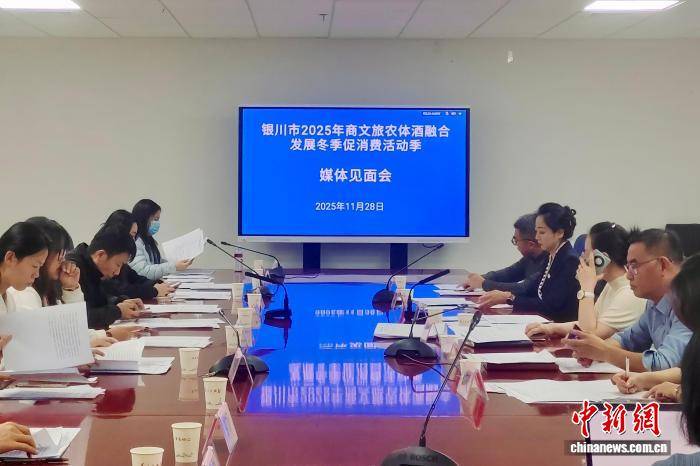
宁夏银川推出多项冬季促消费活动 推动“商文旅农体酒”融合发展
Sou Hu Cai Jing· 2025-11-28 22:09
Core Viewpoint - Yinchuan City is launching a series of promotional activities from December 2025 to March 2026 to stimulate winter consumption across various sectors, including commerce, culture, tourism, agriculture, sports, and wine, under the brand "Beautiful Yinchuan" [1] Group 1: Promotional Activities - Yinchuan City has planned 113 promotional activities, utilizing a "government subsidies + enterprise discounts" model, with a total value of consumption vouchers reaching 1.9 billion yuan [3] - The city has partnered with pharmacies to issue 1 million yuan in health consumption vouchers as part of the "Happy Shopping Yinchuan" initiative [3] Group 2: Tourism Initiatives - The "Winter Tour Yinchuan" campaign features over 60 activities across eight sectors, including events like the New Year party at Yuehai Ski Resort and the Ice Peak Festival at Helan Mountain Rock Art Scenic Area [3] - During the Spring Festival, various events such as the "Mountain-Sea New Spring Lantern Festival" and the 11th Qin Opera Art Performance will be held to enhance the holiday experience for residents and tourists [3] - Yinchuan City has allocated over 5 million yuan for tourism subsidies, offering discounts on entrance fees and bundled tickets at attractions like Xixia Tomb [3] Group 3: Sports Events - The "Active Yinchuan" series includes 33 sports events, featuring professional ice and snow competitions as well as community-friendly activities like snow soccer and parent-child obstacle races [3] - Consumers can enjoy discounts on attraction tickets, accommodation, and dining by presenting event tickets during the promotional period [3] Group 4: Agricultural Promotion - The "Smart Selection Yinchuan" initiative aims to promote local agricultural products in various venues, including government offices and tourist attractions, and to showcase them in markets such as Beijing [4] - Key products include high-quality wine, goji berries, lamb, and cool-season vegetables, which are being marketed to reach a national audience [4]

大豆危机再起!美国再度施压中国,中方早已做好应对
Sou Hu Cai Jing· 2025-11-28 12:20
Core Viewpoint - The article discusses the current dynamics in the soybean market, highlighting the disparity in prices between U.S. and South American soybeans, and the implications of tariffs and trade negotiations on these prices [1][3][19]. Price Disparity - The current post-tax price of U.S. soybeans is approximately 4600 RMB per ton, while South American soybeans are priced at 4000 RMB per ton, resulting in a price difference of 600 RMB per ton [3][5]. - The U.S. soybean price is further impacted by a 13% import tariff compared to a 3% tariff on South American soybeans, creating a significant cost disadvantage for U.S. products [5][7]. Import Volume and Market Impact - Recently, China purchased 160,000 tons of U.S. soybeans, which is a small fraction (less than 1.5%) of its annual import requirement of 110 million tons [7][12]. - The purchase was made by COFCO Group, and despite the small volume, it reflects China's strategic approach to trade negotiations with the U.S. [7][9]. Trade Negotiations and Market Reactions - The soybean purchase is seen as a response to U.S.-China trade talks, indicating a willingness to engage while maintaining control over the volume and timing of purchases [9][10]. - Following the announcement of the purchase, U.S. soybean futures prices fluctuated, demonstrating the sensitivity of the market to Chinese buying activity [10][12]. Future Price Trends - The article suggests that U.S. soybean production may decline due to uncertainty among farmers, while Brazil is expected to increase production, potentially stabilizing overall soybean prices [16][17]. - China's ability to source soybeans from both the U.S. and Brazil allows it to leverage pricing and maintain supply chain security [19][21]. Strategic Implications - The purchase of U.S. soybeans is framed not just as a commodity transaction but as a strategic move to enhance China's bargaining power in trade negotiations [19][21]. - The article emphasizes the importance of mutual benefits in trade, suggesting that further cooperation will depend on the U.S. addressing tariffs and technology restrictions [21].
大宗商品中观轮动系列(二):从信念到模型验证:估值与周期双轮驱动
Guo Tai Jun An Qi Huo· 2025-11-28 10:46
1. Report Industry Investment Rating - Not provided in the report 2. Core Viewpoints of the Report - The research aim of commodity meso - rotation is to combine the "subjective + quantitative" concept and put it into practice, reducing the specificity of factors, parameters, and models in the strategy, and focusing on interpretability and attributability [3][81] - The report constructs a monthly - frequency variety cluster meso - rotation model. The in - sample average annualized return rate is 17.79%, the Sharpe ratio is 1.44, the drawdown is - 5.70%, and the monthly win - rate is 68.98%. From January to November 2025, the out - of - sample total return is 15.43%, the drawdown is 1.09%, the monthly win - rate is 70%, and only three months record negative returns [3][4][83] 3. Summary by Relevant Catalogs 3.1 Commodity Rotation Mechanism and Variety Cluster Division - In the previous report, it was proposed that during the upward phase of the inventory cycle, the real - side is dominant, manifested as fundamental valuation; during the downward phase, the expected - side is dominant, manifested as macro - valuation. A research framework for the rotation of fundamental and macro - valuation under the cycle phase was put forward, and the meso - targets were implemented at the variety cluster level [6] - 16 variety clusters were selected, including 3 in the black sector, 3 in the non - ferrous sector, 5 in the energy and chemical sector, 3 in the agricultural products sector, and 2 in the precious metals sector, starting from January 1, 2019 [7] 3.2 Bottom - up - Fundamental Perspective 3.2.1 Fundamental Valuation Index Construction - The construction of fundamental valuation indexes in meso - rotation is similar to but different from traditional fundamental quantitative analysis. Due to differences in data among varieties, a special method is needed. First, pre - process the original data of inventory, profit, and inventory - to - consumption ratio, including pre - screening, filling missing values, 3σ standardization, and seasonal adjustment. Then, construct the variety cluster diffusion index. Finally, use the inventory diffusion index as the base diffusion index and design "logic gate" adjustment rules [10][13][14] 3.2.2 Back - testing Results - The strategy is rebalanced monthly. By adjusting the number of long and short variety clusters, it is found that the overall return is strongly correlated with the number of variety clusters. The average annualized return rate of the full - parameter group is 9.88%, the Sharpe ratio is 0.52, the drawdown is - 10.58%, and the monthly win - rate is 57.96%. The ls_4_4 group is selected as the strategy benchmark [22] 3.3 Top - down - Macro Perspective 3.3.1 Variety Clusters Expressing Macro Views - Through principal component analysis of Wind's five major sector indexes, three principal components are obtained. PC1 is the combined effect of growth and interest rate factors, with precious metals having a significant negative exposure and the other four sectors having significant positive exposures; PC2 is the combined effect of inflation structure and monetary policy expectations, with energy and chemical and agricultural products having positive exposures and the other three sectors having negative exposures; PC3 is the influence of RMB exchange - rate depreciation, with black and energy - chemical sectors having negative exposures and precious metals, non - ferrous, and agricultural products having positive exposures [28][29][31] 3.3.2 Macro - valuation Index Construction - Select growth, inflation, interest rate, and exchange - rate as macro indicators and construct monthly - frequency indicators. For growth and inflation factors, select proxy indicators, pre - process, seasonally adjust, filter, and synthesize them; for interest rate and exchange - rate factors, calculate them from high - frequency asset data and then reduce the frequency. The macro - valuation intensity index is constructed by multiplying the factor exposure after rolling regression by the factor momentum, summing them up, and then multiplying by the confidence indicator [40][41][49] 3.3.3 Back - testing Results - The strategy is rebalanced monthly. By adjusting the number of long and short variety clusters, it is found that the overall return decreases as the number of variety clusters increases, and the drawdown and volatility ease. The average annualized return rate of the full - parameter group is 10.13%, the Sharpe ratio is 0.91, the drawdown is - 11.17%, and the monthly win - rate is 66.94%. The ls_4_4 group is selected as the reference group [59] 3.4 Cycle Timing 3.4.1 Inventory Cycle Index Construction - Construct an inventory cycle index based on enterprise accounts receivable and inventory, which is the ratio of the increment of enterprise finished - product inventory to the increment of enterprise revenue. After data selection, cleaning, and calculation, the inventory cycle index is standardized to the [0,1] interval and lagged by one month [62] 3.4.2 Inventory Cycle Inflection Point Identification - First, determine the dynamic threshold; then, identify the initial inflection points; finally, filter the inflection points for the second time. After the second filtering, 5 adjacent inflection points are removed. From March 2012 to the end of 2024, there are 11 effective inflection points, and the average inventory cycle running time is 2 years and 1 month. After subjective adjustment, the average running time is 41 months [65][66][70] 3.5 Variety Cluster Meso - rotation Model - Based on the inventory cycle's up - and - down phases, conduct a binary rotation of the valuation model. In the inventory up - phase, the weight of fundamental valuation is 100%; in the down - phase, the weight of macro - valuation is 100%. The average annualized return rate of the in - sample full - parameter group is 17.79%, the Sharpe ratio is 1.44, the drawdown is - 5.70%, and the monthly win - rate is 68.98%. The out - of - sample total return from January to November 2025 is 15.43%, the drawdown is 1.09%, the monthly win - rate is 70%, and only three months record negative returns [74][83] 3.6 Summary and Outlook 3.6.1 Summary - The report builds a variety cluster fundamental valuation rotation model from a bottom - up perspective and a variety cluster macro - valuation rotation model from a top - down perspective. It also constructs an inventory cycle index and conducts a binary rotation of the valuation model based on the inventory cycle [81][82][83] 3.6.2 Outlook - Adjust the variety cluster division method and include active varieties such as new - energy silicon and lithium - Consider factors such as the currency and hedging attributes of precious metals and the geopolitical attributes of oil products - Construct a variety cluster trend state identification model based on volume - price characteristics and evaluate the trend confidence with valuation levels - Deploy a monitoring system from sentiment analysis and news for mid - cycle strategies to avoid risks [84]
红枣市场周报-20251128
Rui Da Qi Huo· 2025-11-28 10:44
Report Summary 1. Report's Investment Rating - No investment rating information is provided in the report. 2. Core Viewpoints - The price of the main contract of Zhengzhou jujube futures rose first and then fell this week, with a weekly increase of about 0.33%. In the short term, the futures price may remain weak [9][13]. - The acquisition of new - season jujubes in Xinjiang's main producing areas is in progress. The prices in the producing areas are trending weakly, and the inventory of 36 sample points has increased [9][42]. - The 2025/26 jujube production season is expected to see a decline in output, and the jujube export volume in October 2025 decreased both month - on - month and year - on - year [46][50]. 3. Summary by Directory 3.1 Week - on - Week Summary - Future trading tips include monitoring spot prices and the consumer side [9]. - The price of the main contract of Zhengzhou jujube futures rose first and then fell this week, with a weekly increase of about 0.33% [9][13]. - In Xinjiang's main producing areas, the acquisition in some areas has ended, while in others, it is in progress. The prices in the producing areas are trending weakly. The inventory of 36 sample points as of November 28, 2025, was 10,848 tons, an increase of 518 tons from last week, a month - on - month increase of 5.01% and a year - on - year increase of 90.32% [9][42]. - Enterprises and small and medium - sized merchants are the main purchasing entities, with Cangzhou merchants being the main purchasing force in the current market [9]. 3.2 Futures and Spot Market - **Futures price**: The price of the Zhengzhou jujube 2601 contract rose first and then fell this week, with a weekly increase of about 0.33% [13]. - **Futures positions**: As of this week, the net position of the top 20 in jujube futures was - 16,457 lots [16]. - **Futures warehouse receipts**: As of this week, the number of Zhengzhou jujube warehouse receipts was 0 [20]. - **Futures spreads**: As of this week, the spread between the Zhengzhou Commodity Exchange's jujube futures 2601 contract and the 2605 contract was - 150 yuan/ton [23]. - **Basis**: As of this week, the basis between the spot price of Hebei grey jujubes and the main contract of jujube futures was 805 yuan/ton [26]. - **Spot prices**: As of November 28, 2025, the purchase price of jujube bulk goods in Aksu was 5.05 yuan/kg, in Alar was 5.5 yuan/kg, and in Kashgar was 6.6 yuan/kg; the wholesale price of first - grade grey jujubes in Cangzhou, Hebei, and Henan was 4.45 yuan/jin; the spot price of special - grade grey jujubes in Cangzhou, Hebei, was 9.83 yuan/kg, and in Henan was 9.8 yuan/kg [29][33][38]. 3.3 Industry Chain Situation - **Supply side**: - As of November 28, 2025, the physical inventory of 36 sample points was 10,848 tons, an increase of 518 tons from last week, a month - on - month increase of 5.01% and a year - on - year increase of 90.32% [42]. - The 2025/26 jujube production season is expected to see a decline in output [46]. - **Demand side**: - In October 2025, China's jujube export volume was 2,205,220 kg, with an export value of 35,238,139 yuan and an export average price of 15,979.42 yuan/ton. The export volume decreased by 3.44% month - on - month and 33.29% year - on - year. From January to October 2025, the cumulative export volume was 25,753,622 kg, a cumulative year - on - year increase of 0.18% [50]. - This week, the BOCE Xinjiang Jujube Good Brand had only a small amount of orders and transactions [55]. 3.4 Options Market and Futures - Stock Correlation - **Options market**: The report only mentions the implied volatility of at - the - money jujube options this week, but no specific data is provided [56]. - **Stock market**: The report shows the price - earnings ratio chart of Hao Xiang Ni, but no specific analysis is given [58][59].
惠民县商务局:“新场景、新供给、新模式”三维度发力,消费市场注入持续的新动能
Sou Hu Cai Jing· 2025-11-28 10:26
Core Viewpoint - The Huimin County government is focusing on fostering new consumption growth through innovative strategies, emphasizing the integration of online and offline channels to enhance consumer experiences and stimulate high-quality development [1][3]. Group 1: New Consumption Growth - The Huimin County Business Bureau aims to stimulate new consumption growth by focusing on "new scenarios, new supply, and new models" [3]. - The strategy includes creating new consumption scenarios that integrate local cultural tourism, sports, and health industries to enhance consumer engagement and value [3]. Group 2: Supply Innovation - The initiative encourages product innovation by attracting and nurturing new business formats and models, particularly in local industries such as rope nets and agricultural products [3]. - Local enterprises are urged to develop more intelligent, green, and healthy consumer goods to provide better and more diverse options from the supply side [3]. Group 3: Online and Offline Integration - The Business Bureau plans to strengthen strategic partnerships with major domestic e-commerce and payment platforms to promote online live streaming sales and offline experience activities [3]. - The goal is to leverage local advantages such as Taobao towns and villages, as well as provincial e-commerce live broadcast bases, to ensure high-quality local products reach consumers through diverse and modern channels, driving continuous new momentum in the consumption market [3].
美国关税政策反转!特批四国免税待遇,瑞士也传来好消息
Sou Hu Cai Jing· 2025-11-28 10:16
Core Points - The U.S. government has announced the removal of tariffs on certain food and import goods from Argentina, Ecuador, Guatemala, and El Salvador, aiming to enhance market access for U.S. businesses in Latin America and Central America [1][3] - The framework agreement is expected to be signed soon, with negotiations for other agreements anticipated to conclude by the end of the year [1][3] - The response from the governments of the four countries has been overwhelmingly positive, as the tariff removal is expected to boost their export trade and deepen economic ties with the U.S. [3] Economic Implications - The tariff removal is seen as a significant opportunity for countries like Ecuador, where the banana industry could see a substantial increase in sales due to reduced costs for entering the U.S. market [3] - The U.S. aims to lower domestic prices for products like coffee and bananas, addressing the cost of living pressures faced by American consumers [5][7] - The move aligns with the Trump administration's focus on affordability and improving public perception following recent electoral losses [7][9] Political Context - The tariff reduction reflects a strategy to balance economic interests with political objectives, as the administration seeks to enhance support among voters by addressing everyday consumer concerns [9][11] - The effectiveness of these trade policy adjustments in delivering immediate benefits to the public remains uncertain, especially with the upcoming elections [11]

油脂油料周报:美豆区间震荡,马棕油止跌反弹-20251128
Guo Xin Qi Huo· 2025-11-28 09:49
研究所 美豆区间震荡 马棕油止跌反弹 ----国信期货油脂油料周报 2025年11月28日 研究所 目录 CONTENTS 1 蛋白粕市场分析 2 油脂市场分析 3 后市展望 研究所 Part1 第一部分 蛋白粕市场分析 一、蛋白粕市场分析 研究所 本周行情回顾:本周CBOT大豆低位区间震荡,期价从上周触及的17个月高位回落后在1100之上窄幅震荡。美国农业部长布鲁克·罗林斯周一表示,特朗普政府预计将在两周内宣布美国农户 援助计划,并达成中国大豆采购协议,但是她没有提供更多细节。当被问及中国购买美国大豆的承诺时,罗林斯表示,美国将和中国在本周或下周签署协议,补充说她相信中国会履行其采购 承诺。她补充说,种种迹象表明,中国采购承诺依然有效,他们确实会订购1200万吨大豆。如果采购订单在12月底之前下达,这些大豆会在明年初交付。美豆在1100美分/蒲式耳之上震荡。 市场仍在关注中国采购美豆的进展。交易商表示,自周二以来已有至少10船美国大豆被采购。这对美豆有所支撑。与之相比,国内连粕市场震荡走高,前几个交易日市场跟随美豆低位窄幅震 荡,据巴西《圣保罗页报》周三报道,中国禁止6.9万吨巴西大豆入境,因为从货舱内发现 ...
广东外贸“十四五”成绩单:规模居全国首位,出口“含新量”攀升
2 1 Shi Ji Jing Ji Bao Dao· 2025-11-28 08:25
Core Insights - Guangdong's foreign trade has achieved significant growth during the "14th Five-Year Plan" period, surpassing 8 trillion and 9 trillion yuan in total trade value, marking historical highs [1] - The province's contribution to national foreign trade growth has increased from 17.8% in 2021 to 38.4% in 2024, solidifying its role as a key player in China's foreign trade [1] Trade Market Expansion - Guangdong has diversified its trade markets, with ASEAN becoming its largest trading partner, reaching an import-export scale of 1.45 trillion yuan in 2024, a growth of 33.5% [2] - Exports to emerging markets such as Latin America, the Middle East, India, Russia, and Central Asia have seen substantial increases, with growth rates of 76.8%, 55.1%, 70.8%, 103.6%, and 208.9% respectively [2] - Trade with countries involved in the Belt and Road Initiative reached 3.48 trillion yuan, growing by 36.4% and accounting for 38.3% of Guangdong's total trade [2] Trade Structure Optimization - General trade has become increasingly significant, with a 46.1% growth in general trade imports and exports, contributing to a 6.3 percentage point increase in overall trade growth [2] - The number of private enterprises engaged in import-export activities rose from 77,000 to 123,000, a 60.7% increase, with their trade value growing by 48.2% [2] Export Dynamics - The export of electric vehicles and lithium batteries has surged, with growth rates of 31 times and 1.3 times respectively, reflecting a shift towards advanced manufacturing and green low-carbon industries [3] - The export scale of integrated circuits, computers, and ships has increased by 77.5%, 70.3%, and 1.7 times compared to the end of the "13th Five-Year Plan," enhancing Guangdong's share in national exports of these products [3] - Self-branded products now account for 21.1% of total exports, up 2.6 percentage points from 2020, indicating a strong global presence of "Guangdong manufacturing" [3] Import Trends - The demand for imports has shifted towards new and high-quality products, with significant growth in the import of integrated circuits, semiconductor manufacturing equipment, and computers, showing increases of 27.1%, 190.3%, and 132.2% respectively [3] - There has been a notable rise in imports of agricultural products and pharmaceuticals, with growth rates of 26.7% and 27.4% respectively, reflecting the increasing domestic consumption needs [3]