电动汽车

Search documents
专访联合国前副秘书长索尔海姆:绿色领域应避免加征更多关税 希望中国企业在全球加大投资
Mei Ri Jing Ji Xin Wen· 2025-08-18 14:00
Core Viewpoint - Eric Solheim emphasizes the significant progress China has made in ecological civilization and green development, positioning it as a leader in global climate governance and sustainable practices [1][4][10]. Group 1: China's Green Development Policies - China has consistently highlighted the importance of balancing ecological protection with economic development, marking a shift from reliance on fossil fuels to sustainable energy sources [4][5]. - The country has made substantial improvements in air quality and water quality, showcasing a successful transformation driven by the philosophy of nurturing the natural environment to promote economic growth [5][6]. - China is now a leader in various green technologies and has established a comprehensive national park system to protect endangered species, indicating its advancement in green development [6][10]. Group 2: Global Green Transition - The global shift towards green energy is unstoppable, with countries like China, South Korea, and Japan continuing to invest in renewable energy despite the U.S. withdrawing from the Paris Agreement [7][10]. - Solar energy has become one of the lowest-cost energy sources globally, and transitioning to solar not only saves costs but also enhances energy security for nations [9][12]. - The U.S. exit from climate cooperation may create challenges, but it primarily affects the U.S. itself, as other nations will continue to pursue green initiatives [8][10]. Group 3: China and Global Climate Leadership - China is positioned to fill the leadership void left by the U.S. in climate cooperation, with a focus on increasing investments in renewable energy technologies globally [10][11]. - The collaboration between China and Europe is seen as crucial for leading global climate action, especially in engaging developing countries [10][11]. - The importance of avoiding additional tariffs on green technologies is highlighted, as such measures could hinder the progress of the green transition [13][14].


新闻分析:越是政策受益者越应是合规经营者
Xin Hua Wang· 2025-08-18 07:23
Core Viewpoint - The article emphasizes the importance of compliance in the "new three items" (electric vehicles, lithium batteries, and photovoltaic products) sector, highlighting that tax evasion undermines the intended benefits of tax incentives and disrupts market order [1][2]. Group 1: Tax Incentives and Compliance - The National Taxation Administration has revealed two tax evasion cases in the "new three items" sector, marking the first disclosure of such violations in this area [1]. - Tax incentives are designed to encourage innovation and development, but some entities are misusing these benefits to evade taxes, which harms fair competition and exacerbates overcapacity [1][2]. - From 2021 to mid-2023, the cumulative tax reductions and exemptions reached 9.9 trillion yuan, expected to hit 10.5 trillion yuan by the end of the year, with 3.6 trillion yuan specifically benefiting technology innovation and advanced manufacturing [2]. Group 2: Impact on Industry and Market - The article discusses the negative effects of tax evasion on legitimate businesses, as it distorts market mechanisms and disrupts fair competition [2][3]. - The tax authorities have investigated 21,800 cases of tax fraud and improper tax benefits during the "14th Five-Year Plan" period, recovering 26.9 billion yuan in taxes [3]. - Experts suggest that a more scientific and sustainable policy framework is needed to address issues like "involution" in certain sectors and to promote a shift from "policy-driven" to "innovation-driven" growth for high-quality development [3].
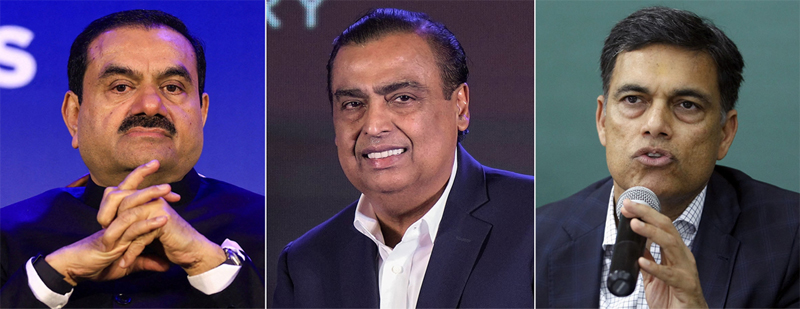
“印度大亨被中国技术吸引,正低调推进合作”
Guan Cha Zhe Wang· 2025-08-18 07:12
Group 1 - The article highlights the growing collaboration between Indian and Chinese companies, driven by India's need for advanced technology in electric vehicles and renewable energy sectors [1][4] - Major Indian conglomerates like Adani Group, Reliance Industries, and JSW Group are seeking partnerships with Chinese firms, particularly in battery manufacturing and electric vehicle technology [1][2] - Indian companies are increasingly opting for discreet collaborations with Chinese firms to avoid government scrutiny, often signing agreements through overseas subsidiaries in countries like Singapore or Vietnam [4][5] Group 2 - The Indian automotive industry has faced supply chain disruptions, prompting companies to secure critical components for electric vehicles to maintain competitive advantages [5] - There is a growing recognition of the importance of renewable energy capacity, with China positioned as a leader in this transition [6] - The thawing of Sino-Indian relations, following previous tensions, is expected to facilitate more open trade agreements and collaborations between the two nations [7]
税务部门首次披露“新三样”领域2起偷骗税案件
Xin Hua She· 2025-08-18 07:10
Group 1 - The core viewpoint is that the tax authorities have disclosed two tax evasion cases in the "new three items" (electric vehicles, lithium batteries, and photovoltaic products) sector, marking the first public announcement of such violations in this area [1] - The tax authorities have implemented a series of tax and fee preferential policies to support the rapid development of entities in the "new three items" sector, but some entities have violated these policies by fraudulently claiming tax benefits [1] - The disclosed cases include companies misreporting non-research personnel salaries as research expenses to unlawfully benefit from tax deductions, and tax evasion gangs manipulating multiple new energy companies to issue false invoices and claim export tax refunds [1] Group 2 - The tax authorities are committed to implementing tax and fee preferential policies effectively, optimizing service measures, and enhancing tax payment convenience to support the growth of business entities [2] - There is a continuous effort to enforce the law in tax matters, strictly investigating and penalizing illegal activities that undermine tax fairness and market order, thereby maintaining a fair tax environment [2]
天工称冠机器人百米赛;与辉同行否认董宇辉年入20亿
2 1 Shi Ji Jing Ji Bao Dao· 2025-08-18 02:34
Group 1 - Beijing humanoid robot "Embodied Tiangong Ultra" won the 100m sprint championship at the World Humanoid Robot Games with a time of 21.50 seconds, marking a significant achievement in autonomous navigation technology [2] - The annual income of internet celebrity Dong Yuhui is reported to be between 2 to 3 billion yuan after leaving Dongfang Zhenxuan, although this claim has been denied by his current company [3] - Google DeepMind released the revolutionary world model Genie 3, which can generate fully interactive virtual worlds in real-time based solely on text input, representing a major step towards general artificial intelligence [4] Group 2 - OpenAI's ChatGPT still faces "hallucination" issues, with executives advising users to verify answers for reliability [5] - Huawei's HarmonyOS user base has surpassed 10 million, with plans to promote Chinese applications globally, aiming to compete with Android and iOS ecosystems by the end of the year [7] - NIO announced the full connectivity of the G318 Sichuan-Tibet battery swap route, allowing users to swap batteries all the way to Mount Everest, enhancing travel convenience for electric vehicle users [8] Group 3 - SK Hynix has surpassed Samsung to become the largest DRAM manufacturer globally, with a market share of 36.3%, while Samsung's share dropped to 32.7%, marking the largest decline since 1999 [10] - Tsinghua University achieved a significant breakthrough in quantum computing, developing a programming architecture for arbitrary two-qubit gates, which is expected to enhance the performance of quantum computers in practical applications [11] - Zhiyuan Robotics launched the OmniHand 2025 series, with prices starting at 14,800 yuan, aimed at both interactive services and professional operations [12] Group 4 - The first urban drone medical delivery route in Northwest China has been launched, connecting health service centers and achieving delivery efficiency three times faster than traditional ground transport [14]

24小时内,中方连出两记重拳,警告盟友,想要给美国当炮灰,必将付出沉重代价
Sou Hu Cai Jing· 2025-08-18 02:28
面对加拿大无视中国关切的态度,中国曾多次给予机会,然而卡尼政府始终无动于衷。直到中国商务部宣布将对所有 加拿大公司征收75%的保证金,才正式反击。这项政策自8月14日起生效,实际上是对加拿大油菜籽倾销行为的一次明 确回应。 实际上,中国的这项反倾销调查在去年9月就已启动,但为何直到现在才落下重锤?原因很简单:中国一直在等待一个 最佳时机。中国是世界上最大的油菜籽进口国,而加拿大的油菜籽出口市场,近一半都依赖中国。2024年,加拿大对 中国出口的油菜籽总值接近50亿加元。一旦保证金政策实施,意味着中国可能停止从加拿大进口油菜籽,这一变动立 刻引发市场波动,油菜籽期货价格在8月12日急剧下跌了6.5%。 眼看着加拿大正处于油菜籽的收割季节,农民们本应享受丰收的喜悦,却不得不面对前所未有的困境。由于市场的不 确定性,许多农民未能提前签订销售合同,现在只能眼睁睁看着收获的油菜籽烂在地里,既卖不出去,又要承担高额 的仓储费用,农民们的处境堪称无奈。路透社采访了一位新加坡的油菜籽贸易商,他直言:"中国这次的反击真的很 狠,75%的保证金几乎宣告了我们不再购买加拿大的油菜籽。"整个加拿大的油菜籽产业链,从种植、加工到销售, ...

欧洲“科技列车”为何失速?
Jing Ji Ri Bao· 2025-08-16 00:59
Core Insights - Europe has historically been a leader in technology but is now lagging behind in emerging fields like AI, electric vehicles, and semiconductor manufacturing, with the focus shifting to the US and China [1][2] Group 1: Factors Contributing to Europe's Technological Lag - Europe's industrial tradition, while valuable, acts as an invisible ceiling that limits the development of new economic models and innovation [2] - The conservative capital ecosystem in Europe restricts innovation, as companies must demonstrate profitability early to attract funding, leading to a lack of financial support for startups [3] - The complex market structure in Europe, characterized by multiple sovereign nations with diverse languages, cultures, and regulations, complicates cross-border business expansion and increases operational costs [5][6] Group 2: Cultural and Regulatory Challenges - The European cultural emphasis on stability and gradual reform creates a cautious approach to new technologies, which can hinder innovation and entrepreneurship [6] - Strict regulatory frameworks, such as the General Data Protection Regulation (GDPR), while protecting privacy, also impose barriers to innovation by slowing down the pace of technological application [6] Group 3: Recognition and Response to Challenges - European leaders have acknowledged the strategic shortfalls in key technology sectors and are planning increased investments in areas like AI and semiconductor manufacturing [7] - The need for profound cultural, institutional, and market changes is critical for Europe to regain its technological edge, balancing stability with a spirit of innovation [7]
无视中国禁令,美国买通“两个内鬼”,4个月偷运中国4000吨稀土
Sou Hu Cai Jing· 2025-08-15 15:20
Core Insights - The article highlights the impact of China's export controls on rare earth elements, particularly on the U.S. military-industrial complex, which faces significant production losses and supply chain vulnerabilities [1][15][17] Group 1: U.S. Military and Supply Chain Issues - U.S. military contractors are experiencing a daily loss of $230 million on the F-35 production line due to rare earth supply shortages, with only 60 days of inventory available [1][15] - The importance of rare earth materials is underscored, as each F-35 requires 417 kilograms of rare earths, and Virginia-class submarines require up to 4 tons [13][15] - The U.S. is heavily reliant on China for rare earth processing, holding 92% of global refining capabilities, which exposes structural weaknesses in the U.S. supply chain [15][17] Group 2: Smuggling and Trade Dynamics - From December 2024 to April 2025, the U.S. imported 3,834 tons of antimony oxide from Thailand and Mexico, surpassing the total from the previous three years, with these materials originating from China [3][5] - Thailand and Mexico have emerged as significant players in the rare earth export market, with Thailand's imports of antimony oxide increasing by 27 times in the first half of 2025 [5][7] - Smugglers are using various methods to evade detection, including mixing rare earth oxides with other materials and mislabeling shipments [9][11] Group 3: China's Response and Regulatory Measures - In response to rampant smuggling, China has initiated a multi-faceted crackdown, including enhanced customs inspections and the introduction of a new mineral resources law that imposes severe penalties for smuggling [19][21] - The use of advanced technologies, such as blockchain for traceability and isotopic fingerprinting for source verification, is being implemented to combat illegal trade [23] - Recent operations have led to the arrest of 63 individuals and the blacklisting of 37 companies involved in smuggling activities [23]
美股三大指数震荡整理,热门中概股多数上涨
Feng Huang Wang Cai Jing· 2025-08-15 14:50
Market Overview - The three major U.S. stock indices experienced fluctuations, with the Dow Jones up 0.06%, the Nasdaq down 0.24%, and the S&P 500 down 0.21% as of the report [1] - Chinese concept stocks saw significant gains, with iQIYI up over 7%, NIO up over 6%, and several others including Bilibili and Pinduoduo rising over 3% [1] - Meta Platforms (META) reached a historic high, with a market capitalization surpassing $2 trillion, marking it as the sixth U.S. company to achieve this milestone [1] - Chip stocks mostly declined, with Applied Materials dropping over 10% due to disappointing Q4 earnings outlook, while Intel rose over 4% amid reports of potential government investment [1] Federal Reserve and Economic Indicators - The St. Louis Fed President Alberto Musalem stated it is too early to determine if interest rates will be lowered in September [2] - The July Producer Price Index (PPI) rose by 0.9%, significantly exceeding market expectations and raising inflation concerns, which cooled down the Fed's rate cut expectations [2] Consumer Sentiment and Corporate Actions - A survey indicated that over 60% of Americans oppose former President Trump's tariff policies, with his overall approval rating at 38% [3] - There is a notable trend of American workers increasingly investing in stocks through their 401(k) accounts, reflecting a shift towards higher stock allocations [4] Investment Strategies and Trends - Berkshire Hathaway disclosed a reduction in its Apple holdings and revealed new investments in sectors such as healthcare, steel, and real estate during Q2 [4] - Major hedge funds have increased their investments in large tech companies, driven by unprecedented growth in the AI sector, while reducing exposure to aerospace, defense, and retail [7] - Retail investors are becoming a significant force in the market, with Goldman Sachs highlighting a resurgence in buying activity among retail investors in S&P 500 and Nasdaq stocks [8]


印度计划2030年成为全球第一大电动汽车生产国?
Hu Xiu· 2025-08-15 07:45
Core Viewpoint - India aims to become the world's largest electric vehicle (EV) producer within five years, reflecting its ambition and urgency for EV transformation, although achieving this goal may be challenging [1][2]. Group 1: Market Growth and Current Status - India's EV market has seen rapid growth, with sales increasing from 43,000 units in FY2022 to 100,000 units in FY2024, doubling in two years; the penetration rate rose from 1.1% to 2.5%, all being pure electric models [3]. - The current EV sales and penetration rate in India are minimal compared to China, which experienced similar challenges during its early EV development phase [5][6]. Group 2: Key Challenges - India faces three main challenges in achieving its EV goals: battery technology and cost, charging infrastructure, and smart driving technology [7][29]. - The battery sector is particularly weak, with India relying heavily on imports for raw materials and lacking a complete supply chain; local production capacity is insufficient to meet the projected demand of 54 GWh in FY2027 [10][11][12]. - The cost of batteries in India is approximately 30% higher than in China, which poses a significant barrier to market potential [12]. Group 3: Charging Infrastructure - As of 2024, India has around 12,146 charging stations, which is inadequate for the growing number of EVs; a ratio of 20:1 between EVs and charging stations indicates a pressing need for infrastructure development [25][26]. - The government has initiated plans to build more charging stations, but the current efforts are insufficient to meet the projected demand of 90,000 charging stations by 2030 [27]. Group 4: Smart Driving Technology - India has a strong software development sector, which could support advancements in smart driving and intelligent cockpit technologies; however, the overall design and hardware manufacturing capabilities are lacking [30][33]. - The current smart driving features in Indian EVs are primarily developed by international suppliers, and local companies are still in the early stages of development [35][36]. Group 5: Future Outlook - The success of India's EV ambitions will depend on overcoming the challenges in battery technology, charging infrastructure, and smart driving capabilities; collaboration with international firms may be necessary for technological advancements [44][45]. - The potential for cooperation between Indian and Chinese companies in the automotive sector could present significant opportunities, given the market's growth potential [42].