
非银金融

Search documents
8月8日机械设备、通信、非银金融等行业融资净卖出额居前
Zheng Quan Shi Bao Wang· 2025-08-11 05:06
Core Insights - As of August 8, the latest market financing balance is 1,995.36 billion yuan, a decrease of 3.56 billion yuan compared to the previous trading day [1] Industry Summary - **Industries with Increased Financing Balance**: - Non-ferrous metals industry saw the largest increase, with a financing balance of 907.00 billion yuan, up by 0.36% (3.59 billion yuan) [1] - Other notable increases include: - Computer industry: 1,547.19 billion yuan, up by 0.22% (3.34 billion yuan) [1] - Automotive industry: 1,036.83 billion yuan, up by 0.12% (1.21 billion yuan) [1] - National defense and military industry: 728.16 billion yuan, up by 0.11% (0.81 billion yuan) [1] - **Industries with Decreased Financing Balance**: - 21 industries experienced a decrease, with the most significant reductions in: - Machinery and equipment: 1,072.29 billion yuan, down by 0.62% (6.71 billion yuan) [2] - Communication: 699.19 billion yuan, down by 0.92% (6.53 billion yuan) [2] - Non-bank financials: 1,629.95 billion yuan, down by 0.32% (5.26 billion yuan) [2] - **Overall Financing Balance Changes**: - The comprehensive industry financing balance increased by 0.74% to 36.00 billion yuan [1] - The social services, non-ferrous metals, and beauty care industries also saw increases, with respective growth rates of 0.68%, 0.40%, and 0.39% [1] - Conversely, the coal, communication, and construction decoration industries had the largest declines, with financing balances of 154.27 billion yuan, 699.19 billion yuan, and 358.57 billion yuan, reflecting decreases of 1.00%, 0.92%, and 0.88% respectively [1]
68只股上午收盘涨停(附股)
Zheng Quan Shi Bao Wang· 2025-08-11 03:58
Market Overview - The Shanghai Composite Index closed at 3653.50 points, up 0.51% [1] - The Shenzhen Component Index closed at 11293.25 points, up 1.48% [1] - The ChiNext Index rose by 1.99% and the Sci-Tech 50 Index increased by 0.88% [1] Stock Performance - Among the tradable A-shares, 4278 stocks rose, accounting for 79.44%, while 943 stocks fell [1] - There were 68 stocks that hit the daily limit up, and 8 stocks hit the limit down [1] - The leading sectors for limit-up stocks included electronics, power equipment, and machinery, with 9, 7, and 7 stocks respectively [1] Notable Stocks - *ST Tianmao and ST Yundong are among the 4 ST stocks that hit the limit up [1] - Stocks with the most consecutive limit-ups include Jishi Media, Shanghai Port Bay, and Sainuo Medical, each with 3 consecutive limit-ups [1] - The stock with the highest limit-up order volume was *ST Tianmao, with 73,470.74 thousand shares, followed by Xinjiang Jiaojian and Beixin Road Bridge [1] Limit-Up Stock Details - Xinjiang Jiaojian: Closing price 15.19, turnover rate 1.06%, limit-up order volume 10,564.58 thousand shares, order amount 1.60 billion [1] - *ST Tianmao: Closing price 1.52, turnover rate 1.18%, limit-up order volume 73,470.74 thousand shares, order amount 1.12 billion [1] - Guosheng Jinkong: Closing price 16.56, turnover rate 10.40%, limit-up order volume 4,496.38 thousand shares, order amount 744.60 million [1] Sector Analysis - The construction decoration sector had significant activity with multiple stocks hitting limit up [1] - The non-bank financial sector also showed strong performance with stocks like *ST Tianmao and Guosheng Jinkong [1] - The electronics and power equipment sectors are highlighted for their robust stock performance [1]




北方稀土上周获融资资金买入超58亿元丨资金流向周报
2 1 Shi Ji Jing Ji Bao Dao· 2025-08-11 03:00
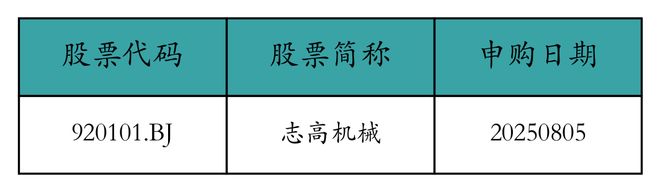
Market Overview - The Shanghai Composite Index increased by 2.11% to close at 3635.13 points, with a weekly high of 3645.37 points [1] - The Shenzhen Component Index rose by 1.25% to 11128.67 points, reaching a peak of 11229.59 points [1] - The ChiNext Index saw a 0.49% increase, closing at 2333.96 points, with a maximum of 2372.68 points [1] - Global markets also experienced gains, with the Nasdaq Composite up by 3.87%, the Dow Jones Industrial Average rising by 1.35%, and the S&P 500 increasing by 2.43% [1] - In the Asia-Pacific region, the Hang Seng Index rose by 1.43% and the Nikkei 225 increased by 2.5% [1] New Stock Issuance - One new stock was issued last week: Zhigao Machinery (920101.BJ) on August 5, 2025 [2] Margin Trading - The total margin trading balance in the Shanghai and Shenzhen markets reached 20031.09 billion yuan, with a financing balance of 19889.53 billion yuan and a securities lending balance of 141.56 billion yuan [3] - The margin trading balance increased by 294.86 billion yuan compared to the previous week [3] - The top three stocks by financing purchase amount were Northern Rare Earth (58.53 billion yuan), Zhongji Xuchuang (49.9 billion yuan), and Dongfang Fortune (48.27 billion yuan) [3][4] Fund Issuance - A total of 21 new funds were issued last week, including various index funds and mixed funds [5] - Notable funds include Ping An Ru Yi Short-term Bond Fund and Penghua CSI Bank Index Fund [5][6] Company Buybacks - There were 23 buyback announcements last week, with the highest amounts executed by Junxin Environmental Protection (50.99 million yuan), Mianbao (12.13 million yuan), and Runze Technology (10.47 million yuan) [7] - The sectors with the highest buyback amounts were Environmental Protection, Pharmaceutical Biology, and Electronics [7][8]





港股开盘 | 恒指高开0.35% 锂矿概念强势
智通财经网· 2025-08-11 01:37
Group 1 - The Hang Seng Index opened up 0.35%, with the Hang Seng Tech Index rising 0.19%. Lithium mining stocks showed strong performance, with Tianqi Lithium up over 14% and Ganfeng Lithium up over 11%. In contrast, the new consumption sector weakened, with Yum China down nearly 2% [1] - Huatai Securities released a report suggesting that the recent pullback in Hong Kong stocks is primarily due to adjustments in internal and external expectations, but the medium-term liquidity easing logic remains unchanged. The report recommends focusing on sectors with improving sentiment and low valuations, particularly emphasizing technology stocks [1] - According to Guotai Junan Securities, the Hong Kong stock market is expected to continue its bull market trend in the second half of the year, driven by incremental capital inflows and structural advantages in assets. The report highlights the importance of monitoring both capital inflows and outflows [2] Group 2 - Zhongyin International stated that the Hong Kong Monetary Authority's sale of USD for HKD has a minimal impact on the Hong Kong stock market, as these funds primarily have a low-risk appetite focused on high-interest deposits. The liquidity in the Hong Kong stock market remains ample, with an average daily turnover of HKD 262.9 billion in July 2025, a year-on-year increase of 167% [3] - Zhongyin International predicts that the Hang Seng Index will reach 27,500 points by the end of this year, corresponding to a forecasted price-to-earnings ratio of 12.3 times, which is a 5% premium over the average forecasted P/E ratio over the past 20 years. The net inflow from southbound trading this year has reached RMB 833.2 billion, a year-on-year increase of 109.8% [3]
野村东方国际 资产重估策略适合牛市吗?
野村· 2025-08-11 01:21
野村东方国际 资产重估策略适合牛市吗?20250809 摘要 市场估值重心正从净利润转向资产重估,因低利率环境使企业永续净利 润增长更难,高成长行业商业模式受阻。 企业为优化 ROE,从规模扩张转向提升经营效率,龙头企业通过缩减现 金循环周期和账期管理来改善净利润和净资产周转效率。 过去三年沪深 300 指数资本总额持续攀升,推动技术研发突破,维持并 强化国际竞争力,为资产重估提供支撑。 资产重估定价方法为 ROE 乘以分红留存率,适用于经济稳定增长期,关 注留存收益对净资产的推动,估值从 PE 转向 PB。 金融股超额收益源于高于市场均值的资产创造增速和资金催化,大市值 公司资产重估增速显著高于中小公司,配置价值更高。 沪深 300 指数通过提高现金周转能力显著改善资产重估增速,主要得益 于龙头企业现金周转能力大幅增加。 中国企业研发投入未受泡沫破裂影响,具备强大的资本投入能力和出海 机遇,通过明星企业拉动供应链实现全球化扩张。 Q&A 过去两年时间里提出的资产重估策略在当前市场环境中的有效性如何? 资产重估策略在当前市场环境中依然有效。尤其是在去年(2024 年)到今年 (2025 年),资产重估增速对于 ...
华泰证券:香港本地股表现强势,获得超额收益
Jin Rong Jie· 2025-08-11 00:04
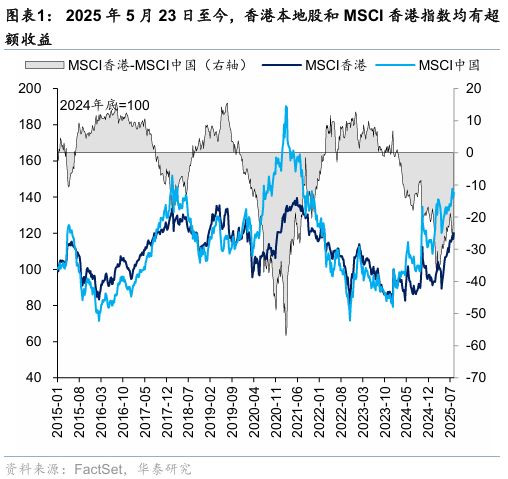
来源:华泰睿思 在 《港股重估蓄势待发》(深度研究 港股重估蓄势待发,2025.5.23)等报告中,华泰总量及行业团队 提出需战略性重视香港的配置,除了投资者熟知的香港中资股外,也强调关注香港本身作为小型开放经 济体的修复(【华泰宏观 专题】香港资产相对优势凸显,2025.5.22),以及香港地产(华泰 房地产: 把握资产重估预期下的香港地产机遇,2025.5.25)、银行(华泰 银行:重视中国资产重估下港银机 会,2025.5.23)、非银(《港交所:人民币升值预期下的价值重估》,2025.8.10)等资产重估机会。 2025年5月23日至今,香港本地股和MSCI香港指数分别上涨10.2%和12.4%,相对恒生指数(5.3%)和 MSCI中国指数(5.9%)均有超额收益 。 核心观点 香港本地股特征:重金融地产、高股息,ROE已修复但估值不高 我们以香港本地收入占比高于20%(接近友邦保险比例)作为香港本地股的划分依据。目前全部港股共 2649只,总流通市值约44万亿港币;香港本地股663只,总流通市值6.6万亿港币;其中个股流通市值大 于200亿港币和纳入港股通的香港本地股分别31和42只,总流通市值都接 ...

A股市场大势研判:指数震荡调整
Dongguan Securities· 2025-08-10 23:30
Market Overview - The A-share market is experiencing a period of index fluctuations and adjustments, with the major indices showing slight declines [1][4] - The Shanghai Composite Index closed at 3635.13, down by 0.12%, while the Shenzhen Component Index fell by 0.26% to 11128.67 [2] Sector Performance - The top-performing sectors include Comprehensive (+1.56%), Building Materials (+1.16%), and Building Decoration (+1.14%), while the worst-performing sectors are Computer (-2.38%) and Electronics (-1.15%) [3] - Concept sectors showing strong performance include Xinjiang Revitalization (+2.98%) and Hydropower Concepts (+2.22%), whereas Huawei Euler and AI concepts saw declines of -3.08% and -3.00% respectively [3] Future Outlook - The market is expected to continue its mid-term positive trend despite short-term fluctuations, with a recommendation to focus on sectors such as Finance, Non-ferrous Metals, Building Decoration, Agriculture, and Machinery Equipment [4][5] - The government has introduced a policy to waive education fees for kindergarten children, which is expected to benefit around 12 million families and reduce household expenses by 20 billion yuan [4]
【十大券商一周策略】A股仍处于牛市中继!避免参与似是而非的资金接力
券商中国· 2025-08-10 16:05
Group 1 - The current market sentiment suggests that small and micro-cap stocks need to slow down, as their valuation and earnings growth do not justify further upward movement [2] - The five strong industries (non-ferrous metals, telecommunications, innovative pharmaceuticals, gaming, and military industry) have more reasonable valuations compared to the small and micro-cap stocks [2] - The driving force behind the small and micro-cap stocks is primarily liquidity, with significant contributions from quantitative products, small active equity products, and retail investors [2] Group 2 - Recent data indicates that A-shares experienced a rebound driven by trading funds, with a notable increase in margin trading balances reaching a near 10-year high [3][6] - The market is expected to maintain a high level of volatility, with sector rotation likely to occur as companies report their semi-annual results [3][6] - The "anti-involution" policy is showing initial effects, and the determination and difficulty of implementing such policies should not be underestimated [3] Group 3 - July exports exceeded expectations, particularly in the machinery, automotive, and integrated circuit sectors, indicating resilience in growth [5] - The Producer Price Index (PPI) has stabilized, benefiting sectors like black metals, non-ferrous metals, coal, and photovoltaic industries, which are experiencing price rebounds [5] - The overall economic fundamentals are showing a trend of stability and improvement, suggesting a focus on sectors with high growth or improvement in earnings for investment [5] Group 4 - The market is expected to remain in a high oscillation range, supported by favorable liquidity conditions, with a focus on sectors with strong earnings momentum [6][10] - The "anti-involution" concept is anticipated to be a recurring theme in market trends, with growth sectors likely to show high levels of activity [6] - The military industry is expected to remain a point of interest, particularly as the "14th Five-Year Plan" concludes and the "15th Five-Year Plan" begins to take shape [6] Group 5 - The current market adjustment is seen as a structural shift rather than a peak in the economic cycle, with limited impact on overall market sentiment [14] - The market is transitioning from traditional cyclical sectors to technology sectors, with a focus on AI and robotics as key investment areas [14] - The "anti-involution" policies are expected to lead to a structural market trend similar to previous government-led initiatives aimed at boosting demand [14]
非银金融周报:两融余额重返2万亿元传递积极信号,险资系私募证券基金再扩容-20250810
HUAXI Securities· 2025-08-10 15:29
Investment Rating - Industry rating: Recommended [5] Core Views - The return of the margin balance to 20 trillion yuan signals positive market sentiment, driven by improved policy expectations and a rebound in market risk appetite [3][4][17] - The average daily trading volume of A-shares has shown significant growth compared to previous years, indicating increased market activity [21] - The establishment of private equity funds by insurance capital, such as the approval of Taiping Asset's private equity fund, is expected to enhance long-term capital investment in the capital market [8][18] Summary by Sections 1. Non-Bank Financial Weekly Perspective - The non-bank financial Shenwan index rose by 0.59%, underperforming the CSI 300 index by 0.64 percentage points, ranking 27th among all primary industries [2][15] - The securities sector increased by 0.80%, while the insurance sector rose by 0.25% [2][15] 2. Margin Trading - As of August 5, the margin balance reached 20,002.59 billion yuan, accounting for 2.30% of the A-share market capitalization, with a financing balance of 19,863.11 billion yuan and a securities lending balance of 139.48 billion yuan [3][16] - The last time the margin balance exceeded 20 trillion yuan was on July 1, 2015, when it reached 20,352.90 billion yuan [3][16] 3. Insurance Sector Expansion - Taiping Asset has received approval to establish a private equity fund management company, which will increase the investment capacity of long-term funds in the capital market [8][18] - The total asset management scale of Taiping Asset exceeded 1.5 trillion yuan by the end of 2024, indicating a strong commitment to long-term investment strategies [8][18]
如何抓住香港本地股的配置机遇
HTSC· 2025-08-10 10:37
证券研究报告 策略 如何抓住香港本地股的配置机遇 2025 年 8 月 10 日│中国内地 策略周报 香港本地股表现强势,获得超额收益 在《港股重估蓄势待发》,2025.5.23 等报告中,华泰总量及行业团队提出 需战略性重视香港的配置,除了投资者熟知的香港中资股外,也强调关注香 港本身作为小型开放经济体的修复(《香港资产相对优势凸显》,2025.5.22), 以及香港地产(《把握资产重估预期下的香港地产机遇》,2025.5.25)、 银行(《重视中国资产重估下港银机会》,2025.5.23)、非银(《港交所: 人民币升值预期下的价值重估》,2025.8.10)等资产重估机会。2025 年 5 月 23 日至今,香港本地股和 MSCI 香港指数分别上涨 10.2%和 12.4%,相 对恒生指数(5.3%)和 MSCI 中国指数(5.9%)均有超额收益。 免责声明和披露以及分析师声明是报告的一部分,请务必一起阅读。 华泰研究 易峘 研究员 SAC No. S0570520100005 SFC No. AMH263 李雨婕 研究员 SAC No. S0570525050001 SFC No. BRG962 香港本 ...