
外卖

Search documents
让外卖=放心,要靠“阳光透明”来推动
Zhong Guo Jing Ji Wang· 2025-07-28 07:49
Core Viewpoint - The launch of the "Million Bright Kitchen" initiative by the company aims to enhance transparency in the food delivery industry by allowing customers to view real-time kitchen environments through live streaming and other formats, addressing long-standing consumer concerns about food safety and quality [1][2][3] Group 1: Company Initiatives - The "Million Bright Kitchen" plan will collaborate with 200,000 merchants to create a transparent and open standard for food safety [1] - The initiative includes support and subsidies for merchants who adopt live streaming and other methods to showcase their kitchen environments [1][3] - The company has reported that by July 2025, its user base is expected to exceed 270 million, with daily order volumes surpassing 35 million [1] Group 2: Industry Context - The food delivery industry has faced challenges due to consumer distrust stemming from the inability to see kitchen conditions, exacerbated by intense price competition [1][2] - Government regulations, such as Chongqing's "no dine-in delivery" rule and Zhejiang's innovative management of delivery zones, are being implemented to improve industry standards [2] - The "Million Bright Kitchen" initiative represents a significant shift in the traditional food delivery business model, aiming to restore consumer confidence and promote a healthier industry environment [2][4] Group 3: Market Dynamics - The introduction of the "Food Safety Diary" feature allows small merchants to easily document their kitchen conditions using mobile devices, lowering the barrier for transparency [3] - The initiative encourages merchants to focus on popular menu items based on platform data, enhancing operational efficiency and potentially lowering prices for consumers [3] - This collaborative ecosystem aims to create a win-win situation for all stakeholders in the food delivery industry, promoting sustainable growth and consumer trust [4]
饿了么前CEO韩鎏受贿4000万被抓 此前在京东阿里任职多年
Sou Hu Cai Jing· 2025-07-28 06:35
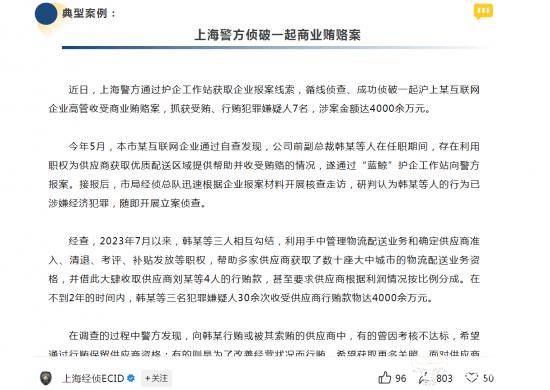
运营商财经网 实习生郑永杰/文 据悉,2023年7月以来,韩鎏等人利用职权为供应商违规获取配送资格并收受贿赂,赃款藏于多处出租 屋。今年6月,饿了么内部调查发现后主动报案。运营商财经网将试图揭示韩鎏过往经历。 在2024年3月1日起,他受聘担任饿了么首席执行官。2025年2月,韩鎏被调离CEO岗位,职务调整为专 注分管即时物流中心。 不过就在今年的6月20日,他在上海办公室被带走,饿了么方面回复称,通过内部调查发现物流主管韩 鎏涉嫌职务犯罪,并主动报案。 关于饿了么高管的薪酬信息未在公开渠道披露具体数据,不过饿了么作为阿里巴巴旗下业务板块,高管 薪酬业内应该属于上位圈。 他最后一次公开露面为2025年5月15日,他出席饿了么蜂鸟即配物流生态商大会,短短两三个月就已经 天翻地覆。 运营商财经(官方微信公众号yyscjrd)—— 主流财经网站,一家全面覆盖科技、金融、证券、汽车、 房产、食品、医药、日化、酒业及其他各种消费品网站。 据百度百科公布的信息显示,韩鎏,辽宁人,出生于1988年,毕业于天津大学物流工程与供应链管理专 业。 2011年在大学毕业后韩鎏就加入了京东,负责京东物流供应链业务,要对当时京东分布在 ...

京东盯上了“幽灵外卖”
Jing Ji Wang· 2025-07-28 06:03
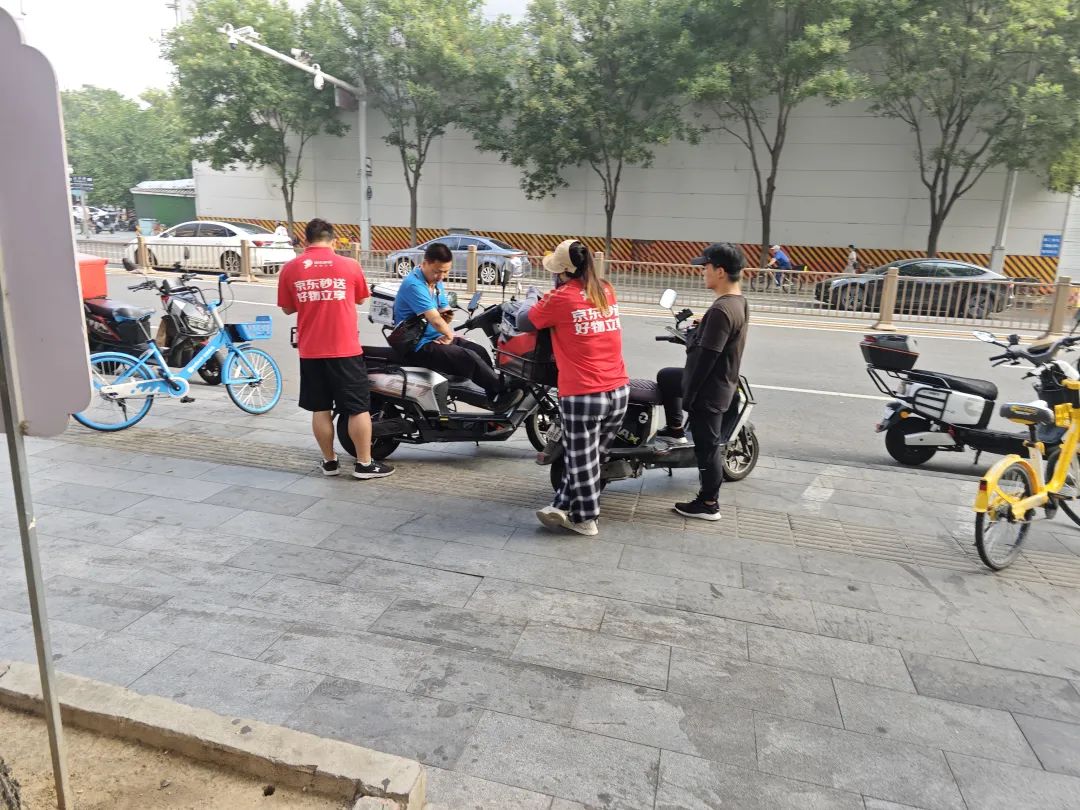
Core Viewpoint - JD.com has launched a "Dish Partner" recruitment program, investing 1 billion yuan to recruit partners for 1,000 signature dishes, aiming to enhance food quality and combat "ghost takeout" issues in the food delivery industry [1][3][4]. Group 1: Industry Context - The Chinese food delivery market is projected to exceed 1.2 trillion yuan in 2024, with a user base reaching 690 million, indicating significant growth in consumer habits towards mobile food ordering [1]. - The prevalence of "ghost takeout" businesses, which operate without proper licenses and often share addresses, poses a challenge to the industry, as highlighted by past reports and ongoing issues [3][4]. Group 2: JD.com's Strategy - JD.com aims to shift from a mere intermediary role to a "central kitchen" model, where chefs will participate in recipe development, and the platform will oversee cooking and quality control, thereby addressing the "ghost takeout" problem [4][6]. - The initiative is expected to enhance transparency regarding food preparation and sourcing, which has been a long-standing concern among consumers [6]. Group 3: Future Implications - The success of JD.com's 1 billion yuan investment and the recruitment of chefs to provide recipes will be critical in determining the effectiveness of this new model [6]. - The move is seen as a potential disruptor in the established food delivery market, encouraging service upgrades and product innovation [6].

“反内卷”:三重目标下如何去产能、提物价
Soochow Securities· 2025-07-28 06:02
Group 1: Capacity Reduction Strategy - The "anti-involution" price governance aims for three goals: short-term regulation of price wars, medium-term capacity reduction, and long-term price recovery, particularly PPI[1] - Capacity reduction can be categorized into two types: shutdown and production limitation, and policy-guided capacity reduction[1] - The current trend favors policy-guided capacity reduction over shutdowns, as the demand side lacks strong stimulus policies[1] Group 2: Price Recovery Expectations - PPI is expected to take 11-12 months to turn positive, potentially reaching around 1.9% by September 2026 under neutral assumptions[1] - Three scenarios for PPI recovery are outlined: optimistic (3.86%), neutral (1.92%), and pessimistic (0.9%) by September 2026, depending on the strength of supply-side capacity reduction[3] - The GDP deflator's recovery is more challenging than PPI due to the service sector's larger weight, with the second industry experiencing a -3.06% deflation in Q2 2024[3] Group 3: Market Clearing Mechanism - The market clearing mechanism is essential for addressing capacity surplus, requiring timely price adjustments and responsive supply behavior[22] - Current obstacles include government subsidies allowing firms to sell below cost, leading to persistent losses and market inefficiencies[24] - Previous efforts to clear "zombie enterprises" in coal and steel sectors have shown significant results, with 115 million tons of capacity addressed[24]
七鲜小厨,一场关乎亿万人吃上好饭的供应链创新
东京烘焙职业人· 2025-07-28 05:56
Core Viewpoint - The article discusses the ongoing "subsidy war" in the food delivery industry, highlighting the detrimental effects on small and chain businesses, and introduces JD's new model "Qixian Xiaochu" as a potential solution to the industry's challenges [4][10][30]. Group 1: Industry Challenges - The recent "0 Yuan Purchase" subsidy campaigns by Meituan and Taobao have led to a significant increase in orders but have severely impacted the profits of merchants, with some reporting minimal earnings despite high order volumes [4][10]. - The prevalence of "ghost restaurants" has intensified competition, driving down prices and squeezing the profit margins of legitimate businesses. For instance, in Beijing, the total profit of the restaurant industry dropped by 88.8% year-on-year in the first half of 2024, with profit margins plummeting to 0.37% [8][10]. - Many legitimate restaurants are forced to either compromise on quality or exit the market entirely due to the aggressive pricing strategies of "ghost restaurants" [9][10]. Group 2: JD's New Model - JD's "Qixian Xiaochu" aims to address the issues of food safety and merchant profitability by establishing a new business model that emphasizes quality over price competition [5][11][30]. - The model includes a "dish partner" mechanism, allowing restaurant owners to contribute recipes while JD manages the operational aspects, thus reducing the financial burden on partners [15][17]. - JD plans to invest 10 billion over three years to establish 10,000 locations, focusing on high-quality, verified food offerings [6][30]. Group 3: Value Chain Reconstruction - JD's approach seeks to eliminate "ghost restaurants" by implementing strict entry standards for partners, ensuring that only quality establishments are included in the delivery network [13][14]. - The model emphasizes transparency and food safety through measures such as centralized production and live-streaming of kitchen operations, which helps build consumer trust [23][26][29]. - By offering guaranteed returns and reducing operational risks for partners, JD's model aims to create a win-win situation for consumers, merchants, and the platform itself [18][30]. Group 4: Industry Evolution - The introduction of "Qixian Xiaochu" represents a significant shift in the food delivery landscape, moving from a focus on price competition to one centered on value and quality [30][32]. - This initiative not only addresses the immediate challenges faced by the industry but also sets a precedent for future developments in the food delivery and broader restaurant sectors [32].
京东 “外卖新招” 亮牌!能破局吗
Jin Rong Shi Bao· 2025-07-28 04:20
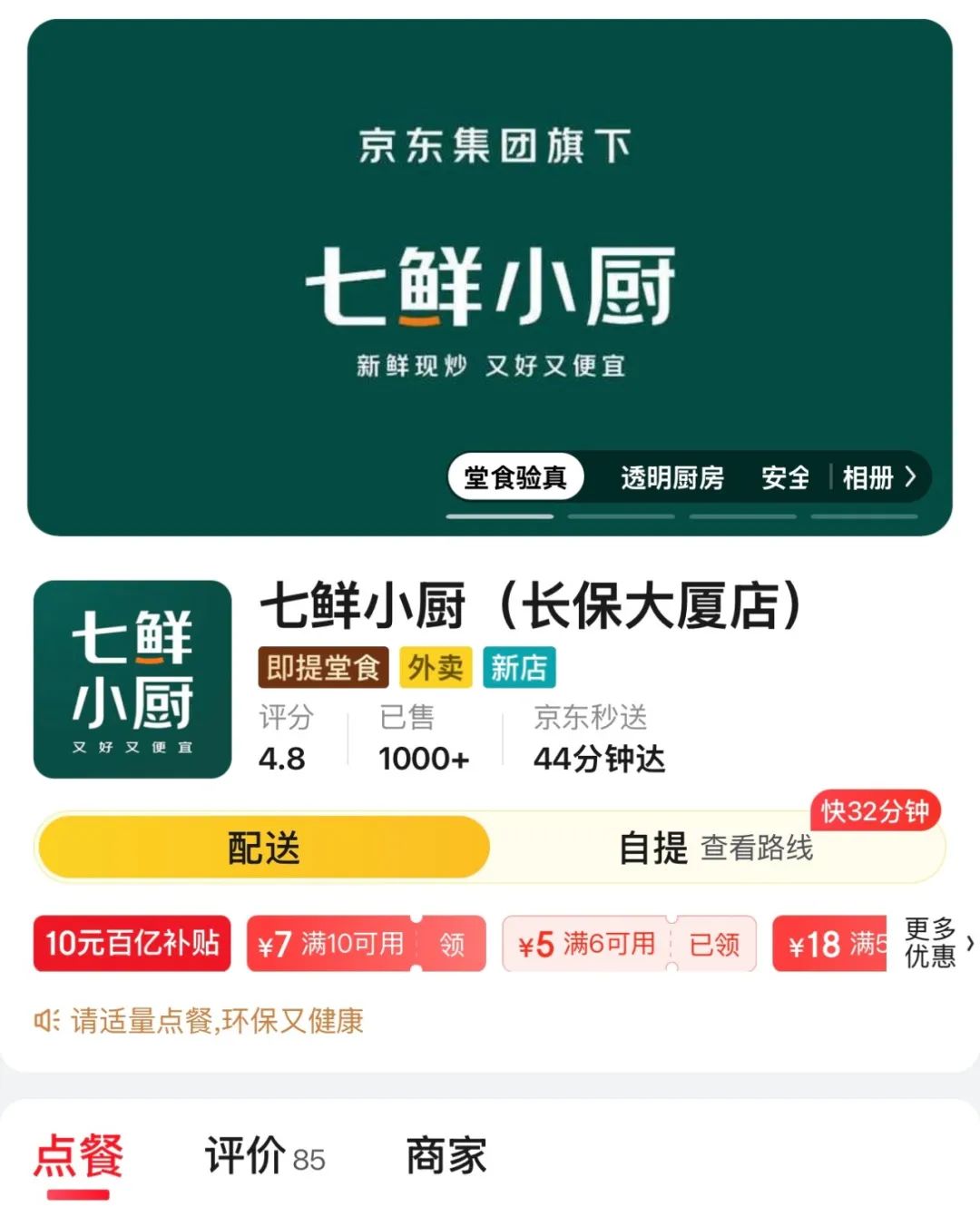
Core Insights - JD's new delivery service "Qixian Xiaochu" officially launched on July 22, following a two-day trial operation, aiming to innovate the food delivery model distinct from Meituan [1] - The service focuses on supply chain innovation to provide quality and affordable food while helping restaurants increase sales and profits [1] - JD plans to recruit partners for 1,000 signature dishes, investing 1 billion yuan over three years, with over 20,000 applications received within a day [4][5] Industry Challenges - The Chinese food delivery industry faces a closed-loop dilemma characterized by platform commissions, merchant cost pressures, and rider overwork, exacerbated by a recent price war [2] - Complaints from consumers and merchants highlight issues such as long wait times and increased costs, while riders experience high stress and penalties [2] - Major players like Meituan and JD are attempting to shift from subsidy-driven competition to value creation, yet aggressive promotions continue [2][3] Regulatory Environment - The State Administration for Market Regulation has urged major platforms, including Ele.me, Meituan, and JD, to comply with e-commerce laws and promote a healthy ecosystem for consumers, merchants, riders, and platforms [3] Business Model and Vision - JD's "Qixian Xiaochu" aims to be a quality restaurant production platform, allowing merchants and chefs to scale their offerings nationally [5] - The pricing strategy targets meals between 10 to 30 yuan, with a focus on providing trustworthy and affordable options for consumers [6] - JD emphasizes its supply chain advantages to maintain quality and reduce costs, aiming to eliminate low-quality competitors [6] Market Reception - Initial sales data shows over 1,000 orders for Qixian Xiaochu, with a variety of dishes offered, although early reviews indicate common delivery issues [8] - The industry narrative continues to focus on "anti-involution," with Meituan investing in infrastructure and partnerships to enhance service quality [8]

陈伟星:AI不能当强盗, 外卖大战是对线下商业的大屠杀
Tai Mei Ti A P P· 2025-07-28 02:51
Group 1 - The discussion highlights the cultural shift in values among younger generations, emphasizing the importance of moral values and the impact of wealth on societal behavior [2][4][7] - The concept of "creating" versus "robbing" in business models is explored, with a critique of platforms that exploit users rather than empower them [4][5][6] - The role of AI in disrupting traditional economic structures is examined, suggesting that ethical considerations must guide its development to ensure it serves humanity positively [5][6][29] Group 2 - The importance of community and relationships in fostering a healthy business environment is stressed, with a focus on trust and collaboration [6][24][35] - The conversation touches on the historical context of Chinese philosophy and its relevance to modern business practices, advocating for a balance between profit and social responsibility [7][50][53] - The need for a shift in focus from short-term gains to long-term value creation is emphasized, suggesting that true success comes from contributing positively to society [28][42][49]

中国思考-反内卷,药引与根治
2025-07-28 01:42
Summary of Key Points from the Conference Call Industry Overview - The report discusses the concept of "anti-involution" in the context of China's economic landscape, particularly focusing on the supply-side challenges that are more complex compared to the previous cycle from 2015 to 2018 [2][3]. Core Insights and Arguments 1. **Policy Signals**: There is a notable increase in policy signals regarding "anti-involution," with comparisons made to the supply-side reform 1.0 period. The current challenges differ significantly from those faced between 2015 and 2018 due to changes in industry competition and macroeconomic conditions [2][3]. 2. **Structural Reforms Needed**: To achieve lasting results in anti-involution, there is a consensus on the necessity for deeper structural reforms, including adjustments to local incentive mechanisms and tax reforms aimed at rebalancing towards consumption [3][10]. 3. **Recent Government Actions**: - On July 16, the State Council emphasized a combination of short-term and long-term measures to regulate competition in the new energy vehicle sector. - On July 18, the State Administration for Market Regulation held discussions with major food delivery platforms. - The Ministry of Industry and Information Technology announced supply-side reforms in ten key industries, including non-ferrous metals and petrochemicals [7]. 4. **Market Signals Ignored**: The report highlights that part of the competition's involution is due to ignored market signals, leading to continued capacity expansion despite falling prices [10]. 5. **Historical Context**: The report draws parallels between the current economic situation and past experiences, noting that anti-involution will not be a quick fix. The GDP deflator index has been negative for nine consecutive quarters since Q2 2023, indicating entrenched deflationary pressures [11]. 6. **Capacity Utilization and Industry Dynamics**: The report notes that the current overcapacity is largely in emerging industries, with 50-90% of capacity owned by the private sector, making administrative capacity reduction more challenging compared to the previous cycle [11][19]. 7. **Potential for Mergers and Acquisitions**: There is an expectation for large enterprises in the polysilicon industry to form acquisition funds to consolidate smaller firms, although execution remains uncertain due to declining demand and high inventory levels [12]. 8. **Gradual Progress Expected**: The report suggests that while some upstream industries may see moderate consolidation, the urgency for adjustment is lower compared to previous reforms [17][20]. 9. **Reform Timing and Delays**: The implementation of formal plans for capacity reduction may experience delays of 3-8 months, reflecting the complexities of the current economic environment compared to the 2015-2018 period [20]. Other Important Insights - **Demand Recovery Limitations**: The report indicates that the cyclical growth may fluctuate at lower levels due to debt and demographic challenges, with limited upside for demand recovery without decisive stimulus measures [18]. - **Need for Comprehensive Policy Mix**: The optimal policy combination would involve more aggressive demand rebalancing measures alongside faster structural reforms to achieve sustainable re-inflation [24]. - **Caution Against Overly Aggressive Measures**: The report warns that overly aggressive capacity reduction without sufficient demand support could lead to deeper deflation after a brief improvement in prices [24]. This summary encapsulates the key points discussed in the conference call, providing insights into the current state of the industry and the anticipated direction of policy and economic reforms in China.
内卷式竞争没有赢家 外卖补贴大战敲响ESG警钟
Zhong Guo Zheng Quan Bao· 2025-07-27 21:07
Core Viewpoint - The subsidy war among food delivery platforms is reaching its end due to regulatory intervention, highlighting the need for sustainable innovation and service capability competition rather than price wars [1][4][5] Group 1: Impact on Restaurants - Many restaurants are experiencing reduced dine-in orders as consumers prefer cheaper delivery options, leading to a decline in overall profitability [1][2] - The financial burden of subsidies has increased significantly for small and medium-sized restaurants, with some facing unsustainable costs due to high promotional expenses from platforms [2][3] - The negative impact of low-price competition is evident, as restaurants struggle to maintain profitability while still covering operational costs such as rent and labor [3][4] Group 2: Regulatory Changes - The newly revised Anti-Unfair Competition Law, effective from October 15, aims to regulate chaotic competition and prevent platforms from forcing merchants to sell below cost [6][7] - Regulatory bodies are actively engaging with major platforms to ensure compliance with laws and promote fair competition within the food service industry [4][5] Group 3: ESG Considerations - The subsidy war has exposed significant shortcomings in platforms' ESG responsibilities, affecting the entire industry ecosystem and raising concerns about food safety and quality [4][8] - Experts emphasize the need for platforms to balance the interests of merchants, consumers, and delivery personnel as part of their ESG commitments [8][9] - The environmental impact of increased packaging waste from delivery services is a growing concern, necessitating a shift towards sustainable practices [8][9] Group 4: Future Directions - Platforms are encouraged to move away from low-price competition and focus on innovative business models that support small merchants and community values [8][9] - There is a call for enhanced regulatory frameworks to ensure fair practices and transparency in platform operations, particularly regarding algorithmic decision-making [9]
(经济观察)中国多方发力整治“内卷式”竞争
Zhong Guo Xin Wen Wang· 2025-07-27 12:34
Group 1 - The call to address "involution" competition is becoming more widespread, with multiple government departments and industry associations advocating against it, expanding from sectors like solar energy and electric vehicles to include e-commerce and food delivery industries [1] - The focus of addressing "involution" competition is increasingly concentrated on common issues such as disorderly competition, severe homogenization, and low-price competition within industries, as well as local government behaviors that lead to unfair competition and project redundancy [1][2] Group 2 - The policy mechanisms to combat "involution" competition are becoming more refined, with recent amendments to laws such as the Anti-Unfair Competition Law and the Price Law draft targeting low-price disorderly competition, which will enhance the legal regulatory framework [2] - Experts highlight that a significant cause of "involution" is the imbalance between supply and demand, necessitating coordinated efforts on both sides, including support for technological innovation and improved market access to prevent excessive entry and low-quality competition [3] - Strengthening market regulation and creating a cleaner competitive environment are essential for consumer confidence, with recent laws aimed at promoting fair competition and protecting rights, which will encourage private sector investment [3]