汽车业

Search documents
2025年6月宏观数据解读:6月经济:名义GDP增速边际放缓,关注股债双牛兑现
ZHESHANG SECURITIES· 2025-07-15 14:03
Economic Overview - In June, the actual GDP growth for Q2 was 5.2%, aligning with market expectations, while nominal GDP growth slowed by 0.7 percentage points to approximately 3.9%[1] - The industrial added value for June increased by 6.8% year-on-year, exceeding market expectations, with a month-on-month growth of 0.5%[3] - The capacity utilization rate for large-scale industries in Q2 was 74.0%, down 0.1 percentage points from the previous quarter and 0.9 percentage points from the same period last year, indicating potential overcapacity[3][23] Investment Trends - Fixed asset investment (excluding rural households) in the first half of 2025 was 248,654 billion yuan, growing by 2.8%, which was below market expectations of 3.8%[5] - Infrastructure investment grew by 4.6%, while manufacturing investment increased by 7.5%, and real estate development investment fell by 11.2%[7][39] - The marginal slowdown in investment demand is attributed to concerns over medium- to long-term uncertainties following tariff adjustments[5][39] Consumer Behavior - The total retail sales of consumer goods in June rose by 4.8% year-on-year, down from 6.4% in May, reflecting a 1.6 percentage point decline[4][31] - The "618" shopping festival significantly supported retail sales, with e-commerce sales reaching 8,556 billion yuan, a 15.2% increase year-on-year[33] - Automotive sales showed robust growth, with June retail sales increasing by 4.6% year-on-year, despite price promotions impacting overall retail revenue[36] Market Outlook - The second half of 2025 is expected to see a dual bull market in stocks and bonds, driven by a potential easing of Sino-US trade relations and risk-averse funds supporting market sentiment[2][21] - The 10-year government bond yield is projected to decline to around 1.5% amid low expectations for large-scale domestic demand stimulus[2][21]
美阵营突然闹翻?日本高官直言:特朗普欺人太甚!当着中方的面,岩屋毅称将认真对待历史
Sou Hu Cai Jing· 2025-07-15 12:53
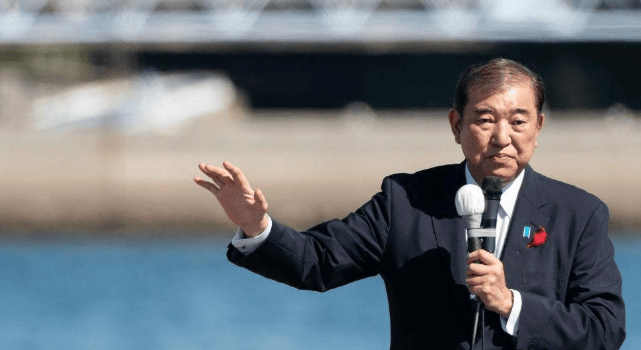
Group 1 - The core issue revolves around President Trump's threat to impose tariffs on Japan, South Korea, and 12 other countries, with a specific mention of a potential 25% tariff aimed at reducing the trade deficit [1][3] - Japan's government is actively discussing countermeasures in response to the U.S. tariff threats, indicating the seriousness of the situation and the potential severe impact on Japan's economy if the tariffs are implemented [1][5] - The expansion of tariffs to cover "all goods" represents a significant systemic pressure test for Japan's economic structure, with potential far-reaching impacts across various industries, particularly in the automotive sector [5][6] Group 2 - Prime Minister Kishida's recent statements reflect a strong stance against perceived U.S. aggression, emphasizing the importance of national interests and the need for Japan to assert itself [3][6] - The relationship between Japan and China appears to be improving, with recent diplomatic engagements suggesting a desire for enhanced cooperation and communication, which may provide Japan with alternative economic partnerships amid U.S. tariff pressures [8]

30%关税,欧盟挨了美国一巴掌,谈判全白搭,冯德莱恩:推迟反制
Sou Hu Cai Jing· 2025-07-15 11:20
Group 1 - The core issue revolves around the U.S. imposing a 30% tariff on the EU, which has led to significant frustration among EU member states [1][2] - The EU initially attempted to negotiate a balanced tariff of 10% but ended up facing a unilateral 30% tariff, indicating a failure in their negotiation strategy [1] - EU Commission President Ursula von der Leyen's decision to delay countermeasures against the U.S. has been criticized as a missed opportunity for a strong response [1][2] Group 2 - The U.S. government is focused on implementing new customs tariffs rather than considering the impact on consumer prices, showcasing a hardline stance [2] - The EU's response has been perceived as weak, with the Commission acting as a spokesperson for U.S. policies rather than defending EU interests [2] - The situation highlights the vulnerability of the EU in the face of U.S. trade policies, suggesting that the EU may be seen as a tool for U.S. interests rather than a unified entity [2]

欧盟公布最终版《通用人工智能行为准则》,如何影响汽车业?
Zhong Guo Qi Che Bao Wang· 2025-07-15 03:21
Core Viewpoint - The European Union's newly released "General Artificial Intelligence Code of Conduct" introduces significant regulatory challenges for the automotive industry, particularly in the context of smart and connected vehicles [3][4]. Group 1: Regulatory Framework - The "Code" serves as an extension of the EU's "Artificial Intelligence Act," focusing on transparency, copyright, safety, and security for AI models used in the automotive sector [4]. - The Code will take effect on August 2, 2025, requiring companies to comply with regulations for AI models built before this date within two years, while models developed after must comply within one year [4]. - The EU adopts a strict risk-based regulatory model, categorizing AI applications into unacceptable, high, medium, and low-risk, with high-risk applications requiring pre-assessment and ongoing monitoring [4]. Group 2: Challenges for the Automotive Industry - Automotive companies must transition from "black box" decision-making to transparent compliance, particularly for Level 2+ autonomous driving systems, which must disclose algorithms, training data sources, and decision logic [5]. - Compliance costs are expected to rise, with estimates indicating a 15%-20% increase in the development costs of intelligent systems per vehicle due to the need for algorithm explainability and real-time monitoring systems [5]. - The automotive sector faces new challenges in copyright compliance and user data governance, necessitating renegotiation of licensing agreements with content copyright holders and ensuring compliance with the EU's General Data Protection Regulation (GDPR) [6]. Group 3: Business Model Innovation - The shift from "data-driven" to "compliance-driven" business models will impact over-the-air (OTA) updates, requiring prior notification to regulatory bodies for changes involving AI model parameters [7]. - Chinese automotive companies exporting to the EU must embed multi-regional compliance modules in their AI systems, ensuring data localization for the EU market [7]. Group 4: Strategic Responses - Automotive companies are advised to establish an AI compliance committee to oversee technical development, legal, and data security departments, and recruit professionals with expertise in EU AI regulations and GDPR [8]. - Long-term strategies should include partnerships with EU-certified open data platforms and content distributors to mitigate infringement risks and the development of lightweight, auditable AI models [9]. - Companies must balance technological innovation with regulatory compliance, as the Code may increase compliance costs but also drive responsible innovation in AI technology [9][10].

经济半年报即将发布,二季度GDP增速有望实现5%以上
第一财经· 2025-07-14 05:43
Core Viewpoint - The economic growth rate in the second quarter is expected to slow slightly compared to the first quarter but is still projected to exceed 5% due to various supportive policies and resilient domestic demand [1][2]. Economic Growth - The average forecast for GDP growth in the second quarter is 5.07%, with expectations of a slight decline from the first quarter [1][3]. - High-frequency data indicates continued improvement in industrial production, consumption, and investment, supporting the overall economic outlook [1][3][4]. Industrial Production - Industrial production is expected to maintain stability, with a predicted year-on-year growth rate of 5.6% in June, slightly down from 5.8% in May [6][7]. - The manufacturing PMI for June is reported at 49.7, indicating a slight recovery in manufacturing activity [6][7]. Consumption Trends - Retail sales growth is anticipated to slow to 5.66% in June, down from 6.4% in May, influenced by the end of holiday demand and the tapering effects of promotional activities [8][9]. - The "trade-in" policy has significantly boosted the retail sales of major appliances, with a year-on-year increase of 28% in the second quarter [9]. Investment Dynamics - Fixed asset investment growth is projected to be around 3.65% in June, slightly lower than the previous month, with challenges in real estate and manufacturing sectors impacting overall investment sentiment [10][11]. - Infrastructure investment is expected to rebound in the second half of the year, supported by the issuance of special bonds and government funding for key projects [12][13].
国际观察|美国双重“压榨” 日韩如何“求生”
Xin Hua She· 2025-07-09 11:39
Core Viewpoint - The Trump administration has announced a 25% tariff on all goods imported from Japan and South Korea starting August 1, increasing pressure on these key allies in trade and military spending [1][2][3]. Group 1: Tariff Impact - The 25% tariff on Japan is higher than the previously suspended "reciprocal tariff," indicating a significant escalation in pressure [2]. - Both Japan and South Korea have substantial trade surpluses with the U.S., making them primary targets for the Trump administration's tariff strategy aimed at correcting perceived trade imbalances [3]. - The imposition of tariffs is seen as a heavy burden for both countries, particularly given their reliance on exports to the U.S. for key industries like automotive [3]. Group 2: Military Spending Pressure - The Trump administration has repeatedly demanded that Japan and South Korea increase their military budgets and share more of the costs for U.S. troops stationed in their countries [3]. - Recent statements from Trump suggest that South Korea's payments for U.S. troop presence are "very low," further intensifying the pressure on both nations [3]. Group 3: Responses from Japan and South Korea - Japan's Prime Minister expressed regret over the tariff announcement and indicated a desire to negotiate terms that protect national interests while achieving a win-win outcome [4]. - South Korea is preparing for negotiations with a focus on national interests, emphasizing the need for thorough preparation in trade discussions with the U.S. [4]. - Both countries are employing a dual strategy of soft and hard measures in response to the tariffs, seeking concessions from the U.S. while protecting their core interests in critical sectors like automotive and agriculture [4]. Group 4: Public Sentiment and Trust Issues - Trust in the U.S. has significantly declined in Japan, with a recent poll showing only 22% of the population expressing trust, a drop of 12 percentage points from the previous year [6]. - In South Korea, the perception of the U.S. relationship has worsened, with a doubling of respondents rating the relationship as "bad" over the past year [7]. - The ongoing pressure from the Trump administration has led to a shift in public sentiment, with calls for both countries to assert more independence in their foreign policies [6][7].
华证发布A股可选消费ESG TOP20,家电业仅一家上榜,是谁
Zheng Quan Zhi Xing· 2025-07-09 03:36
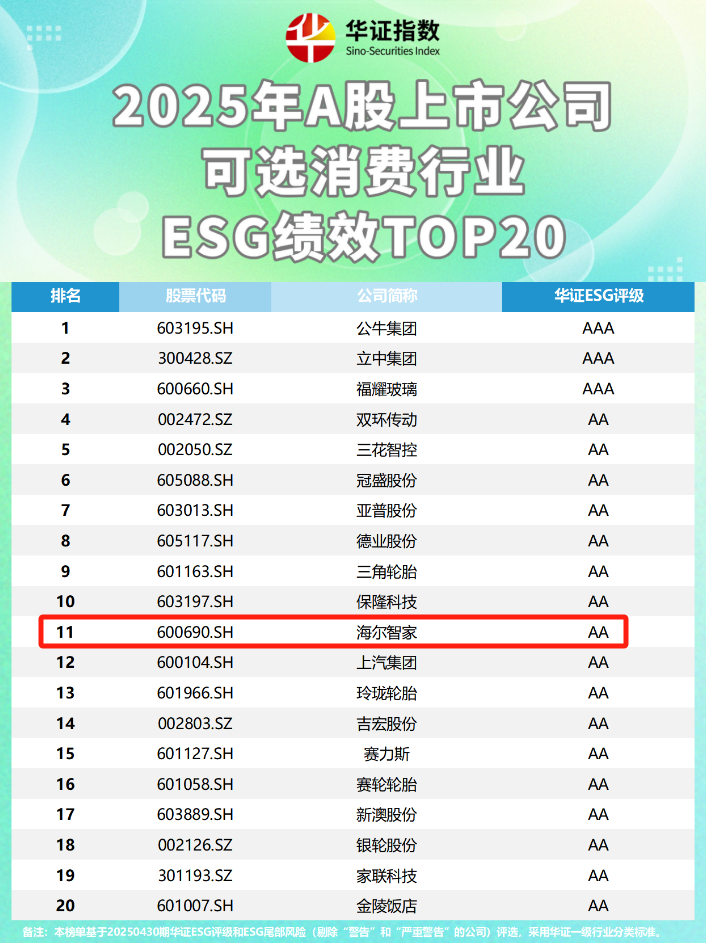
Core Insights - The report by Huazheng Index highlights the top 20 A-share listed companies in terms of ESG performance for 2025, covering 11 industries including industrial, public utilities, consumer discretionary, and finance [1] Group 1: ESG Performance Rankings - In the consumer discretionary sector, Haier Smart Home (600690) is the only company listed among the top 20 for ESG performance [1] - The top 20 companies have a minimum Huazheng ESG rating of AA, with Haier Smart Home being the highest-rated in the home appliance industry [4] Group 2: Haier Smart Home's ESG Scores - Haier Smart Home achieved an E score of 84.19, ranking 2nd out of 148 in its industry for environmental performance [4] - The S score for Haier Smart Home is 88.52, also ranking 2nd out of 148 for social performance [4] - The G score is 85.79, placing Haier Smart Home at 20th out of 148 for governance performance [4] Group 3: Industry Representation - Other companies in the top 20 include SAIC Motor (600104), Seres (601127) from the automotive sector, Bull Group (603195) from electrical machinery, and Fuyao Glass (600660) and Triangle Tire (601163) from automotive parts manufacturing [6] - The increasing participation in ESG initiatives among companies is expected to enhance the sustainable competitiveness of Chinese enterprises [6]

特朗普关税重锤砸向日本,日本央行近期加息无望?
Jin Shi Shu Ju· 2025-07-08 06:46
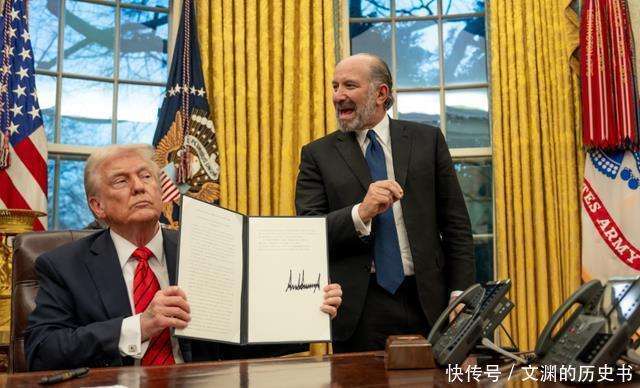
日本首相石破茂周二表示将继续与美谈判,寻求达成互利贸易协议。此前特朗普宣布自8月1日起对日本 商品加征25%关税。特朗普周一虽向贸易伙伴发出大幅增税通知,但暗示若各国提出可接受方案或将推 迟实施。 据报道,韩国贸易部长吕翰九在华盛顿与美国商务部长卢特尼克会晤时,还要求美方降低韩国企业在汽 车、钢铁等领域的关税。 财务大臣加藤胜信周二在记者会上表示,目前暂无计划与美国财政部长贝森特就汇率问题进行磋商。 日本未能在特朗普"对等关税"临时暂停令7月9日到期前达成协议,其谈判重点本是取消汽车25%关税 ——这是其出口依赖型经济的支柱产业。随着7月20日参议院选举临近,石破茂强调日本不会为尽早达 成协议作出"轻易让步"。近期民调显示执政联盟可能失去参议院多数席位,分析师称这将使贸易谈判复 杂化。 美国关税加剧日本经济困境,该国一季度经济已现萎缩。5月实际工资创近两年最大降幅,政府周一更 作出近五年来最悲观经济评估。SMBC日兴证券预计25%关税将导致2026年3月截止的财年经济增长减 少0.26个百分点。 日本综合研究所分析师藤本和树指出:"虽避免最坏情况,但25%关税仍将使出口企业利润骤降25%", 并警告"若企业利 ...
中国带头示范后,30国同时出手,加拿大也不跪,特朗普没有退路
Sou Hu Cai Jing· 2025-07-07 03:56
Group 1 - The trade war initiated by the U.S. has led to a shift in global dynamics, with many countries, inspired by China's firm stance, refusing to yield to U.S. pressure [1][2] - The U.S. is facing increasing difficulties in its trade relations, particularly with China, as it relies heavily on Chinese manufacturing and strategic resources like rare earth minerals [1][2] - The European Union has taken a strong position against the U.S., planning to implement counter-tariffs on U.S. goods worth €210 billion and potentially up to €950 billion [4][5] Group 2 - Japan has shifted from a compliant stance to a confrontational one, refusing to accept a 25% tariff on automobiles, indicating a significant change in its trade policy [5][6] - India, previously seen as likely to concede to U.S. demands, is now prepared to resist, with its representatives arriving in the U.S. for negotiations [5][6] - Canada has taken a bold step by imposing a digital services tax on U.S. tech companies, which has escalated tensions with the U.S. [6][8] Group 3 - The U.S. is in a precarious position as it faces a potential trade war with 30 countries, and the expiration of its high tariffs on certain trade partners is approaching [8][9] - Recent data shows that the U.S. trade deficit has widened significantly, and GDP growth has underperformed, putting additional pressure on the Trump administration [9]
上海国资,加码大模型独角兽!利好来了!广州楼市重磅;首批科创债ETF来了→
新华网财经· 2025-07-03 00:33
Investment and Financial Policies - Zhipu announced a strategic investment of 1 billion yuan from Pudong Venture Capital Group and Zhangjiang Group, with the first transaction completed recently [1] - The Guangzhou Housing Provident Fund Management Center is soliciting public opinions on the implementation of the "Commercial Housing Loan to Housing Provident Fund Loan" policy from July 2 to July 11, aiming to reduce the interest burden on contributors [6][9] Market Developments - The first batch of 10 Science and Technology Innovation Bond ETFs was approved on July 2 [2][15] - The People's Bank of China conducted a reverse repurchase operation of 98.5 billion yuan at a fixed rate of 1.4% on July 2, with a net withdrawal of 266.8 billion yuan [4] Industry Performance - From January to May, the added value of China's electronic information manufacturing industry grew by 11.1% year-on-year, with a revenue of 6.49 trillion yuan, up 9.4% year-on-year [7] - Zhejiang Province announced the establishment of a financial service mechanism for urban renewal, with 49 key projects expected to have a total investment of over 110 billion yuan [7] Corporate Actions - Taobao announced a consumer and merchant subsidy of 50 billion yuan over the next 12 months [19] - Longhua District in Shenzhen released a three-year action plan to promote the cultivation of listed companies, enhancing cooperation with financial research institutions [8] Regulatory Updates - The National Internet Information Office launched a special action to rectify illegal online activities related to enterprises, focusing on managing and addressing false information [5] - The China Securities Regulatory Commission reported that 24 out of the first 26 new floating rate funds have completed fundraising, totaling 22.68 billion yuan [17]