云计算

Search documents
AI云的新分野:芯在,云在
3 6 Ke· 2025-11-14 11:01
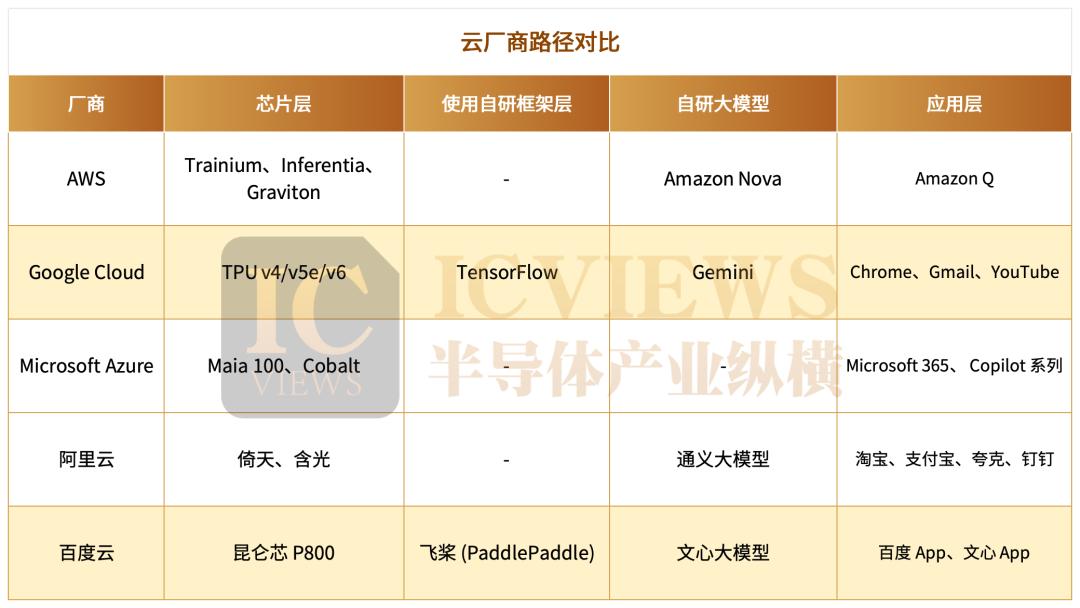
Core Insights - In the first half of 2025, China saw 1,810 AI model project bids totaling over 6.4 billion yuan, surpassing the total for all of 2024, indicating a significant acceleration of investment in key industries such as finance, energy, government, and manufacturing [1] - The demand for AI has evolved, with stricter standards emerging, such as 24/7 operational security requirements and high availability for cloud platforms [1] - The AI public cloud service market in China is projected to grow by 55.3% year-on-year in 2024, driven by a surge in inference demand rather than just training [1] Industry Trends - The AI cloud landscape has shifted from a simple "rental card" model to a more complex system requiring self-developed AI chips and deep collaboration between chips and systems [2][3] - Major cloud providers are moving towards self-developed chips to ensure quality and cost-effectiveness in AI cloud services, as generic GPUs cannot meet long-term AI demands [3] Cloud Provider Strategies - AWS has a comprehensive self-developed chip strategy with Graviton, Trainium, and Inferentia, significantly improving cost efficiency and performance [6][7] - Microsoft Azure is facing challenges with its self-developed chips, which are delayed, leading to continued reliance on NVIDIA GPUs [9][10] - Google Cloud has made significant strides with its TPU chips and is now selling them externally, showcasing confidence in its production capacity [10][11] Competitive Landscape - The competition among cloud providers is intensifying, with AWS focusing on high-end clients and self-developed chips to create a robust AI infrastructure [8] - Google Cloud's full-stack self-developed strategy has led to impressive growth, with a 34% year-on-year revenue increase in Q3 [11] - In China, Alibaba Cloud and Baidu Intelligent Cloud are emerging as key players, each with unique strategies to dominate the AI cloud market [14][20] Future Outlook - The future of AI cloud services will likely be defined by companies that possess self-developed chips and deep collaborative capabilities, creating a clear divide in the industry [20]


微软 AI 战略深度分析
傅里叶的猫· 2025-11-14 10:25
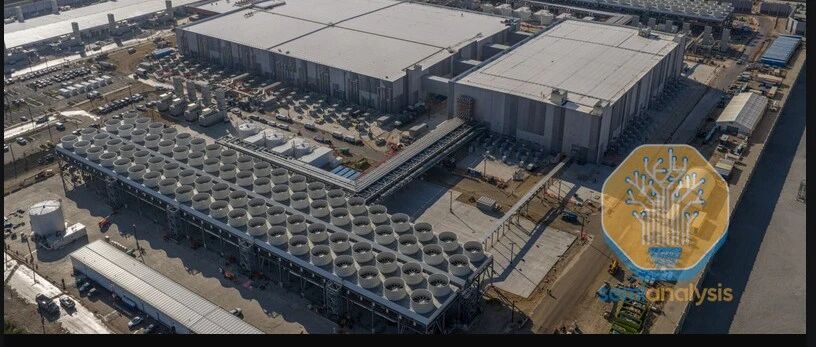
Core Insights - Microsoft, a leader in the AI industry from 2023 to 2024, paused its AI strategy due to concerns over return on investment (ROIC) and execution capabilities, but plans to reinvest in AI by 2025 as demand surges [3][10][19] Group 1: AI Strategy and Market Dynamics - Microsoft significantly increased its investment in OpenAI from $1 billion to $10 billion in early 2023, gaining exclusive access to OpenAI's models [3][11] - The company initiated an aggressive data center expansion plan to support OpenAI's computational needs, including a large-scale project named Fairwater [13][14] - By mid-2024, Microsoft faced a slowdown in data center construction and a shift in its commitment to OpenAI, leading to a strategic pause in its AI investments [5][19] Group 2: Competitive Landscape - In 2025, as global AI applications exploded, Microsoft resumed its AI investments, driven by a surge in demand for accelerated computing [7][19] - OpenAI diversified its partnerships, signing contracts with Oracle, Amazon, and Google, which diminished Microsoft's exclusive supply advantage [9][17] - Microsoft's market share in data center pre-leasing capacity dropped from over 60% to below 25% during the pause, indicating a loss of competitive edge [19] Group 3: Infrastructure and Execution Challenges - Microsoft encountered significant delays in its IaaS (Infrastructure as a Service) layer, particularly in the deployment of bare metal services, which are critical for AI training [20][21] - The company’s inability to meet OpenAI's growing computational demands led to the loss of key contracts, including a $100 billion project originally planned for Wisconsin [23][24] - Microsoft’s reliance on third-party cloud providers increased, with Neocloud's share of Microsoft's new computing capacity rising to nearly 50% [25][26] Group 4: PaaS Layer and Resource Allocation - Microsoft faced challenges in GPU resource allocation, prioritizing high-end GPUs for OpenAI and traditional enterprises, leaving AI startups with insufficient access [29][30] - The Azure platform's performance ratings declined due to stagnation in updates and features compared to competitors like CoreWeave [31][32] - Microsoft’s Azure Foundry aims to capture OpenAI API market share, leveraging its IP rights, but faces challenges in converting token usage into revenue [33][34] Group 5: Model and Application Development - Microsoft’s strategy involves leveraging OpenAI's IP while developing its own MAI models to reduce dependency [41][42] - The MAI series has seen rapid investment growth, with plans to increase annual spending to $16 billion, aiming for model independence [45] - GitHub Copilot, once a market leader, faces competition from new entrants, prompting Microsoft to integrate additional models to retain users [46][49] Group 6: Hardware and Chip Development - Microsoft’s self-developed ASIC chips, particularly the Maia series, have lagged behind competitors, impacting its hardware strategy [56][57] - The Maia 100 chip, released in late 2023, failed to meet industry standards, leading to delays in subsequent models [56][57] - Microsoft's strategic approach of synchronizing chip development with model readiness has resulted in missed opportunities compared to competitors who adopt asynchronous development [57]

甲骨文(ORCL.US)借钱搞AI 狂欢过后留下的可能只剩天价账单
Zhi Tong Cai Jing· 2025-11-14 08:48
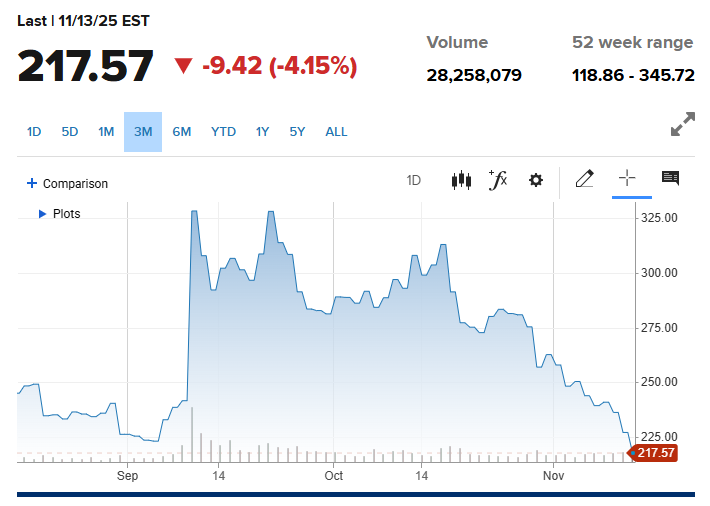
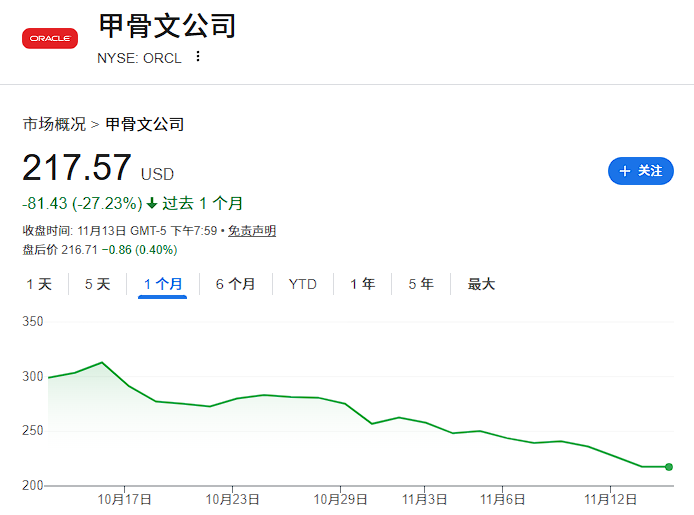
Core Insights - Oracle's stock experienced a significant surge of 36%, reaching an all-time high, due to optimistic cloud infrastructure revenue guidance, but has since lost one-third of its market value, marking its worst monthly performance since 2011 [1][3] Group 1: Market Sentiment and Performance - Initial market enthusiasm was driven by Oracle's partnership with OpenAI, but investor sentiment has shifted, raising concerns about the AI market's rapid development and potential bubble [3][4] - Following the initial surge, Oracle's stock fell by 7% on October 17, as investors questioned the feasibility of the ambitious targets announced during the investor day [4][6] - The company's stock has seen a complete evaporation of its previous gains, which analysts consider logical given the current market dynamics [7] Group 2: Financial Strategies and Challenges - Oracle plans to raise $38 billion through bond issuance to fund its AI business expansion, as it collaborates with partners to develop and lease data centers while procuring GPUs from Nvidia and AMD [3][5] - Barclays analysts have downgraded Oracle's debt rating, citing significant funding needs, and expressed skepticism about the company's credit rating improvement prospects [5] - Credit default swaps (CDS) for Oracle have risen to a two-year high, indicating increased investor demand for risk hedging, although they are not yet at alarming levels [5] Group 3: Competitive Landscape and Criticism - Analysts have criticized Oracle's reliance on speculative demand for its AI strategy, comparing it unfavorably to competitors like Microsoft, Amazon, and Google, which have stronger cash positions and customer demand [6] - Concerns have been raised about the profitability of Oracle's new AI business, with claims that it has low margins compared to its core business, which boasts an 80% gross margin [6]

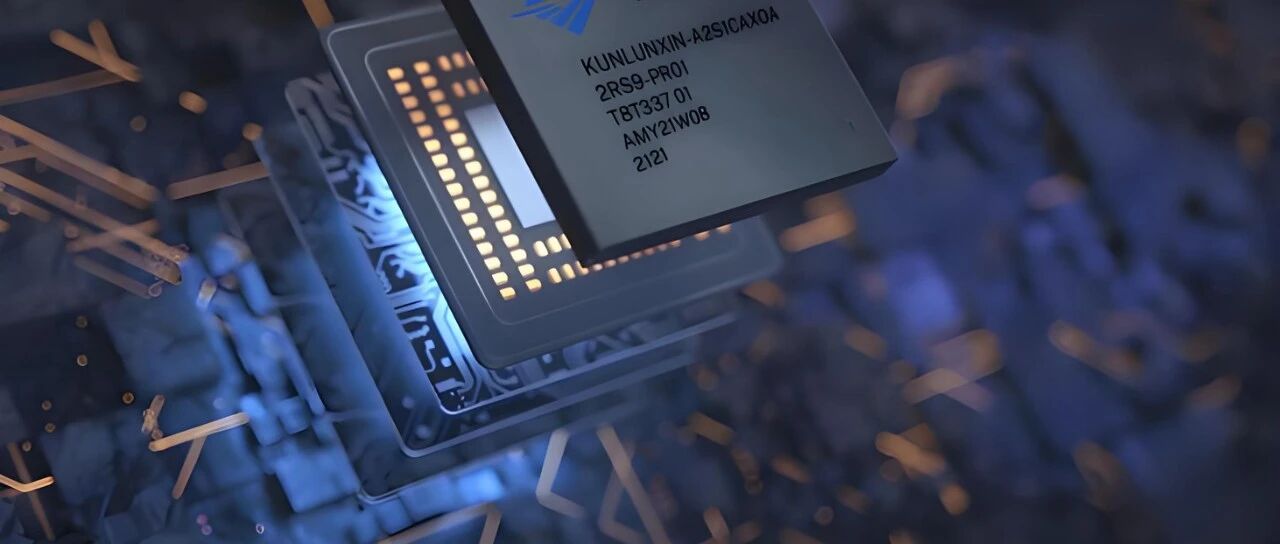
AI云下半场打响,谁是真正的六边形战士?
佩妮Penny的世界· 2025-11-14 08:39
Core Insights - The article discusses the evolution of AI from model competition to a comprehensive infrastructure competition, emphasizing the importance of computing power as the "new oil" [2][3]. Group 1: AI Infrastructure - The AI infrastructure consists of a full chain including chips, computing power, models, platforms, applications, and commercialization ecosystems [3]. - Self-developed chips are crucial for optimizing computing power, reducing costs, and ensuring better integration with business needs [4][5]. - Cloud service providers play a key role in AI infrastructure, with AI cloud being an advanced version that integrates AI chips, models, algorithms, and application ecosystems [7]. Group 2: Market Dynamics - The global cloud computing market is growing rapidly, with China's annual growth rate reaching 35%, and AI-related revenues are increasing at an even faster pace [8]. - In the AI public cloud segment, Baidu Smart Cloud holds a 24.6% market share and has become the first domestic provider to announce profitability in AI cloud services [8][10]. Group 3: AI Chip Development - Baidu has developed the Kunlun chip, optimized for large-scale inference scenarios, with new models like M100 and M300 being introduced [11]. - Baidu has also made advancements in multi-card clusters for the MOE architecture, with products like "Tianchi 256" and "Tianchi 512" capable of training trillion-parameter models [12]. Group 4: Comprehensive AI Ecosystem - Baidu has established a complete domestic stack system for AI, integrating Kunlun chips and the Baijiao AI computing platform for efficient task management [16]. - The company serves over 460,000 enterprise clients and has developed more than 1.3 million platform agents to assist various industries [18]. Group 5: User-Friendly AI Development - The newly launched "Miaoda 2.0" platform allows non-technical users to create applications without programming knowledge, enhancing accessibility [19]. - Baidu's Qianfan platform integrates the latest Wenxin large model and over 150 mainstream models, providing a rich development ecosystem [20]. Group 6: Competitive Landscape - The article compares Baidu's comprehensive layout to Google's, highlighting the importance of having full-stack capabilities in the AI cloud market [25]. - Companies with full-stack capabilities will be able to provide powerful, stable, low-cost, and controllable AI computing power, becoming the digital foundation of the intelligent era [25].
豪赌AI的沉重代价:甲骨文债务激增,市值一个月蒸发超2500亿美元
Hua Er Jie Jian Wen· 2025-11-14 07:44
Core Viewpoint - Oracle's aggressive AI strategy is causing significant financial strain, leading to a sharp decline in stock and bond prices amid a broader tech sell-off [1][3][4] Group 1: Stock Performance - Oracle's stock fell 4.2% on November 13, contributing to a nearly 30% drop over the past month, which is almost double the decline of its closest competitor, Meta [1][3] - The company's market value has decreased by over $250 billion since announcing its partnership with OpenAI in September 2022 [3] Group 2: Debt and Financial Structure - Oracle's long-term debt has surged from $75 billion a year ago to approximately $96 billion, with Morgan Stanley predicting it could reach around $290 billion by 2028 [3][6] - The company is currently negotiating $38 billion in debt financing, making its financial structure the weakest among the five largest cloud service providers [6][9] - Oracle is the only major cloud service provider with negative free cash flow, and its debt-to-equity ratio has soared to 500%, significantly higher than Amazon's 50% and Microsoft's 30% [6][9] Group 3: Credit Ratings and Risks - Credit rating agencies have begun to issue warnings regarding Oracle's aggressive expansion strategy, highlighting a conflict between its ambitious AI goals and its investment-grade balance sheet [8][9] - Barclays downgraded Oracle's bond rating from market neutral to underweight, citing excessive spending on AI infrastructure that exceeds free cash flow [9] - Moody's and S&P Global have raised concerns about Oracle's reliance on a few AI companies, particularly OpenAI, which could pose significant credit risks [9][10]
2025年11月14日:环球市场动态
citic securities· 2025-11-14 04:55
Market Overview - US stocks experienced significant declines, with the Nasdaq dropping 2.3%, the S&P 500 down 1.7%, and the Dow Jones falling 1.7% due to concerns over the release of key economic data[11] - European markets also closed lower, with the pan-European Stoxx 600 index down 0.61% and the German DAX index falling 1.39% as investors opted for profit-taking after recent gains[11] Economic Indicators - The market's expectations for a December interest rate cut have diminished, with the probability now below 50%[6] - The US 10-year Treasury yield rose to 4.12%, while the 30-year yield increased to 4.71%, reflecting market reactions to hawkish comments from Federal Reserve officials[31] Commodity Trends - International gold prices fell by 0.45% to $4,194.5 per ounce, influenced by reduced rate cut expectations[28] - Oil prices saw a slight rebound after a significant drop, with NY crude oil rising 0.34% to $58.69 per barrel[28] Chinese Market Performance - The A-share market closed higher, with the Shanghai Composite Index up 0.73% at 4,029 points, driven by gains in the lithium sector and precious metals[18] - The total market turnover reached 2.07 trillion yuan, indicating robust trading activity[18] Corporate Earnings Insights - JD.com reported a 15% year-on-year revenue increase to 299.1 billion yuan, but adjusted EBIT fell sharply by 98% to 2.11 billion yuan, highlighting challenges in its electronics segment[8] - Tencent's Q3 revenue grew 15% to 192.9 billion yuan, with a notable 23% increase in its gaming business, reflecting strong performance in its core segments[14] Investment Recommendations - Focus on sectors such as technology, manufacturing, and energy infrastructure, particularly in nuclear power and military industries, as potential investment opportunities[6] - The S&P 500 is expected to see revenue and earnings growth rates of 7.3% and 15.6%, respectively, in 2026, suggesting a favorable outlook for equities[6]




为何美股需要警惕“大空头”清盘?其成名之路就是一段泡沫预警的历史
智通财经网· 2025-11-14 03:47
Core Viewpoint - Michael Burry, known for predicting the 2008 financial crisis, has withdrawn Scion Asset Management's registration with the SEC, indicating a divergence between his valuation judgments and market conditions [1][11]. Group 1: Background and Historical Context - Burry founded Scion Capital in November 2000 and made significant profits by shorting subprime mortgage bonds before the 2008 crisis, with exposure reaching $1 billion by Q2 2005 [2]. - His successful bets during the 2007-2008 market crash led to widespread recognition, culminating in the book and film "The Big Short" [3]. - After closing Scion Capital in 2008 due to lawsuits and IRS audits, Burry returned in 2013, renaming his firm Scion Asset Management and focusing on perceived index bubbles [4]. Group 2: Recent Developments and Investment Strategies - In 2021, Burry held substantial put options on Tesla, indicating concerns over its valuation, while also commenting on the speculative nature of GameStop's rise [5]. - Recently, Burry has expressed skepticism about AI-related stocks, particularly Nvidia and Palantir, and has taken short positions against them, reflecting caution towards the AI-driven market rally [9]. - He criticized the accounting practices of major tech firms, estimating that improper depreciation methods could understate depreciation by approximately $176 billion from 2026 to 2028, inflating reported profits [9][10].
2025中国新媒体大会成功召开,腾讯云联合TME发布“音频超能力”方案
Zhong Guo Xin Wen Wang· 2025-11-14 03:38
Core Insights - Tencent Cloud and Tencent Music Entertainment Group (TME) launched the "Audio Superpower" AI innovation solution aimed at enhancing audio content production efficiency and creativity in the media industry [1][2]. Group 1: AI Capabilities and Applications - The "Audio Superpower" solution integrates TME's core audio AI capabilities, including "Qin Language AI Podcast," "Lingyin Large Model," "MuseLM Music Large Language Model," and "Qin Language Audiobook," covering key scenarios such as intelligent podcast generation and text-to-audio conversion [1][2]. - The solution allows for the rapid generation of complete audio content from text materials, significantly reducing production cycles and labor costs [2]. - AI can generate customized music based on semantics, emotions, and scenes, providing richer sound expressions for various media formats [2]. Group 2: Industry Impact and Future Directions - The collaboration with TME signifies Tencent Cloud's ongoing exploration of the "AI + Media" integration path, aiming to deepen AI's role in the media sector [3]. - Tencent Cloud has already served over 300 mainstream media organizations, including People's Daily and Xinhua News Agency, and will continue to advance AI integration in media scenarios [3]. - The core value of the "Audio Superpower" solution lies in exploring new possibilities for content creation, positioning AI as a collaborative partner rather than just a tool [2].

Fed policy divide sharpens; Brainard flags labor market risks, supports December easing
Youtube· 2025-11-14 03:03
Economic Outlook - The Federal Reserve faces a dual challenge with inflation remaining above the target of 2% for nearly four years, currently around 3%, raising concerns among hawks about persistent inflationary pressures [2][4][13] - The labor market is showing signs of softening, particularly in the tech sector, where AI and automation are replacing jobs, leading to urgent concerns for the Fed [5][6] Tariff Impact - Tariffs have contributed to a stagflationary environment, pushing prices higher while dampening hiring and economic activity, complicating the Fed's policy decisions [13][14] - Without tariffs, inflation might have stabilized around 2.5%, but current levels are closer to 3%, indicating a significant impact from tariff policies [4] Consumer Behavior - The top 10% of consumers are driving approximately 50% of spending growth, benefiting from rising stock portfolios and home prices, while the lower 75% are facing higher prices and job security concerns [9][10] - Consumer sentiment surveys indicate that the lower income distribution is increasingly worried about job prospects, reflecting a divided economic outlook [10][11] Federal Reserve Strategy - The Fed is emphasizing the need to cushion downside risks to the labor market, indicating a shift in focus towards employment stability [14][15] - There is a division within the Fed, with some members advocating for caution in rate cuts due to inflationary pressures, while others prioritize labor market concerns [15]

王振辉接替胡伟出任京东物流CEO;滴滴自动驾驶出海首站落地阿布扎比 | 早资道
Sou Hu Cai Jing· 2025-11-14 01:12
Group 1 - JD Logistics appoints Wang Zhenhui as CEO, replacing Hu Wei, effective November 13, 2025 [2] - Hu Wei resigns as CEO of JD Logistics to take on other roles within JD Group [2] Group 2 - Didi Chuxing establishes its first international presence for autonomous driving in Abu Dhabi, partnering with the Abu Dhabi Investment Office [3] - The collaboration focuses on innovation in autonomous driving technology, AI talent development, and ecosystem building [3] - Plans to expand operations throughout the Middle East [3] Group 3 - Alibaba Cloud's Bailian announces a price reduction for the Tongyi Qianwen 3-Max model starting November 13, 2025 [4] - Batch invocation will be charged at half price, with implicit caching at 20% of the standard input token price [4] - Explicit caching will charge 125% for creating cache tokens, with subsequent hits costing only 10% [4] Group 4 - Tencent's President Liu Chiping addresses the agreement with Apple regarding a 15% fee on purchases of WeChat mini-games during Q3 earnings call [5] - Liu emphasizes the strong relationship and ongoing discussions between Tencent and Apple to enhance the mini-game ecosystem [5] Group 5 - Stanford professor Fei-Fei Li's startup World Labs launches the first commercial world model, Marble [6] - Marble supports large-scale multimodal capabilities, allowing the creation of 3D worlds from various inputs [6] - Users can interactively edit, expand, and combine worlds using Marble [6]