
家电

Search documents
【财经分析】中国家电品牌在南美最大市场的竞逐与挑战
Xin Hua Cai Jing· 2025-12-10 08:07
Core Insights - Chinese home appliance companies are transitioning from traditional manufacturers to participants in the green energy transformation, particularly in Brazil, which is the largest appliance market in South America [1][2] - The COP30 conference highlighted the focus on green technologies, with Gree Electric Appliances launching a global initiative to accelerate green alternatives across various sectors [1][2] - The Brazilian market presents significant growth potential for Chinese brands, driven by rising middle-class consumption and ongoing upgrades in air conditioning and television markets [2][10] Group 1: Market Dynamics - Brazil is the largest white goods market in Latin America and a key emerging consumer market globally, with high temperatures and rising energy costs driving demand for air conditioning and televisions [2][10] - The air conditioning penetration rate in Brazil is below 25%, indicating substantial market potential compared to the global average [1] - The competitive landscape is shifting from price-based advantages to value competition focused on technological innovation, localized manufacturing, and brand building [1][2] Group 2: Company Strategies - Gree Electric Appliances has established a strong local presence since 2001, with a production base in Manaus, and reported a 38% revenue growth in 2024, maintaining its leading position in the air conditioning sector [4][10] - TCL has rapidly expanded its air conditioning business, leveraging its television channel advantages, with a projected growth rate exceeding 40% in 2025 [5][6] - Hisense, despite entering the Brazilian market later, achieved approximately 1 billion Brazilian Reais in sales in its first year and plans to expand its product offerings significantly by 2025 [6][7] - Midea operates multiple production bases in Brazil and is investing heavily in local manufacturing, with a goal to become a leading brand in the refrigerator sector within four years [8][10] Group 3: Challenges and Opportunities - The Brazilian market is considered one of the most challenging for home appliance companies due to complex tax systems, high labor costs, and fluctuating currency rates [10][11] - Companies must navigate a fragmented retail structure and establish robust after-sales service networks to build consumer trust [10][11] - The next two to three years are critical for reshaping the competitive landscape in Brazil, with companies needing to excel in energy-saving technologies and localized service networks to gain market share [11][12]
省商务厅举办“家电以旧换新标准宣贯公益培训”活动
Sou Hu Cai Jing· 2025-12-10 04:20
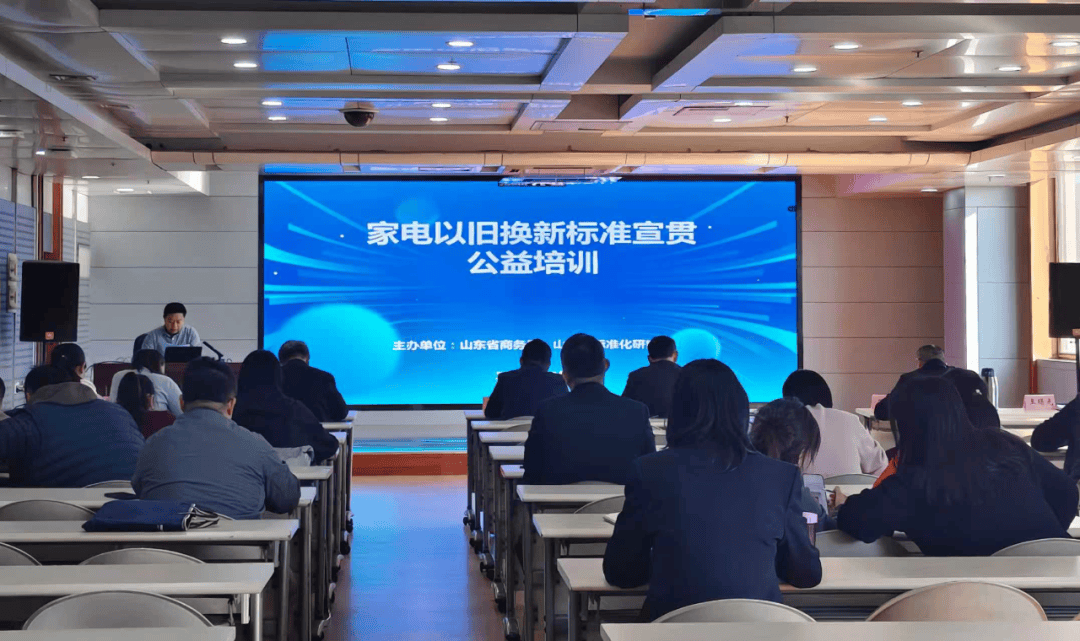
供稿:流通业发展处 12月3日,由省商务厅和省标准化研究院共同主办的"家电以旧换新标准宣贯公益培训"活动在济南举行,各市商务主管部门以及家电流通、回收等领域的 企业代表300余人通过线上线下相结合的方式参加培训。 近年来,全省商务系统认真贯彻落实国家消费品以旧换新决策部署,推动全省家电以旧换新资格核验系统与中国物品编码中心完成条码数据对接,提升家 电以旧换新工作效率和准确性,并借助省标准化院、省家电协会、省再生资源协会等相关单位资源,开展山东省家电流通标准体系研究和重点标准研制工 作,为家电以旧换新工作提供有力支撑。 活动中,首先对《山东省2025年家电以旧换新实施方案》等政策进行了解读,省家用电器行业协会、省再生资源协会和省标准化研究院专家分别就《家用 电器以旧换新信息管理要求》等2项团体标准、《山东省家用电器流通标准体系》以及作业要求等进行了宣贯讲解。此次培训旨在进一步提升商务主管部 门对标准化在家电以旧换新工作中重要作用的认识,深化行业企业对家电以旧换新工作有关政策和标准的理解,切实加强我省家电以旧换新工作的规范性 和科学性,提升家电流通相关单位的管理水平。 ...

11月黑猫投诉企业红黑榜:淘宝大促规则复杂价格不透明
Xin Lang Cai Jing· 2025-12-10 03:59
Core Insights - The article highlights the November complaint handling red and black list released by the Black Cat Complaint platform, reflecting the complaint resolution status of various companies [1][14]. Group 1: Complaint Statistics - As of the end of November 2025, the Black Cat Complaint platform has received over 31.16 million valid consumer complaints, with more than 800,000 valid complaints in November alone [1][14]. - The red and black lists categorize companies based on their complaint handling performance and include a "most concerned areas list" to provide consumers with valuable references [1][14]. Group 2: Notable Complaints - Consumers reported issues with Taobao's promotional mechanisms, citing complex rules, frequent price changes, and difficulties in applying for price protection [2][15]. - CHIGO's small freezer was criticized for falsely advertising a capacity of 72 liters, while the actual measured capacity was less than 35 liters, leading to 1,217 complaints with a response rate of only 37.93% [3][16]. - NewBalance faced complaints regarding shoes that showed quality issues after minimal use, with a total of 1,910 complaints and a response rate of 0% [4][17]. - NARS was reported for refusing to accept returns of unopened cosmetics, with consumers facing obstacles in the refund process due to lack of proper communication from the seller [5][18][19]. - Consumers reported difficulties with NVC lighting products, where the company shifted the burden of quality issues onto consumers, requiring them to handle product returns and installation risks [6][20]. - Jitu Express was criticized for failing to provide pickup codes, leading to poor customer experiences and a response rate of 0% in the last 30 days [7][21]. Group 3: Industry Performance Rankings - The November red and black lists for various industries included: - **Shared Services**: Blacklist included companies like Guangyu Koste and Wisdom Xiaolian, while the whitelist featured companies like Hello and Monster Charging [8][22]. - **Shopping Platforms**: Taobao Mall and Tmall were on the blacklist, while Heart Joy Mall and Tmall Supermarket were on the whitelist [8][22]. - **Travel and Accommodation**: Companies like Shenzhen Airlines and Agoda were blacklisted, while Chengdu Ocean Travel and Ctrip were recognized on the whitelist [8][22]. - **Entertainment and Lifestyle**: WeChat and Tencent were blacklisted, while iQIYI and Cloud Technology were on the whitelist [8][22]. - **Education and Training**: Companies like Zhonggong Education and Duolingo were blacklisted, while companies like Henan Zhong'an and Yuantong were on the whitelist [8][23].
年终特别报道|这一年,经济运行总体平稳、稳中有进
Ren Min Ri Bao· 2025-12-10 03:57
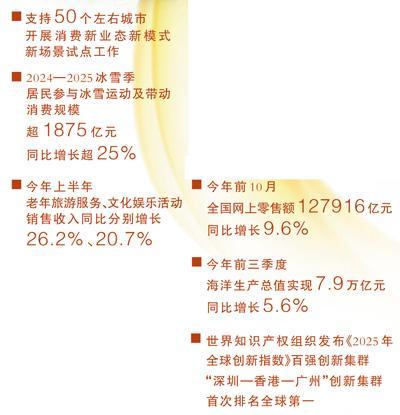
Group 1: Economic Development Trends - The year 2025 is significant for China's modernization process, with a focus on high-quality development and achieving major economic and social goals [2] - The Central Economic Work Conference highlighted the importance of developing new economic sectors such as the "first release economy," "ice and snow economy," "silver economy," and promoting healthy platform economy and county economy [3][4] Group 2: First Release Economy - The first release economy is gaining traction, with cities like Beijing, Shanghai, and Chengdu enhancing policy support to attract new brands and stores, becoming a key driver for domestic demand [3][6] - Chengdu has seen the establishment of 631 first stores in the first three quarters of the year, indicating a growing trend of "first release" becoming a lifestyle [8] Group 3: Ice and Snow Economy - The ice and snow economy is evolving from a seasonal focus to a year-round industry, with the market expected to exceed 1 trillion yuan by 2025 [3][9] - Harbin's Ice and Snow World is integrating technology and culture, offering diverse shopping and dining experiences to enhance consumer engagement [11] Group 4: Silver Economy - The silver economy is expanding with new service models for the elderly, including specialized travel services that cater to their needs, reflecting a shift in consumption patterns towards quality and personalization [12][13] - The elderly demographic is becoming a significant force in the tourism market, with over 80% of travelers on specialized trains being aged 60 and above [13] Group 5: Platform Economy - The platform economy is transitioning from a "what to sell" model to a "what is needed" approach, enhancing consumer experience through direct subsidies and one-stop services [14][15] - E-commerce platforms are driving growth in both domestic demand and foreign trade, with significant increases in sales and participation in global promotional events [16] Group 6: County Economy - The county economy is experiencing robust growth, with initiatives like "Hundred Villages, Thousand Stays" promoting eco-tourism and local industries, leading to increased income for local residents [17][18] - The integration of tourism and local agriculture is driving economic development, with significant increases in visitor numbers and revenue [18] Group 7: Marine Economy - The marine economy is focusing on green and low-carbon initiatives, with advancements in shipbuilding technology and sustainable practices [19][21] - The marine engineering sector is seeing growth, with a reported output value of 32.85 billion yuan in the first ten months of the year, reflecting a 16.9% increase [21] Group 8: Bay Area Economy - The Guangdong-Hong Kong-Macao Greater Bay Area is fostering innovation and collaboration, with companies leveraging regional strengths for technological advancements [22][24] - The synergy between Hong Kong's research capabilities and the manufacturing strengths of the Pearl River Delta is facilitating the commercialization of scientific innovations [24]
险资松绑利好红利板块,300红利低波ETF(515300)震荡市场中优势凸显
Xin Lang Cai Jing· 2025-12-10 03:16
截至2025年12月10日10:48,沪深300红利低波动指数下跌0.54%。成分股华能水电领涨,川投能源、华 域汽车跟涨;招商银行领跌,农业银行、兴业银行跟跌。 消息面上,12月8日,工商银行、农业银行分别发布A股2025年半年度分红派息实施公告,两家银行此 次中期分红总额分别为503.96亿元、418.23亿元。Wind数据显示,截至12月9日,已有26家A股上市银行 披露2025年中期或季度分红方案,合计派息金额拟超2600亿元。 中国银河证券表示,上市银行中期分红力度不减且节奏提前,红利价值日益凸显。 西部证券指出,险资股票风险因子松绑,新规利好银行、公用事业、煤炭等红利板块。伴随新会计准则 即将全面落地,中小险企或将加强OCI股票配置,风险因子松绑下,红利板块有望充分受益。 数据显示,截至2025年11月28日,沪深300红利低波动指数前十大权重股分别为中国神华、双汇发展、 中国石化、格力电器、美的集团、华域汽车、大秦铁路、宝钢股份、中国移动、中国建筑,前十大权重 股合计占比35.7%。 没有股票账户的场外投资者可通过对应的沪深300红利低波动ETF联接基金(007606)把握投资机会。 300红利 ...
兴业证券:26Q2预计家电外销景气优于内销 推荐石头科技(688189.SH)等
智通财经网· 2025-12-10 02:58
Core Viewpoint - The report from Industrial Securities anticipates a mixed performance in the home appliance sector, with domestic sales under pressure due to policy changes and high base effects, while export sales are expected to perform better due to easing tariff impacts and recovering demand in developed and emerging markets [1] Group 1: Home Appliance Overview - The home appliance sector is experiencing internal performance differentiation, with overall operational resilience [1] - Cost factors include rising raw material prices since 2025, while shipping costs have been decreasing, keeping overall cost impacts manageable [1] - Domestic demand is supported by ongoing national subsidies, with retail sales of home appliances significantly outperforming the broader market [1] - Export growth has faced short-term disruptions from tariffs and high base effects, but leading companies are leveraging global layouts and contributions from emerging markets to maintain resilient export performance [1] - The average dividend yield for the home appliance sector is 3.2%, ranking fourth among 31 primary industries in China, highlighting the sector's attractive dividend characteristics [1] Group 2: White Goods - Domestic sales are expected to see a decline in growth rates in the second half of 2025 due to policy impacts and high base effects, with a forecast of a low-to-high growth pattern in 2026 [2] - If national subsidy policies continue in 2026, they may further enhance domestic demand and market structure [2] - Export sales are projected to improve in 2026, benefiting from lower base effects and easing tariff impacts, with leading companies expected to maintain competitive advantages and improve profitability [2] Group 3: Black Goods - The domestic TV market is undergoing structural optimization, with leading companies driving the adoption of RGB Mini LED products, which are expected to contribute to profit growth [3] - The overseas market, particularly in emerging regions, is expected to grow, with major events like the World Cup boosting demand for TVs [3] - Chinese brands are enhancing their marketing efforts and local channel structures to increase overseas market share and improve product mix [3] Group 4: Small Appliances - Domestic sales of small appliances are expected to be supported by national subsidy policies in early 2025, but demand may weaken as subsidies taper off [4] - The geopolitical situation poses risks to small appliance exports, but Chinese companies are well-positioned to manage tariff impacts due to their strong supply chain capabilities [4] Group 5: Robotic Vacuums - The demand for robotic vacuums remains strong, with the continuation of national subsidy policies in 2026 likely to enhance market penetration and improve profitability for brands [5] - Market share is expected to concentrate among leading brands, with a trend of increasing competition within the industry [5] - The overseas market for robotic vacuums is projected to maintain steady growth, although internal competition is intensifying [5]

兴业证券:26Q2预计家电外销景气优于内销 推荐石头科技等
智通财经网· 2025-12-10 02:53
Core Viewpoint - The report from Industrial Securities anticipates a mixed performance in the home appliance sector, with domestic sales under pressure due to policy changes and high base effects, while export sales are expected to perform better due to easing tariff impacts and recovering demand in developed and emerging markets [1] Group 1: Home Appliance Overview - The home appliance sector is experiencing internal performance differentiation, with overall operational resilience [1] - Cost factors include rising raw material prices since 2025, while shipping costs have been decreasing, keeping overall cost impacts manageable [1] - Domestic demand is supported by ongoing national subsidies, with retail sales of home appliances significantly outperforming the broader market [1] - Export growth has faced short-term disruptions from tariffs and high base effects, but leading companies are leveraging global layouts and contributions from emerging markets to maintain resilient export performance [1] - The average dividend yield for the home appliance sector is 3.2%, ranking fourth among 31 primary industries in China, highlighting the sector's attractive dividend characteristics [1] Group 2: White Goods - Domestic sales are expected to see a decline in growth rates in the second half of 2025 due to policy impacts and high base effects, with a forecast of a low-to-high growth pattern in 2026 [2] - Continued national subsidy policies in 2026 could further enhance domestic demand and market structure [2] - Export sales are projected to outperform domestic sales in 2026, driven by easing tariffs and increased penetration in emerging markets [2] Group 3: Black Goods - The domestic TV market is undergoing structural optimization, with leading companies driving the adoption of RGB Mini LED products, which are expected to contribute to profit growth [3] - The overseas market is benefiting from sustained growth in emerging markets, with major events like the World Cup expected to boost demand for TVs [3] - Chinese brands are enhancing their marketing efforts and local channel structures to increase overseas market share [3] Group 4: Small Appliances - Domestic sales of small appliances are expected to be supported by national subsidy policies in early 2025, but demand may weaken as subsidies taper off [4] - The geopolitical situation poses risks to small appliance exports, but Chinese companies are well-positioned to manage tariff impacts due to their strong supply chain capabilities [4] Group 5: Robotic Vacuums - The demand for robotic vacuums remains strong, with the continuation of national subsidy policies in 2026 likely to enhance domestic market penetration and improve profitability [5] - Market share is expected to concentrate among leading brands, with a trend of differentiation in marketing strategies [5] - The overseas market for robotic vacuums is projected to maintain steady growth, although internal competition is intensifying [5]
德昌股份20251209
2025-12-10 01:57
Summary of the Conference Call for 德昌股份 Company Overview - 德昌股份 is primarily engaged in the automotive EPS motor business and has extended its high-end technology into the robotics sector, specifically focusing on joint motors [2][3]. Key Points and Arguments Automotive EPS Motor Business - The automotive EPS motor business is entering a growth phase, with projected revenue of 400 million yuan in 2024, accounting for 10% of total revenue, and expected to reach 1.5 billion yuan by 2027, with a net profit margin of approximately 15% [2][8]. - The company has established itself as a domestic leader in the automotive EPS motor sector, overcoming significant technical barriers such as heat dissipation, low vibration, and low noise [3][4]. - The global market for automotive EPS motors is largely dominated by foreign companies, but 德昌股份 has made significant progress and aims to capture top-tier domestic and international clients [3][4]. Robotics Joint Motor Business - 德昌股份 is actively developing robotics joint motors, which require high performance standards due to their complex applications and stringent requirements for heat dissipation and miniaturization [5][6]. - The company is currently engaging with top-tier domestic and international clients, including indirect connections with Tesla, indicating a strong potential for market share expansion [6][10]. Household Appliances Business - The household appliances segment, which constitutes about 70%-80% of revenue, is viewed as a cash flow source. Despite facing challenges from tariffs and price reductions, the company aims to enhance profitability through increased self-manufacturing rates and project optimization [2][4][8]. - The household appliances business is expected to maintain a steady growth rate of 10%-15%, although profitability may be impacted in 2025 due to external pressures [2][8]. Financial Projections - Overall net profit is projected to be around 200 million yuan in 2025, influenced by fluctuations in the household appliances segment, with an increase to approximately 400 million yuan in 2026 [9]. - The company’s future financial performance may exceed expectations, particularly if the robotics segment begins to contribute significantly [7][10]. Market Perception and Misconceptions - There is a common misconception that 德昌股份 is merely a traditional household appliance company, which overlooks the potential of its emerging businesses in automotive EPS motors and robotics [4][10]. - The market has not fully recognized the growth potential of these new sectors, which could lead to significant valuation upside in the coming years [2][10]. Investment Recommendation - 德昌股份 is recommended for continued tracking and investment due to its strong growth potential across multiple core business areas, including household appliances, automotive EPS motors, and robotics [11]. - The company’s focus on core business development and its ability to achieve breakthroughs in new markets suggest a high likelihood of stock price doubling within the next three years [11].

税收数据显示——消费市场活力不断释放
Sou Hu Cai Jing· 2025-12-10 01:17
Group 1: Consumer Market Dynamics - The tax data from the State Taxation Administration indicates a positive shift in China's consumer market, driven by various consumption-boosting policies and new consumption scenarios [1][2] - The "old-for-new" policy has significantly stimulated consumer demand, with retail sales of communication devices and daily household appliances increasing by 20.3% and 26.5% year-on-year, respectively, from January to November [1] - The sales revenue of new energy passenger vehicles also showed strong growth, with a year-on-year increase of 19.1% during the same period [1] Group 2: Sports and Health Consumption - The sports and health sectors are experiencing heightened activity, with sports event-related economic output increasing significantly, leading to a multiplier effect on consumption [2] - From January to November, the retail sales of sports exhibition services and sports goods grew by 29.7% and 6.6% year-on-year, respectively [2] - Health-related consumption is also on the rise, with sales of health auxiliary treatment equipment and health consulting services increasing by 14.1% and 11.9% year-on-year [2] Group 3: Cultural and Tourism Consumption - The cultural and tourism sectors are witnessing a surge in new business models and scenarios, enhancing consumer vitality [2] - Sales revenue from artistic creation and performance, as well as film screenings, increased by 15.6% and 19.1% year-on-year, respectively, from January to November [2] - The integration of tourism with cultural activities has led to significant growth in related services, with travel agency services, scenic spots, and leisure activities seeing year-on-year increases of 10.8%, 29.4%, and 16.6%, respectively [2] Group 4: Demographic Consumption Trends - The elderly and young consumer groups are showing substantial consumption potential, with the elderly market projected to exceed 100 trillion yuan by 2050 [3] - From January to November, spending on elderly care services, social assistance, and nursing home services grew by 33.6%, 9.6%, and 14.6% year-on-year, respectively [3] - Among younger consumers, spending on digital cultural services, particularly those related to emotional value and social attributes, increased by 16.5% year-on-year [3] Group 5: Future Policy Directions - The State Taxation Administration plans to continue implementing tax and fee policies that support consumption, aiming to optimize tax payment services and stimulate domestic demand [3]
这一年,经济运行总体平稳、稳中有进
Ren Min Ri Bao· 2025-12-09 23:59
Economic Development - The year 2025 is significant for China's modernization process, with a focus on high-quality development and achieving major economic and social goals [1] - The Central Economic Work Conference has outlined systematic deployments for economic work in 2025, emphasizing the development of various economies such as the "first launch economy," "ice and snow economy," "silver economy," and others [1][2] First Launch Economy - The first launch economy is gaining traction, with cities like Beijing, Shanghai, and Chengdu enhancing policy support to attract new brands and stores, becoming a key driver for domestic demand [2] - Chengdu has seen the establishment of 631 first stores in the first three quarters of the year, indicating a growing trend towards first launches as a lifestyle choice [4][5] Ice and Snow Economy - The ice and snow economy is evolving from a seasonal focus to a year-round industry, with the scale expected to exceed 1 trillion yuan by 2025 [2] - Harbin's Ice and Snow World is under construction, featuring innovative attractions and a focus on diverse shopping and experiential dining to enhance consumer engagement [5][6] Silver Economy - The silver economy is expanding with new service models for the elderly, including specialized travel services that cater to their needs, reflecting a shift in consumption patterns towards quality and personalization [6][7] - In Yunnan, the elderly tourism market has seen significant growth, with over 80% of travelers being aged 60 and above [7] Platform Economy - The platform economy is transitioning from a "what to produce" model to a "what is needed" approach, enhancing consumer satisfaction through direct connections between platforms and manufacturers [8][9] - E-commerce platforms have facilitated significant growth in agricultural product sales, with rural online retail increasing by 7.5% year-on-year [9][10] County Economy - The county economy is thriving with initiatives like "Hundred Villages Thousand Lodgings," which promote eco-tourism and local agricultural products, leading to increased income for local residents [10][11] - In Luanchuan County, the integration of tourism and agriculture has resulted in a substantial rise in visitor numbers and revenue, with a focus on sustainable development [11] Marine Economy - The marine economy is advancing with innovations in shipbuilding and marine engineering, focusing on green technologies and zero-carbon emissions [12][13] - The Qingdao West Coast New Area has established a marine industry base that has seen a 16.9% increase in output value year-on-year [13] Bay Area Economy - The Guangdong-Hong Kong-Macao Greater Bay Area is fostering innovation and collaboration, with companies leveraging local resources for technological advancements [14] - The synergy between Hong Kong's research capabilities and the Pearl River Delta's industrial strengths is facilitating the commercialization of scientific achievements [14]