食品

Search documents
中证沪港深互联互通综合主要消费指数报10037.55点,前十大权重包含山西汾酒等
Jin Rong Jie· 2025-08-06 08:33
金融界8月6日消息,上证指数低开高走,中证沪港深互联互通综合主要消费指数 (沪港深通消费综合, H30482)报10037.55点。 从中证沪港深互联互通综合主要消费指数持仓样本的行业来看,酒占比37.62%、食品占比27.64%、养 殖占比16.77%、软饮料占比8.13%、美容护理占比3.73%、种植占比2.90%、家庭用品占比2.00%、烟草 占比1.22%。 资料显示,该指数系列样本每半年调整一次,样本调整实施时间分别为每年6月和12月的第二个星期五 的下一交易日。权重因子随样本定期调整而调整,调整时间与指数样本定期调整实施时间相同。在下一 个定期调整日前,权重因子一般固定不变。特殊情况下将对该指数系列样本进行临时调整。当样本退市 时,将其从指数样本中剔除。样本公司发生收购、合并、分拆等情形的处理,参照计算与维护细则处 理。当中证沪港深500指数、中证沪港深互联互通中小综合指数和中证沪港深互联互通综合指数样本发 生变动时,将进行相应调整。 数据统计显示,中证沪港深互联互通综合主要消费指数近一个月上涨2.16%,近三个月下跌1.02%,年 至今上涨0.75%。 据了解,中证沪港深行业指数系列将中证沪港深 ...






中消协:上半年假冒、安全、虚假宣传等问题投诉比重上升
Xin Jing Bao· 2025-08-06 07:51
Core Insights - In the first half of 2025, consumer complaints received by national consumer associations reached 995,971, marking a year-on-year increase of 27.23% [1] - A total of 509,655 complaints were resolved, resulting in a financial recovery of 452 million yuan for consumers [1] Complaint Nature Analysis - After-sales service issues were prominent, accounting for 26.47% of total complaints [1] - Compared to the first half of 2024, complaints regarding counterfeiting, safety, and false advertising increased, while complaints about after-sales service, quality, and measurement decreased [1] Complaint Categories - Product-related complaints totaled 541,215, representing 54.34% of all complaints, with an increase of 8.79 percentage points compared to the first half of 2024 [1] - Service-related complaints amounted to 406,747, making up 40.84% of total complaints, showing a decrease of 1.56 percentage points [1] - Other complaints accounted for 48,009, or 4.82% of the total [1] Product Complaint Breakdown - The top five categories for product complaints were home electronics, clothing and footwear, daily goods, food, and transportation [1] - Compared to the first half of 2024, the proportion of complaints for clothing and daily goods increased [1] Service Complaint Breakdown - The leading categories for service complaints included internet services, life and social services, education and training services, sales services, and cultural, entertainment, and sports services [2] - There was an increase in complaints related to financial services, education and training services, and sales services, while complaints about life and social services and telecommunications services decreased [2] Specific Product Complaints - The top five specific product complaints were clothing, communication products, ordinary food, shoes, and daily miscellaneous items [2] - Notably, complaints for daily miscellaneous items, shoes, and clothing saw significant increases compared to the first half of 2024 [2] Specific Service Complaints - The top five specific service complaints were for commercial internet services, dining services, training services, mobile phone services, and remote shopping [2] - There was a noticeable increase in complaints related to transportation, education services, and performance services, while complaints for mobile phone services and accommodation services decreased [2]
中消协:上半年全国消协组织为消费者挽回经济损失4.52亿元
Sou Hu Cai Jing· 2025-08-06 06:30
Core Insights - In the first half of 2025, consumer complaints in China reached 995,971, marking a year-on-year increase of 27.23% [1] - The resolution rate for these complaints was 509,655, resulting in a total economic loss recovery of 452 million yuan [1] Complaint Categories - After categorization, after-sales service issues were the most prominent, accounting for 26.47% of total complaints [1] - Compared to the first half of 2024, complaints regarding counterfeits, safety, and false advertising increased, while complaints related to after-sales service, quality, and measurement decreased [1] Product Complaints - Product-related complaints totaled 541,215, representing 54.34% of all complaints, with an increase of 8.79 percentage points from the first half of 2024 [3] - The top five categories for product complaints were home electronics, clothing and footwear, daily goods, food, and transportation [3] - Notably, complaints regarding clothing and daily goods saw an increase compared to the previous year [3] Service Complaints - Service-related complaints amounted to 406,747, making up 40.84% of total complaints, which is a decrease of 1.56 percentage points from the first half of 2024 [3] - The leading categories for service complaints included internet services, social and life services, education and training services, sales services, and cultural, entertainment, and sports services [3] - There was an increase in complaints related to financial services, education and training services, and sales services, while complaints about social and life services and telecommunications services decreased [3] Specific Product Complaints - The top five specific product complaints were for clothing, communication products, ordinary food, shoes, and daily miscellaneous items [3] - There was a notable increase in complaints regarding daily miscellaneous items, shoes, and clothing compared to the first half of 2024 [3] Specific Service Complaints - The top five specific service complaints were for commercial internet services, dining services, training services, mobile phone services, and remote shopping [4] - There was a significant increase in complaints related to transportation, education services, and performance services, while complaints about mobile phone services and accommodation services saw a decline [4]


拒绝“剥洋葱”!商品包装轻装上架应成常态
Jing Ji Ri Bao· 2025-08-06 01:47
Group 1 - The excessive packaging phenomenon has been criticized for increasing consumer costs and causing resource waste and environmental pollution, which contradicts the green and low-carbon development concept [1][2] - The China Consumers Association, along with several industry associations, has launched an initiative to oppose excessive packaging and promote green consumption [1] - Statistics indicate that packaging waste accounts for approximately 30% to 40% of urban household waste in China, with a significant portion stemming from excessive packaging [1] Group 2 - New national standards aimed at limiting excessive packaging will be enforced starting September 2023 and April 2024, setting clear and strict requirements regarding packaging void ratios, layers, and costs [2] - Companies are encouraged to optimize packaging design to balance aesthetics and functionality, ensuring that packaging enhances product value without being overly complex [2][3] - The initiative aims to raise awareness among industry players about self-discipline and to reduce excessive packaging from the source, emphasizing the need for innovation in product craftsmanship and performance [3]
治理“内卷式”竞争!多部门“组合拳”发力!
Zheng Quan Shi Bao· 2025-08-06 00:22
Group 1 - The core viewpoint emphasizes the need for a unified national market to combat "involution" in various industries, which has led to unhealthy competition and profit sacrifices among companies [1][4][11] - The government is implementing a series of measures to address "involution" by promoting fair competition and optimizing resource allocation, which is crucial for the construction of a unified national market [2][5][10] - The recent policies focus on both constraints and guidance, including prohibiting local governments from offering unfair incentives and promoting mergers and technological innovation in key industries [5][6] Group 2 - The regulatory framework is evolving, with new laws such as the revised Anti-Unfair Competition Law aimed at preventing predatory pricing and ensuring fair competition among businesses [8][9] - The government is actively seeking to break down local protectionism and market barriers, which are significant obstacles to the establishment of a unified national market [10][11] - Initial results from the government's "combination punches" against "involution" have shown improvements in capacity management and pricing rationality in industries like steel, automotive, and e-commerce [11]
治理“内卷式”竞争!多部门“组合拳”发力!
证券时报· 2025-08-06 00:14
Core Viewpoint - The article discusses the ongoing "involution" competition across various industries in China, emphasizing the need for a unified national market and the government's efforts to regulate and guide this competition to ensure a healthy market environment [2][4][11]. Group 1: Involution Competition - The "involution" competition has escalated from e-commerce and automotive sectors to electronics, food, steel, and cement industries, leading to a detrimental cycle where companies sacrifice profits for market share [2][4]. - The Chinese government, through multiple departments, is actively implementing measures to address this "involution" competition, aiming to break the cycle and promote a healthier market order [2][5][11]. Group 2: Government Measures - The National Development and Reform Commission (NDRC) has introduced guidelines to prevent local governments from offering illegal incentives in areas such as finance, taxes, and resources, focusing on both constraints and guidance [5][6]. - The Ministry of Industry and Information Technology (MIIT) is targeting key industries like automotive and steel to encourage structural adjustments and the elimination of outdated capacities [6][11]. - The State Administration for Market Regulation (SAMR) is conducting targeted actions against unfair competition across a wide range of sectors, including e-commerce and food, to ensure fair market practices [6][9]. Group 3: Price Governance Framework - Recent reforms in the Anti-Unfair Competition Law aim to establish a fair competition review system, prohibiting practices that disrupt market order through below-cost pricing [8][9]. - The NDRC and SAMR are working on revising the pricing law to address predatory pricing and ensure that service pricing is also regulated, enhancing the legal framework for market supervision [9][10]. Group 4: Achievements and Future Directions - Initial results from the government's "combination punches" against "involution" competition show improvements in industries like steel and construction materials, with a gradual recovery in upstream supply chain prices [11]. - The article highlights the need for further reforms in performance evaluation and fiscal systems to eliminate local protectionism and market barriers, which are essential for the successful establishment of a unified national market [11].
小“票根”成为“金钥匙”(新视窗·新供给引领新消费新需求)
Ren Min Ri Bao· 2025-08-05 22:21
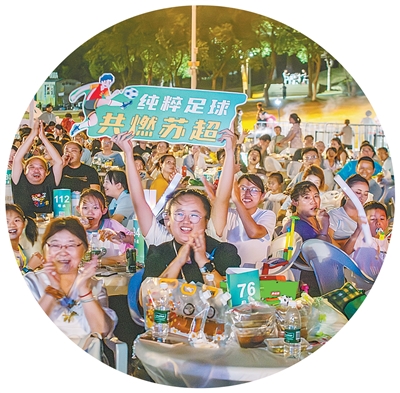
Core Insights - The "ticket root economy" is emerging as a key driver for consumer engagement, transforming single consumption actions into extended consumption chains across various sectors [3][4][7] - This economic model connects different consumption areas, creating new opportunities for market growth and enhancing the overall consumer experience [4][11] Group 1: Economic Impact - The "ticket root economy" links diverse consumption fields, facilitating a new wave of consumer opportunities and market development [4][7] - In Shanghai, the "ticket root economy" is integrated into the city's six major special actions aimed at boosting consumption, promoting synergy between cultural, tourism, and commercial sectors [3][4] - The model has led to significant increases in consumer spending, with events like the "Su Super" league attracting over 10,000 attendees per match, resulting in a 40% increase in late-night dining [5][7] Group 2: Consumer Engagement - Various regions are implementing innovative strategies to enhance consumer engagement through ticket-based incentives, such as discounts and free entries to attractions [4][5][8] - In Jiangsu, a "1+3" consumption discount model offers multiple benefits to ticket holders, promoting cultural and sports integration [7][11] - The integration of digital technologies and promotional activities has made ticket roots a frequent term in local markets, enhancing consumer experiences [4][8] Group 3: Regional Collaboration - The "ticket root economy" fosters regional collaboration, as seen in initiatives like the "Million Workers Tour Bashu" program, which promotes cross-regional tourism [13][14] - In Zhejiang, the "Zhe BA" initiative combines sports events with local economic activities, creating a comprehensive summer consumption experience [8][9] - The model encourages local businesses to participate in promotional activities, enhancing the overall consumer experience and driving economic growth [9][10] Group 4: Future Prospects - The "ticket root economy" is expected to continue evolving, with a focus on deepening the integration of culture, tourism, and commerce to sustain growth [14] - Experts suggest that establishing cross-industry cooperation mechanisms will be crucial for the long-term success of the "ticket root economy" [14] - The model's ability to respond to consumer demands and efficiently integrate market resources positions it as a potential engine for expanding overall consumption [14]
华金证券研究所所长杨烨辉:下半年科技、消费等行业或迎结构性机会
Zhong Guo Zheng Quan Bao· 2025-08-05 12:20
Group 1 - The decision-making departments have signaled ample policy space for the second half of the year, emphasizing the importance of policy rhythm and precision in implementation [1] - The central bank may utilize tools such as relending and rediscounting for more targeted liquidity support to stabilize the real economy, with manufacturing and infrastructure investment expected to maintain high growth rates [2] - The "anti-involution" policy is becoming a new focus, aiming to prevent low-level repeated construction and regional vicious competition, which will have a profound impact on the competitive landscape and profit prospects of related industries [2] Group 2 - The short-term outlook suggests that abundant policy space, particularly in fiscal and monetary support, will boost market expectations, while supply-side optimization driven by "anti-involution" policies may improve the supply-demand balance in certain industries [3] - The liquidity environment is expected to remain loose, with the Federal Reserve's interest rate cut cycle not yet over, allowing for a stable trend of liquidity easing domestically [3] - Key sectors expected to benefit include technology growth, "anti-involution" related industries, and consumer sectors, with specific opportunities in TMT, machinery, military, new energy, pharmaceuticals, coal, steel, building materials, automotive, chemicals, logistics, semiconductors, robotics, artificial intelligence, home appliances, consumer electronics, retail, and new consumption sectors such as social services, food, and beauty care [3]
大盘再创年内收盘新高,消费持续补涨!规模领先的消费ETF(159928)收涨近1%,全天获大举净申购超2亿份!
Sou Hu Cai Jing· 2025-08-05 08:03
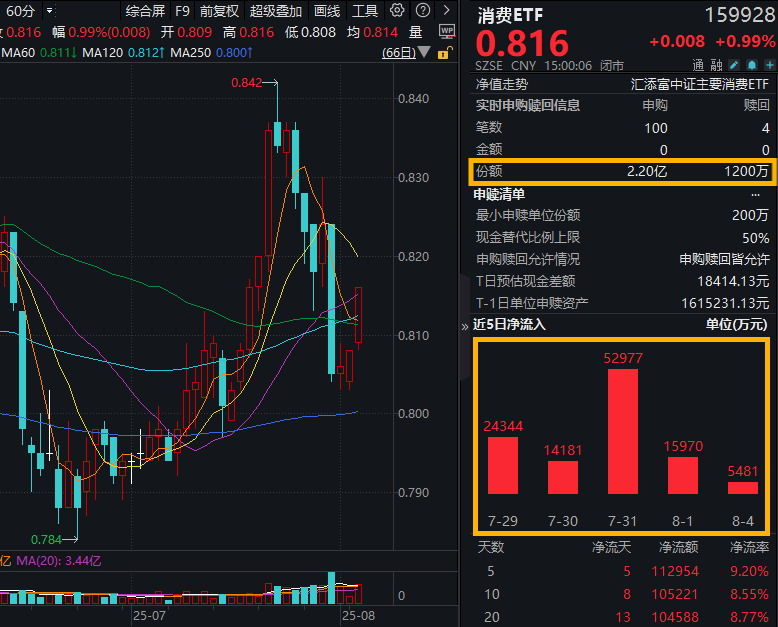
Market Overview - The A-share market closed positively on August 5, with a total trading volume exceeding 1.6 trillion yuan, and the Shanghai Composite Index rising nearly 1%, reaching a new closing high for the year [1] - The leading consumption ETF (159928) saw a nearly 1% increase, with a trading volume of 470 million yuan and a net subscription of 208 million units, marking the ninth consecutive day of capital inflow, totaling over 1.4 billion yuan [1] ETF Performance - The consumption ETF (159928) has a current scale exceeding 13.1 billion yuan, significantly leading its peers [1] - Key constituent stocks of the consumption ETF performed well, with Dongpeng Beverage rising over 3%, Luzhou Laojiao up over 2%, and Shanxi Fenjiu increasing over 1% [3] Policy and Economic Insights - Haitong International noted that six out of eight essential consumption sectors tracked in July maintained positive growth, while two sectors, including high-end and mid-range liquor, experienced negative growth due to new alcohol bans and adverse weather conditions [5] - The report highlighted that most liquor prices stabilized in July, with slight adjustments observed in various products [5] - The introduction of favorable policies, such as the implementation of a childcare subsidy system estimated at 100 billion yuan annually, is expected to stimulate essential consumption sectors [6] Industry Analysis - CITIC Securities indicated that the liquor industry has been under pressure this year, but signs of stabilization are emerging, with expectations of a gradual recovery in demand and performance in the third quarter [7] - The report emphasized that leading liquor companies are enhancing shareholder returns through increased dividends and buybacks, which may provide a safety margin for investments [7] - The analysis of Moutai's business model suggests a proactive approach to exploring new demand and adjusting its distribution network during the industry's cyclical downturn [8] Investment Strategy - The consumption ETF (159928) is characterized by its resilience across economic cycles, with over 68% of its top ten constituent stocks being essential consumer goods [8] - The report recommends focusing on sectors benefiting from policy support, particularly dairy products and liquor, while remaining cautious about the potential decline in soft drink margins [6]

停播1300多天,薇娅未“隐入尘烟”
3 6 Ke· 2025-08-05 00:22
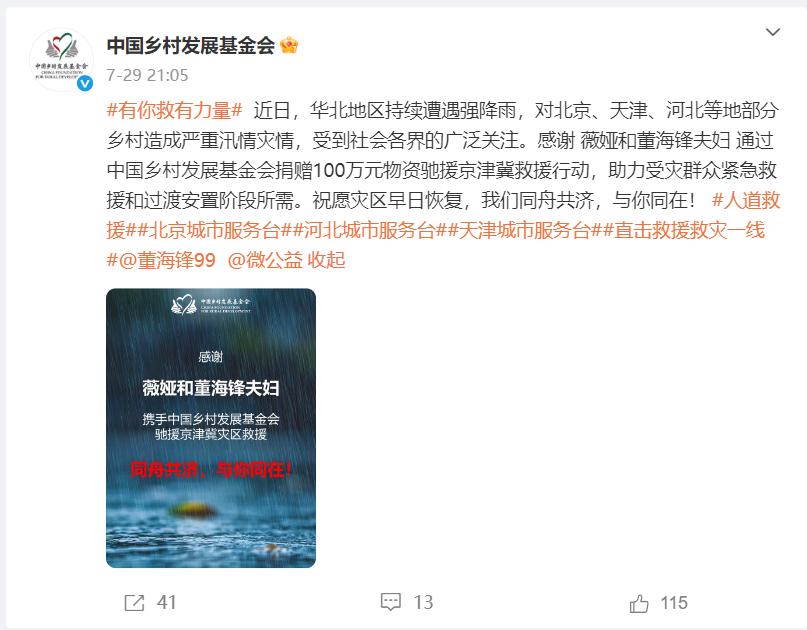
Core Viewpoint - After the tax evasion incident, Viya has shifted her focus towards philanthropy and business operations, while her husband, Dong Haifeng, has taken a more prominent role in the public eye, indicating a strategic pivot in their business model and public engagement [1][7]. Philanthropic Activities - In response to severe flooding in North China, Viya and her husband donated 1 million yuan worth of materials to aid disaster relief efforts in the Beijing-Tianjin-Hebei region [2]. - Prior to the tax incident, the couple was already active in philanthropy, donating 1 million yuan in cash and 3 million yuan worth of medical supplies during the COVID-19 outbreak in Wuhan [4]. - They continued their charitable efforts during various disasters, including donations of 2 million yuan during the Zhengzhou floods in 2021 and 1 million yuan for the Sichuan earthquake in 2022 [5]. Financial Contributions - From 2020 to the present, the couple's total donations have exceeded 32 million yuan, which has helped improve their public image post-tax scandal [6]. - Their philanthropic actions have provided tangible support to disaster-stricken areas and vulnerable groups, while also aiding in the recovery of their public reputation [6]. Business Developments - Viya has transitioned to a behind-the-scenes role, focusing on educational initiatives and business strategy, while Dong Haifeng has taken on more public-facing responsibilities [8]. - Dong Haifeng has been actively promoting their new business ventures, including the development of AI-driven systems to enhance e-commerce operations [8]. - The couple has also ventured into the short drama and food industries, with new companies established under their control [9]. Marketing Strategies - A new mini-program named "Qianxun Super Member" has been launched, which is indirectly associated with Viya, suggesting a strategy to leverage her past influence in a more subtle manner [10]. - Despite the ongoing negative impact from the tax evasion scandal, the couple is exploring various avenues to re-establish their market presence and engage with their audience [10].