
化纤

Search documents
研报掘金丨东吴证券:首予桐昆股份“买入”评级,后续盈利能力有望改善
Ge Long Hui A P P· 2026-01-13 06:36
Core Viewpoint - Dongwu Securities research report indicates that with the ongoing reduction in polyester chain competition, Tongkun Co., Ltd. is expected to see an improvement in profitability, and the company is viewed positively for future growth potential, receiving an initial "Buy" rating [1] Group 1: Industry Overview - By the end of December 2025, major domestic polyester filament manufacturers plan to implement self-discipline production cuts to maintain prices, with a planned reduction of 10% for POY and 15% for FDY, with further reductions expected around the Chinese New Year [1] - Tongkun Co., Ltd. is the largest polyester filament producer globally, with a PTA production capacity of 10.2 million tons per year and a polyester filament capacity of 13.5 million tons per year, leading the industry in both capacity and output [1] Group 2: Company Developments - As of the first half of 2025, Tongkun Co., Ltd. is constructing a 1.2 million tons per year green differentiated fiber project, which is divided into two phases: the first phase includes the construction of two sets of polyester filament production units with a total capacity of 600,000 tons per year and a texturing workshop, utilizing some relocated equipment from the former Hengsheng company; the second phase will also include two sets of polyester filament units with a total capacity of 600,000 tons per year [1] - The company will steadily advance the project while balancing industry supply and demand and market conditions [1]

桐昆股份(601233):聚酯链反内卷推进,看好长丝龙头景气修复
Soochow Securities· 2026-01-13 05:06
Investment Rating - The report assigns a "Buy" rating for Tongkun Co., Ltd. (桐昆股份) for the first time [1]. Core Views - The report highlights that the polyester chain is undergoing a reversal of internal competition, which is expected to improve the profitability of the company in the future [8]. - The company is the largest producer of polyester filament in the world and is constructing a 1.2 million tons/year green differentiated fiber project [8]. - The report anticipates significant growth in net profit for the company, projecting net profits of 20 billion, 35 billion, and 40 billion yuan for the years 2025 to 2027, respectively [8]. Financial Summary - Total revenue for 2023 is projected at 82.64 billion yuan, with a year-on-year growth of 33.30% [1]. - The net profit attributable to shareholders is expected to reach 797.04 million yuan in 2023, reflecting a substantial year-on-year increase of 539.10% [1]. - The earnings per share (EPS) for 2023 is estimated at 0.33 yuan, with a projected P/E ratio of 52.38 [1]. - The company’s total assets are forecasted to be 104.39 billion yuan in 2024, with a debt-to-asset ratio of 66.30% [6][9]. - The report predicts a gradual increase in net profit margins, with the net profit margin expected to rise from 1.19% in 2024 to 3.88% in 2027 [9].
芳烃橡胶早报-20260113
Yong An Qi Huo· 2026-01-13 01:19
1. Report Industry Investment Rating No information provided in the documents. 2. Core Viewpoints PTA - Proximal TA device load decreased slightly, polyester load remained stable, inventory continued to decline, but polyester maintenance plans were intensively announced, basis weakened, and spot processing fees shrank. PX domestic operation was at a high level, overseas load increased, PXN decreased month - on - month, disproportionation efficiency weakened while isomerization efficiency remained high. In the future, with high PX profits, domestic production will remain high and overseas operation will recover, leading to a downward revision of the de - stocking amplitude in the far - month. TA's own processing fees have also improved. In the short term, the upward space is limited due to the upcoming polyester maintenance plans before the festival. However, the overall pattern has not changed before the new device is put into operation. Attention should be paid to the progress of overseas operation improvement [1]. MEG - Proximal domestic oil - based production had some load reduction, overseas maintenance increased month - on - month, port inventory decreased at the beginning of the week due to low arrivals, and the forecast of arrivals during the week rebounded. The basis remained weak, and coal - based efficiency improved month - on - month. Recently, domestic supply has been increasing steadily, overseas maintenance has increased month - on - month, overall inventory accumulation continues and the absolute inventory is not low. The pattern is expected to remain weak under the continuous new production. Attention should be paid to short - selling opportunities on rebounds [3]. Polyester Staple Fiber - The device operation was stable, the operation rate was maintained at 97.6%, production and sales improved month - on - month, and inventory decreased slightly. On the demand side, the operation rate of the polyester yarn end remained stable, raw material inventory decreased while finished product inventory increased, and efficiency remained stable. After the raw material price correction, the spot processing fees of staple fiber improved, while the futures price remained low. The downstream seasonality is expected to continue to weaken. With limited inventory pressure, the operation rate of staple fiber remains high. It has a medium - low valuation and weak driving force, with limited overall contradictions. Attention should be paid to the warehouse receipt situation [3]. Natural Rubber and 20 - grade Rubber No clear weekly or overall view was summarized in the document. Styrene and Related Products No clear view was summarized in the document. 3. Summaries According to Related Catalogs PTA - **Price and Index Data**: From January 6 - 12, 2026, data such as crude oil, PX processing margin, PTA spot price, and polyester margin were presented. For example, on January 6, the PTA spot price was 6530, and the polyester margin was 369.0 [1]. - **Device Changes**: Ineos' 1.25 - million - ton device reduced its load [1]. - **Market Situation**: Proximal TA device load decreased slightly, polyester load remained stable, inventory continued to decline, but polyester maintenance plans were intensively announced, basis weakened, and spot processing fees shrank. PX domestic operation was at a high level, overseas load increased, PXN decreased month - on - month, disproportionation efficiency weakened while isomerization efficiency remained high [1]. MEG - **Price and Index Data**: From January 6 - 12, 2026, data such as MEG prices (including outer - disk, inner - disk, etc.), profits, and loads were presented. For example, on January 6, the MEG outer - disk price was 745, and the coal - based profit was - 410 [3]. - **Device Changes**: Inner Mongolia Yankuang's 400,000 - ton device increased its load [3]. - **Market Situation**: Proximal domestic oil - based production had some load reduction, overseas maintenance increased month - on - month, port inventory decreased at the beginning of the week due to low arrivals, and the forecast of arrivals during the week rebounded. The basis remained weak, and coal - based efficiency improved month - on - month [3]. Polyester Staple Fiber - **Price and Index Data**: From January 6 - 12, 2026, data such as staple fiber prices, profits, and loads were presented. For example, on January 6, the staple fiber price was 6610, and the short - fiber profit was - 110 [3]. - **Device Operation**: The device operation was stable, the operation rate was maintained at 97.6%, production and sales improved month - on - month, and inventory decreased slightly [3]. - **Demand - side Situation**: The operation rate of the polyester yarn end remained stable, raw material inventory decreased while finished product inventory increased, and efficiency remained stable [3]. Natural Rubber and 20 - grade Rubber - **Price Data**: From January 6 - 12, 2026, data such as prices of various rubber products (including US - dollar - denominated Thai standard rubber, mixed rubber, etc.) were presented. For example, on January 6, the US - dollar - denominated Thai standard rubber price was 1895 [3]. Styrene and Related Products - **Price Data**: From January 6 - 12, 2026, data such as prices of ethylene, pure benzene, styrene, and related products were presented. For example, on January 6, the ethylene price was 745, and the pure benzene (CFR China) price was 5295 [6]. - **Profit and Operation Rate Data**: Data on production profits and operation rates of products such as PS, EPS, and ABS were presented [6].
芳烃橡胶早报-20260112
Yong An Qi Huo· 2026-01-12 01:41
Group 1: Report Industry Investment Rating - There is no information about the report industry investment rating provided in the documents. Group 2: Report's Core Views - For PTA, the near - end TA device slightly reduced its load, the polyester load remained stable, and the inventory continued to decrease. However, with the concentrated introduction of polyester maintenance plans, the basis weakened, and the spot processing fee shrank. In the future, the high profit of PX will keep domestic production high and overseas production rising, reducing the de - stocking amplitude in the far - month. The short - term upward space is limited before the pre - holiday polyester maintenance plan, but the overall situation has not changed before the new device is put into operation. Attention should be paid to the progress of overseas production increase [1]. - Regarding MEG, the near - end domestic oil - based production has partial load reduction, and overseas maintenance has increased month - on - month. The port inventory decreased at the beginning of the week due to low arrivals, but the arrival forecast rebounded during the week. The basis remained weak, and the coal - based profit improved month - on - month. The overall inventory accumulation continues, and the absolute inventory is not low. The pattern is expected to remain weak under the continuous new production, and attention should be paid to short - selling opportunities on rebounds [1]. - For polyester staple fiber, the far - end device runs smoothly, the production and sales have improved month - on - month, and the inventory has slightly decreased. On the demand side, the opening rate of the polyester yarn end remained stable, the raw material inventory decreased, and the finished product inventory increased, with stable profits. After the raw material price correction, the spot processing fee of staple fiber has improved, but the futures price remains low. The downstream seasonality is expected to continue to weaken, and the production load remains high with limited inventory pressure. It is in a state of medium - low valuation and weak drive, with limited overall contradictions. Attention should be paid to the warehouse receipt situation [1]. - In the case of natural rubber and 20 - grade rubber, the daily and weekly price changes of various rubber products are provided. The specific market situation needs further analysis based on these price changes [1]. - For styrene, the daily price changes of relevant products such as ethylene, pure benzene, and styrene are presented, as well as the daily changes in the production profits of ABS, EPS, and PS. The overall market situation is affected by these price and profit changes [3]. Group 3: Summaries According to Related Catalogs PTA - **Device and Load**: Near - end TA device slightly reduced load, polyester load stable [1]. - **Inventory and Basis**: Inventory continued to decrease, basis weakened, spot processing fee shrank [1]. - **Future Outlook**: High PX profit keeps domestic production high and overseas production rising, far - month de - stocking amplitude reduced, short - term upward space limited [1]. MEG - **Device and Load**: Near - end domestic oil - based partial load reduction, overseas maintenance increased month - on - month [1]. - **Inventory and Basis**: Port inventory decreased at the beginning of the week, arrival forecast rebounded, basis remained weak [1]. - **Profit and Outlook**: Coal - based profit improved month - on - month, overall inventory accumulation continues, pattern expected to remain weak [1]. Polyester Staple Fiber - **Device and Production - Sales**: Far - end device runs smoothly, production and sales improved month - on - month, inventory slightly decreased [1]. - **Demand Side**: Polyester yarn end opening rate stable, raw material inventory decreased, finished product inventory increased, profits stable [1]. - **Processing Fee and Outlook**: Spot processing fee improved after raw material correction, futures price low, downstream seasonality weakening, production load high [1]. Natural Rubber and 20 - grade Rubber - **Price Changes**: Daily and weekly price changes of various rubber products are provided [1]. Styrene - **Price Changes**: Daily price changes of ethylene, pure benzene, styrene and related products are presented [3]. - **Profit Changes**: Daily changes in the production profits of ABS, EPS, and PS are shown [3].
《化工周报 26/1/5-26/1/9》:陕西省或对高耗能行业实施差别化电价,有机硅再迎涨价,商业航天催化密集-20260111
Shenwan Hongyuan Securities· 2026-01-11 15:30
Investment Rating - The report maintains a "Positive" rating for the chemical industry [2][3] Core Insights - The macroeconomic outlook for the chemical industry indicates a stable increase in oil demand due to global economic recovery and tariff adjustments, with Brent oil prices expected to remain in the range of $55-70 per barrel [2][3] - The report highlights the potential for price increases in the organic silicon sector, driven by supply constraints and rising demand ahead of the Lunar New Year [2] - The report suggests focusing on key sectors such as industrial silicon, PVC, and phosphorus, as well as companies like Xinjiang Tianye and Xingfa Group, which are expected to benefit from differentiated electricity pricing policies in Shaanxi Province [2][3] Summary by Sections Chemical Macro Outlook - Oil supply is tightening due to OPEC+ production delays and peak shale oil output, while demand is stabilizing with an expected increase in oil prices [3] - Coal prices are expected to stabilize at a low level, alleviating pressure on downstream industries [3] - The U.S. is likely to accelerate natural gas export facility construction, potentially lowering import costs [2][3] Price Trends - Brent crude oil prices increased by 3.7% to $63.02 per barrel, while WTI prices rose by 2.7% to $58.84 per barrel [9] - The PPI for all industrial products decreased by 1.9% year-on-year but increased by 0.2% month-on-month, indicating a slight recovery in manufacturing activity [5] Sector Recommendations - The report recommends focusing on the textile chain, agricultural chemicals, export-related chemical products, and companies benefiting from "de-involution" policies [2] - Specific companies to watch include: - For textiles: Lu Xi Chemical, Tongkun Co., and Hengli Petrochemical - For agricultural chemicals: Hualu Hengsheng and Baofeng Energy - For export-related chemicals: Juhua Co. and Wanhu Chemical [2][15] Key Company Valuations - The report includes a valuation table for key companies, indicating their market capitalizations and projected earnings [15][16]



成本驱动节奏放缓 PTA期货盘面短期内观望为佳
Jin Tou Wang· 2026-01-11 01:29
Core Viewpoint - The PTA futures market shows a slight decline in price, with a weekly drop of 0.66%, while production and capacity utilization rates have increased slightly, indicating mixed signals in the market dynamics [1][3]. Market Performance - As of January 9, 2026, the main PTA futures contract closed at 5108 yuan/ton, with a weekly trading range from 5128 to 5210 yuan/ton, and a low of 5014 yuan/ton [1]. - The average processing margin for PTA in China was reported at 336.2 yuan/ton, reflecting a year-on-year increase of 17.23% [1]. Production and Capacity - The weekly average capacity utilization rate for PTA was 74.2%, which is an increase of 0.35% from the previous week [1]. - Domestic PTA production reached 1.4312 million tons, showing an increase of 10,700 tons compared to the previous week [1]. Institutional Insights - Ningzheng Futures noted an enhanced expectation of inventory accumulation in Q1, with major polyester manufacturers planning to gradually reduce their operating rates, leading to limited self-driven demand for PTA [3]. - Guoxin Futures highlighted a decline in polyester operating expectations and significant compression of profit margins, indicating weakening downstream demand [3]. - The overall supply of PTA is expected to increase due to the restart of maintenance units, with January anticipated to begin inventory accumulation, although the pressure remains lower than in previous years [3].


化工行业周报:陕西省研究对高耗能行业执行差异化定价,或为反内卷开拓新思路-20260110
KAIYUAN SECURITIES· 2026-01-10 13:08
Investment Rating - The industry investment rating is "Positive" (maintained) [1] Core Views - The report highlights the implementation of differentiated pricing for high-energy-consuming industries in Shaanxi Province, which may provide new policy ideas for combating internal competition [4][22] - BOPET prices have shown a strong upward trend, with some companies still expressing intentions to raise prices, although price stability is currently key [5][24] Summary by Sections Industry Trends - The chemical industry index outperformed the CSI 300 index by 2.24% this week, with 82.39% of stocks in the chemical sector rising [16] - The CCPI (China Chemical Product Price Index) increased by 1.25% this week [19] Key Industry Insights - The Shaanxi Province's proposal for differentiated electricity pricing for high-energy-consuming industries aims to phase out backward production capacity, which could benefit leading companies in the sector [4][22][23] - BOPET prices in East China reached 7,500-7,700 RMB/ton, with an average price of 7,556.25 RMB/ton, reflecting a weekly increase of 42.68 RMB/ton (0.57%) [5][24] Recommended and Beneficiary Stocks - Recommended stocks include leading chemical companies such as Wanhua Chemical, Hualu Hengsheng, and Hengli Petrochemical [7] - Beneficiary stocks include Xinjiang Tianye and Zhongtai Chemical in the calcium carbide and chlor-alkali sectors [23][36] Product Tracking - The price of urea increased by 1.46% to an average of 1,735 RMB/ton, while phosphate rock prices remained stable [40][41] - The market for viscose staple fiber is stable, with an average price of 12,800 RMB/ton, while demand remains weak [34]


三个关键词,看民营经济活力迸发
Ren Min Ri Bao· 2026-01-09 22:09
Group 1: Innovation in Technology - The lightest satellite produced by Starry Sky Technology weighs only 20 kg, showcasing the advancement in micro-nano satellite applications for everyday users [1] - Beijing Changmu Valley Medical Technology's surgical robot reduces hip replacement surgery time by 30% and achieves precision control within a millimeter, enhancing the efficiency of orthopedic surgeries [2] - The automation in Shagang's cold-rolled intelligent sampling and testing center has transformed the sampling process from manual to automated, significantly improving efficiency [3] Group 2: Research and Development Growth - A report from the All-China Federation of Industry and Commerce indicates that the top 1000 private enterprises in China will see record levels of R&D investment and outcomes in 2024, driving economic growth through sustained innovation [4] Group 3: Optimizing Business Environment - The Supreme People's Court has released four typical cases to protect the rights of private enterprises, emphasizing that a strong legal framework is essential for a favorable business environment [5] - Continuous policy initiatives are being implemented to enhance the business environment, including the removal of barriers to fair competition and the promotion of private investment [8] Group 4: Resilience and Market Adaptation - Hengli Group has developed industrial silk that is lightweight yet strong, demonstrating the company's focus on core competencies and resilience in facing external challenges [10] - Over 60% of "specialized and innovative" small giant enterprises are deeply engaged in industrial foundational sectors, enhancing the competitiveness of the supply chain [11] - Private enterprises have become a major force in foreign trade, with imports and exports reaching 23.52 trillion yuan, a year-on-year increase of 7.1% [11]


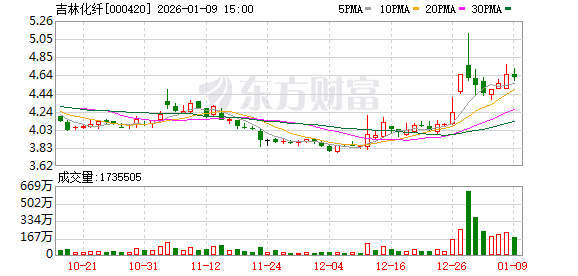
吉林化纤:公司1.2万吨碳纤维复材生产线项目已完工,复材的认证工作也进入尾声
Mei Ri Jing Ji Xin Wen· 2026-01-09 07:19
Group 1 - The core project of the company is a 12,000-ton carbon fiber composite production line, which includes carbonization and composite production processes [2] - The total investment for the carbon fiber composite project is 1.458 billion yuan [2] - The project has been completed, and the certification work for the composites is nearing completion [2]

瓶片短纤数据日报-20260109
Guo Mao Qi Huo· 2026-01-09 03:05
Group 1: Report Industry Investment Rating - No relevant information provided Group 2: Core Viewpoints of the Report - The market sentiment has ebbed, and the PX market has experienced a rapid rise. This round of increase is not due to a sudden change in fundamentals but is mainly driven by speculative funds. The futures market has begun to dominate the price discovery mechanism, and the trend reinforces itself. Although there are concerns about bubbles, the PX fundamentals are indeed supported. The market is expected to remain tight in 2026, driven by the new PTA production capacity in India and the organic growth of demand. The PX - naphtha spread has widened to $360, and the PX - mixed xylene spread has reached $155, significantly improving the economics of aromatics extraction. The PX market is at a critical juncture where speculative sentiment and fundamental tensions intersect. Domestic PTA maintains a high - operating rate, and although polyester demand weakens seasonally in China, the production cuts of polyester factories have formed a negative feedback [2] Group 3: Summary According to Related Catalog 1. Price Changes - PTA spot price decreased from 5080 to 5070, a decrease of 10; MEG domestic price decreased from 3719 to 3717, a decrease of 2; PTA closing price decreased from 5150 to 5086, a decrease of 64; MEG closing price decreased from 3879 to 3846, a decrease of 33; 1.4D direct - spinning polyester staple decreased from 6545 to 6520, a decrease of 25; short - fiber basis decreased from 36 to 34, a decrease of 5; 2 - 3 spread decreased from 4 to 18, a decrease of 14; polyester staple cash flow increased from 240 to 246, an increase of 6; 1.4D direct - spinning and imitation large - chemical fiber spread decreased from 1270 to 1245, a decrease of 25; East China water bottle chips decreased from 6053 to 6032, a decrease of 21; hot - filling polyester bottle chips decreased from 6053 to 6032, a decrease of 21; carbonated - grade polyester bottle chips decreased from 6153 to 6132, a decrease of 21; bottle chip spot processing fee decreased from 464 to 452, a decrease of 12; T32S pure polyester yarn price remained unchanged at 10500; T32S pure polyester yarn processing fee increased from 3955 to 3980, an increase of 25; polyester - cotton yarn 65/35 45S price remained unchanged at 16600; cotton 328 price decreased from 15680 to 15610, a decrease of 70; polyester - cotton yarn profit increased from 1334 to 1377, an increase of 43; primary three - dimensional hollow (with silicon) price remained unchanged at 7210; hollow staple fiber 6 - 15D cash flow increased from 421 to 430; primary low - melting - point staple fiber price remained unchanged at 7775 [2] 2. Market Conditions of Short Fibers and Bottle Chips - Short - fiber: The main short - fiber futures dropped 56 to 6472. In the spot market, polyester staple fiber production factories mainly negotiated prices, and trader prices decreased. Downstream buyers had a strong bearish attitude, making small - order purchases as needed, and there was not much trading in the market. The price of 1.56dtex*38mm semi - bright (1.4D) polyester staple fiber in the East China market was 6390 - 6650 yuan for cash - on - delivery, tax - included self - pick - up; in the North China market, it was 6510 - 6770 yuan for cash - on - delivery, tax - included delivery; in the Fujian market, it was 6450 - 6630 yuan for cash - on - delivery, tax - included delivery. - Bottle chips: The mainstream negotiation price of polyester bottle chips in the Jiangsu and Zhejiang markets was 6000 - 6110 yuan/ton, with the average price dropping 10 yuan/ton compared to the previous working day. PTA and bottle - chip futures first rose and then fell, and the support from the cost side weakened. Most supply - side offers were raised, the market negotiation atmosphere was weak, downstream terminals made small - order replenishments, the trading link had rigid - demand transactions, and the market negotiation focus shifted slightly downward [2] 3. Operating Rates and Production and Sales - Direct - spinning staple fiber load (weekly) increased from 86.77% to 88.84%, an increase of 2.07%; polyester staple fiber production and sales decreased from 74.00% to 66.00%, a decrease of 8.00%; polyester yarn operating rate (weekly) remained unchanged at 66.00%; recycled cotton - type load index (weekly) remained unchanged at 51.10% [3]