服务消费

Search documents
更大力度提振消费扩大内需 9部门提出19项措施激发服务消费潜能
Shang Hai Zheng Quan Bao· 2025-09-16 18:32
Core Viewpoint - The recent issuance of the "Several Policy Measures to Expand Service Consumption" by the Ministry of Commerce and nine other departments aims to boost consumption and expand domestic demand through 19 specific measures across five areas, indicating a comprehensive, innovative, and forward-looking approach to enhance the service consumption market in China [1][2]. Group 1: Policy Measures - The policy measures include initiatives such as launching "Service Consumption Seasons" to promote consumption activities and supporting collaborations between quality consumption resources and well-known IPs [1]. - The measures also focus on extending operating hours for popular cultural and tourist venues, optimizing reservation methods, and encouraging the implementation of no-reservation policies [1]. - Adjustments to student holiday arrangements and the improvement of supporting policies are also part of the measures [1]. Group 2: Market Trends - The service consumption market in China is expected to experience a new wave of growth, with service retail sales increasing by 5.1% year-on-year in the first eight months of this year, outpacing the growth of goods retail sales [1]. - There is a notable increase in demand for integrated consumption scenarios such as "tourism+" and "sports+", with retail sales in tourism and related services maintaining double-digit growth [1]. Group 3: Focus Areas - The policy measures target key areas such as culture, sports, and education, aiming to enhance service quality and variety in response to evolving consumer demands [2][3]. - Specific initiatives include exploring the market value of traditional cultural IPs, encouraging the introduction of international sports events, and fostering a diverse education and training market [2]. Group 4: Financial Support - The measures emphasize the need for enhanced financial support, including the use of various funding channels to support the construction of service facilities in culture, tourism, elderly care, childcare, and sports [3]. - There is a focus on guiding social capital to invest in service consumption-related sectors and increasing credit support for service consumption enterprises [3]. Group 5: Technological Integration - The integration of technology, such as artificial intelligence and big data, is identified as a key trend in transforming service consumption, leading to more efficient and personalized services [4]. - The emergence of cross-industry business models, such as "cultural tourism + sports" and "healthcare + medical services," is expected to create new consumption scenarios and growth opportunities [4].
城市24小时 | 直达湾区,又一条“能源大动脉”来了
Mei Ri Jing Ji Xin Wen· 2025-09-16 16:04
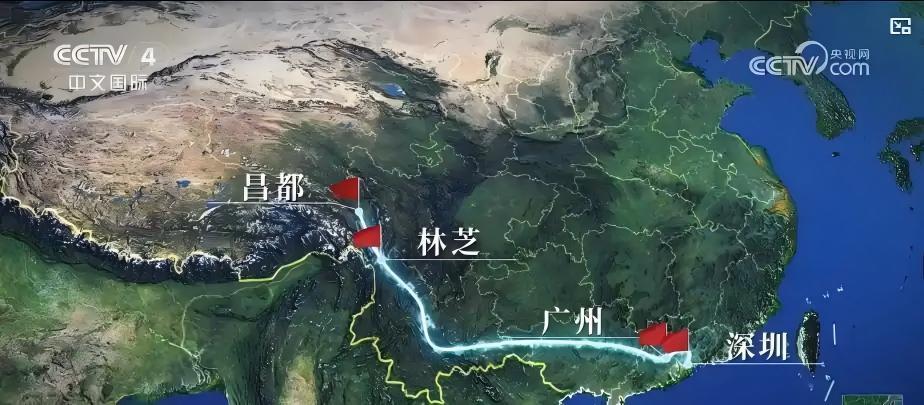
Core Points - The construction mobilization meeting for the ±800 kV UHVDC project from Tibet to the Guangdong-Hong Kong-Macao Greater Bay Area was held on September 16, marking the start of the world's largest flexible DC transmission project [1][4] - The project will connect four converter stations in Tibet and Guangdong, aggregating over 20 million kW of clean energy, providing a strong green low-carbon energy guarantee for the region [1][4] - The total investment for the project is approximately 53.2 billion yuan, with an additional investment of over 150 billion yuan for supporting clean energy infrastructure [4] Energy Demand and Supply - In July, Guangdong's electricity consumption reached 531.52 billion kWh, a year-on-year increase of 4.3%, with the highest load reaching 165 million kW, accounting for 11% of the national load [2][4] - The total electricity consumption in China for the year reached 1.02 trillion kWh in July, marking an 8.6% year-on-year increase [1][2] Economic Impact - The project is expected to create over 100,000 direct jobs during peak construction and significantly boost the upstream and downstream equipment industries [4] - Since 2015, the cumulative electricity export from Tibet has reached 15.79 billion kWh, generating over 4.2 billion yuan in economic benefits for the region [2] Strategic Importance - The UHVDC project is seen as a key move in optimizing national energy resource allocation, breaking regional barriers, and achieving precise alignment between resources and markets [4] - The project will enable the delivery of over 43 billion kWh of clean energy annually to the Greater Bay Area, equivalent to half the annual output of the Three Gorges Dam [4]

事关扩大服务消费,9部门发文!“金九银十”将为消费注入新动力?
Xin Hua She· 2025-09-16 13:01
Core Viewpoint - The Ministry of Commerce and nine other departments released measures to expand service consumption, emphasizing the importance of service consumption in improving people's livelihoods and driving economic growth [2][3]. Group 1: Policy Measures - Five key areas with 19 specific measures were outlined to boost service consumption, including promoting "service consumption seasons" and supporting collaborations with well-known IPs [1][2]. - The initiative aims to enhance the quality of service supply to meet diverse consumer needs, with a focus on optimizing operational hours and reservation methods for popular cultural and tourist venues [1][3]. Group 2: Enhancing Service Supply - The plan includes expanding high-level openness in the service industry, particularly in internet, culture, telecommunications, and healthcare sectors [3][4]. - It encourages the development of cultural and artistic projects, leveraging existing venues to create impactful cultural events and exhibitions [3][4]. - The initiative also aims to attract foreign sports events and promote local sports competitions to enhance service offerings [3][4]. Group 3: Stimulating New Consumption - Measures to attract more foreign visitors include optimizing visa policies and promoting unique travel experiences tailored for international tourists [4][5]. - The plan encourages the integration of digital services in consumption, supporting e-commerce platforms in creating innovative online and offline service experiences [4][5]. Group 4: Financial Support - The government will utilize various funding channels to support the construction of service facilities in culture, tourism, and sports sectors [5][6]. - Financial institutions are encouraged to increase credit support for service consumption sectors, with a focus on developing tailored financial products [6][7]. Group 5: Monitoring and Evaluation - The initiative includes optimizing statistical methods for service consumption to better reflect regional developments and encourage the use of big data for monitoring [7].


界面晚报 | 商务部等九部门发布19条举措支持服务消费;日本自民党总裁选举或进入5人混战
Sou Hu Cai Jing· 2025-09-16 10:59
据商务部网站周二发布消息,商务部、国家发改委、财政部等九个部门联合发布《关于扩大服务消费的 若干政策措施》(以下简称《措施》),从培育服务消费促进平台、丰富高品质服务供给、激发服务消 费新增量等五方面提出多达19条具体举措。在培育服务消费促进平台方面,《措施》提出,开展消费新 业态新模式新场景试点城市建设。积极发展首发经济,推动创新和丰富服务消费场景,支持优质消费资 源与知名IP跨界合作,打造一批商旅文体健融合的消费新场景,培育一批新型消费龙头企业。 服务消费迎重磅政策支持,商务部等九部门发布19条举措 ...
商务部等9部门:支持金融机构扩大服务消费领域信贷投放
Zheng Quan Shi Bao Wang· 2025-09-16 09:03
Core Viewpoint - The Ministry of Commerce and nine other departments have issued policies to expand service consumption, emphasizing the use of monetary and credit tools to support financial institutions in increasing credit investment in the service consumption sector [1] Group 1: Policy Measures - The policies encourage financial institutions to enhance credit support for service consumption entities, ensuring reasonable loan interest rates to sustainably support service consumption [1] - Financial institutions are urged to innovate and develop specialized financial products and services tailored to the characteristics and financing needs of service consumption entities [1] Group 2: Support for Diverse Consumption Scenarios - The measures promote financial institutions to strengthen support for diversified service consumption scenarios, clusters, and related key project constructions [1]
基金上周调研青睐电子、通信行业
Sou Hu Cai Jing· 2025-09-16 00:12
上周(9月8日-9月14日)共有129家公募机构参与了154家A股上市公司的调研,合计调研频次达702次。行 业方面,电力设备成为上周最受公募调研青睐行业,合计调研次数达143次。此外,电子、计算机、医 药生物、汽车、有色金属等行业亦获得较高关注。富国基金认为,后续将逢低布局具有产业趋势或政策 逻辑的方向。科技板块仍是行情核心主线,关注AI、机器人、创新药等,与市场行情联动性较强的非 银金融也有望持续受益。此外,根据政策节奏增加对存在政策倾斜的服务消费,以及受益于反内卷和海 外降息后流动性环境和制造业修复的化工、有色、新能源等方向的关注。 ...
【招银研究|宏观点评】波动修复——中国经济数据点评(2025年8月)
招商银行研究· 2025-09-15 11:13
Core Viewpoint - The economic data for August indicates a slowdown in China's economy, with key indicators falling short of market expectations, highlighting persistent supply-demand imbalances and increasing downward pressure on growth [1][4]. Group 1: Consumption - Retail sales growth in August was 3.4%, below the expected 3.8%, influenced by adjustments in national subsidies and the emergence of consumption loan interest subsidies [3][5]. - Commodity consumption growth declined by 0.4 percentage points to 3.6%, marking the third consecutive month of slowdown, with notable performance in upgraded goods like jewelry and sports equipment [5]. - Service consumption remained resilient, with retail sales growth slightly decreasing to 5.1%, driven by increased demand for travel and leisure activities during the summer [8][10]. Group 2: Fixed Asset Investment - Fixed asset investment growth was only 0.5% in August, a significant drop of 1.1 percentage points from the previous month, with infrastructure and manufacturing investments also declining [11][12]. - Real estate investment saw a year-on-year decline of 12.9%, with new construction and sales continuing to weaken, indicating ongoing challenges in the property market [12][15]. - The government is expected to implement policies to stimulate investment, including early issuance of local government debt limits to alleviate financial burdens [15][28]. Group 3: Trade - Export growth in August was 4.8% year-on-year, down from 7.2%, primarily due to a significant drop in exports to the U.S., which fell by 33.1% [19][21]. - Imports also slowed to a growth rate of 1.3%, with declines in energy and agricultural product imports, while trade surplus expanded to $102.33 billion, up 11.8% year-on-year [19][20]. Group 4: Supply - Industrial production growth slowed to 5.2%, below the expected 5.7%, with ongoing supply-demand imbalances and a decline in the production of consumer goods [22]. - High-tech manufacturing sectors showed robust growth, with a 9.3% increase, while overall production faced challenges from weak domestic and external demand [22]. Group 5: Inflation - CPI inflation rose to 0.9%, marking the fourth consecutive month of increase, while PPI inflation improved to -2.9%, indicating some recovery in industrial prices [25][27]. - The divergence in CPI and PPI trends suggests potential for marginal recovery in prices, supported by various favorable factors [27]. Group 6: Outlook - The economic outlook suggests a potential GDP growth rate of around 4.7% for the third quarter, with increasing pressure to stabilize growth and the likelihood of new policies to support consumption and investment [28].
扩大服务消费若干政策措施出台在即 多手段激发增量
Zheng Quan Ri Bao Wang· 2025-09-13 04:27
Core Viewpoint - The Chinese government is focusing on expanding service consumption through various policy measures, aiming to enhance service supply capabilities and stimulate new growth in service consumption [1][3]. Group 1: Current Trends in Service Consumption - Service consumption is increasingly significant, with a shift towards a balanced focus on both goods and services. From 2020 to 2024, the average annual growth rate of residents' service consumption expenditure is projected to be 9.6% [1]. - From January to July this year, service retail sales increased by 5.2% year-on-year, indicating a rising proportion of service consumption [1]. - Key characteristics of service consumption development include continuous expansion, structural upgrades in demand for cultural, entertainment, tourism, sports, and education services, diversification of consumption scenarios, and an increase in demand for high-quality, personalized services [1][2]. Group 2: Strategies for Cultivating New Growth Points - Five strategies are proposed to cultivate new growth points in service consumption: expanding cultural and entertainment consumption, developing unique tourism experiences, enhancing sports consumption, promoting digital consumption, and tapping into lower-tier markets [2]. - There is a need for supply-side optimization, including institutional innovation to lower market entry barriers, enhancing technological empowerment for digital transformation, and building strong service brands [2][3]. Group 3: Policy Recommendations - A comprehensive policy framework is suggested to support service consumption across various sectors such as home services, cultural tourism, digital services, health, and sports [3]. - To boost demand, it is recommended to increase urban and rural residents' income, optimize personal income tax systems, and implement measures like service consumption vouchers or subsidies [3].
服务消费成为扩大消费重要动力 一组数据带你看
Yang Shi Xin Wen· 2025-09-11 08:32
Core Insights - The service trade fair is a significant platform for the opening, innovation, and cooperation in service trade, and it plays an important role in expanding service consumption [1] - China's consumption pattern is gradually shifting towards a balance between goods and service consumption [1] Group 1: Market Growth - During the 14th Five-Year Plan period, China's consumption market remains the second largest globally, with an average annual growth of 5.5% in social retail sales over the past four years, expected to exceed 50 trillion yuan this year [1] - Service consumption is growing faster than goods consumption, becoming a key driver for expanding overall consumption [1] Group 2: Consumer Spending Trends - From 2020 to 2024, the average annual growth rate of residents' service consumption expenditure is projected to be 9.6%, with 4.6 yuan spent on services for every 10 yuan spent by consumers [1] - In the first seven months of this year, service retail sales increased by 5.2% year-on-year, with the proportion of service consumption continuing to rise [1] Group 3: Future Policies - Looking ahead to the 15th Five-Year Plan, a series of policies aimed at unleashing the potential of service consumption will continue, including opening up to foreign quality services and reducing restrictive measures domestically to enrich service supply [1] - Targeted new measures are also expected to be introduced [1]
破解供需壁垒 挖掘服务消费增长潜力
Shang Hai Zheng Quan Bao· 2025-09-10 18:48
Core Insights - The article discusses the rapid growth and structural characteristics of service consumption in China, emphasizing its importance in driving economic growth and internal demand [7][8][11]. Group 1: Current State of Service Consumption - Service consumption is growing faster than average consumption rates, with a contribution rate of 60.2% to national economic growth in the first half of the year, up 5.8 percentage points year-on-year [8][10]. - The service sector's value added reached 39 trillion yuan, growing by 5.5% year-on-year, indicating a robust performance in service consumption [8][9]. - New business models such as instant retail and live e-commerce are thriving, with online retail sales increasing by 8.5% year-on-year [8][9]. Group 2: Structural Characteristics - Service consumption is diversifying and upgrading, with traditional services like dining and transportation maintaining stable growth while emerging sectors like cultural entertainment and healthcare are rapidly increasing their share [9][10]. - The proportion of service consumption in total consumption rose from 39.7% in 2013 to 46.1% by the end of 2024, highlighting a significant shift towards service-oriented consumption [10][11]. - Urban residents have a higher share of service consumption, but rural areas are experiencing faster growth, contributing to a more balanced overall structure [9][10]. Group 3: Drivers of Service Consumption Growth - Rising per capita GDP, projected to reach $13,500 in 2024, is expected to further drive service consumption demand [11][12]. - The aging population, with the elderly rate increasing from 10.1% in 2015 to 15.6% in 2024, is creating diverse service consumption needs [11][12]. - The younger generation is becoming the main consumer group, shifting towards personalized and high-quality service consumption [11][12]. Group 4: New Growth Points in Service Consumption - The development of life services is expected to continue, driven by technological innovation and mobile payment advancements [15][16]. - The integration of culture and tourism services is anticipated to release significant potential, with AI and IoT enhancing consumer experiences [16][17]. - Health and elderly care services are emerging as new growth areas, with AI applications improving service efficiency and personalization [16][17]. Group 5: Challenges and Policy Recommendations - Insufficient effective supply of service consumption is a major constraint, particularly in rural areas where elderly care services are lacking [19][20]. - Enhancing residents' income and consumption willingness is crucial for stimulating service consumption [20][21]. - Policies should focus on increasing disposable income, improving social security systems, and expanding credit support for service consumption [22][23].