
航空发动机

Search documents
从半年报看民营经济韧性与活力
Si Chuan Ri Bao· 2025-08-02 00:50
Economic Performance - The private economy in Sichuan achieved a value-added of 1,778.79 billion yuan in the first half of the year, with a year-on-year growth of 5.7%, which is 0.1 percentage points higher than the provincial GDP growth rate [1] - The value-added of the private economy accounted for 55.7% of the provincial GDP, remaining stable compared to the same period last year [1] Investment Trends - Private investment in Sichuan showed signs of recovery, with a year-on-year increase of 2.4% in the first half of the year, reversing a decline of 1.3% from the previous year [3] - The number of cities achieving positive growth in private investment increased from 10 to 15, indicating a broader recovery [3] - In Chengdu, private investment excluding real estate development grew by 13.2% in the first half of the year [3] Sector Focus - There is a shift in private investment towards high-quality development, with a 10.2% increase in investment in high-tech manufacturing [4] - New projects, such as the light aircraft engine production base, are expected to enhance production capabilities significantly by 2027 [2][4] Business Dynamics - The total number of private business entities in Sichuan surpassed 9 million, reaching 9.062 million, with private enterprises growing by 4.6% year-on-year [5] - The number of newly registered private enterprises increased by 16.0% in the first half of the year, indicating robust business expansion [5] Policy Support - The introduction of the "Sichuan Province Business Environment Evaluation Management Measures" has standardized the evaluation of the business environment, promoting service efficiency across 21 cities [2][3] - Continuous improvement in administrative processes has led to significant reductions in approval times and requirements for starting businesses, particularly in the restaurant sector [5] Innovation and Financing - The number of innovative private SMEs and specialized "little giant" enterprises has reached 10,066, 4,014, and 380 respectively, indicating a strong focus on innovation [6] - The cost of financing and energy has decreased, enhancing the innovation capabilities of private enterprises [6]
行远自迩,笃行不怠:航空发动机长尾效应浅析
Changjiang Securities· 2025-07-30 09:21
Investment Rating - The report maintains a "Buy" rating for key companies in the aerospace and defense sector, including 航发动力, 图南股份, 华秦科技, 航亚科技, 航材股份, and 应流股份 [10]. Core Insights - The aerospace engine market is expected to experience significant growth during the "14th Five-Year Plan" period, leading to a substantial aftermarket potential exceeding 400 billion yuan over the next 20 years, driven by the high-value consumable nature of military engines [2][6][7]. - The maintenance market for military aerospace engines is projected to account for over 50% of the total lifecycle cost, indicating a strong demand for repair and maintenance services [6][25]. - The report highlights that the aftermarket for aerospace engines is approximately four times larger than the new engine market, with a significant portion of costs attributed to materials and maintenance [7][60]. Summary by Sections Market Overview - The military aerospace engine's consumable nature necessitates multiple repairs throughout its lifecycle, with the lifespan of military aircraft often exceeding that of their engines [17][19]. - The report emphasizes the increasing frequency of engine replacements due to operational demands and technological advancements [21]. Aftermarket Potential - The future aftermarket space for military aerospace engines is estimated at approximately 428.74 billion yuan over the next 20 years, with an average annual market value of 21.44 billion yuan [7][57]. - The breakdown of the aftermarket includes approximately 5% for spare engines, 22% for engine repairs, and 51% for spare parts [60]. Industry Dynamics - The report indicates that the demand for maintenance and repair services will enhance the revenue and profitability of engine manufacturers, particularly as domestic production rates increase [8][14]. - The control systems segment of aerospace engines is expected to benefit significantly from the expansion of the maintenance and replacement market [8][16]. Company Performance - The report notes that key companies like 航发动力 have shown robust revenue growth in their aerospace engine and derivative product segments, with projected growth rates of 19% to 22% during the "14th Five-Year Plan" period [39][40].

航发动力(600893.SH):参与新型发动机的研制工作,开展产品试制
Ge Long Hui· 2025-07-29 08:41
Group 1 - The company,航发动力, has established a strategic partnership with a research institute for the development of new engine technologies [1] - The company is involved in the research and development of new engines, including product trials and testing validation [1] - The necessary research funding is primarily provided by the research institute [1]
航发动力: 中国航发动力股份有限公司投资者活动记录表
Zheng Quan Zhi Xing· 2025-07-28 16:27
Core Viewpoint - The company is experiencing a decrease in sales revenue due to external factors affecting product delivery and some products not yet contracted, leading to increased financing needs and financial expenses in the first half of 2025 [2][3] Group 1: Financial Performance - Sales revenue in the first half of 2025 decreased year-on-year due to external factors impacting product delivery and delayed contract signings [2] - Increased financing needs were driven by slower-than-expected receivables collection, resulting in higher financial expenses compared to the previous year [2] Group 2: Product Structure and Profitability - The company is undergoing a product structure upgrade, with a significant increase in the proportion of new product models, which has impacted profitability [3][4] - The adjustment in product structure is seen as a necessary and positive move for long-term growth, despite causing short-term challenges and pressure on overall profit margins [4][5] Group 3: Market Strategy and Opportunities - The company plans to leverage its advantages in technology and product similarity to expand into the domestic commercial engine market [4] - The company is focusing on the low-altitude economy sector through its subsidiaries, enhancing market penetration with specific engine series [4] - The company aims to capitalize on long-term growth opportunities presented by the domestic large aircraft industry chain while continuously improving market share [5]
中方扩大稀土出口后,特朗普突然变了个人,美国总统访华提上日程
Sou Hu Cai Jing· 2025-07-27 07:19
Core Viewpoint - The recent increase in China's rare earth exports has led to a notable shift in the U.S. stance, particularly from Trump, who is now showing a more conciliatory approach and expressing intentions to visit China, indicating a potential turning point in U.S.-China relations [1][3]. Group 1: Rare Earth Exports - China's rare earth magnet exports to the U.S. surged from less than 60 tons in May to 353 tons in June, marking a 660% increase, while total rare earth exports rose from 1,238 tons to 3,188 tons, a 157.5% increase [3]. - The Chinese Ministry of Commerce has accelerated the approval process for rare earth export controls to ensure national security while meeting reasonable demands from other countries [3][8]. Group 2: U.S. Response - The Trump administration responded by restoring exports of NVIDIA's H20 AI chips to China and easing restrictions on General Electric's jet engine parts [5]. - The White House has relaxed visa and investment restrictions for China and indicated that plans for a presidential visit to China are underway, alongside intensifying the third round of U.S.-China trade negotiations [5][7]. Group 3: Strategic Considerations - The recent trade consensus and the established 90-day tariff ceasefire highlight the U.S.'s need to expand its market and alleviate supply chain pressures, with rare earths being a critical component [7]. - Trump's domestic economic challenges and election pressures necessitate a visit to China to secure agreements that could enhance his political image ahead of the midterm elections [7][8]. Group 4: Geopolitical Implications - Rare earths are essential for electric vehicles, wind energy, and high-end defense equipment, with China controlling over 90% of the global rare earth market [8]. - The U.S. risks losing its competitive edge in key resources if it over-regulates, potentially pushing allies like the EU, Japan, and South Korea closer to China [8][9]. Group 5: Future Outlook - The series of events from China's export expansion to Trump's attitude shift indicates that despite intense competition, there remains room for dialogue between the U.S. and China, highlighting their interdependent relationship [9]. - The sustainability of this "peaceful situation" is uncertain, influenced by internal divisions within Trump's team and domestic hawkish pressures [9].


应流股份20250723
2025-07-23 14:35
Summary of the Conference Call for 应流股份 Company Overview - 应流股份 is a leading enterprise in high-end casting, primarily engaged in the manufacturing of high-end components such as gas turbine blades, aircraft engine blades, nuclear power products, and low-altitude economy-related products [4][19]. Financial Performance - In 2024, 应流股份 achieved revenue of 2.5 billion yuan, a year-on-year increase of 4%, while profit was 290 million yuan, down 5.6% year-on-year [2][6]. - The decline in profit is attributed to increased investments in the two-machine business and new fields, leading to higher capital expenditures [2][6]. - Fixed assets reached approximately 4 billion yuan, with ongoing construction nearing 1.4 billion yuan, resulting in significant depreciation [2][6]. - Current gross margin is around 34%, with a net margin of 10%, expected to gradually increase to over 40% and net margins to 15%-20% in the future [6]. Market Dynamics - The gas turbine market is experiencing significant growth, driven by increased demand influenced by AI, particularly in Europe and the US [2][9]. - Gas turbines are the primary power generation equipment in data centers in Europe and the US, accounting for nearly 70% of the market [10]. - The global gas turbine market is projected to be approximately 200 billion yuan in 2024, with the blade market alone estimated at 50 billion yuan [10]. Industry Trends - The capital expenditure of the four major cloud service providers in North America is expected to reach 212 billion USD in 2024, with a projected increase to 320 billion USD in 2025, reflecting a year-on-year growth rate of 50% [11]. - The gas turbine market is dominated by GE, Siemens, and Mitsubishi Heavy Industries, which collectively hold nearly 90% market share [12]. Strategic Initiatives - 应流股份 plans to issue 1.5 billion yuan in convertible bonds to enhance the production capacity of gas turbine and aircraft engine blade coating processes, aiming to increase output and average selling price (ASP) [2][8]. - The company has secured over 1.2 billion yuan in orders for gas turbine blades by the end of 2024, doubling compared to 2023 [3][13]. Competitive Landscape - The aircraft engine market is significantly larger than the gas turbine market, with the global aircraft engine manufacturing market exceeding 1 trillion yuan, compared to approximately 200 billion yuan for gas turbines [14]. - The order-to-sales ratio in the aircraft engine industry has increased from 0.8 in 2019 to 2.1 in 2024, indicating rapid growth [17]. Future Outlook - 应流股份 anticipates revenues of over 400 million yuan, 550 million yuan, and 740 million yuan for 2025, 2026, and 2027, respectively, with corresponding valuations of 48x, 35x, and 26x [5][21]. - The company is well-positioned to capitalize on the growing demand in the gas turbine and aircraft engine sectors, with a clear growth trajectory and high market potential [21]. Additional Insights - 应流股份 has established long-term strategic partnerships with GE Aviation and Safran, enhancing customer engagement and product development [18]. - The traditional casting business accounts for approximately 45% of the company's revenue, generating about 1.2-1.3 billion yuan annually with a stable gross margin of around 30% [20]. This summary encapsulates the key points from the conference call, highlighting the company's financial performance, market dynamics, strategic initiatives, and future outlook.

Raytheon Technologies(RTX) - 2025 Q2 - Earnings Call Transcript
2025-07-22 13:30
Financial Data and Key Metrics Changes - In Q2 2025, adjusted sales reached $21.6 billion, reflecting a 9% increase on both an adjusted and organic basis, driven by growth across all segments [16] - Segment operating profit was $2.7 billion, up 12% year over year, with a consolidated segment margin expansion of 30 basis points [16] - Adjusted earnings per share (EPS) increased by 11% to $1.56, influenced by segment operating profit growth and a lower effective tax rate [16] - Free cash flow for the quarter was an outflow of $72 million, impacted by powder metal-related compensation and tariff costs [17] Business Line Data and Key Metrics Changes - Collins reported sales of $7.6 billion, up 9%, with commercial aftermarket sales increasing by 13% and defense sales up 11% [21] - Pratt and Whitney's sales also reached $7.6 billion, up 12%, driven by a 19% increase in commercial aftermarket sales [23] - Raytheon achieved sales of $7 billion, up 6%, supported by higher volume in land and air defense systems [25] Market Data and Key Metrics Changes - The company reported a book-to-bill ratio of 1.86, with a backlog of $236 billion, up 15% year over year [5] - Global Revenue Passenger Kilometers (RPKs) are expected to grow over 5% for the year, supporting strong commercial aftermarket demand [6] - The U.S. defense budget reconciliation includes over $150 billion for additional defense spending, indicating strong demand for defense products [7] Company Strategy and Development Direction - The company is focused on executing its backlog, driving cost discipline, and investing in innovation [28] - Strategic partnerships are being formed in Europe to support production ramp-ups, particularly for defense systems [7][12] - The company is leveraging data analytics and AI to enhance productivity and operational efficiency [13] Management's Comments on Operating Environment and Future Outlook - Management expressed confidence in the strong demand across end markets, with expectations for continued top-line growth [8] - The outlook for adjusted sales for the full year has been increased to a range of $84.75 billion to $85.5 billion, reflecting strong first-half performance [18] - The effective tax rate is expected to remain stable at 19.5%, with improvements in operating performance contributing to EPS growth [19] Other Important Information - The company raised its dividend by 8%, reflecting confidence in long-term cash generation capabilities [14] - The company is maintaining its full-year free cash flow outlook at $7 billion to $7.5 billion, with expected recovery from the work stoppage at Pratt [20] Q&A Session Summary Question: Can you discuss Raytheon's multiyear outlook and the potential for awards flowing from the backlog? - Management highlighted strong demand with a 1.35 book-to-bill ratio and a 25% increase in backlog since the end of 2023, emphasizing the focus on ramping production and forming key partnerships in Europe [34][36] Question: What are the latest developments regarding tariffs and their impact on demand? - Management noted a reduction in tariff cost outlook from $850 million to $500 million, with no current negative impact on demand observed [45][48] Question: Can you clarify the impact of the reconciliation bill on R&D capitalization? - The company expects a moderate cash benefit from the restoration of R&D expensing, which will continue to provide benefits in the coming years [56][57] Question: How do you see the trajectory of Raytheon's margins going forward? - Management expressed optimism about achieving 12% plus margins, driven by improved program mix and productivity [102][105] Question: What is the status of the GTF advantage and supply chain improvements? - Production for the GTF advantage has begun, with deliveries planned for later this year, and overall supply chain stability is improving [110][111]

海外两机需求爆发,铬盐、高温合金及零部件迎来机遇
2025-07-21 00:32
Summary of Conference Call Notes Industry Overview - The conference call discusses the high-temperature alloy industry and the gas turbine market, highlighting the surge in demand for gas turbines and related components due to various factors including AI data centers and energy transition needs [1][3][9]. Key Points and Arguments Demand Surge in Gas Turbines - Siemens Energy has a backlog of 50GW in gas turbine orders, with 29GW already secured and 21GW reserved, 30% of which is driven by AI data centers. The company plans to increase production capacity by 30% to meet rising demand from the U.S. and Middle East markets [1][7]. - Keyvanava expects its order backlog to reach 60GW by the end of 2025, with a significant increase in orders and a plan to achieve an annualized shipment of 20GW by mid-2026 [1][8]. - Sanlin Heavy Industry reported a 77% year-on-year increase in new gas turbine orders, reaching 1.47 trillion yen, with plans to expand global capacity by 30% [1][10]. High-Temperature Alloy Industry Challenges and Opportunities - The high-temperature alloy supply chain faces challenges such as delivery delays and supply disruptions due to geopolitical factors. However, companies are increasing capital expenditures to expand capacity, which is expected to improve delivery volumes in the next one to two years [1][5]. - Howmet reported a record revenue of $996 million in Q1 2025, a 13% increase year-on-year, with significant growth in both commercial and defense aviation sectors [4][13]. - ATI, a key supplier in the commercial aviation engine market, achieved a 35% revenue growth to $421 million in Q1 2025 and plans to expand capacity further [4][14]. Growth in Aviation Engine Market - The commercial aviation engine market saw a 142% year-on-year increase in backlog orders, reaching $11.65 billion, while service orders grew by 22.6% to $14.21 billion [2][12]. - Rolls-Royce increased its market share in wide-body engines from 32% to 36% and reported a 229% increase in new large engine orders [2][12]. Impact on Domestic Companies - Domestic companies like Hangya Technology and Longda Co. are gradually entering the international supply chain, with significant contracts with major international firms [1][15]. - The demand from overseas markets is expected to benefit Chinese companies involved in high-temperature alloys and component manufacturing, leading to increased orders and market opportunities [1][16]. Additional Important Insights - The overall demand for the gas turbine market is anticipated to grow significantly in the second half of 2025, driven by the expected increase in deliveries and the transition from coal to gas [1][9]. - The high-temperature alloy sector is expected to see a boost due to the increased demand for chromium, which is a key component in high-temperature alloys [1][6].
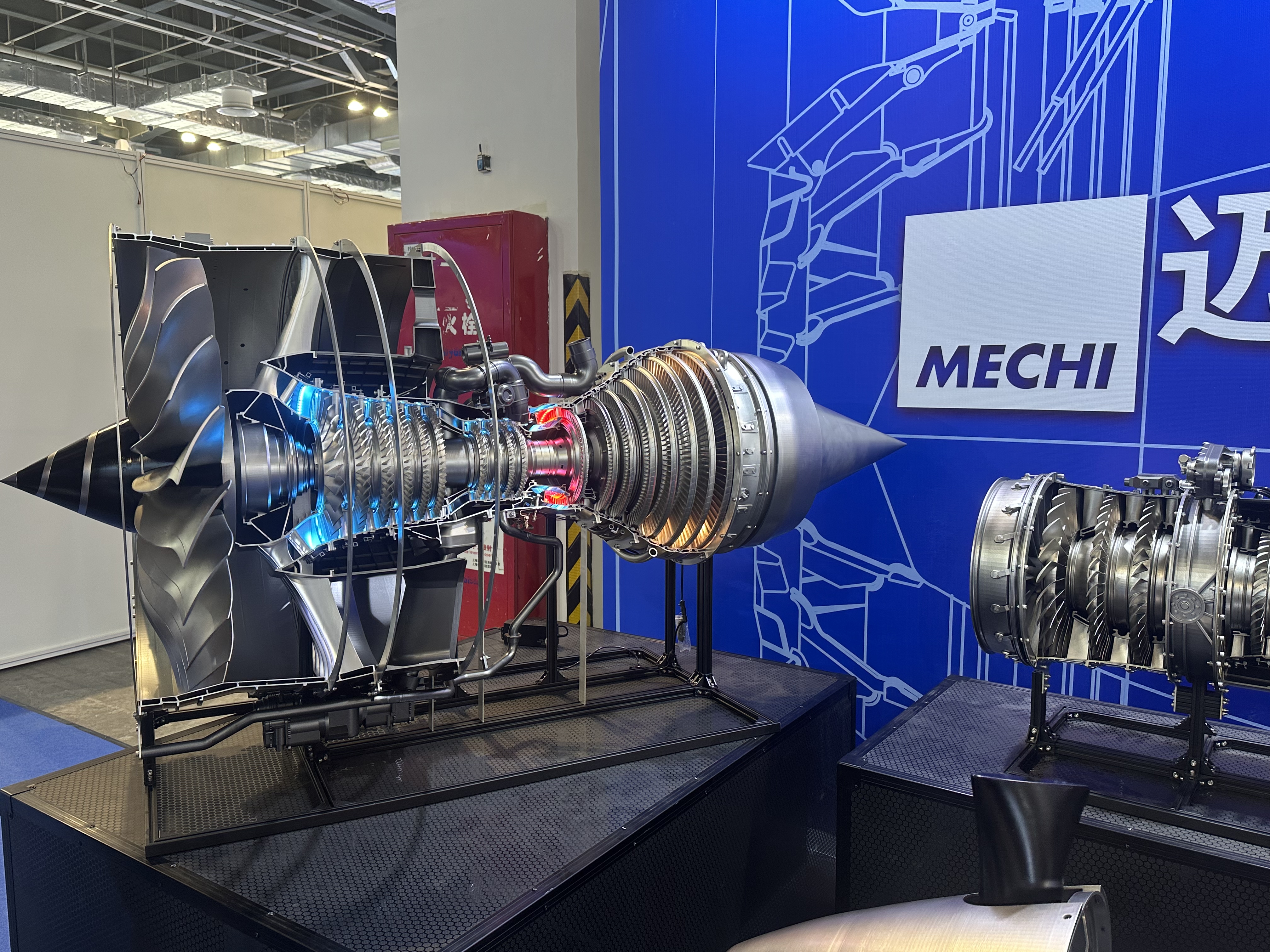
抢滩东南亚,中国航空发动机商业化破局
Di Yi Cai Jing· 2025-07-18 07:15
Core Insights - The low-altitude economy in China is accelerating, leading to a shift in the aviation engine industry towards commercial viability [1] - The performance of flying vehicles is heavily dependent on the efficiency and performance of the aviation power systems, particularly the engines [2][3] Industry Developments - A 200 kg class single-rotor unmanned helicopter developed by Hangjing Innovation has a payload capacity of 50 kg, a flight endurance of 5 hours, and a speed of 120 km/h, with over 500 units shipped annually [2] - The aviation engine is considered the "heart" of traditional aviation machinery, with precision being crucial for quality and cost [3] - High-temperature alloys are essential for maintaining the stability of combustion chambers and blades, but their high cost and complex production processes create significant industry barriers [6] Market Trends - There have been 87 investment events in the low-altitude economy sector in the first five months of this year, a 50% increase compared to the same period last year [7] - Chinese aviation power products are gaining a competitive edge in international markets due to lower costs and a mature supply chain [7] - The China Aviation Industry Corporation predicts that the commercial aviation engine market in China will see explosive growth over the next 20 years, with an expected delivery of 19,000 units and a market value exceeding $300 billion [7]
应流股份20250716
2025-07-16 15:25
Summary of Conference Call for Yingliu Technology Industry Overview - The demand for gas turbines, optical modules, and PCBs is driven by large-scale investments in overseas data centers, positively impacting related US stock sectors [2][4] - The domestic military aviation engine sector is expected to see growth in new model deliveries despite 2025 being a small year for military products [2][6] - The domestic civil aviation engine market exceeds 100 billion RMB, currently reliant on imports, with domestic engines like the Changjiang series maturing [2][6][7] - The global market for civil aviation engines is highly concentrated, dominated by GE Aviation, Pratt & Whitney, and Rolls-Royce, with high demand but limited delivery capacity [2][7] Company Insights - Yingliu Technology has diversified its operations across military engines, gas turbines, oil and gas, mining, and nuclear power, establishing a platform development model [3][9] - The company’s order backlog increased from 150-200 million RMB at the end of Q3 last year to 1.2 billion RMB by the end of Q1 this year, indicating strong demand [3][9] - Recent long-term contracts with Siemens and other overseas clients extend production schedules to 2028-2029, expected to significantly boost future performance [3][10] Financial Performance - The company has maintained high R&D investment levels since 2017, averaging 300-400 million RMB annually, with capital expenditures rapidly increasing to 4.5 billion RMB [3][11] - The nuclear power business has shown rapid growth, with expectations of significant order releases in the next two to three years, maintaining a growth rate of around 20% [3][12][14] Future Prospects - The company is entering a harvest period, with a strong order book and expected profitability improvements in Q3 [3][13] - The low-altitude sector is being fully developed, with large orders signed in the first half of the year, anticipated to turn from losses to profits in the coming years [3][15] - The nuclear fusion business is also being explored, with collaborations for materials and equipment development, providing additional growth potential [3][14] Key Contracts and Collaborations - Significant contracts signed with major players like Siemens and GEV reflect the increasing demand for gas turbines and the need for domestic companies to support main engine manufacturers [3][8][10] Conclusion - Yingliu Technology is well-positioned for growth with a diversified portfolio, strong order backlog, and strategic investments in R&D and capital expenditures, indicating a positive outlook for future performance across various sectors [3][13][15]