软件

Search documents
高盛示警:2026年美国经济最大隐患为股市回调 软件占IPO储备约四分之一放大波动风险
Sou Hu Cai Jing· 2026-02-25 11:18
Group 1 - The core concern highlighted by Goldman Sachs is the risk of a stock market correction in the U.S. economy by 2026 [1] - Despite a temporary strengthening of the U.S. stock market, multiple instability signals have emerged internally [1] - The software sector has shown signs of potential valuation risks, particularly as it constitutes about 25% of the IPO pipeline, amplifying the impact of market volatility [1] Group 2 - Continuous fluctuations in stock prices and changes in corporate confidence are identified as the main macroeconomic risks currently facing the market [1] - Previous investor enthusiasm for AI-related trades had led to a sustained market uptrend, but the recent sharp decline in software stocks has caused a rapid shift in market sentiment [1] - Even if the broader market rebounds, uncertainties regarding the software sector's outlook remain, with market participants remaining highly vigilant about further declines in this sector [1]

华尔街又有新词!高盛抛出HALO效应:AI越猛,资金越爱“老资产”
Jin Shi Shu Ju· 2026-02-25 10:23
Group 1 - The core viewpoint of the article is that companies with tangible production assets are outperforming the market as investors seek safe havens from AI disruption risks [1] - Goldman Sachs' team reported that since the beginning of 2025, a basket of capital-intensive stocks has outperformed light-asset stocks by approximately 35% [1] - The "HALO effect" refers to the preference for companies with heavy assets and low obsolescence risk, particularly in sectors like utilities, basic resources, and energy [1] Group 2 - The report highlights that the market is rewarding capacity, networks, infrastructure, and engineering complexity, which are harder to replicate and less susceptible to rapid technological obsolescence [2] - In the capital-intensive stock portfolio, Goldman Sachs selected companies such as ASML Holding NV, Safran, LVMH, Air Liquide, and Airbus, while the light-asset portfolio includes L'Oréal, Adyen, DSV, and Siemens Healthineers [2] - Concerns about AI disrupting business models have led to significant declines in stocks previously viewed as stable winners, affecting various industries including logistics [2] Group 3 - Major tech companies, including Amazon, Microsoft, Alphabet, Meta Platforms, and Oracle, are expected to invest approximately $1.5 trillion in AI infrastructure from 2023 to 2026, compared to a cumulative investment of about $600 billion before 2022 [3] - Higher real yields and geopolitical factors supporting fiscal spending and manufacturing are driving capital flows toward capital-intensive industries [3] - Market expectations for earnings growth and return on equity are now more favorable for capital-intensive companies compared to light-asset firms [3]
产业焦点 | 全球软件股暴跌背后的大逻辑
Sou Hu Cai Jing· 2026-02-25 10:11
Core Viewpoint - The global software industry is experiencing a significant sell-off, termed "doomsday sell-off," with major software stocks dropping 40% to 50% since mid-January 2024, driven by advancements in AI technology that threaten traditional software roles and developers [1][8]. Group 1: Market Impact - Major software companies, including IBM, have seen drastic stock declines, with IBM's stock dropping 13.2% in a single day, resulting in a market value loss of approximately $31 billion [1]. - The S&P 500 Software and Services Index has fallen over 18%, with a total decline of about 30% from its peak in September 2025 [1]. - Companies like Chegg, Adobe, Salesforce, and Intuit have experienced severe stock price drops, with Adobe's stock falling over 60% and Salesforce's stock halving in value [8]. Group 2: AI Developments - Anthropic's release of Claude Cowork and its plugins for legal and financial sectors has enabled AI to perform complex tasks that previously required specialized software, leading to fears of job displacement among software users [2]. - The open-source AI agent OpenClaw, developed by Peter Steinberger, has capabilities that allow it to autonomously execute tasks on local devices, raising concerns about the future of software development and usage [2][3]. - AI agents are now capable of writing 90% of code, significantly reducing the time required for software projects, which could lead to a decreased demand for human software engineers [6]. Group 3: Historical Context and Future Predictions - The current situation is compared to historical technological advancements, such as the invention of the spinning machine, which replaced manual labor, suggesting that AI will similarly replace many cognitive tasks [7][8]. - Predictions indicate that within the next few years, many jobs involving data processing and administrative tasks will be taken over by AI, with significant implications for white-collar workers [10][11]. - Elon Musk forecasts that by 2028, surgical robots will surpass human surgeons in skill, indicating a rapid advancement in AI capabilities that could threaten various professional fields [11]. Group 4: Ethical and Humanitarian Considerations - The rise of AI is not only an economic issue but also a humanitarian one, as it raises questions about the future roles of individuals in a world where AI can perform many tasks more efficiently [5][8]. - Concerns are expressed about the potential for AI to develop goals misaligned with human interests, leading to ethical dilemmas regarding control and coexistence with advanced AI systems [13][14].
股价下跌,第四范式澄清传闻
Bei Jing Shang Bao· 2026-02-25 09:50
Core Viewpoint - The recent significant decline in the stock price of Fourth Paradigm is attributed to market concerns regarding the potential replacement of existing software business models by rapidly evolving AI large models [1] Group 1: Company Response - Fourth Paradigm's board clarified that the development of AI large models is accelerating, leading to a rapid increase in demand for computing power and related services, which benefits the company's main business [1] - As of the first nine months of 2025, 83.9% of Fourth Paradigm's revenue is derived from computing power-related income, with 16.1% coming from software services [1] Group 2: Market Data - Fourth Paradigm's stock price is currently at 40.32 HKD, with a total market capitalization of 20.933 billion HKD [1]
美股中小科技股IPO遇冷:四分之三破发平均跌18% 大型AI及加密企业IPO仍受追捧
Jin Rong Jie· 2026-02-25 09:03
原本被市场视作美股科技股IPO爆发之年的2026年,正被对人工智能颠覆的担忧打乱节奏,多数中小科 技企业上市进程陷入停滞。 美国IPO市场沉寂多年后,2025年科技股IPO迎来回暖,SpaceX、OpenAI、Anthropic等大型AI企业筹备 今年上市的消息,给数十家长期观望的私募股权支持小型软件公司带来上市契机。不过,本月初市场对 AI颠覆软件行业的担忧引发软件股抛售,一篇关于AI威胁的博客进一步加剧本轮"AI颠覆式交易"抛售 潮。 当前已知SpaceX计划于6至7月上市,估值目标超1万亿美元,OpenAI和Anthropic也在考虑2026年底启动 上市流程,华尔街并未担忧今年美股科技公司IPO总量出现明显下滑。 惠灵顿资管后期成长型私募投资主管威瑟勒表示:'这一分歧意味着,美国软件行业将会面临这样的局 面:一些小型公司最终会变得一文不值,而巨头公司仍将拥有惊人的投资者偏好,投资者都想持有它们 的股票。'他同时补充,并非所有基金经理都能参与巨头公司IPO交易,部分专注中小市值公司的基金经 理仍会关注小型科技企业的投资机会。 市场有风险,投资需谨慎。本文为AI基于第三方数据生成,仅供参考,不构成个人投资 ...
“杭州六小龙”之一群核科技冲击港股!营收走高但持续亏损
Shen Zhen Shang Bao· 2026-02-25 07:44
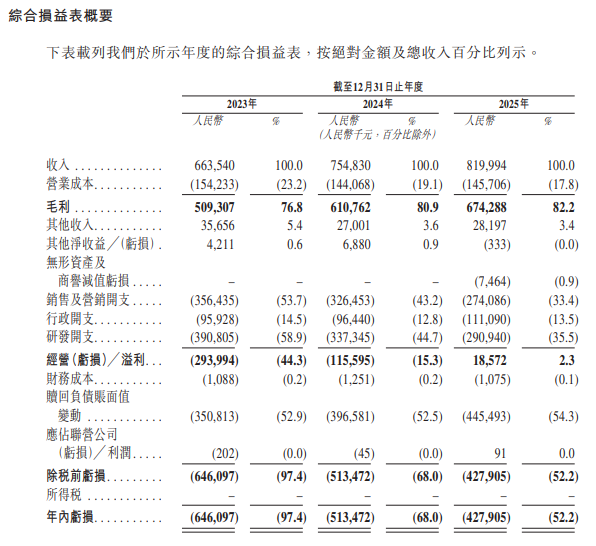
Core Insights - ManycoreTech Inc. has submitted its listing application to the Hong Kong Stock Exchange, marking its third attempt, with Morgan Stanley and CCB International as joint sponsors [1] - The company aims to become the first listed company among the "Hangzhou Six Little Dragons" and has received approval from the Securities and Futures Commission [1] - ManycoreTech is a leading provider of cloud-native space design software, holding a 23.2% market share in China, according to Frost & Sullivan [1][2] Financial Performance - Revenue projections for ManycoreTech from 2023 to 2025 are RMB 664 million, RMB 755 million, and RMB 820 million, respectively [2][3] - The company has reported losses of RMB 646 million, RMB 513 million, and RMB 428 million for the same periods, with gross profit margins increasing from 76.8% to 82.2% [2][3] - Operating cash flows have been negative during the reporting periods, indicating ongoing financial challenges [4] Product and Market Strategy - ManycoreTech's core product, Coohom, is a cloud-native space design platform that offers 3D design capabilities and supports 18 languages for international markets [2] - The company has expanded its offerings to include SpatialVerse, a next-generation spatial intelligence solution aimed at accelerating AI development [2] - The Chinese space design software market is projected to only account for 4.4% of the broader design and visualization software market by 2024, indicating significant growth potential [1][2] Investment and Funding - ManycoreTech has undergone multiple rounds of financing since its establishment in 2013, with major shareholders including IDG Capital, GGV Capital, and Hillhouse Capital [5] - The company plans to continue investing in product development, technology support, and marketing to drive long-term growth [4]


美股暴跌800点的元凶找到了,AI末日预演,从“斩杀”白领开始
3 6 Ke· 2026-02-25 07:41
Group 1 - The U.S. stock market experienced a significant decline, with the Dow Jones dropping over 800 points and only 27% of stocks rising, particularly impacting software stocks [1] - The Technology Software ETF (IGV) hit a 52-week low, falling 5% on the day and nearly 30% year-to-date, erasing gains since the launch of ChatGPT [1] - Major companies in the financial sector, including American Express, KKR, and Blackstone, saw declines exceeding 8% [1] Group 2 - A Substack article titled "2028 Global Intelligence Crisis" triggered the market sell-off, predicting that by 2028, AI advancements would lead to increased corporate profits but also significant job losses in white-collar positions, resulting in reduced wages and consumption [2] - The article highlighted a potential economic feedback loop where weakened demand impacts SaaS models and credit systems, ultimately leading to a negative economic spiral [2] Group 3 - By June 2028, the unemployment rate is projected to reach 10.2%, exceeding expectations, with the S&P 500 down 38% from its peak in October 2026 [3] - The economic environment in 2026 was characterized by high stock prices and rising profit margins due to layoffs, which led to increased investments in AI [5] - The concept of "ghost GDP" emerged, indicating that while productivity statistics may appear strong, the benefits are not reaching consumer spending [6] Group 4 - The cycle of AI advancement leading to reduced workforce needs and increased layoffs is expected to continue, creating a self-reinforcing loop of economic contraction [7] - The white-collar income sector is crucial for the $13 trillion mortgage market, and changes in income expectations could lead to systemic defaults [8] Group 5 - The software sector is particularly vulnerable, with SaaS companies facing challenges as AI replaces intermediary services, leading to a decline in annual recurring revenue (ARR) [9] - The crisis in the software sector is expected to spread to consulting, legal, and marketing industries, undermining the entire business chain built around white-collar productivity [9] Group 6 - By early 2027, the use of large language models (LLMs) became standard, significantly impacting intermediary roles across various sectors [16] - AI agents began to optimize consumer choices automatically, leading to a decline in the value of traditional intermediaries and a fragmentation of markets [20][22] Group 7 - The initial perception of AI's impact was limited to specific industries, but by January 2027, it became clear that the issue was structural rather than cyclical [24][25] - The U.S. economy, heavily reliant on white-collar jobs, faces significant challenges as AI replaces core income-generating roles, leading to a potential decline in discretionary spending [26] Group 8 - The private credit market, which has grown significantly, is now facing risks as software companies struggle with revenue growth assumptions, leading to downgrades and defaults [32][33] - The financial system's stability is threatened as income declines impact mortgage and consumer credit markets, leading to increased risk for banks and credit institutions [42] Group 9 - Housing prices in tech-heavy areas are declining, with early default rates rising among traditionally high-quality borrowers, indicating a shift in income expectations [38] - The mortgage market is under pressure as high-income households face rising debt-to-income ratios, leading to potential widespread defaults [39] Group 10 - The crisis reflects a fundamental shift in the value of labor and productivity, with AI advancements leading to a re-evaluation of income distribution and economic structures [44][48] - The rapid evolution of AI technology is outpacing institutional adjustments, raising concerns about the future of labor and economic stability [48]
“软件行业恐将破产”
3 6 Ke· 2026-02-25 07:41
Group 1 - Nassim Taleb warns investors about the increasing volatility and potential bankruptcy risks in the software industry driven by artificial intelligence (AI) [1] - Taleb believes that the market is currently underestimating structural risks while overestimating the durability of leading AI companies [1] - He emphasizes that while some will profit from AI, it does not guarantee that current AI companies will be the ones to benefit [1] Group 2 - A report from Citrini Research predicts a dystopian scenario by June 2028, where AI disruption leads to mass unemployment, decreased consumer spending, and economic contraction [2] - Taleb's warnings align with the concerns raised in the Citrini Research report, amplifying market fears [2] Group 3 - Taleb notes that the recent stock market gains have been driven by a small number of AI concept stocks, and a rotation in leading sectors could pose risks to broader indices [3] - He states that structural tail risks across industries are being underestimated, suggesting that potential market corrections could be significant [3] - Taleb anticipates that market gains may continue in the short term, but the scale of potential declines is a greater concern [3] Group 4 - Taleb highlights a structural shift in the market, particularly in the gold sector, which has seen a price increase of approximately 30% since October of the previous year [3] - He expresses concerns about the ongoing U.S. fiscal deficit and the "weaponization" of the dollar through sanctions, which could undermine the dollar's status as a reserve currency [3] Group 5 - Taleb discusses the unpredictable nature of tariffs, stating that if tariffs are permanent and clear, businesses can adapt, but erratic policies will deter investment [4] - He warns that tariffs have a regressive tax nature, disproportionately affecting low-income consumers and exacerbating social inequality [4] Group 6 - Taleb emphasizes the risk of oil supply disruptions due to U.S.-Iran tensions, warning that the global economy cannot withstand another shock similar to the 1970s [5] - He asserts that commodity-driven stagflation cannot be easily remedied through monetary policy [5] - Universa Investments, where Taleb serves as a distinguished scientific advisor, focuses on tail risk hedging strategies to achieve excess returns during market crises, having achieved an annualized return of over 100% last year [5]
“AI鬼故事”引发美股地震,始作俑者:我也没想到……
3 6 Ke· 2026-02-25 07:35
Core Viewpoint - The report titled "2028 Global Intelligence Crisis" by Citrini Research founder James van Geelen predicts a dystopian future driven by AI advancements, leading to massive layoffs, deflation, and a spike in unemployment rates in the U.S. to over 10% [1][5]. Group 1: Market Reaction - Following the report's release, the U.S. stock market experienced a significant sell-off, with the S&P 500 index dropping over 1% and major software stock ETFs declining by more than 4% [3]. - Specific companies mentioned in the report, such as ServiceNow, DoorDash, and American Express, saw their stock prices fall, despite Citrini not shorting these companies [3][4]. - The market's reaction indicates a shift in sentiment regarding AI, moving from enthusiasm for growth to concerns about potential disruptions [3][4]. Group 2: Report Content and Implications - The report outlines a scenario where rapid AI advancements lead to increased productivity but also render many jobs obsolete, resulting in a consumer spending collapse and a "race to the bottom" in white-collar jobs [5][6]. - The report has sparked significant debate, with critics labeling it as "science fiction" and questioning its economic logic [5][6]. - Van Geelen emphasizes that the report aims to initiate dialogue to prevent the described scenarios from occurring, acknowledging the uncertainty surrounding the potential outcomes of AI advancements [6][7]. Group 3: Company Background - Citrini Research, founded by van Geelen, focuses on thematic investment research and has a subscriber base of over 119,000, covering various topics from modern warfare to macro trends [7]. - The company has gained attention in the financial sector, particularly after van Geelen's previous research on shorting Silicon Valley Bank prior to its collapse [6][7].

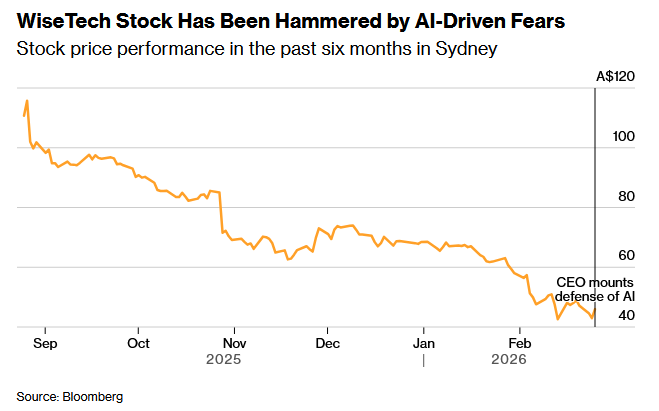
澳洲货运软件巨头WiseTech“自我革命”:全面拥抱AI 两年内将裁员30%
Zhi Tong Cai Jing· 2026-02-25 07:07
在澳大利亚货运软件巨头WiseTech Global宣布计划在两年内裁减近30%员工数小时后,该公司首席执行 官Zubin Appoo表示,由人工智能(AI)驱动的成本节约最终将渗透到整个公司。 Zubin Appoo在周三的一次采访中表示:"我们将审视公司所有职能部门。我坚信AI和大型语言模型将提 升所有这些职能部门的生产力。我无法告诉你具体是50%、70%还是30%。" WiseTech开发的货运软件帮助从托运人到物流企业的各类公司规划和管理全球货物流动,包括追踪集装 箱和处理海关事务。Zubin Appoo指出,一些曾经需要六七个月的项目现在一天之内就能完成。他表 示,得益于AI,在一个新的市场推出全球海关功能,以前需要长达两年的时间,现在可以快六七倍。 Zubin Appoo计划在AI驱动的改革下削减2000个职位——该公司员工总数约为7000名。这代表着澳大利 亚同类裁员中规模最大的一次,裁员将在本财年及下一财年完成。虽然包括亚马逊(AMZN.US)和Meta Platforms(META.US)在内的科技巨头正花费数千亿美元来拥抱AI,但很少有公司像WiseTech那样早或那 样大规模地削减人员。 ...