
美妆

Search documents
财报面面观|旧胄溃退,新贵登场:美妆行业内卷重构
Zhong Guo Ji Jin Bao· 2025-04-29 03:29
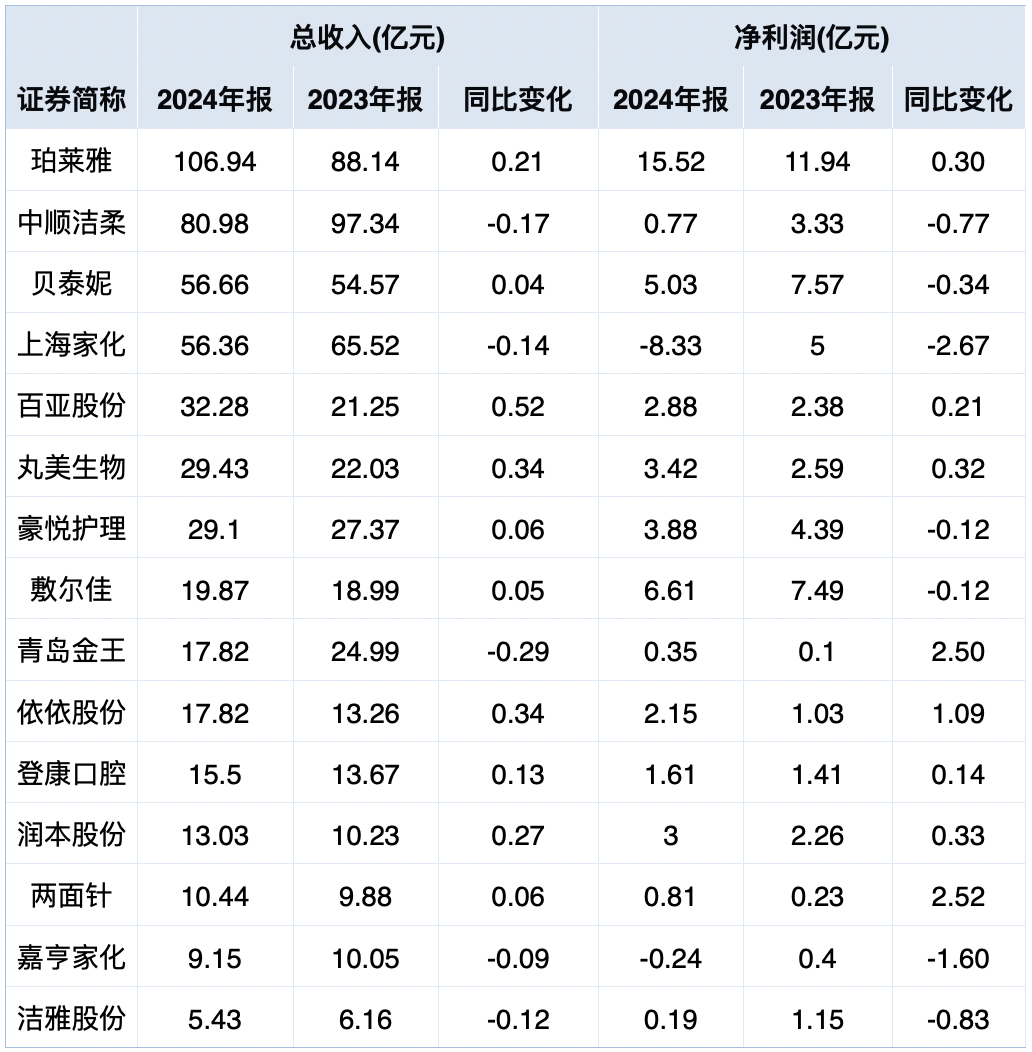
Core Viewpoint - The performance of beauty companies listed in 2024 reflects a challenging environment, with many traditional giants facing significant losses while some emerging brands show strong growth [1][2]. Industry Overview - In 2024, China's total retail sales of consumer goods grew by 3.5%, but the retail sales of cosmetics declined by 1.1%, amounting to 435.65 billion yuan [2]. - The overall industry is experiencing a downturn, leading to price cuts and store closures by several foreign brands [2]. - Major companies like Shanghai Jahwa reported a loss of 833 million yuan, highlighting the struggles of established players [2][4]. Company Performance - As of April 27, 2024, 15 A-share cosmetic companies reported a total revenue of 50.081 billion yuan, a year-on-year increase of 3.59%, but net profit fell to 3.765 billion yuan, down from 5.127 billion yuan [4]. - Notable performances include: - Proya achieved revenue of 10.778 billion yuan, becoming the first domestic beauty brand to surpass 10 billion yuan [2][11]. - Shanghai Jahwa's revenue decreased by 13.93% to 5.679 billion yuan, with a net profit loss of 833 million yuan [6]. - Betaini reported revenue of 5.736 billion yuan, up 3.87%, but net profit fell by 33.53% to 503 million yuan [8]. - Huaxi Biological's revenue dropped by 11.61% to 5.371 billion yuan, with net profit down 70.59% to 174 million yuan [8]. Emerging Brands - New entrants like Gu Yu Biotechnology are preparing to enter the capital market, showcasing strong growth with a revenue of 4 billion yuan and GMV exceeding 5 billion yuan [14][15]. - Gu Yu's success is attributed to its focus on a unique ingredient and effective online marketing strategies, although its reliance on a single product category may pose future challenges [15]. Market Trends - The market is witnessing a shift where traditional giants are retracting while new players are emerging, indicating a potential reshaping of the industry landscape [10][14]. - The global beauty market is expected to see a coexistence of domestic brands leading in niche segments while foreign brands focus on high-end markets [16].


贝泰妮(300957):组织变革持续推进 期待618大促企稳回升
Xin Lang Cai Jing· 2025-04-29 02:53
事件 盈利预测与投资建议 考虑到公司组织变革仍在持续,我们预计公司2025-2027 年收入分别为63.38/69.40/75.16 亿元,对应增 速分别为10.5%/9.5%/8.3%;归母净利润分别为7.37/8.46/9.37 亿元,对应增速分别为 46.6%/14.7%/10.8%;EPS 分别为1.74/2.00/2.21 元/股,维持"买入"评级。 风险提示:行业竞争加剧的风险;销售平台相对集中的风险;销售季节性波动的风险 公司发布2024 年年报与2025 年一季报:2024 年营收57.36 亿元(同比+3.9%),归母净利润5.03 亿元 (同比-33.5%);2025Q1 营收9.49 亿元(同比-13.5%),归母净利润0.28 亿元(同比-84.0%)。 组织变革持续推进,利润增长短期承压 2024 年营收增长稳健,利润增长波动,主要源于:1)美妆行业2024 年"双11"等线上大促活动销售普遍 不如预期,公司未达成"双11"预期销售目标;2)市场竞争加剧影响,公司营销费用投入增加;3)悦江 投资业绩承诺未能如期完成,公司基于谨慎性原则,计提长期资产减值准备金;4)公司长期资产折旧 摊 ...
珀莱雅(603605):营收过百亿大关 龙头底色仍在
Xin Lang Cai Jing· 2025-04-29 02:40
Core Viewpoint - The company reported strong financial performance for 2024 and Q1 2025, with revenue exceeding 10 billion yuan and significant profit growth, indicating robust market positioning and operational efficiency [1][3]. Financial Performance - In 2024, the company achieved revenue of 10.778 billion yuan, a year-on-year increase of 21.0%, and a net profit attributable to shareholders of 1.552 billion yuan, up 30.0% year-on-year [1]. - For Q1 2025, revenue reached 2.359 billion yuan, reflecting an 8.1% year-on-year growth, with a net profit of 390 million yuan, a 28.9% increase year-on-year [1]. - The company maintained over 20% profit growth in both Q4 2024 and Q1 2025, benefiting from improved gross margins and cost control [1]. Product Strategy - The company has been reinforcing its "big product strategy" since 2024, focusing on upgrading core product lines and launching new products targeting specific consumer needs, such as whitening and oil control [2]. - The upgrades to existing product lines and the introduction of new series are expected to drive continued double-digit growth on the foundation of over 10 billion yuan in revenue [2]. Profit Forecast and Investment Recommendation - Revenue projections for 2025-2027 are estimated at 12.584 billion yuan, 14.440 billion yuan, and 16.302 billion yuan, with corresponding growth rates of 16.75%, 14.75%, and 12.89% [3]. - Net profit forecasts for the same period are 1.821 billion yuan, 2.121 billion yuan, and 2.440 billion yuan, with growth rates of 17.33%, 16.47%, and 15.06% [3]. - Earnings per share (EPS) are projected to be 4.60 yuan, 5.35 yuan, and 6.16 yuan, maintaining a "buy" rating [3].
用再互动赋能,使一物一码出口转内销增辉,快速开拓国内市场版图
Sou Hu Cai Jing· 2025-04-28 22:47
Core Insights - The article discusses the shift of export-focused companies towards the domestic market in response to international trade uncertainties, highlighting the role of "one product, one code" technology and interactive models in this transition [1][3]. Group 1: "One Product, One Code" Technology - "One product, one code" serves as a new identification technology that connects export-to-domestic companies with local consumers, enhancing transparency and trust in products [3][4]. - This technology allows consumers to access comprehensive information about products, from raw material sourcing to quality control, thereby increasing consumer confidence [3][4]. - An example is provided where a high-end home goods exporter successfully established a premium brand image in the domestic market by showcasing its use of eco-friendly materials and strict quality control through this technology [3][4]. Group 2: Interactive Model - The interactive model leverages "one product, one code" to create deep engagement between companies and consumers, enabling personalized marketing and insights based on consumer behavior [4][6]. - Companies can collect data on consumer preferences and behaviors, allowing them to tailor marketing activities and product offerings, such as limited edition products based on identified consumer demand [4][6]. - An example includes a beauty company that launched targeted marketing campaigns based on insights gained from consumer scanning data, enhancing consumer participation and loyalty [4][6]. Group 3: Brand Building - The interactive model empowers companies to build influential domestic brands by facilitating effective and creative brand communication strategies [6][7]. - Companies can engage consumers through online activities, fostering word-of-mouth marketing and adjusting brand strategies based on consumer feedback [6][7]. - An example is given of a sports equipment company that increased brand awareness and reputation through a consumer engagement campaign that encouraged sharing of personal fitness experiences [6][7]. Group 4: Market Expansion - The combination of "one product, one code" and the interactive model aids companies in rapidly entering the domestic market by analyzing regional consumer data to inform marketing strategies [7]. - Companies can optimize supply chain collaboration through data sharing with distributors and retailers, enhancing product distribution speed and market coverage [7]. - The article emphasizes that transitioning from export to domestic sales is essential for companies to address external challenges and achieve sustainable growth, advocating for the adoption of new technologies and consumer-centric approaches [7].

新消费赛道第一期:美妆、潮玩
2025-04-28 15:33
Summary of Key Points from Conference Call Records Industry Overview - The conference call discusses the new consumption sectors, specifically focusing on the beauty and trendy toy industries, highlighting the impact of Generation Z on consumer behavior and market dynamics [1][2][3]. Core Insights and Arguments Beauty Industry - The beauty industry is benefiting from the logic of domestic product substitution, with domestic brands continuously increasing their market share, particularly in the mid-to-high-end market [1][2][5]. - The market for skincare products, especially eye and facial care, is growing significantly faster than the overall market, driven by emerging functional ingredients like recombinant collagen and signaling molecules [1][15]. - The beauty sector is experiencing a shift from traditional e-commerce to content-driven e-commerce, necessitating changes in marketing strategies and organizational structures to adapt to a "product finds people" model [1][3][4]. - The impact of the US-China tariff war has made domestic beauty products more attractive, with over 10 billion yuan worth of beauty products imported from the US facing tariffs, enhancing the competitiveness of local brands [2][5]. - Companies like Proya, Betaini, and Perfect Diary are expected to show strong performance despite facing profit pressures, indicating overall strengthening competitiveness in the sector [2][5]. Trendy Toy Industry - The trendy toy industry is heavily reliant on IP (intellectual property) comprehensive operation capabilities rather than manufacturing, with leading companies maintaining competitive advantages through design and supply chain innovations [1][30][31]. - The market for trendy toys is rapidly growing, with a 30% year-on-year increase in the domestic pan-entertainment toy market, expected to maintain a compound annual growth rate of 14% over the next five years [31]. - Companies like Pop Mart are expanding their market presence in Southeast Asia and the US, with revenue growth expected to exceed market expectations [1][30][40]. Additional Important Insights - The beauty industry is transitioning from an incremental market logic to a stock market logic, with new business models and companies emerging [5][6]. - The rise of Generation Z as a primary consumer group is driving demand for products that emphasize emotional and personal expression, leading to structural opportunities in niche markets like trendy toys and beauty care [1][3][8]. - The beauty sector is seeing a shift towards personalized marketing and decentralized promotion strategies, reflecting changes in consumer preferences and shopping behaviors [4][11]. - The competitive landscape in the trendy toy sector is evolving, with leading brands like Pop Mart and others leveraging their IP capabilities to capture market share from smaller players [30][35][36]. Conclusion - The beauty and trendy toy industries are undergoing significant transformations driven by changing consumer preferences, competitive dynamics, and macroeconomic factors. The focus on domestic brands, innovative marketing strategies, and IP management will be crucial for companies looking to capitalize on these trends in the coming years [1][5][30][31].
财报解读|美妆企业去年业绩冷热不一,本土公司首现百亿公司
Di Yi Cai Jing· 2025-04-28 12:53
Core Viewpoint - Domestic beauty brands are gaining competitive advantages in the market through high cost-performance ratios and refined operations [1][7]. Group 1: Market Performance - In early 2024, the retail sales of cosmetics in China are projected to be 435.7 billion yuan, a year-on-year decline of 1.1% [2]. - Despite the overall market stagnation, several domestic beauty companies have reported impressive performance, with Proya (603605.SH) achieving a revenue of 10.778 billion yuan, a year-on-year increase of 21.04% [2][3]. - Other established beauty companies such as Shiseido (02145.HK), Maogeping (01318.HK), and Marubi (603983.SH) also reported revenue growth exceeding 20% [2]. Group 2: Online Sales Strategy - Leading beauty companies are increasingly focusing on online sales, with Proya's online sales ratio exceeding 95% and sales surpassing 10 billion yuan [4]. - Shiseido's online sales ratio is over 90%, with sales exceeding 6 billion yuan, while Marubi's online sales ratio is above 85% [4]. - In the e-commerce landscape, Douyin has emerged as a significant player, with total beauty sales reaching between 2.5 billion to 5 billion units and total sales exceeding 100 billion yuan [4]. Group 3: Quarterly Performance - In Q1 2025, the retail sales of cosmetics reached 114.9 billion yuan, a year-on-year increase of 3.2% [6]. - Proya reported a Q1 2025 revenue of 2.359 billion yuan, up 8.13% year-on-year, and a net profit of 390 million yuan, up 28.87% [6]. - Marubi achieved a Q1 2025 revenue of 847 million yuan, a year-on-year increase of 28.01%, with a net profit of 135 million yuan, up 22.07% [6]. Group 4: Future Outlook - The management of Juzhi Biological aims for a revenue growth of 25% to 28% and a net profit growth of 21% to 24% for the 2025 fiscal year [7]. - The cosmetics and medical beauty industry is expected to show stable growth driven by policy support and consumer recovery [7]. - Domestic beauty brands are focusing on reducing traffic costs and enhancing digital marketing strategies to ensure measurable business growth [7].


走进百亿珀莱雅 看国货美妆“闯世界”背后的科研之力
新华网财经· 2025-04-28 10:47
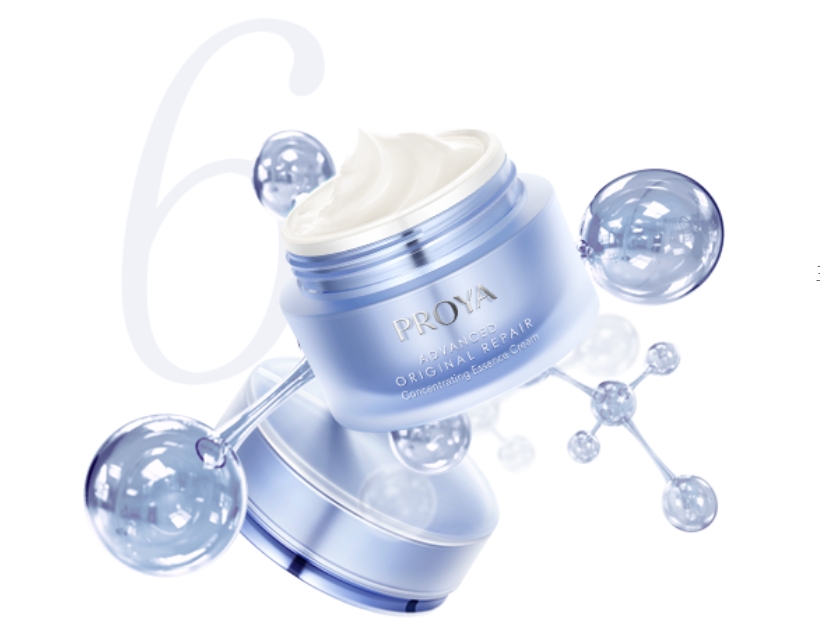
连续两年蝉联国货美妆行业营收榜首,主导或参与制定国家标准19项,累计获得229项国家专利(2024 年财报报告期内)……珀莱雅化妆品股份有限公司自2003年成立以来,历经自主研发、A股上市、多品 牌矩阵构建等阶段,成长为中国美妆行业首家营收破百亿的企业。 如今,以科技创新为核心驱动力,珀莱雅正朝着"未来十年跻身全球化妆品行业前十"的目标迈进,不断 为科技强国建设贡献民企力量。从珀莱雅的发展历程,我们得以窥见民族品牌参与全球美妆产业竞争的 突围之路。 下好"硬功夫":三大研发中心构建国际化研发格局 穿过杭州西郊龙坞茶镇的葱郁茶田,珀莱雅杭州龙坞研发中心的新中式建筑跃入眼帘。走进实验区,科 研人员正专注操作着精密仪器,对产品安全性进行检测。 "产品生产出来仅仅是起点,在顺利的情况下,产品从生产完成到消费者手中,需要经历成分分析、重 金属含量检测、微生物检测等十几道严苛的质检程序。"珀莱雅研发人员指着闪烁的仪器屏幕介绍道, 眼前这台价值百万的仪器精度可达到十的负九次方,其精准度相当于在堆满10亿个球的体育场里,准确 找到其中一个。 珀莱雅杭州龙坞研发中心研发人员正对产品进行检测。新华网发 珀莱雅化妆品股份有限公司供 ...
龙虎榜复盘 | 机构大买绩优股,机器人继续活跃
Xuan Gu Bao· 2025-04-28 10:44
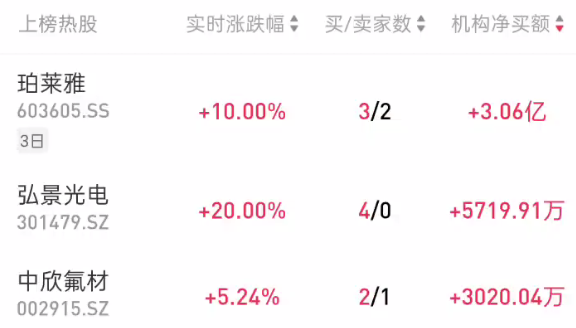
Group 1: Stock Market Activity - Today, 30 stocks were listed on the institutional leaderboard, with 10 stocks seeing net purchases and 20 stocks experiencing net sales [1] - The top three stocks with the highest net purchases by institutions were: Proya (3.06 billion), Hongjing Optoelectronics (57.19 million), and Zhongxin Fluorine Materials (30.20 million) [1][2] Group 2: Company Performance - Proya, a local mass-market beauty brand, reported a year-on-year net profit growth of 28.87% in its quarterly report [4] - Hongjing Optoelectronics saw a significant increase in its stock price, rising by 20% [2] - Zhongxin Fluorine Materials experienced a stock price increase of 5.24% [2] Group 3: Industry Insights - The electricity sector is undergoing reforms, with companies like Mindong Electric focusing on clean energy and renewable resources [5] - Huadian Liaoning Energy, a key power and heat supplier in Liaoning Province, reported a year-on-year net profit growth of 17.27% [6] - The State Grid's focus on high-quality development and infrastructure improvements is expected to support economic growth [6][7] - The rise of virtual power plants is seen as a solution to balance supply and demand in the electricity market [7] Group 4: Robotics and Material Demand - Dongbei Group is currently developing humanoid robot joint motors, which are still in the testing phase [8] - Zhongxin Fluorine Materials has established an integrated PEEK core material industry layout, with market demand projected to grow significantly from 2,334 tons in 2022 to 5,079 tons by 2027, reflecting a CAGR of approximately 16.8% [8]


3月社零稳健复苏,关税倒逼电商平台调整运营模式
Minmetals Securities· 2025-04-28 02:47
Investment Rating - The investment rating for the leisure services sector is "Positive" [5] Core Insights - The consumer market is showing steady recovery, with March retail sales reaching 40,940.5 billion yuan, a year-on-year increase of 5.9% [11][12] - The rural consumption growth rate continues to outpace urban areas, driven by the rural revitalization strategy [14][24] - The service consumption and cultural tourism markets are driving steady growth, with a significant increase in travel during the Qingming holiday [26][29] - The new energy vehicle market is experiencing rapid growth, with a retail penetration rate of 51.1% in March, supported by government subsidies [31][32] - The online retail market is showing strong growth momentum, with total online retail sales reaching 1.3 trillion yuan in March, a year-on-year increase of 8.9% [34][35] Summary by Sections Social Retail - In March 2025, the total retail sales of consumer goods reached 40,940.5 billion yuan, with a cumulative increase of 4.6% year-on-year for the first three months [12][22] - Rural consumption in March was 5,345.1 billion yuan, growing 5.3% year-on-year, indicating stronger resilience compared to urban areas [14][24] - Essential goods such as grain and oil saw a significant increase of 13.8% in retail sales, while beverage sales increased by 4.4% [21][24] Travel and Services - The service consumption market continued its strong momentum, with a year-on-year increase of 4.9% in service retail sales compared to goods retail [26] - During the Qingming holiday, 126 million people traveled, spending 57.549 billion yuan, reflecting a year-on-year increase of 6.3% and 6.7% respectively [29][30] Low Carbon and New Energy - In Q1 2025, the cumulative retail sales of new energy passenger vehicles reached 2.414 million units, a year-on-year increase of 37% [31] - The penetration rate of new energy vehicles reached 51.1% in March, with government policies stimulating demand through subsidies [31][32] E-commerce - The total online retail sales in March reached 1.3 trillion yuan, with physical goods sales at 1.13 trillion yuan, marking a year-on-year increase of 6.9% [34] - The adjustment of operational models in response to high tariffs has led to a shift towards semi-managed logistics, reducing costs significantly [35]
丸美生物一季度营收同比增长28.01% “双美”战略布局未来可期
Zheng Quan Ri Bao Wang· 2025-04-28 01:49
4月22日丸美生物董事会主席兼CEO孙怀庆在第五届重组胶原蛋白科学论坛上提到,随着丸美生物主导 制定的《国家重组胶原蛋白行业标准》进入最后评审阶段,公司已经从最初的"吹哨人",变成了现在的 标准制定者和行业引领者。 弗若斯特沙利文数据显示,中国重组胶原蛋白产品市场规模预计将从2022年的185亿元增长至2027年的 1083亿元,年复合增长率为42.4%,重组胶原蛋白产品的市场渗透率也将大幅提升,到2027年将提高至 62.3%。 本报讯 (记者王镜茹) 4月26日广东丸美生物(603983)技术股份有限公司(以下简称"丸美生物")发布一季度业绩。一季度 公司实现总营业收入8.47亿元,同比增长28.01%;归母净利润1.35亿元,同比增长22.07%。 同日,丸美生物发布2024年年报。2024年公司营业收入29.70亿元,同比增长33.44%;归母净利润3.42 亿元,同比增长31.69%。其中,主品牌丸美实现营业收入20.55亿元,主营收入占比69.24%;PL恋火品 牌实现营业收入9.05亿元,主营收入占比30.51%;毛利率73.7%,同比上升3.01个百分点,主要系产品 结构及成本控制不断优化所致 ...