
零售

Search documents
行业周报:赤子城科技Dramabite成短剧黑马,关注AKK菌布局企业-20260118
KAIYUAN SECURITIES· 2026-01-18 14:44
Investment Rating - Investment rating: Positive (maintained) [1] Core Insights - The luxury goods retail revenue in China is showing signs of recovery, with high-end brands like LVMH, Hermès, and Prada experiencing positive growth since Q2 2025 [15][16] - The global network literature market is witnessing rapid growth, particularly in Latin America, with WebNovel reaching nearly 400 million cumulative users by October 2025 [34][35] - The micro-drama and comic-drama market in China is projected to exceed 100 billion yuan in 2025, significantly surpassing the film box office revenue [37][38] - The probiotic market is expanding, with a focus on next-generation probiotics (NGPs) like AKK bacteria, which show significant potential in health applications [55][63] Summary by Sections 1. Duty-Free Shopping - Post-New Year duty-free shopping in Hainan shows strong growth, with sales reaching 3.89 billion yuan and a 49.6% year-on-year increase in shopping amount [31][33] - The high net worth individuals are expected to drive luxury consumption, with a notable increase in spending on preservation-type luxury goods [15][16] 2. Network Literature - The Chinese network literature market reached 49.55 billion yuan in 2024, with a 29.37% year-on-year growth, while the overseas market grew by 10.68% [34] - WebNovel has cultivated nearly 530,000 authors and over 820,000 original works, with a significant increase in user engagement [34][35] 3. Micro-Drama - The micro-drama and comic-drama market in China is expected to reach 100 billion yuan in 2025, with a 98% year-on-year growth [37][38] - The user base for micro-dramas is approaching 700 million, with a strong preference among female viewers [40][42] 4. Probiotics - The global probiotic market is projected to grow at a CAGR of 8.7%, reaching 93.49 billion USD by 2028, with China's market expected to reach 134.89 billion yuan by 2024 [55][63] - Next-generation probiotics like AKK bacteria are gaining traction, with significant potential in health management and consumer interest [55][63]




可选消费W03周度趋势解析:美联储独立性和未来货币政策稳定性的担忧和要求设置信用卡利率上限,本周海外消费集体下挫-20260118
Haitong Securities International· 2026-01-18 14:35
Investment Rating - The report assigns an "Outperform" rating to multiple companies including Nike, Midea Group, JD Group, and Anta Sports, among others [1]. Core Insights - Concerns regarding the independence of the Federal Reserve and future monetary policy stability have led to a collective decline in overseas consumer sectors [4][11]. - The snack sector has shown resilience, outperforming the MSCI China index, while other sectors such as luxury goods and overseas sportswear have faced significant declines [4][11]. - The report highlights that most sectors are currently undervalued compared to their historical averages, indicating potential investment opportunities [9][15]. Sector Performance Summary - **Snack Sector**: Increased by 1.7%, with Wei Long's revenue guidance for 2026 projected to grow over 15% due to innovative products and channel expansion [6][14]. - **Jewelry Sector**: Rose by 1.6%, driven by Chow Tai Fook's strong operational performance expectations for FY26Q3 [6][14]. - **Overseas Cosmetics**: Gained 1.1%, with E.L.F Beauty's sales growth exceeding previous guidance [6][14]. - **Domestic Sportswear**: Increased by 1.5%, with Li Ning's revenue meeting expectations and a positive outlook for net profit margins [8][14]. - **Pet Sector**: Grew by 0.3%, with strong annual growth despite a slight decline in December [8][14]. - **Gambling Sector**: Slight decline of 0.1%, with Galaxy Entertainment showing resilience as a preferred investment choice [8][14]. - **Domestic Cosmetics**: Decreased by 0.3%, with expectations for recovery in 2026 [8][14]. - **Retail Sector**: Fell by 1.5%, with Target's positive leadership changes noted [8][14]. - **Luxury Goods**: Declined by 2.9%, impacted by market concerns over credit risks following Saks Global's bankruptcy [8][14]. - **Overseas Sportswear**: Experienced a significant drop of 4.0%, with major brands like Nike and Adidas facing declines [8][14]. - **Credit Card Sector**: Decreased by 5.1%, influenced by proposed caps on credit card interest rates [8][14]. Valuation Analysis - The report indicates that the expected PE ratios for various sectors in 2025 are below their historical averages, suggesting potential undervaluation: - Overseas Sportswear: 30.4x (57% of historical average) - Domestic Sportswear: 13.5x (71% of historical average) - Jewelry: 22.8x (43% of historical average) - Luxury Goods: 27.4x (49% of historical average) - Gambling: 16.2x (26% of historical average) - Overseas Cosmetics: 41.0x (61% of historical average) - Domestic Cosmetics: 27.3x (51% of historical average) - Pet Sector: 36.9x (50% of historical average) - Snack Sector: 29.8x (72% of historical average) - Retail: 29.9x (54% of historical average) - US Hotels: 34.8x (21% of historical average) - Credit Cards: 28.3x (54% of historical average) [9][15].
当“网红股”跌落神坛,什么才是穿越周期的投资真谛?丨CV荐书
投中网· 2026-01-18 07:04
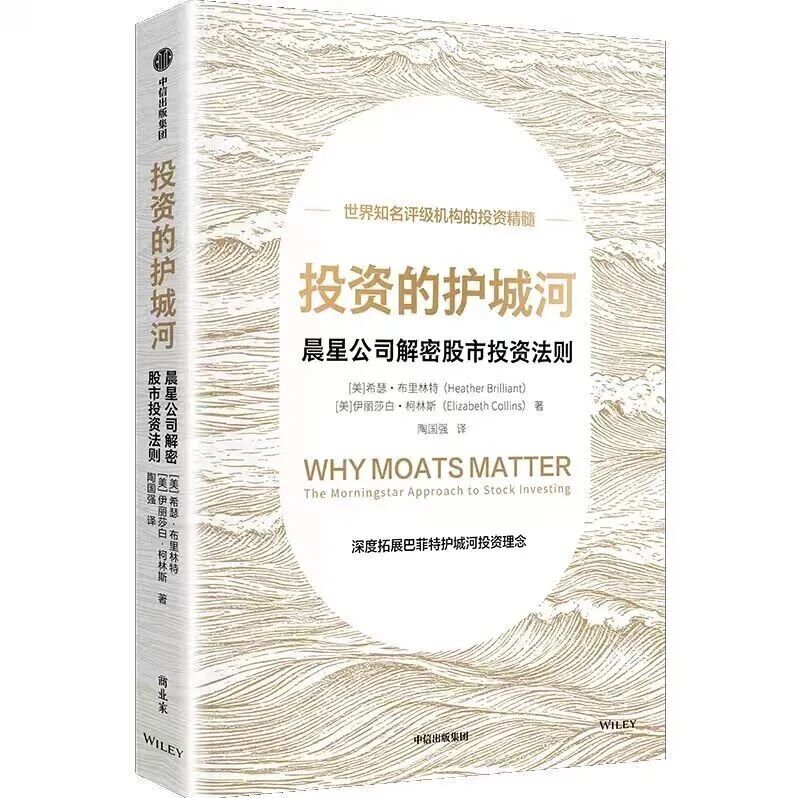
Core Viewpoint - The article emphasizes the importance of identifying companies with a strong economic moat that can withstand economic cycles and competition, providing reliable long-term returns for investors [3][4]. Group 1: Economic Moat Concept - The concept of an economic moat is crucial for understanding which companies can deliver sustainable competitive advantages and superior capital returns over time [3][4]. - Morningstar has developed a rigorous and globally applicable analysis and rating system based on the economic moat concept, demonstrating its effectiveness through decades of performance [5][8]. Group 2: Morningstar's Investment Philosophy - Morningstar's investment philosophy is built on three core principles: decoding economic moats, identifying great companies, and determining the best time to invest in them [10][14]. - The analysis framework includes five identifiable sources of economic moats: intangible assets, cost advantages, switching costs, network effects, and efficient scale [11][12][13]. Group 3: Investment Timing and Valuation - Identifying great companies is only part of the investment success; buying them at fair or undervalued prices is essential for generating excess returns [14]. - Morningstar employs a discounted cash flow model to estimate intrinsic value, requiring deep analysis of future cash flows and competitive advantage periods [15]. Group 4: Safety Margin and Uncertainty - Acknowledging the inherent limitations of human predictions is vital for rational investors, leading to the principle of safety margin to protect against unforeseen risks [18]. - Morningstar's unique uncertainty rating system helps assess the difficulty and risk of future cash flow predictions, guiding the required safety margin for investments [18]. Group 5: Consumer Sector Analysis - The consumer sector serves as an excellent platform for applying the economic moat theory, with strong brands and difficult-to-replicate scale advantages being key factors [21]. - Specific industries, such as beverages and packaged goods, demonstrate how brand loyalty and distribution networks create robust economic moats [26][23]. Group 6: Case Studies and Practical Insights - The book "Investing with Moats" provides a systematic approach to identifying valuable companies, offering practical insights and case studies across various consumer sub-industries [30][31]. - It emphasizes the importance of focusing on intrinsic value rather than market price fluctuations, fostering a mindset that resists market panic and greed [31].

数码家电行业周度市场观察-20260118
Ai Rui Zi Xun· 2026-01-18 05:08
Investment Rating - The report does not explicitly provide an investment rating for the digital home appliance industry Core Insights - The digital home appliance industry is undergoing a transformation driven by data quality and AI integration, with a focus on high-end market growth and consumer emotional value [2][5] - The report highlights significant trends in various sectors, including the rise of AI in logistics, healthcare, and retail, emphasizing the importance of data-driven decision-making and technological innovation [5][8] Industry Environment - Data quality is more critical than algorithms in determining the effectiveness of AI, with successful companies maintaining clean and unified data [2] - The 2025 report on China's high-end home appliance market indicates a 10.2% year-on-year growth in retail sales, driven by consumer demand for emotional value and quality [2] - The healthcare AI market is projected to reach 16.4 billion yuan in 2024, with significant advancements in efficiency and precision in medical applications [5] - The logistics sector is expected to grow to 965.5 billion yuan by 2025, transitioning from scale competition to value-driven strategies [5] - The smartphone market is experiencing a shift towards AI integration, with AI smartphones expected to account for 15% of global shipments by 2024 [5] - The retail industry is facing challenges in data integration and supply chain efficiency, with AI technologies being pivotal for transformation [5] Top Brand News - Honor aims to regain market share through AI smartphones and overseas expansion, facing competition from established players [19] - Ant Group is enhancing its C-end applications with AI health solutions, targeting the underserved market [20] - Xiaomi's flagship model features advanced AI capabilities, aiming to strengthen its hardware ecosystem [21] - DingTalk is expanding into AI hardware, marking a strategic shift in its offerings [21] - ByteDance is significantly increasing salaries to attract AI talent, reflecting the competitive landscape in the AI sector [23]



下周重磅日程:中国GDP、“美联储最爱通胀指标”、日央行决议、冬季达沃斯
Hua Er Jie Jian Wen· 2026-01-18 03:37
Group 1: Economic Data and Events - China's real estate development investment for the year is expected to decline by 15.9% [3] - December industrial added value in China is projected to grow by 4.8% year-on-year [3] - December retail sales in China are anticipated to increase by 1.3% year-on-year [3] - China's GDP growth for the fourth quarter is expected to be 4.8% year-on-year [3] - The U.S. core PCE price index for November is expected to show a month-on-month increase of 0.2% [5] - The U.S. GDP for the third quarter is expected to be revised to an annualized quarter-on-quarter growth of 4.3% [5] Group 2: Corporate Developments - Intel and Netflix are among the companies set to release earnings reports next week, which will be critical for assessing the recovery in tech hardware and streaming growth [18] - Walmart will be included in the Nasdaq 100 index, replacing AstraZeneca [18] - Dragon Flag Technology is seeking to issue approximately 52 million shares in its Hong Kong IPO, aiming to raise up to 2.05 billion HKD (approximately 262 million USD) [18] Group 3: Geopolitical and Market Sentiment - The World Economic Forum in Davos is expected to attract over 60 heads of state and numerous global leaders, with significant attention on U.S. President Trump's agenda [11][12] - Geopolitical tensions, particularly in Venezuela and Iran, are likely to impact market sentiment and risk appetite [7] - The U.S. Supreme Court is set to hear a case regarding the dismissal of a Federal Reserve official, which could have implications for the Fed's independence [14][15]

16元盒饭自助杀疯了,这届打工人彻底不装了
虎嗅APP· 2026-01-18 03:27
Core Viewpoint - The article discusses the shift in consumer preferences in the Chinese dining industry, highlighting the rise of affordable self-service meals and the decline of high-end dining experiences, reflecting a broader trend towards value for money and practicality in consumer behavior [4][10]. Group 1: Rise of Affordable Dining - The emergence of "box lunch self-service" meals priced under 20 yuan has become a popular choice among workers, serving as a "lifeline" for many [5][12]. - By May 2025, the number of self-service restaurants in China is projected to reach 66,000, with a net increase of over 10,000 locations compared to the previous year, driven primarily by affordable fast-casual dining options [5]. - The appeal of these self-service meals lies in their variety, affordability, and the ability to satisfy hunger without breaking the bank, contrasting sharply with the struggles of high-end dining establishments [9][15]. Group 2: Decline of High-End Dining - High-end restaurants are facing significant challenges, with notable closures including Opera BOMBANA and L'Atelier 18, indicating a downturn in the luxury dining sector [6][7]. - The closure of establishments like the Michelin-starred Ultraviolet by Paul Pairet, which charged 6,800 yuan per meal, underscores the shift in consumer spending away from luxury dining experiences [7]. Group 3: Changing Consumer Behavior - The trend towards value-driven dining reflects a broader change in consumer attitudes, with a focus on practicality and cost-effectiveness becoming paramount [10][18]. - The rise of brands like Mixue Ice City and the popularity of low-cost meal options illustrate a market shift where consumers prioritize affordability over brand prestige [19][22]. - Data indicates that while the Engel coefficient for Chinese households is decreasing, indicating a rise in living standards, consumer spending is becoming more cautious and value-oriented [19][22]. Group 4: Generational Shifts in Consumption - The Z generation, characterized by their strong sense of national identity and skepticism towards brand premiums, is driving a new wave of consumption focused on cost-effectiveness [28][30]. - Over 85% of the Z generation prioritize value for money, leading to a culture where frugality is celebrated and luxury is scrutinized [28][30]. - This generation's consumption patterns reflect a strategic retreat from traditional markers of success, opting instead for practical spending in the face of economic pressures [30][34]. Group 5: The Complexity of Modern Consumption - The article posits that the current consumer landscape is marked by a duality of frugality and indulgence, where consumers are both budget-conscious and willing to splurge on experiences that matter to them [41][42]. - The popularity of affordable self-service meals serves as a reflection of a broader societal trend towards finding balance between survival and dignity in consumption choices [36][40].

“内需主导”被列为年度经济工作重点任务之首 广州“先跑一步”
Guang Zhou Ri Bao· 2026-01-18 01:38
Core Viewpoint - Guangzhou is focusing on strengthening its internal capabilities to enhance both consumption and investment, aiming for a robust economic performance in the new year [2][10]. Consumption Renewal - The consumption market in Guangzhou is undergoing a transformation, showcasing a blend of local culture, Chinese aesthetics, and global influences [3]. - New commercial developments, such as the Sam's Club and the Taikoo Li shopping area, are attracting significant foot traffic and international brands, indicating a vibrant retail environment [3][4]. - The city is diversifying its commercial landscape, creating multiple shopping hubs to meet various consumer needs, thus breaking away from a previously centralized commercial model [3]. Investment Drive - Guangzhou is committed to investing in human capital to enhance living standards and stimulate consumption, as evidenced by the "33 measures" aimed at boosting consumer spending [6][10]. - The city has seen a significant increase in business registrations, with over 4.25 million entities, and is attracting foreign investment, with one in seven new foreign enterprises setting up in Guangzhou [7]. - Major projects, including the TCL Huaxing and HSBC training center, are indicative of an improved business environment and growing investor confidence [7]. Recruitment and Development - The "Ten-Hundred-Thousand Investment Project" aims to attract substantial investments, including 10 projects worth 10 billion, 100 projects worth 1 billion, and 1,000 projects worth 100 million [8]. - The establishment of a comprehensive ecosystem for cell and gene therapy in Nansha is a key example of Guangzhou's forward-looking industrial strategy [8]. Internal Demand Leadership - The central economic work conference emphasizes the importance of balancing consumption and investment, highlighting their interdependent relationship in driving domestic demand [9]. - Industrial investment in Guangzhou has shown resilience, with a 2.5% increase in industrial investment and significant growth in high-tech sectors [10]. Departmental Initiatives - The Guangzhou Development and Reform Commission is implementing measures to enhance investment efficiency and project management, ensuring timely execution of new and ongoing projects [11][12]. - The Guangzhou Commerce Bureau is focused on expanding quality consumer goods and services, enhancing the international consumption environment, and promoting local consumption initiatives [14][15]. Investment Development Actions - The Guangzhou Investment Development Committee is executing a comprehensive strategy to attract investments across various sectors, including biotechnology and new consumption industries [16][17].

中金《秒懂研报》 | 何以胖东来:当一家超市开始“输出幸福”,我们该学什么?
中金点睛· 2026-01-18 01:07
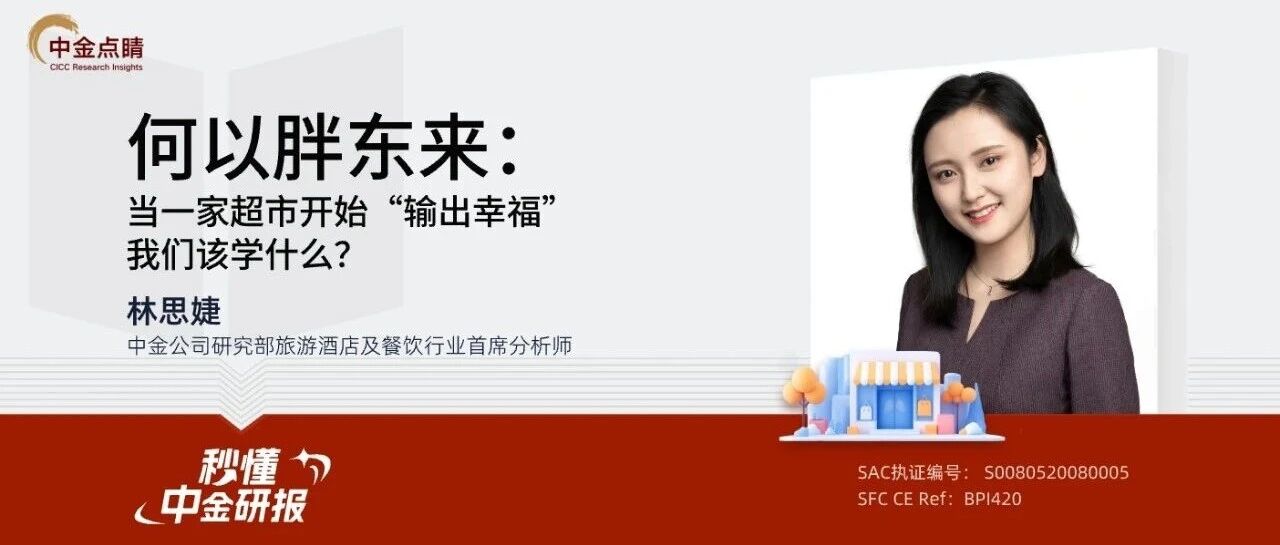
Core Viewpoint - The article discusses the unique business model of "胖东来" (Pang Donglai), a regional supermarket in China, which has achieved significant success without relying on capital infusion or aggressive pricing strategies. It emphasizes the concept of "幸福生产力" (happiness productivity) and how it can be understood and replicated in other businesses [2]. Group 1: Business Performance - Pang Donglai operates 13 stores in two cities, generating sales of 16.96 billion yuan in 2024, with over 3 million visitors during the National Day holiday, surpassing the top five tourist attractions in Henan province [5]. - By October 6, 2025, the total sales reached 18 billion yuan, with the supermarket segment contributing over half of this amount [5]. - The company has integrated deeply into the local economy, employing approximately 18,000 people and accounting for about 6% of the retail sales in the cities of Xuchang and Xinxiang [5]. Group 2: Employee-Centric Management - Pang Donglai's success is attributed to its employee-centric approach, offering salaries up to 110,000 yuan per year, a 7-hour workday, and various benefits such as paid vacations and health insurance for employees' parents [7]. - The company has a low employee turnover rate of 1.2% in the first three quarters of 2025, compared to industry averages of 100% [7]. - Employees are encouraged to engage with customers genuinely, contributing to a positive shopping experience and customer loyalty [8]. Group 3: Product and Service Strategy - The supermarket focuses on high-quality products and has stopped promotional activities, instead investing in product quality and supplier management [9]. - Pang Donglai has developed its own brand products, with expected sales exceeding 1 billion yuan in 2025, and has implemented customer-friendly store designs and services [12]. - A rapid response mechanism for customer complaints and a transparent approach to product quality issues have fostered trust and positive word-of-mouth [12]. Group 4: Broader Implications and Methodology - The business model of Pang Donglai has evolved into a "人本经营" (human-centered management) methodology that is being shared with other retailers, demonstrating adaptability across different regions and contexts [13]. - The successful transformation of a competitor's store in Urumqi, guided by Pang Donglai, resulted in a 286% increase in sales on opening day, showcasing the effectiveness of this methodology [14]. - The article highlights that the principles of treating employees well and focusing on genuine customer interactions can lead to sustainable business success, even in a competitive environment [16].
沃尔玛(WMT.US)大换血:电商少帅接掌美国业务 集团CEO交棒倒计时
智通财经网· 2026-01-17 08:53
Core Viewpoint - Walmart has undergone a significant executive reshuffle, appointing new leaders for its three core business divisions, signaling a strategic focus on enhancing its e-commerce capabilities and maintaining growth momentum in a competitive retail environment [1][2]. Group 1: Executive Changes - David Guggina has been appointed as the President and CEO of Walmart U.S., succeeding John Furner, who will become the CEO of the entire group [1]. - Doug McMillon, the outgoing CEO, has led Walmart for over ten years, successfully transforming it from a traditional retailer to a digital retail giant [1]. - Guggina, who joined Walmart from Amazon about eight years ago, has rapidly advanced within the company, most recently overseeing supply chain operations and U.S. online business [1]. Group 2: Business Strategy and Challenges - Guggina will manage a business area with annual sales reaching hundreds of billions of dollars, aiming to sustain the company's recent strong performance amid challenges such as discerning consumers and a weakening job market [2]. - The retail competition is intensifying, with rivals like Costco, Target, and Aldi increasing investments to lower prices and enhance shopping experiences [2]. - Walmart is also signaling plans to expand its physical stores and fresh food business while strengthening its e-commerce operations [2]. Group 3: Additional Appointments and Financial Performance - Latrice Watkins has been appointed as the President and CEO of Sam's Club U.S., while Chris Nicholas will lead Walmart's international business [3]. - Seth Dallaire has been promoted to Chief Growth Officer, focusing on expanding Walmart's advertising, membership, and non-retail business areas, which are becoming key profit growth engines [3]. - Walmart's stock price increased by 24.49% last year, outperforming the S&P 500 index, and the company will join the Nasdaq-100 index next week [3].

百大集团股份有限公司关于收回委托理财本金及收益的公告
Sou Hu Cai Jing· 2026-01-17 06:32
Core Viewpoint - The company has approved a proposal to utilize idle funds for entrusted financial management, allowing for an investment of up to 1.5 billion RMB [1] Group 1: Financial Management - The company will use no more than 1.5 billion RMB of idle self-owned funds for entrusted financial management [1] - From December 4, 2025, to January 16, 2026, the company redeemed a total of 240.6843 million RMB in principal from financial products and received corresponding earnings of 634,400 RMB [1] - As of January 16, 2026, the balance of entrusted financial management stood at 1.1150183 billion RMB, which includes 224.5750 million RMB in bank financial products, 163 million RMB in securities firm financial products, and 727.4433 million RMB in trust products [1] Group 2: Financial Losses - The financial loss incurred was primarily due to exchange rate losses [1]
