电子产品

Search documents
特朗普突然翻脸,石破茂收到直白警告,日本前首相直言:要搞好中日关系
Sou Hu Cai Jing· 2025-07-07 02:39
Group 1 - The U.S. government, under President Trump, is considering imposing a 25% tariff on Japanese cars due to Japan's lack of imports of American vehicles, indicating a strong stance on trade relations with Japan [1][5] - Japan's automotive industry is crucial to its economy, employing 8.3% of the workforce and contributing approximately 10% to the GDP, making the potential tariffs a significant threat to Japan's economic stability [5] - The U.S. tariffs could result in a $17 billion impact on Japanese automotive exports, highlighting the severity of the situation for Japan's economy [5] Group 2 - Japan's Prime Minister, Shigeru Ishiba, has expressed a commitment to protecting national interests and prefers trade negotiations over tariff increases, indicating a diplomatic approach to the trade tensions [3] - The automotive sector is not the only area at risk; South Korea also faces potential economic repercussions from Trump's tariffs, particularly in its automotive and electronics industries, which are vital to its GDP [6] - The ongoing trade negotiations between Japan and the U.S. have been a focal point, with Japan seeking to eliminate automotive tariffs as a primary goal [5]

马杜罗:委方与中国签署3项重要协议,期待中国市场未来向更多委优质产品开放
Huan Qiu Shi Bao· 2025-07-06 22:50
Group 1 - The Venezuela-China Cooperation Expo was recently held in Caracas, attracting over 50 companies from both countries [1] - Venezuelan President Maduro announced the signing of three important agreements with China, covering oil and gas, industry, infrastructure, and agriculture [1][3] - Maduro emphasized the commitment to strengthen the all-weather strategic partnership between Venezuela and China, focusing on cooperation in infrastructure, artificial intelligence, and social welfare [3][4] Group 2 - Venezuela has reached a collaboration with a leading Chinese technology company to promote the development of artificial intelligence in tourism, agriculture, research, healthcare, education, and telecommunications [3] - Venezuelan Vice President Delcy Rodriguez stated that Venezuelan producers can export seafood, butter, and cocoa to China [3] - According to TradeMap, in 2024, China's exports to Venezuela are valued at $4.803 billion, accounting for nearly one-third of Venezuela's total imports of $15.284 billion [3]

联播+|事关你我,这场会议释放4大民生信号
Yang Shi Wang· 2025-07-05 13:54
Economic Policy and Development - The Central Political Bureau emphasized the need to utilize policy space effectively and focus on high-quality economic development [1] - Key areas of focus include modern industrial system construction, increasing residents' income to expand consumption, optimizing the development environment for private enterprises, and enhancing social welfare [1] Consumer Demand and Economic Growth - The meeting highlighted the importance of expanding domestic demand, with a focus on consumption as a fundamental driver of economic growth [5] - There is a trend towards consumption upgrading, with an emphasis on boosting sales in automobiles, electronics, and home goods, as well as promoting service consumption in sports, leisure, and cultural tourism [5] - As policies to expand domestic demand take effect, consumption is expected to continue to grow, contributing significantly to economic growth [5] Real Estate Market Adjustments - The meeting stressed the need to prevent and mitigate risks in key areas, particularly in the real estate market, which is undergoing significant changes in supply and demand [7] - There is a call for timely adjustments to real estate policies to better meet residents' housing needs, including increasing the supply of affordable housing and promoting urban village renovations [7][9] - The real estate market is expected to stabilize as economic recovery progresses, transitioning from rapid growth to a more stable development phase [9] Employment and Labor Market - Employment was identified as a critical issue, with the government focusing on stabilizing and improving employment through various policies [12] - The labor market is showing signs of improvement, but challenges remain in terms of total employment pressure and structural issues [12] - The meeting underscored the strategic importance of employment policies, reflecting the government's commitment to addressing basic livelihood issues [12] Rural Development and Poverty Alleviation - The meeting reiterated the importance of protecting arable land and enhancing its quality, as well as consolidating poverty alleviation achievements and advancing rural revitalization [13][16] - The per capita disposable income of rural residents reached 10,551 yuan, with a real growth of 7.2%, surpassing urban residents by 2.5 percentage points [14]
罗马仕淘宝店退款进度缓慢,被指保证金余额不足无法退款
第一财经· 2025-07-03 14:05
2025.07. 03 本文字数:912,阅读时长大约1.5分钟 7月3日,据蓝鲸新闻,罗马仕引发的充电宝风波持续发酵,多位消费者爆料"召回困难",罗马仕电商平台店铺已处于"保证金余额不 足"状态,无法进行退款。 据九派新闻,有消费者称,其订单退款流程已卡顿数十天,联系商家也没获得回应,"淘宝客服的回复是卖家钱款不足,暂无法退 款,他们正在催缴保证金"。 还有消费者表示,自从填写罗马仕相关召回申请后就再未收到"下文","6月19号填的召回,当时是说3-5个工作日审核给我消息,现 在变成了15个工作日审核 。" 目前罗马仕电商店铺显示依然在正常营业状态,可正常购买旗下产品,但店铺内已无充电宝相关商品在售。 爱企查App显示,近日,罗马仕关联公司深圳罗马仕科技有限公司发生工商变更,雷社杏卸任法定代表人、董事、经理,由雷杏容接 任。值得一提的是,变更记录显示,2025年4月,雷社杏接任该公司法定代表人、董事。 | | | 查企业 · 深圳罗马仕科技有限公司 | | স 贺一下 | | 应用 · 老户特惠 | | HAPP | | --- | --- | --- | --- | --- | --- | --- | - ...

关税战下的美国抢进口:规模、区域和结构——海外周报第96期
一瑜中的· 2025-07-03 13:56
Core Viewpoint - The article discusses the impact of increased tariffs on U.S. imports, highlighting the scale, regions, and types of goods being imported as a response to tariff changes [4][5][6]. Group 1: Tariff Increases - The effective tariff rate in the U.S. rose to 7% in April, with projections of 2.3% for 2024. The effective tariff rate on imports from China increased to 37.5% in April, up from 25% in March, and is expected to drop to 10.6% in 2024. For regions outside China, the effective tariff rate rose to 3.9% in April from 1.8% in March, with a forecast of 1% for 2024 [5][9]. Group 2: Scale of Imports - U.S. imports surged by approximately $188.3 billion, accounting for 68.6% of the average monthly import value for 2024. This surge indicates a potential drag on import growth of about 9.8% over the next seven months due to demand being pulled forward [6][12]. - The share of air freight in U.S. imports increased significantly, peaking at 37.1% in the first quarter of the year, compared to an annual average of 27.6% for 2024, before slightly declining to 31.5% in April [6][12]. Group 3: Sources of Imports - The primary regions contributing to the increase in U.S. imports include the Eurozone, ASEAN, Taiwan, Australia, and India, which collectively accounted for an 11 percentage point increase in year-on-year import growth [7][15]. - The air freight share from Australia, the Eurozone, India, Vietnam, and Taiwan saw significant increases, although there was a decline in April for Australia and the Eurozone, indicating a potential decrease in import momentum from these regions [15][20]. Group 4: Types of Goods Imported - The main categories of goods that U.S. companies have been importing include electronic products, pharmaceuticals, and raw metals, which together contributed 18.5 percentage points to the year-on-year import growth from January to April [8][23]. - In April, while the growth rates for pharmaceuticals and raw metals slowed, electronic products continued to show strong demand, contributing 4.1 percentage points to the overall import growth [23][24].

海外周报第96期:关税战下的美国抢进口,规模、区域和结构-20250703
Huachuang Securities· 2025-07-03 09:36
Tariff Impact - The effective tariff rate in the U.S. surged to 7% in April 2025, up from 2.3% in 2024, with the rate for imports from China reaching 37.5%[6] - By May 2025, the overall tariff rate further increased to 8.7%[6] Import Surge - U.S. imports exceeded historical trends by approximately $188.3 billion from December 2024 to May 2025, representing 68.6% of the average monthly import value for 2024[6] - The import growth rate is expected to be negatively impacted by about 9.8% in the remaining months of 2025 due to this surge[6] Import Sources - Major regions contributing to the import surge include the Eurozone, ASEAN, Taiwan, Australia, and India, collectively boosting U.S. imports by 11 percentage points in the first four months of 2025[6] - In April 2025, the import growth from these regions was approximately 5.7 percentage points, while the Eurozone's contribution turned negative, detracting 0.1 percentage points[6] Import Methods - Air freight imports surged to 37.1% in January to March 2025, significantly higher than the annual average of 27.6%, before dropping to 31.5% in April[6] - The increase in air freight usage indicates a strategy to expedite imports before tariffs took effect[6] Product Categories - The primary products imported during this period were electronics, pharmaceuticals, and raw metals, which together accounted for an 18.5 percentage point increase in overall import growth from January to April 2025[12] - In April 2025, electronics alone contributed 4.1 percentage points to the import growth, while pharmaceuticals and raw metals also showed significant increases[12]
外商涌入华强北“扫货” 人流畅旺折射中国市场强磁力
Zheng Quan Shi Bao· 2025-07-01 18:23
Group 1 - The influx of foreign merchants in Huaqiangbei reflects the increasing confidence of foreign investors in the Chinese market, driven by favorable visa policies and enhanced business facilitation measures [1][5]. - Huaqiangbei, known as "China's electronic first street," has become a hotspot for foreign buyers, with an average of over 7,000 foreign visitors daily, indicating a strong demand for electronic products [2][3]. - The competitive pricing and quality of Chinese products, particularly in the technology sector, are major attractions for foreign buyers, making China an appealing destination for investment [3][4]. Group 2 - The implementation of the 240-hour visa-free transit policy has significantly boosted foreign arrivals, with 9.215 million foreign visitors recorded since its introduction, marking a 40.2% increase compared to the previous year [5]. - Various cities, including Beijing and Shanghai, have introduced special visa policies for foreign business personnel, enhancing the ease of doing business in China [5]. - The overall increase in inbound business travel and the expansion of foreign enterprises' activities in China demonstrate the market's robust vitality and attractiveness [4][5].
张平:在海外呆了8、9年,现在觉得中国制造真的是YYDS,太牛了
凤凰网财经· 2025-06-29 14:16
凤凰网财经讯 6月28-29日,"2025中国企业出海高峰论坛"在深圳举行,本次论坛由凤凰网主 办,雪花超高端系列品牌-醴首席赞助合作,中国企业出海全球化理事会联合主办,以"为开放的世 界"为主题,旨在全球产业链深度重构之际,为中国企业搭建思想碰撞、资源对接、规则对话的高 端平台,系统性破解出海难题,共探生态共赢转型路径。 山海图创始人兼CEO张平出席了本次论坛,并在圆桌对话环节分享了服务"一带一路"出海企业所观 察到的经验。 对于企业出海东南亚的首选国家,张平认为要具体看企业所在什么行业,服装、玩具、电子产品、 家具等行业基本首选越南;涉及资源类的行业如开矿等首选印尼;旅游业、电商等行业首选泰国; 中高端制造如半导体等行业首选马来西亚。而菲律宾虽然当地治安不好,但它对进口没有限制,不 适合大企业、上市公司,中小企业去冒险比较有机会。 山海图创始人兼CEO张平 谈到制造业的时候,张平表示:"以前我在国内的时候也没有觉得中国制造有多厉害,现在在海外 八九年,真的是YYDS,太牛了。" 张平表示,中国很多制造业企业在海外做的都是很辛苦的事情,他很敬佩这样的企业。张平以一家 去印尼盖冶炼厂的中国企业举例,这家企业从 ...

张平:在海外呆了8、9年,现在觉得中国制造真的是YYDS,太牛了
Feng Huang Wang Cai Jing· 2025-06-29 07:57
Group 1 - The "2025 China Enterprises Going Global Summit" was held in Shenzhen, focusing on providing a high-end platform for Chinese companies to address challenges in going global amidst the restructuring of global industrial chains [1] - The summit aimed to facilitate resource connections, rule dialogues, and idea exchanges among Chinese enterprises [1] Group 2 - Zhang Ping, founder and CEO of Shanhaitu, shared insights on preferred Southeast Asian countries for Chinese enterprises based on industry types, recommending Vietnam for textiles and toys, Indonesia for resource industries, Thailand for tourism and e-commerce, and Malaysia for mid-to-high-end manufacturing like semiconductors [3] - Zhang Ping highlighted the challenges faced by Chinese manufacturing companies abroad, citing an example of a Chinese firm that took years to establish a smelting plant in Indonesia, emphasizing the perseverance required to transfer Chinese technology [3]

山西消费品以旧换新推出升级版:补贴更多、范围更大
Zhong Guo Xin Wen Wang· 2025-06-26 02:10
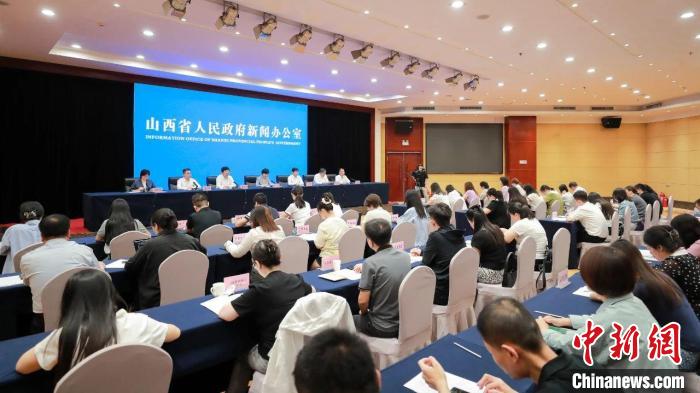
中新网太原6月26日电(车雨榕李新锁)山西省政府新闻办25日召开新闻发布会,详解《山西省提振消费 专项行动实施方案》。其间,山西省商务厅副厅长梁志勇表示,山西将持续加力扩围实施消费品以旧换 新,不断优化补贴审核流程,提高资金兑付效率,推动全省消费市场企稳回升。 山西加力提振消费。 山西省政府新闻办供图 在以旧换新补贴资金方面,2024年清算工作已完成,共计补贴资金55.11亿元(其中中央资金37.45亿元, 省级资金17.66亿元)。2025年已预拨资金44.44亿元(中央资金40亿元,省级配套资金4.44亿元)。 山西省财政厅副厅长、新闻发言人陈新民说,后续将根据工作开展情况加大支持力度,全力确保消费者 享受真金白银的优惠。(完) (文章来源:中国新闻网) 今年,山西消费品以旧换新工作,突出"加力"和"扩围"。在补贴标准上,汽车置换更新执行国家限定最 高标准,对购买新能源车的消费者补贴1.5万元,燃油车补贴1.3万元;家电方面,购买1级能效水效标准 的产品可享受额外5%的补贴,立减额度达20%;电动自行车补贴标准由去年的500元提高至600元;手 机、平板、智能手表等电子产品的补贴标准为最终销售价格的15% ...