新能源汽车

Search documents
成渝经济圈2025年投资动能强劲,重庆“十项行动”投资2961亿
Jing Ji Guan Cha Wang· 2026-01-22 14:07
Core Viewpoint - Chongqing has exceeded its annual investment target for the "Ten Actions" major projects in the Chengdu-Chongqing economic circle, achieving a total investment of 296.14 billion yuan in 2025, with an investment completion rate of 114.96% [1] Group 1: Infrastructure Development - In the modern infrastructure projects, an investment of 136.59 billion yuan was completed, with an investment completion rate of 104.77% [1] - Key infrastructure projects include the successful completion of the Chongqing section of the Chengdu-Chongqing high-speed railway and the full opening of the highway from Hechuan to Bichuan to Jiangjin, significantly improving travel efficiency [2] Group 2: Energy and Water Resources - The Hami-Chongqing ±800 kV UHVDC project has been fully completed and put into operation, providing a new guarantee for long-term electricity supply in Chongqing, with a total investment of 28.6 billion yuan [2] - The project can transmit over 36 billion kWh of electricity annually from Xinjiang to Chongqing, enhancing the energy security of the region [2] Group 3: Industrial Development - Modern industrial projects achieved an investment of 62.62 billion yuan, with an investment completion rate of 143.68% [3] - Significant advancements in advanced manufacturing include the trial operation of a 6-inch IGBT power semiconductor production line and the completion of the first phase of the fiberglass and high-performance composite materials industrial base [3] Group 4: Technological Innovation and Open Projects - Investments in technology innovation and open projects reached 17.27 billion yuan, with an investment completion rate of 125.43% [3] - The establishment of the Zhangjiang Laboratory in Chongqing is progressing, which will enhance the region's capabilities in optoelectronic micro-system integration technology [3] Group 5: Ecological and Social Projects - Ecological, consumption, and livelihood projects completed an investment of 79.66 billion yuan, with an investment completion rate of 114.01% [4] - The Longxi River ecological restoration project has achieved stable water quality standards, enhancing flood control and wastewater treatment [4] Group 6: Future Plans - Chongqing plans to systematically prepare a list of major projects for 2026, focusing on a rolling promotion mechanism to continuously upgrade existing projects and inject momentum into the high-quality development of the dual-city economic circle [4]
比亚迪1月22日全情报分析报告:「2025比亚迪新能源汽车表现亮眼」对股价有积极影响
36氪· 2026-01-22 13:46
Core Viewpoint - BYD is leading the Chinese electric vehicle market with a significant sales advantage, driven by its comprehensive industry chain layout and technological innovations, which are expected to positively impact its stock price and investor confidence [9][14][15]. Sales Performance - In 2025, BYD topped the sales ranking with 4.602 million vehicles sold, showcasing its leadership in the electric vehicle market [9][14]. - The company achieved a 100% target completion rate alongside four other automakers, indicating strong market performance [9]. Technological Advantages - BYD's core technologies, such as the blade battery, enhance its product offerings and competitive edge in the market [15]. - The company's diverse product matrix covers high, medium, and low-end segments, catering to various consumer needs and increasing market share [15]. International Expansion - BYD's overseas sales surpassed 1 million units for the first time, reflecting its capability for global market expansion and enhancing its international image [15]. - The company is strategically advancing its smart driving technology in collaboration with other automakers, positioning itself favorably in future automotive technology competition [15]. Market Sentiment - As of January 22, the overall sentiment regarding BYD is predominantly positive, with 70.5% of the 46,641 online discussions being favorable [10]. - The primary platform for this sentiment is Toutiao, which accounted for 11.05% of the discussions [12]. Stock Price Impact - The combination of sales leadership, technological advantages, product diversity, international market growth, and advancements in smart driving technology is expected to positively influence BYD's stock price in the short and long term [15].


广汽集团:2026年1月5日,公司与华为终端签署全面合作框架协议
Zheng Quan Ri Bao· 2026-01-22 13:40
Core Viewpoint - GAC Group has announced a comprehensive cooperation framework agreement with Huawei, focusing on joint innovation in cutting-edge technologies such as the HarmonyOS ecosystem and AI, aiming to create globally competitive smart mobility solutions [1] Group 1: Partnership Details - The agreement was signed on January 5, 2026, and emphasizes strategic collaboration in technology and ecosystem development, without involving channel areas [1] - Since 2017, GAC Group and Huawei have been expanding and deepening their strategic partnership, covering various domains from hardware to software, products to cloud services, and R&D to smart manufacturing [1] Group 2: Focus Areas - The collaboration will leverage both companies' strengths in manufacturing electric vehicles, operating systems, intelligent cockpits, and global services [1] - The partnership aims to jointly develop high-end smart electric vehicle brands, enhancing competitiveness in the automotive industry [1]

脑机接口遇上市场接口,托举民营经济的浙江样本
2 1 Shi Ji Jing Ji Bao Dao· 2026-01-22 12:49
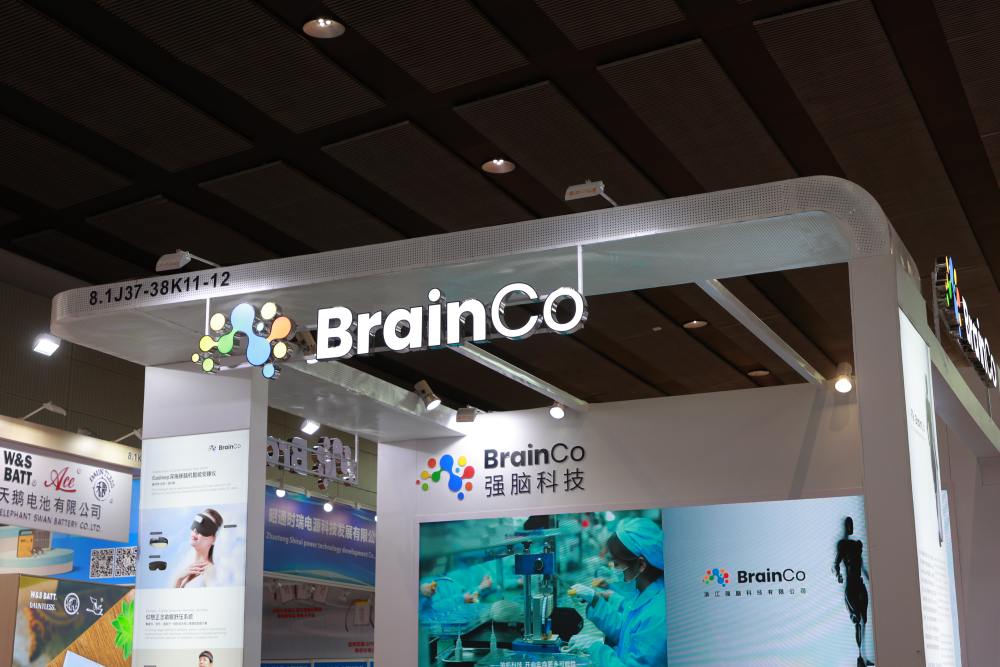
Core Insights - The article emphasizes the importance of providing space for innovators to transform technological advancements into public welfare, ultimately supporting the private economy and reserving possibilities for future societal progress [1] Group 1: Private Enterprises in Zhejiang - As of the end of 2025, Zhejiang province is expected to have a total of 3.7689 million registered private enterprises, with 56.5 private enterprises per 1,000 people [2] - Zhejiang's private enterprises have made significant breakthroughs in cultivating new productive forces, transitioning from scale expansion to value creation [2] - Strong Brain Technology, a leading company in the brain-computer interface field, has developed the world's first non-invasive brain-controlled bionic hand and is recognized as China's first brain-computer interface unicorn [2][3] Group 2: Strong Brain Technology's Mission - Strong Brain Technology aims to assist 1 million physically disabled individuals in regaining daily life through the use of neuro-controlled prosthetics within the next five to ten years [3] - The company has already helped over 2,046 individuals with the installation of smart bionic prosthetics, achieving a completion rate of 102% of its target [3][4] Group 3: Entrepreneurial Spirit and Government Support - The entrepreneurial journey of Strong Brain Technology's founder, Han Bicheng, reflects the essence of entrepreneurial spirit, which is to turn innovative ideas into practical market solutions [3][4] - Zhejiang's government has been proactive in creating a fair competitive environment for private enterprises, which has laid a solid foundation for their development [3][4] - The local government's support for innovation and industry development is illustrated by the metaphor "laying eggs along the way," indicating that nurturing technology and businesses locally can lead to broader market success [8] Group 4: Technological Advancements and Market Entry - Strong Brain Technology achieved the mass production of the world's first high-precision brain-computer interface product, with 100,000 units produced in 2022, marking its entry into the consumer market [7] - The company's product line has expanded to include attention training systems, autism rehabilitation solutions, and sleep intervention devices, driving growth in both medical rehabilitation and consumer applications [7] Group 5: Innovation Environment and Policy Support - Zhejiang's innovation policy includes a "3 70%" mechanism, ensuring that 70% of the support for industrial funds, new land, and energy consumption is directed towards private investment projects [11] - The province is exploring a "company recognition, government acknowledgment" mechanism to provide a more autonomous development environment for talent in private enterprises [11] - The government aims to open more application scenarios to encourage private and leading enterprises to develop digital platforms, fostering collaborative industrial development [11]
2025新能源汽车大战,谁赢、谁输?
3 6 Ke· 2026-01-22 12:47
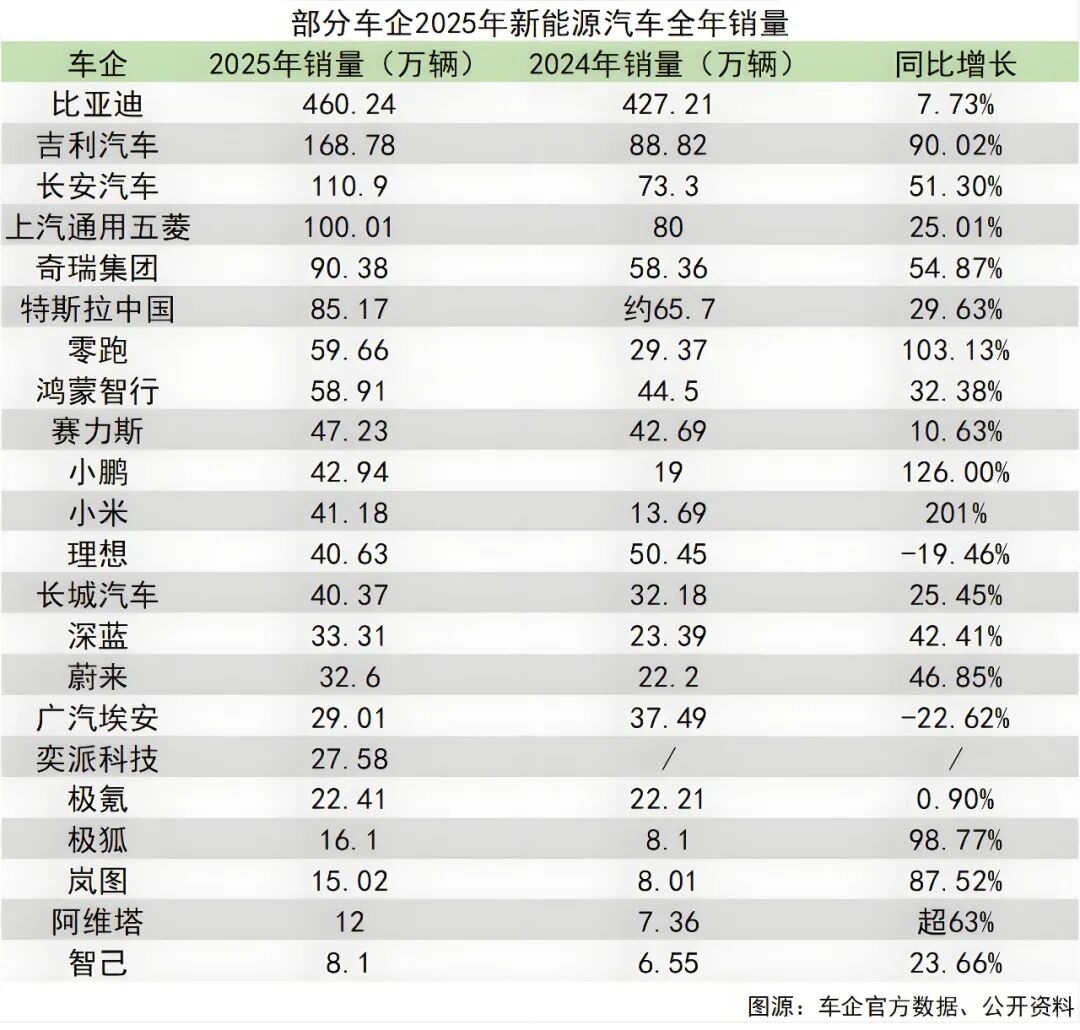
Core Insights - The Chinese automotive industry is experiencing a significant transformation, with total production and sales expected to exceed 34 million units by 2025, driven largely by the growth of new energy vehicles (NEVs) [1] - The market is increasingly dominated by domestic brands, with the top ten companies capturing over 70% of the market share, indicating a pronounced "Matthew Effect" [1] - Profitability has become the primary focus for companies, shifting from merely increasing sales volume to ensuring sustainable profits [1][6] Market Dynamics - NEV production and sales reached 16.62 million and 16.49 million units respectively in 2025, marking year-on-year growth of 29% and 28.2% [1] - The concentration of the NEV market is intensifying, with the top ten companies expected to hold over 74% of the market share by 2025, up from approximately 67% in 2024 [1] Company Performance - BYD leads the market with a total NEV sales volume of 4.60 million units in 2025, including 2.26 million pure electric vehicles, surpassing Tesla to become the global leader in pure electric sales [2] - Geely, Changan, and SAIC-GM-Wuling have joined the "million club," with Geely's NEV sales skyrocketing to 1.69 million units, marking a 90.02% increase year-on-year [3] - New entrants like Xiaomi and Leap Motor are rapidly gaining traction, with Xiaomi achieving over 410,000 units sold in 2025, while Leap Motor's sales reached 596,600 units, reflecting a 103.13% increase [3] Financial Performance - BYD reported revenues of 566.27 billion yuan and a net profit of 23.33 billion yuan for the first three quarters of 2025, maintaining a high gross profit margin of 17.87% [6][7] - New players like Leap Motor and Xiaomi have also reported significant revenue growth, with Leap Motor achieving a 174% increase in revenue for the first half of 2025 [8] Technological Advancements - AI technology has become a core competitive advantage in the NEV sector, transitioning from concept to practical application in 2025 [10] - Major companies are integrating advanced driver-assistance systems (ADAS) into more affordable models, making high-tech features more accessible [11] Management Strategies - Companies are focusing on refined management practices to navigate the competitive landscape, with an emphasis on organizational restructuring and supply chain management [14][16] - Cost control measures are evolving, moving away from extravagant marketing to data-driven customer acquisition strategies [16] Capital and Investment - The importance of capital is underscored by significant fundraising activities, with BYD raising 43.5 billion HKD in a major equity financing round [18] - Companies like NIO and Zero Run are also securing substantial investments to support their growth and technological advancements [18] Export Growth - The export of Chinese NEVs reached 2.62 million units in 2025, representing a year-on-year increase of over 100% and accounting for 36.84% of total automotive exports [19] - BYD remains the leader in exports, with 1.05 million units shipped abroad, benefiting from its overseas manufacturing presence [19]
公募基金四季报风云:基金经理激战AI泡沫论,半数基金年底减仓
Jing Ji Guan Cha Wang· 2026-01-22 11:45
Core Viewpoint - The 2025 Q4 public fund reports reveal a complex landscape characterized by "the strong getting stronger and the obscure emerging" [3] Group 1: Fund Performance - Over 40% of active equity products achieved positive quarterly returns, yet the overall fund profits still incurred losses exceeding 10 billion [4] - The top-performing fund, Yongying High-end Equipment Select A, reported a quarterly return of 56.42%, while some healthcare-themed funds experienced losses exceeding 23% [4] - Mini funds like Zhongou Cycle Select saw their scale surge from 0.36 billion to 15.75 billion, marking an increase of over 42 times [4] Group 2: Fund Manager Strategies - More than half of active equity funds opted to reduce stock positions, with over 10 products decreasing their positions by more than 20% [5] - The champion fund Yongying Technology Select A reduced its stock position from 94.41% to 80.34%, a decrease of over 14 percentage points [5] - Fund managers are showing caution towards AI hardware valuations, seeking relatively undervalued segments within the industry [9] Group 3: AI Bubble Debate - The debate over whether the AI sector has entered a bubble has intensified, with differing views among fund managers [10] - Some managers believe the AI industry is in the early stages of bubble formation, while others argue that valuations have returned to reasonable levels [11] - The core of the bubble debate revolves around the timing of technological advancements and the pace of commercial application [12] Group 4: Investment Opportunities - Fund managers are shifting their focus from beta to alpha, emphasizing the importance of stock selection [17] - In the innovative drug sector, opportunities are identified in the overseas expansion of the industry chain and domestic substitution of equipment [18] - The overall return levels in the equity market may decline, but significant structural excess return opportunities still exist [18]

技术铸魂 口碑破局:极氪开辟中系豪华新范式
Mei Ri Jing Ji Xin Wen· 2026-01-22 11:19
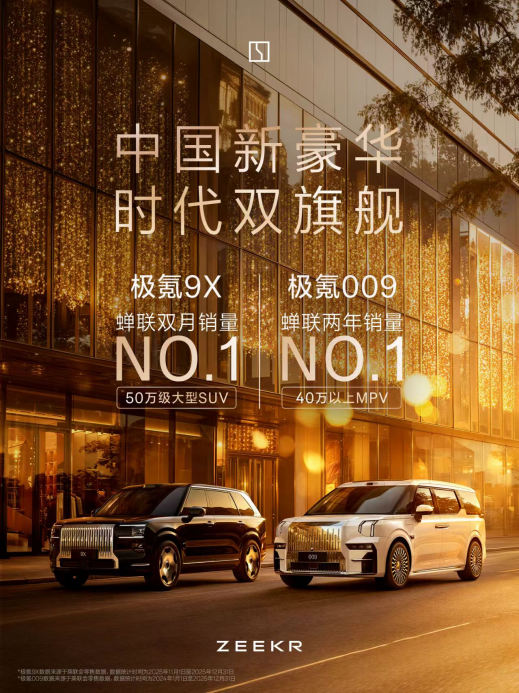
Core Insights - The luxury car market in China is undergoing significant changes, with traditional luxury brands struggling to maintain their historical premium pricing while new energy brands face challenges in competition and consumer decision-making [1][3] Group 1: Market Dynamics - Traditional luxury brands are finding it difficult to sustain their market positions due to reliance on historical pricing strategies, while new energy brands are caught in a "price war" and struggle with consumer choices between brand perception and technical specifications [1] - Zeekr, under the "One Geely" strategy, reported impressive results with annual deliveries of 224,133 units and a global cumulative delivery of nearly 650,000 units, achieving an average selling price exceeding 300,000 yuan [1] Group 2: Product Strategy - Zeekr's luxury breakthrough is attributed to its commitment to fully self-developed technology, creating a competitive edge with advanced technologies like the Haohan-S luxury hybrid architecture and Haohan AI digital chassis [4] - The Zeekr 9X is highlighted as a major player in the luxury SUV market, with a high average price of 538,000 yuan and over 70% of high-end models sold to customers previously owning traditional luxury brands [5] Group 3: Technology and Consumer Benefits - Zeekr's strategy of technology democratization allows flagship technologies to be accessible in lower-priced models, enhancing the overall product matrix and addressing consumer charging anxiety with over 2,000 self-built charging stations [7] - The introduction of the "Zeekr User Service Charter" and initiatives like the "Mystery Experience Officer" program aim to enhance user experience and brand transparency, fostering a strong relationship with consumers [8] Group 4: Brand Reputation and Market Position - Zeekr's focus on user experience and brand building has led to a significant increase in its Net Promoter Score (NPS), positioning it among the top brands in consumer confidence [9] - The Zeekr 9 series has not only dominated the domestic market but has also gained international recognition, being showcased at CES and expanding its delivery footprint to over 50 countries [9]
国开行吉林省分行:金融引擎护航吉林“十四五”高质量发展
Xin Lang Cai Jing· 2026-01-22 11:00
Core Viewpoint - The Jilin Branch of the National Development Bank has played a crucial role in supporting the comprehensive revitalization of Jilin Province during the "14th Five-Year Plan" period, with a total loan issuance exceeding 200 billion yuan, significantly contributing to the province's high-quality development [1] Group 1: Infrastructure Development - The Jilin Branch has positioned itself as a "main bank for infrastructure," issuing over 120 billion yuan in infrastructure loans to meet financing needs for major projects [2] - In transportation, the bank supports the construction of highways, railways, and urban rail transit, enhancing the province's comprehensive transportation network [2] - Key projects include financing for the Changchun urban area ring road and the Jilin to Hunchun railway passenger line, improving travel efficiency for residents [2] Group 2: Industrial Innovation - The bank has focused on supporting the "six new" industries, providing 33 billion yuan in loans for advanced manufacturing and strategic emerging industries [3] - Notable projects include financing for BYD's battery production facility, which aims to establish the first electric vehicle battery production base in Northeast China [3] - The bank has also supported new materials development, helping companies like Jilin Carbon Valley with technology research and production capacity [3] Group 3: Green Transformation - The Jilin Branch has actively promoted green development, issuing 59 billion yuan in loans for ecological protection, clean energy, and environmental infrastructure [4] - The bank has led financing for significant clean energy projects, including the first large-scale green methanol project in the country [4] - It has also supported ecological restoration projects, such as the successful implementation of the ecological environment-oriented development project in Changchun [4] Group 4: Inclusive Finance - The bank has maintained a commitment to inclusive finance, providing over 1.6 billion yuan in student loans to benefit more than 200,000 economically disadvantaged students [5] - It has issued 19 billion yuan in loans to over 3,000 small and micro enterprises, addressing financing challenges in underdeveloped areas [5] - The bank's initiatives aim to ensure that financial services reach a wide range of beneficiaries, enhancing economic resilience [5]
国泰海通证券每日报告精选
GUOTAI HAITONG SECURITIES· 2026-01-22 10:50
Market Trends - AI hardware penetration is increasing, leading to a rise in the semiconductor industry, with PCB and memory prices continuing to rise[4] - Lithium carbonate prices have surged by 12.7% due to supply constraints and improving downstream demand[6] - The pork price has improved by 2.4% month-on-month, supported by consumption policies and seasonal demand[5] Consumer Insights - In the real estate sector, the transaction area of commercial housing in 30 major cities has decreased by 30.5% year-on-year, with first-tier cities down by 35.4%[5] - Retail sales of passenger cars have dropped significantly, with a 32% year-on-year decline in daily sales, particularly in the new energy vehicle segment, which saw a 38% drop[5] Industry Developments - The domestic company Tiangong International is focusing on powder metallurgy technology for nuclear fusion materials, with a target of 25% revenue growth over the next three years[8] - The cement production in Uganda has increased from 370,000 tons in 2000 to 5.1 million tons in 2023, driven by rapid urbanization and economic growth[12] Company Performance - Hikvision's net profit for 2025 is projected to be 141.88 billion yuan, reflecting an 18.46% year-on-year increase, driven by high-quality growth strategies[40] - Netflix's revenue for FY26 is expected to reach $511 billion, with a net profit of $135 billion, indicating a 22.5% year-on-year growth[48]





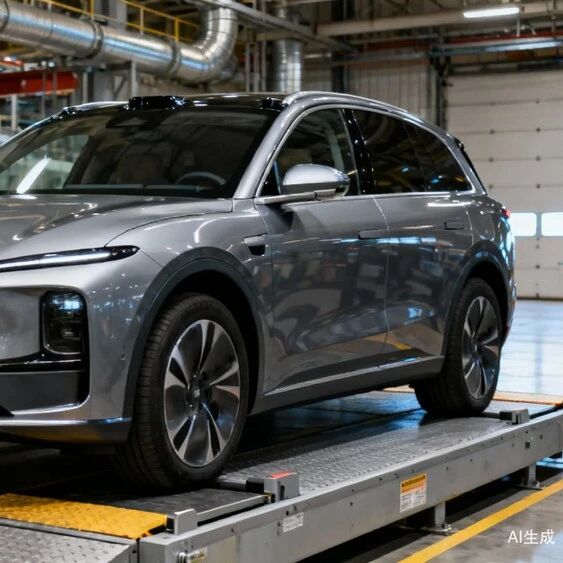
中国,为什么要让新能源车“减肥”?
虎嗅APP· 2026-01-22 10:18
Core Viewpoint - The article discusses the increasing weight of electric vehicles (EVs), particularly SUVs, and the implications of this trend on the industry, safety, and resource utilization. It highlights the need for the industry to adopt measures to reduce vehicle weight in response to new energy consumption standards set by the government [4][9][47]. Group 1: Industry Trends - By 2025, China's production and sales of new energy vehicles (NEVs) are projected to reach 16.626 million and 16.49 million units, respectively, marking a year-on-year growth of 29% and 28.2%, maintaining the global lead for 11 consecutive years [4]. - The average weight of new energy vehicles is 20%-30% heavier than traditional fuel vehicles, with some models exceeding 3 tons [14][11]. - The implementation of national energy consumption standards is pressuring the industry to reduce vehicle weight [8][49]. Group 2: Causes of Increased Weight - The primary reason for the increased weight of EVs is the battery, with electric versions of vehicles like the BMW X3 weighing significantly more due to larger battery packs [17][15]. - The trend of "oil-to-electric" conversions has led to redundant weight as manufacturers retrofit existing fuel vehicle platforms with batteries, resulting in additional structural reinforcements [20][22]. - The growing number of features and configurations in EVs, such as larger interiors and added amenities, contributes to the overall weight increase [25][27]. Group 3: Negative Consequences - Heavier vehicles pose safety risks, as increased weight affects braking efficiency and can lead to greater wear on components [34][35]. - The additional weight results in higher energy consumption, creating a cycle where increased battery capacity leads to heavier vehicles and diminished returns on range improvements [39][40]. - The inefficient use of resources in battery production exacerbates environmental concerns, contradicting the eco-friendly principles of EVs [45][46]. Group 4: Regulatory Response - The new national standard for electric vehicle energy consumption, effective from January 1, 2026, aims to bind energy consumption limits to vehicle weight, making it more challenging for manufacturers to rely on simply adding battery capacity [47][48]. - This standard encourages a shift away from the "stacking batteries" approach, promoting a focus on weight reduction and efficiency [49]. Group 5: Solutions for Weight Reduction - Upgrading materials, such as using aluminum and composite materials, can significantly reduce vehicle weight while maintaining strength [55][56]. - Structural optimization through advanced manufacturing techniques, like large-scale die-casting, can streamline production and reduce weight [58]. - System integration strategies can minimize redundant components, effectively lowering overall vehicle weight without compromising performance or safety [60][66].