
电动汽车

Search documents
印度稀土储量全球第3,为啥还被中国“卡脖子”?这1致命短板太扎心!
Sou Hu Cai Jing· 2025-07-13 02:26
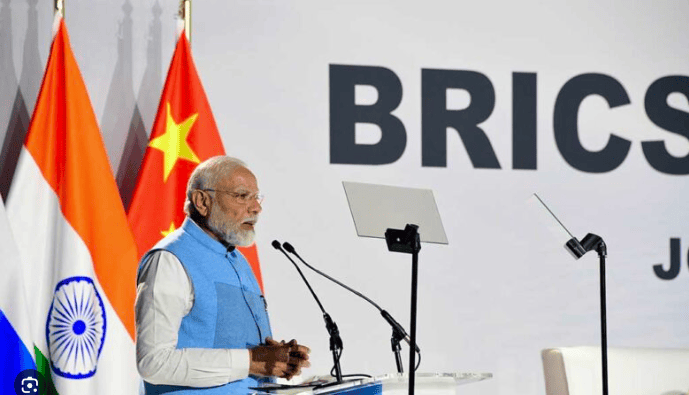
Group 1 - The article discusses India's dependency on China for critical resources, particularly in the context of Prime Minister Modi's statements at the BRICS summit, highlighting the contradiction between India's desire for self-sufficiency and its reliance on Chinese supply chains [1][10] - India ranks third globally in rare earth reserves, with over 9 million tons, but lacks the infrastructure to extract and process these resources, making it reliant on China for processing capabilities [6][8] - The demand for rare earth materials, especially in the electric vehicle sector, is increasing significantly, yet India continues to depend on China for refined materials, creating a diplomatic tension between the two nations [10][12] Group 2 - Modi's diplomatic approach is characterized by a desire for cooperation while maintaining a tough public stance, reflecting India's cultural emphasis on national pride and self-respect [12][15] - The article suggests that India is attempting to leverage multilateral platforms like BRICS to exert pressure on China rather than engaging in direct negotiations, which may not be an effective strategy [12][15] - The need for India to balance its aspirations of becoming a major power with the reality of its industrial dependencies on China is emphasized, indicating that true independence in industry cannot be achieved without cooperation from China [13][15]

马斯克再失一员大将:X首席执行官宣布离职
财富FORTUNE· 2025-07-12 13:07
Core Viewpoint - Linda Yaccarino has stepped down as CEO of social media platform X, marking another departure from Elon Musk's business empire amid increasing chaos in his personal and professional life [1][2]. Group 1: Leadership Changes - Yaccarino joined X in June 2023 and had a background in media and advertising, previously working at NBC and Turner Broadcasting [2]. - The reasons for Yaccarino's departure remain unclear, but the platform has faced significant challenges since Musk took over in 2022, including a loss of users to competitors like Bluesky [3]. - Other recent high-profile departures from Musk's companies include: - Omead Afshar, former North America and Europe sales head at Tesla [4]. - Jenna Ferrua, former HR director at Tesla, who left after seven years [5]. - Milan Kovac, former head of the Optimus robot team at Tesla, who spent nine years at the company [6]. - Vineet Mehta, former battery architecture head at Tesla, who left after 18 years [7]. - Mark Westfall, former mechanical engineering head in Tesla's energy division, who worked there for ten years [9]. - Brett Weitz, former global content, talent, and brand sales head at X, who described his time at the company as memorable [10]. Group 2: Impact of Departures - The departures of these executives highlight a trend of instability within Musk's companies, which may affect their operational efficiency and strategic direction [3][4][5]. - The loss of experienced leaders could hinder the companies' ability to innovate and compete effectively in their respective markets [3][6][7].


沃尔沃CEO:与中国合作才能领先
Huan Qiu Wang Zi Xun· 2025-07-11 23:06
Group 1 - Tesla's market share in China is being increasingly challenged by local competitors like BYD and Xiaomi, with Xiaomi surpassing Tesla in sales within a year of entering the automotive market [1] - Tesla has relied heavily on its Model 3 and Model Y vehicles, leading to consumer fatigue and a decline in interest among Chinese buyers [1] - Local electric vehicle brands are introducing new models with advanced features that appeal to Chinese consumers, such as large entertainment screens and voice assistants, which are becoming standard expectations [1] Group 2 - Volvo's CEO emphasizes the need for the European automotive industry to improve competitiveness rather than relying on tariffs to protect against Chinese electric vehicle manufacturers [2] - The CEO advocates for a focus on local market demands in China, suggesting that European manufacturers should not simply transfer their technology but collaborate with local entities to develop relevant features [2] - The increasing interest of Chinese consumers in technology-rich vehicles highlights the necessity for automotive companies to adapt their offerings to meet local preferences [2]
特朗普,突发!黄金暴涨!美股全线下跌!
Sou Hu Cai Jing· 2025-07-11 15:28
Market Overview - US stock market opened lower on July 11, but later showed signs of recovery with major indices narrowing their losses [1] - Gold and Bitcoin prices surged, with gold rising over 1% to exceed $3360 per ounce and silver increasing by more than 3% [3] Cryptocurrency Sector - Cryptocurrency stocks saw significant gains, with Bit Origin rising over 40% [2] - Bitcoin increased by more than 6.5%, despite nearly 280,000 liquidations in the past 24 hours [2] Electric Vehicle Industry - NIO's stock surged over 7% following the announcement of its new model, the Ladao L90, with a starting price of 279,900 yuan for purchase and 193,900 yuan for battery rental [3] - The Ladao L90 is set to officially launch at the end of July, with deliveries starting on August 1 [3] Trade Policy and Economic Outlook - President Trump announced plans to impose a 15% or 20% tariff on nearly all remaining trade partners, raising concerns in the market [4][5] - The Royal Bank of Canada has pushed back its forecast for the Federal Reserve to restart interest rate cuts from September to December, citing the need for more time to assess inflation and labor market conditions [5]

省心又放心 比亚迪推出“全面兜底”计划
Huan Qiu Shi Bao· 2025-07-11 14:08
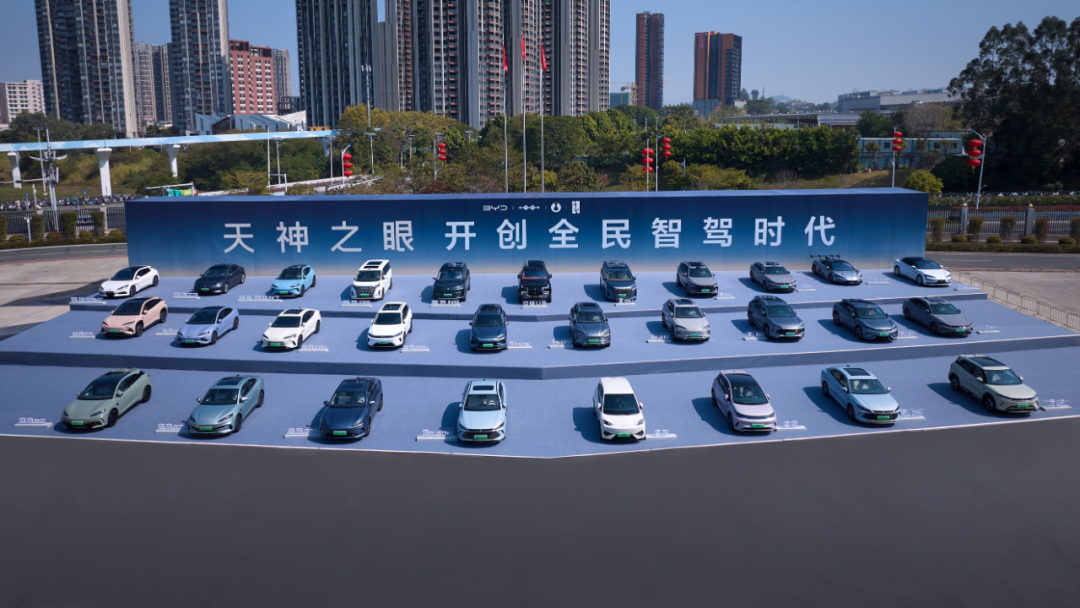
Core Viewpoint - The automotive industry is increasingly focusing on human-centric and safety-first approaches, with smart driving technologies enhancing convenience and safety for consumers. BYD has introduced advanced L4-level smart parking technology and a comprehensive liability coverage plan, setting a precedent in the industry and improving service standards for smart vehicles [1][6]. Group 1: Market Trends and Consumer Sentiment - The domestic smart driving market is experiencing a dichotomy, with rising consumer demand for features like smart parking and navigation, as indicated by a projected L2-level penetration rate exceeding 55% by mid-2024 and potentially surpassing 65% by 2025 [3][4]. - Despite the growing interest, many consumers remain ambivalent about smart driving technologies, with concerns about liability in the event of accidents being a significant pain point [3][4]. Group 2: Technological Advancements - The implementation of the "Automated Driving Classification" standard in China has categorized driving automation into six levels, with most vehicles currently on the market operating at L2 level, requiring driver supervision even when using assistance features [4]. - BYD's newly launched smart parking technology is comparable to L4-level automation, allowing drivers to disengage from active monitoring under specific conditions [4][6]. Group 3: BYD's Safety Commitment - BYD's safety net plan promises compensation for any safety issues or property damage occurring during smart parking scenarios for all "Tian Shen Zhi Yan" model users, marking a global first in mass-produced vehicles [6][11]. - This initiative aims to eliminate the "liability vacuum" in the industry, shifting accident responsibility from users to the company, thereby providing consumers with a sense of "technical freedom" and "liability exemption" [6][11]. Group 4: User Experience and Features - The smart parking technology allows users to park in challenging scenarios with just one button, offering options for head-in or reverse parking and three speed settings: "Comfort," "Standard," and "Fast" [7]. - The system includes features to avoid collisions, such as automatic folding mirrors and voice prompts, enhancing user safety during parking [7][10]. Group 5: Data and Engineering Support - BYD boasts one of the largest smart driving ecosystems globally, with over 10 million vehicles on the road, including more than 1 million equipped with the "Tian Shen Zhi Yan" system, generating 44 million kilometers of real-world data daily [11][12]. - The company employs over 110,000 engineers, with nearly 70% holding advanced degrees, ensuring efficient data utilization to optimize technology and address potential issues [11][12].

深度解读|马斯克建“美国党”背后三大推手
Xin Hua She· 2025-07-11 13:36
Core Viewpoint - Elon Musk's proposal to establish a new political party, the "American Party," reflects deep-seated contradictions within American society and politics, driven by his desire to protect his technological empire and respond to the evolving political landscape [2][8]. Group 1: Conflict of Interests - The immediate catalyst for Musk's initiative is the "Big and Beautiful" bill promoted by Trump, which eliminates tax incentives for electric vehicle purchases, adversely affecting Tesla [3]. - This conflict represents a broader struggle between traditional industries and emerging tech capital, highlighting the tension between MAGA supporters and tech elites [3]. - Musk's establishment of the "American Party" signals the emergence of a new interest group in American political dynamics, representing the tech-industrial complex [3]. Group 2: Conflict of Systems - Musk's involvement stems from his understanding of the complexities of the American electoral system, which he believes he can navigate to become a disruptive force [5]. - The electoral system's fragmentation and gerrymandering have led to increased political polarization, making it difficult for third-party candidates to gain traction [5]. - Musk envisions that the "American Party" could gradually secure seats in the House of Representatives, thereby influencing government decisions to protect his interests [5]. Group 3: Conflict over National Debt - The "Big and Beautiful" bill also raises concerns about the escalating U.S. national debt, which Musk views as a significant threat to economic stability and innovation [6][7]. - Musk argues that unchecked debt expansion undermines U.S. competitiveness and jeopardizes funding for critical sectors like aerospace and renewable energy, which are vital to his business interests [7]. - The national debt has become a central issue in American political discourse, with differing views on fiscal responsibility between Democrats and Republicans [7][8].
中国创新生态全面升级 新质生产力加速形成
Yang Shi Wang· 2025-07-11 07:24
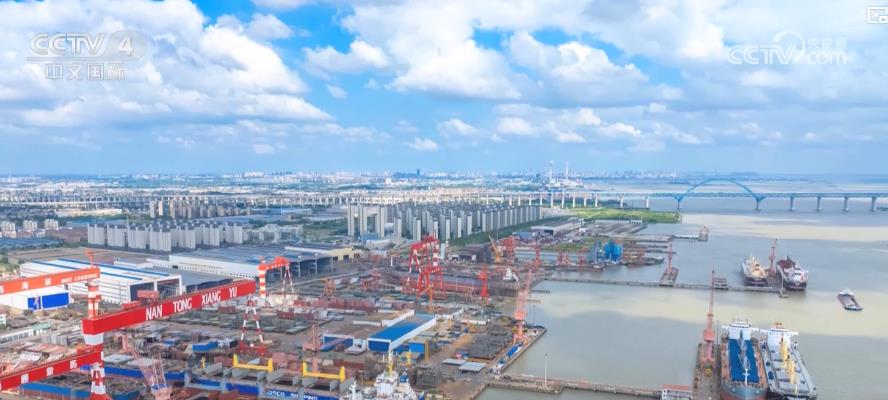
Group 1 - The core viewpoint is that China's "14th Five-Year Plan" has successfully implemented strategic tasks, leading to significant breakthroughs in innovation and a high level of R&D investment [1][4] - The plan includes 102 major projects that are progressing smoothly, integrating artificial intelligence with various industries, and promoting the deep integration of the internet, big data, and the real economy [4][10] - China's contribution to global economic growth remains around 30%, positioning the country as a stable and positive force in the world economy [7][13] Group 2 - The focus of Chinese innovation is not merely on technological breakthroughs but on enhancing user experience and market demand, creating a complete innovation ecosystem [7] - Chinese technology companies are gaining global recognition, particularly in emerging technologies such as energy transition and artificial intelligence [10][13] - The growth of the middle-income group, the development of the digital economy, and advanced infrastructure showcase the resilience and potential of the Chinese economy [13]
马斯克的“快意恩仇”
21世纪经济报道· 2025-07-11 05:39
Core Viewpoint - Elon Musk's proposal to establish a new political party in the U.S. aims to liberate citizens from the existing two-party system, which he claims is leading the country to bankruptcy due to waste and corruption [1][4]. Group 1: Political Context - The U.S. election system is characterized by an indirect election process where the president is elected by an electoral college rather than by direct popular vote [1][2]. - The electoral votes are allocated based on the population of each state, with a total of 538 electoral votes, including 3 from Washington D.C. [1]. - The "winner-takes-all" principle in U.S. elections means that the candidate with the majority of votes in a state receives all of that state's electoral votes, contrasting with proportional representation systems in some European countries [2]. Group 2: Historical Stability of Two-Party System - The two-party system has been stable for nearly 200 years, with the Democratic and Republican parties dominating due to their substantial campaign resources and experience [3]. - California, a Democratic stronghold, has the highest number of electoral votes at approximately 54, while Texas, a Republican stronghold, has about 40 electoral votes [3]. Group 3: Challenges for Third Parties - Third parties in the U.S., such as the Green Party and the Libertarian Party, often participate in elections to raise awareness rather than to win, with many candidates withdrawing early to increase their visibility [4]. - The political landscape is complicated by the two parties' ability to adapt their policies to attract voters, making it uncertain whether Musk's new party can effectively challenge the status quo [4]. Group 4: Impact on Tesla - Following Musk's announcement about forming a new party, Tesla's stock price dropped nearly 7%, resulting in a market value loss of approximately $68 billion [5]. - Analysts express concern that Musk's political activities could negatively impact Tesla's stock, with some suggesting that he should distance himself from politics to protect the company's interests [5]. - Recent legislative changes reducing tax incentives for electric vehicles may further affect Tesla's sales and the broader electric vehicle market [5]. Group 5: Internal Challenges - Musk's high compensation package, which could yield up to $56 billion in stock options if performance targets are met, has drawn criticism regarding the board's oversight [6]. - Analysts recommend implementing restrictions on Musk's political activities and setting boundaries for his tenure at Tesla to mitigate potential conflicts of interest [6]. - Musk's dissatisfaction with the two-party system raises questions about the feasibility and sincerity of his intentions to establish a new political party [6].
马斯克的“快意恩仇”
2 1 Shi Ji Jing Ji Bao Dao· 2025-07-11 03:38
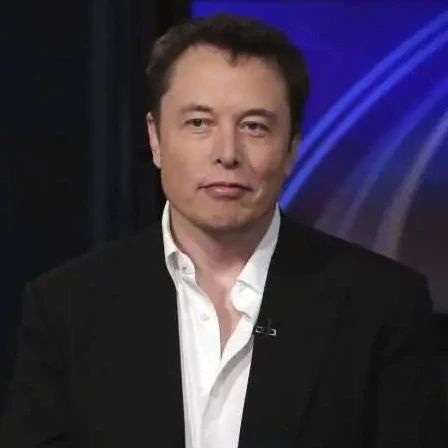
Group 1 - Elon Musk announced the formation of a new political party called the "American Party" to liberate citizens from the two-party system in the U.S. [1] - A poll conducted by Musk showed that 65.4% of over 1.24 million participants supported the establishment of the "American Party" [1] - The U.S. electoral system operates on an indirect election basis, where the president is elected by an electoral college rather than by direct popular vote [1][2] Group 2 - The "winner-takes-all" principle in U.S. elections means that the candidate with the most votes in a state receives all of that state's electoral votes [2] - Historically, the two-party system has been stable in the U.S., with the Democratic and Republican parties dominating due to their established voter bases and resources [3] - Third parties have existed in the U.S., but they often struggle to gain significant traction, with many candidates participating primarily to raise their profile rather than to win [3] Group 3 - Musk's political activities have negatively impacted Tesla's stock price, which fell nearly 7% following his announcement about the new party, resulting in a market cap loss of approximately $68 billion [4] - Analysts have downgraded Tesla's stock rating from "buy" to "hold" due to concerns over Musk's political involvement and its potential adverse effects on the company [5] - Musk's high compensation package has drawn criticism, and there are calls for more oversight regarding his political activities and their impact on Tesla [5]
美国电动汽车市场晴转阴
Zhong Guo Qi Che Bao Wang· 2025-07-11 02:00
Group 1 - The core viewpoint of the articles is that the recent tax and spending bill passed by the U.S. Congress, which significantly reduces tax rates and cuts subsidies for clean energy, poses a serious setback for the electric vehicle (EV) industry in the U.S. [2][3] - The bill eliminates federal tax credits for electric vehicle purchases starting September 30, which is expected to lower consumer interest in EVs [2][4] - The shift in U.S. climate and energy policy under the Trump administration has led to a decline in consumer willingness to purchase electric vehicles, marking a significant change in market dynamics [4][7] Group 2 - Data from S&P Global indicates that U.S. electric vehicle sales fell for the first time in 14 months in April, with a 4.4% year-over-year decline [5][6] - Tesla, as a market leader, has seen its sales drop significantly, with a 22% year-over-year decline in May, contributing to the overall downturn in the electric vehicle market [6] - Consumer interest in electric vehicles has decreased, with only 51% of Americans considering purchasing an EV by 2025, down from 59% in 2023 [7][8] Group 3 - Concerns over high maintenance costs, expensive prices, and inadequate charging infrastructure are primary reasons for the declining interest in electric vehicles among consumers [8] - The attractiveness of purchase subsidies has diminished, with only 39% of consumers considering tax credits as a motivating factor for buying an electric vehicle by 2025, compared to 60% in 2022 [8]
