新茶饮

Search documents
新茶饮春节景区门店业绩大增 核心产品增长明显
Xin Jing Bao· 2026-02-24 09:37
Group 1 - The "Spring Festival Economy" has led to a surge in consumer demand, with many businesses offering "Spring Festival Open" services, resulting in a strong start to the year for the consumption market [1] - Popular tourist cities such as Beijing, Shanghai, Chengdu, Chongqing, Shenzhen, Guangzhou, Xi'an, Hangzhou, Nanjing, and Wuhan have been identified as the top 10 travel destinations, driving significant sales growth for new tea beverage brands [1] - Tea brands like Cha Bai Dao reported a staggering 4500% increase in sales at scenic area stores, while Ba Wang Cha Ji saw over 200% growth in sales at key locations such as scenic spots and transportation hubs [1] Group 2 - The "One Cup of Good Tea, Good Luck Added" marketing campaign by Tian La La resulted in a remarkable increase in customer traffic, with some stores experiencing over 1500% growth in performance [2] - Yi He Tang achieved a revenue increase of over 35% during the Spring Festival period, with total cup sales rising by 28% compared to the previous year [2] - The best-performing provinces for Yi He Tang were Guangxi, Hebei, and Henan, showcasing a dual-driven growth strategy [2] Group 3 - New tea products from brands like Hi Tea, including Qi Lan Pink Guava and Qi Lan Apple Apricot, became popular during the Spring Festival, contributing to significant sales [3] - Yi He Tang's sales volume reached over 2.2 million cups for its baked milk tea, maintaining its top position in sales, followed by other popular products [3] - Cha Bai Dao implemented various incentive policies for franchisees to meet the high demand during the Spring Festival, resulting in significant profit increases for stores that remained open [3]
新茶饮春节景区门店业绩大增,核心产品增长明显
Xin Jing Bao· 2026-02-24 09:25
Core Insights - The "Spring Festival Economy" has led to a surge in consumer demand, with many businesses offering "Spring Festival Open" services, resulting in strong sales performance for various tea brands during the holiday period [1] Group 1: Market Performance - Popular tourist cities such as Beijing, Shanghai, Chengdu, Chongqing, Shenzhen, Guangzhou, Xi'an, Hangzhou, Nanjing, and Wuhan ranked as the top 10 travel destinations, driving significant sales for tea brands [1] - Tea brand Cha Bai Dao reported a staggering 4500% increase in sales at scenic area stores in major tourist cities [1] - Ba Wang Cha Ji experienced over 200% sales growth in key stores located in scenic areas, highway service areas, and transportation hubs during the holiday [1] Group 2: Brand-Specific Achievements - Tian La La's marketing campaign "A Good Cup of Tea, Good Luck Added" resulted in a customer traffic surge, with some stores seeing a 1500% increase in performance, and over 800% growth in more than a thousand rural stores [2] - Yi He Tang achieved a revenue increase of over 35% year-on-year during the Spring Festival period, with total cup sales rising by 28% compared to the previous year [2] - On the first day of the Lunar New Year, Yi He Tang's revenue grew by 10% compared to the same day in the previous year, with cup sales increasing by 4% [2] Group 3: Product Innovations - New tea products from Hi Tea, such as Qi Lan Pink Guava and Qi Lan Apple Apricot, became popular during the Spring Festival, showcasing a successful product strategy [3] - Yi He Tang's baked milk tea reached over 2.2 million cups sold, leading the sales chart, followed by Mint Milk Green and Pearl Milk Tea with over 1.55 million and 900,000 cups sold, respectively [3] - Ba Wang Cha Ji's classic products continued to dominate sales, with new special tea products receiving positive consumer feedback [3] Group 4: Operational Strategies - Cha Bai Dao implemented various incentive policies for franchisees to meet the high consumer demand during the Spring Festival, resulting in increased store openings during the holiday [3] - A franchisee from Guangdong reported an additional profit of approximately 50,000 yuan from operating continuously during the Spring Festival, despite increased operational costs [3]
兴业证券:2026年关注电新、TMT、新消费等出海机会
智通财经网· 2026-02-21 07:29
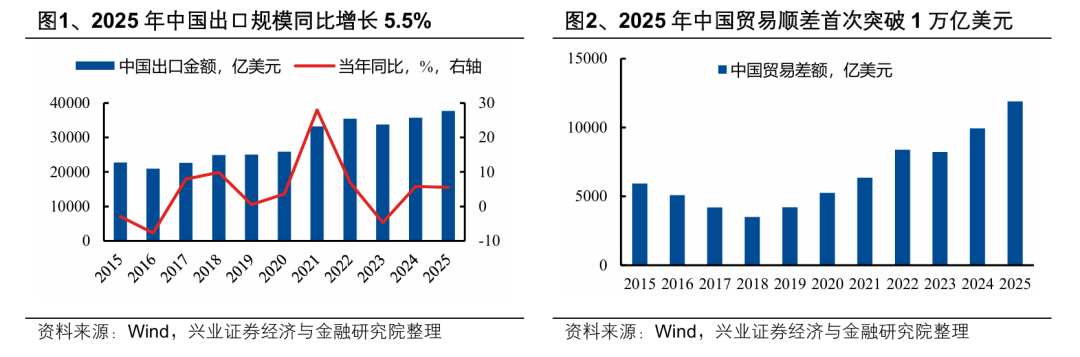
Core Viewpoint - The global industrial system is undergoing a significant paradigm shift from "efficiency first" to "security and autonomy," leading to increased demand for infrastructure and industrial construction, with China transitioning from a "final product exporter" to a "global basic industrial provider" [1][39]. Group 1: China's Foreign Trade Trends - China's foreign trade is diversifying and moving towards higher-end products, with exports reaching a historical high of $2.5 trillion in 2025, a year-on-year increase of 5.5% [2]. - The trade surplus surpassed $1 trillion for the first time, marking a significant year-on-year increase of 19.8% [2]. - Net exports contributed 1.64 percentage points to GDP growth in 2025, the second-highest level since 2007 [5]. Group 2: Regional and Product Structure - The diversification of external demand is strengthening, with emerging markets compensating for declines in the U.S. market. Exports to the U.S. fell by 19.79% year-on-year, while exports to ASEAN, Africa, and the Middle East grew by 13.64%, 25.9%, and 9.7%, respectively [8]. - High-end manufacturing products such as electrical machinery, machinery, automobiles, and ships remain the mainstay of exports, contributing 44.10%, 17.67%, 16.05%, and 6.99% to the total export scale [13]. Group 3: Opportunities for Overseas Expansion - In 2026, there are strong overseas opportunities in sectors such as electric new (batteries, grid equipment), machinery, TMT (electronics, communication, gaming), innovative pharmaceuticals, new consumption, shipbuilding, commercial vehicles, automotive parts, and chemical products [57]. - The restructuring of global supply chains is accelerating the globalization of Chinese enterprises' production capacity, with 229 companies establishing production facilities or subsidiaries in ASEAN, India, and Mexico by 2025, nearly doubling from 2024 [29]. Group 4: AI Expansion Cycle - The AI expansion cycle is a core focus in the Chinese capital market, with significant capital expenditure expected from major tech companies. For instance, capital expenditures from major cloud service providers in North America are projected to reach $598.7 billion in 2026, a 67% increase year-on-year [45][46]. - The demand for AI-related hardware is expected to drive growth in related sectors, benefiting domestic manufacturing leaders in robotics and consumer electronics [48]. Group 5: Cultural and Technological Output - Chinese enterprises are also focusing on cultural and technological exports, with significant growth in overseas revenue from IP (e.g., toys, games) and lifestyle brands (e.g., new tea drinks, e-commerce) [49][50]. - The innovative pharmaceutical sector is becoming a key player in the global market, with several new drugs commercialized in the U.S. and Europe, indicating strong potential for further overseas opportunities in 2026 [53].


告别泡沫叙事:九大关键词看懂2025中国消费 | 年终盘点
Sou Hu Cai Jing· 2026-02-20 12:37
Group 1: Core Insights - The Chinese consumer market in 2025 is characterized by both chaos and fragmentation, with a shift towards efficiency, value, and trust as the essence of competition [2] - The year witnessed significant events such as the end of the food delivery war, a crisis in the prepared food sector, and the rise of hard discounts while soft discounts declined [2] - Major international brands are seeking survival through divestitures, while the middle class experiences repeated disillusionment in consumption [2] Group 2: Food Delivery War - The food delivery war was ignited by JD's aggressive entry into the market, leading to a fierce subsidy competition among major players like Meituan and Alibaba [5][6] - In Q2 2025, the three major players burned through at least 30 billion yuan, equivalent to the total industry profit of the previous year [6] - The war has severely impacted small businesses and delivery personnel, highlighting the unsustainable nature of the competition [6] Group 3: Prepared Food Crisis - The prepared food crisis began with a public dispute involving a well-known restaurant, exposing significant gaps in consumer trust and industry standards [10][11] - The crisis has led to the closure of 102 stores by the affected restaurant and highlighted the precarious state of the industry, with many companies facing severe losses [12] - The market for prepared foods is projected to grow significantly, with the government moving towards establishing clearer standards [12][13] Group 4: Hard Discount Battle - The hard discount retail sector is experiencing explosive growth, with major players like JD and Hema aggressively expanding their store presence [16][18] - The distinction between hard and soft discounts is becoming more pronounced, with hard discounts focusing on sustainable low prices through private label products [18][19] - The competition is shifting from price wars to efficiency in supply chains and operational capabilities [19] Group 5: Dairy Product Trends - The "milk skin" product has gained immense popularity, evolving from a local specialty to a nationwide trend, with significant sales figures reported [21][22] - The product's success is attributed to its versatility and the ability to integrate into various food categories, driving demand and industry expansion [22] Group 6: Medicinal Food Market - The market for medicinal food has surpassed 370 billion yuan, with a growing emphasis on integrating traditional Chinese medicine into everyday food products [25][26] - The industry is witnessing an expansion of raw materials and innovative product forms, driven by advancements in technology and consumer demand [27][28] Group 7: International Brand Divestitures - In 2025, international brands like Starbucks and Burger King began divesting their Chinese operations, indicating a shift in market dynamics [31][32] - The decline in market share for these brands is attributed to their inability to adapt to the rapidly changing consumer landscape in China [32] - Successful local brands have capitalized on this opportunity, demonstrating the potential for growth through localized strategies [33] Group 8: Middle-Class Consumer Sentiment - The middle class in China is experiencing a sense of disillusionment, reacting negatively to price increases and perceived quality issues [36][39] - This demographic is increasingly critical of brands that do not meet their expectations, indicating a shift in consumer behavior and brand loyalty [39] Group 9: Weight Management Trends - 2025 has been dubbed the "Year of Weight Management," with a national initiative promoting healthy weight control [41][44] - The market for weight management products is projected to reach 326 billion yuan, with a significant increase in demand for functional foods [45][46] Group 10: IPO Activity in Hong Kong - The Hong Kong stock exchange has seen a surge in IPO activity, with 111 companies raising over 250 billion yuan in 2025, surpassing previous expectations [49][50] - The consumer sector has been a major focus, with numerous retail and consumption-related companies going public [50][51] - The trend of dual listings (A+H shares) is also gaining momentum, indicating a robust interest in capital markets [52]
告别泡沫叙事:九大关键词看懂2025中国消费
Xin Lang Cai Jing· 2026-02-20 02:07
Group 1: Chinese Consumption Market Trends in 2025 - The Chinese consumption market in 2025 is characterized by both chaos and transformation, moving away from bubble narratives towards efficiency, value, and trust as core competitive elements [1] - The delivery service battle resulted in a loss of at least 30 billion yuan in Q2 2025, significantly impacting small businesses and delivery personnel [3][4] - The pre-prepared food crisis highlighted a significant trust gap between consumers and the food industry, leading to a call for national standards [6][8] Group 2: Delivery Service Battle - The delivery service war was ignited by JD's aggressive entry into the market, leading to a fierce subsidy competition among major players like Meituan and Alibaba [3][4] - The battle resulted in a dramatic increase in active users for JD and Meituan, but ultimately led to unsustainable financial losses [3][4] - The strategic rationale for giants like Alibaba and JD was to cultivate consumer habits of ordering food through their platforms, thereby enhancing their core e-commerce businesses [4] Group 3: Pre-prepared Food Crisis - The pre-prepared food crisis began with a public dispute involving a well-known restaurant, revealing deep-seated issues in the food industry's industrial transformation [6][7] - The crisis underscored the clash between consumer rights and the interests of food enterprises, with consumers demanding transparency [8][9] - The industry is expected to undergo significant regulatory changes, with new national standards being proposed to ensure consumer awareness and rights [9][10] Group 4: Discount Retail Trends - The discount retail sector in China is experiencing rapid expansion, with new players entering the market and established brands accelerating their store openings [11][12] - Hard discount models are thriving due to their focus on private label products and supply chain efficiency, while soft discount models are struggling [11][13] - The competition has shifted from price wars to a broader focus on supply chain efficiency and operational capabilities [13][14] Group 5: Health and Wellness Trends - The market for health and wellness products, particularly those related to traditional Chinese medicine, has surpassed 370 billion yuan, indicating a growing consumer interest in health [18][19] - The product offerings in this sector are diversifying, with new ingredients being added to the list of approved health foods [19][20] - Retail channels are increasingly focusing on health products, with major retailers launching specialized health product lines [22] Group 6: International Brands Selling Out - In 2025, several international brands, including Starbucks and Burger King, opted to sell their Chinese operations to local partners, indicating a shift in market strategy [23][24] - The decline in market share for these brands is attributed to their inability to adapt to the fast-paced and competitive Chinese market [24][25] - Successful local brands have demonstrated the potential for growth and profitability in the Chinese market, contrasting with the struggles of foreign brands [26] Group 7: Middle-Class Consumer Sentiment - The middle-class consumer segment in 2025 is experiencing significant discontent, driven by rising prices and perceived value discrepancies [28][30] - This demographic is increasingly critical of brands that do not meet their expectations for quality and value, leading to a reevaluation of brand loyalty [30][31] - The notion of the middle class is being challenged, with discussions around its existence and relevance in the current economic landscape [30] Group 8: Weight Management as a National Strategy - 2025 has been designated as the "Year of Weight Management," with government initiatives promoting healthy eating and lifestyle choices [33][34] - The market for weight management products is projected to reach 326 billion yuan, with a significant increase in demand for functional foods [35][36] - The trend reflects a broader societal shift towards health consciousness, influencing various sectors including food and fitness [36] Group 9: IPO Activity in Hong Kong - The Hong Kong stock market saw a surge in IPO activity in 2025, with 111 companies raising a total of 250.56 billion yuan, surpassing previous expectations [37][38] - The consumer sector was a major focus, with numerous retail and consumption-related companies going public [38][39] - The trend of dual listings (A+H shares) is gaining momentum, indicating a strategic move by companies to enhance their market presence [40]
2025新茶饮复盘:告别野蛮生长,存量博弈下的生死时速
新消费智库· 2026-02-09 13:03
Core Insights - The Chinese new tea beverage market is experiencing a significant slowdown, with the growth rate dropping from 24.9% (2017-2022) to 6.4% in 2024, indicating a shift from expansion to competition in a saturated market [4][34][37] - The market is projected to reach a size of 3547.2 billion yuan in 2024, with growth rates stabilizing between 5%-7% in the first three quarters of 2025, marking the transition to a phase of stock competition [4][37] - The competitive landscape is characterized by a concentration of market share among leading brands, with smaller brands struggling to survive [5][49] Group 1: Industry Trends - The new tea beverage industry has officially transitioned from a high-growth phase to a period of meticulous management and profitability focus, moving away from rapid store openings and population growth [4][34] - The number of new tea beverage stores opened in the past year was 118,000, while 157,000 closed, resulting in a net decrease of 39,000 stores, highlighting the intense competition and market saturation [5][47] - The health trend in the industry is deepening, with the use of sugar substitutes in milk tea reaching 61.3%, and the application of plant-based ingredients increasing from 18.9% in 2024 to 26.4% in 2025 [7] Group 2: Brand Dynamics - Leading brands like Mixue Ice City and Bawang Chaji are expanding rapidly, with Mixue Ice City surpassing 53,000 global stores and Bawang Chaji increasing to 7,038 stores, reflecting a trend of head brand concentration [5][44] - Mid-tier brands are facing significant challenges, with companies like Nayuki's Tea reporting a revenue decline of 4.7% and a net loss of 919 million yuan in 2024 [6][49] - The market is witnessing a "one super, many strong" structure, with Mixue Ice City holding a dominant position and other brands like Bawang Chaji and Gu Ming rapidly gaining ground [55] Group 3: Market Strategies - Brands are increasingly focusing on emotional marketing, with Bawang Chaji positioning itself as a solution for emotional needs among young consumers [10] - The exploration of overseas markets has become a core strategy for leading brands, with Bawang Chaji's overseas GMV exceeding 300 million yuan in Q3 2025, marking a 75.3% year-on-year growth [8] - The industry is shifting towards value competition, moving away from price wars, as brands like Xicha announce a return to user and brand focus, halting low-price competition [14] Group 4: Consumer Behavior - The rise of the "one-person economy" is driving demand for smaller, high-quality products, as consumers prefer moderate consumption over large quantities [25][26] - The focus on seasonal products has become a fixed rhythm, with multiple brands launching offerings based on seasonal fruits, indicating a trend towards timely innovation [22] - The consumer landscape is stabilizing, with shopping and afternoon tea becoming dominant consumption scenarios, limiting the expansion of new consumption contexts [38]

从茶山到产品,「找茶」用“冰萃方™”和风味创新兑现每一口好茶
Zhong Guo Shi Pin Wang· 2026-02-09 08:35
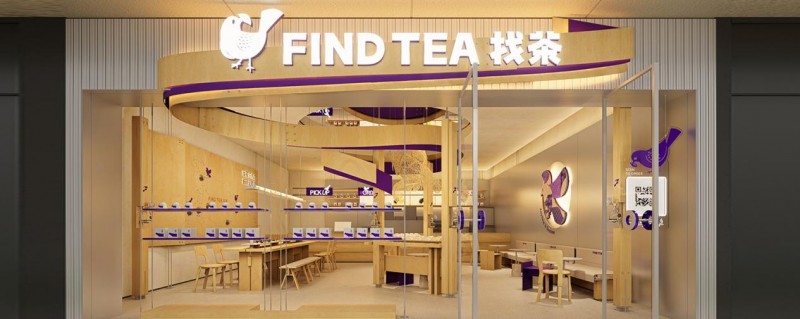
Core Insights - The article highlights a shift in consumer demand within the new tea beverage market, where health, quality, and consistent flavor have become the primary drivers of purchasing decisions, moving beyond mere variety and freshness [1] - The brand "找茶" (Find Tea) is strategically positioned to capitalize on this trend by focusing on high-quality tea selection, flavor innovation, and immersive consumer experiences [1] Group 1: Brand Strategy and Product Development - "找茶" emphasizes the importance of sourcing high-quality tea from renowned regions in China, including Zhejiang Longjing, Guangxi Jasmine, Anxi Tieguanyin, Wuyi Jin Jun Mei, and Yunnan Ice Island Pu'er, establishing a strong foundation for its product offerings [3][8] - The brand employs a unique "冰萃方™" (Ice Extraction Method) to ensure stable flavor output and express the distinct characteristics of each tea, enhancing the consumer experience [5][6] - "找茶" aims to create a "brand-exclusive tea garden cooperation base" to ensure comprehensive quality control and transparency in sourcing, including a visual "tea garden traceability map" [8] Group 2: Flavor Innovation and Consumer Engagement - The brand integrates traditional tea culture with modern consumer preferences through innovative flavor translations, making high-quality tea accessible and appealing to younger audiences [9][12] - "找茶" has developed a diverse product line, including "World Premium Tea," "Fresh Light Milk Tea," "Matcha Layered Green," "Ice Fresh Fruit Garden," and "Global Inspiration Coffee," reflecting its commitment to meeting the varied taste preferences of the younger generation [11] - Each product is designed to provide a sensory journey, enhancing the emotional connection between the consumer and the brand, ultimately fostering a long-term trust relationship [16] Group 3: In-Store Experience and Brand Identity - The brand's in-store experience is crafted around a "五感六觉" (Five Senses and Six Feelings) system, creating an immersive environment that emphasizes quality, flavor, and emotional engagement [14] - The store design features artistic elements and sensory details that enhance the consumer's experience, making each visit a unique journey that transcends mere consumption [14][16] - "找茶" positions itself as a leader in global tea culture, aiming to make premium tea understandable and enjoyable for young consumers, thereby establishing a lasting brand presence in the market [12]
从茶山到产品,「找茶」用“冰萃方™”和风味创新兑现每一口好茶
Sou Hu Wang· 2026-02-09 08:04
Core Insights - The article highlights a shift in consumer preferences in the new tea beverage market, where health, quality, and long-term value have become key decision-making factors, moving beyond just diverse flavors and fresh ingredients [1] Group 1: Brand Positioning and Strategy - The brand "找茶" (Find Tea) targets the trend of consumer demand by focusing on high-quality tea leaves and creating a systematic capability in "selecting fine tea - flavor innovation - experiential scenarios" [1] - "找茶" emphasizes the importance of regional identity in its products, sourcing from key tea-producing areas in China to ensure quality and authenticity [3] - The brand has established deep collaborations with quality tea gardens and plans to create a "brand-exclusive tea garden cooperation base" for comprehensive quality control [7] Group 2: Product Innovation and Development - Utilizing the proprietary "冰萃方™" (Ice Extraction Method), "找茶" transforms regional teas into stable and expressive end products, such as "龙井知春·茶冰" (Longjing Tea Ice) and "观音乌龙·轻乳茶" (Oolong Light Milk Tea) [5] - The brand has developed a diverse "flavor exploration map" with five product lines, catering to the varied tastes of younger consumers, including innovative combinations like "茉莉芝芝玉米酪" (Jasmine Corn Cheese) [10][11] Group 3: Consumer Experience and Engagement - "找茶" creates an immersive experience in its stores through a "五感六觉" (Five Senses and Six Feelings) system, enhancing the emotional connection with consumers and establishing a complete value loop of "quality - flavor - experience" [13] - The brand aims to provide a sensory journey with each cup of tea, fostering a sense of joy and emotional comfort for consumers, thus building a long-term trust relationship [15]
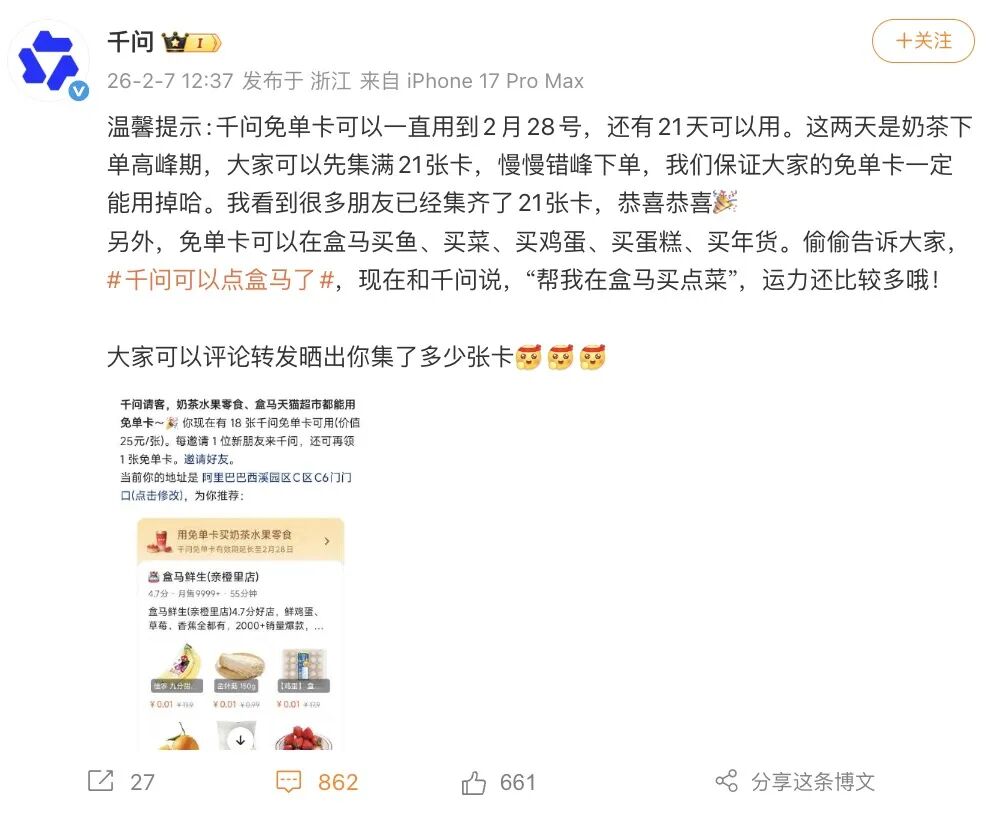
千问宣布免单卡延期,9小时订单破1000万,奶茶店员:要疯了,根本做不完
2 1 Shi Ji Jing Ji Bao Dao· 2026-02-07 07:39
Group 1 - The core event is the launch of Alibaba's "Spring Festival 3 Billion Free Orders" campaign, which generated significant consumer interest and led to a surge in orders, reaching 10 million within 9 hours of launch [1] - The campaign's free order cards were initially set to expire on February 23 but were extended to February 28 to accommodate consumer demand, allowing purchases not only for milk tea but also for various food items [1] - The campaign caused operational chaos in many tea beverage stores across the country, with reports of overwhelmed staff and systems crashing due to the high volume of orders [1][2] Group 2 - The sudden spike in demand positively impacted the stock performance of tea beverage companies, with notable increases in share prices for brands like Cha Bai Dao (up 6.08%) and Gu Ming (up 3.58%) on February 6 [2] - The new tea beverage market has seen a slowdown in growth, with projections indicating a market size exceeding 300 billion yuan by 2025, but growth rates have dropped from over 20% to single digits [3] - External support from major platforms like Alibaba provides a significant boost to tea brands, enhancing brand visibility and customer acquisition at a low cost, which is seen as a profitable opportunity for these companies [4] Group 3 - The promotional activity is part of a broader trend of competition among internet giants for user acquisition, which has implications for the tea beverage industry as it benefits from increased consumer engagement [6][8] - The immediate impact of the subsidy campaign was evident, with over 1 million orders placed through the app within 3 hours of launch [7] - Despite the short-term stock price declines for Alibaba due to the costs associated with the subsidy, analysts suggest that such investments are crucial for long-term user retention and market positioning [9]

千问宣布免单卡延期,9小时订单破1000万,奶茶店员:要疯了,根本做不完
21世纪经济报道· 2026-02-07 07:37
Core Viewpoint - The article discusses the impact of Alibaba's promotional campaign "Spring Festival 3 Billion Free Orders" on the new tea beverage industry, highlighting the surge in consumer demand and the subsequent stock market reactions for tea companies [1][3][5]. Group 1: Promotional Campaign Impact - Alibaba's "Spring Festival 3 Billion Free Orders" campaign led to a significant increase in orders, reaching 10 million within 9 hours of launch [1]. - The campaign's success prompted an extension of the validity of the free order cards from February 23 to February 28, allowing consumers more time to utilize them [1]. - The promotion not only boosted sales for tea beverage stores but also provided substantial brand exposure and customer acquisition for participating brands [5]. Group 2: Market Reactions - The tea beverage sector saw a collective rise in stock prices, with notable increases such as Tea Baidao up 6.08% and Gu Ming reaching a historical high with a 3.58% increase [3]. - The sudden spike in demand led to operational chaos in many stores, with reports of overwhelmed staff and systems crashing due to the high volume of orders [2][3]. - Despite the positive short-term effects on tea stocks, there are concerns about the sustainability of this growth, as previous promotional campaigns have led to temporary spikes followed by declines [5][6]. Group 3: AI Competition and Long-term Implications - The article emphasizes that the competition among major platforms for AI user acquisition is driving unexpected benefits for the new tea beverage industry [5][9]. - Analysts suggest that the current competition for user engagement and data will shape the future landscape of the industry, with companies needing to invest heavily in AI to maintain relevance [10]. - While short-term financial pressures from promotional activities may affect profitability, the long-term potential for companies that secure user loyalty and data is significant [11].