家电

Search documents
成本支撑+需求稳增,行业价格底部反弹
摩尔投研精选· 2026-03-05 10:29
Group 1 - The A-share market is experiencing significant volatility driven by geopolitical risks, market structure differentiation, and capital competition, transitioning from an index-driven market to a structure-driven market focused on earnings and capital [1] - The upcoming "Two Sessions" is expected to create a favorable policy environment, while the RMB remains strong, enhancing the attractiveness of Chinese equity assets [1] - Investment opportunities are suggested in sectors with short-term certainty such as oil and gas, petrochemicals, coal, and non-ferrous metals, as well as in industries with improving supply-demand dynamics like basic chemicals, steel, construction materials, and finance [1] Group 2 - The global supply of vitamins A, E, and methionine is under pressure due to a drone attack on Qatar's energy facilities, which has significant implications for the European chemical industry [2][3] - Current prices for methionine and vitamins are at historically low levels, with methionine prices at 2.7% and vitamin E prices at 10.4% of their historical percentiles [2] - The decline in industry inventory since January indicates a transition from price bottoming to profit recovery, with key price increases noted for various products in February [3]


部分城市购车指标将进一步放宽
21世纪经济报道· 2026-03-05 10:21
Core Viewpoint - The article emphasizes the Chinese government's commitment to expanding domestic demand, particularly through consumer spending initiatives, as outlined in the Government Work Report [2]. Group 1: Measures to Boost Consumption - The government plans to implement a "rural and urban residents' income increase plan" to enhance the income of low-income groups and improve the social security system, thereby increasing consumption capacity [3]. - There will be a focus on cultivating new growth points in consumption supply, including enhancing service consumption and promoting new business models in sectors like tourism, automotive, and experiential services [3]. - Policies will be introduced to alleviate residents' concerns, such as increasing healthcare and childcare support, which will help unlock consumer potential [3]. Group 2: Financial and Policy Support - The government aims to leverage fiscal and financial collaboration to amplify consumer spending, with a new 100 billion yuan special fund to support consumption [4]. - Initiatives will include subsidies for key consumer goods like automobiles and home appliances, with a focus on trade-in programs that have previously shown significant sales impact [4]. - Efforts will be made to remove barriers to consumption, such as simplifying promotional activity approvals and easing vehicle purchase restrictions in certain cities [4]. Group 3: Early Indicators of Consumption Growth - Early signs of consumer spending growth have been observed, particularly during the recent Spring Festival, with daily sales revenue increasing by 13.7% compared to the previous year [5]. - The robust performance in retail and service sectors indicates a strong underlying momentum in the Chinese consumption market for the year ahead [5].

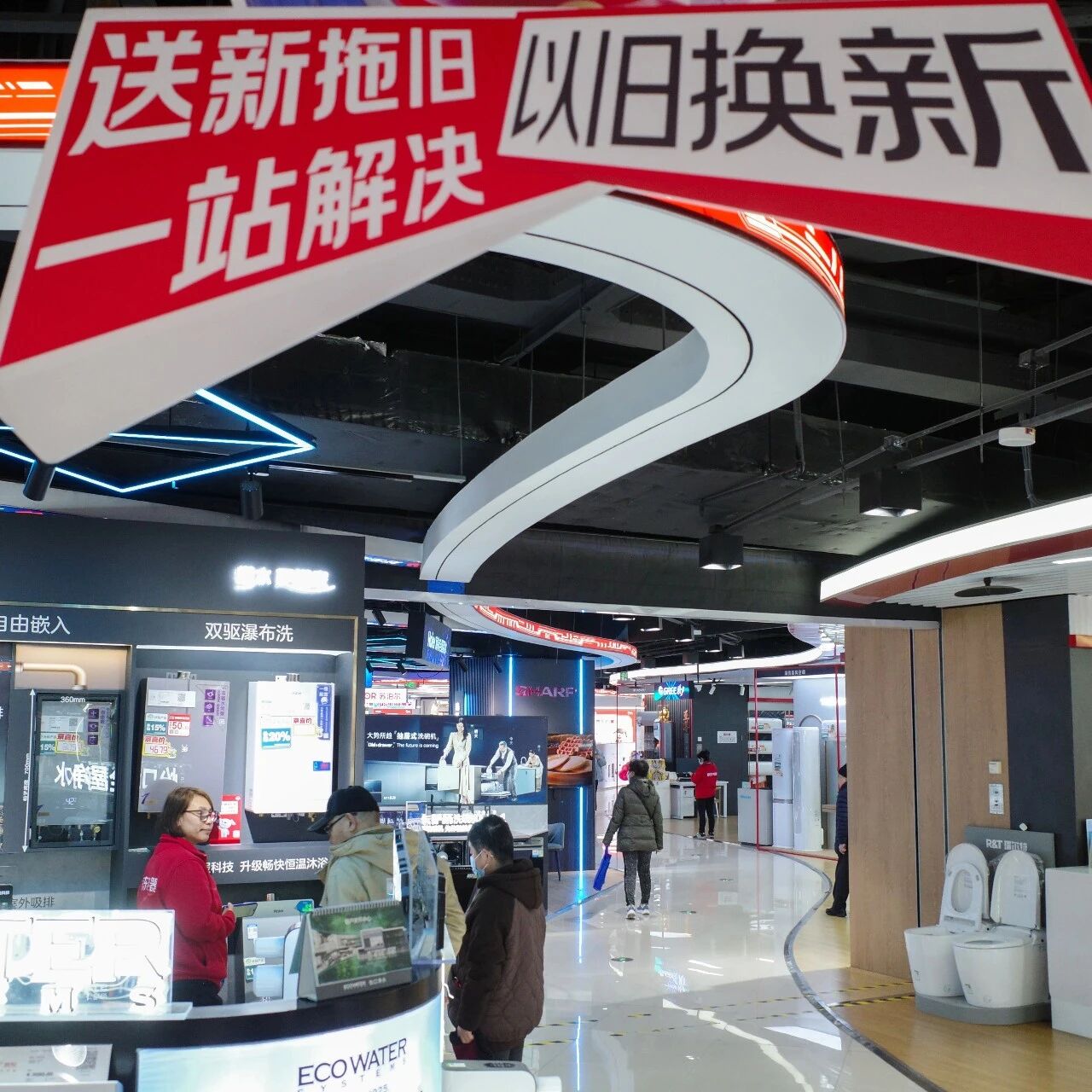
2500亿元国债支持以旧换新,今年家电消费仍有提质扩容潜力
第一财经· 2026-03-05 05:54
Core Viewpoint - The government work report for 2026 emphasizes the promotion of consumer goods consumption through a special long-term bond of 250 billion yuan to support the replacement of old products, alongside a 100 billion yuan fiscal-financial collaboration fund to boost domestic demand [3][4]. Group 1: Government Support and Policies - The government has allocated 250 billion yuan for special bonds to support the replacement of old consumer goods, indicating a strong commitment to enhancing consumer spending [3]. - A special fund of 100 billion yuan will be established to promote domestic demand, utilizing methods such as loan interest subsidies, financing guarantees, and risk compensation [3]. - The scope of subsidies has been narrowed to three key areas: automobiles, home appliances, and digital smart products, with expectations for the subsidy scale to exceed market forecasts this year [3][4]. Group 2: Industry Insights and Expectations - The home appliance market is expected to see significant growth due to the positive impact of government subsidies, with a focus on quality improvement and market expansion [3][4]. - The digital industry is anticipated to experience a notable recovery in mid-to-low-end products and replacement demand, particularly in smart wearable devices and lower-tier markets [4]. - The current subsidy policy is viewed as a crucial catalyst for the consumer market in 2026, driving the green and intelligent transformation of the home appliance sector [4]. Group 3: Market Dynamics and Challenges - Despite the positive effects of subsidies, the home appliance industry is still facing challenges related to supply-demand mismatches, necessitating a more refined operational approach to activate user demand [4]. - The core issue in the market remains the mismatch between supply and demand, which requires a breakdown and reorganization of the market to create more user value [4].
全国人大代表周云杰:流量有两面性,每天睡前会看网友评论
21世纪经济报道· 2026-03-05 05:12
Core Viewpoint - The article discusses the insights of Zhou Yunjie, Chairman and CEO of Haier Group, regarding the integration of user feedback into business management and the future of robotics in households, emphasizing safety and the potential of embodied intelligence in the context of aging populations [1][3]. Group 1: User Engagement and Feedback - Zhou Yunjie emphasizes the importance of learning from users and maintaining a close relationship with them, using social media feedback to improve management systems [1]. - He dedicates about one and a half hours each night to review user comments and suggestions, highlighting the dual nature of online traffic in amplifying both strengths and weaknesses [1]. Group 2: Robotics in Households - The focus of household robots should not solely be on humanoid designs but prioritize safety first, with applications tailored to specific household scenarios such as assisting with getting up and walking [3]. - The market for elderly care robots is seen as vast, with a gradual adoption process expected, positioning robots as a new category of home appliances with unlimited market potential [3]. Group 3: Recommendations for Embodied Intelligence - Zhou proposes four key recommendations to advance embodied intelligence: 1. Breakthrough in core technologies by establishing national R&D projects focused on multi-modal perception, adaptive learning, and biomimetic operations [3]. 2. Build foundational infrastructure by creating national-level open innovation platforms and datasets for embodied intelligence [4]. 3. Develop a standardized system for embodied intelligent robots to facilitate large-scale implementation in manufacturing [4]. 4. Support leading enterprises in creating benchmark applications for embodied intelligence in complex tasks, promoting replicable and scalable case studies [5].


中国银河证券:A股市场震荡并非趋势性转向 配置机会上关注三大主线
智通财经网· 2026-03-05 00:46
Core Viewpoint - The recent volatility in the A-share market is not indicative of a trend reversal but rather a short-term emotional release under external pressures, with a medium to long-term positive trend remaining intact [1][2][3] Market Characteristics - The A-share market has experienced significant fluctuations driven by geopolitical risks, market structure differentiation, and capital dynamics, resulting in wide index oscillations and extreme sector divergence [2] - External geopolitical factors, particularly the ongoing Middle East tensions, have triggered short-term volatility, while domestic economic fundamentals and policy direction continue to dominate medium to long-term trends [2][3] Investment Opportunities - The market is expected to transition from emotion-driven movements to fundamentals-driven dynamics, characterized by "oscillation digestion, momentum enhancement, and structural focus" [3] - Key investment themes include: - **Theme One**: Short-term certainty in price increases and risk aversion, particularly in sectors like oil and gas, petrochemicals, coal, non-ferrous metals, and shipping ports, which are benefiting from rising energy prices and inflation expectations [3][4] - **Theme Two**: Improvement in supply-demand dynamics and industry profit recovery, with a focus on sectors such as basic chemicals, steel, construction materials, and financials, especially banks [4] - **Theme Three**: New productive forces in the domestic economy, including storage, computing power, consumer electronics, communication equipment, communication services, semiconductors, and military industries, as well as consumer sectors with strong domestic and external demand expectations [4]

中观景气跟踪 3月第1期:周期资源价格大涨,建工复产偏强
GUOTAI HAITONG SECURITIES· 2026-03-04 09:30
1. Report Industry Investment Rating No information provided. 2. Core Viewpoints of the Report - In the week from 02.23 - 03.01, the mid - level economic performance showed differentiation. The rising Middle - East situation led to significant price increases in cyclical resources such as crude oil, chemical, shipping, and non - ferrous metals. The construction industry's resumption of work was stronger than the same period in the lunar calendar, possibly supported by the warming of real - estate sales and the early implementation of fiscal funds in 2026. The AI computing power industry's prosperity center continued to move up, while the traditional commodity consumption was under pressure [4]. 3. Summary According to the Table of Contents 3.1 Upstream Resources: Soaring Crude Oil Chain Prices and Significant Increase in Non - ferrous Metal Prices - **Oil and Chemicals & Shipping**: Due to the escalating Middle - East situation after the US - Israel air strike on Iran on 2026.02.28, the threat to the safety of crude oil transportation in the Strait of Hormuz led to significant disruptions in global crude oil supply. As of 03.03, the Brent crude oil futures settlement price increased by 12.3% compared to 02.27, and the domestic chemical product price index rose by 4.8%. The crude oil transportation index (BDTI) and refined oil transportation index (BCTI) increased by 43.9% and 54.0% respectively [7]. - **Coal**: As of 02.28, the ex - works price of Qinhuangdao Port's Q5500 steam coal was 751 yuan/ton, with a week - on - week increase of 4.0%. The increase was mainly due to the uncertainty of coal supply from Indonesia and the rise in international coal prices [8]. - **Non - ferrous Metals**: As of 02.27, the COMEX gold price increased by 3.3% week - on - week. Industrial metals such as SHFE copper and aluminum also saw price increases. Small metals like black tungsten, molybdenum, and cobalt rose by 6.5%, 2.1%, and 13.1% respectively, driven by AI capital expenditure [10]. 3.2 Technology & Manufacturing: Increasing Growth Rate of Technology Hardware Prosperity and Fast Post - Festival Resumption of Work - **Electronics**: Driven by AI infrastructure demand, the prosperity of technology hardware continued to grow. In January 2026, South Korea's semiconductor export volume (TTM) reached 183.82 billion US dollars, a year - on - year increase of 28.8%, and the export volume of memory chips reached 128.53 billion US dollars, a year - on - year increase of 44.1%. As of 02.27, the average prices of DRAM DDR4 and DDR5 increased by 1.9% and 3.8% respectively [20]. - **Infrastructure and Real - Estate Chain**: Steel prices fluctuated slightly. As of 02.28, the prices of rebar and hot - rolled coils changed by - 0.3% and + 0.6% week - on - week respectively. The apparent consumption of rebar increased by 25.5% compared to the same period in the lunar calendar. As of 02.27, the blast furnace operating rate increased by 0.6% week - on - week and 2.2% compared to the same period in the lunar calendar. Building material prices fluctuated slightly. As of 02.26, the average price of domestic float glass increased by 1.2% week - on - week, and the inventory increased by 26.5% compared to the same period in 2025. As of 02.28, the national cement price index decreased by 0.4% week - on - week, and the cement shipping rate increased by 9.0% compared to the same period in 2025 [23][27]. 3.3 Downstream Consumption: Strong Post - Festival Real - Estate Sales and High Tourism Prosperity Year - on - Year - **Real - Estate**: As of the week of 03.01, the commercial housing transaction area of 30 large and medium - sized cities increased by 55.4% compared to the same period in the lunar calendar of 2025. The second - hand housing transaction area of 10 key cities increased by 14.5% compared to the same period in 2025. After the new policy in Shanghai, the real - estate sales consultation heat increased significantly [31]. - **Durable Goods**: In March 2026, the production plan of household air conditioners decreased by 6.1% year - on - year. The domestic sales and export production plans decreased by 1.5% and 7.1% respectively. In February 2026, the inventory warning index of Chinese automobile dealers was 56.2%, a year - on - year decrease of 0.7% and a month - on - month decrease of 3.2% [39]. - **Beverages**: As of 2026.02.28, the wholesale reference prices of original and bulk Feitian Moutai increased by 0.3% and 0.0% respectively. As of 2026.02.27, the retail prices of Chinese milk and yogurt increased by 0.1% and 0.0% respectively [41]. - **Pigs & Planting**: As of 03.01, the national price of live pigs (inner ternary) decreased by 6.8% week - on - week. As of 02.28, the domestic spot weekly average prices of soybeans, soybean meal, wheat, and corn increased by 0.0%, 0.5%, 0.1%, and 0.5% respectively. The weekly average prices of CBOT soybeans and corn increased by 1.1% and 3.7% respectively [43]. - **Service Consumption**: As of the week of 03.01, the domestic movie box office decreased by 63.1% compared to the same period in the lunar calendar of 2025. From 02.22 - 02.28, the average congestion degree of Shanghai Disneyland was 75%, a 32.3% increase compared to the same period in 2025 [51]. 3.4 Logistics and People Flow: Significantly Increased Freight Prosperity Compared to the Same Period in the Lunar Calendar and Post - Festival Recovery of Port Throughput - **Passenger Transport**: As of the week of 03.01, the subway passenger volume of 10 major cities increased by 77.0% week - on - week and decreased by 10.3% year - on - year. The Baidu Migration Scale Index increased by 7.4% week - on - week and 130.8% year - on - year. The number of domestic flights increased by 3.9% week - on - week and 21.6% year - on - year, and 27.0% compared to the same period in 2019. The number of international flights decreased by 1.4% week - on - week and recovered to 93.8% of the same period in 2019 [53]. - **Freight Transport**: As of the week of 03.01, the national highway and railway freight volumes increased by 26.0% and 3.2% respectively compared to the same period in the lunar calendar of 2025. The national postal express pick - up and delivery volumes increased by 21.9% and 32.8% respectively compared to the same period in 2025 [59]. - **Maritime Transport**: As of 02.27, the SCFI index increased by 6.5% compared to before the festival. The Baltic Dry Index (BDI) increased by 2.7% compared to before the festival. As of the week of 03.01, the cargo throughput and container throughput of Chinese ports increased by 25.5% and 12.3% respectively compared to the same period in the lunar calendar of 2025 [61].
中国银河策略:A股市场波动的“正负手”及投资展望
Xin Lang Cai Jing· 2026-03-04 08:10
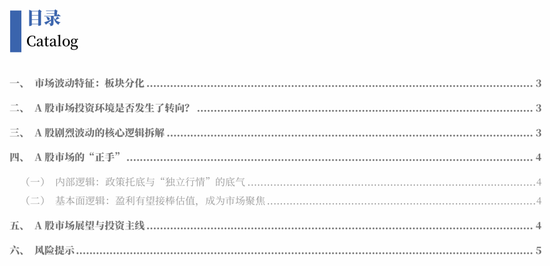
炒股就看金麒麟分析师研报,权威,专业,及时,全面,助您挖掘潜力主题机会! 来源:中国银河策略 A股市场投资机会展望:A股剧烈波动并非趋势性转向,而是外围压力叠加下的短期情绪集中释放,中 长期市场向好趋势未变,后续将逐步从"情绪驱动"回归"基本面驱动",呈现"震荡消化、动能提升、结 构聚焦"的运行格局。一是政策面持续发力,两会期间政策红利将集中释放,为市场提供明确的主线方 向;二是国内经济复苏基础逐步夯实,企业盈利有望持续改善,为市场提供基本面支撑;三是当前A股 估值仍处于合理水平,长线资金逐步入场,市场中长期向好趋势明确。配置机会上,建议重点关注:主 线一,短期确定性,涨价与避险。若地缘冲突短期内难以平息,全球实物资产正经历价值重估过程。霍 尔木兹海峡的紧张局势直接驱动能源及替代性需求走强。油气、石油化工(直接受益于油价上涨)、煤 炭(替代逻辑);有色金属(铜、铝、黄金,受益于通胀预期和避险需求);航运港口(运价飙升及航 线重构)。主线二,供需格局改善与行业盈利修复逻辑,以及估值具备安全边际的红利资产,建议关注 基础化工(业绩边际改善预期加强,如化学制品、化学原料、农化制品等)、钢铁、建筑材料、金融 (尤其是 ...
家电行业专题研究报告:从人民币升值看汇率波动的传导影响
Huachuang Securities· 2026-03-04 07:07
Investment Rating - The report maintains a "Buy" recommendation for the home appliance industry, focusing on the impact of RMB appreciation on exchange rate fluctuations [2]. Core Insights - The report explores the transmission mechanism of RMB appreciation on companies, detailing how exchange rate changes affect gross margins, exchange gains/losses, and derivative instruments. It highlights the potential impact on profitability for representative companies like Anker Innovations and Haier Smart Home [6][7]. Summary by Sections Industry Basic Data - The home appliance industry consists of 80 listed companies with a total market capitalization of 20,546.36 billion RMB and a circulating market value of 18,385.86 billion RMB [2]. Relative Index Performance - The absolute performance over the last month is -0.1%, while it has increased by 8.2% over six months and 12.4% over twelve months. Relative performance shows a decline of 2.0% over one month, 3.4% over six months, and 7.0% over twelve months [3]. Exchange Rate Impact Analysis - The report identifies three main areas affected by exchange rate fluctuations: gross margin, exchange gains/losses, and derivative instruments. RMB appreciation reduces the amount of foreign currency income recognized in RMB, impacting gross margins negatively. Companies with significant foreign currency net assets may experience exchange losses, affecting net profits [9][14]. Company-Specific Analysis - Anker Innovations benefits from its USD net asset expansion during appreciation cycles, while Haier Smart Home, despite historically having negative foreign currency net assets, has managed to reduce its debt levels and adapt its foreign exchange management to mitigate losses [18][22]. Future Outlook - The report suggests that the probability of a significant and sustained appreciation of the RMB against the USD is low. It notes that the recent trend of RMB appreciation has likely led to the release of previously accumulated foreign currency positions, widening the range of acceptable fluctuations in the exchange rate [6][17]. Investment Recommendations - The report recommends focusing on companies with strong operational certainty, such as Midea Group, Haier Smart Home, and Anker Innovations, as they have diversified foreign currency net assets and effective foreign exchange hedging strategies to manage risks [7][30].

【财闻联播】美议员提议征收年度财富税,马斯克首年或缴420亿美元!国内商家紧急调整中东货运航线
券商中国· 2026-03-03 11:15
Macro Dynamics - The People's Bank of China announced a net injection of 300 billion yuan through the Medium-term Lending Facility (MLF) in February 2026, with other monetary policy tools showing varied net injections [2] - In February, the net injection from open market operations included a net purchase of government bonds of 500 billion yuan and a net withdrawal of 1,205 billion yuan through 7-day reverse repos [2] Industry Development - The Guangdong-Hong Kong-Macao Greater Bay Area is accelerating its development, with significant achievements in integration, including the joint hosting of the 15th National Games and the implementation of the "Yue Car Southbound" policy [3] - The innovation index of the Shenzhen-Hong Kong-Guangzhou cluster has reached the top globally, while the Zhuhai-Macao cluster has been ranked among the world's top 100 for two consecutive years [3] Company Dynamics - Gree Electric Appliances' chairman, Dong Mingzhu, stated that the company will maintain its dividend payout this year, emphasizing the importance of talent in enhancing industrial efficiency [14] - GAC Group's chairman, Feng Xingya, highlighted the potential for growth in the rural electric vehicle market and the need for Chinese electric vehicles to establish global standards as they expand internationally [15] - Oriental Securities received approval from the China Securities Regulatory Commission to issue up to 6 billion yuan in technology innovation corporate bonds [10]

全国人大代表、格力电器董事长董明珠:今年会保持分红力度
证券时报· 2026-03-03 10:13
Group 1 - The core viewpoint of the article emphasizes the impact of artificial intelligence (AI) on employment in the manufacturing sector, highlighting that while AI may affect job numbers, it also enhances industry efficiency [1] - Gree Electric Appliances, represented by its chairman Dong Mingzhu, is confident in its development, attributing this confidence to its talent pool [1] - Dong Mingzhu stated that Gree Electric will "maintain" its dividend distribution efforts this year, indicating a commitment to shareholder returns [1]