房地产

Search documents
复星国际预计2025财年亏损超215亿
Jing Ji Guan Cha Wang· 2026-03-12 12:45
Company Dynamics - Fosun International (00656.HK) issued a profit warning for the fiscal year 2025, expecting a loss of at least 21.5 billion yuan due to one-time asset impairment and value reassessment [2] - The projected loss for 2025 is estimated to be between 21.5 billion to 23.5 billion yuan, a significant increase from the 4.35 billion yuan loss in 2024 [2] - The main reasons for the substantial loss include impairment of real estate projects and provisions for goodwill and intangible assets [2] - The real estate sector continues to face downward pressure, with overall market demand remaining weak, leading to significant challenges for the group's real estate business [2] Subsidiary Performance - Yuyuan Inc. is expected to incur a loss of 4.8 billion yuan in 2025, making it one of the largest loss-making companies within the Fosun system for that year [2] - Yuyuan Inc.'s core business includes jewelry fashion, cultural dining, and commercial property, with a significant property located in the Yuyuan shopping area of Shanghai [3] - In 2024, Yuyuan Inc. reported a revenue of 46.924 billion yuan, a year-on-year decrease of 19.3%, and a net profit of 0.125 billion yuan, down 93.81% year-on-year [3] - The anticipated pre-loss for Yuyuan Inc. in 2025 is attributed to asset impairment provisions for real estate projects and goodwill, accelerated inventory liquidation, and structural changes in consumer behavior affecting revenue and gross margin [3] Strategic Outlook - On March 10, Guotai Junan Securities rated Fosun International as "Buy," highlighting the company's efforts in deleveraging and focusing on strategic core businesses with market leadership [4] - The company is significantly exiting non-strategic and non-core assets while accelerating its global operations, leveraging Chinese capabilities to enhance core business performance [4] - Fosun International's ongoing efforts to streamline operations and reduce debt are expected to help it navigate through economic cycles and achieve a recovery [4]



复星国际2025财年业绩预警:预计亏损超215亿元
Jing Ji Guan Cha Wang· 2026-03-12 12:40
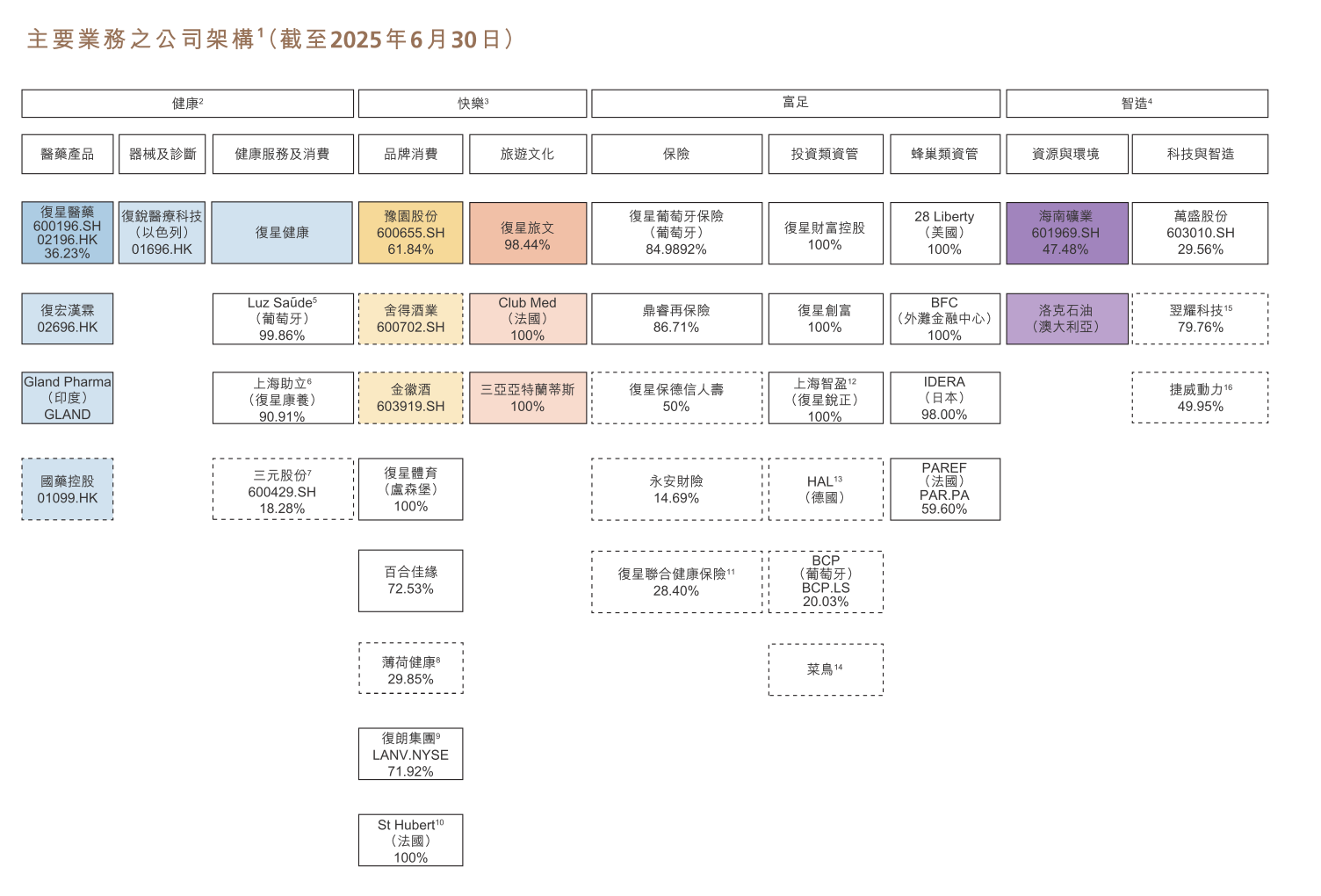
Company Dynamics - Fosun International has issued a profit warning for the fiscal year 2025, expecting a net loss of between 21.5 billion to 23.5 billion yuan, a significant increase from the previous year's loss of 4.35 billion yuan [1] - The primary reason for this loss is attributed to one-time impairment and revaluation of certain assets, particularly due to the ongoing downturn in the real estate market, which has led to substantial pressure on the group's real estate business [1] - The company has made large provisions for projects showing signs of impairment and has also impaired goodwill and intangible assets in non-core business segments to more accurately reflect asset values [1] Business Overview - As a diversified enterprise spanning pharmaceuticals, real estate, finance, and technology, Fosun International reported total assets exceeding 735.6 billion yuan as of the mid-2025 report, with its business divided into four strategic segments: "Health," "Happiness," "Wealth," and "Intelligent Manufacturing" [2] - The "Health" segment includes companies such as Fosun Pharma and Gland Pharma, while the "Happiness" segment focuses on consumer goods and tourism, featuring companies like Yuyuan and Club Med [2] - The "Wealth" segment encompasses insurance and asset management, including Fosun Portugal Insurance, and the "Intelligent Manufacturing" segment covers resources, manufacturing, and technology businesses [2] Financial Performance - According to disclosed data from Fosun International's listed companies, Yuyuan is expected to incur a loss of 4.8 billion yuan for the year 2025, making it one of the largest loss-makers within the Fosun system [3] - The anticipated loss for Yuyuan is primarily due to asset impairment provisions for real estate projects and goodwill, accelerated inventory liquidation, and structural changes in the consumer sector leading to decreased revenue and gross profit compared to the previous year [3] - On March 10, Guotai Junan Securities rated Fosun International as "Overweight," highlighting the company's efforts to reduce leverage and focus on core strategic businesses, which may enable it to navigate through cycles and achieve a recovery [3]
巨亏超215亿,复星国际“盘子”有多大?
Jing Ji Guan Cha Wang· 2026-03-12 11:40
Core Viewpoint - Fosun International (00656.HK) has issued a profit warning for the fiscal year 2025, expecting a loss of at least 21.5 billion RMB due to one-time asset impairment and value reassessment, significantly increasing from a loss of 4.35 billion RMB in 2024 [1] Group 1: Financial Performance - The expected loss for the fiscal year 2025 is projected to be between 21.5 billion and 23.5 billion RMB, a substantial increase compared to the previous year's loss of 4.35 billion RMB [1] - The primary reasons for the significant loss include impairment of real estate projects and the provision for goodwill and intangible assets [1] - Fosun International's total assets exceeded 735.6 billion RMB as of the mid-2025 report [2] Group 2: Business Segments - The company operates across four main segments: "Health," "Happiness," "Wealth," and "Intelligent Manufacturing" [2] - In the "Health" segment, Fosun Pharma reported a revenue of 29.39 billion RMB for the first three quarters of 2025, a decline compared to the previous year, while innovative drug revenue grew by 18.09% to over 6.7 billion RMB [5] - The "Happiness" segment, which includes consumer goods and tourism, saw a revenue drop of 21.33% to 28.4 billion RMB for the first three quarters of 2025, with a net loss of 0.953 billion RMB [5] - The "Wealth" segment, which includes insurance and asset management, reported a gross premium income of 3.271 billion euros for Fosun Portugal Insurance, a 16.5% increase year-on-year [6] - The "Intelligent Manufacturing" segment, focusing on resource and technology businesses, achieved a total revenue of 3.36 billion RMB, a 5.93% increase, but with a net profit decline of 42.84% [7] Group 3: Challenges and Outlook - Yuyuan Industrial Co., a subsidiary, is expected to incur a loss of 4.8 billion RMB in 2025, significantly impacting Fosun's overall performance [8] - The company emphasized that the large non-cash impairments and provisions are intended to accurately reflect financial information and do not affect overall operations and cash flow [9] - Analysts from Guotai Junan Securities have given a "Buy" rating, suggesting that the company is focusing on core strategic businesses and reducing debt, which may lead to a recovery [9]

超30地密集调整公积金政策
21世纪经济报道· 2026-03-12 11:09
Core Viewpoint - The housing provident fund policy is entering a significant adjustment window, with the government emphasizing the need for reform after a decade, aiming to activate over 10 trillion yuan in dormant funds to stabilize the real estate market and facilitate the transition of industry dynamics [1][5][11]. Group 1: Policy Adjustments - More than 30 regions in China have adjusted their housing provident fund loan policies this year, focusing on increasing loan support, expanding usage scenarios, and enhancing family mutual assistance functions [1][8]. - Chengdu announced on March 10 that it plans to raise the maximum loan limit for housing provident funds and phase out restrictions on the number of loans [1][11]. - Fuzhou has expanded the scope of interest rate discounts for provident fund loans and included inter-city provident fund loans in its support policies [1][11]. Group 2: Strategic Positioning - Analysts suggest that the key to breaking through the current limitations of the provident fund system lies in redefining its strategic positioning in response to fundamental changes in housing supply and demand [2][9]. - The current system has primarily focused on supporting home purchases, but there is a growing need to extend its functions to cover a broader range of housing consumption scenarios, including rental support and home improvement [9][10]. Group 3: Challenges and Recommendations - Despite a substantial accumulated balance of 10.9 trillion yuan in housing provident funds, the utilization efficiency remains low due to high thresholds and restrictions on usage [6][10]. - Recommendations include revising the Housing Provident Fund policy at the national level to remove restrictive regulations, such as the minimum down payment ratio and limitations on loan types for multi-child families [10][11]. - Establishing a dynamic interest rate adjustment mechanism and promoting inter-regional mutual recognition of loans are also suggested to enhance the operational efficiency of the provident fund [10].

农业上游回升,化工中游分化
Hua Tai Qi Huo· 2026-03-12 05:36
1. Report Industry Investment Rating - Not provided in the given content 2. Core View of the Report - The upstream of the agricultural industry is recovering, while the middle - stream of the chemical industry is showing differentiation. The production and service industries are affected by various factors such as geopolitical conflicts and inflation [1] 3. Summary by Related Catalogs 3.1. Production and Service Industries - **Production Industry**: 32 IEA member countries agreed to release 400 million barrels of oil from their emergency reserves. Japan plans to release national oil reserves as early as the 16th, and Germany will release 2.4 million tons of national oil reserves [1] - **Service Industry**: In February, the US CPI increased by 2.4% year - on - year, and the core CPI increased by 2.5% year - on - year. There is a risk of inflation rebound in the US, and the market expects the Fed to cut interest rates in July [1] 3.2. Industry Overview 3.2.1. Upstream - **Energy**: The prices of liquefied natural gas and international crude oil are continuously rising [2] - **Agriculture**: The prices of eggs and palm oil are recovering [2] - **Non - ferrous Metals**: The price of aluminum has a slight recovery [2] 3.2.2. Middle - stream - **Chemical Industry**: The PX operating rate remains high, while the polyester operating rate is low [3] - **Energy**: The coal consumption of power plants is at a low level [3] - **Infrastructure**: The operating rate of road asphalt is at a low level [3] 3.2.3. Downstream - **Real Estate**: The sales of commercial housing in first - and second - tier cities have a seasonal decline [4] - **Service**: The number of domestic flights has decreased [4] 3.3. Key Industry Price Indicators - **Agriculture**: The spot prices of corn, eggs, palm oil, and cotton have increased to varying degrees, while the average wholesale price of pork has decreased [35] - **Non - ferrous Metals**: The spot price of aluminum has increased, while the prices of copper, zinc, and nickel have decreased [35] - **Ferrous Metals**: The spot prices of螺纹钢, iron ore, and wire rod have increased [35] - **Non - metals**: The spot prices of natural rubber and glass have increased, and the China Plastic City price index has also increased significantly [35] - **Energy**: The spot prices of WTI crude oil, Brent crude oil, and liquefied natural gas have increased, while the coal price has decreased slightly [35] - **Chemical Industry**: The spot prices of PTA, polyethylene, urea, and soda ash have increased [35] - **Real Estate**: The cement price index has decreased, while the building materials comprehensive index has increased slightly, and the concrete price index has remained unchanged [35]
信达国际控股港股晨报-20260312
Xin Da Guo Ji Kong Gu· 2026-03-12 02:43
Market Overview - The Hang Seng Index (HSI) faces short-term resistance at 26,500 points, with geopolitical uncertainties causing volatility in international oil prices and potential capital outflows from Asian markets [2] - The Chinese government has slightly lowered its economic growth target for the year to a range of 4.5% to 5%, aligning with expectations, while the overall economic data remains stable [2] - The HSI has formed a head-and-shoulders pattern since January, recently testing support at 25,000 points, with a short-term rebound resistance around the 50-day moving average at approximately 26,500 points [2] Sector Focus - AI Stocks: The semiconductor industry is experiencing rapid growth due to intensive upgrades in AI large models [3] - The People's Bank of China emphasizes the need for a cautious and orderly advancement of AI applications in the financial sector, aiming to enhance digital and intelligent development momentum [6] Company News - Cathay Pacific reported a 9.5% increase in profits last year, exceeding expectations [3] - Guohua Technology is set to raise up to 3.3 billion HKD through its IPO starting today [3] - Several companies, including Oriental Overseas and Li Auto, are expected to announce their earnings today [3] Economic Indicators - The U.S. Consumer Price Index (CPI) rose by 2.4% year-on-year in February, meeting expectations [7] - The U.S. fiscal deficit surpassed 1 trillion USD as of February, although it has decreased significantly compared to the previous year [7] - The International Energy Agency (IEA) member countries agreed to release 400 million barrels of oil reserves to address market disruptions caused by geopolitical tensions [8] Investment Recommendations - There are suggestions to lower the eligibility threshold for investors in the Hong Kong Stock Connect program to enhance market liquidity and attract international capital [6]




房地产行业周报:两会地产无新增表述,“沪七条”后一周上海楼市升温明显
Orient Securities· 2026-03-12 02:24
Investment Rating - The report maintains a "Positive" investment rating for the real estate industry in China [2] Core Insights - The government work report for 2026 reiterates the previous stance on real estate policy without any new changes, indicating a consistent approach focused on risk prevention, safeguarding livelihoods, and reducing financialization [4][53] - The report suggests that the next policy focus may shift towards urban renewal and affordable housing, with potential easing of home purchase thresholds in high-energy cities [4][53] - Despite the lack of extraordinary policy stimuli, the real estate market is expected to stabilize within 1-2 years, with a recommendation to shift market focus from policy speculation to tracking market conditions and identifying cyclical turning points [4][53] Market Performance - The A/H real estate index has declined, underperforming against benchmarks, with the A-share real estate index down by 4.09% and the Hong Kong property stocks down by 4.76% to 4.88% [9][14] - In the secondary housing market, Shanghai's listing prices have decreased by 0.2% week-on-week, while the number of listings has increased by 1.82% [19][24] - The transaction volume for second-hand homes in first-tier cities has shown significant growth, with a week-on-week increase of 83% and a month-on-month increase of 34% [32][44] Secondary Housing Tracking - The report indicates that Shanghai's listing prices continue to decline, while the number of listings has rebounded significantly post-holiday, with a week-on-week increase of 0.75% in first-tier cities [19][24] - The transaction volume for second-hand homes in Shanghai reached a new high, with a cumulative year-on-year increase of 49.9% since the new policy was implemented [32][44] New Housing Tracking - New housing transactions have shown a recovery post-holiday, with a week-on-week increase of 91% across ten sample cities, and a 107% increase in first-tier cities [48][49] - The total inventory of new homes has slightly increased, with first-tier cities showing a week-on-week increase of 0.2% [50][51] Key Events Commentary - The report highlights that the recent government meetings did not introduce new statements regarding real estate, reaffirming the existing policy direction [52][53]


两会地产无新增表述,“沪七条”后一周上海楼市升温明显
Orient Securities· 2026-03-12 00:43
Investment Rating - The report maintains a "Positive" investment rating for the real estate industry in China [2] Core Insights - The government work report for 2026 reiterates the consistent policy approach towards real estate, with no new changes introduced. The focus remains on risk prevention, safeguarding livelihoods, and reducing financialization. The report suggests that the next policy focus may shift towards urban renewal and affordable housing, with potential adjustments in home purchase thresholds in high-energy cities [4][53] - The real estate market is expected to stabilize within 1-2 years even without extraordinary policy stimuli, as most fundamental indicators have returned to balanced levels after significant adjustments over the past five years. The report advises a shift in market focus from policy speculation to tracking market conditions and identifying cyclical turning points [4][53] Market Performance - The A/H real estate index has declined, underperforming against benchmarks, with the A-share real estate index down by 4.09% and the Hong Kong property stocks down by 4.76% and 4.88% respectively [7][14] - In the secondary housing market, Shanghai's listing prices have slightly decreased by 0.2%, while the number of listings has increased by 1.82% week-on-week, indicating a seasonal recovery [19][24] - The transaction volume for second-hand homes in first-tier cities has shown significant growth, with a week-on-week increase of 83% and a month-on-month increase of 34% [32][44] Secondary Housing Tracking - The report highlights that the second-hand housing market in Shanghai has seen a daily transaction peak of 2,053 units, the highest in nearly a year, with a cumulative year-on-year increase of 49.9% since the new policy was implemented [32][44] - The overall listing volume in first-tier cities has increased by 0.75% week-on-week, with Shanghai showing a notable increase of 1.82% [19][24] New Housing Tracking - New housing transactions have rebounded post-holiday, with a week-on-week increase of 91% across ten monitored cities, and a 107% increase in first-tier cities [48][49] - The total inventory of new homes has slightly increased, with first-tier cities showing a week-on-week increase of 0.2% [50][51]
全国两会闭幕,钱袋子重新找方向
吴晓波频道· 2026-03-12 00:29
Core Viewpoint - The article discusses the investment outlook following the National People's Congress (NPC) in China, highlighting key market indicators and expert opinions on various asset classes for March 2026 [3][5]. Group 1: Key Market Indicators - The article identifies several key market indicators including the CSI 300 Index, STAR 50 Index, Hang Seng Index, US stocks, US Dollar Index, gold prices, housing prices in first-tier cities, and oil prices as benchmarks for market predictions [3][15]. - Historical data shows that during the NPC, the market's performance tends to decline, with a lower winning rate compared to the week prior [4]. Group 2: March Investment Opportunities - March is characterized as a critical window for wealth allocation, coinciding with several important financial events such as earnings reports, real estate activity, and central bank meetings [6][7]. - The "earnings report season" in March often shifts market sentiment from aggressive to defensive, as investors seek to avoid underperforming stocks [8]. - The real estate market typically sees increased activity in March and April, driven by school enrollment considerations and government policy interventions [9][11]. Group 3: Expert Opinions on Asset Classes - For the CSI 300 Index, opinions are divided, with 4 experts bullish, 3 bearish, and 1 neutral, citing macroeconomic factors and high historical valuations as risks [18]. - The STAR 50 Index has the highest bullish sentiment, with 62.5% of experts expecting a rebound after a period of underperformance [20]. - The outlook for US stocks is predominantly bearish, with 50% of experts predicting declines due to high valuations and geopolitical tensions [23]. - The Hang Seng Index shows mixed opinions, with equal numbers of experts bullish and bearish, reflecting ongoing uncertainties in the market [25]. - Gold is viewed with caution, as experts are split on its future performance, balancing its inflation-hedging properties against potential geopolitical easing [28]. - The US Dollar Index has unanimous support against bearish sentiment, with experts citing inflation and monetary policy as key drivers [31]. - Oil prices are expected to face volatility, with experts cautious about potential geopolitical resolutions impacting prices [33]. - The outlook for housing prices in first-tier cities is uncertain, with most experts indicating a lack of clear direction and a tendency to remain at the bottom [35]. Group 4: Investment Strategies - The article suggests a diversified asset allocation strategy, categorizing investments into risk assets (stocks and real estate), defensive assets (bank products and bonds), and safe-haven assets (gold) [40][42]. - The most favored asset is the STAR 50 ETF, followed by "HALO" concept stocks and consumer ETFs, indicating a preference for technology and consumer sectors [44]. - Experts recommend a cautious approach to investing, focusing on quality assets and avoiding speculative positions in the current volatile environment [56][60].

月度前瞻 | “春节错位” 如何影响经济开门红?(申万宏观·赵伟团队)
赵伟宏观探索· 2026-03-11 16:03
Core Viewpoint - The article discusses the significant impact of the "Spring Festival misalignment" on economic data for January and February, which may lead to a distorted understanding of the economic "opening red" and affect market expectations [10][11][12]. Group 1: Impact of "Spring Festival Misalignment" - The "Spring Festival misalignment" is expected to push up economic data for January and February while lowering data for March, causing volatility in year-on-year growth rates for key indicators like exports and industrial value added [11][12]. - Historical data shows that the Spring Festival, being a movable holiday, has a more substantial impact on economic data than fixed holidays, with fluctuations in year-on-year growth rates sometimes reaching 40 percentage points [11][12]. - The influence of the Spring Festival misalignment is more pronounced on the supply side than the demand side, with effects lasting over a month, characterized by three phases: pre-holiday rush, holiday shutdown, and post-holiday resumption [11][12][18]. Group 2: Actual Resumption of Work - After adjusting for the Spring Festival misalignment, production and export indicators show improvement, with various sectors experiencing different levels of recovery compared to December 2025 [46][122]. - Key indicators such as the operating rates of blast furnaces and PTA, as well as highway freight volume, have shown year-on-year increases of 2-5 percentage points [46][122]. - Export conditions have also improved, with port cargo throughput in January-February 2026 rising by 7.4 percentage points compared to December 2025 [64][122]. Group 3: Economic "Opening Red" Interpretation - The combination of "Spring Festival misalignment" and production improvements is likely to result in a positive rebound in industrial value added and exports for January and February [94][99]. - Forecasts suggest that industrial value added for January-February may reach a year-on-year growth of 6%, while exports could rise to 21.9% [94][99]. - Consumer data is expected to exceed previous pessimistic market expectations, with service consumption likely to outperform goods consumption [116][124]. Group 4: Investment Trends - The easing of the "debt squeeze" effect may lead to better-than-expected fixed asset investment growth compared to December 2025, although the rebound may be limited [105][124]. - The share of special refinancing bonds has significantly decreased, indicating a potential recovery in infrastructure investment, while real estate investment remains weak due to ongoing financing pressures [105][124]. - Overall, fixed asset investment growth for January-February is anticipated to be better than the -13.2% recorded in December 2025, but still within the range of -5% to -10% [105][124].