非银金融

Search documents
把握权益催化行情,金融和科技是重点
Orient Securities· 2025-07-08 02:44
Group 1 - The report emphasizes the importance of capturing equity-driven market trends, particularly focusing on the financial and technology sectors as key areas for investment [4][7]. - The current bullish market sentiment is driven by improved public confidence stemming from enhanced grassroots governance capabilities, which has positively influenced market emotions and risk appetite [4][7]. - The convertible bond market's fundamental logic remains unchanged, with a long-term perspective supporting the investment rationale for convertible bonds, particularly those with strong credit quality and low volatility [4][12]. Group 2 - The report notes that from June 30 to July 6, the Shanghai Composite Index rose by 1.40%, while the Shenzhen Component Index increased by 1.25%, indicating a strong correlation between the stock market and convertible bonds [9]. - The trading volume of convertible bonds significantly increased to 647.66 billion, with the China Convertible Bond Index rising by 1.21% and the parity center increasing by 2.6% to 100.6 yuan [12]. - The report highlights that high-rated, large-cap, and low-priced convertible bonds performed well, while small-cap and high-priced bonds showed relative weakness [12].
上半年美股IPO回暖,中概股融资额锐减
证券时报· 2025-07-08 00:25
Core Insights - The US equity financing market showed a recovery in the first half of the year, with total equity financing (including IPOs and refinancing) amounting to $95 billion, an increase of $12.7 billion or 15.46% compared to the same period last year [1] IPO Market Summary - A total of 198 companies successfully went public in the first half of the year, an increase of 84 companies year-on-year, raising $25.9 billion, which is a growth of 33.72% [1] - The Nasdaq led the IPO market with 157 companies listed, raising $17.632 billion, accounting for 68.05% of the total IPO market [1] - The New York Stock Exchange had 29 IPOs raising $8.179 billion, representing 31.57% of the total [1] - The American Stock Exchange (AMEX) had 12 IPOs with a total fundraising of $0.098 billion [1] Refinancing Market Summary - There were 429 refinancing events, a decrease of 17 events compared to last year, with a total refinancing amount of $69.1 billion, an increase of 9.83% [1] - The highest refinancing amount was from Charles Schwab, totaling $13.111 billion, followed by Keurig Dr Pepper at $4.903 billion and QXO at $4.222 billion [2] Notable Companies in IPOs - Venture Global, the second-largest LNG producer in the US, was the top IPO fundraiser with $1.75 billion [2] - CoreWeave and SailPoint Parent raised $1.5 billion and $1.38 billion, respectively, ranking second and third [2] - The top ten IPOs raised a total of $9.7 billion, accounting for 37.62% of the total IPO fundraising [2] SPAC Market Insights - The number of SPAC listings significantly increased, with 52 SPACs going public, up by 40 from the previous year, raising $9.4 billion, a substantial increase of 338.60% [2] Chinese Companies in the US Market - 40 Chinese companies went public in the US, primarily small and medium-sized enterprises, raising a total of $0.9 billion, a decrease of 61.12% year-on-year [3] - Only two companies, Bawang Tea and Ascentage Pharma, raised over $100 million, with amounts of $0.411 billion and $0.126 billion, respectively [3] Underwriting Performance - Cantor Fitzgerald led the IPO underwriting with $2.828 billion across 15 deals, followed by JPMorgan with $2.234 billion from 13 deals, and Goldman Sachs with $2.213 billion from 15 deals [3] - In refinancing, JPMorgan topped the list with $10.398 billion from 39 deals, followed by Goldman Sachs with $9.913 billion from 32 deals [3]

上半年美股IPO回暖 中概股融资额锐减
Zheng Quan Shi Bao· 2025-07-07 18:17
Group 1: Overall Market Performance - In the first half of the year, US equity financing saw a rebound, totaling $95 billion, an increase of $12.7 billion or 15.46% compared to the same period last year [1] - A total of 198 companies went public through IPOs, raising $25.9 billion, which is a 33.72% increase year-over-year [1] - There were 429 refinancing events, a decrease of 17 from the previous year, with a total refinancing amount of $69.1 billion, up 9.83% year-over-year [1] Group 2: Sector Performance - The non-bank financial sector led in financing, raising a total of $32.9 billion [1] - The software services sector ranked second with $9.7 billion raised [1] - The pharmaceutical and biotechnology sector came in third, raising $7.5 billion [1] Group 3: IPO Market Distribution - Nasdaq remained the leading market for IPOs with 157 companies listed, raising $17.632 billion, accounting for 68.05% of the total IPO market [1] - The New York Stock Exchange had 29 IPOs, raising $8.179 billion, which is 31.57% of the total [1] - The American Stock Exchange (AMEX) had 12 IPOs, raising $0.098 billion [1] Group 4: Top IPOs - Venture Global, the second-largest LNG producer in the US, was the top IPO fundraiser with $1.75 billion [2] - CoreWeave and SailPoint Parent followed with $1.5 billion and $1.38 billion, respectively [2] - The top ten IPOs raised a total of $9.7 billion, representing 37.62% of the total IPO fundraising [2] Group 5: SPAC Performance - The number of SPAC IPOs significantly increased, with 52 SPACs listed, up 40 from the previous year, raising $9.4 billion, a substantial increase of 338.60% [2] Group 6: Chinese Companies in the US Market - In the first half of the year, 40 Chinese companies went public in the US, raising only $0.9 billion, a decrease of 61.12% year-over-year [3] - Only two companies, Bawang Tea and Ascentage Pharma, raised over $100 million, with amounts of $0.411 billion and $0.126 billion, respectively [3] Group 7: Underwriting Performance - Cantor Fitzgerald led the IPO underwriting with $2.828 billion across 15 deals [3] - JPMorgan Chase followed with $2.234 billion from 13 deals, while Goldman Sachs was third with $2.213 billion from 15 deals [3] - In refinancing, JPMorgan Chase also led with $10.398 billion from 39 deals, followed closely by Goldman Sachs with $9.913 billion from 32 deals [3]


市场情绪遇上大美丽法案
2025-07-07 16:32
Summary of Key Points from the Conference Call Industry or Company Involved - The discussion primarily revolves around the U.S. labor market, economic policies under the Trump administration, and the implications of the "Great Beautiful Act" on the economy. Core Insights and Arguments - **Labor Market Risks**: The decline in labor participation rates, particularly among youth and older populations, indicates potential risks in the labor market despite a decrease in unemployment rates. The unemployment rate may rise in the future, with projections suggesting it could reach 4.4%-4.5% by the end of the year, exceeding the natural unemployment rate level [1][6][10]. - **Non-Farm Payroll Adjustments**: Significant downward revisions are expected for the non-farm employment data for Q1 2025, with monthly adjustments potentially reaching 70,000 to 80,000 jobs. This aligns with a slowdown in private non-farm income due to reduced working hours and declining wages [3][4]. - **Impact of Government Policies**: The Trump administration's immigration restrictions have temporarily lowered unemployment rates but may hinder long-term demand and GDP growth. The tax cuts have stimulated short-term demand, but the overall impact on employment growth remains uncertain [9][11]. - **Federal Reserve's Interest Rate Decisions**: There is a high probability that the Federal Reserve will initiate interest rate cuts in September, with expectations of two cuts within the year, influenced by the current labor market conditions and fiscal policies [10][20]. - **Economic Implications of the "Great Beautiful Act"**: The act, signed on Independence Day, is expected to have short-term economic effects, but its long-term impact requires further analysis, particularly on various sectors such as services and manufacturing [7][8]. Other Important but Potentially Overlooked Content - **Debt and Deficit Projections**: The new fiscal legislation is projected to expand the deficit to approximately $4.1 trillion over the next decade, with a potential debt-to-GDP ratio reaching 130% by 2033, raising concerns about long-term fiscal sustainability [11][13][15]. - **Sector Performance in A-Share Market**: The A-share market shows strong sentiment, particularly in sectors like non-bank financials, insurance, and consumer goods, which are expected to perform well due to supportive earnings and favorable valuations [21][22]. - **Macroeconomic Policy Directions in China**: Future macroeconomic policies in China will focus on stabilizing the real estate market, expanding domestic demand, and promoting technological innovation, which are crucial for overall economic stability [23][24]. - **Investment Opportunities**: Long-term investment potential is identified in sectors such as energy, basic chemicals, and consumer electronics, with a focus on areas that exhibit strong earnings support and favorable valuations [24][25][26].
京东、渣打、蚂蚁等旗下多家机构备战香港稳定币牌照
第一财经· 2025-07-07 15:50
Core Viewpoint - The article discusses the ongoing competition for stablecoin licenses in Hong Kong, highlighting the scarcity of these licenses and the intense interest from major financial institutions and tech companies. It also addresses the potential impact of stablecoins on the global monetary system, suggesting that their influence may be overstated. Group 1: Stablecoin License Competition - The stablecoin license in Hong Kong is scarce and highly sought after, with only a few licenses expected to be issued despite over 40 companies preparing applications [2][3] - Major players in the financial and tech sectors, including JD.com and Standard Chartered, are actively pursuing stablecoin licenses, while smaller firms face significant challenges in qualifying for applications [3][4] Group 2: Market Dynamics and Business Models - Companies involved in cross-border payments are exploring stablecoin applications to meet the growing demand for digital currency transactions, necessitating partnerships with wallet providers and exchanges [4] - Some smaller companies are entering the stablecoin space primarily for market speculation rather than genuine operational capabilities, indicating a trend of opportunistic behavior in the market [4] Group 3: Transition from Web2 to Web3 - Traditional enterprises face challenges transitioning from Web2 to Web3, particularly in understanding blockchain technology and ensuring compliance while maintaining product scalability [5] - The need for "chain abstraction" is emphasized, allowing traditional payment institutions to engage with blockchain technology at a lower barrier [5] Group 4: Overstated Impact of Stablecoins - The notion that stablecoins will fundamentally disrupt the international monetary system is considered exaggerated, as they are essentially extensions of fiat currency rather than replacements [8] - Stablecoins may enhance the efficiency of cross-border payments, but their actual cost benefits are likely closer to 1%, contrary to popular belief [8][9] Group 5: Future of the Renminbi Stablecoin - There are discussions about the potential for an offshore renminbi stablecoin, with emphasis on strategic implementation and the importance of distinguishing between short-term and long-term goals [10] - The development of a renminbi stablecoin could align with the internationalization of the renminbi and support the establishment of Shanghai as an international financial center [10]

国泰海通|金工:量化择时和拥挤度预警周报(20250706):市场上行趋势将会延续
国泰海通证券研究· 2025-07-07 14:36
Core Viewpoint - The market uptrend is expected to continue, supported by technical indicators and optimistic market sentiment [1][2]. Market Indicators - The liquidity shock indicator for the CSI 300 index was 1.19, lower than the previous week (1.36), indicating current market liquidity is 1.19 times above the average level of the past year [2]. - The PUT-CALL ratio for the SSE 50 ETF options decreased to 0.79 from 0.95, reflecting increased investor optimism regarding the short-term performance of the SSE 50 ETF [2]. - The five-day average turnover rates for the SSE Composite Index and Wind All A were 0.98% and 1.62%, respectively, maintaining trading activity at 66.75% and 75.52% percentiles since 2005 [2]. Macro Factors - The onshore and offshore RMB exchange rates experienced slight fluctuations, with weekly increases of 0.05% and 0.12%, respectively [2]. - China's official manufacturing PMI for June was 49.7, up from the previous value of 49.5 and above the expected 49.3; the Caixin manufacturing PMI for June was 50.4, higher than the previous 48.3 [2]. Technical Analysis - The Wind All A index broke above the SAR indicator on June 24, signaling a buy [2]. - The current market score based on the moving average strength index is 228, placing it in the 88.8% percentile since 2021 [2]. - The sentiment model score is 3 out of 5, with both trend and weighted models indicating positive signals [2]. Market Performance - The SSE 50 index rose by 1.21%, the CSI 300 index increased by 1.54%, the CSI 500 index went up by 0.81%, and the ChiNext index gained 1.5% during the last week [3]. - The overall market PE (TTM) stands at 20.0 times, positioned at the 60.1% percentile since 2005 [3]. Factor Crowding Observations - The crowding degree for high earnings growth factors has significantly increased [3]. - The crowding degrees for small-cap factors, low valuation factors, high earnings factors, and high earnings growth factors are 0.66, -0.10, -0.21, and 0.15, respectively [3]. - The industry crowding degrees are relatively high in banking, comprehensive, non-ferrous metals, retail, and non-bank financial sectors, with construction materials and steel showing notable increases [3].

量化择时周报:模型提示价量匹配度降低,市场情绪回落较快-20250707
Shenwan Hongyuan Securities· 2025-07-07 10:45
Group 1 - Market sentiment indicator decreased to -0.9, down from -0.65, indicating a bearish outlook [9][11] - The trading volatility between sectors has decreased, reflecting a lack of capital activity and increased divergence in market sentiment [11][17] - The total trading volume of the A-share market showed a gradual decline throughout the week, with the lowest daily trading volume recorded at 1.3335 trillion RMB on Thursday [15][17] Group 2 - The model indicates a preference for large-cap stocks, with the 20-day RSI close to the 60-day RSI level, suggesting potential for continued strength in large-cap stocks [29][35] - The short-term trend scores for industries such as steel, construction materials, and basic chemicals have significantly increased, with construction materials showing a rise of 90.91% [29][30] - The sectors with the strongest short-term trends include banks, communications, media, and non-ferrous metals [29][30]
债券动态跟踪报告:银行转债陆续退市,如何选择底仓品种
Ping An Securities· 2025-07-07 03:02
Report Industry Investment Rating No relevant content provided. Core Viewpoints - The balance of bank convertible bonds may shrink by approximately 10 billion yuan this year, and by the end of 2025, it may be around 9 billion yuan. If other commercial banks can follow the example of state - owned banks' low - PB private placements, there may be a possibility of supplementary supply of bank convertible bonds [3][4]. - The replacement bottom - position varieties should have the characteristics of high rating, low volatility, and high capital capacity. It is recommended to pay attention to AAA - rated convertible bonds in non - banking finance and general public utilities for low - volatility and high - rating, and photovoltaic equipment and pig - breeding convertible bonds for large capital capacity [3][40]. - For photovoltaic equipment convertible bonds, it is recommended to screen leading individual bonds and leave room for rating downgrades. When the convertible bond price is low, gradually build a position [2][22]. Summary by Relevant Catalogs 1. The balance of bank convertible bonds may shrink by about 10 billion yuan this year - As of June 30, 2025, there were 10 bank convertible bonds in the market, with a balance of 13.49 billion yuan, a decrease of 7 bonds and 11.1 billion yuan compared with the end of 2023. If the relevant convertible bonds are all delisted, the balance of bank convertible bonds will further shrink by 10.13 billion yuan to 8.98 billion yuan by the end of 2025 compared with the end of 2024 [4]. - The shrinkage of bank convertible bond scale may be irreversible in the short term. It is necessary to observe the progress of bank capital replenishment. Currently, the policy supports state - owned large - scale banks to replenish core tier - one capital. This year, the private placement prices of four state - owned big banks were lower than 1 - time PB, about 0.7 - time PB. There are bank convertible bonds totaling 2.9 billion yuan that have been announced but not issued, and the current PB multiples of the underlying stocks are between 0.5 - 0.7 times [4]. 2. The replacement bottom - position varieties should have three characteristics: high rating, low volatility, and high capital capacity - Before 2024, bank convertible bonds mainly served as bottom - position allocation varieties, with limited contribution to returns. Since 2024, due to the strengthening of the dividend style, bank convertible bonds have advantages in both returns and volatility. After bank convertible bonds exit the market, investors may return to the pre - 2024 investment model, and the difficulty of participation has increased. Some investors may leave the convertible bond market [13]. - The replacement bottom - position varieties should have high rating, low volatility, and high capital capacity. Configuration is the primary function, and individual bond elastic returns are a by - product [13]. 3. Low - volatility and high - rating: AAA - rated convertible bonds in non - banking finance and general public utilities - As of June 30, there were 4 non - banking finance convertible bonds, with 3 AAA - rated ones having a total scale of 1.46 billion yuan. They belong to the same large - finance industry as bank convertible bonds, with low risks of underlying stock delisting and credit default. After a sharp rise, it is not recommended to chase the high. When the convertible bond price returns to around 110 - 115 yuan, it may be a good bottom - position allocation buying point [17]. - The so - called "general public utilities" include public utilities and transportation. There are 3 AAA - rated convertible bonds in this sector, with a balance of 1 billion yuan. The advantage is a long remaining term, and the disadvantage is a relatively high current convertible bond price and insufficient defense against underlying stock decline [18][20]. 4. Large capital capacity: Photovoltaic equipment and pig - breeding convertible bonds - Photovoltaic equipment and pig - breeding are both strong - cycle industries. The current balance of photovoltaic equipment convertible bonds is 6.08 billion yuan, and the balance of pig - breeding convertible bonds is 2.72 billion yuan. The photovoltaic equipment sector's net profit turned negative in 2024, and the pig - breeding sector may have passed the most difficult period, but the pig price has been falling since August 2024 [21]. - The advantages of photovoltaic equipment convertible bonds are low prices and high capital accommodation. It is recommended to screen leading individual bonds and leave room for rating downgrades. The advantage of pig - breeding convertible bonds is mainly large capital capacity, and it is necessary to pay attention to the marginal changes in the pig price [22].
7月挖掘机会在“小众”
Orient Securities· 2025-07-07 02:45
Group 1 - The core viewpoint of the report emphasizes that investment opportunities in the credit bond market for July are hidden in niche varieties, durations, and issuers [6][9]. - The report indicates that the short-end strategy remains stable, with high-grade bonds showing limited excess returns while low-grade bonds continue to be explored [6][9]. - The report notes that the market sentiment in the first week of July is positive, with mid-to-long-term spreads continuing to compress, indicating a market still seeking duration for yield [6][9]. Group 2 - The report highlights that the issuance of credit bonds has significantly decreased, but net financing has increased due to a faster reduction in repayment amounts [22][23]. - It mentions that the average coupon rates for newly issued AAA and AA+ bonds have shown a slight decline, while the issuance costs for mid-to-low grade bonds have increased [22][23]. - The report states that the valuation of credit bonds across various grades and maturities has declined, with mid-to-long-term yields decreasing more significantly than short-term yields [22][26]. Group 3 - The report suggests that the main strategy for urban investment bonds in July is to focus on short-end bonds within a 3-year duration, while extending duration to 5 years where possible [14][19]. - It indicates that the absolute yield gap has narrowed significantly, making further short-end exploration challenging, and emphasizes the need for a balanced approach in duration management [14][19]. - The report identifies specific regions such as Shandong, Sichuan, Tianjin, and Henan as areas for potential exploration in the short-end segment [14][19]. Group 4 - The report notes that credit spreads for urban investment bonds have generally narrowed by about 4 basis points across most provinces, with minimal differentiation between regions [29][30]. - It highlights that the credit spreads for various industries have also contracted by 3 to 4 basis points, indicating a consistent trend across sectors [29][30]. - The report points out that the real estate sector continues to experience significant valuation volatility, reflecting ongoing market challenges [29][30].
东方财富上周获融资资金买入超67亿元丨资金流向周报
2 1 Shi Ji Jing Ji Bao Dao· 2025-07-07 02:41
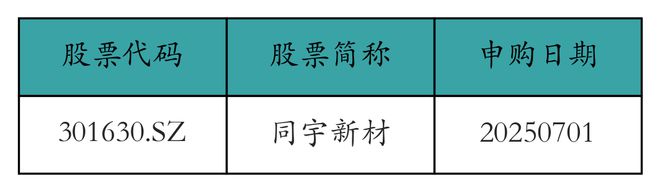
Market Overview - The Shanghai Composite Index increased by 1.4% to close at 3472.32 points, with a peak of 3497.22 points during the week [1] - The Shenzhen Component Index rose by 1.25% to 10508.76 points, reaching a high of 10610.5 points [1] - The ChiNext Index saw a 1.5% increase, closing at 2156.23 points, with a maximum of 2187.88 points [1] - In the global market, the Nasdaq Composite rose by 1.62%, the Dow Jones Industrial Average increased by 2.3%, and the S&P 500 gained 1.72% [1] - In the Asia-Pacific region, the Hang Seng Index fell by 1.52%, and the Nikkei 225 Index decreased by 0.85% [1] New Stock Issuance - One new stock was issued last week: 301630.SZ, with a subscription date of July 1, 2025 [2] Margin Trading Situation - The total margin trading balance in the Shanghai and Shenzhen markets reached 18470.61 billion yuan, with a financing balance of 18341.82 billion yuan and a securities lending balance of 128.79 billion yuan [3] - The margin trading balance increased by 134.02 billion yuan compared to the previous week [3] - The Shanghai market's margin trading balance was 9348.08 billion yuan, up by 48.25 billion yuan, while the Shenzhen market's balance was 9122.53 billion yuan, increasing by 85.78 billion yuan [3] - A total of 3411 stocks had margin buying, with 70 stocks having buying amounts exceeding 1 billion yuan, led by Dongfang Caifu, Zhongji Xuchuang, and Xinyi Sheng with buying amounts of 67.58 billion yuan, 53.81 billion yuan, and 42.71 billion yuan respectively [3][4] Fund Issuance Situation - Twelve new funds were issued last week, including various types such as bond funds and stock funds [5] Company Buyback Amounts - Eighteen companies announced buybacks last week, with the highest amounts executed by Zhongwei Co., BOE Technology Group, and Longbai Group, with buyback amounts of 86.33 million yuan, 82.38 million yuan, and 20.17 million yuan respectively [6][7] - The industries with the highest buyback amounts were electric equipment, electronics, and retail [7]