石油

Search documents
【招银研究|资本市场快评】如何看待A股与黄金大跌
招商银行研究· 2026-03-23 12:21
Core Viewpoint - The ongoing geopolitical conflict in the Middle East is escalating, leading to heightened expectations of global stagflation and emerging liquidity risks, significantly impacting capital markets and asset prices, particularly in the Asia-Pacific region [1] Group 1: Equity Market - The situation in the Middle East has worsened, with the Strait of Hormuz experiencing substantial navigation restrictions, which is a critical factor for capital market dynamics [2] - A significant adjustment in the A-share market occurred on March 23, primarily driven by the negative macroeconomic combination of escalating geopolitical tensions and stagflation expectations, resulting in the first negative year-to-date returns for major A-share indices [3] - Historical data indicates that the maximum drawdown for the Shanghai Composite Index in any given year is not less than 8%, suggesting that a decline to the range of 3500-3850 points is a normal adjustment within a bull market [4] - The A-share market has seen a substantial release of risks, but a clear stabilization point requires further observation, with a cautious approach recommended for position management [5] Group 2: Gold Market - Gold prices are under pressure due to rising tightening expectations driven by inflation concerns, with significant outflows from major gold ETFs indicating a rapid withdrawal of institutional funds [7] - Speculation exists regarding oil-producing countries potentially selling gold reserves to manage liquidity, reminiscent of past behaviors during financial crises [8] - The future trajectory of gold prices is highly dependent on the evolution of the U.S.-Iran conflict, with three potential scenarios outlined: prolonged strait blockade leading to stagflation concerns, a swift resolution by U.S. forces, or a situation where inflation rises without economic stagnation [9][10]


KPLER原油库存数据报告:浮仓增加全口径库存下探
Zhong Xin Qi Huo· 2026-03-23 11:44
Report Summary 1. Report Industry Investment Rating - Not provided in the given content 2. Core View - In the week of March 22, global full - caliber (including in - transit) crude oil inventories declined significantly, likely due to shipping disruptions in the Persian Gulf leading to a decrease in the number of in - transit cargoes. Floating storage inventories increased significantly, mainly due to the backlog of cargoes within the Persian Gulf. In terms of on - land inventories by region, European inventories decreased slightly, while inventories in China, India, Russia, and the Middle East all increased [2] 3. Summary by Related Catalog - **Global Full - Caliber Crude Oil Inventory**: In the week of March 22, it declined significantly, mainly because shipping disruptions in the Persian Gulf led to a decrease in in - transit cargoes [2] - **Floating Storage Inventory**: It increased significantly, mainly due to the backlog of cargoes within the Persian Gulf [2] - **On - land Inventory by Region**: - **Europe**: Inventory decreased slightly [2] - **China, India, Russia, Middle East**: Inventories increased [2]
金融市场突变!油价跳水12%,美股期指、金银快速反弹,特朗普称将暂停打击伊朗能源设施5天
21世纪经济报道· 2026-03-23 11:34
Group 1 - International oil prices experienced a sharp decline, with New York crude oil dropping to $85.66, a decrease of 12% within the day, and Brent crude oil falling to $94.33, down over 11% [1][2] - The opening price for New York crude was $100.51, reaching a high of $101.67 and a low of $84.37, indicating a volatility of 17.61% [2] - Precious metals prices rebounded, with spot gold's decline narrowing and spot silver turning positive [4] Group 2 - European stock markets quickly rebounded, with the French CAC40 index rising nearly 1.5%, and both the FTSE China A50 index futures and MSCI China A50 interconnect index futures also increasing by nearly 1.5% [6] - U.S. President Trump announced a temporary pause on military strikes against Iran's power plants and energy infrastructure for five days, contingent on successful ongoing discussions [6] - The Asia-Pacific stock market faced significant declines, with 133 stocks in A-shares hitting the daily limit down, and Hong Kong tech stocks experiencing a sharp drop, exemplified by Hua Hong Semiconductor falling by 5% [7]

水泥发运明显回升——每周经济观察第63期
一瑜中的· 2026-03-23 11:20
Core Viewpoint - The article discusses the current economic conditions in China, highlighting both improvements and declines in various sectors, including cement shipping rates, oil prices, consumer demand, and trade activities [2][3][4][24]. Group 1: Economic Activity - The Huachuang Macro WEI index has risen to 5.00% as of March 15, 2026, up from 4.58% on March 8, indicating a recovery in economic activity [9]. - The increase in the WEI index is primarily driven by improvements in consumer demand for passenger vehicles and production rates in the semi-steel tire sector, influenced by the Spring Festival holiday effects [9]. Group 2: Asset Performance - The stock-bond Sharpe ratio difference remains high at 2.16, indicating that stocks still offer better relative value compared to bonds, despite a slight decline from previous highs [11]. - The bond yield curve has steepened, with 1-year, 5-year, and 10-year government bond yields reported at 1.2568%, 1.5625%, and 1.8299%, respectively [47]. Group 3: Consumer Demand - Retail sales of passenger vehicles continue to show negative growth, with a year-on-year decline of 21.3% as of March 15, 2026, compared to a 25.4% drop in February [14]. - The real estate market shows signs of contraction, with residential sales area down by 12% year-on-year as of March 20, 2026 [15]. Group 4: Production - Cement shipping rates have improved significantly, reaching 30.6% as of March 20, 2026, an increase of 11 percentage points from March 13, although still 7.6 percentage points lower than the previous year [20]. - The construction industry shows a recovery in work resumption rates, with 62% of construction sites reopening as of March 18, 2026, up 19.5 percentage points from the previous period [21]. Group 5: Trade - Port container throughput growth continues to decline, with a year-on-year increase of only 2.5% as of March 15, 2026, down from 16.5% in the previous year [24]. - The shipping market is experiencing mixed trends, with the Shanghai export container freight index showing a slight decrease of 0.2% [24][25]. Group 6: Prices - Oil prices have continued to rise, with Brent crude oil reaching $112.2 per barrel, an increase of 8.8% [3][33]. - In contrast, gold and copper prices have seen significant declines, with gold priced at $4576.3 per ounce, down 8.9%, and copper at $12128 per ton, down 5.6% [4][33]. Group 7: Fiscal Policy - The government plans to implement a more proactive fiscal policy, with new local bond issuance plans totaling 111.4 billion yuan for the week of March 23, 2026 [39][40].

“我们在用伊朗的石油对付伊朗”
中国能源报· 2026-03-23 11:11
Group 1 - The core viewpoint of the article is that the U.S. is considering conditional relaxation of oil sanctions on Iran to stabilize crude oil prices, which is intended to harm Iran economically, as stated by U.S. Treasury Secretary Janet Yellen [1] - The U.S. Treasury's Office of Foreign Assets Control issued a general license allowing the delivery and sale of Iranian crude oil and petroleum products that were already loaded onto ships as of the 20th, aiming to increase oil market supply [1] - Yellen mentioned that approximately 140 million barrels of Iranian oil are either shipped or stored at sea, indicating a significant volume of oil that could potentially enter the market [1] Group 2 - In response to Yellen's statements, an Iranian oil ministry spokesperson claimed that there are no remaining oil supplies stranded at sea or available for international markets, suggesting that the U.S. statements are merely intended to create hope for buyers [1] - The ongoing conflict between Israel and Iran has escalated, leading to disruptions in the Strait of Hormuz, which has caused a significant increase in international oil prices and rising retail prices for gasoline and diesel in the U.S. [1]
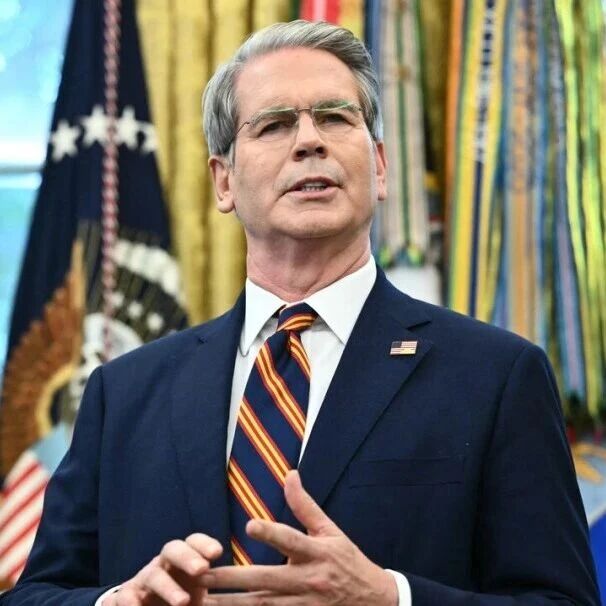
近13年来首次!发改委主动干预成品油涨幅:汽、柴油每升少涨0.85元
第一财经· 2026-03-23 10:17
Core Viewpoint - The National Development and Reform Commission (NDRC) has implemented temporary price control measures on refined oil products to mitigate the impact of rising international oil prices due to the escalating conflict between the U.S. and Iran, ensuring economic stability and protecting consumer interests [3][7]. Group 1: Price Adjustments - The price of gasoline and diesel will increase by 1160 yuan and 1115 yuan per ton, respectively, but the actual increase will be limited to 2205 yuan and 2120 yuan per ton due to the temporary control measures [5][7]. - The retail price of 92-octane gasoline is expected to range from 8.4 yuan to 8.5 yuan per liter, while diesel prices are between 8.3 yuan and 8.5 yuan per liter [5][6]. - For a typical private car with a 50L fuel tank, filling up will cost approximately 44.5 yuan more, while for large logistics vehicles, the cost increase per 100 kilometers will be around 38 yuan [5][6]. Group 2: Historical Context - This is the first proactive intervention by the NDRC since the current refined oil pricing mechanism was established in 2013, aimed at reducing the impact of rising international oil prices [7][8]. - Previous interventions in 2015 and 2022 were not aimed at mitigating price increases but were responses to falling oil prices or protective measures for domestic industries [7][8]. - The next price adjustment window is set for April 7, 2026, with analysts suggesting a likelihood of further price increases if international oil prices continue to rise [9].

“美考虑地面行动夺取伊朗哈尔克岛”
中国能源报· 2026-03-23 10:13
Group 1 - The article reports that the U.S. is considering ground military action to seize Iran's Khark Island, as communicated by senior officials to Israel and other countries [1] - The U.S. military is accelerating the deployment of thousands of Marines and naval personnel to the Middle East, including the "Boxer" amphibious assault ship, "Portland" dock landing ship, and "Comstock" landing ship, which together carry approximately 4,500 Marines and other combat personnel [1] - President Trump has threatened new strikes on Khark Island and may take further action against Iran's oil infrastructure [1] Group 2 - Khark Island, located about 25 kilometers from the Iranian coast, is Iran's largest oil export base, with 90% of the country's oil exported from this location [1] - Iranian military officials have warned that any U.S. military aggression against Khark Island would face unprecedented retaliation since the U.S. and Israel began their attacks on Iran [1]
每日商品期市纵览-20260323
Dong Ya Qi Huo· 2026-03-23 10:11
1. Report Industry Investment Rating No relevant information provided. 2. Core Views of the Report - The overall commodity futures market is significantly affected by geopolitical conflicts, especially the situation in the Middle East, which has led to price fluctuations in various commodities [1][2][3]. - For most commodities, short - term price trends are mainly influenced by geopolitical factors, while medium - to long - term trends depend on supply - demand fundamentals and macro - economic conditions [11][12][15]. 3. Summary by Related Catalogs Financial Futures - **Stock Index**: Affected by external disturbances and low market sentiment, the stock index has been continuously adjusted. There is a possibility of a technical rebound in the short - term, and it is relatively strong in the medium - to long - term [2]. - **Treasury Bonds**: Inflation concerns caused by the Middle East situation and high oil prices suppress long - term bond trends, while short - term bonds benefit from stable capital. If the stock market decline expands, the bond market may rise due to risk - aversion sentiment [2]. Container Shipping on European Routes The market has entered a high - level wide - range shock. The core logic has shifted from trading geopolitical conflicts to weighing risk premiums and the reality of the off - season. Near - month contracts are subject to repeated games between events and spot markets, and far - month contracts price in long - term conflicts, with high volatility risks [3]. Non - ferrous Metals - **Platinum and Palladium**: Geopolitical conflicts in the Middle East have pushed up oil prices, leading to inflation concerns. The shift in monetary policy expectations suppresses platinum and palladium prices. There are short - term price fluctuations [4]. - **Gold and Silver**: Reversal of the Fed's interest - rate hike expectations, rising US dollar index and real interest rates of US bonds, and the escalation of Middle East conflicts have put pressure on gold and silver prices. There is a lack of upward momentum in the short - term [5]. - **Copper**: Tightening macro - expectations and weak industrial reality have caused copper prices to break through key ranges. In the short - term, the price remains weak, and in the medium - to long - term, attention should be paid to marginal changes in macro - expectations and industrial supply - demand [5]. - **Aluminum**: Geopolitical factors initially pushed up prices, but then concerns about economic recession and liquidity tightening, along with a significant cooling of the Fed's interest - rate cut expectations, have made aluminum prices fluctuate weakly. There is a possibility of price increases if raw material shortages lead to more production cuts [6]. - **Alumina**: Domestic production capacity has declined, narrowing the oversupply situation, but new production capacity in Guangxi has brought supply pressure. Overseas, geopolitical factors in the Middle East have affected orders, and shipping costs have risen. The fundamentals are mixed, and cost and policy expectations provide phased support [6]. - **Cast Aluminum Alloy**: It strongly follows the price of Shanghai aluminum, and has strong support below due to raw material shortages and the impact of tax refund policies [7]. - **Zinc**: The price is at the lower end of the range, with some support from downstream purchases. The supply pressure from domestic smelting is increasing, and the demand recovery is delayed. In the short - term, it runs weakly [7]. - **Nickel and Stainless Steel**: Fluctuate following macro - guidance. The cooling of the Fed's interest - rate cut expectations and the uncertainty of the US - Iran conflict have put pressure on prices. The fundamentals are in a more intense game, and attention should be paid to demand release and Indonesian policies [8]. - **Tin**: Suppressed by both macro - panic sentiment and fundamentals. In the short - term, there is no obvious turning point, and in the medium - to long - term, the price center moves upward [8]. - **Lithium Carbonate**: The supply is in a loose pattern, and the demand is mainly for rigid procurement. The market is jointly dominated by supply - demand fundamentals and capital sentiment [9]. - **Industrial Silicon and Polysilicon**: The industry is in a situation of weak supply and demand. Polysilicon has entered a loss - making range. The current is the bottom of the production - capacity cycle, and attention should be paid to production - capacity clearance and supply - demand optimization [10]. - **Lead**: The price fluctuates and adjusts. The supply side brings upward pressure, and the demand side recovers slowly. The price oscillates within a range [10]. Black Metals - **Rebar and Hot - Rolled Coil**: Geopolitical conflicts in Iran have pushed up oil and coking coal prices, providing cost support. However, high inventory and high warrants of hot - rolled coils form upward pressure. The short - term rebound height is limited [11]. - **Iron Ore**: The price is strong in the near - term and weak in the long - term. The cost side provides support, but in the medium - to long - term, new production capacity will make the fundamentals looser [11]. - **Coking Coal and Coke**: There is a short - term surplus of coking coal, and the supply - demand contradiction of coke may deteriorate. Overseas energy price increases provide bottom support, but the surplus problem restricts price elasticity [12]. - **Ferrosilicon and Silicomanganese**: Hurricane disturbances in Australia have affected manganese ore shipments, and coking coal provides cost support. The demand for ferroalloys from steel mills is weak, and the inventory of silicomanganese is at a historical high, with large de - stocking pressure [12]. Energy and Chemicals - **Crude Oil**: The continuous escalation of the US - Iran conflict has increased the risk of navigation in the Strait of Hormuz, and short - term upward momentum still exists. The price fluctuates at a high level [13]. - **Fuel Oil**: Geopolitical conflicts in the Middle East have restricted the inflow of regional oil. The supply of low - sulfur fuel oil has tightened significantly, and the inventory is decreasing. The supply gap will support the spot premium and refinery profits in the short - term [13][14]. - **Asphalt**: Geopolitical disturbances have led to short - term price increases in crude oil, and in the short - term, geopolitical factors are the core determinants [14]. - **Pure Benzene - Styrene**: Geopolitical conflicts in the Middle East have provided cost support, and there are risks of reduced production in refineries. The market is short - term volatile and strong [15]. - **LPG**: The futures price has risen significantly driven by capital sentiment. The fundamentals provide limited support, and it enters a high - level shock in the short - term [15]. - **Methanol**: The situation in Iran threatens production and transportation, and geopolitical games are the core logic. The supply - demand pattern is dominated by geopolitics, and device uncertainties increase volatility [16]. - **PP and Propylene**: The fundamentals are still strong, and they are expected to maintain a volatile and strong trend before the geopolitical risks are eliminated [17]. - **Plastic**: If the conflict continues, it is expected to run strongly; if the situation eases, some risk premiums will be withdrawn, but it is difficult to fall back to the pre - event level in the short - term [17]. - **Rubber**: Synthetic rubber has risen significantly driven by energy costs and geopolitics, while natural rubber is under pressure from weak macro - sentiment. In the medium - to long - term, the supply - demand structure supports the valuation [18]. - **Soda Ash**: The daily production remains high, and the demand is stable but weak. The inventory performance is better than expected, and the price movement is restricted by supply - demand and macro - factors [18]. - **Glass**: The cold - repair expectation of float glass continues, and the supply return expectation and high inventory limit the price increase. The price oscillates under the combined action of supply - demand and cost [19][20]. - **Caustic Soda**: The supply has tightened marginally, and the demand has improved marginally. The overall supply - demand pattern has improved, and the futures price is jointly driven by fundamentals and market sentiment [20]. Agricultural Products - **Hog**: The market is in a complex game stage. In the short - term, the hog price may continue to bottom around 10 yuan/kg, and the subsequent trend depends on whether cash - flow pressure can force capacity out - clearing [21]. - **Oilseeds**: The Sino - US negotiation in April has been postponed. In the short - term, the spot price is firm, but the medium - term large - supply logic remains unchanged. The price difference between soybean meal and rapeseed meal is being repaired [21]. - **Oils**: In the short - term, it oscillates. The price of crude oil is the core influencing factor, and attention should be paid to the bio - fuel policies of Indonesia and the US [22]. - **Cotton**: Geopolitical conflicts have led to crude - oil fluctuations and increased macro - risks. In the short - term, the price has fallen, but in the medium - to long - term, the downstream demand has resilience, and the lower support is stable [23]. - **Sugar**: The expected sugar production in Brazil has been lowered, and the geopolitical situation in the Middle East has made capital cautious. The domestic supply - demand pattern is stable, and the sugar price oscillates [23]. - **Egg**: The supply of small - sized eggs is tight in some areas, and the feed price provides cost support. The short - term price adjusts slightly, and the upward space is limited [24]. - **Apple**: The Tomb - Sweeping Festival stocking is progressing, and the market is polarized. The fundamentals and delivery logic support the futures price, which maintains a strong - oscillating pattern [24]. - **Jujube**: The market focus is on the demand side, and the downstream sales are mediocre. The price is under pressure and may oscillate at a low level [25].
How investors should think about oil and stocks in the Iran war – in 3 simple steps
New York Post· 2026-03-23 10:00
Core Viewpoint - The ongoing conflict in Iran is raising investor concerns about a potential energy crisis, global recession, and the end of the current bull market, but historical patterns suggest that capital markets often recover quickly from such conflicts [1][2]. Market Reactions - The typical market response to conflicts follows a three-step pattern: initial volatility and rising oil prices, further volatility as markets assess worst-case scenarios, and then a stock rally as investors recognize the limited economic impact of the conflict [2]. - Historical data shows that the S&P 500 increased by 12.5% during Desert Storm and 31.9% in the following year, indicating that markets can rebound even amidst ongoing conflicts [3]. Oil Market Dynamics - The Gulf Coast's role as a production hub raises fears, but it only accounts for 3.5% of global GDP, and Iran's oil output was just 3% of global supply before the conflict [5]. - Shipping routes, particularly through the Strait of Hormuz, are critical, with 20% of global oil flows passing through it; however, much of this oil is for processing rather than export, and alternative pipeline routes are already in place [8]. Historical Context - The current situation differs from the 1970s when the U.S. was heavily reliant on foreign oil; now, the U.S. is the world's top oil producer and has better relationships with most Middle Eastern exporters [9]. - In past regional conflicts, oil prices have shown a tendency to stabilize or decrease after initial spikes, with an average increase of 5% a month after conflict onset but a decrease of 4% after six months [10]. Economic Implications - Even if oil prices rise, historical trends indicate that economies and stock markets can thrive with higher oil prices, as seen in the early 2010s when economies grew with oil prices around $100 [11]. - The political landscape suggests that unresolved conflicts could impact midterm elections, potentially influencing market sentiment and investor behavior [12].

霍尔木兹海峡被封锁,能源之外中东局势如何冲击美国农民?|声动早咖啡
声动活泼· 2026-03-23 09:34
Core Viewpoint - The recent military conflict in the Middle East, particularly the U.S. and Israel's airstrikes on Iran, has led to significant disruptions in global energy and fertilizer markets, directly impacting American farmers and the agricultural sector [3][4]. Group 1: Impact on Energy and Fertilizer Prices - Following the closure of the Strait of Hormuz, oil and natural gas prices have surged, with urea prices rising from $500 to $700 per ton, potentially doubling if the conflict continues [4][5]. - The Middle East is a crucial supplier of nitrogen fertilizers, with approximately 30% of global fertilizer exports passing through the Strait of Hormuz, which is now blocked due to the conflict [5][6]. Group 2: Effects on American Agriculture - Urea and nitrogen fertilizers are vital for crops like wheat, rice, and corn, which provide over 40% of global caloric intake; disruptions in supply could severely affect food production [5][6]. - The conflict comes at a critical time for U.S. farmers, as they typically begin planting in April, and the interruption in fertilizer supply could lead to shortages during the planting season [9][10]. Group 3: Broader Economic Implications - The agricultural sector has already been under pressure due to rising fertilizer prices and previous supply chain disruptions from the Russia-Ukraine conflict, which had already strained the market [7][8]. - The current situation may lead to increased costs for consumers as fertilizer price hikes are expected to be passed down to grocery store prices, affecting overall living costs [10].