
智能网联汽车

Search documents
苏州全面推动“车路云一体化”场景应用
Su Zhou Ri Bao· 2025-12-02 00:31
Core Insights - The article highlights the advancements in autonomous driving technology showcased at the 7th Global Intelligent Driving Conference in Suzhou, emphasizing the city's ambition to develop a fully integrated "Smart Driving City" [1] Group 1: Scene Implementation and Technology - Suzhou has implemented remote driving technology that allows one operator to control multiple cleaning vehicles, significantly reducing operational costs [2] - The city has established over 100 intelligent vehicle networking application scenarios, including smart transportation, logistics, and autonomous parking, with more than 1,200 vehicles involved in road testing and demonstration [2] - The release of the "Guidelines for Commercial Demonstration Applications of Autonomous Driving Equipment" has increased expectations for the commercialization of these scenarios [2] Group 2: Industrial Development and Innovation - Suzhou has a solid foundation in autonomous driving, chip development, and software, with over 150 innovative achievements in the past year and the emergence of several unicorn companies [3] - The city has strengthened collaborations with top universities and research institutions, establishing the Jiangsu Province Intelligent Driving Technology Key Laboratory and a public service platform for new energy vehicles [3] - Suzhou is advancing the integration of artificial intelligence with the automotive industry, having received approvals for multiple national pilot projects related to intelligent connected vehicles [3] Group 3: Regional and Global Collaboration - The launch of the cloud control platform for the Suzhou-Nanjing-Wuxi intelligent driving pilot cities marks a significant step towards regional collaboration in the Yangtze River Delta [5] - Suzhou is actively engaging in global markets, leveraging its industrial strength and export-oriented economy to enhance its position in the intelligent industry chain [5] Group 4: Policy Support and Future Outlook - The city has introduced over 30 policies to support the healthy development of the intelligent vehicle networking industry, including 20 new measures aimed at promoting the new energy vehicle sector [6] - Suzhou's strategic planning focuses on scene implementation, technological breakthroughs, regional collaboration, and global outreach to foster high-quality development in the intelligent driving sector [6]
大湾区应用场景创新中心(智能制造)落户深圳
Ren Min Ri Bao· 2025-12-01 23:06
Core Insights - The "Baijing Chuangxiang" scenario docking conference was held in Bao'an District, Shenzhen, focusing on the establishment of the Guangdong-Hong Kong-Macao Greater Bay Area Application Scenario Innovation Center for Intelligent Manufacturing [1][2] - The center aims to leverage Bao'an's manufacturing base and application resources to develop new fields and high-value scenarios in technologies such as artificial intelligence, industrial internet, big data, and cloud computing [1][2] Group 1 - The conference attracted over 760 companies, releasing more than 500 scenario opportunities and capabilities, with over 60 companies signing agreements on-site [2] - More than 150 companies showcased over 500 new technologies and products, covering various fields including intelligent manufacturing, artificial intelligence, low-altitude economy, and unmanned systems [2] - The government-led scenarios included 288 opportunities, focusing on social governance, public services, and industry applications, while enterprise application scenarios totaled 220, targeting sectors like smart terminals and semiconductor industries [2] Group 2 - Bao'an District has nearly 560,000 enterprises, with around 5,600 above-scale manufacturing companies, covering all 31 major categories of manufacturing [2] - The district features a comprehensive transportation hub with nearly 400 square kilometers of land and 175 square kilometers of sea, integrating multiple transportation modes [2] - Bao'an has proposed to become a "benchmark city for fully open scenarios," aiming to open over 100 innovative application scenarios and release more than 1,000 new technologies, products, and solutions [2]
——政策周观察第57期:\十五五\扩内需,如何部署?
Huachuang Securities· 2025-12-01 13:04
Group 1: Macroeconomic Strategy - The article emphasizes the need to boost domestic consumption, noting that China's consumption rate lags behind developed countries by 10-30 percentage points, particularly in service consumption[1] - Short-term measures include optimizing supply and reducing restrictions to enhance the availability of quality consumer goods and services[1] - Long-term strategies focus on increasing residents' income and improving the share of labor remuneration in national income distribution[1] Group 2: Investment Expansion - The report advocates for effective investment expansion, particularly in infrastructure, while maintaining a balance to avoid excessive investment[2] - Key investment areas include urban renewal, strategic transportation corridors, new energy systems, and major water conservancy projects[2] - The government plans to implement significant projects in consumer-related sectors, such as elderly care and health services, to support consumption[2] Group 3: Policy Developments - A recent plan aims to create three trillion-level consumption sectors and ten hundred-billion-level consumption hotspots by 2027, focusing on areas like elderly products and smart connected vehicles[2] - The government has allocated 700 billion yuan and 800 billion yuan in special bonds for "hard investment" projects in the past two years[2] - The report highlights the importance of enhancing the efficiency of investment returns and addressing the issues of "heavy investment, light returns" in certain sectors[2]
“十五五”扩内需,如何部署?——政策周观察第57期
一瑜中的· 2025-12-01 12:04
Core Viewpoint - The article emphasizes the importance of expanding domestic demand as a strategic foundation during the "14th Five-Year Plan" period, focusing on boosting consumer spending and effective investment to counter external uncertainties and enhance economic growth [2][13]. Summary by Sections 1. Boosting Consumer Spending - Current Situation: China's consumer spending rate lags behind developed countries by 10-30 percentage points, particularly in service consumption [2]. - Short-term Measures: Focus on optimizing supply, innovating consumption scenarios, and removing unreasonable restrictions in the consumption sector [2]. - Long-term Goals: Enhance residents' income and consumption capacity, ensuring that income growth aligns with economic growth and labor productivity [2][13]. 2. Expanding Effective Investment - Infrastructure Investment: Maintain a moderate growth in infrastructure investment while avoiding excessive expansion [3]. - Investment Focus: Target major projects in urban renewal, strategic transportation corridors, new energy systems, and significant water conservancy projects, as well as investments in consumer-related sectors [3][13]. - Support Measures: Reform the investment and financing system, utilize new policy financial tools, and improve the pricing mechanisms in transportation and energy sectors to enhance investment returns [3][13]. 3. Recent Policy Developments - Consumption Policy: The Ministry of Industry and Information Technology released a plan to enhance the adaptability of supply and demand in consumer goods, aiming to establish three trillion-level consumption sectors and ten hundred-billion-level consumption hotspots by 2027 [4][11]. - Industry Meetings: The People's Bank of China held a meeting to combat speculative trading in virtual currencies, and the Ministry of Industry and Information Technology discussed regulations in the battery industry [4][11]. 4. National Development Goals - The article outlines the goal of achieving a high-quality development pattern where supply and consumption interact positively by 2030, with a gradual increase in consumption's contribution to economic growth [11][12]. - Specific sectors identified for growth include elderly products, smart connected vehicles, and consumer electronics, with a focus on addressing the needs of an aging population [12][13].


广西创新联合体达32家
Ke Ji Ri Bao· 2025-12-01 07:57
Core Points - The Guangxi Zhuang Autonomous Region's Science and Technology Department announced the list of innovation consortia for 2025, with eight new consortia including the Guangxi Energy AI Smart Space Innovation Consortium [1] - The total number of innovation consortia in Guangxi has reached 32, covering key industries such as non-ferrous metals, new generation information technology, biomedicine, and new energy, playing a significant role in integrating innovation and industrial chains [1] - A management approach for innovation consortia was introduced, emphasizing a combination of top-down and bottom-up methods for formation, focusing on unique, characteristic, and leading research directions [1] Summary by Sections Innovation Consortia Development - The innovation consortia have achieved full-chain integration from technology to industry through a collaborative model involving government, enterprises, universities, and the market since 2024 [2] - Specific achievements include advancements in the sugar refining industry, development of fuel cell trucks, new capacitor products, and the second generation of injectable artemisinin derivatives, with the latter expected to achieve industrialization by 2025 [2]
财经观察:AI时代,中国需要何种“新技能”人才
Huan Qiu Wang Zi Xun· 2025-11-30 23:01
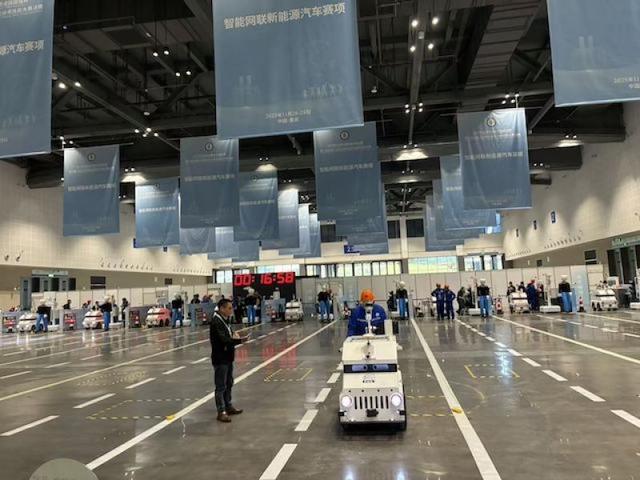
来源:环球时报 【环球时报报道 记者 陈子帅】编者的话:当下,全球主要经济体正大力布局新能源汽车、人形机器人 等新兴产业和未来产业,相关人才的培养也成为不可忽视的课题。人工智能(AI)等前沿产业的发 展,不仅依赖高科技人才在研发端的突破,更离不开大量技术技能人才在落地应用环节的支撑。近日, 中国工信部在重庆举办了第三届全国工业和信息化技术技能大赛,将智能网联汽车、机器人等领域的真 实工业场景搬到了赛场上,来自全国近千名职业技术院校的师生展示了他们对这些前沿产业技术的掌握 能力。《环球时报》记者在现场采访发现,在上述关键产业中,中国已经培养和储备了一批技术技能人 才,他们将成为中国高端产业落地的重要支撑。 "新型工程人才"要掌握跨学科知识 90分钟,让人形机器人搬箱子 3名学生组成一队,当场编写程序和调试机器人,短短1.5小时,人形机器人就能完成自主避障行走、搬 箱子,乃至从一堆杂物中挑选指定零件等考核内容。《环球时报》记者在全国技术技能大赛现场目睹了 这一生动场景。 近年来随着人形机器人产业迅速发展,越来越多的技术院校开始培养该领域的技能人才。记者了解到许 多参赛选手在今年甚至最近几个月才刚接触人形机器人,但 ...
增强消费品供需适配性 释放经济澎湃动力
Zheng Quan Ri Bao· 2025-11-30 16:22
Group 1 - The core viewpoint of the article emphasizes the implementation plan by six departments to enhance the adaptability of supply and demand in consumer goods, aiming for significant structural optimization by 2027 and a high-quality development pattern by 2030 [1][2] - The plan sets two main goals: to create three trillion-level consumption sectors and ten hundred-billion-level consumption hotspots by 2027, and to establish a mutually reinforcing interaction between supply and demand by 2030 [1][2] - The current consumer market in China is experiencing accelerated upgrades and faster segmentation, with diverse demands for personalized, high-quality, intelligent, and green products, while facing structural contradictions due to oversupply of homogeneous and low-end products [1] Group 2 - The plan focuses on the "silver economy" and children's products, targeting the growing elderly population and increasing birth rates as significant growth opportunities [2] - Key areas highlighted in the plan include smart connected vehicles, consumer electronics, smart wearables, and civilian drones, aligning with the development direction of new productive forces [2] - Cultural elements are integrated into products, with an emphasis on transforming traditional aesthetics and heritage skills into marketable goods, aiming to boost consumer confidence and drive consumption through cultural identity [2][3]
多部门最新回应,关于促进家电家居等大宗消费
Sou Hu Cai Jing· 2025-11-30 12:09
Core Insights - The Chinese government has introduced a plan to enhance the adaptability of supply and demand in consumer goods, aiming to create three trillion-level consumption sectors and ten hundred-billion-level consumption hotspots by 2027, with a focus on high-quality development by 2030 [1] Group 1: Development Goals - By 2027, China aims to establish three trillion-level consumption sectors and ten hundred-billion-level consumption hotspots [1] - By 2030, the goal is to achieve a high-quality development pattern where supply and consumption interact positively, with a steady increase in consumption's contribution to economic growth [1] Group 2: Key Consumption Areas - The three trillion-level consumption sectors include elderly products, smart connected vehicles, and consumer electronics [1] - The ten hundred-billion-level consumption hotspots cover categories closely related to daily life, such as baby products, smart wearables, cosmetics, fitness equipment, outdoor products, pet food, civilian drones, trendy toys, jewelry, and national fashion apparel [1] Group 3: Current Market Trends - In the first ten months of this year, the trade-in policy for consumer goods has generated over 2.4 trillion yuan in sales, benefiting more than 360 million people [3] - Retail sales of home appliances, furniture, and communication equipment have seen approximately 20% year-on-year growth, maintaining a rapid growth rate [3] Group 4: Regulatory and Standardization Efforts - The State Administration for Market Regulation has released 22 national standards related to energy and water consumption for daily consumer goods, enhancing the supply of quality products to meet consumer demand [3] - The plan emphasizes the development of energy-efficient and environmentally friendly products suitable for rural areas, including efficient range hoods, gas stoves, water heaters, and bathroom products [3][4]
人才缺口超百万!智能网联汽车被明确列为“万亿消费领域”,产教融合破解人才困局
Hua Xia Shi Bao· 2025-11-29 10:37
Group 1 - The core focus of the articles is the rapid development and potential of the intelligent connected vehicle (ICV) sector, which is expected to reach a trillion-level consumption market by 2027, alongside other sectors like elderly products and consumer electronics [2][4]. - The Ministry of Industry and Information Technology has set a target to form three trillion-level consumption areas and ten billion-level consumption hotspots by 2027, with ICV being one of the key areas [2][4]. - In the first seven months of this year, the sales of new passenger cars with Level 2 driving assistance features reached 7.76 million units, with a penetration rate of 62.58% [2]. Group 2 - There is a significant talent gap in the ICV sector, with an estimated shortage of 1.03 million professionals in manufacturing and service roles related to new energy and intelligent connected vehicles [3][5]. - Current educational institutions are only producing about 120,000 graduates annually in relevant fields, which is insufficient to meet the industry's demands [3][5]. - The job market for ICV is evolving rapidly, with over 260 distinct job roles identified, each requiring hundreds to thousands of professionals [7][8]. Group 3 - The integration of traditional automotive skills with new technologies such as AI and electronic systems is essential, as the industry shifts towards a more complex skill set [8][9]. - The recent national skills competition introduced new categories focused on ICV, emphasizing the need for practical skills in hardware assembly, fault detection, and system integration [9][10]. - Educational programs are adapting to include a mix of foundational and specialized courses to better prepare students for the evolving job market in ICV [10].
打造万亿级消费领域 政策发力激活内需市场“结构红利”
Zheng Quan Ri Bao Wang· 2025-11-29 03:28
Core Viewpoint - The implementation plan aims to enhance the adaptability of supply and demand in consumer goods, setting quantifiable targets of three trillion-level consumption sectors and ten hundred-billion-level consumption hotspots by 2027, thereby optimizing the supply structure of consumer goods [1][2]. Group 1: Implementation Plan Goals - By 2027, the plan targets a significant optimization of the consumer goods supply structure, establishing three trillion-level consumption sectors and ten hundred-billion-level consumption hotspots [1]. - By 2030, a high-quality development pattern characterized by positive interaction between supply and consumption is expected to be fundamentally established, with a steady increase in the contribution of consumption to economic growth [2][3]. Group 2: Market Context and Trends - As of now, the total variety of consumer goods in China has reached 230 million, with over 100 categories, including home appliances and furniture, leading global production [2]. - In the first ten months of this year, retail sales of goods reached 36.6 trillion yuan, showing a year-on-year growth of 4.4%, which is an acceleration of 1.2 percentage points compared to the same period last year [2]. Group 3: Focus Areas for Development - The plan emphasizes the cultivation of key areas such as elderly products and smart connected vehicles, reflecting the demand driven by demographic changes and technological upgrades [4]. - The elderly products market is projected to grow from 2.6 trillion yuan in 2014 to 5.4 trillion yuan by 2024, with a compound annual growth rate of 7.3%, highlighting the importance of the silver economy [4]. Group 4: Strategies for Implementation - The plan includes measures to enhance the supply of elderly products, such as developing necessary products like nursing robots and health monitoring devices, and promoting home modifications for the elderly [4]. - To achieve the set goals, the plan calls for accelerated technological innovation, market cultivation through new consumption scenarios, and the establishment of a supportive policy framework [5].