
超市

Search documents
12月商超经营重点来了!营销策划、生鲜重点、毛利管控、陈列规划...
Sou Hu Cai Jing· 2025-12-02 16:13
Core Insights - December is a crucial month for retail businesses, characterized by a surge in consumer demand due to various holidays and seasonal changes, making it a "golden month" for sales [1][2] December Marketing Focus - The marketing strategy should revolve around the themes of "winter economy" and "holiday gatherings," with a focus on product adjustments and promotional activities to capture the year-end consumption peak [2] - Key dates in December include major events like heavy snow, Double Twelve, Winter Solstice, Christmas, and New Year's, which influence consumer behavior and purchasing patterns [2] Seasonal Marketing Strategies - **Heavy Snow and Winter Solstice**: Marketing proposals should emphasize health and wellness, promoting high-energy and high-protein products, along with convenient ready-to-eat options to meet consumer needs for nourishment and time efficiency [3][4][6] - **Christmas**: Focus on fresh and prepared food items, including vegetables, meats, and baked goods, to enhance the festive atmosphere and facilitate family gatherings [13][15] - **New Year**: The marketing approach should cater to family reunions, short trips, and gift-giving, emphasizing health and wellness products that align with New Year resolutions [24][25] Product Display and Promotion - **Heavy Snow Season**: Create themed displays for high-energy staple foods, warming soup ingredients, and traditional foods like dumplings and glutinous rice balls, enhancing the shopping experience [8][9][10] - **Christmas**: Highlight fresh produce, ready-to-eat meals, and festive baked goods, ensuring a variety of options for holiday celebrations [15][16] - **New Year**: Introduce health-focused products and gift sets, with an emphasis on low-sugar and nutritious options to cater to health-conscious consumers [26][27] Consumer Engagement Strategies - Implement online and offline promotional strategies, including pre-event marketing through social media and in-store decorations to create a festive shopping environment [30][31] - Utilize seasonal themes in product packaging and marketing materials to enhance consumer appeal and drive sales [27][29]

步步高涨2.03%,成交额5.77亿元,主力资金净流入3209.57万元
Xin Lang Zheng Quan· 2025-12-02 06:10
Core Viewpoint - The stock price of Bubugao has increased by 40% this year, with recent trading activity showing a slight upward trend, indicating potential investor interest and market confidence in the company [2]. Group 1: Stock Performance - As of December 2, Bubugao's stock rose by 2.03%, reaching 5.53 CNY per share, with a trading volume of 577 million CNY and a turnover rate of 4.92%, resulting in a total market capitalization of 14.869 billion CNY [1]. - Year-to-date, Bubugao's stock has seen a 40% increase, with a 2.60% rise over the last five trading days and a 5.94% increase over the last 20 days, although it has declined by 5.47% over the past 60 days [2]. Group 2: Financial Performance - For the period from January to September 2025, Bubugao reported a revenue of 3.201 billion CNY, reflecting a year-on-year growth of 26.45%. However, the net profit attributable to shareholders was 226 million CNY, which represents a significant decrease of 88.83% compared to the previous year [2]. - The company has cumulatively distributed 1.677 billion CNY in dividends since its A-share listing, but there have been no dividend distributions in the last three years [3]. Group 3: Shareholder and Market Activity - As of September 30, 2025, the number of shareholders for Bubugao increased to 172,500, marking a 95% rise from the previous period, while the average circulating shares per person decreased by 27.06% to 12,476 shares [2]. - Bubugao has appeared on the stock market's "Dragon and Tiger List" 10 times this year, with the most recent appearance on September 9, where it recorded a net buy of -51.528 million CNY [2].

【环球财经】香港10月零售销售复苏势头继续增强
Xin Hua Cai Jing· 2025-12-01 10:51
Core Insights - The total retail sales value in Hong Kong for October 2025 is estimated at HKD 35.2 billion, representing a year-on-year increase of 6.9%, indicating a continued recovery in retail sales momentum [1] Retail Sales Performance - Online sales accounted for 14.6% of the total retail sales value in October, with an estimated value of HKD 5.2 billion, showing a year-on-year increase of 27.2% [1] - The cumulative online sales value for the first ten months of the year is estimated to have increased by 9.5% year-on-year [1] Category Analysis - The sales value of electrical and other unclassified durable consumer goods increased by 24.6% year-on-year [1] - The sales value of jewelry, watches, and luxury gifts rose by 9.5% year-on-year [1] - Conversely, the sales value of supermarket goods decreased by 1.8% year-on-year, and the sales value of automobiles and auto parts fell by 20.1% year-on-year [1] Seasonal Adjustments - The seasonally adjusted total retail sales value for the three months ending in October increased by 3.0% compared to the previous three months [1] - The seasonally adjusted total retail sales volume for the same period rose by 1.4% [1] Future Outlook - The spokesperson for the Hong Kong government indicated that the year-on-year increase in total retail sales value has accelerated further, with most major retail categories continuing to see growth [1] - Future improvements in consumer sentiment and a significant increase in visitor numbers to Hong Kong are expected to provide ongoing support for the retail sector [1]
这10位女性CEO,撑起中国零售半边天
3 6 Ke· 2025-12-01 10:17
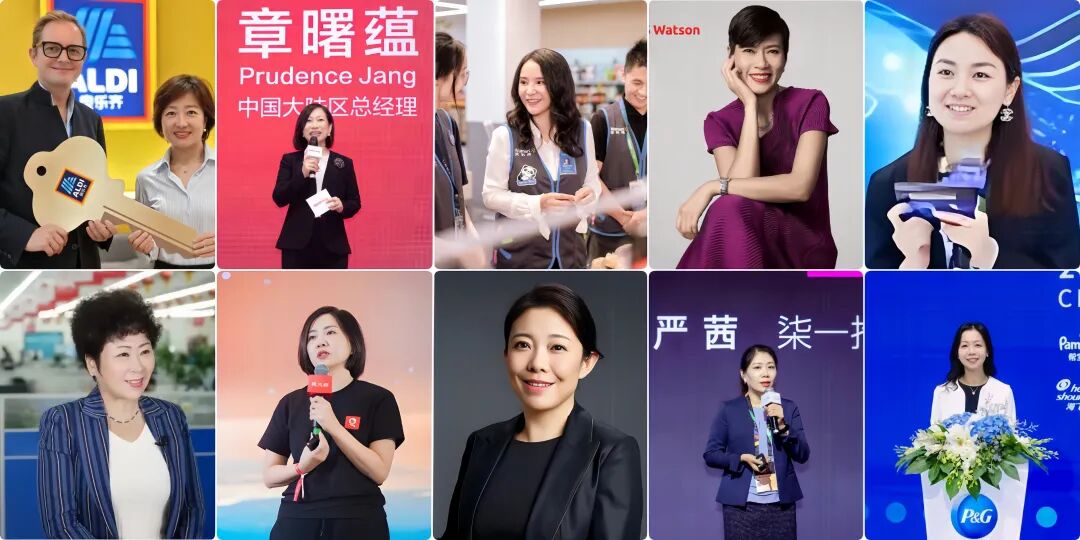
Core Insights - The retail industry in China is entering a "her era" with a significant number of female CEOs leading major companies, highlighting a shift in leadership dynamics [2][31]. Group 1: Leadership Changes - Gao Xin Retail announced Li Weiping as the new CEO, previously serving as CMO at Hema Fresh with an annual salary of 3.36 million [2]. - ALDI China appointed Jacqueline Chen as the new CEO, who has over 20 years of experience in retail and previously held significant roles at Walmart and Metro [5]. - Costco China appointed Zhang Shuyun as the new General Manager, emphasizing aggressive expansion in the Yangtze River Delta region [8]. - Walmart China has seen significant growth under CEO Zhu Xiaojing, with revenues increasing from 87.4 billion to 158.845 billion [10]. - Hema's new CEO, Yan Youlei, aims for rapid expansion, planning to open nearly 100 new stores and achieve over 75 billion in GMV [11]. - 7-ELEVEn China is now led by Yan Qian, who has driven significant growth in store numbers from 3,319 to 4,639 [15]. - Watsons appointed Ni Wenling as CEO, who has extensive experience within the company since 2000 [25]. - Procter & Gamble's Greater China CEO Xu Min is the first locally trained CEO in the company's 184-year history [28]. Group 2: Industry Trends - The rise of female leadership in retail reflects broader trends in gender representation within the industry, with many companies now led by women [2][31]. - The focus on private label products has increased, with ALDI raising its private label share to 90% and launching low-price product lines [5]. - The retail sector is increasingly competitive, with companies like Hema and 7-ELEVEn innovating their business models to meet consumer demands [11][15].
奥乐齐与盒马超盒算NB,走了两条不同的路
东京烘焙职业人· 2025-12-01 08:37
Core Viewpoint - The article discusses the contrasting development paths of two leading brands in the hard discount sector in China, Aldi and Hema Supermarket, highlighting their strategies and market presence in Jiangsu province [5][12]. Group 1: Aldi's Strategy - Aldi has adopted a steady and organic growth philosophy in China, focusing on supply chain development and operational efficiency since its first pilot store opened in June 2019 [8][12]. - As of October 2025, Aldi has expanded to 80 stores in China, primarily in Shanghai and Jiangsu, with plans for further openings [8][12]. - Aldi's strategy emphasizes a limited range of expansion around mature markets to ensure supply chain efficiency and cost reduction, reflecting its commitment to "extreme efficiency" and "long-termism" [12]. Group 2: Hema Supermarket's Expansion - Hema Supermarket, under the brand "Super Box NB," is rapidly expanding, with 73 stores in Jiangsu as of November 18, 2023, and plans for further growth [13][16]. - The brand has shifted to a franchise model to accelerate its expansion into county markets, which is seen as a key driver for future growth [22][24]. - Hema's operational strategy includes a focus on digital capabilities and community penetration, leveraging its parent company Alibaba's resources [15][22]. Group 3: Market Dynamics - The competition in Jiangsu's discount retail market is intensifying, with Aldi and Hema Supermarket vying for market share [18][25]. - Both brands have unique strengths: Aldi focuses on quality and low prices through its private label products, while Hema emphasizes rapid product iteration and digital integration [19][22]. - The article suggests that the future of the discount retail market in Jiangsu will likely be dominated by both Aldi and Hema, each contributing significantly to the sector's growth [18][25].
北京朝阳迎首家“胖改永辉” 永辉超市百子湾路店调改开业
Zheng Quan Shi Bao Wang· 2025-11-30 10:11
Core Insights - The article highlights the expansion of Yonghui Supermarket's "Pang Yonghui" model in Beijing, emphasizing its commitment to quality retail and customer-centric approaches [1][3]. Group 1: Store Expansion and Model Implementation - Yonghui Supermarket's Beijing Chaoyang Baiziwan Road store has officially opened, marking the 18th store in the Beijing and surrounding areas to adopt the "Pang Yonghui" model [1]. - The company has successfully transitioned from its first store to a network of 18 stores in Beijing over the past year, indicating a robust growth strategy [1]. Group 2: Product Offering and Quality Focus - The new store features a product structure that aligns with 80% of the offerings found in Pang Donglai stores, including a dedicated area for Pang Donglai's private label products [1]. - The store boasts a new product ratio exceeding 40% and nearly 20% of imported goods, showcasing a diverse and high-quality product range [1][2]. Group 3: Brand Development and Customer Experience - Yonghui's private label system includes the "Yonghui Custom" series, which meets stringent EU standards, and the "Quality Yonghui" series, featuring products that pass 439 safety checkpoints [2]. - The store environment has been optimized with wider main aisles and standardized shelf heights, enhancing the shopping experience [2]. Group 4: Workforce Development and Future Plans - The company is implementing a craftsman plan that offers skill certification for technical positions, with senior technicians receiving monthly subsidies of up to 2,500 yuan [3]. - Yonghui's transformation in Beijing is moving from scale expansion to refined operations, with plans for further store openings, including a new location in Tongzhou on December 23 [3].


一周上新!东更道点心、赛拉维、cute cube面包立方...海内外新品资讯抢先看 | 全球职人情报站
东京烘焙职业人· 2025-11-30 08:33
Group 1 - The article highlights the latest product launches and innovations in the baking industry, showcasing various brands and their new offerings [2][3][4][5][6][8][12][14][16][18][19][23][26][29][31][33][35][36][38][42][46][49][51][53][56][59][67][69][71][75][77][80][82][84][86][88][90][93][95][97][99][101][103][105][107][110][111][113][116][118][120][122][124][126][127][128][129][130][131][132][133][134][135][137][139][140][141][143][144] - The article emphasizes the rise of chain bakeries and the competition within the baking sector, indicating a shift in consumer preferences and market dynamics [143][144] Group 2 - The article mentions the introduction of new flavors and products by various brands, such as Kiri's cheese baguette and Häagen-Dazs' winter ice cream offerings [126][127] - It discusses the expansion of brands like "Tea Yan Yue Se" into the coffee market, indicating diversification strategies within the food and beverage sector [128] - The article notes the launch of new product lines by companies like Gu Ming, focusing on high-quality ingredients and unique preparation methods [129]

商贸零售行业周报:品牌建设+科技美学,谱写国货美妆增长答案-20251130
KAIYUAN SECURITIES· 2025-11-30 07:11
Investment Rating - The investment rating for the retail industry is "Positive" (maintained) [1] Core Views - The retail industry is experiencing a shift towards quality growth and long-term strategies, moving away from reliance on traffic bonuses [25][26] - The industry is focusing on emotional consumption themes, with high-quality companies in sectors like gold jewelry, offline retail, cosmetics, and medical aesthetics being highlighted as investment opportunities [5][29][30] Summary by Sections Retail Market Review - The retail industry index rose by 3.45% during the week of November 24-28, 2025, outperforming the Shanghai Composite Index by 2.05 percentage points [4][13] - The multi-format retail sector showed the highest growth this week, with a 6.18% increase, while the jewelry sector led the year-to-date performance with a 22.11% increase [18][19] Retail Insights: Brand Building and Technological Aesthetics - The 2025 Cosmetics Annual Conference highlighted the importance of brand building and technological aesthetics for domestic beauty brands to achieve growth [25][26] - Companies like Shiseido and Shanghai Jahwa are focusing on quality and profitability, while Elysian Group is transitioning from operational to technological drivers [26][27] Investment Recommendations - **Gold Jewelry**: Focus on brands with differentiated product offerings and consumer insights, recommending companies like Chow Tai Fook and Lao Pu Gold [5][29] - **Offline Retail**: Highlighting companies adapting to trends and exploring AI-enabled cross-border e-commerce, with recommendations for Yonghui Supermarket and Aiyingshi [5][30] - **Cosmetics**: Emphasizing brands that meet emotional value and safety innovation, recommending companies like Maogeping and Proya [5][30] - **Medical Aesthetics**: Targeting differentiated product manufacturers and expanding medical chains, recommending companies like Aimeike and Kedi-B [5][30] Company-Specific Insights - **Chow Tai Fook**: Achieved revenue of HKD 38.986 billion in FY2026H1, with a slight decline in revenue but a stable profit margin [36][37] - **潮宏基 (Chao Hong Ji)**: Reported a revenue increase of 28.4% in Q1-Q3 2025, with a strong performance in Q3 [39][40] - **永辉超市 (Yonghui Supermarket)**: Experienced a revenue decline of 22.2% in Q1-Q3 2025, but is undergoing a transformation towards quality retail [43][44]





中国超市之父,63岁杀出绝境
创业家· 2025-11-29 10:07
以下文章来源于最华人 ,作者华人作者团 最华人 . 有华人的地方,就有最华人。 关注华人商业领袖、创业者及商业案例; 洞察科技制造、品牌出海、产 业革新等。 "2022中国正能量网络精品"获得者。 强者,永远不会被击垮。 作者 :吴垢 来源:最华人 什么?胖东来都开到北京了? 今年春天,北京海淀区新辰里广场,突然成了北京最火爆的打卡胜地之一。 超市开业当天,九点半才正式开门,七点就已被人群挤爆。一直到中午11点,门口的队伍仍有 将近200米长。 进门第一眼,很多人愣住了: 果切区4小时8折,6小时6折,8小时后下架报损; 多个区域配备放大镜; 提供免费雨衣、非机动车免费充气。 这股熟悉的"胖东来味",让无数北京人瞬间魂穿到了河南。 慕名而来的顾客人手提着几大件胖东来自营产品,补货的员工忙得脚不沾地,慢一秒货架就有 被搬空的风险。 可当大家拿起购物篮,看见超市写的"物美"两个大字时,才顿时回过神来: 原来这不是胖东来,而是北京人最熟悉的物美超市! 是谁,让这家北京人眼里"老登味十足"的超市焕发了第二春? 答案指向一个似乎被世人遗忘的人物——物美超市的创始人,张文中。 他曾是斯坦福博士后、 内地民营零售港股第一股 ...

延安首家永辉胖东来调改店落户万达广场 首店经济激活消费新引擎
Zhong Zheng Wang· 2025-11-29 08:33
Core Insights - The opening of the first Yonghui Supermarket in Yan'an marks a significant step in enhancing the quality retail strategy in the region, driven by local policies aimed at boosting consumption [1] - The store's design focuses on quality upgrades and local specialties, with a substantial product optimization and introduction of new items to meet consumer demands [1][2] Group 1: Store Features - The Yan'an Wanda Plaza store covers approximately 2,600 square meters and aims to fill the gap in high-quality retail in the area, promoting a "15-minute convenient living circle" [1] - The product assortment has been significantly revamped, with 4,786 out of 10,225 items optimized and 4,963 new selected products added, achieving a 47% replacement rate [1] - The store's product structure now meets 80% of the standards set by the "Fat Donglai" model, with an increase in imported goods to 11% and a notable rise in fresh and cooked food offerings [1] Group 2: Pricing and Promotions - The store implements a "quality and affordable" strategy, ensuring that high-frequency daily goods are offered at reasonable prices, promoting the idea of "quality not expensive" [2] - Seasonal promotions, such as the "Yonghui Hot Pot" theme event, are designed to attract consumers by providing a one-stop shopping experience for hot pot ingredients [2] Group 3: Brand and Service Enhancements - The store features a dedicated area for "Fat Donglai" branded products, allowing local consumers to access these sought-after items conveniently [3] - Yonghui's own brands, including "Quality Yonghui" and "Yonghui Custom," are emphasized to meet quality living needs with competitive pricing [3] - Customer service enhancements include various facilities such as height measurement tools, blood pressure monitors, and custom processing services for meat and seafood, reflecting a commitment to detailed customer care [3]