
文化产业

Search documents
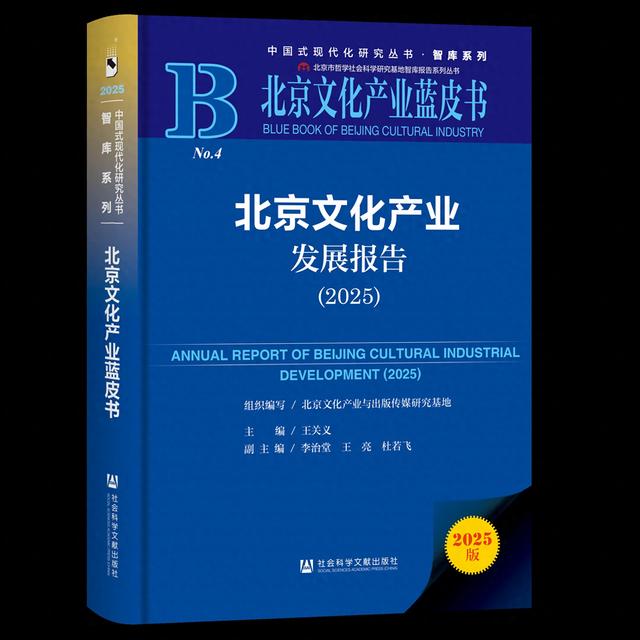
北京文化产业蓝皮书:“北京模式”领跑全国
Bei Jing Ri Bao Ke Hu Duan· 2025-11-04 13:48
Core Insights - The "Beijing Cultural Industry Blue Book: Beijing Cultural Industry Development Report (2025)" highlights the successful "Beijing model" of cultural and financial integration, which is essential for the city's leadership in the national cultural industry [1] Group 1: Policy and Support Mechanisms - Beijing has actively demonstrated its role as a national cultural center, contributing to the development of the cultural industry through strategies like "Cultural+" and the integration of technology and digital communication [3] - The city has implemented a tiered support system to empower businesses at different stages, including initiatives like "Rent Relief" for small enterprises and the "Investment and Loan Award" program, which attracted debt investments of 38.282 billion and equity investments of nearly 360 million in 2023 [3] - The "Investment and Loan Award" program has effectively guided social capital into the cultural sector, with a financial leverage ratio of 415.51 [3] Group 2: Digital Transformation and Technological Integration - The Blue Book emphasizes the need for Beijing to adopt a development approach that integrates technology with culture, aiming to build a high-end cultural industry system [4] - It advocates for a comprehensive digital transformation of the cultural industry, from content production to consumption, creating a new model of coexistence between "Culture + Technology" [5] - The report suggests constructing a full-chain digital cultural dissemination system, leveraging the IP value of cultural heritage sites and developing immersive digital exhibitions and interactive games [5] Group 3: International Collaboration and Intellectual Property - Beijing is encouraged to enhance international cultural exchange and cooperation through multi-language intelligent translation systems and mainstream media platforms [5] - The Blue Book calls for the establishment of a robust digital cultural intellectual property protection system to support the international expansion of cultural products [5] - The vision is for Beijing to create a high-quality cultural industry landscape with national leadership and global influence, contributing to the creative transformation of traditional culture and the exchange of human civilizations [5]


【晶采观察·我们的“十五五”】新需求新期待!这两个新提法蕴含何种深意?
Yang Guang Wang· 2025-11-04 13:19
Group 1: Core Insights - The "15th Five-Year Plan" emphasizes the importance of "prospering new mass arts under internet conditions" and "enriching high-quality tourism product supply," aligning with the trend of consumption upgrading [1][2] - The rise of new mass arts is supported by a solid social foundation, with 696 million users of micro-short dramas and a projected market size exceeding 50 billion yuan by 2024, indicating a shift from passive consumption to active cultural participation [1][2] - The plan aims to enhance tourism experiences through a comprehensive optimization of the entire travel process, focusing on personalized services and diverse high-quality tourism products [2][3] Group 2: Industry Development - The integration of culture and tourism is expected to gain momentum, driven by the continuous acceleration of consumption upgrading and China's vast market scale [3] - The trend of traveling for cultural experiences, such as attending performances, has become common, highlighting the demand for immersive cultural and scenic experiences [3] - Future efforts will focus on improving content, scenarios, technology, and services to enhance the overall travel experience [3]
超1亿元!这位潮汕老板拿下汕头首宗粤东城轨TOD宅地
Sou Hu Cai Jing· 2025-11-04 10:12
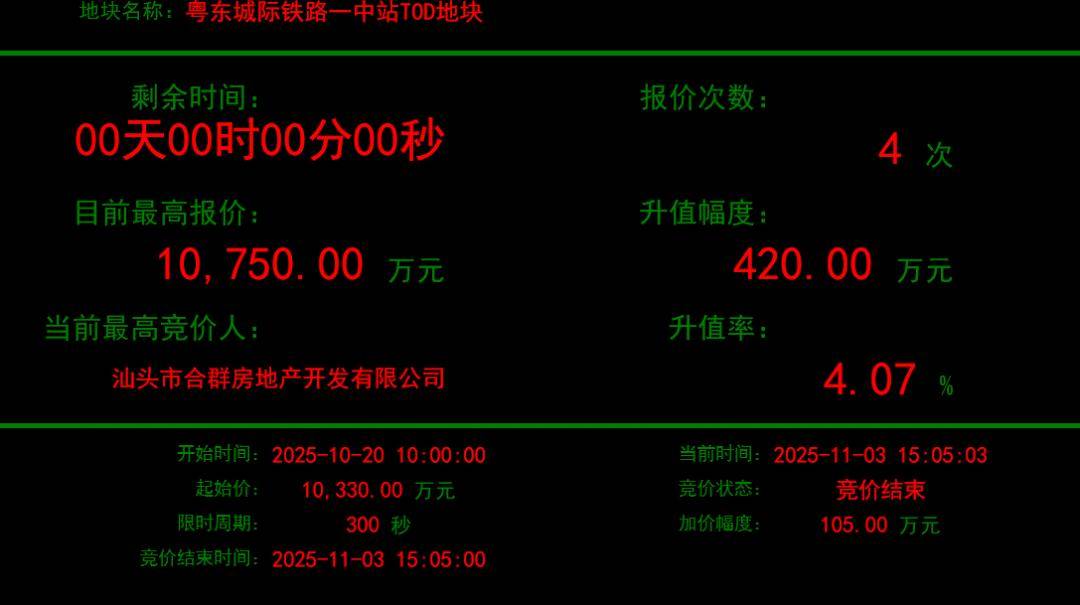
Core Points - The TOD land parcel at the Yuedong Intercity Railway Yizhong Station has been successfully sold to Shantou Hequn Real Estate Development Co., Ltd. for a total price of 107.5 million yuan, with a floor price of approximately 4,256 yuan per square meter [1][2][7] - This transaction marks the first TOD residential project in Shantou, indicating a significant development in the local real estate market [7][8] Summary by Sections Land Details - The total area of the land parcel is approximately 7,015.45 square meters (about 10.52 acres), which includes residential land (5,651.33 square meters) and retail commercial land (1,364.12 square meters) [4][6] - The starting price for the land was 10,330 million yuan, translating to a starting floor price of about 4,090 yuan per square meter, with a residential land use period of 70 years and commercial land use period of 40 years [5][6] Development Requirements - The development must include at least 5% of the residential building area allocated for affordable housing and talent housing, which will be handed over to the government upon completion [5] - The project must also ensure connectivity with the Yizhong Station and reserve space for station facilities [5][6] Company Profile - Hequn Group, the winning bidder, is a local real estate company in Shantou, known for its high-end market positioning and international product design [8][11] - The company has successfully developed several high-end residential projects, establishing a strong brand presence in the region [11][18] - Founded by Huang Sanwu, Hequn Group has diversified into automotive trade, real estate development, and cultural industries, becoming a significant player in the local economy [11][18]
【宏观经济】一周要闻回顾(2025年10月29日-11月4日)
乘联分会· 2025-11-04 08:43
Core Viewpoint - The article highlights the growth in China's electricity market transactions and the performance of the cultural and related industries, indicating a positive trend in revenue and market activity despite some challenges in manufacturing and non-manufacturing sectors [2][5][12]. Electricity Market Transactions - In September 2025, the total electricity market transaction volume reached 573.2 billion kilowatt-hours, a year-on-year increase of 9.8%. The provincial transactions accounted for 430.3 billion kilowatt-hours, growing by 7.2%, while inter-provincial transactions rose by 18.5% to 142.9 billion kilowatt-hours [3]. - From January to September 2025, the cumulative electricity market transaction volume was 49,239 billion kilowatt-hours, up 7.2% year-on-year, representing 63.4% of the total electricity consumption, an increase of 1.4 percentage points compared to the previous year [3]. - The long-term transaction volume was 47,234 billion kilowatt-hours, while spot transaction volume was 2,005 billion kilowatt-hours. Green electricity transactions reached 2,348 billion kilowatt-hours, marking a 40.6% increase [3]. Cultural and Related Industries - In the first three quarters of 2025, the revenue of large-scale cultural and related enterprises grew by 7.9% year-on-year, totaling 1,095.89 billion yuan, which is 0.5 percentage points faster than the growth rate in the first half of the year [6][7]. - The profit of cultural enterprises reached 90.93 billion yuan, reflecting a 14.2% increase, with a profit margin of 8.30%, up by 0.45 percentage points from the previous year [8]. - The cultural manufacturing sector generated 30,766 billion yuan, growing by 2.3%, while the cultural service sector saw a more significant increase of 11.9%, totaling 60,626 billion yuan [7][8]. - The eastern region's cultural enterprises reported revenues of 87,561 billion yuan, an 8.2% increase, while the central and western regions also experienced growth rates of 6.4% and 8.7%, respectively [8]. Purchasing Managers' Index (PMI) - In October 2025, the manufacturing PMI was recorded at 49.0%, indicating a decline of 0.8 percentage points, suggesting a slowdown in manufacturing activity [12]. - The non-manufacturing business activity index was at 50.1%, showing a slight increase, indicating expansion in the non-manufacturing sector [17]. - The comprehensive PMI output index stood at 50.0%, reflecting stability in overall production and business activities [20].

化科技创新学术年会为艺术与科技的双向奔赴注入强劲动力
Nan Fang Du Shi Bao· 2025-11-04 06:58
Core Insights - The "2025 Cultural Technology Innovation Academic Annual Conference (CTIS2025)" was successfully held at Shenzhen University, focusing on the theme of "Art and Technology Innovation Development in the Digital Intelligence Era" [1][3] - The conference aimed to explore the intersection of art and technology as a key driver for the prosperity of socialist culture and the realization of a modernized strong nation [1][4] Group 1: Conference Overview - The conference attracted over 200 experts and young scholars from both domestic and international backgrounds [1] - Eight parallel forums were set up to discuss various topics, including "Paths of Art and Technology Integration" and "Digital Art Innovation Practices" [2][7] - The event has become one of the most influential academic gatherings in the field of cultural and technological integration in China since its inception in 2012 [4][9] Group 2: Key Themes and Discussions - The integration of cultural and technological innovation is seen as essential for economic and social transformation, particularly through AI technology [4][6] - Discussions emphasized the shift from "experience-driven" to "data-empowered" artistic creation, highlighting the importance of digital content innovation [8] - The conference served as a platform for academic dialogue, showcasing research findings and practical insights on the future of cultural technology integration [9] Group 3: Institutional Contributions - Shenzhen University is committed to promoting theoretical research and talent cultivation in cultural technology integration [3][4] - The Cultural Industry Research Institute at Shenzhen University aims to build an academic research and innovation think tank that serves the Greater Bay Area and the nation [3][9] - The release of the "Cultural Technology Blue Book: Cultural Technology Innovation Development Report (2025)" provided insights into industry status, cutting-edge applications, and policy recommendations [5]
人文环境也是营商环境
Ren Min Ri Bao· 2025-11-04 06:45
Group 1 - The article emphasizes the role of cultural institutions, such as museums, in enhancing the business environment and attracting investment, highlighting that a well-managed museum often correlates with a favorable business climate [1] - The success of cultural initiatives in regions like Suzhou and the Suzhou Industrial Park illustrates how cultural heritage and values can attract foreign investment and foster economic development [1] - High-quality cultural products and services not only enrich people's spiritual lives but also stimulate economic growth and development potential [1] Group 2 - Cultural empowerment is essential for creating a conducive business environment, as seen in the innovation cluster of Shenzhen-Hong Kong-Guangzhou, which ranks first globally due to its diverse and inclusive cultural traits [2] - The historical and cultural foundations in places like Ningbo contribute significantly to the development of leading manufacturing enterprises, showcasing the importance of cultural heritage in economic success [2] - Long-term cultural development is necessary for sustainable business environments, as short-sighted policies can lead to resource misallocation and deter investment [2] Group 3 - A healthy business environment is likened to an ecosystem that requires systematic thinking, integrating visible improvements with less tangible cultural enhancements [3] - The recent policies in Shanghai, such as the new administrative penalty list and affordable housing initiatives, demonstrate a comprehensive approach to improving the business environment and enhancing quality of life for residents [3] - The focus on cultural empowerment in the 14th Five-Year Plan indicates a shift towards valuing cultural and ecological aspects in business environment optimization, emphasizing the need for targeted and systematic measures [3]
让文化创新渗透到生活每个角落
Ren Min Ri Bao Hai Wai Ban· 2025-11-03 00:41
Core Viewpoint - The key to empowering economic development through culture lies in transforming cultural resource advantages into cultural development advantages, thereby releasing the economic value and social benefits of culture to enhance quality of life [1] Group 1: Cultural Market Development - The continuous prosperity of the cultural market has led to increased expectations for high-quality cultural products [1] - Optimizing the supply of cultural products and services is a systematic project that requires retaining cultural essence while meeting market demands [1] Group 2: Production System and Content Creation - A people-centered production system should be established, encouraging cultural products to be rooted in real life and deeply exploring historical, regional, and ethnic cultural connotations to meet diverse needs [2] - The trend of cross-industry integration and ecological construction should be followed, promoting the interweaving of "culture+" and "+culture" to systematically develop cultural IP into various products like games, animations, and themed spaces [2] Group 3: Technological Integration and Modernization - The integration of deep digitalization and intelligent technology should be embraced to create immersive cultural consumption scenarios such as virtual museums and large-scale exhibitions [2] - Traditional culture should be modernized and internationally disseminated using contemporary aesthetics, language, and values [2] Group 4: Talent Development and Education - Educational models should be innovated to encourage interdisciplinary education, cultivating "T-shaped talents" who understand cultural arts and possess digital technology, market management, and international communication skills [2] - Support mechanisms should be established to encourage grassroots creators, independent studios, and intangible cultural heritage inheritors to participate in various aspects of the cultural industry [2] Group 5: Future Outlook - Cultural innovation should permeate every aspect of economic and social life, combining depth of thought, artistic height, and technological novelty to stimulate the emergence of outstanding cultural products that enrich people's lives [2]
“十五五”规划建议的学习心得:风高浪急之下的久久为功
Changjiang Securities· 2025-11-02 23:31
Economic Goals - The "15th Five-Year Plan" aims for per capita GDP to reach the level of middle-income countries by 2035, requiring an average annual GDP growth rate of at least 4%[5] - The plan continues the economic growth target set in the "14th Five-Year Plan," emphasizing the need for GDP growth to remain within a reasonable range[20] Confidence and Strategy - The plan reflects a more confident and proactive stance, emphasizing the ability to face significant challenges and maintain long-term stability[6] - It highlights the importance of strategic determination and confidence in overcoming both domestic and international uncertainties[9] Supply-Side Focus - The plan stresses the importance of maintaining the manufacturing sector's position in the economy and advancing manufacturing capabilities[39] - It includes a forward-looking approach to technology and industry, aiming to establish a modern industrial system with a focus on advanced and future technologies[39] Demand-Side Initiatives - A key focus is on increasing the household consumption rate, which is currently low compared to other countries, as part of the strategy to expand domestic demand[7] - The plan emphasizes "investing in people" as a means to stimulate effective investment and enhance consumption rates[7] Financial Sector Priorities - The financial sector's focus is on risk prevention, market stability, and expanding openness, reflecting a shift in the role and capabilities of financial authorities[8] - The central bank and regulatory bodies are committed to supporting economic development while maintaining a stringent regulatory environment[8]
“文化+”“+文化”双向奔赴(深观察)
Ren Min Ri Bao Hai Wai Ban· 2025-11-02 22:47
Core Insights - The integration of culture into the economy is becoming a significant driver of economic development, with the cultural industry contributing 4.59% to China's GDP in 2023, nearing the 5% threshold for pillar industries [4] - The cultural sector is experiencing substantial growth, with projected revenue of 19.14 trillion yuan in 2024, marking a historical high [4] - The rise of cultural products and experiences is fostering a collaborative development across various industries, enhancing consumer engagement and market opportunities [5][6] Group 1: Cultural Products and Market Trends - Innovative cultural products are gaining popularity, with examples like the "Wukong" game boosting tourism in Shanxi and the "Nezha" movie leading to sold-out merchandise [2] - The animated film "Chang'an 30,000 Miles" has generated over 1.82 billion yuan in box office revenue, sparking a renewed interest in Tang poetry and related cultural experiences [3] - The success of Chinese science fiction and mythology in both domestic and international markets is evident, with approximately 200 million active overseas users of Chinese online literature [3] Group 2: Cultural Industry Growth - The cultural industry is becoming a pillar in cities like Beijing and Hangzhou, where its value added to GDP exceeds 10% [4] - The cultural sector's revenue is projected to reach 19.14 trillion yuan in 2024, indicating robust growth and a significant contribution to the economy [4] Group 3: Cultural Integration with Other Industries - The "Cultural + Creative Products" trend is driving consumer interest, with products like the Palace Museum calendar selling over 8.5 million copies [5] - The "Cultural + Technology" approach is leading to immersive experiences through digital exhibitions and virtual museums, enhancing public engagement with history [6] - The "Cultural + Tourism" strategy is enriching travel experiences, with projects like "Impression Liu Sanjie" attracting large audiences [7]
奋力激发文体创新活力
Guang Xi Ri Bao· 2025-11-01 02:53
Group 1: Cultural Innovation and Development - The 20th Central Committee of the Communist Party emphasizes the need to stimulate cultural innovation and creativity to promote socialist culture [1] - Guangxi's cultural and sports sectors are actively learning and implementing the spirit of the 20th Central Committee, aiming to enhance cultural confidence and innovation to support high-quality economic and social development [1] - The Guangxi Federation of Literary and Art Circles plans to integrate art with technology and tourism, focusing on modernizing artistic creation while preserving cultural heritage [1] Group 2: Media and Technology Integration - The Guangxi Broadcasting and Television Bureau aims to enhance the international communication capacity towards ASEAN through systematic reforms in broadcasting and television [2] - The integration of artificial intelligence in cultural and tourism sectors is prioritized, with plans to develop a comprehensive model and promote innovative technologies in tourism [2] - The focus is on balancing cultural and tourism public services across urban and rural areas, while also enhancing night-time tourism consumption and inbound tourism [2] Group 3: Sports Industry Development - The development of the sports industry is seen as a strategic goal for building a strong sports region and supporting broader economic and social development [3] - The Guangxi Sports Bureau is constructing a unique event system and aims to establish itself as a national experimental zone for high-quality sports development [3] - The integration of AI technology in sports is emphasized, with initiatives to foster innovation and collaboration in the sports sector, particularly in relation to ASEAN [3]