海运

Search documents
节前预制菜板块火爆,假日产业链正被发掘!
Sou Hu Cai Jing· 2025-09-15 06:15
Group 1: Market Overview - The Shanghai Composite Index has stabilized above 3400 points, with increasing trading volume and a stock rise-fall ratio of 2.57:1, indicating a seemingly strong market [1] - However, less than 50% of stocks have risen more than 6%, suggesting underlying weaknesses in the market [1] Group 2: Illusions in the Bull Market - The approval of the national standard for pre-prepared food safety reflects a "waiting for rise" illusion, indicating potential transformation pressures for related restaurant businesses [3] - A significant drop in shipping prices, with the Ningbo Export Container Freight Index decreasing by 11.7%, highlights the "hot and cold" illusion in the market [3] - The denial by Goldman Sachs regarding the upgrade of Shenghong Technology's target price illustrates the "rise and fall" illusion, where misleading information is prevalent [3] - Despite low loan interest rates (approximately 3.1% for new loans in August), a wave of shareholder reduction plans from over 30 companies indicates a "high and low" illusion in market liquidity [3] Group 3: Quantitative Perspective - Anxiety in investment decisions stems from the tendency to speculate on market fluctuations rather than focusing on fundamental data [4] - The analysis of two stocks shows that while one stock has occasional rebounds, its "institutional inventory" has disappeared, whereas the other stock, despite a sharp decline, maintains active "institutional inventory" [6] Group 4: Global Investment Insights - Recent global events, such as the U.S. anti-dumping investigation on simulated chips and significant layoffs at Musk's AI company, emphasize the need for a broader investment perspective in a globalized economy [12] - The new regulations on pre-prepared food not only signify the beginning of industry standardization but also indicate a trend towards consumer upgrades [12] - Investors are encouraged to focus on core data that truly impacts the market, rather than being swayed by overwhelming information, to avoid traps in a bull market and seize opportunities during fluctuations [12]


严制裁的油轮和全面涨价的快递弹性测算
Changjiang Securities· 2025-09-14 14:13
Investment Rating - The report maintains a "Positive" investment rating for the transportation industry [11]. Core Insights - VLCC freight rates have reached a new high since March 2023, driven by limited supply and OPEC's production increase, indicating a tight oil tanker supply-demand situation [6][20]. - The express delivery sector is experiencing a nationwide price increase trend, with a significant recovery in profitability expected in Q4 2025 [7][39]. Summary by Sections Oil Tankers - VLCC freight rates have surged, with a notable increase of 39.3% to 78k USD/day, reflecting a tight supply situation due to limited new ship deliveries and stringent sanctions [9][20]. - The correlation between VLCC freight rates and annual profits of Zhongyuan Shipping indicates potential for price recovery in the sector [6][36]. - OPEC's production policy shift has led to increased exports, further supporting oil transportation demand [28][32]. Express Delivery - The regulatory stance against "involution" in the express delivery sector has strengthened, leading to a nationwide price increase that began as regional trials [51][52]. - The average price across the country has risen by 0.23 RMB since July, with potential net profit increases for major companies like Zhongtong and Yunda expected in Q4 2025 [7][53]. - The report highlights a significant recovery in profitability for major express delivery companies, with projected net profit increases of 7.8 billion RMB for Zhongtong and 5.3 billion RMB for Yunda by Q4 2025 [7][56]. Passenger Transport - Domestic passenger transport volume has shown improvement, with a 8% year-on-year increase in domestic passenger volume and a 14% increase in international passenger volume [61]. - The average domestic passenger load factor has improved by 3.2 percentage points, while international load factors have increased by 4.0 percentage points [67]. - Despite a slight decline in ticket prices, the overall market is expected to see marginal improvements in revenue as demand continues to recover [67][75].


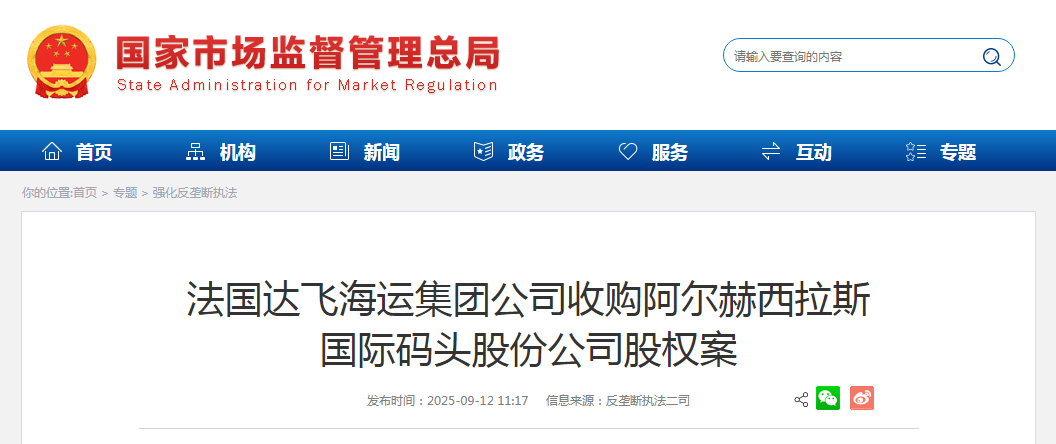
法国达飞海运集团公司收购阿尔赫西拉斯国际码头股份公司股权案
Zhong Guo Zhi Liang Xin Wen Wang· 2025-09-12 08:44
Group 1 - The public announcement period is set from September 12, 2025, to September 21, 2025 [2]
招商轮船股价涨6.3%,富国基金旗下1只基金重仓,持有31.48万股浮盈赚取16.05万元
Xin Lang Cai Jing· 2025-09-12 02:20
Group 1 - The core viewpoint of the news is that China Merchants Energy Transportation Co., Ltd. (招商轮船) has seen a significant stock price increase of 6.3%, reaching 8.60 CNY per share, with a trading volume of 481 million CNY and a turnover rate of 0.70%, resulting in a total market capitalization of 69.441 billion CNY [1] - The company, established on December 31, 2004, and listed on December 1, 2006, is primarily engaged in maritime transportation services, with 86.38% of its revenue coming from transportation services, 6.75% from other income, 4.77% from merchandise sales, and 2.10% from shipping support services [1] Group 2 - From the perspective of fund holdings, one fund under the Fortune Fund has increased its stake in China Merchants Energy Transportation, with the Fortune CSI Modern Logistics ETF (516910) adding 15,600 shares in the second quarter, bringing its total holdings to 314,800 shares, which constitutes 3.78% of the fund's net value, ranking it as the sixth-largest holding [2] - The Fortune CSI Modern Logistics ETF (516910) was established on June 3, 2021, with a current scale of 52.1781 million CNY, achieving a year-to-date return of 9.62% and a one-year return of 30.87% [2]
港股早评:三大指数高开逾1.7%齐创阶段新高,科技股强势,生物医药股回暖
Ge Long Hui· 2025-09-12 01:34
Market Performance - US stock indices reached new highs, with the Chinese concept index rising by 2.89% [1] - Hong Kong's three major indices opened significantly higher, with the Hang Seng Index up 1.74%, the National Index up 1.73%, and the Hang Seng Tech Index up 1.97%, all hitting new phase highs [1] Sector Performance - Large technology stocks showed strong performance, reportedly starting to use self-developed chips for AI model training, with Alibaba and Baidu opening up by 5.86% and 3.76% respectively, and JD.com rising by 3.47% [1] - Other tech stocks like Tencent and Kuaishou increased by over 2%, while Xiaomi and Meituan also saw gains [1] - Biopharmaceutical stocks rebounded, with Zai Lab rising by 5.6% and BeiGene increasing by over 5% [1] - Evergrande Property resumed trading and surged by 38%, leading the property management sector's rise [1] - Shipping, domestic real estate, gaming, internet healthcare, gold, and automotive stocks all experienced gains [1] Decliners - Some Apple concept stocks, new consumption concept stocks, and domestic insurance stocks saw declines, with Hongteng Precision dropping nearly 3%, and Hu Shang Aunt down by 1.66% [1] - China Pacific Insurance fell by nearly 1% [1]
2024年中国对外直接投资流量为1922亿美元 连续13年列全球前三——中企“出海” 为全球市场“上新”(经济聚焦·扩大双向投资)
Ren Min Ri Bao· 2025-09-10 21:53
Group 1 - In 2024, China's outward direct investment flow is projected to reach $192.2 billion, maintaining a global share of 11.9%, marking the 13th consecutive year in the top three globally [1] - By the end of 2024, China's outward direct investment stock is expected to be $3.14 trillion, continuing its position in the top three globally for eight consecutive years [1] - China's outward investment is characterized by resilience and vitality, with a focus on high-tech products, high-end equipment, and green low-carbon products as new growth points [1][7] Group 2 - The "Silk Road Maritime" initiative has expanded to 148 named routes, connecting 150 ports across 48 countries, with 367 members in the alliance, enhancing the global influence of Chinese enterprises [2] - In 2024, China's outward investment is expected to drive $211 billion in goods exports, a 13% increase, accounting for 5.9% of total goods exports during the same period [3] - Chinese enterprises are increasingly focusing on emerging markets in Southeast Asia and the Middle East, shifting from traditional investments in developed countries [4] Group 3 - As of the end of 2024, Chinese investors have established 52,000 overseas enterprises in 190 countries, with 19,000 in Belt and Road Initiative countries, and 70% of these enterprises are expected to be profitable or break even [5] - Companies like the Arul Automotive Group in Kazakhstan and CATL in Europe are exemplifying successful investments that integrate local development with Chinese technology and products [6] - The shift from product export to brand, capital, and technology export is evident, as Chinese companies leverage their R&D and industrial clusters to expand globally [7]
我国海洋生产总值去年突破10万亿元
Qi Huo Ri Bao· 2025-09-10 16:06
Group 1 - The core viewpoint is that the national marine GDP is projected to reach 10.5 trillion yuan in 2024, an increase of 2.7 trillion yuan compared to 2020 [1] - Marine oil and gas are expected to be the main contributors to reserves and production, with marine crude oil accounting for over 70% of the domestic crude oil increment in 2024 [1] - China's marine pharmaceutical research and development capabilities rank among the world's top, with domestically developed marine drugs making up 28% of the globally listed categories [1] Group 2 - The marine shipping volume and container throughput account for one-third of the global total [1] - The marine tourism industry is projected to achieve an added value of 1.6 trillion yuan in 2024, with a surge in cruise tourism and marine educational travel, transforming the marine sector into a "happy check-in place" [1]
国泰海通 · 晨报0911|策略:地产销售边际改善,耐用品增长乏力
国泰海通证券研究· 2025-09-10 14:41
Core Viewpoint - The article highlights a marginal improvement in real estate sales, while durable goods consumption shows signs of weakness, indicating a mixed economic outlook in various sectors [2][4]. Group 1: Real Estate and Construction - New home sales in major cities have shown a year-on-year increase of 4.4%, with first-tier cities experiencing a decline of 6.8%, while second and third-tier cities saw increases of 8.2% and 11.4% respectively [5]. - Despite the improvement in real estate sales, the impact on construction starts remains weak, and infrastructure demand continues to be subdued, leading to a decline in demand for construction materials [2][4]. Group 2: Consumer Durables - Retail sales of passenger vehicles increased by 4.6% year-on-year in August 2025, but the growth rate has significantly slowed down due to a high base from the previous year [5]. - The service consumption sector has shown a decline, with a notable drop in movie box office revenues by 51% week-on-week during the back-to-school period [5]. Group 3: Manufacturing and Technology - The construction demand remains weak, affecting the construction industry, while steel prices have slightly increased due to environmental production limits, and cement prices continue to decline [6]. - Global semiconductor sales have seen a robust year-on-year growth of 20.6% in July 2025, driven by strong demand in AI capital expenditures [6]. Group 4: Transportation and Logistics - Passenger transport demand has decreased significantly week-on-week, with a 17.6% drop in the migration scale index, although it remains up 5% year-on-year [7]. - Freight logistics have also shown a decline, with highway truck traffic and railway freight volume down by 1.0% and 1.2% respectively week-on-week [7].

我国海洋生产总值已突破10万亿元
Bei Jing Shang Bao· 2025-09-10 11:15
Core Insights - The National Ocean Economic Output is projected to reach 10.5 trillion yuan in 2024, an increase of 2.7 trillion yuan compared to 2020 [1] Group 1: Industry Development - Strategic emerging industries such as marine energy, marine pharmaceuticals, and seawater desalination are showing positive development trends [1] - Marine oil and gas are expected to account for over 70% of the domestic crude oil increment by 2024 [1] - China's marine pharmaceutical research capabilities rank among the world's top, with domestically developed marine drugs making up 28% of the globally listed categories [1] Group 2: Economic Contributions - The marine tourism industry is projected to generate an added value of 1.6 trillion yuan in 2024, with a growing interest in cruise tourism and marine education [1] - China's shipping volume and container throughput account for one-third of the global total [1] Group 3: Technological Innovations - Technological innovation is identified as the primary driving force behind the development of the marine economy [1] - The "Dream" vessel, with a displacement of 42,600 tons and a drilling depth of 11,000 meters, has been officially commissioned, showcasing leading global drilling performance [1] - The world's first 100,000-ton production and storage oil platform, "Deep Sea No. 1," has been completed and is in operation [1]
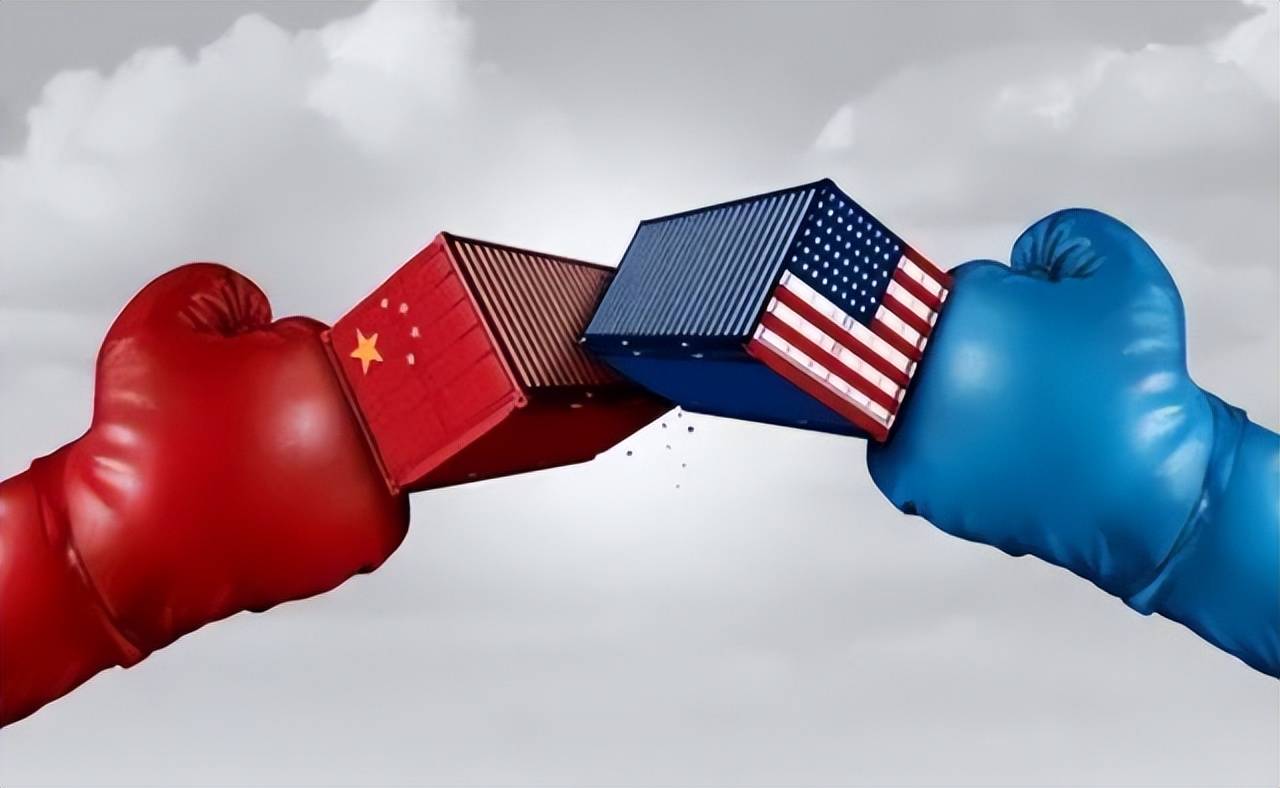
中美海运对决升级!美国征收高额港口费之后,中国征收78.2%关税!
Sou Hu Cai Jing· 2025-09-10 07:07
Core Viewpoint - The ongoing U.S.-China trade conflict has escalated into the maritime sector, with the U.S. imposing high port fees on Chinese vessels and China retaliating with a 78.2% tariff on U.S. optical fiber products, indicating a broader struggle for influence over global trade rules and maritime dominance [1][10]. U.S. Actions - The U.S. Trade Representative's office announced a tiered port fee structure for vessels "operated or manufactured" in China, starting at $50 per ton in 2025 and increasing to $140 by 2028 for Chinese vessels, while non-Chinese operated but Chinese-manufactured vessels will incur fees starting at $120 per container, rising to $250 by 2028 [3]. - A "reward mechanism" allows shipping companies to receive fee exemptions for up to three years if they purchase new U.S.-built vessels, aiming to diminish China's shipping influence and revitalize the U.S. shipbuilding industry [5]. China's Response - In response, Chinese companies have begun restructuring their shipping routes, suspending at least six Asia-U.S. West Coast routes and reallocating vessels to Europe, Latin America, and the Middle East, while utilizing transshipment hubs to avoid direct port restrictions [6]. - Although these adjustments may slightly extend logistics timelines, the overall costs remain significantly lower than the imposed port fees, with China accelerating investments in ports and logistics in Latin America, West Asia, and Africa [8]. Industry Dynamics - The fee war is prompting a global restructuring of maritime assets, with shipowners adjusting ownership structures and vessel registrations to reduce Chinese ownership visibility, leading to a "de-identification" trend in the industry [9]. - China's imposition of tariffs on U.S. optical fiber products, particularly affecting major companies like Corning and Draka, signals a strategic move to assert its position in high-end manufacturing and technology [10][12]. Long-term Implications - The U.S. strategy to protect its shipbuilding and port industries may not yield the desired results, as China adapts by expanding its global trade network and enhancing resilience against unilateral pressures [12]. - The ongoing adjustments in shipping routes and tariff responses indicate a shift towards a more decentralized and robust global trade system, with the potential for new trade standards to emerge [14]. Conclusion - The maritime conflict reflects broader national competition and tests corporate adaptability, with the outcome hinging on which side can better navigate the evolving trade landscape and establish new norms [15].