超市

Search documents
一年消失3037家,传统超市正在消亡
虎嗅APP· 2025-11-25 10:19
Core Viewpoint - The traditional supermarket industry in China is facing a significant downturn, with 62 major supermarket companies reducing their store count by 3,037 in 2024, indicating a collective struggle against the rise of e-commerce and changing consumer habits [4][7][14]. Group 1: Industry Trends - The market share of traditional supermarkets has declined from 34% in 2019 to 32% in 2024, while the share of e-commerce has increased from 22% to 32% during the same period [15]. - The large hypermarket segment has seen a drastic drop from 19% to 13% in market share, reflecting a shift in consumer preferences towards more efficient shopping options [15]. - The rise of community group buying and specialized stores has further eroded the customer base of traditional supermarkets, which are perceived as inefficient and cumbersome [18][20]. Group 2: Company Performance - Among the top 100 supermarkets in China, 62 companies reduced their store numbers, with only 25 showing growth, highlighting a trend of contraction in the industry [7][9]. - Notable reductions include 1,009 stores by Jibai Holdings, 493 by CR Vanguard, and 234 by Yonghui Superstores, indicating a widespread retreat among major players [9][10][12]. - Yonghui Supermarket's revenue plummeted from 48.7 billion to 29.9 billion yuan, showcasing the financial strain faced by leading companies in the sector [12]. Group 3: Consumer Behavior - Consumers are increasingly opting for convenience, with shopping habits shifting towards online platforms and quick delivery services, diminishing the appeal of large supermarkets [4][15][16]. - The traditional supermarket model is failing to meet modern consumer expectations in terms of efficiency, experience, and value, leading to a decline in foot traffic and sales [20][22]. - The lack of social engagement and unique shopping experiences in traditional supermarkets has resulted in a loss of relevance among younger consumers [20][22].


官网上线,超盒算NB稳步推进加盟合作
Sou Hu Cai Jing· 2025-11-25 04:16
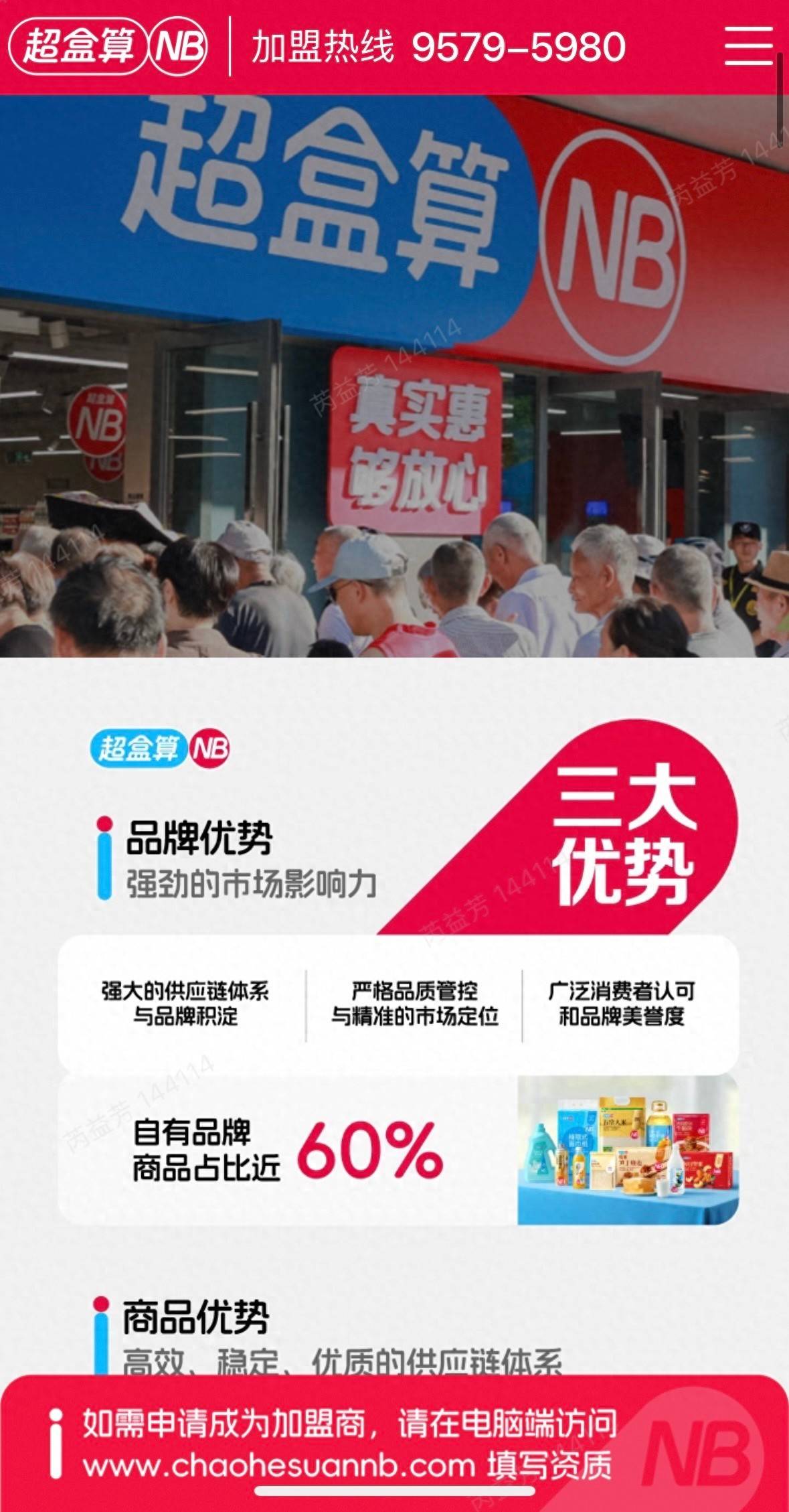
Core Insights - Hema's budget community supermarket, Super Box NB, has officially opened its franchise application channel, marking its first external franchise opportunity [1] - The initial cities for franchise openings include Shanghai, Hangzhou, Jiaxing, and Huzhou, with an annual franchise fee of 50,000 yuan, excluding store renovation, equipment, and deposit costs [1][5] - Super Box NB aims to target pragmatic consumers with a limited product range and long-term low prices, featuring over 1,500 essential items across four consumer scenarios [5][6] Group 1 - The franchise model is designed for large residential communities or mature business districts, with store sizes ranging from 500 to 650 square meters [1] - Super Box NB has rapidly expanded, opening over 20 stores monthly since its brand upgrade in August, positioning itself as a leading player in the hard discount sector [5] - The brand's self-owned products account for nearly 60% of its offerings, highlighting its focus on essential consumer needs [5] Group 2 - The hard discount market in China has a penetration rate of only 8%, compared to 42% in Germany and 31% in Japan, indicating significant growth potential [5] - The company emphasizes a cautious and quality-focused expansion strategy, as evidenced by its recent establishment of a production warehouse in Shandong [6] - Super Box NB provides a comprehensive digital support system for franchisees, including standardized store management processes and quality control measures essential for fresh food operations [5][6]
三江购物涨2.03%,成交额5.50亿元,主力资金净流出6334.99万元
Xin Lang Cai Jing· 2025-11-25 03:10
Core Viewpoint - Sanjiang Shopping has shown a significant increase in stock price and trading activity, indicating positive market sentiment despite some net outflows of capital [1][2]. Group 1: Stock Performance - As of November 25, Sanjiang Shopping's stock price increased by 2.03%, reaching 16.06 CNY per share, with a trading volume of 5.50 billion CNY and a turnover rate of 6.32%, resulting in a total market capitalization of 87.96 billion CNY [1]. - Year-to-date, the stock price has risen by 50.37%, with a slight increase of 0.12% over the last five trading days, a 13.34% increase over the last 20 days, and a 45.08% increase over the last 60 days [1]. Group 2: Financial Performance - For the period from January to September 2025, Sanjiang Shopping reported a revenue of 2.988 billion CNY, reflecting a year-on-year growth of 0.59%, while the net profit attributable to shareholders decreased by 5.42% to 114 million CNY [2]. - The company has distributed a total of 1.362 billion CNY in dividends since its A-share listing, with 329 million CNY distributed over the past three years [3]. Group 3: Shareholder Information - As of September 30, 2025, the number of shareholders for Sanjiang Shopping increased to 48,400, a rise of 61.74%, while the average circulating shares per person decreased by 38.17% to 11,311 shares [2]. - Among the top ten circulating shareholders, Hong Kong Central Clearing Limited holds 3.8167 million shares, a decrease of 878,200 shares compared to the previous period [3].

超盒算NB开放加盟,加盟费每年5万,盒马要轻资产扩张?
Nan Fang Du Shi Bao· 2025-11-24 11:17
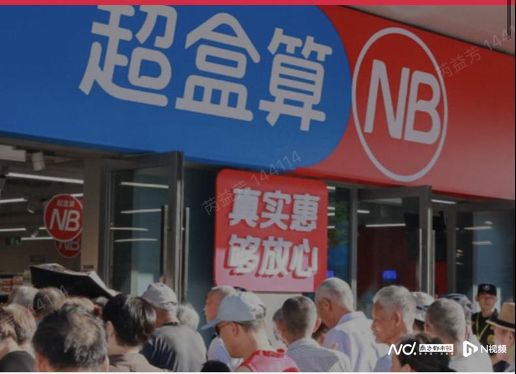
Core Insights - Hema's budget community supermarket, Chaohe Suan NB, has officially opened its franchise application channel, marking its first time offering franchise opportunities [1][3] - The initial cities for franchise openings include Shanghai, Hangzhou, Jiaxing, and Huzhou, with a franchise fee of 50,000 yuan per year, excluding store renovation, equipment, and deposit costs [1][3] Group 1 - Chaohe Suan NB is a key business model for Hema, which has been rapidly expanding since its rebranding in August, opening over 20 stores per month [3] - In September and October, Chaohe Suan NB opened 30 and over 20 stores respectively, bringing the total number of stores to over 350 [3] - The supermarket targets "practical consumers" with a limited product range and long-term low prices, featuring over 1,500 essential items across four key usage scenarios [3] Group 2 - Chaohe Suan NB's appeal to franchisees lies in its comprehensive digital support system, including standardized store management processes and intelligent store management systems [3] - The focus on the Jiangsu, Zhejiang, and Shanghai regions indicates a cautious and strategic approach to franchise expansion, ensuring consistent operational standards and customer experience [3]
逆势再开2万平米大店,这家东北超市新势力凭什么?
Sou Hu Cai Jing· 2025-11-24 09:05
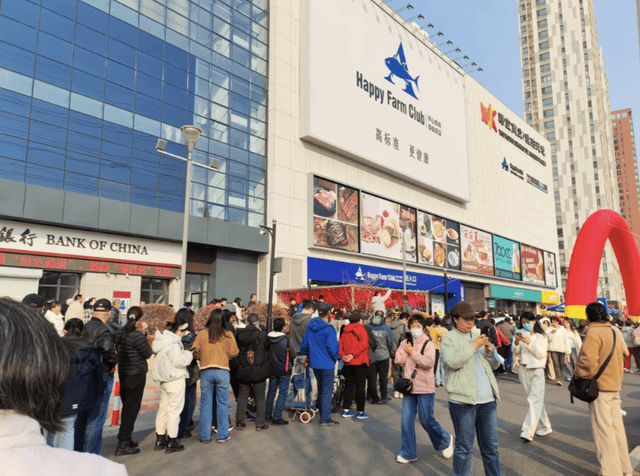
Core Insights - The traditional large supermarket model in China is shrinking, but a new player, Happy Farm A Membership Store, is emerging in Shenyang with a 20,000 square meter store, challenging the trend [1][3][4] Group 1: Company Overview - Happy Farm A Membership Store plans to open multiple locations, including a second store in Shenyang and potential expansion to Shanghai [3][4] - The store aims to redefine the supermarket experience by combining local characteristics with modern retail practices, moving away from traditional price competition [4][9] Group 2: Store Layout and Offerings - The store features a three-level layout: the first floor focuses on high-frequency daily necessities, the second on fresh produce and ready-to-eat meals, and the third on freshly prepared local snacks [5][6][8] - The design aims to create a seamless shopping experience, transforming the store into a "food park" or "localized lifestyle center" that reflects the essence of traditional Northeast markets [6][8] Group 3: Supply Chain and Pricing Strategy - Happy Farm A Membership Store leverages over a decade of experience in fresh produce to build a robust supply chain, allowing for cost control and differentiation [7][8] - The pricing strategy emphasizes high quality and value, with a focus on fresh and ready-to-eat products, appealing to consumers willing to pay a premium for better quality [8][9] Group 4: Industry Trends - The emergence of Happy Farm A Membership Store is part of a broader trend of regional supermarket players adapting to local consumer preferences, moving away from standardized models [9][10] - The retail industry is entering a new "warlord era," where success will depend on understanding local lifestyles and providing unique shopping experiences [10][11]
会员制商店激战“线上到家”,会员店仍在“圈地”
Bei Jing Ri Bao Ke Hu Duan· 2025-11-24 04:30
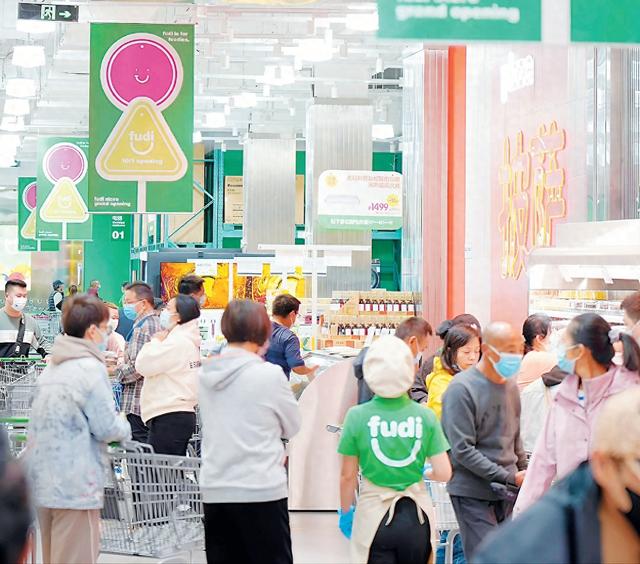
转自:北京日报客户端 会员制超市在激烈比拼供应链能力的同时,快速履约也成为拓展市场的关键。北京本土会员超市品牌 fudi近日宣布与京东秒送达成战略合作,为线上业务寻求增量。沃尔玛近日也发布了2025财年三季度财 报,中国市场保持增长,线上业务持续引领整体业绩上扬。从商品力的持续打造到配送到家的服务,会 员制超市正在进入新一轮的竞争周期。 源:fudi会员商店 fudi发力线上业务 定位于高客单价、大体量的会员制超市,在线上领域也展开较量。近日,fudi与京东秒送达成战略合 作,双方打通线上配送服务、会员体系、供应链与未来生态共建通道。据悉,这是fudi首次进入即时零 售领域。fudi方面表示,本次合作远非简单的配送服务叠加,而是对本土会员店发展路径的一次系统性 重构。面对外资品牌已形成的全国规模,fudi携手京东秒送,旨在打造具有代表性的会员制超市"中国 样本",并通过此次合作,实现"增长模型"的补齐。 fudi方面还表示,该品牌已启动全国布局。据悉,fudi的全国布局已率先在华东、西南启动,并已在上 海、成都等核心城市筹备落子。本次与京东秒送联手,fudi将在目标区域高效实现"未开店、先聚客", 提升品牌知 ...

雀巢扩建工厂;赛百味增资至3.8亿;Gucci CEO加入Brioni董事会
Sou Hu Cai Jing· 2025-11-24 03:32
Investment Dynamics - Nestlé is investing approximately £28 million (around 260 million RMB) to upgrade its Dalston factory in Cumbria, UK, aimed at expanding its ready-to-drink coffee production line, which will include a new mixing workshop and two packaging lines, reducing manual handling by 80% and achieving a capacity of 60,000 packs per hour [3] - Danone Canada announced a historic investment in its Boucherville factory in Quebec, which includes energy recovery equipment to enhance sustainable operations, marking Danone's largest investment in Canada to rapidly increase yogurt production capacity to meet growing health demands [6] - Subway's management company in Shanghai increased its registered capital from approximately 320 million RMB to about 380 million RMB, a 21% increase, to support rapid store expansion and narrow the gap with competitors like McDonald's and KFC [9] - "Meet Little Noodles" is targeting to raise $100 million (approximately 780 million HKD) through a pre-IPO roadshow, which will support its expansion to a thousand stores and strengthen its brand in the Chinese dining sector [10] Acquisition Dynamics - Uni-President Enterprises has signed a share purchase agreement to acquire Carrefour Taiwan for a total of approximately $970 million (around 6.9 billion RMB), which is about $32 million (approximately 230 million RMB) less than the 2023 transaction price [15] - Guangxi Travel Health Industry Group is acquiring a 20% stake in Southern Black Sesame Group, which will help the latter repay short-term debts and aim for profitability by 2025 [18] - Anheuser-Busch InBev is in talks to acquire BeatBox, valuing the company at approximately $700 million (around 5 billion RMB), which will enhance its presence in the ready-to-drink segment and leverage existing distribution channels [20] - JBS's subsidiary Mantiqueira USA is set to acquire Hickman's Egg Ranch, one of the top 20 egg producers in the U.S., as part of its strategy to diversify its protein business [22] Personnel Dynamics - Roland Mouret has stepped down as creative director of his eponymous brand, with Han Chong taking over as the sole creative director, which may impact the brand's short-term performance due to the loss of a key creative force [24] - Francesca Bellettini, CEO of Gucci, has joined the board of Brioni, which may enhance the brand's supply chain resources and potentially replicate Gucci's high-margin model to boost profitability [27]



步步高涨2.11%,成交额2.91亿元,主力资金净流出2251.24万元
Xin Lang Cai Jing· 2025-11-24 02:52
Core Viewpoint - The stock of Bubugao has shown volatility with a year-to-date increase of 34.68%, but has recently experienced a decline of 10.29% over the last five trading days and 6.83% over the last twenty days [1] Group 1: Stock Performance - As of November 24, Bubugao's stock price rose by 2.11% to 5.32 CNY per share, with a trading volume of 2.91 billion CNY and a turnover rate of 2.58% [1] - The total market capitalization of Bubugao is 14.304 billion CNY [1] - The stock has appeared on the "龙虎榜" (a trading list) ten times this year, with the most recent appearance on September 9, where it recorded a net buy of -51.528 million CNY [1] Group 2: Financial Performance - For the period from January to September 2025, Bubugao achieved a revenue of 3.201 billion CNY, representing a year-on-year growth of 26.45%, while the net profit attributable to shareholders decreased by 88.83% to 226 million CNY [2] - The company has distributed a total of 1.677 billion CNY in dividends since its A-share listing, with no dividends paid in the last three years [3] Group 3: Shareholder Information - As of September 30, 2025, the number of shareholders of Bubugao increased by 95% to 172,500, while the average circulating shares per person decreased by 27.06% to 12,476 shares [2] - The Hong Kong Central Clearing Limited has exited the list of the top ten circulating shareholders [3] Group 4: Business Overview - Bubugao operates in the retail sector, specifically in general retail and supermarkets, with its main business revenue composition being 64.34% from supermarkets, 27.44% from other businesses, 6.01% from department stores, and 2.21% from logistics and advertising [1][2]

县城零售,冰火两重天
虎嗅APP· 2025-11-23 10:01
Core Viewpoint - The retail landscape in county-level cities is experiencing a stark contrast, with discount stores thriving while traditional supermarkets and convenience stores struggle to survive [2][11][30]. Group 1: Retail Performance Disparity - In a county commercial street, a well-established cooked food store is thriving, selling around 500 kg of cold dishes daily, while nearby stores face poor sales [3][6][8]. - Discount stores are attracting significant customer traffic, with one store reporting daily sales of 5,000 yuan in its first month and reaching over 10,000 yuan during peak periods [15][17]. - Traditional supermarkets are witnessing a drastic decline in sales, with one store's weekend sales dropping from 7,000-8,000 yuan to 3,000-4,000 yuan, reflecting a nearly 50% decrease in revenue over two years [19][21]. Group 2: Consumer Behavior Changes - Consumers in county areas are increasingly price-sensitive, with 71% prioritizing cost-effectiveness in their shopping decisions, significantly higher than the 58% in first- and second-tier cities [17][30]. - The shift towards online shopping is notable, with the proportion of online purchases in county areas rising from 32% in 2019 to 58% in 2024 [32]. Group 3: Industry Trends and Challenges - The number of discount stores is rapidly increasing, with a projected growth of 67% in 2024, particularly in county markets where over 55% of new stores are located [17][30]. - Convenience stores are facing high closure rates, with an 18% closure rate in county areas, compared to 12% in first- and second-tier cities [24]. - The restaurant industry is also struggling, with a closure rate of 16% in county markets, indicating a challenging environment for many dining establishments [28]. Group 4: Structural Changes in Retail - The retail industry is shifting from a "big and comprehensive" model to a "small and specialized" approach, with businesses focusing on niche markets to enhance competitiveness [34][36]. - Rising operational costs, particularly in rent and labor, are reshaping the industry landscape, making it difficult for traditional supermarkets to maintain profitability [36][37]. - Capital investment is increasingly favoring growth-oriented sectors like discount stores and specialty shops, leaving traditional retail formats with limited funding opportunities [37][38].
行业周报:六福集团业绩预告高增,美丽田园战略升级-20251122
KAIYUAN SECURITIES· 2025-11-22 11:35
Investment Rating - The report maintains a "Positive" investment rating for the retail industry [1] Core Insights - The retail industry is experiencing a significant transformation, with a focus on emotional consumption and innovative product offerings driving growth [6][32] - Companies like Liufu Group and Meili Tianyuan are implementing strategic upgrades to enhance brand value and market presence [27][29] Summary by Sections Retail Market Overview - The retail index reported a decline of 7.24% during the week of November 17-21, 2025, underperforming the Shanghai Composite Index by 3.34 percentage points [5][14] - The retail index has increased by 0.58% year-to-date, lagging behind the overall market performance [14][18] Company Performance Highlights - Liufu Group anticipates a revenue increase of approximately 20%-30% and a net profit growth of 40%-50% for the six months ending September 30, 2025, driven by effective product differentiation and sales strategies [27] - Meili Tianyuan is focusing on three major strategic initiatives: building a super brand through acquisitions, establishing a super chain for quality growth, and enhancing digital capabilities for precise marketing [29] Investment Themes - **Gold and Jewelry**: Focus on brands with differentiated product offerings and consumer insights, recommending companies like Laopuhuang and Chaohongji [6][35] - **Offline Retail**: Emphasize companies adapting to market changes, recommending Yonghui Supermarket and Aiyingshi [6][32] - **Cosmetics**: Highlight domestic brands that cater to emotional value and safety innovations, recommending companies like Maogeping and Pola [6][33] - **Medical Aesthetics**: Target differentiated product manufacturers and expanding medical chains, recommending Aimeike and Kedi-B [6][34] Key Company Updates - Chaohongji reported a revenue increase of 28.4% year-to-date, with a focus on expanding its franchise model and product innovation [38][40] - Yonghui Supermarket's revenue decreased by 22.2% year-to-date, but the company is undergoing a transformation to improve its supply chain and store optimization [41][43]