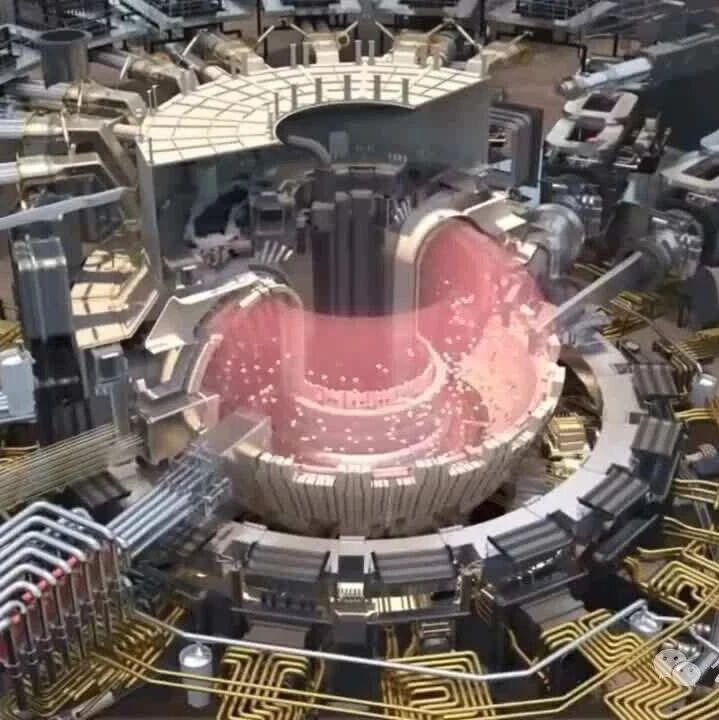
核聚变

Search documents
磁体材料迭代推动产业升级
Zhong Guo Neng Yuan Wang· 2026-02-09 00:51
Core Insights - The fusion industry is entering an accelerated phase driven by policy support and capital expenditure, with major countries expected to introduce fusion policies by 2025, marking a shift from laboratory research to industrial layout and regulatory framework construction [2] - Low-temperature superconductors are relatively mature, while high-temperature superconductors are expected to become the mainstream in the future, with magnetic materials being the core foundation for stable magnetic field confinement in fusion devices [2] Industry Overview - The magnet system is a core cost component of fusion projects, with the ITER project using low-temperature superconductors having 86% of its component costs attributed to parts, of which magnets account for 28% [3] - In high-temperature superconductor projects, the cost of the magnet system increases further, with the ARC project showing that magnets account for 46% of the total cost [3] Market Potential - The market size for second-generation high-temperature superconducting tapes for global controllable fusion devices is projected to reach 300 million yuan in 2024, with an expected growth to 4.9 billion yuan by 2030, representing a compound annual growth rate of 59.3% from 2024 to 2030 [3] Investment Recommendations - The magnet segment, being the highest value component in the fusion system, is currently transitioning from low-temperature to high-temperature technology validation and evolution, indicating a positive outlook for demand driven by the capital expenditure cycle in fusion [3] - Key suppliers in the magnet segment include: 1) Low-temperature superconductors: Western Superconductor 2) High-temperature superconductors: Shanghai Superconductor (not listed, controlled by Jingda Co., Ltd. (600577)), Lianchuang Optoelectronics (600363), Eastern Superconductor (not listed, a subsidiary of Yongding Co., Ltd. (600105)) 3) Core suppliers of tantalum and niobium: Dongfang Tantalum Industry (000962) [3]
核聚变深度:磁体材料迭代推动产业升级(附34页PPT)
材料汇· 2026-02-08 15:24
Group 1 - The fusion industry is entering an accelerated phase driven by policy support and capital expenditure, with major countries expected to introduce fusion policies by 2025, marking a shift from laboratory research to industrial layout and regulatory framework construction [2][9] - Domestic policy support for controllable nuclear fusion is forming a clear advancement logic, with a national framework being established to optimize regulatory processes and provide clear guidance for technological research and development [6][8] - The superconducting materials landscape is characterized by a parallel development of low-temperature superconductors (NbTi, Nb₃Sn) and high-temperature superconductors (REBCO), with low-temperature superconductors currently supporting existing fusion operations and high-temperature superconductors poised to become key for next-generation high-field fusion technology breakthroughs [2][3][27] Group 2 - The magnet system is a core cost component of fusion projects, with the ITER project showing that component costs account for 86%, of which magnets represent 28%, primarily due to the reliance on high-cost low-temperature liquid helium for cooling [3][55] - In high-temperature superconducting projects, the cost of the magnet system is expected to increase further, as seen in the ARC project where the magnet system accounts for 46% of the total cost [57] - The global market for second-generation high-temperature superconducting tapes used in controllable nuclear fusion devices is projected to grow from 300 million yuan in 2024 to 4.9 billion yuan by 2030, with a compound annual growth rate (CAGR) of 59.3% from 2024 to 2030 [3][65] Group 3 - Investment recommendations focus on the magnet segment of the fusion system, which is currently transitioning from low-temperature to high-temperature technology, indicating a significant demand increase driven by the capital expenditure cycle in nuclear fusion [3][8] - The BEST project, aimed at bridging the gap between experimental and demonstration reactors, is expected to accelerate capital expenditure, with significant procurement activities already underway [59][63] - The global market for superconducting materials is expected to see substantial growth, driven by the increasing demand for high-temperature superconductors in fusion applications, with REBCO materials showing significant potential for enhancing magnetic field strength and reducing magnet size [27][31]


电力设备与新能源行业2月第1周周报:马斯克团队计划光伏扩产,钠电应用加速-20260208
Bank of China Securities· 2026-02-08 06:46
Investment Rating - The report maintains an "Outperform" rating for the power equipment and new energy industry [1]. Core Insights - The global sales of new energy vehicles are expected to maintain rapid growth by 2026, driving demand for batteries and materials [1]. - Recent fluctuations in material prices for power batteries warrant attention to the pricing situation along the supply chain [1]. - Solid-state batteries are entering a critical phase of engineering validation, with a focus on related materials and equipment companies [1]. - In the photovoltaic sector, "anti-involution" and "space photovoltaics" are identified as the two main investment themes for 2026, with increased demand for photovoltaic equipment [1]. - The domestic market is seeing a rise in high-power component demand, with downstream battery components relying on efficiency improvements for market clearing [1]. - Wind power demand is expected to continue growing, with recommendations to focus on wind turbines and offshore wind power [1]. - The energy storage sector remains highly prosperous, with a recommendation to pay attention to energy storage cells and large-scale integrated plants [1]. - Hydrogen energy is anticipated to open up demand for green hydrogen, with a focus on downstream hydrogen-based energy applications [1]. - Nuclear fusion is seen as a long-term catalyst for energy development, with recommendations to focus on core suppliers in the nuclear fusion power sector [1]. Summary by Sections Industry Performance - The power equipment and new energy sector rose by 2.2%, outperforming the Shanghai Composite Index, which fell by 1.27% [10]. - The photovoltaic sector saw the highest increase at 3.43%, while the wind power sector experienced a slight decline of 0.01% [13]. Key Industry Information - The China Passenger Car Association estimates that 900,000 new energy vehicles will be wholesaled in January 2026, a 1% year-on-year increase [27]. - Changan Automobile and CATL announced the global launch of the first sodium battery mass-produced passenger vehicle, expected to be available by mid-2026 [27]. - Tesla has achieved large-scale production of dry electrode technology [27]. - The domestic energy storage tender for January 2026 reached 36.3 GWh, with notable bidding scales in Ningxia, Hebei, and Xinjiang [27]. Company Developments - Foster is collaborating with professional institutions to invest in a private equity fund focused on flexible thin-film gallium arsenide battery companies [29]. - Guoxuan High-Tech plans to raise up to 5 billion yuan through a private placement for a 20 GWh power battery project [29]. - TCL Zhonghuan's subsidiary Maxeon Solar signed a patent licensing agreement with Aisuo, with a five-year licensing fee of 1.65 billion yuan [29].





工银瑞信年度策略解读:把握传统产业升级、新兴产业扩张与前沿领域投资机遇
Jiang Nan Shi Bao· 2026-02-06 02:15
Core Viewpoint - The "15th Five-Year Plan" is expected to provide clear direction and policy support for the capital market, with a focus on traditional industry upgrades, emerging industry demand expansion, and thematic investments in frontier industries [1] Macro Analysis: Opportunities in Financial Assets - The liquidity environment is expected to remain relatively loose both globally and domestically, providing opportunities across various financial assets, with a particular emphasis on the A-share equity market [2] - Current A-share market valuations are considered reasonable based on historical rolling returns, suggesting that the market is not overly expensive [2] - Two core supporting factors for the A-share market include a friendly liquidity environment and an anticipated upward trend in the profit cycle due to improved supply-demand dynamics [2] Trend Assessment: Technological Self-Reliance - The "15th Five-Year Plan" emphasizes technological self-reliance as a strategic task, highlighting the importance of technological innovation and productivity improvement for sustainable economic development [4] Insight into Opportunities: Three Structural Directions - The "15th Five-Year Plan" outlines three key investment directions: 1. Traditional industries such as chemicals, shipbuilding, and metallurgy are expected to enhance profitability through supply-side policies and optimization [5][6] 2. Emerging industries like artificial intelligence and energy storage are projected to experience sustained demand growth, leading to rapid development [6] 3. Frontier industries, including embodied intelligence and quantum technology, are seen as having significant growth potential and should be monitored for breakthroughs in basic scientific research [6] Rational Layout: Understanding Industry Trends - Investors are advised to recognize industry trends and avoid frequent timing based on short-term fluctuations, particularly in the high-growth and high-volatility technology sector [7] - The investment strategy should focus on understanding industry development trends and adjusting strategies only when substantial changes occur in the underlying fundamentals [7]
8亿元!嘉定区未来产业基金发布
Sou Hu Cai Jing· 2026-02-04 12:41
2月3日,以"科创聚势,嘉速未来"为主题的嘉定科创产业发展合作联盟2025年度会议举行。会上,嘉定 区未来产业基金正式亮相! 作为由政府指导、市场化运作的政府投资基金,嘉定区未来产业基金总规模达8亿元,首期规模2亿元, 由区级财政、区属国企及街镇集体企业共同出资。该基金聚焦未来智能、未来能源、未来材料、未来健 康、未来空间五大核心赛道,采用"子基金投资+直接投资"模式,重点支持具有颠覆性、多学科交叉特 点以及前沿平台性技术的早期孵化和项目投资。 作为科创联盟发起单位,嘉定科投集团持续做强做优"百亿投资矩阵、千亿基金生态",投资组合内上市 企业数量已突破135个。2025年,嘉定科投集团、上海科创集团、上海未来产业基金、武岳峰科创等机 构联合投资星环聚能,推动全球领先的磁约束聚变堆核心技术落地,助力嘉定布局可控核聚变未来产 业,夯实前沿科技发展基础。 "嘉定作为上海国际科创中心重要承载区,有非常突出的科技资源优势。'十五五'时期,我们将重点聚 焦未来能源、未来智能、未来空间等核心赛道,进行前瞻布局。希望通过设立区未来产业基金,弥补市 场在早期创新投资领域的短板,撬动引导更多社会资本,共同支持'从0到1'的原始创 ...
2026年度策略:锚定AI未来,共启科技新篇
GOLDEN SUN SECURITIES· 2026-01-30 00:50
Group 1: Financial Technology - In 2026, global liquidity is expected to remain reasonably ample, with the domestic monetary policy maintaining a moderately loose tone[14] - The digital RMB 2.0 will officially implement on January 1, 2026, transitioning from M0 to M1 currency attributes[18] - The CIPS network expansion will be a key focus starting February 1, 2026, as new rules for the RMB cross-border payment system come into effect[20] Group 2: AI Applications - The AI application landscape is shifting towards commercial monetization, with a focus on achieving breakeven after initial explosive growth[24] - C-end applications are dominated by major tech giants, making it difficult for smaller firms to survive in the market[40] - B-end applications are seeing some achieving unit economics (UE) breakeven, particularly in sectors with high product-market fit (PMF) like robotaxi[45] Group 3: AI Computing Power - Global demand for AI computing power is on the rise, with domestic internet companies being the largest consumers of intelligent computing servers[3] - Domestic chip manufacturers are making significant breakthroughs, with companies like Huawei and Cambricon showing strong growth potential[3] - The shift towards scale-up supernode architectures is expected to accelerate, enhancing overall system performance[3] Group 4: AI Energy - The AIDC power supply paradigm is evolving towards 800V HVDC systems, driven by the need for higher power density and efficiency[4] - Nuclear fusion is being explored as a long-term energy solution, with significant advancements expected within the next five years[7]





机械行业2026年度投资策略:AI重塑制造业需求,成熟制造走向全球
Guolian Minsheng Securities· 2026-01-28 15:33
Group 1 - The core view of the report emphasizes that AI is reshaping manufacturing demand, with mature manufacturing moving towards global markets, and the mechanical industry is expected to benefit significantly from technology and export growth in 2026 [1][9][10] - The mechanical industry index outperformed the CSI 300 by 23.25 percentage points in 2025, with a 40.91% increase in the mechanical industry index compared to a 17.66% increase in the CSI 300 [9][10] - AI technology is expected to have a profound impact on the manufacturing industry, with AI infrastructure reshaping demand patterns and applications driving hardware manufacturing equipment demand [9][11] Group 2 - The report predicts that 2026 will see a significant increase in demand for equipment driven by AI infrastructure, including semiconductor equipment, liquid cooling equipment, and gas turbines [13] - The demand for AI hardware manufacturing equipment and components, such as humanoid robots and 3C automation equipment, is expected to rise [13] - Export-oriented equipment, particularly in the engineering machinery sector, is anticipated to show strong growth in 2026 [13] Group 3 - The semiconductor equipment market is projected to grow, with global sales expected to reach $125.5 billion in 2025, a 7.4% increase, and further growth to $138.1 billion in 2026 [34][40] - The report highlights that the domestic semiconductor equipment market in China is expected to reach approximately 230 billion yuan in 2025, indicating strong growth potential [41] - The PCB industry is entering a new development cycle driven by AI demand, with a projected global PCB market value of approximately $73.57 billion in 2024, reflecting a 5.8% year-on-year increase [54][56] Group 4 - Liquid cooling technology is becoming essential due to the increasing power consumption of AI servers, with the global liquid cooling component market expected to reach $5-10 billion in 2025 and $25 billion by 2030 [84][86] - The report indicates that the demand for liquid cooling solutions will significantly increase as AI processing power continues to rise, making traditional cooling methods inadequate [70][84] - The introduction of advanced liquid cooling systems, such as NVIDIA's GB200 and GB300, is expected to drive market growth and innovation in cooling technologies [84][86]




西贝突曝大消息!
Sou Hu Cai Jing· 2026-01-24 13:03
Financing Activities - Haier New Energy completed over 1 billion RMB in Series B financing, with funds primarily allocated for R&D and market expansion in photovoltaic and energy storage systems [2] - Supermagnetic New Energy announced several hundred million RMB in angel round financing, focusing on the development of high-temperature superconducting magnetic systems for controllable nuclear fusion [2] - Ailios Biotech secured over 100 million RMB in pre-B round financing to enhance its self-developed filtration membranes for biopharmaceutical applications [3] - Anhui Anpin Intelligent Technology completed angel round financing to accelerate the promotion of intelligent tavern operation solutions [3] - Dongyi Technology raised over 100 million RMB in angel++ round financing to advance its "Robot for AI" strategy [4] - Dvision Medical completed several tens of millions RMB in A2 round financing to promote the development of super-microsurgery robots [5] - AI startup Anthropic is pursuing a new financing round aiming to raise 25 billion USD, with significant investments from major tech firms [5] - Xingsai Biotech completed nearly 100 million RMB in A++ round financing, focusing on single-cell analysis instruments [6] - Today Sleep, a startup, announced several tens of millions RMB in seed round financing to develop sleep-related smart products [7] - Zhejiang Dejin Biotech completed several tens of millions RMB in A round financing to advance its recombinant botulinum toxin products [7] - Yupan Intelligent completed 513 million RMB in Pre-IPO+ financing to enhance its capabilities in embodied intelligence and global expansion [8] - Nanjing Hairong Pharmaceutical raised 140 million RMB in a new round of financing to accelerate the development of innovative drugs [9] - Xibei Restaurant Group completed A round financing, with investments from various parties including the founder of a well-known restaurant brand [10] - New Yue Biotech completed several tens of millions RMB in A+ round financing to enhance its AI drug development capabilities [10] - AtomForm announced a new round of financing exceeding 100 million RMB to accelerate its commercialization process [11] - Liangxuan Technology completed several hundred million RMB in C round financing to promote quantum computing applications [12] - Lianbo Precision completed over 100 million RMB in C round financing to support high-end manufacturing initiatives [13] - Juwei Technology completed nearly 100 million RMB in A round financing to enhance its industrial IoT capabilities [14] - Lanjing Technology secured several tens of millions RMB in A+ round financing to focus on agricultural robotics [14] - Zhejiang Humanoid Robot Innovation Center completed 450 million RMB in Pre-A round financing, reflecting strong market confidence [15] - Epuji completed nearly 100 million USD in B round financing to strengthen its data center delivery capabilities [16] Investment Funds - The establishment of various investment funds, including a 20 billion RMB seed fund in Shanghai focusing on AI and intelligent models [19] - The launch of a 50 billion RMB investment fund in Zhengzhou aimed at supporting innovative industries [20] - The creation of a 10 billion RMB fusion energy venture capital fund in Hefei to support key technologies in nuclear fusion [20]
两年内点亮核聚变的第一道光:合肥“人造太阳”奔赴快车道
第一财经· 2026-01-23 10:55
Core Viewpoint - China's nuclear fusion development is accelerating, transitioning from basic scientific research to engineering applications, supported by AI technology, positioning the country as a global leader in the nuclear fusion industry [3][4]. Group 1: Development Progress - As of now, there are 58 fusion companies globally, with China accounting for 14, nearly 25% of the total, making it a significant player in the fusion industry [6]. - The EAST facility achieved a world record by maintaining a plasma temperature of 100 million degrees Celsius for 1066 seconds, marking a critical milestone for stable fusion reactions [6][7]. - The BEST and CRAFT facilities have also made significant advancements, with the BEST's major component installation and CRAFT's key system achieving a 2 MW steady-state power output [7]. Group 2: Strategic Framework - The "three-step" strategy for fusion commercialization includes: completing fusion power demonstration by 2027, constructing a Chinese fusion engineering demonstration reactor by 2030, and developing commercial reactors by 2040 [7]. - The commercialization process involves six stages: principle exploration, scale experiments, burning experiments, construction of experimental reactors, demonstration reactors, and commercial reactors [7]. Group 3: Ecosystem and Talent Development - The ecosystem supporting nuclear fusion commercialization is built on a cluster of large scientific devices, including EAST, BEST, and CRAFT, which provide a comprehensive system from basic research to engineering validation [9][11]. - Over 200 member units have joined the Anhui Fusion Industry Association, covering twelve key areas of the fusion supply chain, indicating a growing industrial ecosystem [11]. - A talent cultivation model combining academic training and funding support has been established, with plans to set up 10-20 fusion colleges across the country in the next five years [12][13]. Group 4: Capital Support - A capital system has been created to support the "three-step" strategy, including a 1 billion yuan venture capital fund focused on key technological breakthroughs and industrial cultivation [15]. - The establishment of the "Fusion Financial Institutions Alliance" aims to provide comprehensive financial services to fusion industry enterprises [16]. - Current capital expenditures for commercial fusion projects like BEST are nearing 200 billion yuan, with expectations for market expansion as the industry progresses towards commercial reactors [16].
有一种热叫你妈觉得你热
Datayes· 2026-01-22 12:30
Core Viewpoint - The article discusses the recent market trends in A-shares, highlighting significant movements in various sectors, particularly in aerospace, GPU, and pharmaceuticals, while also mentioning the impact of geopolitical events and economic policies on market sentiment [18][21][26]. Group 1: Market Overview - The total trading volume in the three markets reached 27,166.48 billion, an increase of 926.47 billion from the previous day, with over 3,500 stocks rising [18]. - A total of 94 stocks hit the daily limit, with 20 stocks closing at the limit, and 18 stocks achieving consecutive limit-ups, with the highest being 17 consecutive limit-ups [18]. - The aerospace sector saw a significant rebound, with stocks like Galaxy Electronics achieving 8 limit-ups in 14 days, driven by news of SpaceX's IPO plans [18][21]. Group 2: Sector Performance - The GPU sector is gaining traction, with Shanghai Suiruan Technology's IPO application accepted, aiming to raise 6 billion [26]. - The pharmaceutical retail sector is encouraged to undergo mergers and acquisitions, with government support for optimizing the business environment [26]. - The nuclear fusion concept is gaining attention, with companies like China First Heavy Industries recording multiple limit-ups, influenced by partnerships in the nuclear energy market [21]. Group 3: Geopolitical and Economic Influences - Trump's recent speech at Davos criticized various global leaders and emphasized the importance of U.S. dominance in international affairs, which may affect market sentiment [8][11]. - The U.S. economic indicators show a core inflation rate of 1.6% over the past three months, with a projected GDP growth rate of 5.4% for the fourth quarter, which could influence investor confidence [11]. - The article notes the rising natural gas prices due to severe winter storms, impacting the oil service sector positively [21].