
橡胶加工

Search documents
广发期货《特殊商品》日报-20251021
Guang Fa Qi Huo· 2025-10-21 08:06
1. Glass and Soda Ash Report Industry Investment Rating Not provided. Core View - Soda ash continues to weaken, with inventory piling up in factories and mid - stream delivery warehouses. The supply is in excess compared to current demand, and without actual capacity exit or load reduction, the supply - demand situation will be further pressured. Adopt a short - selling strategy on rebounds [1]. - Glass manufacturers' sales have improved, but the deep - processing orders are still weak. In the long - term, the industry needs capacity clearance to solve the over - supply problem. Pay attention to spot purchasing rhythm, high - frequency data changes, and macro - level drivers [1]. Summary by Directory - **Prices and Spreads**: Glass prices in North China, East China, Central China, and South China decreased, with drops ranging from 0.85% to 3.28%. Soda ash prices in most regions remained stable. Glass futures prices were mostly flat or slightly down, while soda ash futures prices rose slightly [1]. - **Supply**: Soda ash production rate increased by 3.37% to 88.41%, and weekly output increased by 3.37% to 77.08 million tons. Float glass daily melting volume increased by 1.16% to 16.13 million tons, and PV daily melting volume remained unchanged [1]. - **Inventory**: Glass factory inventory increased by 5.84% to 6282.40 ten - thousand heavy boxes, and soda ash factory inventory increased by 3.74% to 165.98 million tons [1]. 2. Industrial Silicon Report Industry Investment Rating Not provided. Core View - Industrial silicon spot prices are stable, and futures prices first rose on news of a company's production cut and then fell back. In October, supply increased significantly, with a risk of inventory accumulation and price pressure. However, considering cost factors and the approaching dry season, prices may move up. The price is expected to fluctuate at a low level, mainly in the range of 8000 - 9500 yuan/ton. Consider buying at low prices if the 11 - contract price drops to 8000 - 8300 yuan/ton [2]. Summary by Directory - **Prices and Spreads**: Spot prices of most industrial silicon varieties remained unchanged, and basis differences decreased. Some monthly spreads changed significantly, such as the 2510 - 2511 spread dropping by 97.30% [2]. - **Fundamentals**: National industrial silicon production increased by 9.10% to 42.08 million tons, and Xinjiang's production increased by 19.78% to 20.32 million tons. Organic silicon DMC production decreased by 5.78%, and polysilicon production decreased by 1.29%. Recycled aluminum alloy production increased by 7.48%, and industrial silicon exports decreased by 8.36% [2]. - **Inventory**: Social inventory increased by 3.12% to 56.20 million tons, and non - warehouse receipt inventory increased by 7.15% to 31.55 million tons [2]. 3. Polysilicon Report Industry Investment Rating Not provided. Core View - Polysilicon futures prices fell after opening on Monday, possibly due to some funds taking profits. The continuous increase in polysilicon warehouse receipts pressured the November contract price. There is a risk of inventory accumulation due to increased supply. Whether the increased production can be digested by demand in the fourth - quarter peak - installation season will significantly affect prices. The price is mainly in a high - level oscillation. Pay attention to policy implementation, production control, and demand - side orders. The supply in Southwest China will decrease during the dry season, which will support prices. Guard against the risk of inventory accumulation if demand is lower than expected [4]. Summary by Directory - **Prices and Spreads**: The average price of most polysilicon and related products remained stable. The main contract price of futures decreased by 3.82% [4]. - **Fundamentals**: Weekly silicon wafer production increased by 11.85% to 14.35 GM, and monthly polysilicon production decreased by 1.29% to 13.00 million tons. Polysilicon imports increased by 28.46%, and exports decreased by 28.16% [4]. - **Inventory**: Polysilicon inventory increased by 5.42% to 25.30 million tons, and silicon wafer inventory increased by 3.16% to 17.31 GM [4]. 4. Logs Report Industry Investment Rating Not provided. Core View - The log futures market fluctuated. The 01 contract is relatively strong. With the increase in foreign quotes and port fees, there is strong cost support. During the seasonal peak season, the futures price has certain support at the bottom. The 01 contract may be treated as bullish [5]. Summary by Directory - **Prices and Spreads**: Log futures prices of different contracts decreased slightly. Spot prices of most log varieties remained unchanged [5]. - **Supply**: Monthly port shipments increased by 6.00% to 176.6 million cubic meters, and the number of ships from New Zealand to China, Japan, and South Korea increased by 4.55% [5]. - **Inventory**: National log inventory decreased by 2.34% to 292.00 million cubic meters, and the average daily log出库 volume increased by 10% to 6.32 million cubic meters [5]. 5. Natural Rubber Report Industry Investment Rating Not provided. Core View - In the short - term, the rebound in raw material prices supports rubber prices, but the expected improvement in weather in northeastern Thailand may lead to a decline in raw material prices. Demand has not improved significantly, and some enterprises are still adjusting production flexibly to control inventory. In the short - term, rubber prices may follow the macro - led market. If raw material supply is smooth, prices may decline further; if not, prices are expected to be around 15000 - 15500 yuan/ton [7]. Summary by Directory - **Prices and Spreads**: The price of Yunnan state - owned whole - latex increased by 0.35%, and the price of Thai standard mixed rubber increased by 0.69%. Some month - to - month spreads changed significantly [7]. - **Fundamentals**: Production in Thailand, Indonesia, and India in August showed different trends. Tire production and import of natural rubber increased, while tire exports decreased [7]. - **Inventory**: Bonded area inventory decreased by 4.07% to 43483 tons, and natural rubber factory - warehouse futures inventory on the SHFE decreased by 2.93% to 40119 tons [7].
本周铜库存增加550吨,铝库存减少2749吨
Mei Ri Jing Ji Xin Wen· 2025-10-17 07:36
Group 1 - The core point of the article highlights the changes in metal and rubber inventories on the Shanghai Futures Exchange for the week of October 17, with copper inventory increasing by 550 tons, aluminum decreasing by 2,749 tons, zinc increasing by 2,677 tons, lead increasing by 1,785 tons, nickel increasing by 1,300 tons, tin decreasing by 188 tons, and natural rubber decreasing by 7,282 tons [1] Group 2 - Copper inventory saw an increase of 550 tons [1] - Aluminum inventory experienced a significant decrease of 2,749 tons [1] - Zinc inventory increased by 2,677 tons [1] - Lead inventory rose by 1,785 tons [1] - Nickel inventory increased by 1,300 tons [1] - Tin inventory decreased by 188 tons [1] - Natural rubber inventory saw a notable decrease of 7,282 tons [1]
天津东疆综合保税区落地全市首单20号胶期货保税交割业务
Sou Hu Cai Jing· 2025-10-10 08:16
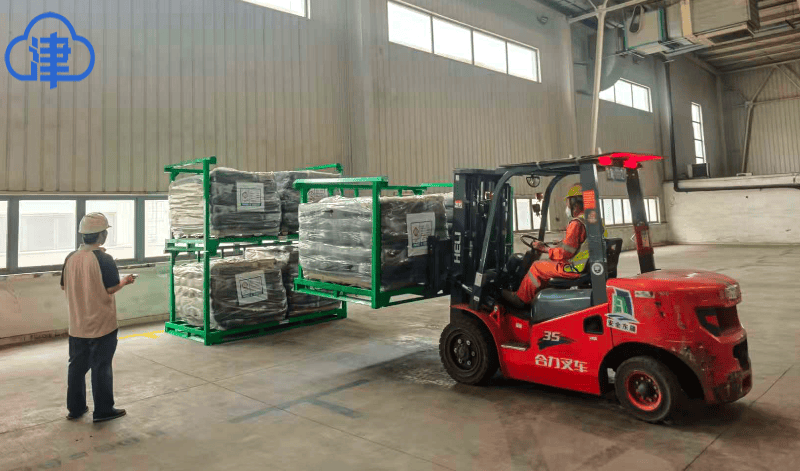
Core Insights - The successful arrival and storage of the first batch of 1,200 tons of No. 20 rubber at Tianjin marks the first bonded delivery of this futures product in the region, enhancing the operational capabilities of the East Jiang Comprehensive Bonded Zone [2][4] - The establishment of the No. 20 rubber futures delivery warehouse in Tianjin is significant as it is the city's first and only facility with bonded delivery capabilities for this futures product, which is crucial for the rubber processing industry [2][4] Industry Developments - The East Jiang area is leveraging its multiple functional policies as a Free Trade Zone, Comprehensive Bonded Zone, and Port to enhance its role in international shipping and financial innovation [4] - The successful implementation of the No. 20 rubber futures delivery business aligns with the trend of stable supply of bulk raw materials, which is increasingly important for the manufacturing sector in the context of the Beijing-Tianjin-Hebei coordinated development [4] Future Outlook - The East Jiang area plans to continue expanding the range of futures delivery categories and innovate service models, aiming to attract more upstream and downstream enterprises in the rubber industry [4] - The development of the No. 20 rubber futures delivery business is expected to enhance the port's resource allocation capabilities within the international trade network, contributing to the integration of port, industry, and city [4]

橡胶:八年轮回,起伏机遇
2025-09-28 14:57
Summary of Key Points from Conference Call on Natural Rubber Industry Industry Overview - The natural rubber industry is experiencing a cyclical phase with increased supply expectations due to the new rubber tapping season in Yunnan and Hainan, alongside full-scale tapping in Thailand and Vietnam, which is putting pressure on rubber prices [1][2] Supply and Demand Dynamics - Domestic natural rubber supply is heavily reliant on imports, with a self-sufficiency rate of only 14%, importing over 5 million tons annually from countries like Thailand, Côte d'Ivoire, Vietnam, and Myanmar, which account for over 80% of total imports [4][5] - The supply situation has shifted from contraction to expected growth in 2023, with favorable weather conditions and increased tapping activities contributing to this change [2] Global Supply Changes - The global supply landscape is changing, with traditional Southeast Asian production areas contracting due to aging trees and competition from high-value crops, while emerging African regions like Côte d'Ivoire are growing but face risks from cocoa price increases [8][12] - Thailand's rubber planting area has been declining since its peak in 2016, with production rates nearing saturation, making significant output increases unlikely [10] Price Characteristics - Natural rubber prices exhibit characteristics of both agricultural and industrial commodities, with a planting cycle of 6-8 years leading to rigid short-term supply and potential for long-term price increases due to tightening supply from major producing countries [7][15] Industry Structure - The natural rubber supply chain consists of three main segments: rubber tree planting and raw material trade, rubber processing, and downstream consumption, with the tire industry accounting for over 70% of consumption [3] Demand from Tire Industry - The tire industry shows steady demand for natural rubber, although the full-steel tire segment is currently in a surplus phase. Leading companies are adopting new collaborative models to drive growth, which may increase overall natural rubber consumption [13] Future Market Outlook - In the second half of 2025, the global natural rubber market may face amplified supply-demand contradictions, with total inventory potentially shifting from a depletion phase to an accumulation trend due to seasonal demand declines and macroeconomic uncertainties [14] - Despite short-term challenges, the long-term outlook remains positive due to tightening supply from major producing countries and rigid demand [15]
宁证期货今日早评-20250923
Ning Zheng Qi Huo· 2025-09-23 01:51
Report Summary 1. Report Industry Investment Ratings No specific industry investment ratings are provided in the report. 2. Core Views - The overall view of the report is to provide short - term evaluations and trading suggestions for various commodities and financial products, including analysis of supply - demand relationships, price trends, and market sentiment [1][2][4]. 3. Summary by Product Crude Oil - Kuwait's crude oil production will increase to 2559000 barrels per day from October, and OPEC+ will increase production by 137000 barrels per day in October. The global crude oil supply is abundant, and the price is under pressure. It is advisable to sell on rallies [1]. Rubber - Rubber is in a situation of low inventory and weak demand. Due to typhoon - affected tapping and insufficient cost support, and weak downstream demand after pre - holiday restocking, it should be treated with a neutral view [2]. Steel and Related Products - **Steel**: In the "Golden September", steel demand is slowly recovering. With appropriate production control by building material steel mills, the supply - demand relationship has slightly improved. Before the National Day, steel mills need to replenish stocks, and the cost supports steel prices. Short - term steel prices may fluctuate at a high level, but the upward space is limited [4]. - **Iron Ore**: The global iron ore shipping volume fluctuates at a high level, and the arrival volume increases. Iron water production may rise, and port inventory is expected to accumulate. Iron ore prices may fluctuate in a narrow range [4]. - **Coke**: After the second - round price cut, coking profits turn negative, and coke production slightly decreases. Iron water production increases, and the demand for coke is well - supported. The pre - holiday restocking of the middle and lower reaches provides demand support, and the spot price stabilizes. Attention should be paid to the iron water production in the peak season [5]. Livestock and Agricultural Products - **Pig**: The national pig price is weakly stable. The market's resistance to price drops increases, and the decline slows down. However, the pressure on farmers to sell remains, and the price has not stopped falling. After continuous price drops, farmers' willingness to hold prices increases. Short - term long positions can be tried, and attention should be paid to the slaughter rhythm of large farms and demand recovery [6]. - **Soybean**: With the increase in the supply of new soybeans, the supply pressure in the market will increase. The downstream demand has not improved significantly, and domestic soybean prices are expected to continue to be under pressure in the short term [7]. Fats and Oils - **Palm Oil**: In Malaysia, palm oil production and exports in September decreased. The international palm oil market has high inventories, and the demand in India and China is weak. The price is expected to fluctuate weakly in the short term [8]. Chemical Products - **PX**: As PX maintenance devices restart and short - process efficiency is good, the supply increases. PTA maintenance devices resume work, and the terminal recovery is limited. PX supply and demand are expected to increase, and the overall supply is relatively loose. It should be treated with a weak - neutral view [9]. - **Methanol**: Domestic methanol production decreases from a high level, downstream demand recovers, and imports are expected to remain high in September. Port inventory continues to accumulate. The 01 contract is expected to fluctuate weakly in the short term, and it is recommended to wait and see [10]. - **Soda Ash**: The price of soda ash is relatively stable. Production decreases slightly, and inventory decreases. The demand from the float glass industry is weak. The 01 contract is expected to fluctuate in the short term. It is recommended to wait and see or do short - term long positions on pullbacks [11]. - **Polypropylene**: Polypropylene production is relatively stable, new production capacity pressure is released, and the overall supply is abundant. Commercial inventory decreases, and demand is slowly improving. The 01 contract is expected to fluctuate in the short term. It is recommended to wait and see or do short - term long positions on pullbacks [13]. Financial Products - **Treasury Bonds**: China's monetary policy adheres to a domestic - centered approach. After the Fed's interest rate cut, the bond market may be slightly positive, but the upward space is limited. Treasury bonds are expected to fluctuate in the short term [13]. - **Precious Metals** - **Gold**: Geopolitical risks and the decline of the US dollar index are beneficial to gold. The independence of the Fed brings uncertainties. Gold is expected to fluctuate upwards [14]. - **Silver**: Multiple Fed officials' speeches on interest rate cuts affect the market. The market's expectation of interest rate cuts promotes the rise of precious metals. Silver is expected to fluctuate upwards, and attention should be paid to the impact of gold on silver [14].
济南炼化环保型橡胶增塑剂产量翻番
Zhong Guo Hua Gong Bao· 2025-09-03 03:42
Core Viewpoint - The upgrade and transformation of the environmentally friendly rubber plasticizer series at Jinan Refining has led to significant improvements in product yield and production capacity, addressing the high production costs of green rubber and tires in China due to foreign market dominance [1] Group 1: Production and Performance - In August, the upgraded environmentally friendly rubber plasticizer series at Jinan Refining achieved full-load operation, with product yield increasing by 3.56 percentage points year-on-year [1] - The production volume has doubled compared to the period before the upgrade, with the first batch of products already launched into the market and sold to downstream companies such as Qilu Petrochemical Rubber Plant [1] Group 2: Market Impact and Innovation - The environmentally friendly rubber plasticizer is a key raw material for producing green styrene-butadiene rubber and green tires, significantly improving the flexibility and plasticity of tire rubber [1] - Jinan Refining's self-developed A1820 environmentally friendly rubber plasticizer meets international advanced performance standards and is the only domestically produced substitute product, making it highly favored by enterprises [1]
中国石化济南炼化环保型橡胶增塑剂实现产量翻番
Da Zhong Ri Bao· 2025-08-26 04:02
Core Insights - China Petroleum & Chemical Corporation (Sinopec) has successfully upgraded its environmentally friendly rubber plasticizer production facility in Jinan, achieving full-load operation and doubling the output compared to pre-upgrade levels [2][3] - The A1820 eco-friendly rubber plasticizer is a key raw material for producing green styrene-butadiene rubber and green tires, significantly improving the performance characteristics of tire rubber [2] - The domestic market for green rubber and tires has been dominated by foreign companies, leading to high production costs; the introduction of the A1820 product aims to address this issue by providing a local alternative [2] Industry Developments - The upgrade project includes the construction of a new 700,000 tons/year furfural refining unit and the expansion of the ketone-benzene dewaxing unit from 100,000 tons/year to 170,000 tons/year [3] - By June 2025, the project aims to achieve a production capacity increase from 25,000 tons to 57,300 tons of plasticizers annually, supporting the transition of China's tire industry towards greener and higher-end products [3]


海南加工增值内销免关税政策加快促进制造业发展和产业集聚
Hai Nan Ri Bao· 2025-08-25 01:23
Core Viewpoint - The implementation of the duty-free policy for value-added processing and domestic sales in Hainan is accelerating the development of the manufacturing industry and promoting industrial clustering, with over 800 million yuan in duties exempted over four years [3][4][8]. Group 1: Policy Impact - The duty-free policy has expanded from specific zones to the entire island, benefiting various industries and leading to a cumulative domestic sales value exceeding 10.46 billion yuan [3][8]. - The policy has significantly reduced operational costs for companies, enhancing their confidence in deepening their presence in Hainan's free trade port [4][5]. - The policy has attracted numerous domestic and international jewelry enterprises, fostering a competitive industrial cluster [2][3]. Group 2: Industry Development - The first successful case under the policy involved Hainan Jingrun Pearl Technology Co., which imported seawater pearls and benefited from a 21% duty reduction [1][4]. - The policy has led to the establishment of new enterprises, such as Hainan Ouyijia Food Co., which invested 159 million yuan in a cold chain processing base for imported meat, projecting an annual output value exceeding 1 billion yuan [5][6]. - The policy has also been applied to various sectors, including petrochemicals and textiles, with significant duty exemptions reported [6][8]. Group 3: Future Prospects - The upcoming full closure operation in December 2023 is expected to further enhance the duty-free policy, allowing for the inclusion of locally produced materials in the value-added calculation [8][9]. - The policy will lower the entry barriers for companies, allowing those with less than 60% of their revenue from encouraged industries to benefit from the duty exemptions [9]. - The expansion of the policy's applicability to zero-duty goods is anticipated to create a synergistic effect, enhancing the competitiveness of Hainan's manufacturing sector [9].
白沙:实施链长制,做强六大重点产业链
Hai Nan Ri Bao· 2025-08-19 01:34
Group 1 - The core initiative is the implementation of a "chain leader system" to strengthen six key industrial chains in Baisha County, focusing on forestry economy, tea, natural rubber, health economy, low-altitude economy, and ethnic cultural sports [2][3] - The "Baisha Key Industrial Chain Chain Leader System Work Plan (2025-2027)" has been introduced, establishing a three-tier collaborative promotion system with a "total chain leader + chain leader + chain master" structure [2][4] - The county aims to achieve an annual growth rate of over 5% in output or revenue for each industrial chain by 2027, with plans to cultivate or introduce at least 1 to 2 upstream and downstream supporting enterprises for each chain [4] Group 2 - Baisha County plans to develop a composite ecological planting model of "benefit wisdom + mushrooms" under rubber trees, and expand organic tea gardens to over 20,000 acres, targeting a leading enterprise with an annual output value exceeding 100 million [3] - The county will enhance the value of rubber products through high-performance rubber and deep processing of rubber wood, while promoting the "Rainforest Baisha Health to Home" brand and developing "Rainforest Healing" projects [3] - The establishment of a low-altitude economy town centered around Yuanmen General Airport will include drone research and manufacturing, low-altitude tourism, and aviation sports events [3]
广发期货《特殊商品》日报-20250812
Guang Fa Qi Huo· 2025-08-12 06:51
Report Industry Investment Ratings No relevant content provided. Core Views Glass and Soda Ash - Soda ash remains in an obvious oversupply situation, with weakening spot sales recently. In the medium term, after the PV glass capacity growth slows down and the float glass capacity stabilizes, there is still pressure on supply and demand, and there may be further cold repair expectations. It is recommended to wait for a new opportunity to short. [1] - The glass market has seen a significant weakening in the recent market sentiment, and the spot sales have also declined sharply. The inventory has shifted from manufacturers to middle - men, and the overall spot price is difficult to increase further. It is recommended to hold short positions. [1] Industrial Silicon - Driven by the good atmosphere in the commodity market, industrial silicon has risen. In August, the supply and demand of the industrial silicon market both increase, and it is expected to reach a tight balance. If the price drops to 8000 - 8500 yuan/ton, it is advisable to try long positions. [2] Polysilicon - In August, the supply and demand of polysilicon both increase, but the supply growth rate is larger, and there is still pressure on inventory accumulation. If there is new progress in capacity integration or clearance, polysilicon is expected to rise again; otherwise, it may fluctuate and decline under the pressure of inventory and warehouse receipts. It is advisable to try long positions at low prices and buy put options to try short positions at high prices. [3] Natural Rubber - In the short term, the positive factors on the supply side are concentrated, and the spot inventory continues to decline. The rubber price is expected to be strong. It is recommended to short at high prices if the raw material supply in the peak - production season is smooth. [4] Logs - From a fundamental perspective, last week, due to the reduction of available goods in some specifications and the reluctance of traders to sell, the spot price was continuously raised. The demand remains strong, and the inventory has decreased significantly. The short - term futures market is expected to fluctuate strongly, and it is recommended to go long at low prices. [5] Summary by Relevant Catalogs Glass and Soda Ash Price and Spread - Glass: The prices in North China, East China, Central China, and South China have all declined, while the futures prices of glass 2505 and 2509 have increased. The 05 basis has decreased. [1] - Soda ash: The prices in North China, East China, and Central China remain unchanged, while the price in Northwest China has decreased. The futures prices of soda ash 2505 and 2509 have increased, and the 05 basis has decreased. [1] Supply - The soda ash production rate and weekly output have increased, while the float glass daily melting volume and PV glass daily melting volume remain unchanged. [1] Inventory - The glass inventory and soda ash factory and delivery - warehouse inventories have all increased, while the glass factory's soda ash inventory days remain unchanged. [1] Real Estate Data - The year - on - year growth rates of new construction area, completion area, and sales area have all decreased, while the growth rate of under - construction area has decreased significantly. [1] Industrial Silicon Spot Price and Basis - The prices of East China oxygen - passing SI5530 industrial silicon, East China SI4210 industrial silicon, and Xinjiang 99 silicon have all increased, while the corresponding bases have decreased. [2] Monthly Spread - The spreads of 2508 - 2509, 2510 - 2511, and 2511 - 2512 have decreased, while the spreads of 2509 - 2510 and 2512 - 2601 have increased. [2] Fundamental Data - The national industrial silicon output, national and regional production rates, and exports have increased, while the organic silicon DMC output has decreased. [2] Inventory - The Xinjiang factory inventory has decreased slightly, while the Sichuan factory inventory and social inventory have increased slightly. [2] Polysilicon Spot Price and Basis - The average prices of N - type re - feeding material, N - type granular silicon, and other products remain unchanged, while the N - type material basis has decreased significantly. [3] Futures Price and Monthly Spread - The main contract price has increased, while the spreads of "current month - first - continuous" and "first - continuous - second - continuous" have changed significantly. [3] Fundamental Data - The weekly and monthly polysilicon production, export volume, and net export volume have increased, while the import volume has decreased. The silicon wafer production has changed in different periods. [3] Inventory - The polysilicon inventory, silicon wafer inventory, and polysilicon warehouse receipts have all increased. [3] Natural Rubber Spot Price and Basis - The prices of Yunnan state - owned whole - latex and Thai standard mixed rubber have increased, while the prices of cup rubber, glue, and some raw materials in Xishuangbanna have dropped to zero. The basis and non - standard price difference have decreased. [4] Monthly Spread - The spreads of 9 - 1 and 1 - 5 have decreased, while the spread of 5 - 9 has increased. [4] Fundamental Data - In June, the production of Thailand and India increased, while the production of Indonesia decreased. The tire production and natural rubber import volume in China increased, while the tire export volume decreased. The production cost and profit of Thai dry rubber have changed. [4] Inventory - The bonded area inventory has decreased, while the Shanghai Futures Exchange factory - warehouse futures inventory has increased. The inbound and outbound rates of dry rubber in Qingdao have changed. [4] Logs Futures and Spot Price - The prices of log futures contracts 2509, 2511, and 2601 have increased, while the basis has decreased. The spot prices of some radiation pine and spruce in ports remain unchanged or increase slightly. The new round of foreign quotation remains unchanged. [5] Cost - The RMB - US dollar exchange rate and the import theoretical cost remain unchanged. [5] Monthly Data - The port shipping volume and the number of departing ships from New Zealand to China, Japan, and South Korea have decreased. [5] Inventory - The inventory in major ports in China, Shandong, and Jiangsu has decreased. [5] Demand - The daily average outbound volume in China remains unchanged, with a slight increase in Shandong and a slight decrease in Jiangsu. [5]