茶饮

Search documents
霸王茶姬店员“手打奶茶”引争议,官方回应
Feng Huang Wang· 2026-01-06 05:23
此次事件,霸王茶姬作出如下处理: 凤凰网科技讯 1月6日,关于网传"霸王茶姬店员徒手操作"视频,霸王茶姬官方发布调查及处理通报, 官方表示,视频中店员为跟风网络"印度奶茶"热梗博取流量,在即将开始打烊时,用当天门店的报损废 弃物料进行模仿摆拍。监控核查显示,该物料在拍摄结束后被当场倒掉,未对外销售,现场在拍摄结束 后完成常规清洁消毒流程。事后该店员为掩盖错误称该行为系打烊后操作。该门店采用自动化设备制 茶,所有原叶鲜奶茶的制作均通过扫码由机器自动化完成,实现人料分离。 该店员的行为,严重违反了公司《食品安全操作规范——报损物料处理规定》、《员工管理手册》及 《门店运营管理手册》,我们对此感到震惊与愤怒。该行为完全背离我们对食品安全和诚信经营的坚 持,触碰了品牌价值观的底线,我们绝不包庇。事关食品安全,我们绝不容许娱乐化。 对此次事件,我们已第一时间作出如下处理: 2. 涉事店员:该门店店员刘某某,因严重违纪及诚信问题,予以辞退处理。 《关于网传"霸王茶姬店员徒手操作"视频的调查及处理通报》 茶友们,大家好: 今天上午,我们关注到网络上流传的"霸王茶姬 手打"视频,我们对此高度重视,并第一时间展开了内 部调查。 ...
太平洋证券:建议关注餐饮链低基数下的修复 四大方向把握明年消费投资脉络
智通财经网· 2026-01-06 01:56
Core Viewpoint - The report from Pacific Securities suggests that the food and beverage sector, particularly frozen food, is expected to recover due to low base effects and reduced competition, leading to improved profitability. The sector's low valuation may benefit from a "Davis Double" effect as demand recovers and leading companies explore new product opportunities [1][3]. Group 1: Industry Performance and Trends - In 2025, consumer demand is under pressure, with the liquor and restaurant chains lagging behind. The overall consumption has been flat, with retail sales and CPI data at low levels, impacting traditional consumption [2]. - The liquor sector has shown a decline in performance, with major brands like Moutai experiencing a drop in prices from 2200 yuan to 1550 yuan. Most liquor companies, except for a few leaders, have reported declining revenues and profits [2]. - The snack and beverage sectors have shown resilience, characterized by high-frequency consumption and low average transaction values. New products and channels have positively impacted their performance [2][3]. Group 2: Future Outlook and Recommendations - The central economic work conference has prioritized boosting domestic demand, with expectations for policy support to stimulate recovery. There is potential for improvement in consumer spending if housing prices stabilize and supportive policies are implemented [3]. - For 2026, the focus is on the recovery of the restaurant chain sector, particularly frozen foods, as competition eases and profitability improves. The beverage sector, especially low-cost and high-frequency items, is also expected to perform well [3][4]. - Investment opportunities are identified in four areas: overseas demand, cost benefits, new product launches, and value-for-money consumption. Companies like Moutai, Anqi Yeast, and various beverage brands are highlighted for their potential [4].

霸王茶姬“擦边毒品”是暴论,但奶茶越泡越浓是真的?
虎嗅APP· 2026-01-05 23:57
Core Viewpoint - The article discusses the controversy surrounding the high caffeine content in Bawang Chaji's milk tea, which has led to public concern and stock price fluctuations, highlighting the need for consumer awareness regarding caffeine levels in tea products [5][11][27]. Group 1: Caffeine Controversy - A popular social media influencer raised concerns about Bawang Chaji's new milk tea product, claiming its caffeine content was dangerously high and likening it to a drug [5][7]. - The Shanghai Narcotics Control Office had to clarify that caffeine is naturally present in tea and that Bawang Chaji's caffeine levels are within acceptable limits [7][19]. - Bawang Chaji's stock dropped by 14.5%, resulting in a market value loss of approximately $200 million due to the caffeine controversy [11]. Group 2: Consumer Reactions - Many consumers, particularly office workers, have reported experiencing insomnia and anxiety after consuming Bawang Chaji's products, leading to a perception of the brand as a modern alternative to energy drinks like Red Bull [9][16]. - The article notes that the caffeine content in Bawang Chaji's drinks can be significantly higher than that in traditional beverages, with one cup containing caffeine equivalent to about 2.5 cans of Red Bull [16][18]. Group 3: Health Implications - The article emphasizes that while milk tea is not considered a healthy beverage, the caffeine content has raised concerns among consumers, especially as it relates to sleep disturbances [8][16]. - Bawang Chaji has introduced new products with lower caffeine levels, but consumer feedback indicates that these alternatives may compromise taste, leading to a lack of market enthusiasm [20][28]. Group 4: Industry Trends - The article highlights a broader trend in the tea beverage industry, where high caffeine content is becoming a common concern, not just for Bawang Chaji but also for other brands like Heytea and Yi Dian Dian [25][27]. - The marketing strategies of milk tea brands have shifted from promoting health benefits to addressing caffeine content, reflecting a growing consumer awareness of the potential risks associated with high caffeine intake [28][30].


2025年茶饮行业数据总结及2026年展望
2026-01-05 15:42
Summary of the Conference Call on the Tea Beverage Industry and Companies Industry Overview - The tea beverage industry is experiencing growth, with significant developments expected in 2026, particularly in Southeast Asia, South America, and Japan/Korea markets, which are identified as key growth areas due to their market potential and increasing brand presence [25][21]. Company Insights Gu Ming - **2025 Performance**: Gu Ming's GMV (Gross Merchandise Volume) grew approximately 18% year-on-year, with December's takeaway orders dropping to 37% due to subsidy reductions and seasonal factors. The actual revenue rate for takeout was around 75%, down from nearly 70% during peak subsidy periods [1][3][5]. - **2026 Projections**: Gu Ming anticipates a total revenue (GMV) of 35 billion yuan in 2026, with company revenue expected to exceed 40% of GMV. Growth will primarily come from the addition of over 3,000 new stores, with daily average revenue per store projected to remain stable at around 7,500 to 8,000 yuan [1][7]. - **Sales Strategy**: The company plans to increase coffee product sales to 25% of total sales, promote breakfast and afternoon tea offerings, and introduce new products. The expected ROI for paid advertising is projected to be between 1:4 and 1:5 [1][9][10]. - **Store Performance**: In December, Gu Ming's average daily revenue per store was 209,000 yuan, with a stable average transaction value of 25.7 yuan [2]. Mi Xue Bing Cheng - **2025 Performance**: Mi Xue Bing Cheng reported a same-store sales growth of 3-4% in December, with a slight increase in actual revenue of about 1%. Online sales accounted for 36% of total sales, showing a year-on-year increase but a decline compared to the previous month [16][22]. - **2026 Expansion Plans**: The company plans to add 5,000 new stores in 2026, focusing on tourist attractions and transportation hubs, with a total of 8,000 new stores expected. The company aims to maintain its pricing strategy without increasing prices to achieve a 5% same-store growth [18][22]. - **Sales Strategy**: Mi Xue Bing Cheng is also looking to enhance its product offerings and has plans to open flagship stores to strengthen its brand presence in key locations [34]. Lucky Coffee - **2025 Performance**: Lucky Coffee's daily average sales reached approximately 3,300 yuan, with a significant increase in store numbers from 4,500 to 11,000 by the end of 2025. The company has focused on coffee products, which now account for 80% of its offerings, with 90% of sales coming from coffee-related products [26][27]. - **Future Growth**: The company expects a 10% growth in single-store performance for 2026, driven by increased foot traffic and optimized marketing strategies [28]. Key Challenges and Considerations - **Subsidy Reductions**: The reduction in takeout subsidies has led to a decline in revenue rates, which could impact overall sales performance across the industry [3][5]. - **Market Competition**: The potential for price wars due to reduced subsidies may affect consumer behavior and sales dynamics, particularly in the mid-tier beverage market [22]. - **Investment Models**: Different investment models among companies, such as Gu Ming's higher investment costs compared to Lucky Coffee's lower model, may influence their expansion strategies and franchisee recruitment [32]. Conclusion The tea beverage industry is poised for growth, with companies like Gu Ming, Mi Xue Bing Cheng, and Lucky Coffee implementing strategic plans to enhance their market presence and sales performance. However, challenges such as subsidy reductions and competitive pressures will require careful navigation to sustain growth trajectories in the coming years.
年度投资策略报告:底部向阳,寻找结构性亮点-20260105
Tai Ping Yang Zheng Quan· 2026-01-05 14:15
Overall Industry Review - The food and beverage sector significantly underperformed the market, with a year-to-date decline of -0.62%, lagging behind the Shanghai Composite Index by 15.0 percentage points [7][11] - The snack sector showed strong performance with a year-to-date increase of 28.88%, driven by channel expansion and a total revenue growth of 30.97% in the first three quarters of 2025 [11] - The beverage sector, particularly soft drinks, benefited from travel demand and low-price, high-frequency consumption, achieving a revenue and profit growth in double digits [11][14] Alcoholic Beverages - The liquor sector exhibited weak performance, with a decline in sales and prices, particularly for white liquor, which saw a year-on-year revenue drop of -5.83% and a net profit decline of -6.93% in the first three quarters of 2025 [11][44] - The overall white liquor sector's revenue decreased by -5.8% and net profit by -6.9% in the first three quarters of 2025, with a significant drop in Q3, where total revenue fell by -18.4% [44] - The report indicates that the white liquor industry is in a prolonged adjustment phase, with the current downturn lasting 57 months, marking the longest adjustment period in history [35][40] Future Outlook - The central economic work conference emphasized the importance of boosting domestic demand in 2026, with expectations for policy support to stimulate recovery [3] - The report suggests focusing on sectors with low bases for recovery, such as frozen foods and beverages, which are expected to benefit from demand recovery and new product opportunities [3][4] - The report highlights the potential for structural opportunities in the food and beverage sector, particularly in overseas markets and cost improvements, recommending companies like Anqi Yeast and Mijiu Group for their overseas expansion strategies [4][34] Investment Strategies - The report identifies four key investment themes for 2026: opportunities in overseas markets, cost benefits, new product launches, and value-for-money consumption [4] - Companies with strong platform capabilities and innovative products, such as Dongpeng Beverage and Wancheng Group, are recommended for their potential in the beverage sector [4] - The report also emphasizes the importance of identifying companies that can adapt to a low-inflation, low-confidence environment by offering high-value products [14]






回望新消费:风停了,猪会摔下来
虎嗅APP· 2026-01-05 13:28
Core Viewpoint - The article discusses the dramatic shift in the new consumption sector from a period of rapid growth and high valuations to a phase of significant decline and business failures, emphasizing that while some brands thrived, many others collapsed under unsustainable business models and market conditions [5][24]. Group 1: Market Trends and Brand Performance - In 2021, the new consumption sector experienced a frenzy with 842 financing events totaling over 900 billion yuan, leading to inflated valuations for brands with minimal sales [11]. - By 2025, many once-prominent brands like墨茉点心局 and 钟薛高 faced severe operational challenges, with墨茉点心局 reducing its stores from a nationwide presence to just 29, primarily in its home city of Changsha [6][8]. - The consumer market in 2025 is undergoing a harsh selection process, with a significant number of previously sought-after unicorns facing closure and valuation drops [8]. Group 2: Reasons for Business Failures - The rapid decline of brands can be attributed to several factors: high operational costs, severe product homogeneity, and a faster-than-expected consumer downgrade [19]. - The cost of maintaining storefronts in high-rent areas is unsustainable for low-margin products like 30 yuan noodles, leading to financial strain [19]. - The oversaturation of similar products in the market has made it difficult for brands to differentiate themselves, resulting in a loss of consumer interest [19]. Group 3: Survivors and Their Strategies - Brands like 蜜雪冰城 have emerged as winners by maintaining a cautious approach to capital and focusing on sustainable business practices, such as building their supply chains [21][23]. - Traditional brands like 泸溪河 have also thrived, with over 600 stores nationwide, demonstrating resilience against the backdrop of newer, capital-driven brands [21]. - The article highlights a shift in consumer behavior, where repeat purchases are essential for business sustainability, contrasting with brands that relied heavily on initial consumer interest without fostering loyalty [23][24].
蜜雪冰城在美国的赚钱法子,被贾跃亭学去了?
Sou Hu Cai Jing· 2026-01-05 00:15
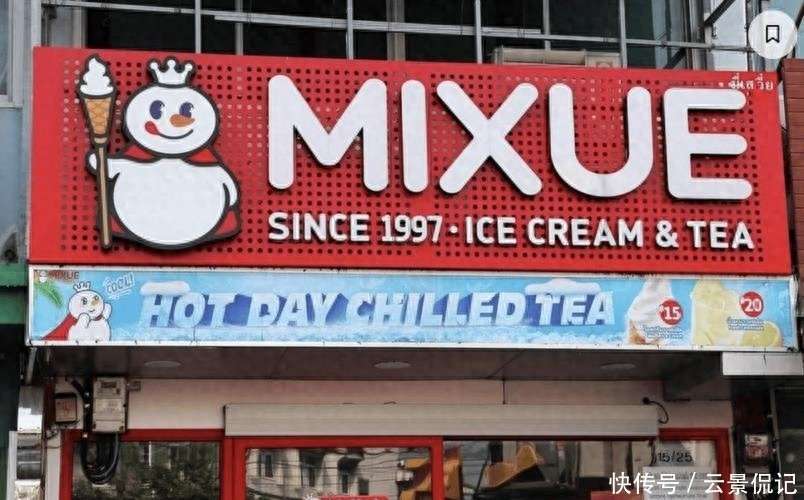
Core Insights - The opening of the first North American store by Mixue Ice City in Hollywood, Los Angeles, symbolizes the entry of Chinese consumer brands into the global market with disruptive business models [1] - Mixue Ice City's pricing strategy, featuring ice cream at $1.19 and meal sets at $3.99, aims to create waves in the local tea beverage market, leveraging a highly integrated supply chain driven by China for profit maximization [1][3] - Faraday Future, led by Jia Yueting, has shifted its strategy from building an electric vehicle supply chain from scratch in the U.S. to a "China parts + U.S. assembly" model, mirroring Mixue's operational logic [1][8] Group 1: Mixue Ice City - Mixue Ice City has maintained a core strategy of "extreme cost performance" since its establishment in 1997, achieving profitability through centralized factories, standardized equipment, and comprehensive supply chain control [2] - Over 70% of Mixue's profits come from selling standardized consumables to franchisees, rather than beverage sales, allowing for low pricing in high-cost areas like Hollywood [3] - The core equipment and packaging materials are produced in China, significantly reducing costs compared to local alternatives, while the U.S. operations focus on light front-end functions [3][5] Group 2: Faraday Future - Jia Yueting's transition to a lighter asset model for Faraday Future reflects a realization of the high costs and inefficiencies of building a complete electric vehicle supply chain in the U.S. [8][10] - The new strategy involves using existing Chinese supply chains for core components, with final assembly and testing conducted in the U.S., significantly shortening development cycles [10][11] - This approach allows for competitive pricing in the mid-range electric vehicle market, with manufacturing costs projected around $35,000 per vehicle [10] Group 3: Comparative Analysis - Both Mixue Ice City and Faraday Future exhibit a similar operational model in the U.S., focusing on leveraging China's manufacturing efficiency as a competitive advantage [11] - This "reverse globalization" strategy minimizes initial investments and accelerates product launches while maintaining cost flexibility and mitigating geopolitical risks [11][12] - The success of Mixue Ice City and the strategic shift of Faraday Future highlight a broader evolution in the globalization path of Chinese enterprises, moving from mere manufacturing to becoming integral players in global supply chains [12][13]



4家消费公司拿到新钱;火山引擎与春晚达成合作;喜茶与星星人联名又上新|创投大视野
36氪未来消费· 2026-01-03 12:00
Group 1 - The core viewpoint of the article highlights significant investments in various consumer sectors, particularly in the toy and pet industries, indicating a growing interest in innovative products and market expansion strategies [3][5][7][8]. Group 2 - The潮玩 brand "黑玩" has completed over 100 million RMB in Series A financing, led by Jinding Capital, with plans to enhance online and offline channel integration and expand into key overseas markets [3][4]. - "杰森娱乐" has secured several hundred million RMB in strategic financing, focusing on product innovation and market expansion, with a portfolio of over 500 IPs [5][6]. - The pet service platform "宠乐Go" has raised over 40 million RMB in angel round financing, aiming to integrate AI technology into its product offerings and supply chain management [7]. - "深庭纪智能," a Chinese robotics company, has completed a 100 million RMB angel round financing, focusing on outdoor AI companion robots with advanced environmental perception capabilities [8]. Group 3 - ByteDance's AI assistant application "Dola" has surpassed 10 million daily active users in overseas markets, indicating strong growth and user engagement [9][11]. - The company has also announced its partnership with the Central Broadcasting Television Station as the exclusive AI cloud partner for the Spring Festival Gala, showcasing its technological capabilities [12]. Group 4 - The film "疯狂动物城2" has become the box office champion for imported films in 2025, grossing 4.022 billion RMB [20]. - The domestic film box office in 2025 reached 51.832 billion RMB, reflecting a year-on-year growth of 21.95% [21]. Group 5 - The Chinese government has introduced a subsidy policy for consumers purchasing certain home appliances and digital products, aiming to stimulate consumption [22]. - During the New Year holiday, Hainan's duty-free sales saw a significant increase, with sales amounting to 251 million RMB, a year-on-year growth of 93.8% [23].

你好!港股
Guo Ji Jin Rong Bao· 2026-01-03 07:28
Core Insights - The Hong Kong stock market is experiencing a significant resurgence in 2025, with 114 new IPOs and a total fundraising amount of 286.3 billion HKD, marking a 63% increase in new listings and over 200% growth in fundraising compared to 2024, reclaiming the top position in global IPOs after four years [1][3][26] IPO Market Performance - The year 2025 saw a total of 114 new stocks listed on the Hong Kong Stock Exchange, a substantial increase from 70 in 2024 [1][3] - The total fundraising amount reached 286.3 billion HKD, representing a growth of over 200% year-on-year [1][3] - Eight new stocks raised over 10 billion HKD each, with Ningde Times raising 41 billion HKD, becoming the second-largest IPO globally [3] New Stock Subscription Records - The market witnessed record-breaking subscription rates, with Jin Ye International Group achieving a subscription multiple of 11,465 times, the highest in Hong Kong's history [4] - The IPO of Mixue Group saw a frozen capital scale of 1.84 trillion HKD, making it the "frozen capital king" of Hong Kong IPOs [4] - The IPO failure rate dropped to 28.83%, the lowest in five years, indicating a strong market sentiment [4] Company Listings and Trends - The new listings in 2025 can be categorized into three tiers: new consumer brands, A+H listed companies, and resilient companies transitioning from A-share failures [5][6][8] - New consumer brands like Mixue Group and Lin Qingxuan have shown strong market performance, with Mixue Group's market value reaching 109.3 billion HKD [7][8] - A+H listed companies contributed significantly to the IPO recovery, with 19 such companies raising about 50% of the total fundraising [8] Market Dynamics and Future Outlook - The IPO market is expected to remain active in 2026, with over 300 applications pending, predicting around 160 new listings and a total fundraising of at least 300 billion HKD [15][18] - The influx of southbound capital and selective foreign investment is reshaping the market structure, with domestic investors gaining significant pricing power [22][24] - The trend of A-share companies seeking dual listings in Hong Kong is likely to continue, supported by favorable policies encouraging domestic companies to list abroad [17][18] Capital Market Evolution - The capital market is witnessing a shift in funding structure, with southbound capital net purchases reaching nearly 1.41 trillion HKD, a record high [22] - The integration of companies into the Hong Kong Stock Connect is enhancing liquidity and valuation, creating a positive cycle for listed firms [22][24] - Companies are increasingly focusing on operational efficiency and sustainable growth to attract capital, moving away from mere storytelling [20][21]





便宜到不像美国!蜜雪冰城价格暴击北美市场,星巴克慌了?
Sou Hu Cai Jing· 2026-01-02 11:52
Core Insights - The opening of the first store of Mixue Ice City in Hollywood, Los Angeles, marks a significant step in its global expansion strategy, responding to previous market entries by competitors like Luckin Coffee [3][5]. Group 1: Market Entry and Strategy - Mixue Ice City’s overseas expansion is a well-planned strategic move rather than a spontaneous decision, leveraging insights gained from intense domestic competition [5]. - The company has successfully replicated its business model in the U.S. market, utilizing competitive pricing and a robust supply chain to create a significant market impact [5][19]. - The pricing strategy in Los Angeles includes a combo package priced at $3.99, which is significantly lower than local competitors, thus reshaping consumer value perception [7][9]. Group 2: Consumer Preferences and Product Offering - Mixue Ice City has tailored its product offerings to meet local consumer preferences, introducing sugar levels of 120%, 150%, and even 200% to cater to American tastes for sweetness [12]. - The brand has transformed its image from a typical tea drink provider to a trendy lifestyle brand, attracting customers with unique product offerings and engaging marketing strategies [14]. Group 3: Supply Chain and Operational Efficiency - The company’s ability to offer low-priced products is supported by a strong global supply chain, which includes a significant agreement with Brazil for sourcing coffee beans worth no less than 4 billion RMB [21][22]. - This strategic supply chain development allows Mixue Ice City to maintain competitive pricing while ensuring product quality, positioning it favorably against competitors [19][24]. Group 4: Broader Implications for Chinese Brands - The success of Mixue Ice City signifies a structural shift in the global market position of Chinese brands, showcasing their ability to compete effectively against established international players [25][31]. - The evolution of Chinese brands in highly competitive domestic markets has led to faster product iterations and more refined marketing strategies, enabling them to outperform less organized overseas markets [31][32].