
绿色能源

Search documents
中国国际大学生创新大赛(2025)中国—中亚青年交流营和成果展举行
Shan Xi Ri Bao· 2025-06-17 00:26
Group 1 - The China International College Students Innovation Competition (2025) was held in Astana, Kazakhstan, focusing on themes of mutual learning and innovation among youth from China and Central Asian countries [1][2] - Over 100 quality projects were presented by students from China, Kazakhstan, Uzbekistan, Kyrgyzstan, and Tajikistan, covering modern agriculture, information technology, green energy, and cultural tourism [1] - The event facilitated deep exchanges among youth and experts in areas such as biological breeding, smart agriculture platform construction, and technology transfer, aiming to enhance China-Central Asia technological collaboration [1] Group 2 - Northwest A&F University has established close cooperation with several Central Asian universities, achieving significant results in joint laboratories, overseas demonstration stations, and talent cooperation [2] - The China International College Students Innovation Competition, initiated in 2015, has become the largest global innovation competition platform, with the first Central Asia regional competition this year to promote youth exchanges and cooperation [2]
国家统计局投资司首席统计师罗毅飞解读2025年1—5月份投资数据
Guo Jia Tong Ji Ju· 2025-06-16 07:08
Core Insights - The overall fixed asset investment in China from January to May 2025 reached 191,947 billion yuan, showing a year-on-year growth of 3.7% [1] Group 1: Equipment Investment - The investment in equipment and tools has shown significant growth, with a year-on-year increase of 17.3%, which is 13.6 percentage points higher than the overall investment growth rate [2] - This segment contributed 63.6% to the overall investment growth, adding 2.3 percentage points to the total [2] Group 2: Infrastructure Investment - Infrastructure investment maintained steady growth, increasing by 5.6% year-on-year, which is 1.9 percentage points higher than the overall investment growth [3] - The contribution rate of infrastructure investment to overall growth was 34.5%, an increase of 1.9 percentage points compared to the previous period [3] - Notable growth was observed in the water transportation sector, which grew by 27.2%, and the water management sector, which grew by 26.6% [3] Group 3: Manufacturing Investment - Manufacturing investment continued to grow rapidly, with a year-on-year increase of 8.5%, surpassing the overall investment growth by 4.8 percentage points [4] - This sector contributed 56.5% to the overall investment growth, with an increase of 1.9 percentage points from the previous period [4] - Specific growth rates included 13.2% in consumer goods manufacturing, 7.3% in equipment manufacturing, and 1.6% in raw materials manufacturing [4] - High-tech manufacturing sectors such as aerospace and equipment manufacturing saw a significant increase of 24.2%, while computer and office equipment manufacturing grew by 21.7% [4] Group 4: High-Tech Service Investment - High-tech service investment showed a positive trend, with a year-on-year growth of 11.6%, accelerating by 0.3 percentage points compared to the previous period [5] - The information service sector experienced a remarkable growth of 41.4%, while professional technical services grew by 11.9% [5] Group 5: Private Investment - Private project investment remained stable, with a year-on-year growth of 5.8% when excluding real estate development [6] - Notable growth in private investment was seen in the accommodation and catering sector at 25.3%, cultural, sports, and entertainment sectors at 10.0%, and infrastructure at 10.0% [6] Group 6: Green Energy Investment - Green energy investment surged, with a year-on-year increase of 25.4% in the electricity, heat, gas, and water production and supply sectors [7] - This segment contributed 43.8% to the overall investment growth, adding 1.6 percentage points to the total [7] - Investments in solar, wind, nuclear, and hydropower collectively grew by 26.6% [7] Group 7: Large Project Investment - Investment in projects with planned total investments of 1 billion yuan or more increased by 6.5% year-on-year, which is 2.8 percentage points higher than the overall investment growth [8] - This segment contributed 3.6 percentage points to the overall investment growth [8] Group 8: Future Directions - The focus will be on implementing central government policies, utilizing various government investment tools, and promoting effective investment [9] - There will be an emphasis on advancing high-quality implementation of major construction projects and enhancing the high-end, intelligent, and green development of the manufacturing sector [9] - Efforts will be made to stimulate private investment and promote its development through effective government investment [9]
英央行谨慎试水,复苏难解通胀,脱欧后陷两难境地
Sou Hu Cai Jing· 2025-06-14 09:13
Core Viewpoint - The Bank of England has decided to maintain the current interest rate at 4.25%, reflecting a cautious approach amid economic uncertainties and concerns over inflation and global geopolitical tensions [1][3][10] Economic Environment - The UK economy is facing a complex situation with a weakening job market and slowing wage growth, yet inflation remains above the Bank's target of 2% [3][4] - Global factors such as the ongoing Russia-Ukraine conflict and US-China tech decoupling are impacting the UK's economic landscape, making it more challenging for the Bank to adjust interest rates [6][7] Monetary Policy Considerations - The current stance of the Bank of England is characterized as a "tactical wait," as inflation has not sufficiently decreased, and there are risks associated with lowering rates too quickly [3][4] - The Bank's decision to keep rates steady is seen as a strategy to control inflation expectations and avoid triggering a new wave of inflation or asset bubbles [4][6] Structural Economic Issues - The UK economy is losing growth drivers, with diminishing contributions from traditional sectors like finance and real estate, while emerging sectors are lagging behind competitors [7][9] - The government's limited fiscal space and reliance on the Bank's monetary policy for economic stimulus further complicate the situation [7][9] Market Expectations - Investors are cautiously optimistic about potential rate cuts, but the Bank of England is entering a "cautious easing" phase, where minor adjustments may not yield significant effects [9][10] - The upcoming months will be critical for assessing the Bank's ability to navigate economic challenges and maintain policy independence amid external pressures [10]


中国经济面面观|稳就业·保民生:政策、平台与企业如何联动?
Xin Hua She· 2025-06-14 04:26
Group 1 - The scale of college graduates in 2025 is expected to reach 12.22 million, an increase of 430,000 compared to the previous year [1] - The employment market is showing new trends, particularly in fields such as artificial intelligence, high-end manufacturing, and quantum technology, indicating a strong demand for talent [3] - There is a clear industry differentiation in the job market, with strategic industries like AI, new energy, and chip manufacturing seeking versatile talents rather than those with single skills [3] Group 2 - The Ministry of Education has launched a "Double Thousand" plan to enhance employment capabilities among college students, aiming to establish 1,000 micro-specialties and 1,000 vocational training courses nationwide [5] - Collaborative efforts between educational institutions and enterprises are being strengthened to ensure that graduates meet market demands, exemplified by initiatives like the "Baosteel Class" [5][7] - A "100-day sprint" action has been initiated to boost employment for the 2025 college graduates, with 46,200 companies visited and 4.718 million job openings expanded as of June 6 [7]
“与山东合作,我们充满信心”
Ren Min Ri Bao Hai Wai Ban· 2025-06-10 22:50
Core Viewpoint - The "2025 Hong Kong-Macao Shandong Week" aims to enhance cooperation between Shandong and Hong Kong/Macao across various sectors, including trade, technology, and culture, showcasing Shandong's development potential and opportunities for collaboration [4][5][8]. Group 1: Economic Cooperation - Shandong's import and export trade with Hong Kong reached 88.5 billion yuan in 2024, a year-on-year increase of 35.1%, while trade with Macao amounted to 450 million yuan [5]. - In the first four months of this year, Shandong's trade with Hong Kong and Macao totaled 28.53 billion yuan, reflecting a 2.2% year-on-year growth [5]. - The event resulted in the signing of 27 key cooperation projects with a total investment of 2.98 billion USD, covering sectors such as digital economy, green energy, and healthcare [8]. Group 2: Cultural Exchange - The "Good Taste Shandong, Fragrant Macao" event showcased over 150 Shandong specialty foods and cultural products, promoting Shandong cuisine and culture in Macao [9]. - The event serves as a platform for Shandong to enhance its international presence and cultural exchange, aiming to make Shandong's culinary offerings popular among Macao residents [9]. Group 3: Strategic Development - Shandong is recognized for its strong industrial foundation and modern industrial system, with Hong Kong being the largest source of foreign investment for Shandong [5][6]. - The collaboration is expected to leverage Hong Kong's international resources and Shandong's market potential, fostering innovation and economic growth [6][8]. - The establishment of 739 new Hong Kong-invested enterprises in Shandong in 2024, with actual use of Hong Kong capital reaching 8.59 billion USD, indicates deepening ties [7].
【财经分析】10块钱门票,万亿级家底!数据揭秘“苏超”刷屏真相
Xin Hua Cai Jing· 2025-06-09 05:15
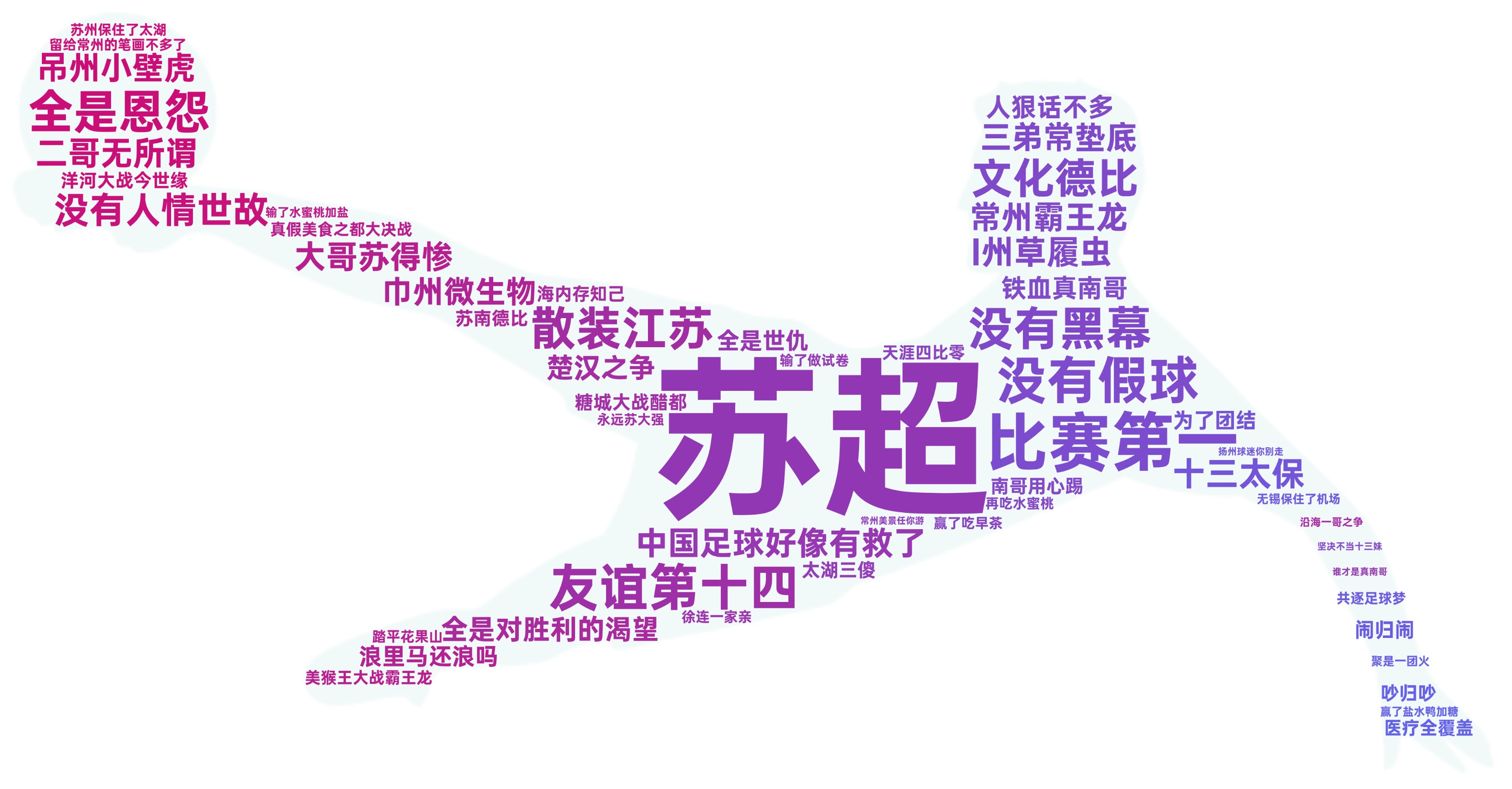
Group 1 - Paris Saint-Germain achieved a historic 5-0 victory over Inter Milan in the UEFA Champions League final, marking the largest margin in the history of the finals [1] - The attendance for the Champions League final was 64,500, while the Jiangsu Provincial City Football League, known as "Su Super," had a combined attendance of 22,200 for matches in Xuzhou and Lianyungang [1] - The total market value of Paris Saint-Germain's team exceeded €900 million, while the "Su Super" featured 516 players, with only 29 being professional athletes [1] Group 2 - The popularity of "Su Super" on domestic social media has surpassed that of the Champions League final, with various memes and discussions highlighting local rivalries and cultural references [1] - The economic strength of Jiangsu Province is a key factor in the success of "Su Super," with local teams relying on sponsorships and city subsidies to cover operational costs, which can reach around tens of millions annually [4][5] - Jiangsu Province's GDP is projected to exceed ¥13 trillion in 2024, with all 13 prefecture-level cities achieving GDPs over ¥450 billion, showcasing a balanced economic development across the region [5][8] Group 3 - Nantong and Nanjing are leading in the "Su Super" standings, with Nantong's team achieving three consecutive victories, while Nanjing ranks third with two wins and one loss [9] - Nantong has developed a modern industrial system with six major trillion-yuan industry clusters, including textiles and shipbuilding, contributing to its economic growth [11][15] - Nanjing has established a comprehensive power grid industry chain, with significant advancements in software and information technology, ranking high in both sectors [20][29] Group 4 - Yancheng's automotive manufacturing sector saw a 44% increase in output value in 2024, with a 5.9-fold growth in new energy vehicle production [40] - The competition among mid-tier cities like Xuzhou, Yangzhou, and Taizhou is intense, with each city striving for economic advancement and industrial development [41] - Zhenjiang is recognized for its eyewear industry, producing 400 million pairs of glasses annually, accounting for 75% of the national market [47] Group 5 - Suzhou's GDP reached ¥2.67 trillion in 2024, leading the province with strong growth in electronic information and equipment manufacturing sectors [81] - Wuxi is focusing on traditional manufacturing while also developing emerging industries like IoT and integrated circuits, with the latter expected to exceed ¥200 billion in scale [92][100] - Changzhou is emerging as a leader in green energy and carbon materials, with significant contributions from companies like CATL and BYD [100][102]
向“绿”求“金” 低碳产业重塑经济增长逻辑
Zhong Guo Xin Wen Wang· 2025-06-07 10:13
Core Insights - The 2025 Shanghai International Carbon Neutral Technology, Products and Achievements Expo highlights the shift of low-carbon transformation from being seen as "high investment, low return" to a "golden track" for revenue growth for companies [1] - The demand for green transformation is increasing, with companies demonstrating that green development can lead to significant financial gains [1] Group 1: Green Certificates and Market Growth - Green certificates, which represent the environmental attributes of renewable energy, are crucial for promoting green electricity consumption, with 1 certificate equating to 1,000 kWh of renewable energy [1] - In the first five months of 2024, China issued 1.093 billion green certificates, with a trading volume of 289 million certificates, marking a year-on-year increase of 490% [1] - The number of participants in green certificate trading reached 96,000 across 34 provincial-level regions in China [1] Group 2: Shanghai's Role in Green Energy - Since 2021, Shanghai enterprises have purchased over 27 million green certificates and over 15 billion kWh of green electricity, aiding in the low-carbon transformation of export-oriented companies [2] - Purchasing green electricity and certificates provides users with a pathway to utilize clean energy and alter their energy consumption structure [2] Group 3: Technological Advancements in Low-Carbon Market - The Shanghai Technology Exchange established a dedicated platform for green technology transactions in December 2023 to enhance the efficiency of matching supply and demand in the low-carbon sector [3] - The platform has recorded 169 completed projects and a transaction value of 824 million yuan, involving various universities and large state-owned enterprises across multiple provinces [3]
绿电绿证服务中心在沪揭牌
Guo Ji Jin Rong Bao· 2025-06-07 07:24
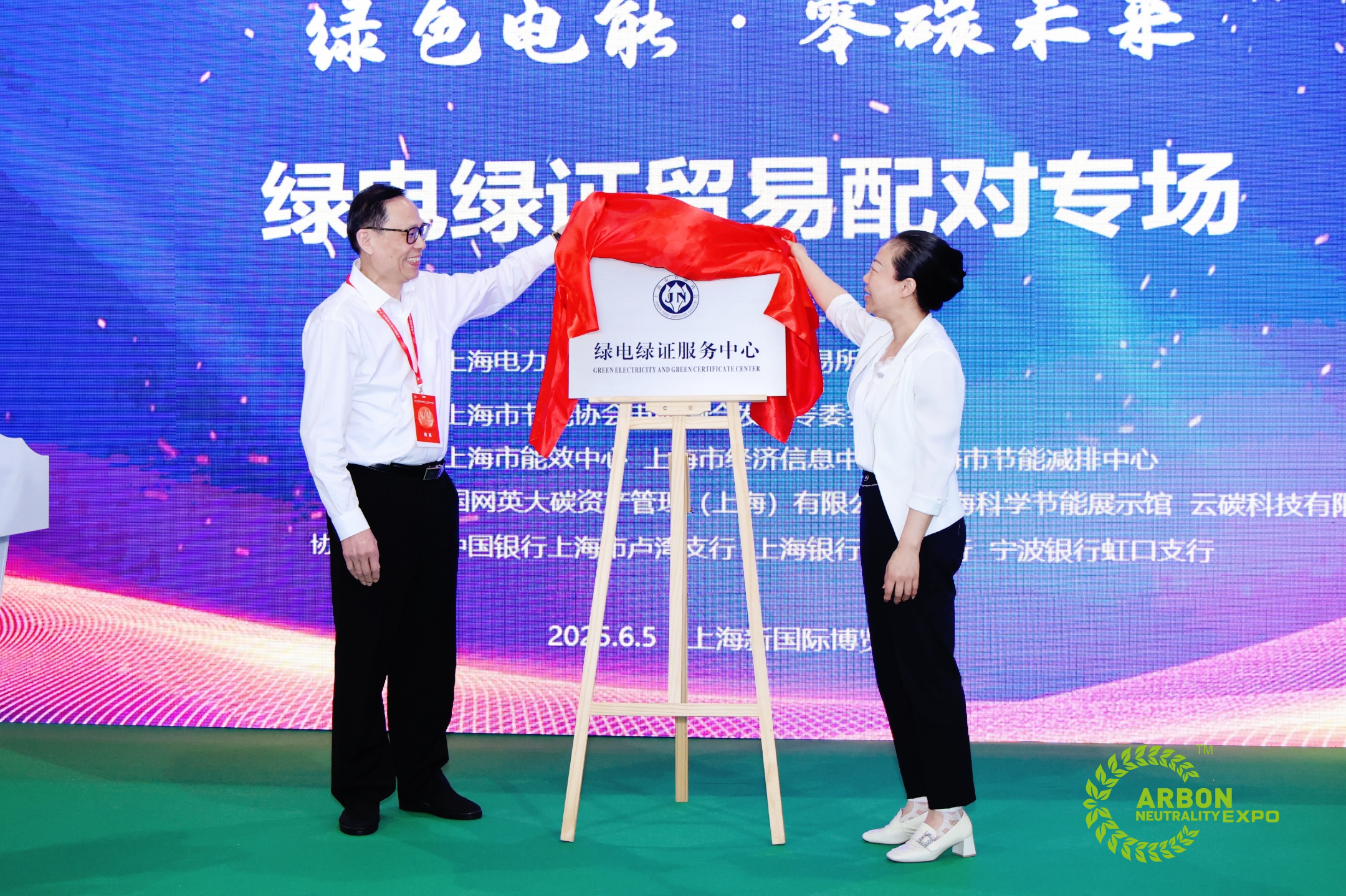
Core Insights - The 2025 Shanghai International Carbon Neutral Technology, Products, and Achievements Expo (Carbon Expo) was held from June 5 to 7, focusing on "Green Electricity, Zero Carbon Future" [1] - The event highlighted the increasing attention on green electricity and green certificates as essential tools for promoting green energy consumption under the national "dual carbon" strategy [1] - The establishment of the Green Electricity and Green Certificate Service Center marks a significant step towards facilitating green electricity consumption and supporting enterprises in their low-carbon transitions [3] Group 1 - The event featured a trade matching segment where representatives from enterprises engaged in in-depth discussions with service providers, enhancing their understanding of the green electricity and green certificate trading process [4] - Industry experts provided valuable insights on policy interpretation, service solutions, and practical innovations related to green electricity procurement agreements [1][4] - The market for green electricity and green certificates is expected to experience significant growth as China transitions from energy consumption control to carbon emission control, creating a golden development window [4] Group 2 - The unveiling of the Green Electricity and Green Certificate Service Center was attended by key officials, indicating strong governmental support for green energy initiatives [3] - Several companies signed agreements for green electricity and green certificate services, marking the official start of collaborative trading efforts [3] - Qikun Technology was recognized as one of the first service points and entered into a strategic partnership with Yuantonghui Energy Technology to explore opportunities in green electricity procurement and compliance [3]
杭州高新区(滨江):“三链”融合引领高新技术产业发展
Ren Min Ri Bao· 2025-06-05 21:41
Core Viewpoint - Hangzhou High-tech Zone (Binjiang) integrates party building with industrial development, fostering economic growth through the "Pioneer Bin·Chain Event" brand and achieving a GDP of 77.5 billion yuan in Q1 2025, with industrial added value increasing by 17% year-on-year, the highest in the city [1]. Group 1: Organizational Development - The establishment of a comprehensive party committee for the smart IoT industry ecosystem integrates 12 functional departments and 8 research and financial institutions, enhancing resource coordination and addressing major issues through quarterly meetings [2]. - Industry chain party committees have been formed to include representatives from leading and small enterprises, facilitating monthly meetings to address enterprise needs and promote deep cooperation among businesses [2]. Group 2: Enterprise Services - The "Red Chain Housekeeper Team" provides policy consultation and business assistance, having visited over 2,300 enterprises and resolved more than 410 issues, with a 99.3% resolution rate for enterprise-related problems [3]. - A "benefit package" has been created, consolidating 50 policies and 70 services, including the issuance of innovation vouchers and investment funds, benefiting over 200 enterprises and facilitating 2.35 billion yuan in financing [4]. Group 3: Talent and Innovation - The zone has attracted 9,418 young university graduates in Q1 2025, leading the city in talent acquisition [5]. - A mechanism has been established to address enterprise challenges through party and community collaboration, resulting in the formation of 11 joint laboratories and 91 horizontal contracts worth 63.8 million yuan since 2024 [5].

将生态财富转换为经济财富,国家重点生态功能区如何破解生态产业化困境?
Zhong Guo Huan Jing Bao· 2025-06-02 23:20
Core Viewpoint - The article discusses the challenges and pathways for the ecological industrialization of national key ecological function areas, emphasizing the need to convert ecological wealth into economic wealth to achieve common prosperity while addressing existing economic and social development issues in these regions [1][2]. Challenges Faced - National key ecological function areas are often located in ecologically sensitive regions, leading to strict controls on development activities and resource utilization, which results in local economic stagnation [2][3]. - Local governments may prioritize short-term gains from traditional industries over the long-term benefits of ecological industrialization due to economic pressures [2][3]. - The ecological protection goals are rigid, while economic development goals are flexible, creating conflicts in policy implementation [2][3]. - Many areas rely on traditional ecological industry models, such as eco-tourism and specialty agriculture, which have short supply chains and low added value, limiting long-term economic growth [2][3]. Policy Support Issues - There is insufficient policy support for ecological industrialization, with local execution often lacking, leading to ineffective policy outcomes [3][4]. - Existing ecological protection compensation mechanisms have low standards, failing to adequately cover opportunity costs for local economic development [3][4]. - Policies often do not consider regional differences in resource endowments and industrial characteristics, leading to mismatches in development needs [3][4]. Financial and Talent Constraints - Ecological industrialization requires long-term financial investment, but these regions typically have weak economic foundations and limited ability to attract social capital [4][7]. - The low compensation standards for ecological protection hinder local government and enterprise investment in ecological industries [4][7]. - There is a shortage of high-end talent in remote areas, which affects the ability to develop comprehensive professional capabilities necessary for ecological industrialization [4][7]. Community Involvement - Successful ecological industrialization relies on active community participation, but many areas see low engagement from local residents [4][8]. - The distribution of benefits from ecological projects often lacks fairness, leading to dissatisfaction among community members [4][8]. - Insufficient education and skills training for residents hinder their ability to adapt to new industry demands [4][8]. Pathways for High-Quality Advancement - Implement differentiated development strategies based on the natural resource endowments and ecological functions of each area to balance ecological protection and economic development [5][6]. - Promote diversified ecological industry development by integrating various sectors such as agriculture, tourism, and cultural creativity to enhance product value [6][7]. - Establish a targeted policy framework that considers regional characteristics and improves the ecological protection compensation mechanism [6][7]. - Develop funding mechanisms to enhance investment capabilities in ecological industries, including the establishment of special development funds [7][8]. - Create transparent benefit-sharing mechanisms to ensure local residents gain from ecological industrialization, enhancing their participation and support [8].