证券业

Search documents
央行四季度例会延续适度宽松货币政策,加大逆周期和跨周期调节力度
Xin Lang Cai Jing· 2026-01-04 09:04
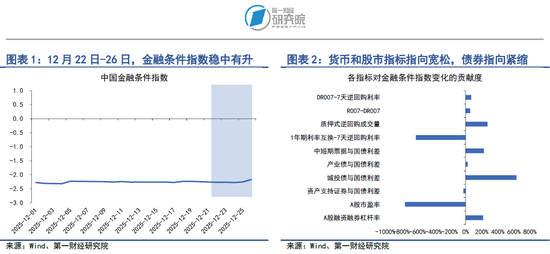
Financial Condition Index Overview - The average daily index of China's financial conditions from December 22 to December 26, 2025, was -2.25, remaining stable compared to the previous week. The index has decreased by 0.87 over the year [1][4][28] - The components of the index indicate a loose monetary and stock market, while the bond market shows signs of tightening. The central bank maintained stable monetary supply, and market liquidity was orderly with low interest rates [1][4][28] Monetary Market - The interbank market maintained stable liquidity, with an average pledged repo transaction volume of 8.48 trillion yuan, consistent with the previous week. However, there was a noticeable decline on December 26, dropping from 8.54 trillion yuan to 7.89 trillion yuan [6][30] - Major money market rates saw an increase, with overnight repo rates averaging 1.35% and 1.26%, reflecting slight changes compared to the previous week [6][30] Central Bank Monetary Policy - The People's Bank of China (PBOC) released key policy signals during the fourth quarter monetary policy committee meeting, emphasizing the need for continued moderate monetary policy and enhanced counter-cyclical adjustments [2][9][35] - The meeting highlighted the importance of integrating incremental and stock policies to effectively manage monetary policy, focusing on both short-term and long-term economic stability [3][10][36] Bond Market - The total issuance of bonds from December 22 to December 26 was 1.64 trillion yuan, a decrease of 317.94 billion yuan from the previous week, while net financing increased by 50.77 billion yuan to 235.05 billion yuan [12][38] - Government bonds saw a net financing of 266.02 billion yuan, while non-financial enterprises also achieved net financing, indicating a mixed performance across sectors [12][39] Stock Market - A-share financing totaled 29.09 billion yuan during the week, an increase of 19.19 billion yuan compared to the previous week, with total financing for the year exceeding 1.07 trillion yuan [20][46] - Major A-share indices experienced gains, with the Shanghai Composite Index rising by 1.87%, and the ChiNext Index increasing by 3.85%. Year-to-date, the Shanghai Composite Index has risen by 18.26% [22][48]

中加基金配置周报|人民币汇率升破7.0,美国3季度GDP走强
Xin Lang Cai Jing· 2026-01-04 02:30
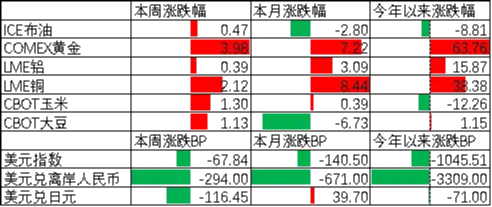
Key Insights - China's December LPR remains unchanged at 3.0% for 1-year and 3.5% for 5-year, maintaining stability for seven consecutive months due to pressure on bank net interest margins and stable policy rates [1][18] - The US Q3 GDP shows a significant annualized growth of 4.3%, surpassing market expectations of 3.3%, marking the fastest growth in two years, driven by strong consumer spending [2][19] - The central bank's monetary policy committee emphasizes the integration of incremental and stock policies to enhance monetary policy regulation, aiming to maintain low comprehensive financing costs [3][19] - The foreign exchange market sees the offshore RMB against the USD surpassing the "7" mark for the first time in 15 months, reaching a high of 6.9985 [4][19] Market Review Futures Market - ICE Brent crude oil increased by 0.47% to $60.33, while COMEX gold rose by 3.98% to $4562 [21][22] - The US dollar index decreased by 67.84 basis points, influenced by calls for the Federal Reserve to lower interest rates [22] Stock Market - The Shanghai Composite Index rose by 1.27% over the past week, while the ChiNext Index increased by 3.00% [23][24] - The Hang Seng Index gained 0.50%, supported by a weaker US dollar [26] Bond Market - Major bonds saw a decline, with 3Y AAA and AA+ bonds down by 7 basis points, while 1Y government bonds also decreased by 7 basis points [29][31] - The fourth-quarter monetary policy meeting highlighted the importance of maintaining capital market stability [29] Asset Allocation Perspective - The unchanged December LPR indicates a preference for stable interest margins rather than aggressive monetary easing, with expectations of a slight economic rebound amid easing trade tensions [33] - The strong Q3 GDP data in the US suggests a robust performance driven by the AI sector, although interest rate cut expectations have cooled slightly [33]
央行最新数据!全国人均存款突破10万,北京家庭平均存款竟近百万
Sou Hu Cai Jing· 2026-01-02 21:49
Group 1 - The average household savings in Beijing is approaching 1 million yuan, while in Shanghai it has reached 750,000 yuan, indicating a significant disparity in savings across different regions [2][4] - The increase in savings is primarily due to a shift in consumer behavior, where individuals are spending less rather than earning more, as evidenced by a 10% growth in savings compared to a 5.3% increase in disposable income [6][8] - The rising savings trend is not merely a reflection of increased income but rather a response to economic uncertainties, leading to a cultural inclination towards saving [12][10] Group 2 - The surge in savings has implications for the broader economy, as a collective increase in savings can lead to reduced overall demand, potentially resulting in a cycle of decreased consumption and economic slowdown [8][12] - The People's Bank of China has responded to the high levels of savings by lowering deposit interest rates to encourage spending and investment, with three to five-year fixed deposit rates dropping to around 1.5% [14][12] - There has been a notable shift of funds from savings accounts into investment products, with the bank wealth management market growing by approximately 300 billion yuan in 2024, and the stock market seeing an influx of new investors [14][15]
养老金融新格局:个人养老金“提质”成关键
Xin Lang Cai Jing· 2026-01-02 19:32
Core Insights - The implementation of the "Guiding Opinions" by nine departments, including the People's Bank of China, aims to support the development of the pension system in China, particularly the third pillar, which is expected to see significant growth by 2025 [1][2] Group 1: First Pillar Developments - The first pillar of the pension system, basic pension insurance, has made significant progress in 2025, with a nationwide adjustment of pensions by 2%, benefiting approximately 150 million retirees [2] Group 2: Second Pillar Developments - The second pillar, enterprise annuities, has seen an investment operation scale exceeding 7.7 trillion yuan, with investment returns surpassing 756 billion yuan during the 14th Five-Year Plan period [2] Group 3: Third Pillar Developments - The third pillar, personal pension accounts, has experienced explosive growth, with over 150 million accounts opened by the end of 2025, and a product catalog featuring 1,274 options across various categories [3][4] - Despite the rapid growth in account openings, there is a prevalent issue of low contribution amounts and a lack of sustained investment, attributed to insufficient public awareness and the appeal of different product types [4][5] Group 4: Challenges and Recommendations - The third pillar faces structural challenges, including the need for improved service orientation from banks, which should shift focus from mere account opening to ongoing customer engagement and education [6][8] - Recommendations include enhancing tax incentives for low-income groups, implementing a "pay-as-you-go" mechanism for personal pension contributions, and encouraging enterprises to integrate personal pensions into employee benefits [7][8]
韩元走弱“偏离基本面”!韩国央行行长誓言捍卫汇率稳定
Zhi Tong Cai Jing· 2026-01-02 03:41
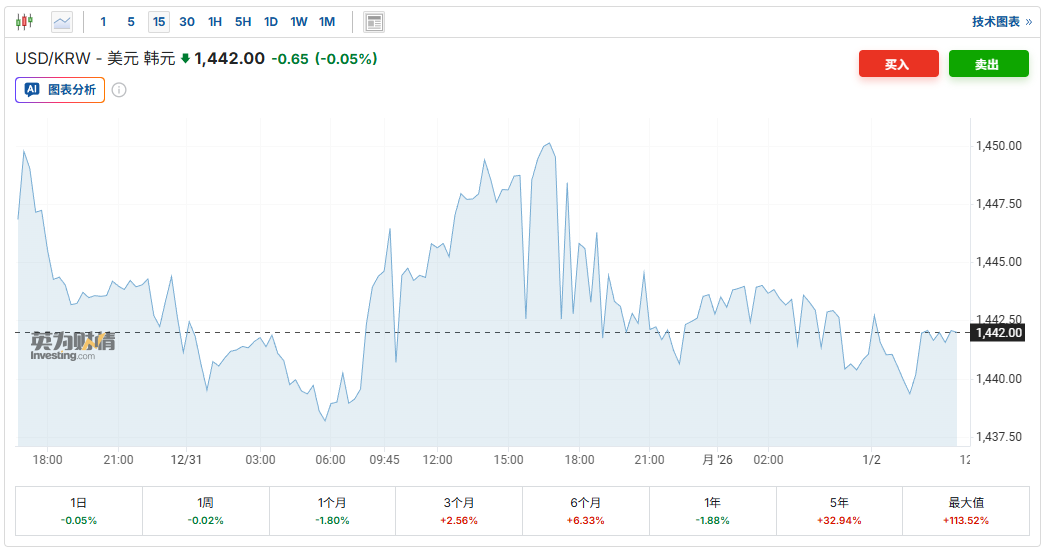
Group 1 - The Bank of Korea Governor Lee Chang-yong stated that the recent depreciation of the Korean won does not reflect the true strength of the South Korean economy and vowed to oppose any investment decisions that may threaten the stability of the foreign exchange market [1] - Concerns over foreign capital outflows and additional U.S. investments as part of tariff negotiations are exacerbating pressure on the won, with the USD/KRW exchange rate recently exceeding 1400 [1] - The South Korean authorities have implemented measures to support the won, including tax incentives and easing foreign exchange controls to increase dollar liquidity domestically [3] Group 2 - The South Korean government announced a new tax incentive plan for repatriated investment accounts to encourage overseas investment capital to return to the domestic market, including a temporary tax exemption on capital gains from selling overseas stocks [4] - The government plans to support major brokerages in launching forward sales products for individual investors to manage foreign exchange risk better [4] - The Bank of Korea maintained the benchmark interest rate at 2.5% and slightly raised economic growth and inflation forecasts, indicating a stable inflation outlook for the new year, although a weaker won could increase inflationary pressures [4]
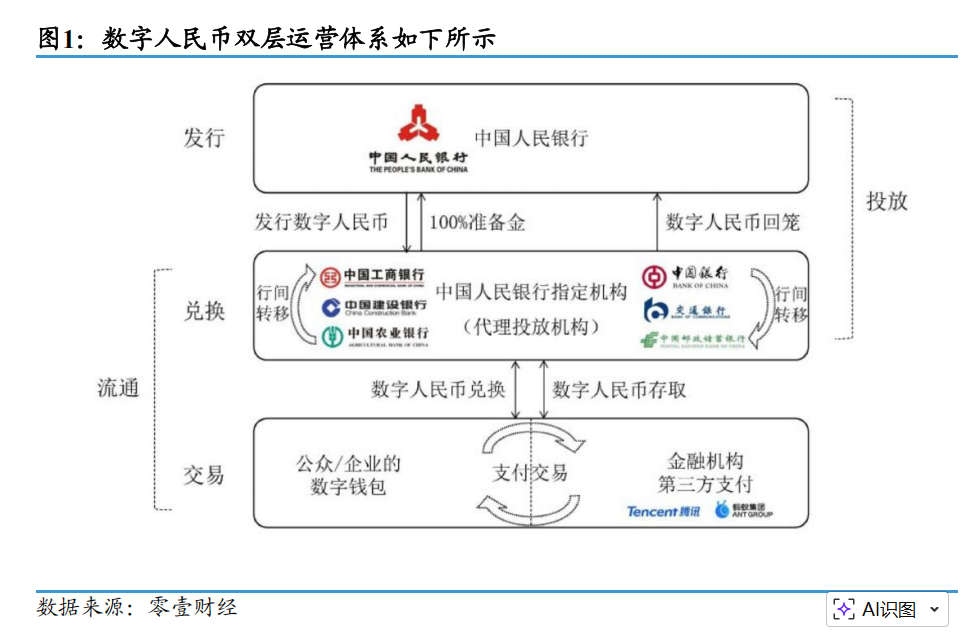
数字人民币2.0:“计息数字货币”的机制与技术创新
Hua Er Jie Jian Wen· 2026-01-01 08:06
Core Viewpoint - The People's Bank of China is officially transitioning the digital yuan from a "cash-type 1.0" to a "deposit currency type 2.0," introducing a historical transformation that enhances its functionality as a financial asset with value storage capabilities [1][2]. Group 1: Mechanism Innovation - The core mechanism innovation of version 2.0 is characterized by the redefinition of liability attributes and the incorporation of a macro framework, allowing digital yuan balances in commercial banks to be classified as "account-based commercial bank liabilities" [3][6]. - The cancellation of the "non-interest" policy for digital yuan enables liquidity to flow directly into the electronic wallet system, marking the end of the cash era [3][6]. - The new framework enhances user willingness to hold and use digital yuan while providing banks with a manageable asset-liability space [6]. Group 2: Technical Architecture - The technical architecture features three major innovations: an account system, a currency string, and smart contracts, which facilitate a digital path for the digital yuan [7]. - The upgrade maintains compliance with existing bank account rules while introducing a "currency string" for value transfer and offline circulation, enhancing verification and system resilience [7]. - Smart contracts embedded in the funding flow can trigger conditions and automate verification in various scenarios, reducing misuse risks and compliance costs [7]. Group 3: Cross-Border Applications - The transition to "digital deposit currency" is reshaping the liquidity foundation and settlement efficiency of the multilateral central bank digital currency bridge (mBridge) [11]. - As of November 2025, digital yuan holds a dominant position in mBridge operations, accounting for 95.3% of transactions, with a total of 4,047 cross-border payments amounting to 387.2 billion yuan [14]. - The introduction of deposit insurance significantly lowers the risk costs for foreign participants holding digital yuan, enabling more robust fund position management [14].


陆家嘴财经早餐2026年1月1日星期四
Wind万得· 2025-12-31 22:50
Group 1 - The People's Bank of China has announced a synchronized reduction in the interest rates for existing "public housing fund + commercial loans" starting January 1, 2026, with first-time homebuyers seeing rates drop to 2.1% for loans under five years and 2.6% for loans over five years [3] - The China Securities Regulatory Commission (CSRC) has released the "Regulations on the Management of Sales Expenses for Publicly Raised Securities Investment Funds," marking the completion of the third phase of fee rate reforms in the public fund industry, which is expected to save investors approximately 51 billion yuan annually [3] Group 2 - The gold and silver markets experienced a significant year in 2025, with gold prices hovering around $4,320 per ounce and silver prices at $71 per ounce, despite a decline on the last trading day of the year. Gold futures rose 55.51% for the year, while silver futures surged 129.83% [4] - Warren Buffett officially stepped down as CEO of Berkshire Hathaway on December 31, 2025, leaving a market anxious about the capabilities of his successor, Greg Abel, while Buffett's stock holdings remain valued at approximately $150 billion [4] Group 3 - China's economy is projected to reach 140 trillion yuan in 2025, with President Xi Jinping emphasizing the need for high-quality development and comprehensive reforms in his New Year address [5] - The State Council has approved a budget of approximately 295 billion yuan for early-stage construction projects in 2026, aiming to accelerate the pace of fund allocation and usage [5] - China's service trade showed steady growth in 2025, with total service import and export reaching 72,023.7 billion yuan, a year-on-year increase of 7.1% [6] Group 4 - The CSRC has officially released pilot rules for commercial real estate REITs, allowing shopping centers, office buildings, and hotels to raise funds through public REITs [7] - The A-share market closed 2025 with the Shanghai Composite Index rising 0.09% to 3,968.84 points, while the Shenzhen Component Index fell 0.58%. The Shanghai Composite Index saw an annual increase of over 18% [7] - The Hong Kong stock market experienced a slight decline on the last trading day of 2025, with the Hang Seng Index down 0.87%, but recorded an annual increase of nearly 28%, marking its best performance in eight years [7] Group 5 - The CSRC has introduced new regulations specifically targeting board secretaries of listed companies to clarify their responsibilities and enhance compliance [8] - The CSRC has also published measures to further standardize its enforcement procedures, ensuring the protection of the legal rights of administrative counterparts [8] - The Shanghai and Shenzhen Stock Exchanges are seeking public opinion on revisions to stock listing rules aimed at regulating the behavior of key stakeholders in listed companies [8] Group 6 - The fifth set of listing standards for the Sci-Tech Innovation Board has been expanded to include the commercial rocket sector, with Blue Arrow Aerospace's IPO application accepted by the Shanghai Stock Exchange [9] - The Nanjing Intermediate People's Court ruled that a listed company must compensate over 43,000 investors for 770 million yuan due to false statements [9] - The Shanghai Stock Exchange issued a regulatory notice to Tianpu Co., involving potential violations of information disclosure [9]



十大首席经济学家展望2026:变局、挑战、突破
Di Yi Cai Jing Zi Xun· 2025-12-31 10:13
2025,全球经济在波动中寻求新的平衡。 2026,我们在挑战中寻找一些确定性。全球经济增长前景如何?中国经济有哪些新动向?美联储是否会 激进降息?中国货币政策如何继续适度宽松?财政政策怎样促进居民增收?黄金是否会续创新高?人民 币会继续升值吗?房地产市场风险能否出清?美股AI泡沫会被戳破吗?A股能否站稳4000点?科技股能 否持续带动市场? 行至岁末,挑战依旧。 带着这些问题,第一财经携手十位"年度机构首席经济学家",为你预测2026。 全球 中金公司首席经济学家、研究部负责人、中金研究院院长 第一财经:2026年全球经济增长前景如何,中国经济有哪些新动向? 彭文生:地缘竞争日益成为影响全球经济和市场的关注点,这既涉及传统的经贸,更包括人工智能等创 新领域的博弈。资源禀赋、规模经济、交易成本是国际贸易与全球产业链的三个决定因素。其中,资源 禀赋和传统理解的比较优势有关(劳动密集、资本密集、自然资源);交易成本包括运输成本、关税和 非关税保护主义措施等;对于美国关税的影响,中国的规模经济优势是一个重要因素。 在新的地缘形势下,以内部循环为主体、内外部循环相互促进的双循环呈现一些新的动向。内循环方 面,实体经济 ...

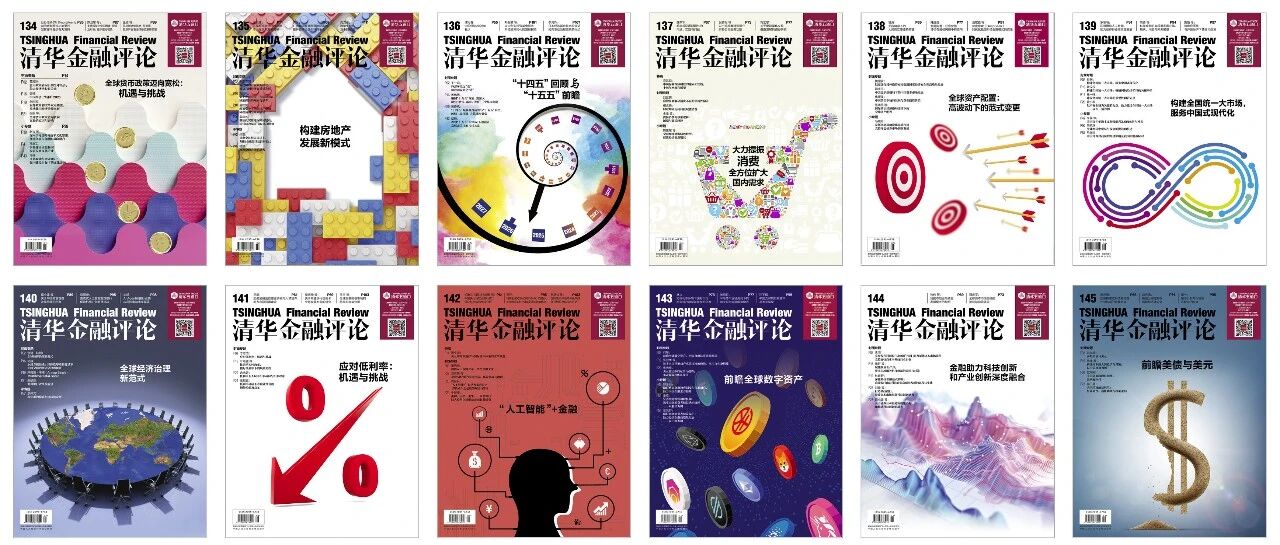
建言金融政策 引领金融实践 | 《清华金融评论》2025年度回顾
清华金融评论· 2025-12-31 09:29
Group 1 - The global economy is experiencing a shift towards more accommodative monetary policies, with central banks expected to enter a rate-cutting cycle in 2024, except for Japan [6] - The resilience of the US economy is attributed to effective macroeconomic policies and the collaboration between fiscal and monetary measures, which have helped avoid recession despite aggressive interest rate hikes [5][6] - The US GDP has shown unexpected growth, with a 2.9% increase in 2023 and a projected 2.8% growth in 2024, largely supported by excess savings accumulated during the pandemic [5] Group 2 - The article emphasizes the need for a new development model in China's real estate sector to stabilize the market and promote high-quality economic growth, as highlighted in recent central government meetings [9][10] - The current real estate model has led to high debt levels among companies, necessitating a shift towards a more sustainable approach that addresses both supply and demand issues in the housing market [10][11] - Key focus areas for the new real estate model include improving housing supply systems, enhancing financial services for homebuyers, and reforming sales systems to stabilize the market [11][12] Group 3 - The article discusses the challenges and opportunities presented by low interest rates in China, suggesting that a combination of proactive fiscal policies and accommodative monetary policies is essential for economic stability [40][41] - It highlights the importance of addressing structural issues in the economy, such as improving public services and enhancing the efficiency of resource allocation [41][42] - The financial sector is urged to adapt to the low interest rate environment by providing innovative financial products and services that meet the evolving needs of consumers and businesses [43] Group 4 - The rise of digital assets is reshaping the global financial landscape, with significant developments in regulatory frameworks and market structures [55][56] - Digital assets, including central bank digital currencies and cryptocurrencies, are becoming mainstream, prompting major economies to establish strategic frameworks for their development [55] - Challenges remain in terms of technology, regulation, and market liquidity, necessitating careful consideration of the future direction of digital assets [56][57]
观网盘点:2025年国内外十二大金融新闻
Guan Cha Zhe Wang· 2025-12-31 09:29
金融是国民经济的血脉。"十四五"时期,我国加快构建中国特色现代金融体系,牢牢守住系统性风险安 全底线,为高质量发展注入磅礴动能。 2025年,全球金融格局深刻演变,中国加快建设金融强国:从"金融强国"目标写入五年规划建议,到货 币政策持续发力显效;从资本市场量质齐升、直接融资功能持续增强,到国有大行补充资本、公司治理 体系加速重塑;从中小金融机构深度整合、行业格局优化升级,到公募基金、保险资金等中长期资金加 速入市;从贵金属价格屡创新高映射全球变局,到港股IPO重回全球第一、AI浪潮重塑全球科技与投资 版图…… 站在"十四五"与"十五五"交汇的新起点,我国金融业将继续秉持改革锐气和开放胸襟,为中国式现代化 注入更加澎湃的金融活水。 【01】"金融强国" 入五年规划建议,"五篇大文章" 顶层设计落地 10月,党的二十届四中全会召开,会议通过"十五五"规划建议,建议提出加快建设金融强国,标志着金 融发展从"规模扩张"向"质量提升"的历史性跨越;3月,国务院办公厅印发《关于做好金融"五篇大文 章"的指导意见》,构建 "1+N" 政策体系,明确科技金融、绿色金融、普惠金融、养老金融、数字金 融"五篇大文章"重点领域和 ...