
非银行金融

Search documents
量化市场追踪周报:主动权益基金情绪偏乐观,银行行业配置达到历史高位-20250727
Xinda Securities· 2025-07-27 09:33
主动权益基金情绪偏乐观, 证券研究报告 银行行业配置达到历史高位 —— 量化市场追踪周报(2025W30) 请阅读最后一页免责声明及信息披露 http://www.cindasc.com 1 [Table_ReportTime] 2025 年 4 月 27 日 金工研究 [Table_ReportType] 金工定期报告 [Table_Author] 于明明 金融工程与金融产品 首席分析师 执业编号:S1500521070001 联系电话:+86 18616021459 邮 箱:yumingming@cindasc.com 吴彦锦 金融工程与金融产品 分析师 执业编号:S1500523090002 联系电话:+86 18616819227 邮 箱:wuyanjin@cindasc.com 周君睿 金融工程与金融产品 分析师 执业编号:S1500523110005 联系电话:+86 19821223545 邮 箱:zhoujunrui@cindasc.com [Table_Title] 量化市场追踪周报(2025W30):主动权益基金情绪 偏乐观,银行行业配置达到历史高位 [Table_ReportDate] ...
情绪与估值7月第3期:市场交易情绪升温,周期估值分位普涨
Yong Xing Zheng Quan· 2025-07-25 08:04
Group 1 - Market sentiment has improved with an increase in margin trading balance, turnover rate, and transaction volume across major indices [2][19] - The average margin trading balance reached approximately 1.92 trillion yuan, up 1.48% from the previous week, with the financing purchase ratio rising to 11.13% of total A-share transaction volume [16][19] - The turnover rate for major indices increased, with the CSI 500 showing the largest growth in transaction volume at 18.30% [19][20] Group 2 - The PE valuation percentiles for major indices increased, with the Shenzhen Component Index leading with a rise of 5.1 percentage points [24][28] - Stable style sectors led the increase in PE valuation percentiles, rising by 2.6 percentage points, while the consumer style also saw a rise of 2.5 percentage points [36][39] - The construction industry led the sectoral PE valuation increases with a rise of 9.4 percentage points, while the banking sector saw a decline of 2.0 percentage points [53][54]
主动权益基金2025年二季报分析:加仓科技减仓消费,港股市场关注度持续提升
CAITONG SECURITIES· 2025-07-25 08:03
Group 1: Report Overview - The report analyzes the regular reports of active equity funds from multiple perspectives, including scale, quantity, position, concentration, industry and sector allocation, and individual stock allocation, aiming to provide an overview of fund trading behavior characteristics and asset allocation [6]. Group 2: Scale and Quantity Analysis - As of 2Q2025, there were 4,385 active equity funds in the market, an increase of 44 compared to the end of the previous quarter. The total scale of active equity funds was 3.17 trillion yuan, a decrease of 30.472 billion yuan or 0.95pct compared to the end of the previous quarter [8]. - In 2Q2025, 71 active equity funds were established in the market, with a combined issuance share of 3.6593 billion shares, a significant increase of 139.18pct compared to the end of the previous quarter [10]. - In terms of fund scale distribution, in 2Q2025, the proportion of active equity funds with a scale of less than 100 million yuan was as high as 80.55%. The proportion of large - scale funds continued to decline. The proportion of funds with a scale of less than 200 million yuan was 46.51%, a 0.12pct increase compared to the end of the previous quarter [14]. Group 3: Position Analysis - In 2Q2025, the equity positions of active equity funds increased slightly. The equity positions of common stock - type, partial - stock hybrid, and flexible - allocation funds were 90.20%, 87.50%, and 72.58% respectively, an increase of 0.86pct, 1.14pct, and 1.12pct compared to the end of the previous quarter [16]. - The Hong Kong stock positions of active equity funds increased significantly. The Hong Kong stock positions of common stock - type, partial - stock hybrid, and flexible - allocation funds were 12.85%, 17.09%, and 4.08% respectively, an increase of 0.84pct, 1.61pct, and 0.36pct compared to the end of the previous quarter [18]. Group 4: Concentration Analysis - In 2Q2025, the concentration of individual stocks and industries of active equity funds decreased slightly. The concentration of the top 3, top 5, and top 10 individual stocks was 20.92%, 31.25%, and 51.77% respectively, a decrease of 0.43pct, 0.87pct, and 1.17pct compared to the end of the previous quarter. The concentration of the first, top 3, and top 5 industries was 18.24%, 37.31%, and 46.53% respectively, a decrease of 0.33pct, 1.07pct, and 1.13pct compared to the end of the previous quarter [21]. Group 5: Heavy - Positioned Sector Analysis - In the A - share market, in 2Q2025, the top three sectors with heavy - positioned stocks of active equity funds were technology, manufacturing, and consumption, accounting for 27.89%, 23.84%, and 14.84% respectively. The sectors with increased positions were technology, financial real estate, and medicine, with an increase of 2.82pct, 1.83pct, and 0.38pct compared to the previous quarter [25]. - In the Hong Kong stock market, the top three sectors with heavy - positioned stocks of active equity funds were technology, consumption, and medicine, accounting for 46.82%, 14.40%, and 13.42% respectively. The sectors with increased positions were medicine and financial real estate, with an increase of 4.94pct and 2.39pct compared to the previous quarter [26]. Group 6: Heavy - Positioned Industry Analysis 6.1 Active Equity Funds - In A - share allocation, in 2Q2025, the top three industries with heavy - positioned stocks of active equity funds in terms of market value were electronics, medicine, and power equipment and new energy, accounting for 18.11%, 11.47%, and 8.85% respectively. The industries with the top three active increases in positions were communication, banking, and non - banking finance, with an increase of 2.51pct, 0.76pct, and 0.74pct respectively [30][32]. - In Hong Kong stock allocation, the top three industries with heavy - positioned stocks of active equity funds in terms of market value were media, electronics, and medicine, accounting for 25.69%, 13.48%, and 13.42% respectively. The industries with the top three active increases in positions were medicine, non - banking finance, and computer, with an increase of 3.88pct, 1.48pct, and 0.88pct respectively [36][37]. 6.2 Performance - Excellent and Hundred - Billion Funds - In A - share allocation, in 2Q2025, the top three industries with heavy - positioned stocks of performance - excellent funds in terms of market value were medicine, national defense and military industry, and communication, accounting for 64.66%, 9.03%, and 8.41% respectively. The top three industries with heavy - positioned stocks of hundred - billion funds were food and beverage, electronics, and medicine, accounting for 19.55%, 19.52%, and 19.35% respectively [40]. - In Hong Kong stock allocation, the top three industries with heavy - positioned stocks of performance - excellent funds in terms of market value were medicine, media, and commerce and retail, accounting for 91.45%, 2.40%, and 1.51% respectively. The top three industries with heavy - positioned stocks of hundred - billion funds were media, communication, and commerce and retail, accounting for 32.18%, 13.18%, and 12.03% respectively [41]. Group 7: Heavy - Positioned Individual Stock Analysis 7.1 Heavy - Positioned Individual Stock Market Value Analysis - In 2Q2025, the top three A - shares with the highest absolute market value of heavy - positioned stocks of active equity funds were CATL, Kweichow Moutai, and Midea Group, with market values of 46.6 billion yuan, 26.213 billion yuan, and 25.094 billion yuan respectively. The top three A - shares in terms of allocation market - value ratio were InnoCare Pharma - U, Weichai Heavy Machinery, and BeiGene - U, with the proportion of shares held in the floating shares being 31.99%, 24.84%, and 24.50% respectively [47]. - The top three Hong Kong stocks with the highest absolute market value of heavy - positioned stocks of active equity funds were Tencent Holdings, Xiaomi Group - W, and Alibaba - W, with market values of 55.608 billion yuan, 19.662 billion yuan, and 18.9 billion yuan respectively. The top three Hong Kong stocks in terms of allocation market - value ratio were 3SBio, Kelun Botai Biopharma - B, and Shanghai Fudan, with the proportion of shares held in the floating shares being 12.56%, 10.57%, and 8.95% respectively [49]. 7.2 Heavy - Positioned Individual Stock Active Position - Adjustment Analysis - In 2Q2025, the top three A - shares with the highest active increase in positions of active equity funds compared to the end of the previous quarter were Zhongji Innolight, Hudian Co., Ltd., and Sinnet Technology, with an increase of 12.953 billion yuan, 7.642 billion yuan, and 7.506 billion yuan respectively. The top three A - shares with the highest active decrease in positions were BYD, Kweichow Moutai, and Wuliangye Yibin, with a decrease of 11.04 billion yuan, 5.527 billion yuan, and 5.021 billion yuan respectively [51]. - The top three Hong Kong stocks with the highest active increase in positions of active equity funds compared to the end of the previous quarter were 3SBio, Innovent Biologics, and JD Health, with an increase of 4.919 billion yuan, 4.07 billion yuan, and 2.793 billion yuan respectively. The top three Hong Kong stocks with the highest active decrease in positions were Tencent Holdings, Alibaba - W, and SMIC, with a decrease of 10.71 billion yuan, 8.463 billion yuan, and 3.235 billion yuan respectively [53].



奉旨吹牛 | 华夏稳盛近一年已涨超30%,反弹后还能买吗?
Sou Hu Cai Jing· 2025-07-24 13:03
来源:财富大侦探007 我们来看看基金经理罗皓亮的信息吧,天天基金数据显示,罗皓亮管理产品时间才6年多,主要做偏股票类产品,目前管理规模10.24亿元,择时能力、抗 风险、经验值、收益率和稳定性都还不错。目前似乎没有拿过大的投研奖项。 来看看基金经理罗皓亮在2025年二季报的分析,看看他对今年市场研判。 "二季度,全球经济环境的不确定性显著提升。美国政策失序,激起全球市场的风险回避情绪,与此同时,国内维持较为稳定宽松的剩余流动性环境,继 续推动刺激内需等政策,A股市场体现出了极强韧性,呈现出红利资产和高成长性资产均受市场不同资金青睐的特殊格局。 基金分享 616 : 华夏稳盛( 005450 ) 各位侦探哥的粉丝们大家好,三年前,我们每天都分享一只基金,现在这个栏目又重新开始了,我们继续按照最新季度的规模排名从大到小来分析基金, 超过600只!最近我们的锐评基金都不敢"锐了",现在只要反应基金产品业绩不好,基金公司高管变动、基金经理一拖多、风格漂移啥的,都有可能给你 戴上"写黑稿"、"敲诈勒索"的帽子,咱现在尽可能给基金公司吹牛! 今天来分享的的这只产品是——华夏稳盛(005450),这是华夏基金基金经理罗皓 ...


连续5日上涨,全市场孤品港股通非银ETF(513750)半日收涨2.38%,近一个月累计净流入超57亿元
Xin Lang Cai Jing· 2025-07-24 05:29
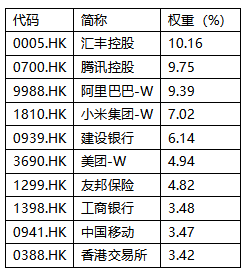
Core Viewpoint - The non-bank financial sector in Hong Kong is experiencing significant growth, as evidenced by the strong performance of the CSI Hong Kong Stock Connect Non-Bank Financial Theme Index and its associated ETF, which have seen substantial inflows and returns [1][2][4]. Market Performance - As of July 24, 2025, the CSI Hong Kong Stock Connect Non-Bank Financial Theme Index rose by 1.80%, with notable increases in constituent stocks such as Zhongzhou Securities (up 4.98%) and CITIC Financial Assets (up 4.84%) [1]. - The Hong Kong Stock Connect Non-Bank ETF recorded a 2.38% increase, marking its fifth consecutive day of gains [1]. - The ETF's trading volume was active, with a turnover rate of 11.92% and a half-day transaction value of 1.157 billion [1]. Fund Inflows and Performance - The Hong Kong Stock Connect Non-Bank ETF has seen continuous net inflows for 16 days, with a maximum single-day inflow of 820 million, totaling 4.334 billion in net inflows [1]. - Over the past month, the ETF has accumulated 5.725 billion in net inflows [1]. - The ETF's net asset value increased by 84.37% over the past year, ranking it 36th out of 2,936 index stock funds, placing it in the top 1.23% [2]. Investment Strategy and Outlook - The non-bank sector is viewed positively, with current valuations at historical midpoints, offering high cost-effectiveness and safety margins [4]. - Macroeconomic stability and liquidity release from interest rate cuts are expected to benefit the non-bank sector, which is a key participant in the capital market [4]. - The index tracks up to 50 listed companies in the non-bank financial theme, reflecting the overall performance of this sector within the Stock Connect framework [2][4]. Key Holdings - As of June 30, 2025, the top ten weighted stocks in the index accounted for 77.92%, with major holdings including China Ping An, AIA, and Hong Kong Exchanges and Clearing [3]. - The top three holdings, China Ping An, AIA, and Hong Kong Exchanges, each represent over 14% of the index [3].
港股新浪潮下,寻找资金共识的入“港”口
Xin Lang Ji Jin· 2025-07-24 05:09
Group 1 - The core viewpoint of the article highlights the significant investment opportunities in the Hong Kong market driven by both capital inflows and technological advancements, particularly in AI, leading to a remarkable performance of Hong Kong stocks from 2025 onwards [1][2] - The article emphasizes the structural changes in the Hong Kong stock market, where traditional financial giants and new tech companies coexist, and a growing number of investors are turning to index-based investments to capture market trends [1][2] - The increasing consensus on the influx of new capital into the Hong Kong market suggests a strong demand for a broad-based index that can accommodate substantial capital needs, similar to the roles of the CSI 300 in A-shares and the S&P 500 in U.S. stocks [1][5] Group 2 - The article identifies the Hong Kong Stock Connect 50 Index as a potential core benchmark for the Hong Kong market, as it transcends single-industry limitations and reflects the current mainstream forces and economic transformation directions [2][3] - It discusses the importance of a representative broad-based index for investors, as it serves as a benchmark for measuring overall market performance and is often a core holding tool for institutional investors in mature markets [4][5] - The current structure of the Hong Kong ETF ecosystem shows a significant imbalance, with institutional holdings in broad-based index products at only 43%, compared to 58% in thematic indices and 61% in Smart Beta strategies, indicating untapped potential for allocation [4][5] Group 3 - The Hong Kong Stock Connect 50 Index is characterized by its broad coverage of key stocks, including both new economy giants and traditional industry leaders, making it highly representative of the market [6][7] - The index accounts for 51% of the total market capitalization, 44% of trading volume, and 57% of profit contributions in the Hong Kong market, showcasing its role as a core asset aggregator [8] - The index's composition reflects the evolution of China's economic dynamics, transitioning from a dominance of finance and real estate to a more diversified representation including technology, automotive, and retail sectors [9][10] Group 4 - The article notes that the market's recognition of the Hong Kong Stock Connect 50 Index is high, with significant allocations from southbound funds and a 40.6% share of active equity products in the Hong Kong holdings [12] - The Hong Kong Stock Connect 50 ETF has become a preferred choice for investors seeking to capture core assets in the Hong Kong market, with a scale of 2.357 billion yuan as of July 16, 2025, indicating its liquidity advantage [15] - The ETF benefits from the Hong Kong Stock Connect mechanism, providing high investment convenience and ample quotas, while also being supported by continuous inflows from southbound capital [15]
国新证券每日晨报-20250724
Guoxin Securities Co., Ltd· 2025-07-24 01:55
Domestic Market Overview - The Shanghai Composite Index closed at 3582.3 points, up 0.01%, while the Shenzhen Component Index closed at 11059.04 points, down 0.37%. The ChiNext Index decreased by 0.01%, and the STAR Market 50 Index increased by 0.45%. The total trading volume of the A-share market was 18984 billion, slightly down from the previous day [1][4][9] - Among the 30 sectors tracked by CITIC, 4 sectors saw gains, with non-bank financials, home appliances, and banks leading the increase. Conversely, building materials, defense, and comprehensive finance experienced significant declines [1][4][9] Overseas Market Overview - On July 23, all three major U.S. stock indices rose, with the Dow Jones Industrial Average increasing by 1.14%, the S&P 500 rising by 0.78%, and the Nasdaq gaining 0.61%. Notably, Merck rose nearly 3%, and UnitedHealth Group increased by over 2% [2][4] News Highlights - The Ministry of Commerce announced that He Lifeng will visit Sweden from July 27 to 30 for economic and trade talks with the U.S. [3][11] - The Hainan Free Trade Port is set to officially start its full island closure operation on December 18 this year, implementing a series of liberalization policies [3][12] - The Public Security Bureau will strengthen the regulation of "smart driving" systems in vehicles [3][14] - A cross-provincial real estate registration mechanism has been established among Beijing, Shanghai, Hangzhou, Guangzhou, and Shenzhen, benefiting over 90 million people [3][15] - The U.S. and Japan have reached an agreement on tariff negotiations, reducing the tariff rate on Japan from 25% to 15% [3][17]
国元证券每日复盘-20250723
Guoyuan Securities· 2025-07-23 15:36
Market Performance - On July 23, 2025, the Shanghai Composite Index fluctuated and lost the 3600-point level, closing at 3582.30, up 0.01%[15] - The Shenzhen Component Index fell by 0.37%, closing at 11059.04, while the ChiNext Index decreased by 0.01%[15] - Total market turnover was 18642.75 billion CNY, a decrease of 284.50 billion CNY from the previous trading day[15] Sector and Style Analysis - Among the 30 CITIC first-level industries, most sectors declined; leading sectors included Non-Bank Financials (up 1.31%), Home Appliances (up 0.51%), and Banks (up 0.38%)[20] - The worst-performing sectors were Building Materials (down 2.56%), Defense and Military (down 1.80%), and Comprehensive Finance (down 1.35%)[20] - In terms of investment style, Financials outperformed, followed by Consumption and Growth, while Large-Cap Value stocks led over Large-Cap Growth stocks[20] Capital Flow - On July 23, 2025, the net outflow of main funds was 646.03 billion CNY, with large orders seeing a net outflow of 346.87 billion CNY and super large orders a net outflow of 299.17 billion CNY[24] - Small orders continued to see a net inflow of 609.73 billion CNY, while medium orders had a slight inflow of 10.19 billion CNY[24] ETF Trading Activity - Major ETFs such as the Huaxia SSE 50 ETF and the Huatai-PB CSI 300 ETF saw varied trading volumes, with the SSE 50 ETF trading at 21.25 billion CNY, an increase of 2.14 billion CNY from the previous day[29] - The CSI 500 ETF had a trading volume of 17.65 billion CNY, up by 3.66 billion CNY, while the CSI 1000 ETF traded at 10.37 billion CNY, an increase of 2.32 billion CNY[29] Global Market Overview - On July 23, 2025, major Asia-Pacific indices closed higher, with the Hang Seng Index up 1.62% at 25538.07 points and the Nikkei 225 up 3.51% at 41171.32 points[33] - In contrast, European indices showed mixed results, with the DAX down 1.09% and the FTSE 100 up 0.12%[33]
2025年二季报公募基金十大重仓股持仓分析
Huachuang Securities· 2025-07-23 14:16
Market Performance - In Q2 2025, major A-share indices generally rose, with the North Star 50 increasing by 13.85% and the Shanghai Composite Index rising by 3.26%[13][17] - The top five performing sectors included Comprehensive Finance (32.16%), National Defense and Military Industry (16.03%), and Banking (12.62%) while the worst performers were Food and Beverage (-5.13%) and Home Appliances (-3.45%) [17][18] Fund Issuance and Positioning - A total of 66 equity-oriented active funds were established in Q2 2025, with a total share of 338.57 billion, marking an increase in issuance compared to the previous quarter[2][25] - The average stock positions of various types of equity-oriented active funds increased, with mixed equity funds reaching an average position of 88.46%[29] Sector and Stock Holdings - The top five sectors with increased holdings were Communication, Banking, National Defense and Military Industry, Non-Bank Financials, and Media, with Communication and Banking seeing increases of over 1%[4][42] - The top five stocks with the largest increases in holdings were Zhongji Xuchuang, Xinyi Sheng, Hudian Co., Shenghong Technology, and SF Express, while the largest reductions were seen in BYD, Kweichow Moutai, and Wuliangye[5][43] Billion Fund Holdings - The largest changes in holdings among billion-dollar funds were observed in SF Express, Xinlitai, and Ningde Times, with the National Defense and Military Industry sector seeing a significant increase from 0 to 10.76 billion[6] Southbound Capital Analysis - In Q2 2025, the top five stocks held by southbound funds included Tencent Holdings, Xiaomi Group, and Alibaba, with notable increases in holdings for Sinda Biopharmaceuticals and Pop Mart[7]






流动性7月第3期:央行万亿净投放有望改善流动性预期
Yong Xing Zheng Quan· 2025-07-23 09:21
Core Insights - The central viewpoint indicates that the central bank's net injection of 1.2 trillion yuan is expected to improve liquidity expectations, with a notable increase in financing buy-ins and significant net inflows from southbound funds [1][2]. Macro Liquidity - Domestic liquidity saw a decline in both 2-year and 10-year government bond yields, with the yield spread widening. The central bank's open market net injection was 1.2011 trillion yuan, while 3,000 million yuan was withdrawn through MLF in July [2][12]. - Internationally, the 2-year U.S. Treasury yield decreased while the 10-year yield increased, leading to a rise in the dollar index. The 10-year U.S. Treasury yield rose to 4.44%, and the dollar index reached 98.46, with the China-U.S. 10-year bond yield spread widening to -2.77% [2][17]. Market Liquidity - Public funds: In July 2025, 71 new funds were established, with 39 being equity funds, totaling approximately 11.6 billion shares issued [3][22]. - ETF funds: 15 new equity ETFs were established in July 2025, with a total issuance of 6.8 billion shares [3][25]. - Southbound funds: There was a significant net inflow of southbound funds, totaling 735.9 billion yuan year-to-date, with major inflows into non-bank financials, pharmaceuticals, and consumer services [3][32][34]. - Margin financing: The average financing buy-in amount was 148.8 billion yuan, reflecting a 6.3% increase week-on-week, with significant net inflows in the computer, machinery, and electronics sectors [4][39]. Fundraising - In July, there were 4 IPOs raising approximately 22.1 billion yuan, with total equity financing around 43.4 billion yuan [4][45].