医疗保健

Search documents
Expect one more move higher in the S&P into year-end, says Strategas' Chris Verrone
Youtube· 2025-10-13 13:14
Market Overview - The market has shown signs of fatigue over the past three to four weeks, with only about 50% of stocks above their 50-day average, indicating a lack of momentum [3] - Despite recent volatility, the market is expected to maintain support levels around 6,400 to 6,450, with a potential move towards 7,000 by year-end [4] Economic Indicators - Cyclical stocks are outperforming defensive stocks, and credit conditions remain benign, suggesting a generally healthy economic environment [3][8] - The recent market sell-off was triggered by concerns over potential trade tensions with China, particularly the announcement of 100% tariffs effective November 1st [6] Sector Performance - Healthcare has begun to show positive trends, raising questions about whether this will extend to other defensive sectors like staples and REITs [5] - Consumer stocks are expected to respond positively to lower oil prices and interest rates, but there is uncertainty about their performance heading into 2026 [11] Regulatory Environment - A significant deregulatory push across various industries, including banking and energy, is noted, which may impact market dynamics [12] - The performance of financial stocks, particularly money center banks, is crucial for the overall market outlook, as they have been leading for the past two years [13]


刚刚,本轮美股牛市迎来“三周年纪念日”,在周五的“跳水”背景下
Hua Er Jie Jian Wen· 2025-10-13 00:26
Core Insights - The current bull market in the U.S. stock market, which began in October 2022, has reached its three-year anniversary, with the S&P 500 index rising 83% and market capitalization increasing by approximately $28 trillion [1] - Despite a significant sell-off triggered by tariff threats from Trump, the S&P 500 index has still gained 13% over the past year, double the average gain for the third year of a bull market [1][2] - The S&P 500 index's price-to-earnings (P/E) ratio has reached 25, the highest level for the third year of a bull market, indicating a rapid increase in valuation levels [2][3] Valuation and Market Concentration - The current bull market is characterized by a rapid rise in valuation levels, with the S&P 500 index's rolling P/E ratio at 25, significantly higher than historical averages for the third year of bull markets [2] - There is a notable concentration of market performance among a few technology giants, with Nvidia rising nearly 1500% and Meta Platforms increasing over 450% in the past three years, while many other stocks have lagged behind [3] - The equal-weighted version of the S&P 500 index has underperformed the market-cap weighted version by 21 percentage points since October 2022, marking the largest lag since at least the 1990s [3] Investor Sentiment and Future Outlook - Despite existing risks, few professional investors predict an imminent bear market, with some suggesting that the Federal Reserve may intervene if conditions worsen [4] - There is a recommendation for investors to rebalance their portfolios, with a shift away from technology stocks towards undervalued sectors like healthcare [4][5] - Historical data suggests that bull markets typically last an average of 4.6 years, with the S&P 500 index returning approximately 157%, indicating potential for further gains in the current market [5]
What We’re Reading (Week Ending 12 October 2025) : The Good Investors %
The Good Investors· 2025-10-12 01:00
Group 1: Economic Analysis of GDP - The article discusses the complexities of calculating GDP, highlighting three different approaches: income, expenditures, and value-added [3][4] - The expenditures approach indicates that healthcare constitutes 17% of GDP, while the value-added approach shows only 8%, due to differing categorizations of spending [4] - The value-added approach is deemed more suitable for measuring manufacturing's share of the economy, as it separates each step in the economic chain [5] Group 2: AI Investment Trends - The discussion draws parallels between past capital spending in telecom during the 1990s and current AI investments, suggesting that excessive capital is being diverted from other sectors [6][8] - Large private equity firms are incentivized to invest heavily in data centers, which may starve small manufacturers of necessary capital [8] - Major tech companies are reportedly spending up to 50% of their income on capital expenditures related to AI, a level of investment that is unprecedented and raises concerns about long-term sustainability [11] Group 3: Financing Structures in Tech - The emergence of special purpose vehicles (SPVs) is noted as a trend among large tech firms to manage capital expenditures without impacting their balance sheets [12] - This shift towards more opaque financing structures may indicate a growing concern among investors regarding the sustainability of current spending levels [12] Group 4: Economic Development and Geography - The article explores the relationship between geography, specifically altitude and temperature, and economic development, arguing that warmer countries tend to be poorer due to higher transportation costs and less trade [13][16] - The concept of "Balkanization" is introduced, explaining how mountainous regions lead to conflict and hinder regional integration, further contributing to economic challenges [16][17] Group 5: Media Influence on Investment Perception - The framing of news articles can significantly influence public perception of markets and investment opportunities, as seen in the coverage of pension funds and private credit [18][19] - The article emphasizes the importance of balanced reporting to avoid skewed perceptions that could lead to poor investment decisions [20] Group 6: Investment Case Study - Bryan Steam Corporation (BSC) is presented as a case study of a company with modest growth and profitability that ultimately provided significant returns to investors over time [21][24] - The company’s financial metrics, such as revenue growth from $16.4 million in 1993 to $26.2 million in 1998, demonstrate the potential for long-term investment success despite initial perceptions of risk [24][25]

AH股市场周度观察(10月第1周)-20251011
ZHONGTAI SECURITIES· 2025-10-11 04:09
A-Share Market - The A-share market showed a mixed performance with the Shanghai Composite Index slightly up by 0.37%, while the ChiNext Index fell significantly by 3.86, indicating notable internal market differences [5][6] - Value stocks generally rose, particularly mid-cap value stocks, while growth stocks experienced a broad pullback. The average daily trading volume for the week was 2.6 trillion yuan, showing a slight increase compared to the previous period [5][6] - The market volatility increased post-National Day, influenced by rising prices of industrial and precious metals, with gold surpassing 4000 USD per ounce. The non-ferrous metals sector saw a cumulative increase of 4.35% during the week [5][6] Hong Kong Market - The Hong Kong market faced downward pressure, with the Hang Seng Index declining by 3.13% and the Hang Seng Tech Index dropping by 5.48%. Traditional value sectors showed relative resilience, while technology, consumer, and healthcare sectors experienced significant declines, with non-essential consumer and healthcare sectors falling over 6% [7] - The adjustment in the Hong Kong market was primarily driven by external uncertainties and internal sector rotations, particularly due to the tightening of US-China relations. The announcement of a 100% tariff on all brand or patented drug imports by the US significantly impacted the healthcare sector [7] - Looking ahead, the Hong Kong market is expected to be heavily influenced by US-China relations, with potential risks from increased tariffs on Chinese goods. Focus should be on dividend-paying sectors less affected by these relations, especially cyclical sectors benefiting from anti-involution policies [7]
优化制度满足多元需求 港股市场磁吸力提升
Zhong Guo Zheng Quan Bao· 2025-10-10 20:57
Group 1 - The Hong Kong IPO market has seen 71 listings as of October 10, 2023, an increase of 23 compared to the same period in 2024, driven by "new economy" sectors and the "A+H" listing model [1][2] - Major sectors contributing to the IPO surge include healthcare, information technology, and consumer discretionary [1] - The "A+H" listing model has become a significant fundraising method, with 11 A-share companies listing in Hong Kong this year, indicating a trend of mainland companies seeking dual listings [2][3] Group 2 - There is a notable increase in long-term capital participation in Hong Kong IPOs, with various institutional investors actively investing in Chinese assets [2][3] - The presence of cornerstone investors, including both domestic and international institutions, has risen, reflecting growing interest from overseas investors in Hong Kong IPOs [3] - The Hong Kong Stock Exchange has announced optimizations to IPO pricing and public market regulations, enhancing its attractiveness as a primary listing venue [4] Group 3 - The outlook for the fourth quarter suggests that more funds may flow into the Hong Kong stock market, with projections indicating over 80 new listings and a fundraising scale of HKD 250 billion to 280 billion in 2025 [4]
上有老下有小,“X世代”成为全球最高消费群体
Sou Hu Cai Jing· 2025-10-10 16:13
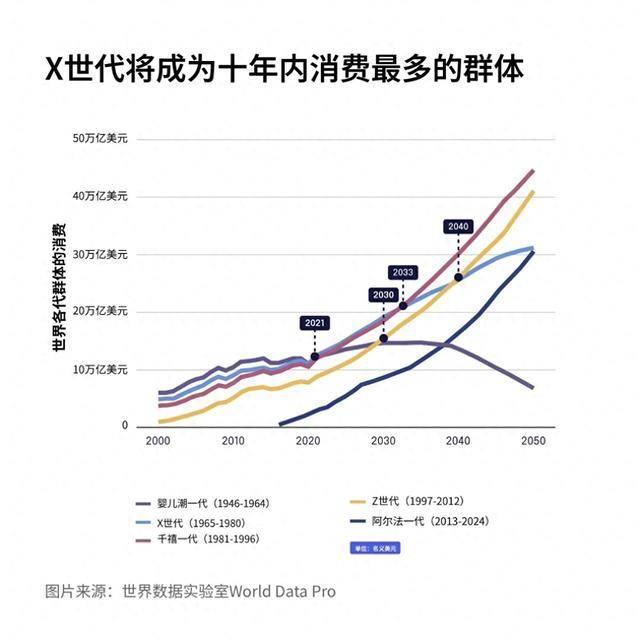
Group 1 - The core viewpoint is that Generation X has become the highest consumer group globally, with a population of approximately 1.4 billion, accounting for 17% of the total population, and their influence on the consumer market is significant and growing [1][3] - Generation X has been leading global consumer spending since 2021, a position expected to last until 2033, particularly in high-income markets like Germany, Japan, the UK, and the US, where their dominance is projected to continue until 2036 [1][3] - By 2025, Generation X is expected to drive global consumer spending of $15.2 trillion [1] Group 2 - Generation X, born between 1965 and 1980, is currently at the peak of their consumption and income, often referred to as the "sandwich generation" due to their responsibilities of caring for both children from the Millennial and Z generations and aging parents from the Baby Boomer generation [3] - Their spending priorities reflect their responsibilities, focusing on elder care, education, durable goods like instruments and gaming consoles, and travel over the next decade [3][6] - In the next ten years, Generation X will continue to lead spending in tourism, healthcare, and education, although their overall spending may decline as the younger Millennial generation begins to surpass them in total consumer expenditure [6]
36氪出海·中东|IFZA干货分享:中小企业拓展迪拜自贸区的六步指南
3 6 Ke· 2025-10-10 11:27
Core Insights - Expanding business into Dubai's free trade zone is becoming a strategic consideration for SMEs aiming for efficient international market entry [2] - The IFZA free zone provides a comprehensive guide for establishing overseas subsidiaries or branches in Dubai, leveraging the region's strategic location and investment-friendly policies [2] Group 1: Expansion Strategy - The first step is to clarify the international expansion concept by understanding key industries in Dubai, such as fintech, logistics, healthcare, e-commerce, and renewable energy, which are experiencing strong growth [3] - Conducting thorough market research helps identify real demand, assess competition, and ensure alignment with local consumer preferences and regulatory requirements [3] Group 2: Licensing and Compliance - Obtaining the appropriate business license is essential for legal operation and export in the UAE free zone, with IFZA offering tailored international trade and export licenses for various business types [4] - Continuous compliance is crucial for stable operations, with IFZA providing one-stop support for annual license renewals, VAT registration, and accounting services [8] Group 3: Market Research and Logistics - Understanding the target market is vital, as SMEs make up 95% of all businesses in Dubai and contribute 40% to the UAE's GDP, indicating a competitive landscape [5] - IFZA offers diverse office and logistics solutions, including shared office spaces and efficient warehousing, allowing businesses to adjust based on budget and operational needs [6] Group 4: Visa and Team Support - Visa processing is a critical component of establishing a branch in Dubai, with IFZA facilitating the entire process for investors, employees, and their families [7] - After company registration, various visa types can be applied for, ensuring a smooth transition for the team to start operations [7] Group 5: Networking and Opportunities - Expanding into Dubai's free trade zone connects businesses to new markets, customers, and opportunities, supported by IFZA's efficient registration processes and comprehensive service offerings [9] - The upcoming IFZA event in Shanghai aims to provide insights from UAE officials and facilitate networking among industry partners [10]

港股集体回调,关注恒生科技ETF易方达(513010)、港股通互联网ETF(513040)等投资价值
Mei Ri Jing Ji Xin Wen· 2025-10-10 05:19
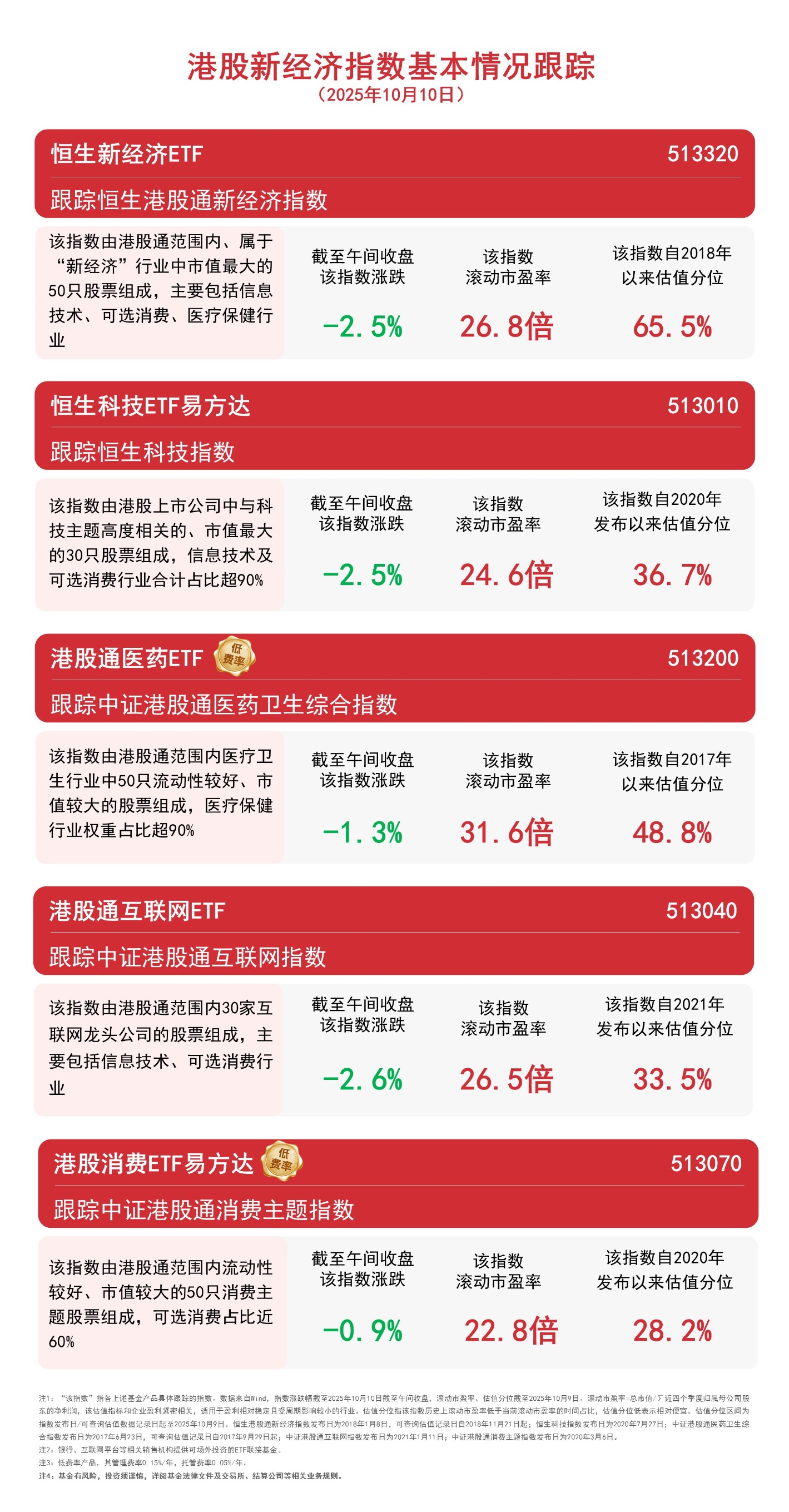
Core Insights - The Hong Kong stock market experienced a collective pullback, with various indices showing declines, including a 0.9% drop in the Consumer Theme Index and a 2.6% drop in the Internet Index [1][5] - The Hang Seng Technology ETF and the Hong Kong Internet ETF have seen significant capital inflows, reaching historical highs of 22.47 billion and 5.35 billion respectively [1] - Huatai Securities suggests that with the onset of a new round of monetary easing by the Federal Reserve and advancements in the internet and technology sectors, market sentiment in Hong Kong may improve further [1] Index Performance - The Hang Seng New Economy Index, which tracks the largest 50 stocks in the "new economy" sector, fell by 2.5% and has a rolling P/E ratio of 26.8 times [2] - The Hang Seng Technology Index, consisting of the largest 30 technology-related stocks, also dropped by 2.5% with a rolling P/E ratio of 24.6 times [3] - The Hong Kong Internet Index, tracking 30 leading internet companies, decreased by 2.6% and has a rolling P/E ratio of 26.5 times [5] - The Consumer Theme Index, which includes 50 major consumer stocks, fell by 0.9% with a rolling P/E ratio of 22.8 times [6]
机构看好港股科技板块,恒生科技ETF易方达(513010)、港股通互联网ETF(513040)等助力布局港股科技资产
Mei Ri Jing Ji Xin Wen· 2025-10-09 09:49
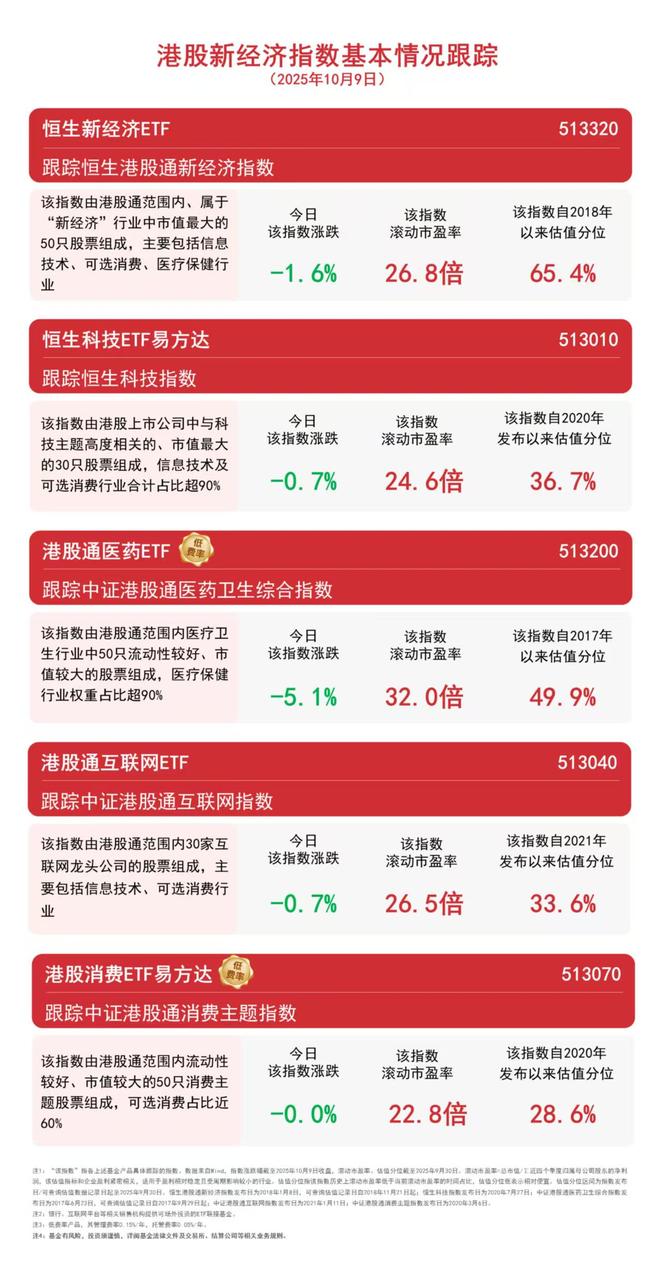
Market Overview - The Hong Kong stock market experienced fluctuations today, with the CSI Hong Kong Stock Connect Consumer Theme Index down by 0.02%, the Hang Seng Technology Index and CSI Hong Kong Stock Connect Internet Index both down by 0.7%, the Hang Seng Hong Kong Stock Connect New Economy Index down by 1.6%, and the CSI Hong Kong Stock Connect Medical and Health Comprehensive Index down by 5.1% [1] - In September, the E Fund Hang Seng Technology ETF (513010) and the Hong Kong Stock Connect Internet ETF (513040) attracted significant capital inflows, with net inflows of 4.2 billion and 2.7 billion respectively [1] Sector Performance - The Hang Seng New Economy ETF tracks the Hang Seng Hong Kong Stock Connect New Economy Index, which consists of 50 stocks from the "new economy" sector with the largest market capitalization. This index saw a decline of 1.6% today, with a rolling P/E ratio of 26.8 times and a valuation percentile of 65.4% since its inception in 2018 [2] - The E Fund Hang Seng Technology ETF tracks the Hang Seng Technology Index, composed of 30 major stocks related to technology. This index decreased by 0.7%, with a rolling P/E ratio of 24.6 times and a valuation percentile of 36.7% since its launch in 2020 [2] - The Hong Kong Stock Connect Medical and Health Comprehensive Index, which includes 50 liquid and large-cap stocks in the healthcare sector, fell by 5.1%, with a rolling P/E ratio of 32.0 times and a valuation percentile of 49.9% since 2017 [2] - The Hong Kong Stock Connect Internet ETF tracks the CSI Hong Kong Stock Connect Internet Index, which consists of 30 leading internet companies. This index dropped by 1.0%, with a rolling P/E ratio of 30.5 times [2] Investment Sentiment - Huatai Securities indicated that with the onset of a new round of monetary easing by the Federal Reserve and advancements in the internet and technology sectors, market sentiment in Hong Kong may have further room for improvement, suggesting that the technology sector remains a potential area for investment [1]
全球媒体聚焦 | 外媒:智能经济和新兴消费趋势点亮中国经济
Sou Hu Cai Jing· 2025-10-02 06:32
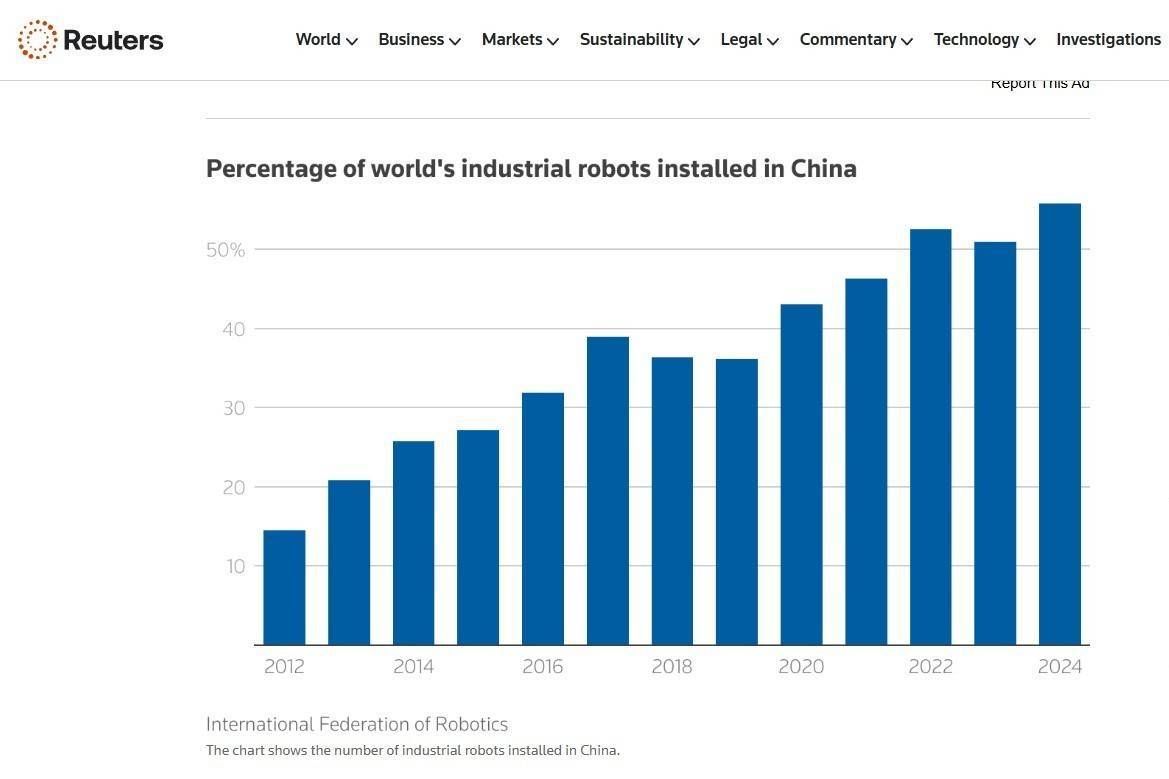
Core Insights - The article emphasizes the importance of a technology-driven "smart economy" in supporting China's economic development and facilitating its economic transformation [1][4]. Group 1: Economic Growth Drivers - Government policies aimed at supporting the "smart economy," including investments in artificial intelligence, semiconductors, and advanced manufacturing, have led to significant growth in the information technology and business services sectors since early 2024 [1]. - The proportion of industrial robots installed in China has been increasing, with over half of the world's industrial robots installed in the country over the past three years [4]. - The retail sector has benefited from targeted government policies, such as the trade-in policy implemented at the end of 2024, which has spurred growth in household appliances, furniture, and communication equipment [4]. Group 2: Consumer Trends - A shift in consumer preferences, particularly among millennials and Generation Z, is driving demand for new domestic products and services that combine tradition with modernity and leverage artificial intelligence and digital technologies [4][6]. - Emerging products and services, such as the sales of Pop Mart's Labubu dolls and the popularity of themed tea shops like "Bawang Chaji," highlight the potential for new consumption trends to break existing categories [4]. Group 3: Aging Population and New Business Opportunities - The aging population in China is creating new business opportunities in areas such as smart home technology, elderly care services, financial pension plans, and specialized healthcare products [6]. Group 4: Long-term Economic Transition - The transition to a sustainable consumption-driven economy in China is expected to be a long and complex process, but investments in advanced industries, innovation in products and services, and flexible policy-making can lay a solid foundation for this shift [6].