
家电

Search documents
消费温和复苏,悦己型春节消费崭露头角
Zhong Guo Yin He Zheng Quan· 2026-02-23 10:45
Investment Rating - The report does not explicitly state an investment rating for the industry Core Insights - The consumption sector is experiencing a mild recovery, with notable changes in consumption structure and patterns, particularly during the Spring Festival period. The government has initiated special activities to stimulate consumption and promote reasonable price increases [1][2] - There is a significant increase in consumer traffic and spending in key retail and dining sectors, although the market remains skeptical about a full recovery. For instance, the essential and non-essential consumption indices in Hong Kong saw declines during the Spring Festival [1][2] - New consumption trends are emerging, driven by smaller family structures and increased car ownership, leading to a rise in self-driving travel and experiential consumption [1][2] Summary by Sections 1. Spring Festival Consumption Monitoring - During the Spring Festival from February 2 to 20, 2026, cross-regional mobility increased by 5.1% compared to the same period in 2025, with significant growth in railway (4.1%), waterway (21.2%), and civil aviation (5.9%) passenger volumes [6][7] - The average ticket price for flights rose by 1.6% compared to 2025 and by 5.9% compared to pre-pandemic levels in 2019 [6] 2. Cultural and Tourism Consumption - The increase in car ownership and changes in population structure have led to a shift towards "self-pleasing" consumption during the Spring Festival, with a notable rise in self-driving trips and experiential activities [11] - The trend of "reverse New Year" is growing, where young people invite their parents to cities for celebrations, reflecting a shift away from traditional family gatherings [11] - The tourism sector saw a surge in hotel bookings in regions like Chaoshan, with Shantou experiencing a 186% increase in bookings compared to the previous year [11] 3. Hainan Duty-Free Consumption - Hainan's duty-free sales reached 9.7 billion yuan during the first four days of the Spring Festival, marking a 15.8% increase year-on-year [15][17] - Sales in Sanya's duty-free shops on the first day of the Lunar New Year hit 2.04 billion yuan, setting a record for the day [15] 4. Spring Festival Movie Box Office - The box office for the 2026 Spring Festival period reached 4.858 billion yuan, with a significant drop compared to the previous year, attributed to fewer blockbuster films [18][21] 5. Consumer Price Index (CPI) - The CPI showed signs of recovery, with year-on-year increases of 0.2%, 0.7%, and 0.8% in October, November, and December 2025, respectively. The growth was driven by rising prices in fresh produce and household goods [25]
新春消费“马”力全开,深市消费龙头活力迸发
Bei Jing Ri Bao Ke Hu Duan· 2026-02-23 09:57
Group 1: Consumer Market Dynamics - The domestic consumption market showed robust vitality during the 2026 Spring Festival, driven by various promotional activities and favorable policies, injecting strong momentum into the annual economic development [1] - Consumer enterprises are expected to achieve a continuous performance recovery this year, supported by a strong start during the Spring Festival consumption peak [1] Group 2: Advertising and Brand Promotion - Yanjing Beer significantly expanded its advertising channels during the Spring Festival, enhancing brand awareness and laying a solid foundation for market expansion in the new year [2] - The company utilized outdoor LED advertisements in nine cities and lightbox ads in 22 high-speed rail stations, effectively reaching target audiences [2] Group 3: Product Innovation and Supply Chain Efficiency - Sanquan Foods actively enhanced production efficiency through the upgrade of intelligent and automated production lines, ensuring stable supply of festive products [3] - The company launched creative festive products targeting young consumers, such as low-fat dumplings, which received positive feedback for meeting health-conscious demands [3] Group 4: Consumer Electronics and Home Appliances - TCL launched a "New Home" marketing campaign during the Spring Festival, offering dual discounts under the new recycling subsidy policy to stimulate demand for home appliances [4] - The company is focusing on its core home appliance business while executing a global and AI smart appliance strategy, aiming to enhance product quality and operational efficiency [4] Group 5: Research and Development Investments - A company reported a research and development investment of 517 million yuan in the first three quarters of 2025, accounting for 3.61% of its revenue, reflecting a year-on-year growth of 4.86% [5] - The company holds various proprietary technologies in preservation and washing machine innovations, with over 1,000 R&D personnel and more than 2,000 authorized patents as of September 2025 [5]
中国银河策略:地缘风险叠加关税风险,港股节后行情怎么看?
Jin Rong Jie· 2026-02-23 07:57
Market Performance - During the week from February 16 to February 20, the Hong Kong stock market experienced fluctuations with the Hang Seng Index declining by 0.58% to 26,413.25 points, the Hang Seng Tech Index falling by 2.78% to 511.50 points, and the Hang Seng China Enterprises Index decreasing by 0.81% to 8,959.56 points [1][6][30] - Among the primary sectors, 8 sectors saw gains while 3 sectors experienced losses. The energy, materials, and industrial sectors had the highest increases, rising by 3.65%, 2.27%, and 1.03% respectively. Conversely, the consumer discretionary, consumer staples, and communication services sectors faced the largest declines, dropping by 1.86%, 1.50%, and 0.13% respectively [1][7][30] Market Liquidity - Due to the Spring Festival holiday, the Hong Kong stock market only operated for half a day on February 16, with a trading volume of HKD 850.56 billion. On February 20, the trading volume was HKD 1,654.61 billion, which is lower than the previous week's average daily trading volume of HKD 2,406.43 billion. The short-selling amount was HKD 237.27 billion, accounting for 14.43%, significantly higher than the previous week's average of 12.56% [2][13][15] Valuation and Risk Premium - As of February 20, 2026, the PE and PB ratios of the Hang Seng Index were 12.09 times and 1.23 times, respectively, placing them at the 79% and 55% percentiles since 2010. The Hang Seng Tech Index had PE and PB ratios of 21.51 times and 2.83 times, respectively, at the 18% and 49% percentiles since 2010 [3][17][22] - The risk premium of the Hang Seng Index was calculated at 4.19%, which is at the 5% percentile since 2010, while the risk premium based on the 10-year Chinese government bond yield was 6.48%, at the 42% percentile since 2010 [3][19][21] Investment Outlook - The geopolitical risks in the Middle East are rising, which may lead to increased volatility in energy and precious metals sectors. The U.S. is exerting pressure on Iran, with potential military actions being considered [4][9][30] - The consumer sector is currently valued relatively low, and with increasing consumer promotion policies, there is potential for growth in this sector [4][30] - The technology sector remains a long-term investment focus, with reduced valuation pressure following recent corrections, and is expected to rebound due to accelerated AI model updates and applications [4][30]


地缘风险叠加关税风险,港股节后行情怎么看?
Zhong Guo Yin He Zheng Quan· 2026-02-23 05:45
Investment Rating - The report does not explicitly state an investment rating for the industry [1]. Core Insights - Geopolitical risks and tariff risks are impacting the Hong Kong stock market, with a focus on how these factors will influence market performance post-holiday [1]. - The report highlights that the U.S. GDP growth rate for Q4 2025 was 1.4%, significantly below the expected 2.5%, indicating a slowdown in the U.S. economy [2][44]. - The report suggests that the recent increase in U.S. tariffs from 10% to 15% on global goods may lead to heightened investor risk aversion, benefiting sectors like precious metals and energy [2][46]. - The consumption sector is currently at a relatively low valuation, with potential for growth as consumer policies increase [2][46]. - The technology sector remains a long-term investment focus, with reduced valuation pressure and potential for rebound due to advancements in AI [2][46]. Market Review - During the week of February 16 to February 20, 2026, the Hong Kong stock market saw declines, with the Hang Seng Index down 0.58% to 26,413.25 points, the Hang Seng Tech Index down 2.78% to 511.50 points, and the Hang Seng China Enterprises Index down 0.81% to 8,959.56 points [4][6]. - Among the primary sectors, 8 sectors increased while 3 sectors decreased, with energy, materials, and industrial sectors showing the highest gains [6][14]. - The trading volume was affected by the Spring Festival, with a total turnover of HKD 850.56 billion on February 16 and HKD 1,654.61 billion on February 20, lower than the previous week's average [14][18]. Valuation and Risk Premium - As of February 20, 2026, the PE and PB ratios for the Hang Seng Index were 12.09 and 1.23, respectively, placing them at the 79% and 55% percentiles since 2010 [22][29]. - The risk premium for the Hang Seng Index was calculated at 4.19%, indicating a low-risk environment compared to historical data [29][31]. - The report notes that the dividend yields for the energy and communication services sectors are above 5%, suggesting stable income opportunities for investors [36][41]. Investment Outlook - The report recommends focusing on sectors that may benefit from geopolitical tensions and tariff adjustments, particularly precious metals and energy [46]. - The consumption sector is expected to gain momentum as consumer policies are implemented, while the technology sector is anticipated to rebound due to advancements in AI [46].
分析师“春节见闻”!有何投资机遇?服务型消费成C位
Sou Hu Cai Jing· 2026-02-23 04:23
Core Insights - The annual analyst field survey during the Spring Festival reveals significant trends in China's economy, with a focus on consumer behavior and industrial developments [1] Consumer Insights - Service-oriented consumption has emerged as a key focus, with analysts noting a strong demand for service consumption during the Spring Festival, particularly in Shanghai, where logistics and service sectors thrived [3] - Observations from Jiangsu province indicate a structural upgrade in consumer behavior, shifting from product-centric to a balance of goods and services, with notable increases in prices and consumption levels in entertainment and dining [3] - The rise of new consumption patterns, such as KTV and cinema attendance, reflects a broader trend towards experiential and service-based spending [2][3] Industrial Insights - Analysts report a rise in new productive forces across various regions, with traditional industries undergoing significant upgrades [5] - In Dalian, the port's logistics advantages have fostered a traditional industrial cluster focused on petrochemicals and equipment manufacturing, with a shift towards refined production processes [5] - Shandong's industrial transformation is highlighted by significant investments in new energy storage technologies, indicating a growing focus on innovative industrial applications [6] Overseas Opportunities - Analysts emphasize the potential for Chinese companies to expand overseas, particularly in Southeast Asia, with Indonesia identified as a key market for Chinese enterprises [7] - The importance of localizing products for the Southeast Asian market is underscored, with successful examples like Mengniu and Mixue demonstrating effective market entry strategies [7] - Observations from Sydney indicate rising prices in consumer goods and housing, highlighting economic challenges in international markets [7]
视频丨为节日幸福感加码 多地出台一系列消费利好政策
Xin Lang Cai Jing· 2026-02-23 02:12
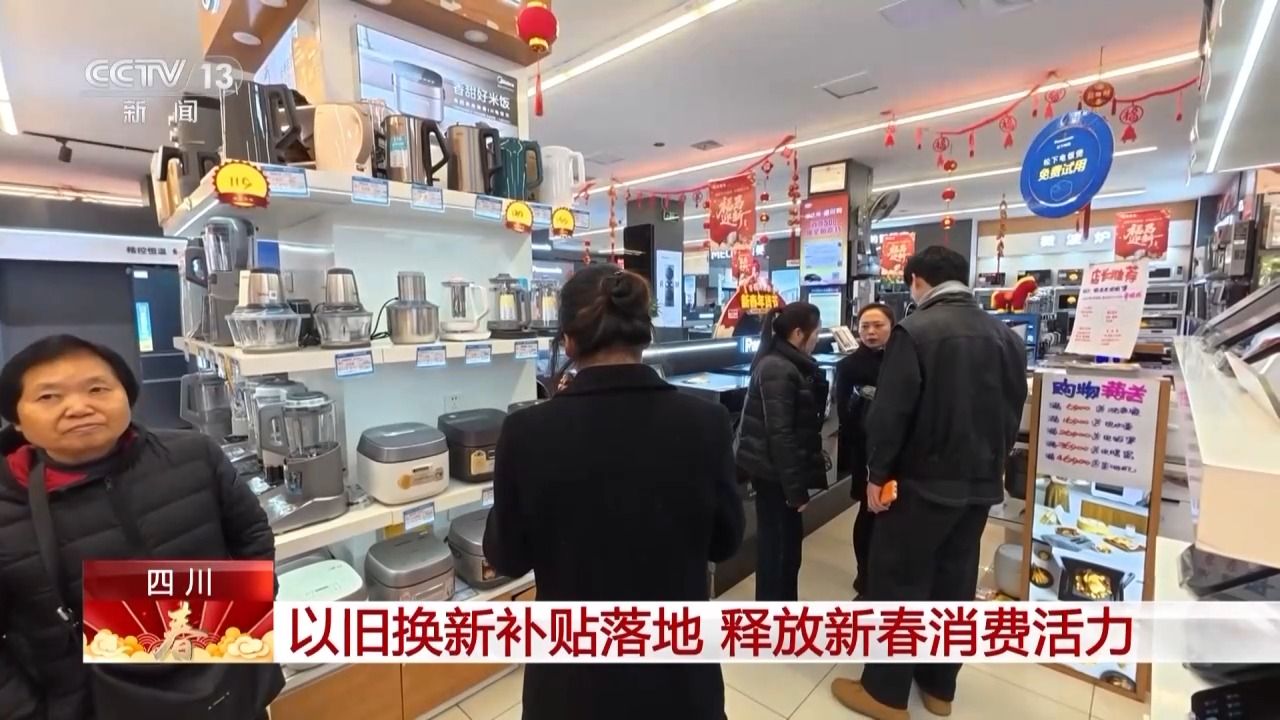
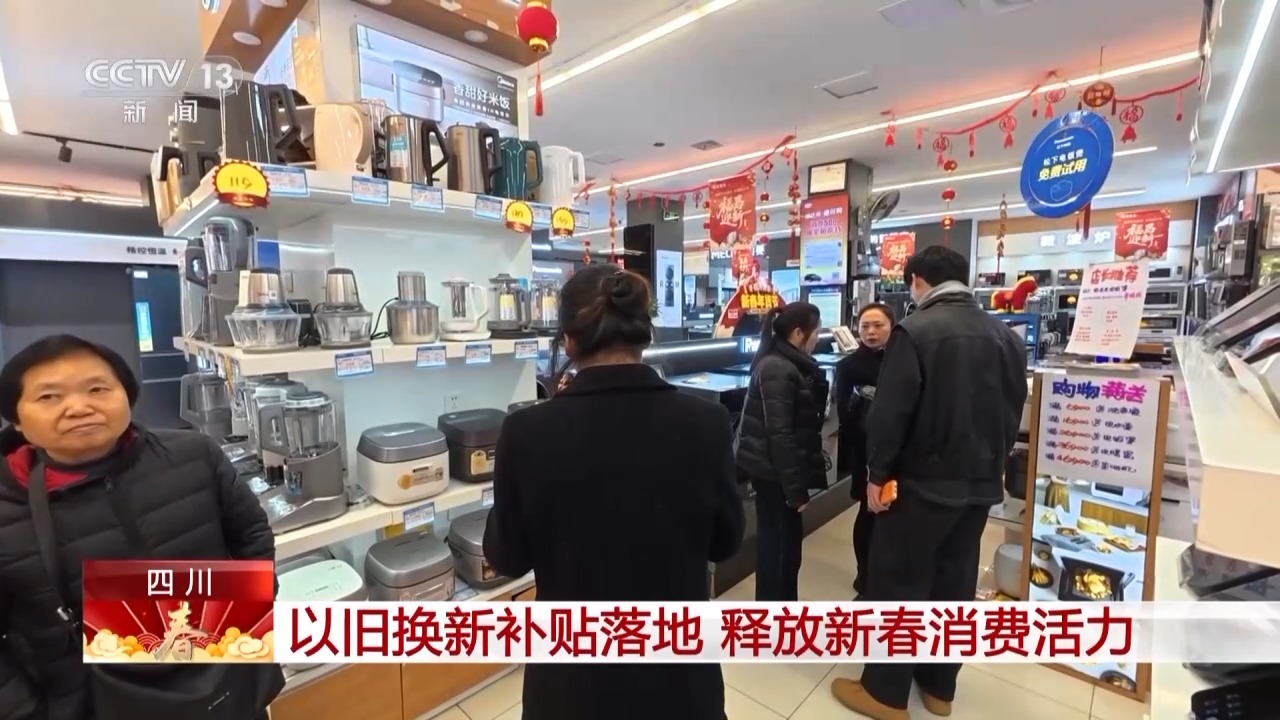
Group 1 - The article highlights the introduction of various consumer-friendly policies across the country, enhancing the festive happiness of citizens during the Spring Festival [1] - In Sichuan, the "old for new" policy has led to significant consumer engagement, with 1.124 million applications for home appliance exchanges, generating a consumption boost of 4.344 billion yuan [4] - The "old for new" initiative not only provides financial benefits to consumers but also promotes consumption upgrades and green transformation, becoming a key growth point in the Spring Festival market [4] Group 2 - Jiangsu's "Lego New Year" special event offers consumers substantial financial incentives, with mobile phones remaining a popular item, alongside emerging tech products like smart glasses and small appliances [5] - The inclusion of smart glasses in national subsidy policies has attracted considerable consumer interest, showcasing the evolving preferences in technology [5][7] - In Anhui, the expansion of the "Two New" policy has invigorated the automotive market, with local subsidies expected to drive monthly consumption by 150 million yuan [9]
为节日幸福感加码 多地出台一系列消费利好政策
Xin Lang Cai Jing· 2026-02-23 02:12
Group 1 - The core viewpoint of the article highlights the positive impact of various consumer-friendly policies implemented across the country, enhancing the festive experience for citizens during the Spring Festival [1] - In Sichuan, the "old for new" policy has led to significant consumer engagement, with 1.124 million applications for home appliance exchanges, generating a consumption boost of 4.344 billion yuan [3] - The demand for digital and smart products is also notable, with 1.618 million applications resulting in a consumption increase of 4.878 billion yuan, indicating a trend towards consumption upgrades and green transformation [3] Group 2 - Jiangsu province organized a special "Happy Shopping Spring Festival" event, providing consumers with substantial incentives, and highlighting the popularity of smartphones and smart gadgets among consumers [4] - The introduction of smart glasses into the national subsidy policy has attracted considerable consumer interest, showcasing the growing trend of technology integration in daily life [4][6] - In Anhui's Chuzhou, the automotive market has been revitalized through combined subsidies and streamlined processes, with expectations of generating 150 million yuan in monthly consumption from automotive purchases [8]
新春走基层| 智能工厂“不打烊”,中国“智造”开新局
Xin Lang Cai Jing· 2026-02-22 06:37
Group 1 - The core viewpoint of the article highlights the transformation of China's manufacturing industry towards intelligent factories, driven by data and automation technologies [1][3]. - Ningbo Steel's factory exemplifies this shift, utilizing AI systems for real-time analysis and automated grading of scrap steel, resulting in a 30% reduction in R&D cycles, an 18% increase in per capita production efficiency, and a 12% improvement in energy utilization [1]. - The article notes that as of now, China has established over 35,000 basic-level, 8,200 advanced-level, and 500 excellent-level intelligent factories, along with 15 leading-level intelligent factories [3]. Group 2 - Qingdao Haier Central Air Conditioning Co., Ltd. was recognized as one of the first leading-level intelligent factories, showcasing advanced levels of customization and integration in its operations [3]. - The implementation of the intelligent factory gradient cultivation action by six departments in 2024 is accelerating the construction of intelligent factories across the country [5]. - Major cities like Beijing, Shanghai, and Guangzhou are setting ambitious goals for AI and manufacturing integration, aiming for comprehensive coverage of intelligent factories and significant increases in robot density by 2028 [5].

经济学家解读特朗普新关税:15%的税率下既有输家也有赢家
Xin Lang Cai Jing· 2026-02-22 04:33
格隆汇2月22日|对许多国家来说,特朗普最新宣布的15%关税税率比在IEEPA关税下面临的税率要 好。RSM US首席经济学家Joe Brusuelas指出,此前面临高达50%关税的巴西,以及加拿大、印度、印度 尼西亚、墨西哥和南非,将面临较低的税率。但他补充说,阿根廷、澳大利亚、沙特阿拉伯和英国等国 家将面临更高的关税。此外,就目前而言,沃尔玛、塔吉特、好市多和亚马逊等零售商将从较低的关税 中受益,而家电行业将受到特朗普关税的严重打击,对家得宝、劳氏和宜家等公司产生了负面影响。虽 然钢铁和铝关税不受影响,但汽车零部件的关税是"对等的"。这对通用汽车、福特和丰田等汽车制造商 来说是个好消息。在众多商品上支付了更高价格的消费者可能不会从较低的关税中受益,而且个人进口 商能否获得退税也存在不确定性。 ...
节后A股开盘必看!三大主线已明牌,这个变数不得不防
Sou Hu Cai Jing· 2026-02-22 04:30
Domestic Policy - Domestic consumption has been elevated to unprecedented importance, with a focus on boosting consumption through special actions and expanding the supply of quality goods [1] - Key sectors benefiting from this policy include home appliances, cultural tourism, municipal infrastructure, and new infrastructure [1] - Visa exemptions for Canada and the UK starting February 17 are expected to boost inbound tourism and duty-free shopping in the short term, with long-term trends favoring service trade openness [1] Platform Economy - The State Administration for Market Regulation has engaged with major platforms like Alibaba and Douyin, emphasizing the need to avoid cutthroat competition and adhere to promotional regulations, which is a long-term benefit for compliant leading companies [2] - ByteDance's Doubao model 2.0 Pro has been released, directly competing with GPT-5.2, significantly reducing reasoning costs, indicating that domestic AI models are entering a practical phase [2] Industrial Upgrades - Humanoid robots gained popularity due to a Spring Festival performance, with Tesla's third-generation robot set to launch in Q1, and domestic companies like Yushutech and UBTECH making breakthroughs in control algorithms and motor performance [2] - The global data center investment boom is projected to reach $320 billion by 2025, a 74% increase, driven by demand for AI and cloud computing, benefiting data center construction and related energy and cooling equipment [2] International Developments - The U.S. tariff policy has shifted, with the Supreme Court rejecting comprehensive tariffs but Trump proposing a 10% global baseline tariff and threatening an additional 15%-30% on automobiles, impacting sectors heavily reliant on exports to the U.S. [2] - The deterioration of U.S.-Iran relations has heightened geopolitical tensions, igniting safe-haven demand for precious metals, with gold surpassing $5,100 per ounce and silver rising over 7% [3] Market Sentiment and Capital Flow - The market anticipates that the Federal Reserve may tolerate higher inflation, leading to a bearish sentiment on the dollar, which enhances the attractiveness of RMB assets, as evidenced by a net inflow of 13.28 billion yuan from northbound funds before the Spring Festival [3] - The M2 money supply grew by 9.0% in January, with social financing stock growth at 8.2%, and the central bank injecting 600 billion yuan before the holiday, indicating healthy liquidity [3] - Historical data shows a 75% probability of the Shanghai Composite Index rising in the first five trading days after the Spring Festival, with an average increase of 1.2% [3] Investment Focus - Key investment directions post-holiday include technology growth sectors such as AI models, humanoid robots, and data centers, driven by both policy and technological advancements [3] - Policy beneficiaries include domestic demand stimulation, infrastructure investment, and leading companies in the platform economy [3] - Safe-haven assets like gold and silver, along with undervalued high-dividend stocks, are recommended to hedge against geopolitical risks [3]